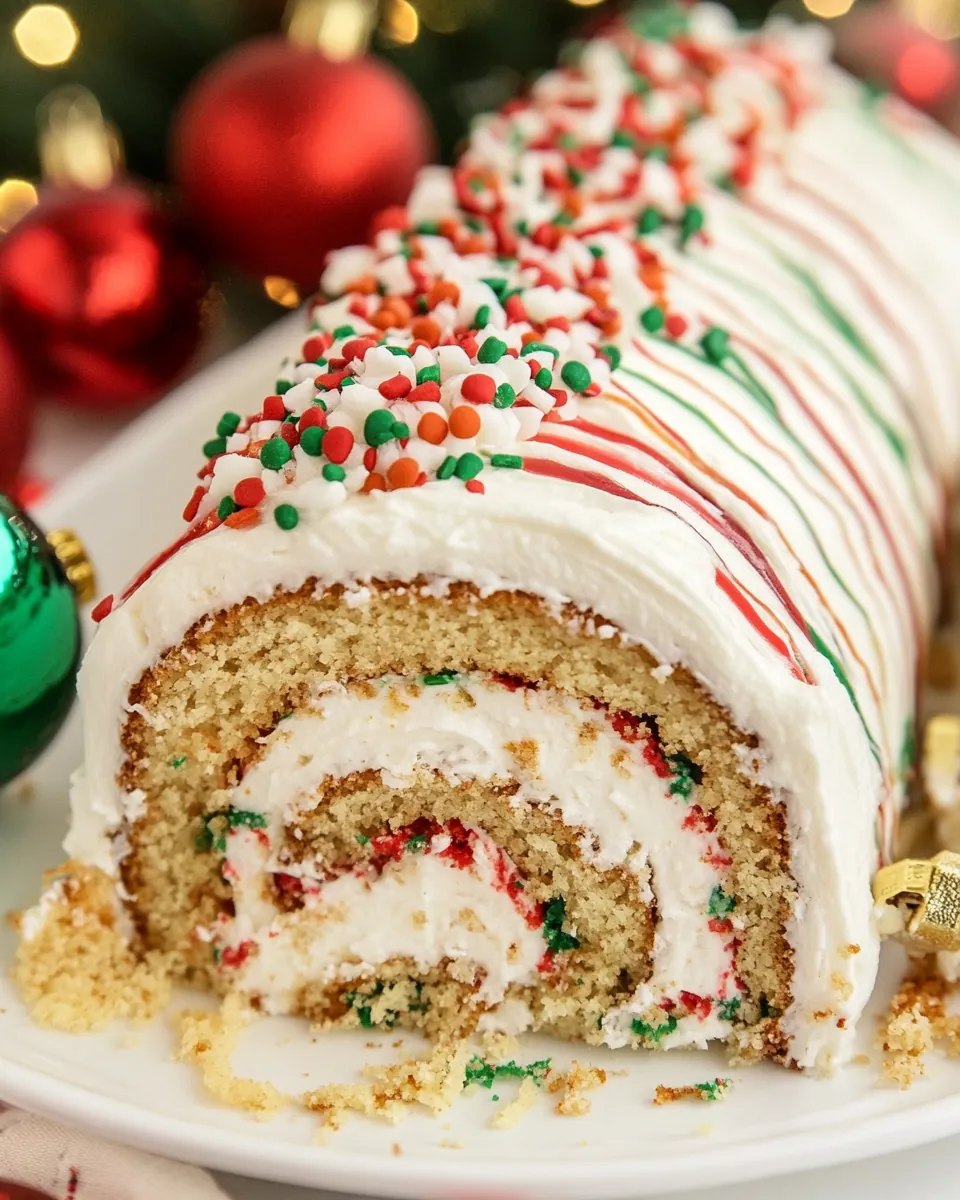
Christmas Cake Roll
Christmas Cake Roll has been my festive showstopper for years, the one dessert I bring when I want smiles that start before the first fork hits the plate. I still remember the first time I tried to roll a sponge cake, palms sweating, towel dusted in confectioners sugar, and a laugh when it cracked on the second try. That messy, determined evening taught me patience, a few tricks about timing, and how a simple filling can rescue almost any bake. Over time I learned how the right balance of eggs and flour creates a pliable sponge that wants to bend, not break, and how a whipped heavy whipping cream filling studded with Christmas colored sprinkles makes the whole thing feel like a celebration.
Now, making this Christmas Cake Roll is my holiday ritual, one that smells like warm vanilla and toastiness from the oven. I often put on a messy apron, crank a playlist of classic holiday tunes, and chat with guests while the cake bakes. Each step is tactile, from beating eggs until frothy to folding in the all-purpose flour with a light hand. The ganache finish with melted chocolate chips and a glossy pour adds a final flourish that always prompts a few appreciative oohs and ahhs. Whether you are making this for an intimate gathering or bringing it to a potluck, the cake roll feels both nostalgic and playful, and it becomes the centerpiece before it becomes dessert.
Recipe Snapshot
45 mins
30 mins
15 mins
Medium
300 kcal
American
Gluten-Free, Low FODMAP
Desserts
Electric mixer, 10×15 inch jelly roll pan, Spatula, Wire rack, Mixing bowls, Microwave safe bowl
What’s Great About This Christmas Cake Roll
It Feels Festive
I love how the Christmas Cake Roll instantly reads as holiday food, without being fussy. The colorful Christmas colored sprinkles tucked into the filling and scattered on top make each slice sing, and guests often remark that it looks like a gift on a plate. I find it works for both adults and kids, and that joyful look on a child s face is one of the top reasons I make this.
Light Sponge, Luscious Filling
The balance between a delicate sponge and creamy filling is what keeps me coming back. Beating the eggs until foamy and incorporating just enough all-purpose flour means the cake stays soft and springy. The whipped heavy whipping cream folded with softened cream cheese creates a tangy, rich center that complements the sweet sponge, and that contrast is a big part of why slices never feel heavy.
Builds Confidence Fast
I appreciate how forgiving this recipe is. Rolling while hot, dusted with powdered sugar, prevents cracking, and if it does crack, the filling is thick enough to patch things up. Each attempt teaches one small trick, so even if you re nervous at first, after one bake you ll feel capable and proud.
Showstopper Finish
The glossy ganache made from melting chocolate chips with cream elevates the cake visually and texturally. It glides over the roll and sets with a silky sheen, making the whole dessert look professionally finished. I always get asked how it stays so glossy, and the answer is simple: warm cream, gentle whisking, and patience while it cools slightly before pouring.
Perfect for Sharing
This recipe yields about a dozen slices, which is ideal for holiday gatherings. I love that it travels well when wrapped and chilled, and that you can prepare parts ahead. The sponge can even be wrapped overnight, and I often make the filling the next day for a fresher mouthfeel. That flexibility keeps this on my short list for parties.
What Goes Into Christmas Cake Roll
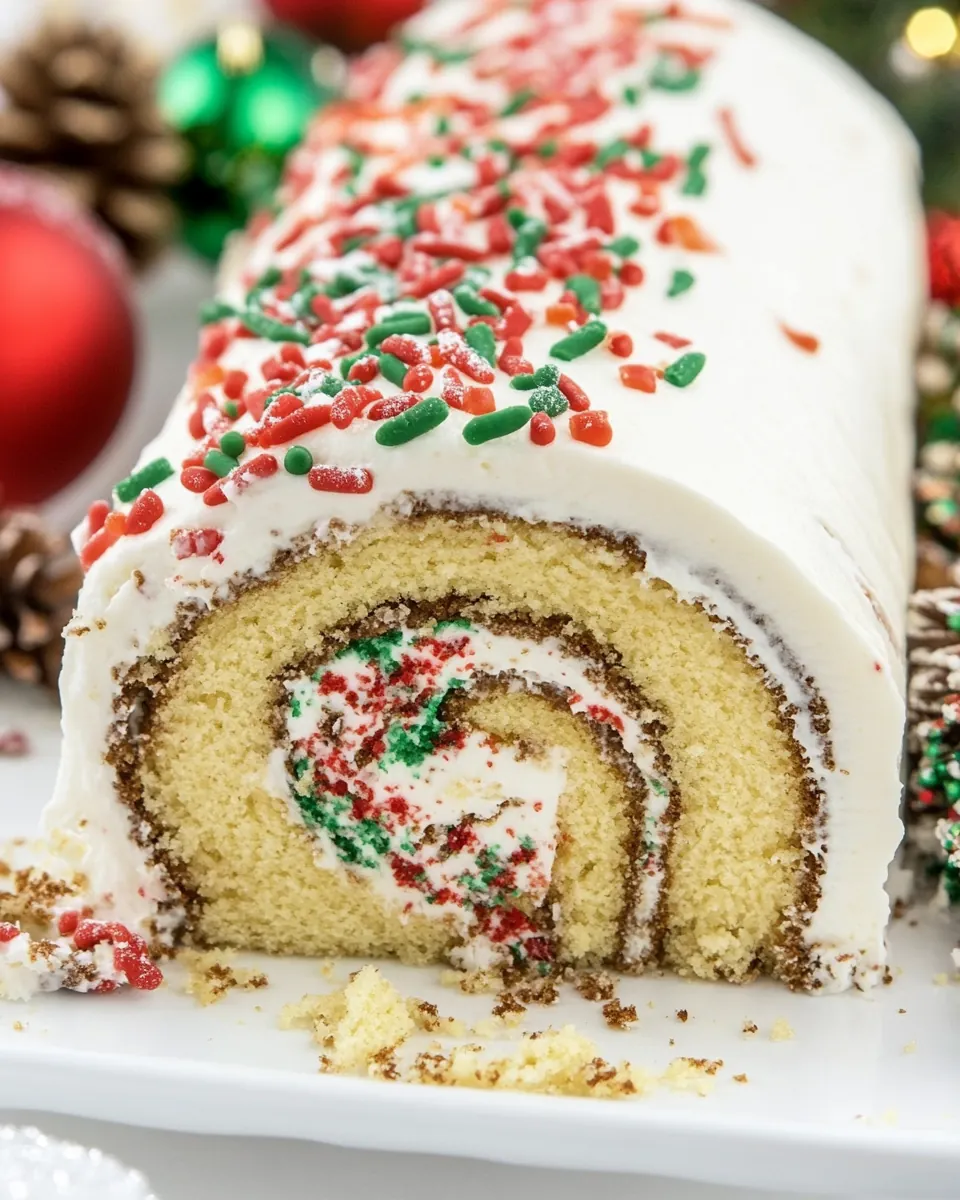
These ingredients work together to create a tender, flexible sponge that rolls easily, paired with a creamy, slightly tangy filling and a glossy chocolate topping. The key players are the eggs for structure and lift, the all-purpose flour for tender crumb, the cream cheese and heavy whipping cream for a luscious filling, and the chocolate chips for a finishing glaze that pulls everything together. Each item has a clear role, from texture to flavor to visual impact.
- 3 large eggs: Whisk vigorously to incorporate air and provide structure and lift to the cake roll; eggs also help emulsify the batter for a smooth texture. Separate handling of whites and yolks can be used to maximize volume and tender crumb.
- 3/4 cup (150 g) granulated sugar: Dissolve into the beaten eggs to sweeten and stabilize the foam, contributing to browning and moisture retention in the sponge. Measure precisely for proper texture balance and even rise.
- 1 tablespoon vegetable oil: Add sparingly to tenderize the crumb and contribute a light richness without weighing down the sponge; vegetable oil helps keep the cake moist after baking. Opt for a neutral-flavored oil to avoid altering the intended flavor profile.
- 1 teaspoon baking powder: Combine with the flour to produce gentle leavening and a finer crumb, helping the sponge rise slightly and maintain a soft texture. Sift or whisk with dry ingredients to ensure even distribution and avoid pockets of leavening.
- 1/4 teaspoon salt: Enhance overall flavor by balancing sweetness and boosting gluten development control; salt also strengthens taste perception in the finished roll. Use the specified small amount to prevent any salty aftertaste.
- 1 teaspoon vanilla extract: Flavor the batter subtly and complement the cake’s sweetness while adding aromatic depth; vanilla helps round out other flavors without overpowering them. Add with the wet ingredients for even flavor dispersion.
- 3/4 cup (93 g) all-purpose flour: Provide the primary structure and body for the sponge, contributing gluten for elasticity while keeping the roll tender when measured accurately. Sift or gently fold to avoid overmixing, which can lead to toughness.
- Powdered sugar to aid in rolling: Dust liberally over the cooled sponge before rolling to prevent sticking and to create a light coating that aids in forming a neat roll. Use a fine dusting so it doesn’t add noticeable sweetness or texture to the cake.
- 4 ounces cream cheese softened: Soften until creamy to create a smooth, tangy filling that contrasts the sweet sponge; cream cheese adds richness and stability to the frosting. Beat well to remove lumps for a uniform filling consistency.
- 1/2 cup (100 g) granulated sugar: Sweeten the cream cheese filling to balance tanginess and achieve the desired spreadable consistency; sugar also helps stabilize whipped fillings. Adjust level slightly if using very sweet toppings or mix-ins.
- 1/2 teaspoon vanilla: Enhance the creamy filling with aromatic vanilla for rounded flavor and to complement the cake and sprinkles; vanilla deepens sweetness without adding sugar. Use pure vanilla extract for best flavor clarity.
- 1 cup cold heavy whipping cream: Whip cold cream to stiff peaks to create a light, airy filling component that adds volume and a silky mouthfeel. Keep cream cold until whipping to ensure stable peaks and good structure in the filling.
- 1/2 cup Christmas colored sprinkles plus more for topping: Provide festive color and a crunchy contrast when folded into or sprinkled onto the filling, adding visual appeal for a Christmas-themed roll. Measure as directed to keep texture balanced and avoid overwhelming the cream.
- 1/2 cup heavy whipping cream: Whip to soft or medium peaks as needed for a glaze or additional topping; heavy cream adds richness and shine when poured or folded. Chill before whipping to achieve stable volume and smooth texture.
- 1 cup (170 g) chocolate chips: Melt or chop to create a glossy drizzle, ganache, or chocolatey element that complements the cream filling and enhances flavor depth. Temper gently while heating to avoid seizing and preserve a smooth finish.
How to Assemble Christmas Cake Roll
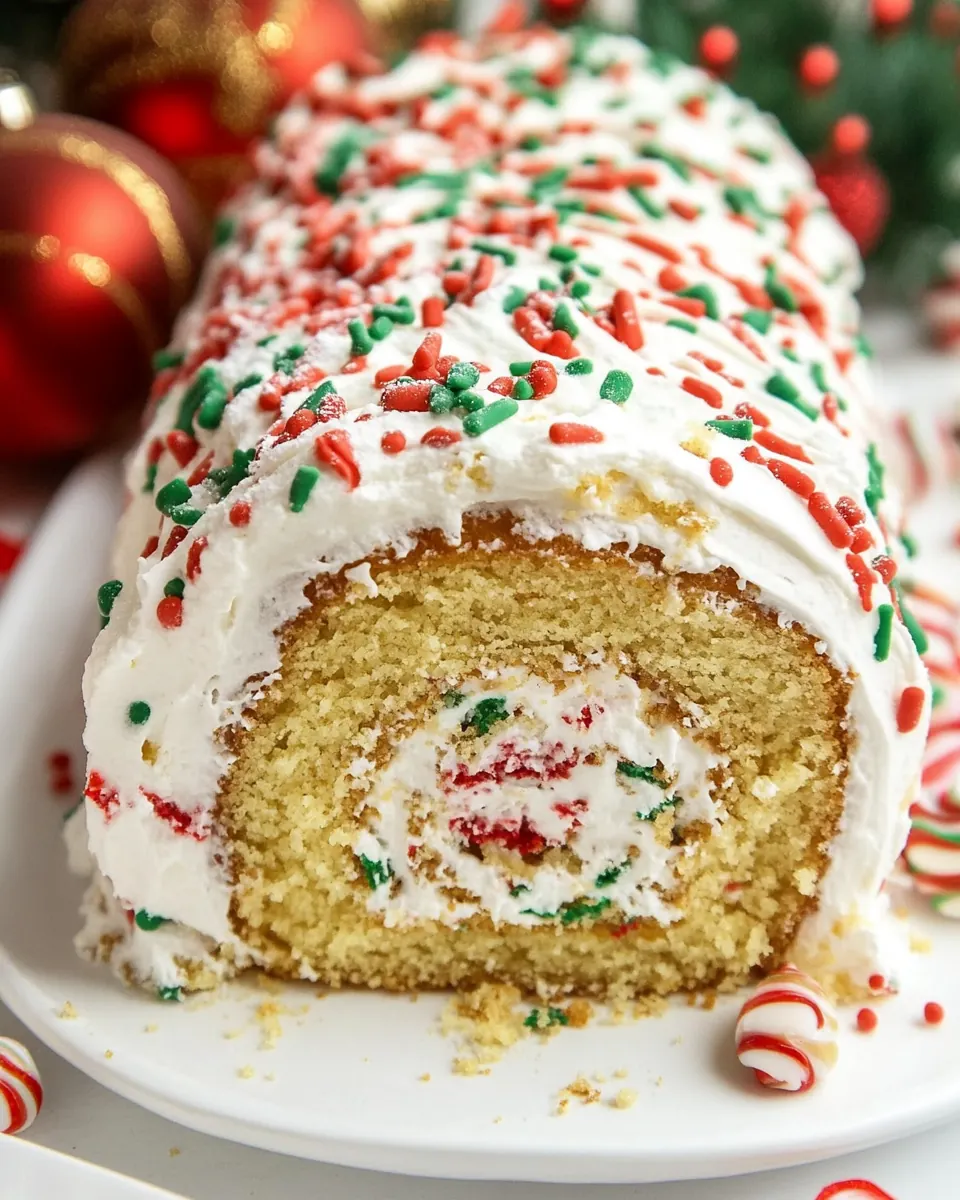
I like to approach assembly as a calm, steady process rather than a race. With mise en place and some confidence, each step flows into the next. You ll rely on sensory cues more than a timer once you get the hang of it, and I ll point out what to look for so you know you re on track.
- Preheat oven to 350°F. Line a 10×15” or 10.5×15” cake/jelly roll pan with foil and spray with floured nonstick cooking spray.: You should smell the faint warmth of the oven as it comes up to 350°F , and the pan s foil will glint under the kitchen light when ready. Preparing the pan carefully ensures the thin sponge bakes evenly and releases cleanly later on. A common issue is uneven lining, which creates air pockets under the batter and leads to uneven baking; press the foil snugly into corners and coat the foil lightly with the floured spray so the cake won t stick. If your oven has hot spots, rotate the pan halfway through the bake to get an even surface color, avoiding overbrowned edges.
- Place eggs in a large bowl or the bowl of an electric mixer. Beat at medium speed with mixer for 5 minutes until foamy and yellow. Add sugar and mix for 2 more minutes, until the mixture is thickened slightly. Mix in oil, baking powder, salt, and vanilla, then add flour and mix slowly until just combined. Pour into prepared pan, spreading as needed with a spatula. Bake for 10-15 minutes, or until the top is browned and the cake springs back when touched lightly. (Mine took 12 minutes, but all ovens differ.): As you beat the eggs , you ll notice their texture shifting from watery to voluminous and pale, with ribbons forming when the whisk lifts, which indicates the right aeration. That airy sponge is what prevents cracking when rolling, so resist the urge to cut the beating time short. A frequent mistake is underbeating which yields a dense batter that tears; if your mixture still looks glossy and not ribbonlike, keep beating in short increments to reach the frothy, pale stage.
- While the cake is baking, lay out a clean kitchen towel onto the counter. Spread with about 1/4 cup powdered sugar.: After adding the granulated sugar , the mixture becomes smoother and slightly thicker, and you should be able to see air pockets suspended in the batter. When you fold in the all-purpose flour gently, avoid overmixing to preserve those bubbles. The batter should spread easily across the pan with a spatula, forming a glossy, even layer. Overworking the batter knocks out air and makes the cake heavy, which is the main reason rolls crack during shaping.
- Remove the hot cake from the oven and carefully, using oven mitts so you don’t burn yourself, flip the cake onto the towel. This might make a mess, but that’s okay. Carefully remove the pan and foil (they’re hot!) and then, using the towel, roll up the cake from the short side. The towel will be rolled into the cake. Let this cool completely before continuing.: Watch the surface transform from pale to a light golden hue, and lightly tap the center; it should spring back, not stay indented. My oven takes about 12 minutes , but models vary, so use the springback test rather than the clock alone. Undercooking leaves a gummy cake that s hard to roll, while overcooking yields a dry, brittle sponge that cracks, so remove when the springback is just right.
- Note: you can wrap the cooled cake in plastic wrap and let it sit overnight before finishing.: Feel the towel s texture and dust it evenly with powdered sugar to create a nonstick layer that helps the cake roll without tearing. This little tactile preparation prevents sticking and adds a hint of sweetness at the seam. A common oversight is uneven sugar coverage, which causes parts of the cake to stick to the towel when flipping; be generous and consistent with the dusting.
- Make the filling: place cream cheese and sugar in a large bowl or the bowl of an electric mixer. Use mixer to beat the cream cheese and sugar until it’s smooth and fluffy, then beat in vanilla. Slowly add the heavy whipping cream, then turn the mixer up to high and beat until stiff peaks form. Halfway through mixing, stop the mixer and scrape down the sides and bottom of the bowl. Stir sprinkles into the whipped cream.: When you flip the pan, the cake should come away easily if the foil and spray were done right; you ll hear a soft slide and see the cake s underside exposed. Rolling it while hot traps steam and sets the sponge in a rolled shape as it cools, preventing cracking later. Don t rush unrolling it while hot for filling, or you risk tearing; let it cool fully in the towel so the spiral holds and the filling won t melt on contact.
- To fill cake: Carefully unroll the cake. Spread with the whipped cream mixture. Carefully roll the cake back up as tight as possible, unsticking it from the towel as you go. Wrap the cake roll in plastic wrap and chill until ready to top and serve.: you can wrap the cooled cake in plastic wrap and let it sit overnight before finishing. : Resting overnight allows the crumb to relax and the moisture to distribute evenly, which can make slicing cleaner the next day. I sometimes do this when I m prepping for a party, as it actually improves stability, and the cake is easier to handle when slightly firm. The pitfall is overwrapping too tightly with no airflow at all; a light seal is fine to prevent drying without making the texture gummy.
- To top: place chocolate chips and heavy whipping cream in a microwave safe measuring cup or bowl. Heat on high power for 60-90 seconds or until the cream is hot, then whisk until smooth. Let cool for 10 minutes. Place cake roll on a wire rack set over a cookie sheet. Pour the ganache over the cake evenly. Top with more sprinkles. Chill until set.: place cream cheese and sugar in a large bowl or the bowl of an electric mixer. Use mixer to beat the cream cheese and sugar until it’s smooth and fluffy, then beat in vanilla. Slowly add the heavy whipping cream, then turn the mixer up to high and beat until stiff peaks form. Halfway through mixing, stop the mixer and scrape down the sides and bottom of the bowl. Stir sprinkles into the whipped cream. : The cream cheese should become silky and without lumps, and when you gradually add cold heavy whipping cream , the mixture transforms into billowy peaks that hold shape. The aroma will be tangy and sweet, and folding in the Christmas colored sprinkles adds visual cheer. A common error is adding the cream too quickly or starting at high speed, which can lead to splattering or uneven whipping; add slowly and increase speed as the mixture thickens.
- To fill cake: Carefully unroll the cake. Spread with the whipped cream mixture. Carefully roll the cake back up as tight as possible, unsticking it from the towel as you go. Wrap the cake roll in plastic wrap and chill until ready to top and serve. : The unrolled sponge should feel supple and lightly dusted with powdered sugar , and spreading the filling evenly ensures each bite has balance. Rolling tightly without squeezing out the filling creates a neat spiral; the tactile feel of resistance tells you when it s snug. If the cake resists and feels stiff, chilling briefly makes it more manageable; forcing a too-stiff roll risks cracking, while a too-loose roll will unfurl.
- To top: place chocolate chips and heavy whipping cream in a microwave safe measuring cup or bowl. Heat on high power for 60-90 seconds or until the cream is hot, then whisk until smooth. Let cool for 10 minutes. Place cake roll on a wire rack set over a cookie sheet. Pour the ganache over the cake evenly. Top with more sprinkles. Chill until set. : When the chocolate chips melt into the warmed heavy whipping cream , the mixture becomes glossy and pours like silk; whisk until smooth and let it settle slightly so it s not piping hot when poured. The ganache s aroma is rich and chocolatey, and it should cascade over the roll in an even layer. Pouring too-hot ganache can melt the filling, so allow that brief cooling period to preserve texture. Once set in the fridge, the ganache offers a satisfying snap and sheen that finishes the dessert beautifully.
Expert Tips about Christmas Cake Roll
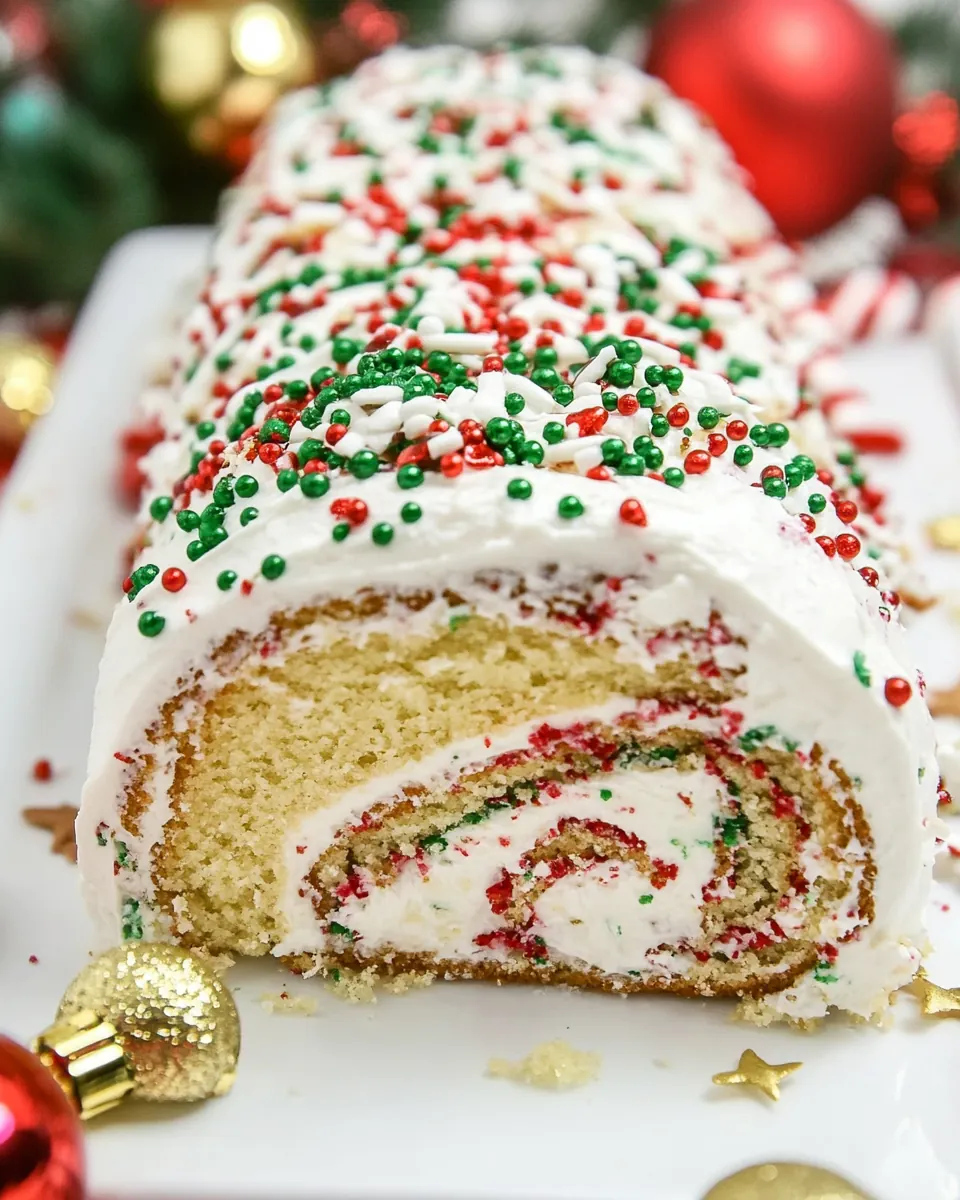
I like to share a few careful tricks that make the difference between a fragile roll and a confident, tidy dessert. These pointers focus on timing, texture, and assembly so you end up with a glossy, sliceable centerpiece.
- Room temperature eggs: Bringing eggs to room temperature helps them whip to greater volume, giving a lighter sponge that is less likely to crack when rolled.
- Gentle folding: When incorporating the all-purpose flour, use a folding motion to preserve air bubbles; overmixing deflates the batter and creates a dense cake.
- Timely bake check: Use the springback test for doneness rather than relying solely on the timer; the cake should spring back gently when touched.
- Roll while warm: Rolling the cake while hot on a sugared towel sets the shape and prevents cracking, a technique that reliably produces smooth spirals.
- Chill before ganache: Chill the filled roll until firm enough to handle, then pour slightly cooled ganache so it sets without bleeding into the filling.
- Stabilize the filling: Beat the heavy whipping cream to stiff peaks and fold into the cream cheese base for a filling that holds up well when sliced.
Serving Options for Christmas Cake Roll
This cake roll is versatile for many holiday scenarios, and how you serve it can elevate the experience. Here are practical, festive serving ideas and storage notes to help you plan.
- Party platter presentation: Slice into uniform 1 inch pieces and arrange on a long platter for easy passing at a holiday buffet.
- Dessert course at dinner: Serve single slices with a small dollop of chilled ganache or a few extra Christmas colored sprinkles as a plated dessert for dinner guests.
- Brunch addition: This roll makes a sweet note at a holiday brunch, paired with coffee or hot cocoa, and it s easy to slice ahead for guests.
- Make ahead storage: Wrap the cooled, filled roll in plastic wrap and chill up to 48 hours, or freeze for up to a month; thaw overnight in the fridge before serving.
- Occasion flexibility: Great for holiday gatherings like Christmas mornings, office parties, or neighborhood potlucks, because it travels well when chilled and wrapped.
- Seasonal pairings: Pair slices with spiced teas, coffee, or a citrus salad to cut through richness and brighten each bite during winter festivities.
FAQ
Conclusion
What makes this Christmas Cake Roll special is its bright, festive presentation combined with a tender, flexible sponge and a rich, whipped filling that slices cleanly. It s both playful and elegant, easy enough for a motivated home baker but impressive enough for holiday guests. I encourage you to try it when you re planning your next celebration; with the trick of rolling while warm and a glossy ganache finish, you ll end up with a dessert that looks like you spent hours, even if you kept things delightfully straightforward. Share it with friends or family, and savor those moments when a simple bake brings people together.
Christmas Cake Roll
Equipment
- Electric Mixer
- 10×15-inch Jelly Roll Pan
- Spatula
- Wire Rack
- Mixing Bowls
- Microwave-safe Bowl
Ingredients
- 3 large eggs Whisk vigorously to incorporate air and provide structure and lift to the cake roll; eggs also help emulsify the batter for a smooth texture. Separate handling of whites and yolks can be used to maximize volume and tender crumb.
- 3/4 cup (150 g) granulated sugar Dissolve into the beaten eggs to sweeten and stabilize the foam, contributing to browning and moisture retention in the sponge. Measure precisely for proper texture balance and even rise.
- 1 tablespoon vegetable oil Add sparingly to tenderize the crumb and contribute a light richness without weighing down the sponge; vegetable oil helps keep the cake moist after baking. Opt for a neutral-flavored oil to avoid altering the intended flavor profile.
- 1 teaspoon baking powder Combine with the flour to produce gentle leavening and a finer crumb, helping the sponge rise slightly and maintain a soft texture. Sift or whisk with dry ingredients to ensure even distribution and avoid pockets of leavening.
- 1/4 teaspoon salt Enhance overall flavor by balancing sweetness and boosting gluten development control; salt also strengthens taste perception in the finished roll. Use the specified small amount to prevent any salty aftertaste.
- 1 teaspoon vanilla extract Flavor the batter subtly and complement the cake’s sweetness while adding aromatic depth; vanilla helps round out other flavors without overpowering them. Add with the wet ingredients for even flavor dispersion.
- 3/4 cup (93 g) all-purpose flour Provide the primary structure and body for the sponge, contributing gluten for elasticity while keeping the roll tender when measured accurately. Sift or gently fold to avoid overmixing, which can lead to toughness.
- Powdered sugar to aid in rolling Dust liberally over the cooled sponge before rolling to prevent sticking and to create a light coating that aids in forming a neat roll. Use a fine dusting so it doesn’t add noticeable sweetness or texture to the cake.
- 4 ounces cream cheese softened Soften until creamy to create a smooth, tangy filling that contrasts the sweet sponge; cream cheese adds richness and stability to the frosting. Beat well to remove lumps for a uniform filling consistency.
- 1/2 cup (100 g) granulated sugar Sweeten the cream cheese filling to balance tanginess and achieve the desired spreadable consistency; sugar also helps stabilize whipped fillings. Adjust level slightly if using very sweet toppings or mix-ins.
- 1/2 teaspoon vanilla Enhance the creamy filling with aromatic vanilla for rounded flavor and to complement the cake and sprinkles; vanilla deepens sweetness without adding sugar. Use pure vanilla extract for best flavor clarity.
- 1 cup cold heavy whipping cream Whip cold cream to stiff peaks to create a light, airy filling component that adds volume and a silky mouthfeel. Keep cream cold until whipping to ensure stable peaks and good structure in the filling.
- 1/2 cup Christmas colored sprinkles plus more for topping Provide festive color and a crunchy contrast when folded into or sprinkled onto the filling, adding visual appeal for a Christmas-themed roll. Measure as directed to keep texture balanced and avoid overwhelming the cream.
- 1/2 cup heavy whipping cream Whip to soft or medium peaks as needed for a glaze or additional topping; heavy cream adds richness and shine when poured or folded. Chill before whipping to achieve stable volume and smooth texture.
- 1 cup (170 g) chocolate chips Melt or chop to create a glossy drizzle, ganache, or chocolatey element that complements the cream filling and enhances flavor depth. Temper gently while heating to avoid seizing and preserve a smooth finish.
Instructions
- Preheat oven to 350°F. Line a 10×15” or 10.5×15” cake/jelly roll pan with foil and spray with floured nonstick cooking spray.: You should smell the faint warmth of the oven as it comes up to 350°F , and the pan s foil will glint under the kitchen light when ready. Preparing the pan carefully ensures the thin sponge bakes evenly and releases cleanly later on. A common issue is uneven lining, which creates air pockets under the batter and leads to uneven baking; press the foil snugly into corners and coat the foil lightly with the floured spray so the cake won t stick. If your oven has hot spots, rotate the pan halfway through the bake to get an even surface color, avoiding overbrowned edges.
- Place eggs in a large bowl or the bowl of an electric mixer. Beat at medium speed with mixer for 5 minutes until foamy and yellow. Add sugar and mix for 2 more minutes, until the mixture is thickened slightly. Mix in oil, baking powder, salt, and vanilla, then add flour and mix slowly until just combined. Pour into prepared pan, spreading as needed with a spatula. Bake for 10-15 minutes, or until the top is browned and the cake springs back when touched lightly. (Mine took 12 minutes, but all ovens differ.): As you beat the eggs , you ll notice their texture shifting from watery to voluminous and pale, with ribbons forming when the whisk lifts, which indicates the right aeration. That airy sponge is what prevents cracking when rolling, so resist the urge to cut the beating time short. A frequent mistake is underbeating which yields a dense batter that tears; if your mixture still looks glossy and not ribbonlike, keep beating in short increments to reach the frothy, pale stage.
- While the cake is baking, lay out a clean kitchen towel onto the counter. Spread with about 1/4 cup powdered sugar.: After adding the granulated sugar , the mixture becomes smoother and slightly thicker, and you should be able to see air pockets suspended in the batter. When you fold in the all-purpose flour gently, avoid overmixing to preserve those bubbles. The batter should spread easily across the pan with a spatula, forming a glossy, even layer. Overworking the batter knocks out air and makes the cake heavy, which is the main reason rolls crack during shaping.
- Remove the hot cake from the oven and carefully, using oven mitts so you don’t burn yourself, flip the cake onto the towel. This might make a mess, but that’s okay. Carefully remove the pan and foil (they’re hot!) and then, using the towel, roll up the cake from the short side. The towel will be rolled into the cake. Let this cool completely before continuing.: Watch the surface transform from pale to a light golden hue, and lightly tap the center; it should spring back, not stay indented. My oven takes about 12 minutes , but models vary, so use the springback test rather than the clock alone. Undercooking leaves a gummy cake that s hard to roll, while overcooking yields a dry, brittle sponge that cracks, so remove when the springback is just right.
- Note: you can wrap the cooled cake in plastic wrap and let it sit overnight before finishing.: Feel the towel s texture and dust it evenly with powdered sugar to create a nonstick layer that helps the cake roll without tearing. This little tactile preparation prevents sticking and adds a hint of sweetness at the seam. A common oversight is uneven sugar coverage, which causes parts of the cake to stick to the towel when flipping; be generous and consistent with the dusting.
- Make the filling: place cream cheese and sugar in a large bowl or the bowl of an electric mixer. Use mixer to beat the cream cheese and sugar until it’s smooth and fluffy, then beat in vanilla. Slowly add the heavy whipping cream, then turn the mixer up to high and beat until stiff peaks form. Halfway through mixing, stop the mixer and scrape down the sides and bottom of the bowl. Stir sprinkles into the whipped cream.: When you flip the pan, the cake should come away easily if the foil and spray were done right; you ll hear a soft slide and see the cake s underside exposed. Rolling it while hot traps steam and sets the sponge in a rolled shape as it cools, preventing cracking later. Don t rush unrolling it while hot for filling, or you risk tearing; let it cool fully in the towel so the spiral holds and the filling won t melt on contact.
- To fill cake: Carefully unroll the cake. Spread with the whipped cream mixture. Carefully roll the cake back up as tight as possible, unsticking it from the towel as you go. Wrap the cake roll in plastic wrap and chill until ready to top and serve.: you can wrap the cooled cake in plastic wrap and let it sit overnight before finishing. : Resting overnight allows the crumb to relax and the moisture to distribute evenly, which can make slicing cleaner the next day. I sometimes do this when I m prepping for a party, as it actually improves stability, and the cake is easier to handle when slightly firm. The pitfall is overwrapping too tightly with no airflow at all; a light seal is fine to prevent drying without making the texture gummy.
- To top: place chocolate chips and heavy whipping cream in a microwave safe measuring cup or bowl. Heat on high power for 60-90 seconds or until the cream is hot, then whisk until smooth. Let cool for 10 minutes. Place cake roll on a wire rack set over a cookie sheet. Pour the ganache over the cake evenly. Top with more sprinkles. Chill until set.: place cream cheese and sugar in a large bowl or the bowl of an electric mixer. Use mixer to beat the cream cheese and sugar until it’s smooth and fluffy, then beat in vanilla. Slowly add the heavy whipping cream, then turn the mixer up to high and beat until stiff peaks form. Halfway through mixing, stop the mixer and scrape down the sides and bottom of the bowl. Stir sprinkles into the whipped cream. : The cream cheese should become silky and without lumps, and when you gradually add cold heavy whipping cream , the mixture transforms into billowy peaks that hold shape. The aroma will be tangy and sweet, and folding in the Christmas colored sprinkles adds visual cheer. A common error is adding the cream too quickly or starting at high speed, which can lead to splattering or uneven whipping; add slowly and increase speed as the mixture thickens.
- To fill cake: Carefully unroll the cake. Spread with the whipped cream mixture. Carefully roll the cake back up as tight as possible, unsticking it from the towel as you go. Wrap the cake roll in plastic wrap and chill until ready to top and serve. : The unrolled sponge should feel supple and lightly dusted with powdered sugar , and spreading the filling evenly ensures each bite has balance. Rolling tightly without squeezing out the filling creates a neat spiral; the tactile feel of resistance tells you when it s snug. If the cake resists and feels stiff, chilling briefly makes it more manageable; forcing a too-stiff roll risks cracking, while a too-loose roll will unfurl.
- To top: place chocolate chips and heavy whipping cream in a microwave safe measuring cup or bowl. Heat on high power for 60-90 seconds or until the cream is hot, then whisk until smooth. Let cool for 10 minutes. Place cake roll on a wire rack set over a cookie sheet. Pour the ganache over the cake evenly. Top with more sprinkles. Chill until set. : When the chocolate chips melt into the warmed heavy whipping cream , the mixture becomes glossy and pours like silk; whisk until smooth and let it settle slightly so it s not piping hot when poured. The ganache s aroma is rich and chocolatey, and it should cascade over the roll in an even layer. Pouring too-hot ganache can melt the filling, so allow that brief cooling period to preserve texture. Once set in the fridge, the ganache offers a satisfying snap and sheen that finishes the dessert beautifully.
Notes
- Room temperature eggs: Bringing eggs to room temperature helps them whip to greater volume, giving a lighter sponge that is less likely to crack when rolled.
- Gentle folding: When incorporating the all-purpose flour, use a folding motion to preserve air bubbles; overmixing deflates the batter and creates a dense cake.
- Timely bake check: Use the springback test for doneness rather than relying solely on the timer; the cake should spring back gently when touched.
- Roll while warm: Rolling the cake while hot on a sugared towel sets the shape and prevents cracking, a technique that reliably produces smooth spirals.
- Chill before ganache: Chill the filled roll until firm enough to handle, then pour slightly cooled ganache so it sets without bleeding into the filling.
- Stabilize the filling: Beat the heavy whipping cream to stiff peaks and fold into the cream cheese base for a filling that holds up well when sliced.