Creamy Cucumber Salad
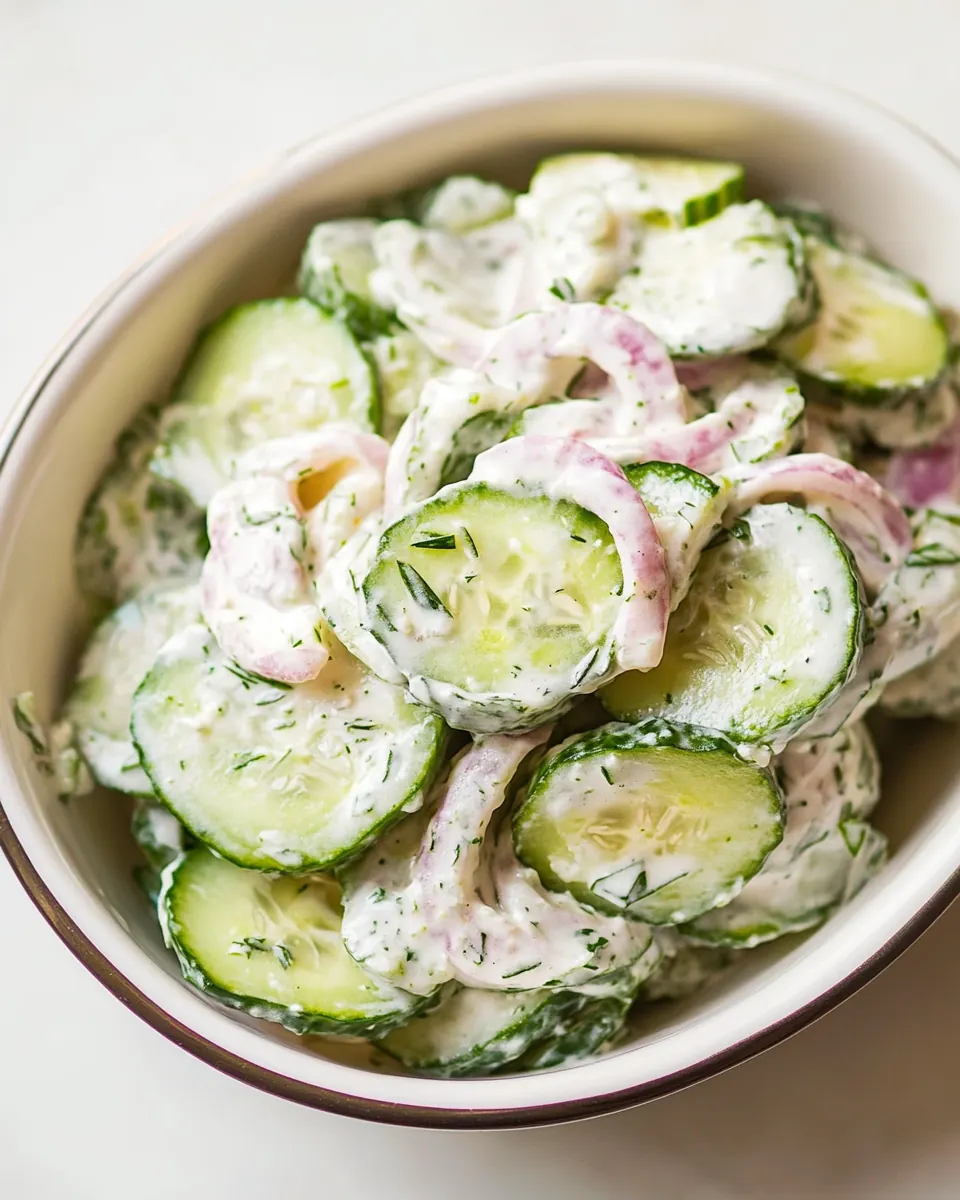
Creamy Cucumber Salad is one of those simple recipes I turn to when summer weather nudges me toward cool, fresh food. The first time I made this salad I had just picked two fat English cucumbers from a neighbor’s garden, and I wanted something that would honor their delicate crunch without hiding their flavor. I mixed a quick, tangy dressing and remember how the light scent of dill folded into the sour cream, making the whole kitchen smell like a tiny roadside market. That moment stuck with me, and this salad became my go to when I want something unfussy but thoughtfully balanced.
I love serving Creamy Cucumber Salad when friends drop by unexpectedly, because it comes together fast and looks like you spent more time on it than you did. I usually slice the cucumbers thinly and let them sit salted for a little while, which softens them just enough and draws out excess water. The contrast between the cool, crisp cucumber and the lush, creamy dressing is a small but satisfying pleasure. Over the years I have tweaked the sugar and vinegar balance to suit my palate, and it’s become a reliable side for grilled mains or a light lunch on its own.
Sometimes I swap the onion amount depending on who I am cooking for, because some people prefer a whisper of sharpness while others like a fuller, more pronounced bite. I keep the technique simple, so the ingredients do the talking: a little salt to coax out moisture, a splash of vinegar for brightness, and chopped dill to lift the profile. When you toss the chilled cucumber and dressing together just before serving, the textures still sing, and the flavors sit in a lovely, restrained harmony. That balance is what makes me return to Creamy Cucumber Salad season after season.
Recipe Snapshot
10 mins
10 mins
Easy
180 kcal
American
Gluten-Free, Low FODMAP
Side Dishes
Colander, Mandoline or sharp knife, Mixing bowl, Paper towel
The Beauty of This Creamy Cucumber Salad
Bright and Refreshing
I love how Creamy Cucumber Salad captures the clean, watery notes of cucumber while the dressing adds a creamy counterpoint. This contrast makes every bite feel lively, especially on a hot day when heavier dishes feel oppressive.
Fast and Forgiving
One of the reasons I keep this recipe in my weeknight rotation is its forgiving nature. You can salt the cucumber longer or shorter and still end up with a pleasant texture. If the dressing needs a little tweak, a pinch more sugar or a splash more white vinegar will quickly balance it.
Minimal Ingredients, Maximum Flavor
I appreciate that the recipe relies on a handful of pantry staples that come together to create a dish that tastes composed and intentional. The interplay of sour cream, chopped dill, and a touch of white sugar highlights the cucumber without overwhelming it.
Versatile Serving Options
This salad works well as a side for grilled meals, a light lunch, or an appetizer at a summer gathering. I like that it pairs with many cuisines without stealing the show. It also comes together quickly, which makes it ideal when my schedule is tight but I still want something homemade.
Simple Technique, Reliable Results
The method of salting and resting the cucumber to draw out water is a small step that yields consistent results. I find this technique elevates the texture and keeps the dressing from becoming watery, which is a common pitfall with chilled vegetable salads.
Everything You Need for Creamy Cucumber Salad
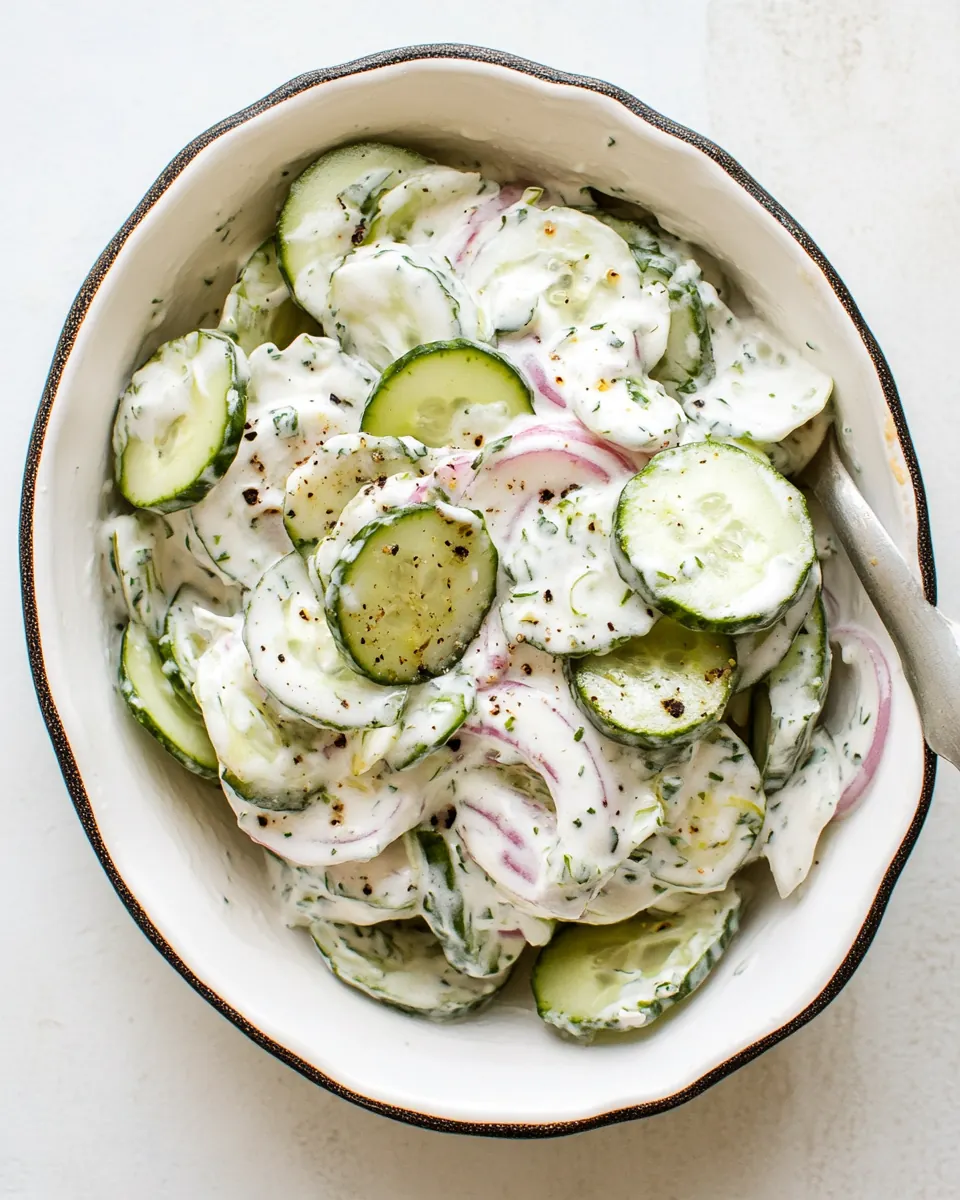
For this salad I aim for harmony between cooling and creamy elements. The ingredients list is short and purposeful, each component bringing a role to play. The cucumber supplies crispness and freshness, the sour cream brings body and silk, and the dill offers an herbaceous lift that ties the whole bowl together. Together, they create a balanced, approachable salad that is more than the sum of its parts.
- 1 English cucumber: Provide crisp texture and mild flavor while releasing moisture when thinly sliced; helps form the salad base and balances creaminess. Peel or leave skin on depending on preference, and slice thinly to maximize surface area for dressing absorption.
- 1 teaspoons salt: Enhance overall seasoning and draw out excess moisture from the cucumber when sprinkled; helps to season evenly throughout the salad. Use measured amount to avoid over-salting and adjust to taste after combining ingredients.
- 1/2 cups sour cream: Contribute rich, tangy creaminess that binds other components and smooths the salad’s texture. Use well-chilled sour cream for best mouthfeel and whisk briefly to ensure a lump-free dressing consistency.
- 1 teaspoon white vinegar: Introduce bright acidity to cut through richness and brighten flavors; helps balance the sour cream and cucumber. Add gradually and taste as you go to achieve the desired level of tang without overpowering other elements.
- 1 teaspoon white sugar see note: Provide a touch of sweetness to round tart and acidic notes; helps create a more balanced, nuanced flavor profile. Dissolve into the dressing for even distribution and adjust quantity to personal preference as noted.
- 1 tablespoon chopped fresh dill: Introduce a fresh, aromatic herbaceous note that complements cucumber and dairy, enhancing overall flavor complexity. Chop finely and stir into the dressing to distribute fragrance and small bursts of dill throughout the salad.
- Pepper to taste: Add a final layer of seasoning and mild heat variability to taste, enhancing complexity without altering texture. Grind fresh over the salad just before serving to preserve aroma and control intensity.
- 3 4 tablespoons finely chopped red onion: Offer sharp, pungent flavor and slight crunch to contrast creamy elements and add savory depth. Finely chop to spread flavor evenly and adjust quantity within the listed range based on preference for onion presence.
Step by Step Instructions for Creamy Cucumber Salad
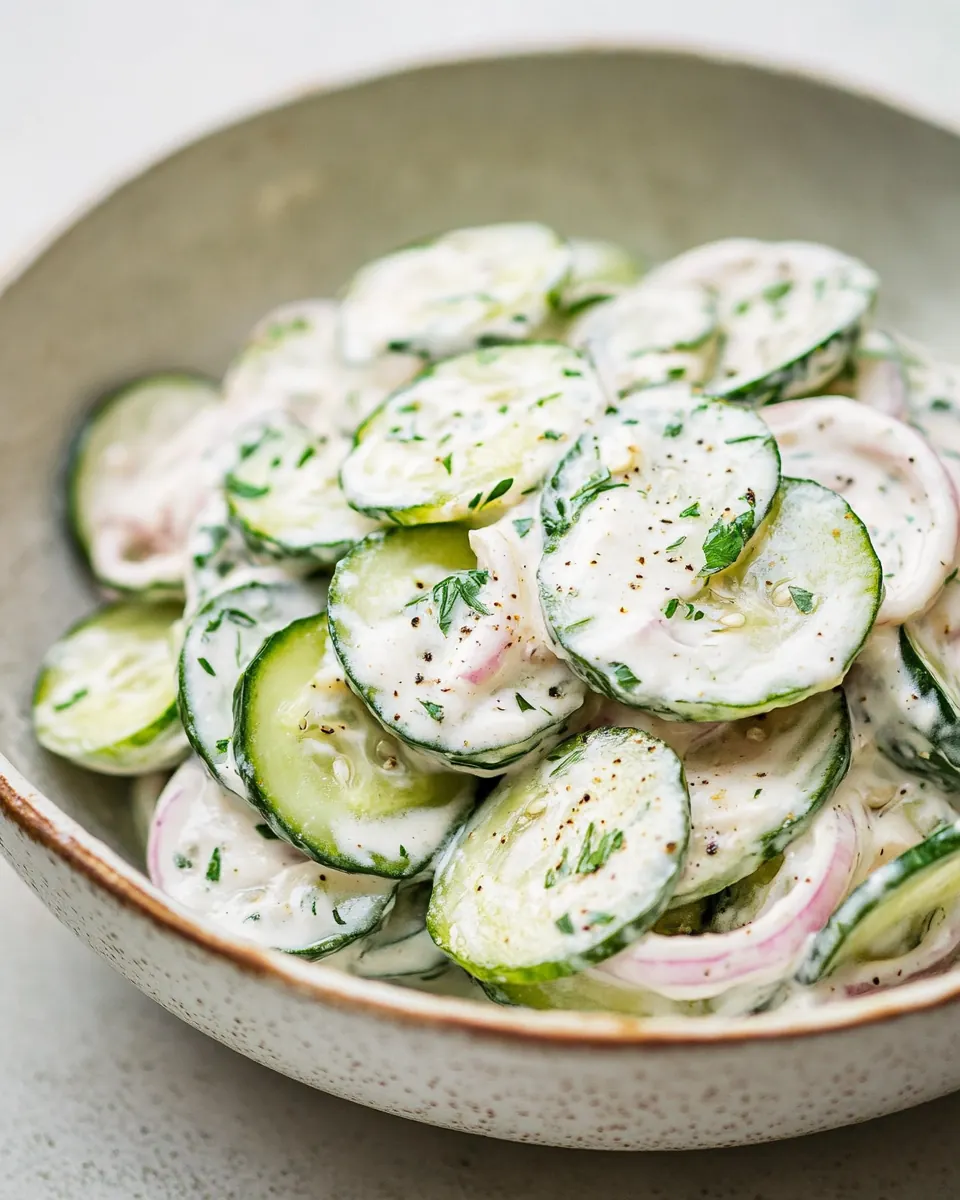
I like to keep the instruction flow calm and conversational so you can follow along easily. These steps are written to help you sense when the salad is on track, and to troubleshoot common issues at each stage. Read through once, then cook with confidence.
- Slice the cucumber thin. I do this quickly using my mandoline (I cut it into 2 mm slices). Add the cucumber slices to a colander. Sprinkle them with the salt and toss with your hands to evenly distribute it. Place the colander in the sink or on a plate to catch the water that will be released. Let it sit for about 30 minutes.: The thin slicing produces a delicate, almost ribbon like texture that lets the dressing cling to each piece and keeps the salad light; expect a soft rustling sound as you glide the cucumber across your slicer. If you are using a mandoline, aim for roughly 2 mm thickness for the ideal balance of crunch and tenderness. Why this matters, the thin slices absorb just enough dressing to be flavorful without becoming mushy. Sensory cue, the slices should look translucent around the edges and feel cool and crisp. Troubleshooting tip, avoid pushing too hard on the mandoline which risks uneven slices or injury, and never skip the guard.
- Meanwhile, make the dressing by adding the sour cream, vinegar, sugar, dill, and pepper to a medium bowl and stirring together until smooth. Taste & adjust if required. Refrigerate the dressing until needed.: Placing the slices into a colander lets liquid drain away, keeping the final salad from getting watery; you will notice droplets collecting and this is a good sign. The sound of liquid clinging to the bowl is subtle, and visually you will see the slices stacked but still airy. Why this matters, letting excess water escape prevents the dressing from becoming diluted and preserves texture. Troubleshooting tip, do not crowd the colander too tightly, which can trap moisture between layers and slow drainage.
- Chop the onion and add it to a salad bowl.: Salt draws moisture and begins to season the cucumber ; tossing by hand ensures the salt contacts every slice and you can feel the change in texture. Expect the cucumber to begin sweating and releasing liquid fairly quickly, and the smell will sharpen slightly as the salt pulls out flavor. Why this matters, even distribution prevents pockets of over salted cucumber and speeds up the moisture release. Troubleshooting tip, use your fingertips to toss gently rather than massaging vigorously, which can break the slices.
- Once the cucumber is ready, give it a quick rinse in cold water and then thoroughly dry it using paper towel. Add it to the salad bowl, pour the dressing over, and toss. It should still be salty enough, but if not, add more salt prior to serving. I recommend eating this salad within a short time of making it because it does go more watery the longer you leave it, but you can chill it for 15 minutes or so prior to serving if you wish.: Catching the released liquid keeps your workspace tidy and lets you monitor how much water has been drawn out; you may see a shallow pool forming beneath the colander. This visual cue indicates the salting step is working. Why this matters, controlling the released liquid helps you decide how long to let the cucumbers rest so they do not become limp. Troubleshooting tip, if you leave it on a flat surface without a catch plate, the liquid can make a mess and the cucumber may reabsorb it.
- Let it sit for about 30 minutes: During this rest the cucumber will shed moisture and concentrate its flavor, becoming more tender yet still pleasantly crisp; you will notice the slices become slightly limp and glossy. This waiting period is worth it because it reduces the chance of a watery dressing later on. Sensory cue, the cucumbers will feel floppier but not mushy, and you will see more pooled liquid below. Troubleshooting tip, avoid skipping this rest time or the dressing will dilute and the salad will feel watery.
- Meanwhile, make the dressing by adding the sour cream, vinegar, sugar, dill, and pepper to a medium bowl and stirring together until smooth: As you whisk the ingredients the dressing will thicken and the aroma of dill will become more pronounced, mingling with the tang of white vinegar and the richness of sour cream . The texture should be glossy and cling when you lift the spoon. Why this matters, creating a smooth dressing ensures even coating and balanced flavor in each bite. Troubleshooting tip, if the dressing seems too thick for your taste, add a teaspoon of cold water at a time to reach the desired consistency, but do so sparingly.
- Taste & adjust if required: Tasting the dressing lets you refine the acidity sweet balance; you may find a little more white sugar softens the edge, or a touch more white vinegar brightens it. The interplay of flavors should feel balanced on your palate, with no single component dominating. Why this matters, adjusting now prevents the need for major corrections after mixing. Troubleshooting tip, add small amounts at a time, because it is easier to increase than to subtract.
- Refrigerate the dressing until needed: Chilling helps the flavors meld and the dressing to thicken slightly, creating a silkier mouthfeel when combined with the salad; you will notice the aroma settles and the texture firms. Why this matters, a rested dressing integrates better with the cucumber . Troubleshooting tip, do not over chill to the point the dressing becomes stiff, let it sit briefly at room temperature if needed to loosen.
- Chop the onion and add it to a salad bowl: Finely chopped red onion brings crunch and a bright, savory edge; chopping uniformly ensures each forkful has a consistent bite. The smell can be sharp right after chopping but will mellow once combined with the dressing. Why this matters, even pieces prevent overpowering onion pockets. Troubleshooting tip, if the onion is too assertive, soak the chopped pieces in cold water for a few minutes and then drain to soften the intensity.
- Once the cucumber is ready, give it a quick rinse in cold water and then thoroughly dry it using paper towel: Rinsing removes most of the surface salt and the cold water firms the slices, while drying keeps the dressing from being diluted; you will feel the slices regain a crisp snap as you pat them dry. Why this matters, removing excess salt ensures the salad is seasoned rather than salty, and drying preserves texture. Troubleshooting tip, be thorough with drying because leftover moisture will thin the dressing and make the salad watery.
- Add it to the salad bowl, pour the dressing over, and toss: When you combine the chilled cucumber with the dressing, you should hear a gentle slosh and see the dressing cling and coat each slice, giving a glossy finish. Tossing just before serving ensures the salad remains lively and not soggy. Why this matters, immediate tossing keeps the textures distinct and the flavors fresh. Troubleshooting tip, avoid tossing too far in advance because the salad will release water and become more watery over time.
- Add more salt prior to serving if needed: After a final taste, a tiny sprinkle of salt can sharpen the flavors, but do this cautiously since most salt was used earlier; the right amount will make the salad pop. Why this matters, small adjustments at the end refine the balance. Troubleshooting tip, add salt gradually and taste between additions to prevent over seasoning.
Substitutions and Tips
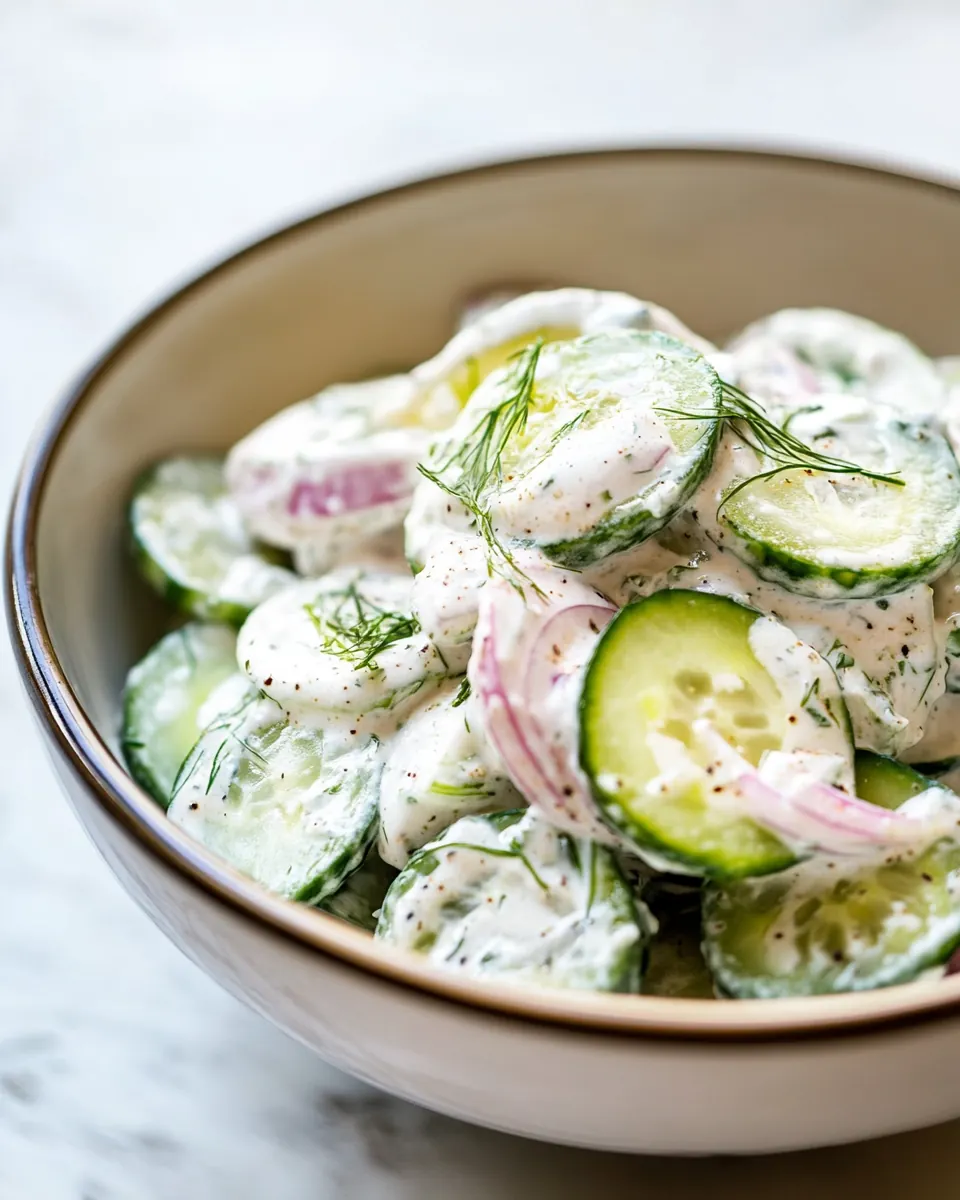
This short intro gives you a roadmap for small substitutions and serving hacks that keep the salad true to its spirit. Below are practical tips expanded into list items so you can scan quickly and pick what works for your pantry or guests.
- Reduce sugar If you prefer less sweetness, start with half the suggested white sugar and add more only if you need it after tasting the dressing; this keeps the dressing bright without leaning too sweet.
- Milder onion If you want a gentler onion presence, soak the chopped red onion in cold water for five to ten minutes, drain well, and then add it to the salad; this mellows the bite while preserving texture.
- Adjust vinegar If the dressing feels too tart, balance it with a little more sour cream or a touch of white sugar, adding small amounts until the acidity softens to your liking.
- Chill briefly If you prefer the salad cool, refrigerate for about fifteen minutes after assembling, but do not leave it too long or it will become watery as the cucumber continues to release liquid.
- Fresh herbs If you do not have dill, you can omit it and the salad will still be pleasant, but I recommend using fresh herbs whenever possible because they add brightness and aroma.
- Double the recipe This salad scales well, so double the ingredients when serving a crowd; keep the dressing and cucumbers separate until just before serving to avoid excess moisture.
Perfect Matches for Creamy Cucumber Salad
This salad pairs easily with a range of mains and occasions, from casual lunches to festive gatherings. Below I outline serving ideas, storage notes, and seasonal pairings that help you plan a complete meal around the salad.
- Light summer lunch Serve the salad with slices of toasted bread and a simple bean spread for an easy, refreshing midday meal.
- Barbecue side The cool, creamy profile complements grilled vegetables or a main that would benefit from a crisp, fresh counterpoint; bring the salad to a backyard cookout for a welcome contrast.
- Appetizer platter Include the salad on a mezze style board alongside olives, flatbreads, and roasted vegetables for a casual starter that feels composed.
- Occasions This recipe works well for summer gatherings, potlucks, or anytime you want a seasonally appropriate side; it is particularly suitable for warm weather events where chilled dishes are appreciated.
- Storage tips Keep the dressing separate from the cucumber if you need to store it overnight, and combine shortly before serving; stored together, the salad will become watery within a few hours.
- Seasonal pairings In summer, pair with ripe tomatoes and fresh herbs; in late season, serve with simple pan seared mains to let the salad provide a cooling balance.
FAQ
Conclusion
What makes this recipe special is its elegant simplicity, where a handful of fresh ingredients combine into a lively, cooling salad. It is a reliable, quick dish that highlights the natural crispness of the English cucumber while the creamy dressing and fresh dill add savory balance. Give it a try the next time you want a no fuss side that feels thoughtfully composed. I promise it will become a frequent request at your table, especially during warm weather meals.

Creamy Cucumber Salad
Equipment
- Colander
- Mandoline or sharp knife
- Mixing Bowl
- Paper towel
Ingredients
- 1 English cucumber Provide crisp texture and mild flavor while releasing moisture when thinly sliced; helps form the salad base and balances creaminess. Peel or leave skin on depending on preference, and slice thinly to maximize surface area for dressing absorption.
- 1 teaspoons salt Enhance overall seasoning and draw out excess moisture from the cucumber when sprinkled; helps to season evenly throughout the salad. Use measured amount to avoid over-salting and adjust to taste after combining ingredients.
- 1/2 cups sour cream Contribute rich, tangy creaminess that binds other components and smooths the salad’s texture. Use well-chilled sour cream for best mouthfeel and whisk briefly to ensure a lump-free dressing consistency.
- 1 teaspoon white vinegar Introduce bright acidity to cut through richness and brighten flavors; helps balance the sour cream and cucumber. Add gradually and taste as you go to achieve the desired level of tang without overpowering other elements.
- 1 teaspoon white sugar see note Provide a touch of sweetness to round tart and acidic notes; helps create a more balanced, nuanced flavor profile. Dissolve into the dressing for even distribution and adjust quantity to personal preference as noted.
- 1 tablespoon chopped fresh dill Introduce a fresh, aromatic herbaceous note that complements cucumber and dairy, enhancing overall flavor complexity. Chop finely and stir into the dressing to distribute fragrance and small bursts of dill throughout the salad.
- Pepper to taste Add a final layer of seasoning and mild heat variability to taste, enhancing complexity without altering texture. Grind fresh over the salad just before serving to preserve aroma and control intensity.
- 3 -4 tablespoons finely chopped red onion Offer sharp, pungent flavor and slight crunch to contrast creamy elements and add savory depth. Finely chop to spread flavor evenly and adjust quantity within the listed range based on preference for onion presence.
Instructions
- Slice the cucumber thin. I do this quickly using my mandoline (I cut it into 2 mm slices). Add the cucumber slices to a colander. Sprinkle them with the salt and toss with your hands to evenly distribute it. Place the colander in the sink or on a plate to catch the water that will be released. Let it sit for about 30 minutes.: The thin slicing produces a delicate, almost ribbon like texture that lets the dressing cling to each piece and keeps the salad light; expect a soft rustling sound as you glide the cucumber across your slicer. If you are using a mandoline, aim for roughly 2 mm thickness for the ideal balance of crunch and tenderness. Why this matters, the thin slices absorb just enough dressing to be flavorful without becoming mushy. Sensory cue, the slices should look translucent around the edges and feel cool and crisp. Troubleshooting tip, avoid pushing too hard on the mandoline which risks uneven slices or injury, and never skip the guard.
- Meanwhile, make the dressing by adding the sour cream, vinegar, sugar, dill, and pepper to a medium bowl and stirring together until smooth. Taste & adjust if required. Refrigerate the dressing until needed.: Placing the slices into a colander lets liquid drain away, keeping the final salad from getting watery; you will notice droplets collecting and this is a good sign. The sound of liquid clinging to the bowl is subtle, and visually you will see the slices stacked but still airy. Why this matters, letting excess water escape prevents the dressing from becoming diluted and preserves texture. Troubleshooting tip, do not crowd the colander too tightly, which can trap moisture between layers and slow drainage.
- Chop the onion and add it to a salad bowl.: Salt draws moisture and begins to season the cucumber ; tossing by hand ensures the salt contacts every slice and you can feel the change in texture. Expect the cucumber to begin sweating and releasing liquid fairly quickly, and the smell will sharpen slightly as the salt pulls out flavor. Why this matters, even distribution prevents pockets of over salted cucumber and speeds up the moisture release. Troubleshooting tip, use your fingertips to toss gently rather than massaging vigorously, which can break the slices.
- Once the cucumber is ready, give it a quick rinse in cold water and then thoroughly dry it using paper towel. Add it to the salad bowl, pour the dressing over, and toss. It should still be salty enough, but if not, add more salt prior to serving. I recommend eating this salad within a short time of making it because it does go more watery the longer you leave it, but you can chill it for 15 minutes or so prior to serving if you wish.: Catching the released liquid keeps your workspace tidy and lets you monitor how much water has been drawn out; you may see a shallow pool forming beneath the colander. This visual cue indicates the salting step is working. Why this matters, controlling the released liquid helps you decide how long to let the cucumbers rest so they do not become limp. Troubleshooting tip, if you leave it on a flat surface without a catch plate, the liquid can make a mess and the cucumber may reabsorb it.
- Let it sit for about 30 minutes: During this rest the cucumber will shed moisture and concentrate its flavor, becoming more tender yet still pleasantly crisp; you will notice the slices become slightly limp and glossy. This waiting period is worth it because it reduces the chance of a watery dressing later on. Sensory cue, the cucumbers will feel floppier but not mushy, and you will see more pooled liquid below. Troubleshooting tip, avoid skipping this rest time or the dressing will dilute and the salad will feel watery.
- Meanwhile, make the dressing by adding the sour cream, vinegar, sugar, dill, and pepper to a medium bowl and stirring together until smooth: As you whisk the ingredients the dressing will thicken and the aroma of dill will become more pronounced, mingling with the tang of white vinegar and the richness of sour cream . The texture should be glossy and cling when you lift the spoon. Why this matters, creating a smooth dressing ensures even coating and balanced flavor in each bite. Troubleshooting tip, if the dressing seems too thick for your taste, add a teaspoon of cold water at a time to reach the desired consistency, but do so sparingly.
- Taste & adjust if required: Tasting the dressing lets you refine the acidity sweet balance; you may find a little more white sugar softens the edge, or a touch more white vinegar brightens it. The interplay of flavors should feel balanced on your palate, with no single component dominating. Why this matters, adjusting now prevents the need for major corrections after mixing. Troubleshooting tip, add small amounts at a time, because it is easier to increase than to subtract.
- Refrigerate the dressing until needed: Chilling helps the flavors meld and the dressing to thicken slightly, creating a silkier mouthfeel when combined with the salad; you will notice the aroma settles and the texture firms. Why this matters, a rested dressing integrates better with the cucumber . Troubleshooting tip, do not over chill to the point the dressing becomes stiff, let it sit briefly at room temperature if needed to loosen.
- Chop the onion and add it to a salad bowl: Finely chopped red onion brings crunch and a bright, savory edge; chopping uniformly ensures each forkful has a consistent bite. The smell can be sharp right after chopping but will mellow once combined with the dressing. Why this matters, even pieces prevent overpowering onion pockets. Troubleshooting tip, if the onion is too assertive, soak the chopped pieces in cold water for a few minutes and then drain to soften the intensity.
- Once the cucumber is ready, give it a quick rinse in cold water and then thoroughly dry it using paper towel: Rinsing removes most of the surface salt and the cold water firms the slices, while drying keeps the dressing from being diluted; you will feel the slices regain a crisp snap as you pat them dry. Why this matters, removing excess salt ensures the salad is seasoned rather than salty, and drying preserves texture. Troubleshooting tip, be thorough with drying because leftover moisture will thin the dressing and make the salad watery.
- Add it to the salad bowl, pour the dressing over, and toss: When you combine the chilled cucumber with the dressing, you should hear a gentle slosh and see the dressing cling and coat each slice, giving a glossy finish. Tossing just before serving ensures the salad remains lively and not soggy. Why this matters, immediate tossing keeps the textures distinct and the flavors fresh. Troubleshooting tip, avoid tossing too far in advance because the salad will release water and become more watery over time.
- Add more salt prior to serving if needed: After a final taste, a tiny sprinkle of salt can sharpen the flavors, but do this cautiously since most salt was used earlier; the right amount will make the salad pop. Why this matters, small adjustments at the end refine the balance. Troubleshooting tip, add salt gradually and taste between additions to prevent over seasoning.
Notes
- Reduce sugar If you prefer less sweetness, start with half the suggested white sugar and add more only if you need it after tasting the dressing; this keeps the dressing bright without leaning too sweet.
- Milder onion If you want a gentler onion presence, soak the chopped red onion in cold water for five to ten minutes, drain well, and then add it to the salad; this mellows the bite while preserving texture.
- Adjust vinegar If the dressing feels too tart, balance it with a little more sour cream or a touch of white sugar, adding small amounts until the acidity softens to your liking.
- Chill briefly If you prefer the salad cool, refrigerate for about fifteen minutes after assembling, but do not leave it too long or it will become watery as the cucumber continues to release liquid.
- Fresh herbs If you do not have dill, you can omit it and the salad will still be pleasant, but I recommend using fresh herbs whenever possible because they add brightness and aroma.
- Double the recipe This salad scales well, so double the ingredients when serving a crowd; keep the dressing and cucumbers separate until just before serving to avoid excess moisture.