Creamy Coconut Chicken Meatball and Noodle Curry
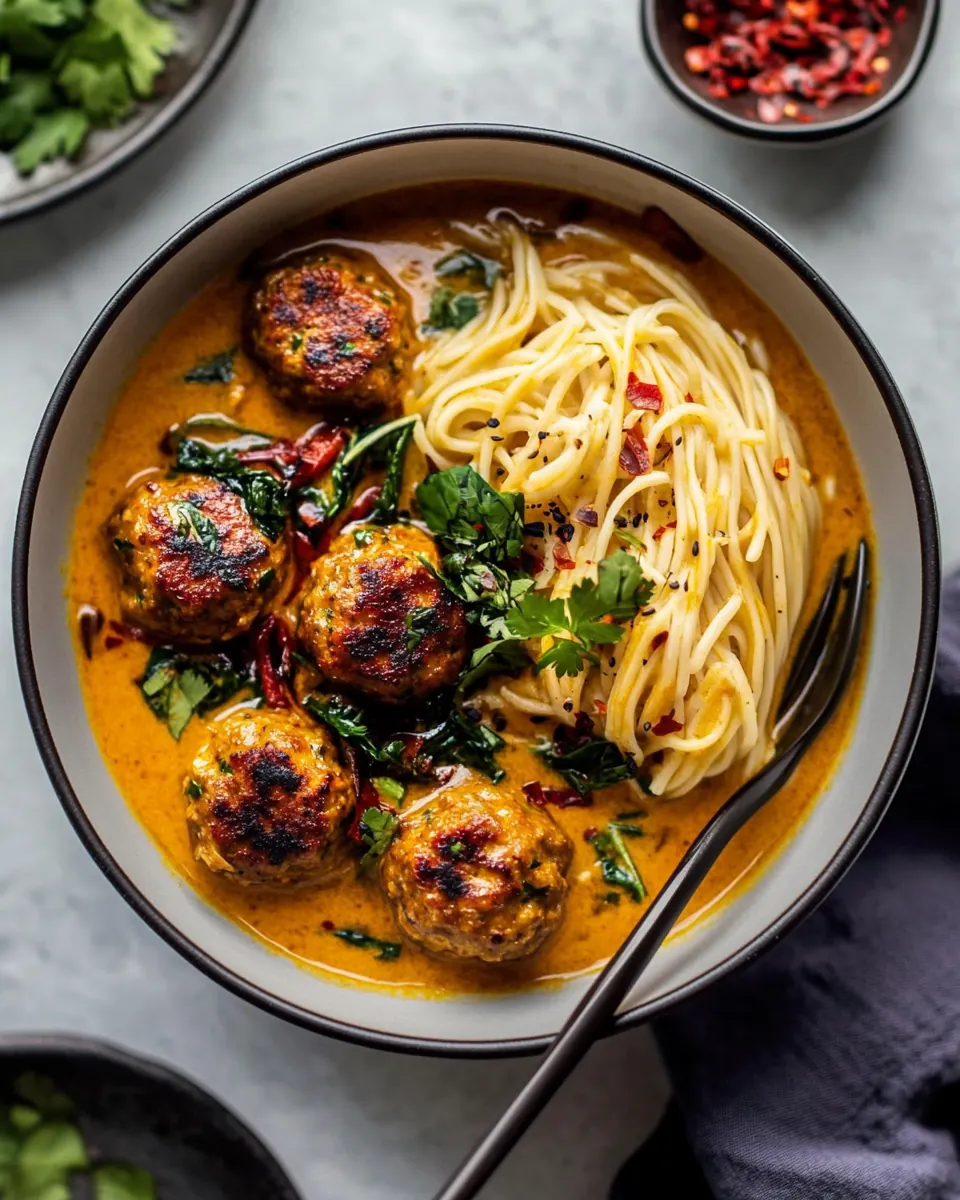
Creamy Coconut Chicken Meatball and Noodle Curry arrived at my table on a rainy October evening, and it immediately felt like a cozy hug in a bowl. I remember juggling a grocery run with a work deadline, spotting a can of coconut milk on sale, and deciding to riff on flavors I loved from street food stalls and homey weeknight dinners. The first spoonful that night sealed it for me, tender chicken meatballs in a rich, velvety coconut curry, threaded through with soft noodles and bright pops of cilantro and pomegranate. It was the kind of dinner that made everyone at the table quiet, which to me is a very good sign.
Over the years I have adjusted the balance of savory and sweet, learned to coax the best texture from the meatballs, and discovered why a splash of soy and a little peanut butter can anchor the whole pot. I often make a double batch of the curry base on colder nights, because leftovers reheat beautifully, and the flavors actually marry even better the next day. When I serve it, I like to pile the noodles first, spoon the curry with its glossy coconut sauce over them, and finish with a scattering of bright cilantro and green onion to lift the dish.
Recipe Snapshot
30 mins
15 mins
15 mins
Easy
450 kcal
Thai
Gluten-Free, Low FODMAP
Dinner
Large pot, Mixing bowl, Tongs, Measuring spoons
Why This Creamy Coconut Chicken Meatball and Noodle Curry Is So Good
Comfort with Bright Accents
I love how Creamy Coconut Chicken Meatball and Noodle Curry manages to be lush yet lively at the same time. The full fat coconut milk creates a silky texture that comforts, while the curry paste and fresh ginger bring energetic, aromatic notes. You get depth without heaviness, and that contrast keeps each bite interesting.
Easy Weeknight Magic
One reason I turn to this recipe when life gets busy is its approachable timeline. You can mix the chicken and green onions, roll the meatballs while the pot heats, and have dinner on the table in under an hour. For weeknights, that efficiency is everything, and it still feels special enough for guests.
Flexible and Forgiving
I appreciate recipes that adapt to what I have on hand. You can swap the cubed butternut squash for sweet potato, choose egg or rice noodles, and even adjust the curry paste quantity to suit your spice tolerance. The structure holds up, so minor substitutions rarely derail the final result.
Textural Play
There is real joy in the textural contrast here. The tender chicken meatballs have a browned exterior from searing, set against silky coconut sauce and soft noodles. Crunchy bits of green onion and the jewel like pomegranate arils add unexpected bursts. For me, those contrasts keep dinner from feeling one note.
Hands On, But Relaxed Technique
I like that the recipe invites some hands on work with rolling meatballs and searing them, yet the long simmer is forgiving. The methods teach control, like how to know when the shallots are sweet and translucent, and reward patience with a cohesive, layered flavor profile.
Recipe Ingredients for Creamy Coconut Chicken Meatball and Noodle Curry
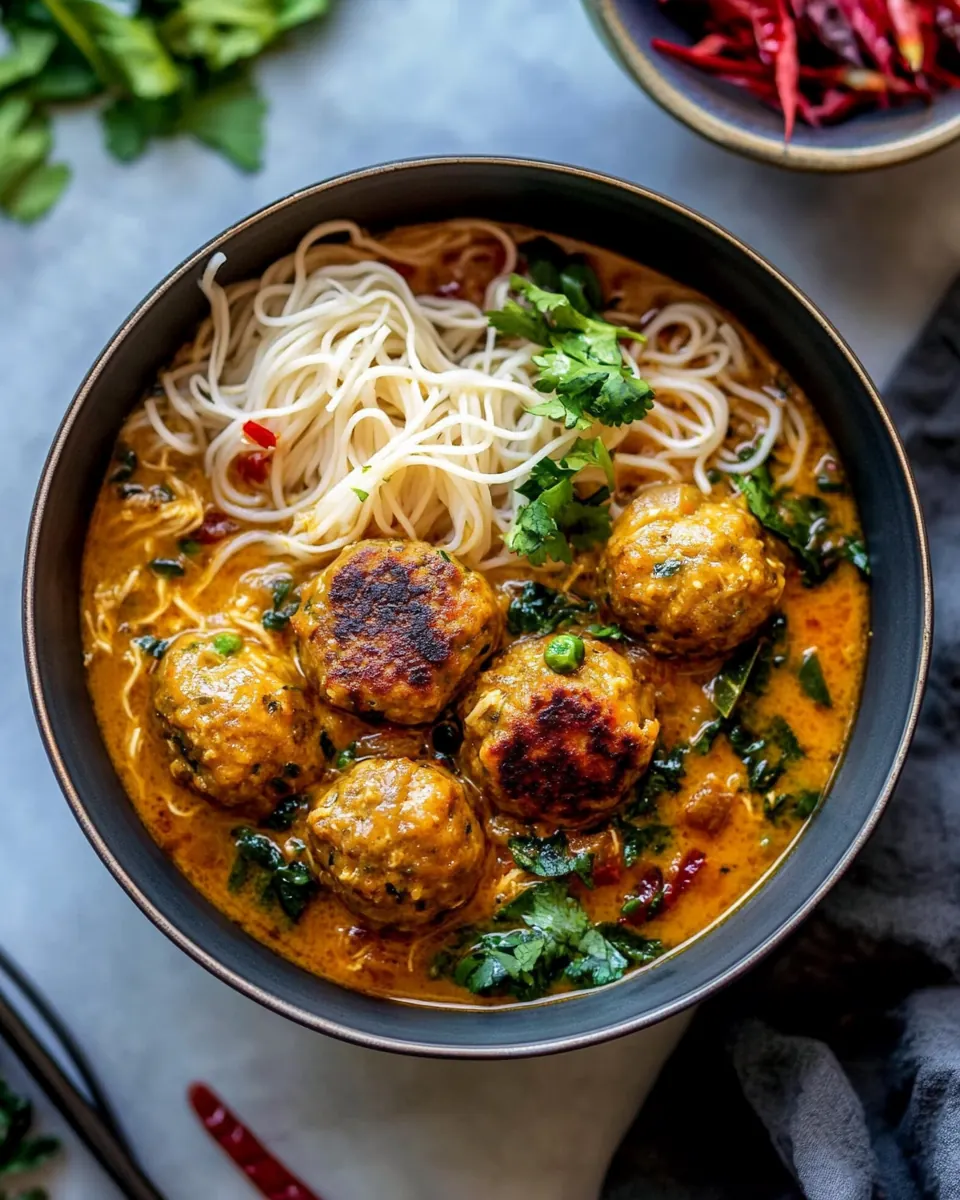
These ingredients were chosen to create a balanced curry where richness, umami, and brightness all play clear roles. The coconut milk and peanut butter make a luscious sauce, while the curry paste, garlic, and ginger provide aromatic backbone. The chicken meatballs bring protein and a satisfying chew, and the vegetables and herbs are there to brighten each bowl.
- 1 pound ground chicken: Use as the primary protein source to form moist, tender meatballs that absorb curry flavors; bind with aromatics and seasonings for rich texture.
- 2 green onions, finely chopped, plus more for serving: Finely chop and fold into the meatball mixture for a mild allium note and fresh crunch, reserving extra slices to garnish the finished dish.
- 1/4 cup + 2 teaspoons low sodium soy sauce: Add measured amounts to season both meatballs and sauce, contributing savory umami and salt balance while preventing overpowering sodium.
- black pepper: Grind to taste to provide a subtle heat and brightness that enhances the savory profile without masking the curry’s aromatics.
- 5 tablespoons extra virgin olive oil or avocado oil: Heat in the pan to sauté aromatics, brown meatballs, and roast squash; choose for high smoke point and neutral flavor that carries spices.
- 1 cup cubed butternut squash or sweet potato: Cube and simmer until tender to add natural sweetness, body, and contrast in texture, helping to thicken the curry as it breaks down slightly.
- 2 3 medium shallots, thinly sliced: Thinly slice and sauté to bring sweet, mild oniony complexity to the base of the sauce, contributing layers of flavor and caramelization.
- 1 inch fresh ginger, grated: Grate finely to release sharp, warm, peppery notes that brighten the sauce and penetrate meatballs for aromatic depth.
- 4 cloves garlic, minced or grated: Mince or grate and incorporate into both meatballs and sauce to deliver pungent, savory bite that rounds out other seasonings.
- 1/2 cup fresh cilantro, chopped, plus more for serving: Chop and stir into the mixture and sauce for a bright, citrus-herb lift and fresh finish; reserve extra for garnishing to enhance aroma.
- 1/4 cup Thai red curry paste: Spoon into the curry base to provide concentrated chili, garlic, and aromatic depth, forming the spicy backbone of the sauce.
- 2 (14-ounce) cans full-fat coconut milk: Pour in to create a rich, creamy coconut foundation that mellows curry paste heat, adds luxurious mouthfeel, and unifies flavors.
- 2 tablespoons creamy peanut butter: Whisk into the sauce to introduce nutty richness and subtle sweetness, lending creaminess and balancing spicy, salty notes.
- 1 tablespoon fish sauce (or low sodium soy sauce): Measure and add to heighten savory complexity with umami depth; use as a finishing seasoning to deepen the curry’s flavor profile.
- 2 cups baby spinach: Wilt into the hot curry near the end to introduce tender leafy texture and a mild, earthy freshness that complements the rich sauce.
- 8 ounces egg or rice noodles: Cook according to package instructions and add to the finished curry to provide comforting, starchy strands that soak up the sauce.
- pomegranate arils, for serving () (optional): Scatter over servings as an optional jewel-like garnish to introduce tart bursts of sweetness and a contrasting texture to each bite.
Step by Step Instructions for Creamy Coconut Chicken Meatball and Noodle Curry
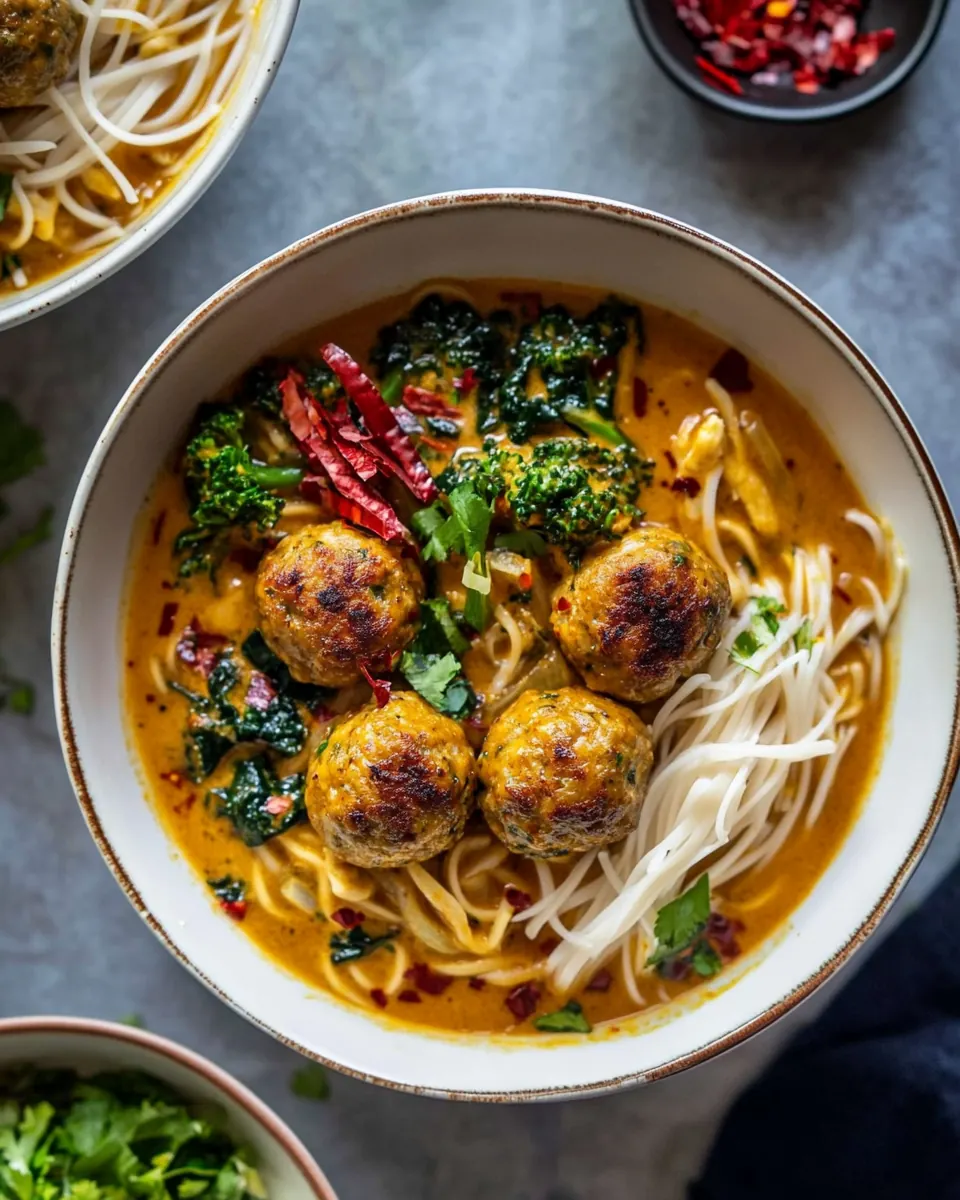
These directions map out a smooth workflow from mixing meatballs to finishing bowls. Read through once so you know which steps overlap, like cooking noodles while the curry simmers, and keep mise en place ready to maintain a steady rhythm.
- Add the chicken, green onions, 2 teaspoons soy sauce, and a pinch of pepper to a bowl. Mix until just combined. Coat your hands with a bit of oil, and roll the meat into tablespoon-size balls (will make 15-20 meatballs). Heat a large pot over medium-high heat and add 2 tablespoons oil. When the oil shimmers, add the meatballs and sear until crisp, about 4-5 minutes, turning them 2-3 times until cooked through. Transfer to a plate. To the same pot, add 3 tablespoon oil, the shallots, ginger, and garlic. Cook until fragrant, about 2 minutes. Add the butternut squash and curry paste. Cook another 5 minutes, stirring occasionally. Stir in the coconut milk, 1/2 cup water, 1/4 cup soy sauce, fish sauce, and peanut butter. Slide the meatballs back into the curry. Simmer over medium heat until the meatballs are cooked through, 5-8 minutes. Stir in the spinach. Thin as desired with additional water or broth. Meanwhile, cook noodles according to package directions. Divide the noodles between bowls and ladle the curry over. Top each bowl with pomegranate, cilantro, and green onions.: The aroma of fresh green onions and soy will be subtle here, and the texture should stay loose so the meatballs remain tender after cooking. Gently fold the ingredients; overworking the chicken leads to dense meatballs. A common mistake is compacting the mix, which yields tough results, so stop mixing as soon as the ingredients are incorporated.
- Coat your hands with a bit of oil, and roll the meat into tablespoon-size balls (will make 15 to 20 meatballs): You will feel the tacky texture ease as the oil prevents sticking, and rolling by tablespoon keeps meatballs uniform so they cook evenly. Place them on a plate with space between to avoid flattening. Rushing this step can produce irregular sizes, so take your time to keep portions consistent.
- Heat a large pot over medium-high heat and add 2 tablespoons oil: Watch for the oil to shimmer, which signals the right searing temperature and helps create a golden crust on the meatballs. If the oil smokes, lower the heat to avoid burning. One pitfall is starting with oil that is not hot enough, resulting in meatballs that absorb oil and become greasy rather than seared.
- When the oil shimmers, add the meatballs and sear until crisp, about 4 to 5 minutes, turning them 2 to 3 times until cooked through: Expect a loud sizzle as the meatballs hit the pot, and look for deep golden patches that provide caramelized flavor. Turn them gently with tongs to preserve their shape, and check one by cutting it open to ensure doneness. Common trouble is overcrowding the pot, which lowers the temperature and prevents browning, so work in batches if needed.
- Transfer to a plate: After searing, the meatballs will rest and continue cooking slightly from residual heat. This rest helps redistribute juices and keeps them tender. Leaving them in the pot can lead to overcooking, so move them aside promptly.
- To the same pot, add 3 tablespoon oil, the shallots, ginger, and garlic. Cook until fragrant, about 2 minutes: You will smell a sweet oniony perfume and feel the air warm as the aromatics release oils. Stir frequently to avoid browning too quickly; gentle translucence is the cue that they are ready. A common error is letting garlic burn, which introduces bitterness, so keep the heat moderate and stir often.
- Add the butternut squash and curry paste: When the squash sizzles lightly, it begins releasing its natural sugars, which pair with the curry paste to build a complex base. Stir so the paste coats the squash evenly, and let it toast slightly to deepen flavor. Watch closely, because curry paste can stick and scorch if unattended.
- Cook another 5 minutes, stirring occasionally: During this time the squash will start to soften and the curry paste will bloom, releasing aromatic oils that perfume the kitchen. The occasional stir prevents sticking and promotes even caramelization. If you skip stirring, some pieces may char unevenly, impacting the sauce flavor.
- Stir in the coconut milk, 1/2 cup water, 1/4 cup soy sauce, fish sauce, and peanut butter: The pot will hiss and then settle into a gentle simmer as the coconut milk thins and binds with the peanut butter, creating a silky emulsion. Use a spoon to dissolve the peanut butter so it blends smoothly. A frequent mistake is adding high heat now, which can cause the coconut milk to split, so maintain a gentle simmer.
- Slide the meatballs back into the curry: As the meatballs nestle into the sauce, you will hear a soft bubble and see them glossy as the sauce clings to their surfaces. This step allows the flavors to marry. Avoid jostling them too much, which can break their shape; instead, gently nudge them into place.
- Simmer over medium heat until the meatballs are cooked through, 5 to 8 minutes: You will notice the sauce thicken slightly and the meatballs plump as they reach safe internal temperature. Stir once or twice to prevent sticking, and test a meatball for doneness. A common error is stopping simmering too early, leaving cores undercooked, so ensure the centers are no longer pink.
- Stir in the spinach: The spinach will wilt in seconds, turning a deep green and adding fresh aroma to the curry. Fold it in so it distributes evenly and avoids clumping. Overcooking the spinach turns it dull and mushy, so add it at the very end.
- Thin as desired with additional water or broth: Taste and assess the sauce consistency, and add small amounts of liquid to loosen the gravy until it coats the back of a spoon. This step lets you control how clingy the sauce is on noodles. Adding too much liquid at once can overly dilute flavors, so add incrementally.
- Meanwhile, cook noodles according to package directions: You will hear the pot come back to a rolling boil and smell the faint wheaty steam as the noodles cook to tender. Rinse rice noodles briefly in warm water if needed to separate them, and drain thoroughly. A typical mistake is overcooking, which leads to mushy noodles that fall apart under the curry.
- Divide the noodles between bowls and ladle the curry over: Arrange noodles so they form a nest, then spoon the glossy curry and meatballs over them, letting sauce pool around each bowl. The contrast of textures and colors is part of the appeal, so present thoughtfully. An easy misstep is piling too much liquid, which can drown the noodles, so control portions for a balanced bowl.
- Top each bowl with pomegranate, cilantro, and green onions: Scatter the jewel like pomegranate arils, the chopped cilantro , and extra green onion for fresh crunch and color. These final touches provide lift and contrast. Skipping garnishes loses the bright finish that elevates the dish from good to memorable.
Tips and Tricks about Creamy Coconut Chicken Meatball and Noodle Curry
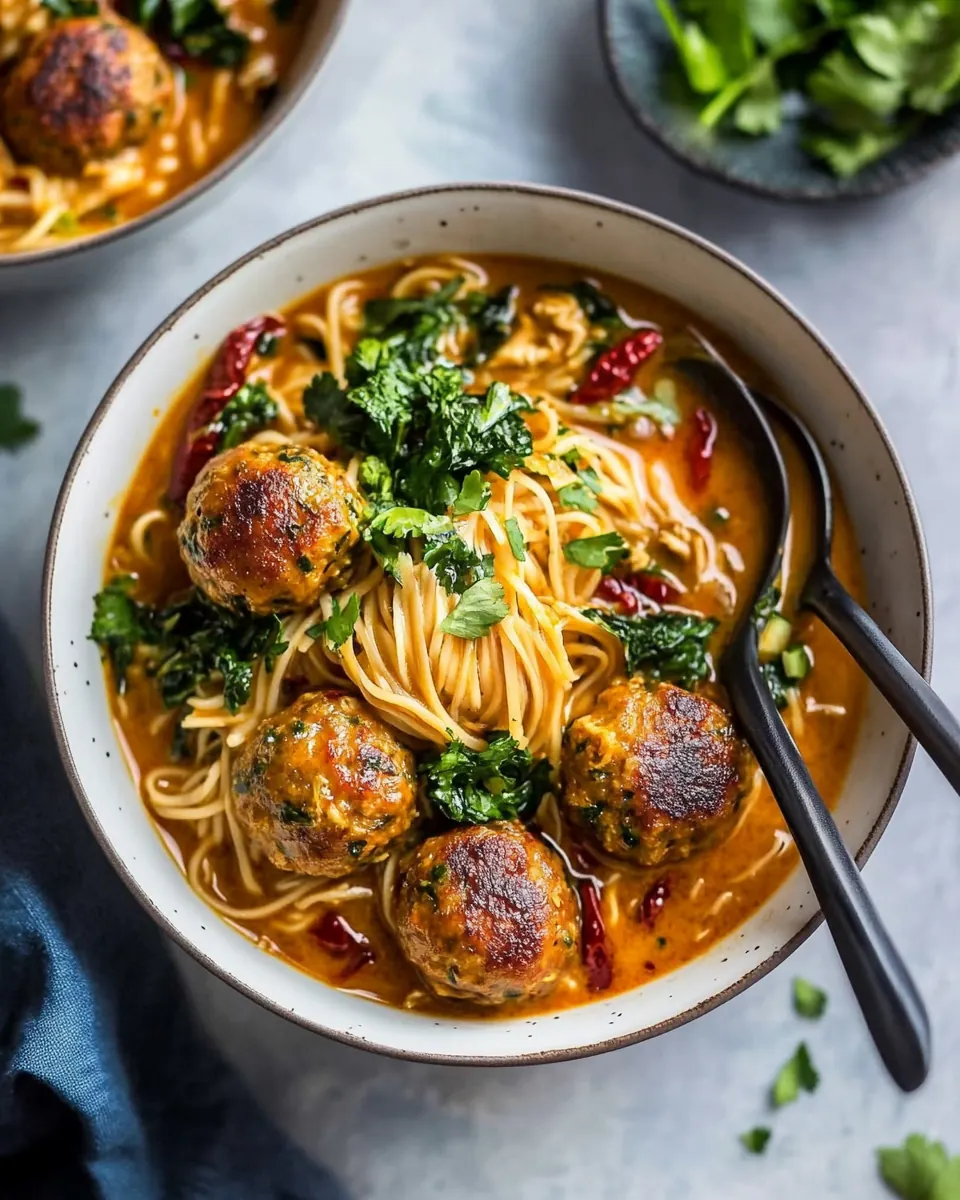
I like to keep a few practical strategies in mind when making this curry. They help maintain texture, build layered flavors, and streamline the cook. Below are detailed tips that I use every time to get consistent, restaurant quality results at home.
- Portion meatballs evenly by using a tablespoon measure so they cook uniformly and present neatly in bowls.
- Toast the curry paste briefly in oil to unlock its aromatic oils and give the sauce a deeper, roasted flavor that raw paste cannot provide.
- Choose full fat coconut milk for a rich, silky sauce; lower fat versions can become thin and separate when simmered.
- Cook noodles to al dente because they will continue to soften slightly when combined with the hot curry, preventing a mushy final texture.
- Use low sodium soy sauce and adjust salt at the end, which lets you control the seasoning without over salting during reduction.
Serving This Creamy Coconut Chicken Meatball and Noodle Curry
This curry makes a satisfying main for casual dinners and special gatherings alike. It pairs well with light sides and bright garnishes that highlight its richness. Below are serving ideas, storage tips, and occasion suggestions to help you plan the perfect meal.
- Serve warm bowls with a bed of noodles and the curry ladled on top, garnished with cilantro, green onions, and optional pomegranate arils for contrast.
- Pair with simple sides like a small green salad or quick cucumber relish to add a crisp, acidic foil to the creamy curry.
- Great for weeknight dinners, because the hands on time is short and the recipes scales easily for leftovers that taste even better the next day.
- Ideal for fall evenings when the cubed butternut squash or sweet potato is in season and adds a cozy, seasonal note to the dish.
- Storage and reheating Store in an airtight container in the refrigerator for up to three days. Reheat gently on the stove over low heat, adding a splash of water if the sauce thickened.
- Make ahead tip Keep the noodles separate and reheat the curry before combining so the noodles do not become overly soft in storage.
FAQ
Conclusion
This recipe stands out because it combines silky coconut sauce, tender chicken meatballs, and slurpable noodles for a balanced bowl that satisfies on many levels. Give it a try the next time you want a dinner that feels both comforting and a bit special. I hope it becomes one of your go to recipes for cozy weeknights and sharing with friends.
Creamy Coconut Chicken Meatball and Noodle Curry
Equipment
- Large Pot
- Mixing Bowl
- Tongs
- Measuring Spoons
Ingredients
- 1 pound ground chicken Use as the primary protein source to form moist, tender meatballs that absorb curry flavors; bind with aromatics and seasonings for rich texture.
- 2 green onions, finely chopped, plus more for serving Finely chop and fold into the meatball mixture for a mild allium note and fresh crunch, reserving extra slices to garnish the finished dish.
- 1/4 cup + 2 teaspoons low sodium soy sauce Add measured amounts to season both meatballs and sauce, contributing savory umami and salt balance while preventing overpowering sodium.
- black pepper Grind to taste to provide a subtle heat and brightness that enhances the savory profile without masking the curry’s aromatics.
- 5 tablespoons extra virgin olive oil or avocado oil Heat in the pan to sauté aromatics, brown meatballs, and roast squash; choose for high smoke point and neutral flavor that carries spices.
- 1 cup cubed butternut squash or sweet potato Cube and simmer until tender to add natural sweetness, body, and contrast in texture, helping to thicken the curry as it breaks down slightly.
- 2 -3 medium shallots, thinly sliced Thinly slice and sauté to bring sweet, mild oniony complexity to the base of the sauce, contributing layers of flavor and caramelization.
- 1 inch fresh ginger, grated Grate finely to release sharp, warm, peppery notes that brighten the sauce and penetrate meatballs for aromatic depth.
- 4 cloves garlic, minced or grated Mince or grate and incorporate into both meatballs and sauce to deliver pungent, savory bite that rounds out other seasonings.
- 1/2 cup fresh cilantro, chopped, plus more for serving Chop and stir into the mixture and sauce for a bright, citrus-herb lift and fresh finish; reserve extra for garnishing to enhance aroma.
- 1/4 cup Thai red curry paste Spoon into the curry base to provide concentrated chili, garlic, and aromatic depth, forming the spicy backbone of the sauce.
- 2 (14-ounce) cans full-fat coconut milk Pour in to create a rich, creamy coconut foundation that mellows curry paste heat, adds luxurious mouthfeel, and unifies flavors.
- 2 tablespoons creamy peanut butter Whisk into the sauce to introduce nutty richness and subtle sweetness, lending creaminess and balancing spicy, salty notes.
- 1 tablespoon fish sauce (or low sodium soy sauce) Measure and add to heighten savory complexity with umami depth; use as a finishing seasoning to deepen the curry’s flavor profile.
- 2 cups baby spinach Wilt into the hot curry near the end to introduce tender leafy texture and a mild, earthy freshness that complements the rich sauce.
- 8 ounces egg or rice noodles Cook according to package instructions and add to the finished curry to provide comforting, starchy strands that soak up the sauce.
- pomegranate arils, for serving (optional) Scatter over servings as an optional jewel-like garnish to introduce tart bursts of sweetness and a contrasting texture to each bite.
Instructions
- Add the chicken, green onions, 2 teaspoons soy sauce, and a pinch of pepper to a bowl. Mix until just combined. Coat your hands with a bit of oil, and roll the meat into tablespoon-size balls (will make 15-20 meatballs). Heat a large pot over medium-high heat and add 2 tablespoons oil. When the oil shimmers, add the meatballs and sear until crisp, about 4-5 minutes, turning them 2-3 times until cooked through. Transfer to a plate. To the same pot, add 3 tablespoon oil, the shallots, ginger, and garlic. Cook until fragrant, about 2 minutes. Add the butternut squash and curry paste. Cook another 5 minutes, stirring occasionally. Stir in the coconut milk, 1/2 cup water, 1/4 cup soy sauce, fish sauce, and peanut butter. Slide the meatballs back into the curry. Simmer over medium heat until the meatballs are cooked through, 5-8 minutes. Stir in the spinach. Thin as desired with additional water or broth. Meanwhile, cook noodles according to package directions. Divide the noodles between bowls and ladle the curry over. Top each bowl with pomegranate, cilantro, and green onions.: The aroma of fresh green onions and soy will be subtle here, and the texture should stay loose so the meatballs remain tender after cooking. Gently fold the ingredients; overworking the chicken leads to dense meatballs. A common mistake is compacting the mix, which yields tough results, so stop mixing as soon as the ingredients are incorporated.
- Coat your hands with a bit of oil, and roll the meat into tablespoon-size balls (will make 15 to 20 meatballs): You will feel the tacky texture ease as the oil prevents sticking, and rolling by tablespoon keeps meatballs uniform so they cook evenly. Place them on a plate with space between to avoid flattening. Rushing this step can produce irregular sizes, so take your time to keep portions consistent.
- Heat a large pot over medium-high heat and add 2 tablespoons oil: Watch for the oil to shimmer, which signals the right searing temperature and helps create a golden crust on the meatballs. If the oil smokes, lower the heat to avoid burning. One pitfall is starting with oil that is not hot enough, resulting in meatballs that absorb oil and become greasy rather than seared.
- When the oil shimmers, add the meatballs and sear until crisp, about 4 to 5 minutes, turning them 2 to 3 times until cooked through: Expect a loud sizzle as the meatballs hit the pot, and look for deep golden patches that provide caramelized flavor. Turn them gently with tongs to preserve their shape, and check one by cutting it open to ensure doneness. Common trouble is overcrowding the pot, which lowers the temperature and prevents browning, so work in batches if needed.
- Transfer to a plate: After searing, the meatballs will rest and continue cooking slightly from residual heat. This rest helps redistribute juices and keeps them tender. Leaving them in the pot can lead to overcooking, so move them aside promptly.
- To the same pot, add 3 tablespoon oil, the shallots, ginger, and garlic. Cook until fragrant, about 2 minutes: You will smell a sweet oniony perfume and feel the air warm as the aromatics release oils. Stir frequently to avoid browning too quickly; gentle translucence is the cue that they are ready. A common error is letting garlic burn, which introduces bitterness, so keep the heat moderate and stir often.
- Add the butternut squash and curry paste: When the squash sizzles lightly, it begins releasing its natural sugars, which pair with the curry paste to build a complex base. Stir so the paste coats the squash evenly, and let it toast slightly to deepen flavor. Watch closely, because curry paste can stick and scorch if unattended.
- Cook another 5 minutes, stirring occasionally: During this time the squash will start to soften and the curry paste will bloom, releasing aromatic oils that perfume the kitchen. The occasional stir prevents sticking and promotes even caramelization. If you skip stirring, some pieces may char unevenly, impacting the sauce flavor.
- Stir in the coconut milk, 1/2 cup water, 1/4 cup soy sauce, fish sauce, and peanut butter: The pot will hiss and then settle into a gentle simmer as the coconut milk thins and binds with the peanut butter, creating a silky emulsion. Use a spoon to dissolve the peanut butter so it blends smoothly. A frequent mistake is adding high heat now, which can cause the coconut milk to split, so maintain a gentle simmer.
- Slide the meatballs back into the curry: As the meatballs nestle into the sauce, you will hear a soft bubble and see them glossy as the sauce clings to their surfaces. This step allows the flavors to marry. Avoid jostling them too much, which can break their shape; instead, gently nudge them into place.
- Simmer over medium heat until the meatballs are cooked through, 5 to 8 minutes: You will notice the sauce thicken slightly and the meatballs plump as they reach safe internal temperature. Stir once or twice to prevent sticking, and test a meatball for doneness. A common error is stopping simmering too early, leaving cores undercooked, so ensure the centers are no longer pink.
- Stir in the spinach: The spinach will wilt in seconds, turning a deep green and adding fresh aroma to the curry. Fold it in so it distributes evenly and avoids clumping. Overcooking the spinach turns it dull and mushy, so add it at the very end.
- Thin as desired with additional water or broth: Taste and assess the sauce consistency, and add small amounts of liquid to loosen the gravy until it coats the back of a spoon. This step lets you control how clingy the sauce is on noodles. Adding too much liquid at once can overly dilute flavors, so add incrementally.
- Meanwhile, cook noodles according to package directions: You will hear the pot come back to a rolling boil and smell the faint wheaty steam as the noodles cook to tender. Rinse rice noodles briefly in warm water if needed to separate them, and drain thoroughly. A typical mistake is overcooking, which leads to mushy noodles that fall apart under the curry.
- Divide the noodles between bowls and ladle the curry over: Arrange noodles so they form a nest, then spoon the glossy curry and meatballs over them, letting sauce pool around each bowl. The contrast of textures and colors is part of the appeal, so present thoughtfully. An easy misstep is piling too much liquid, which can drown the noodles, so control portions for a balanced bowl.
- Top each bowl with pomegranate, cilantro, and green onions: Scatter the jewel like pomegranate arils, the chopped cilantro , and extra green onion for fresh crunch and color. These final touches provide lift and contrast. Skipping garnishes loses the bright finish that elevates the dish from good to memorable.
Notes
- Portion meatballs evenly by using a tablespoon measure so they cook uniformly and present neatly in bowls.
- Toast the curry paste briefly in oil to unlock its aromatic oils and give the sauce a deeper, roasted flavor that raw paste cannot provide.
- Choose full fat coconut milk for a rich, silky sauce; lower fat versions can become thin and separate when simmered.
- Cook noodles to al dente because they will continue to soften slightly when combined with the hot curry, preventing a mushy final texture.
- Use low sodium soy sauce and adjust salt at the end, which lets you control the seasoning without over salting during reduction.