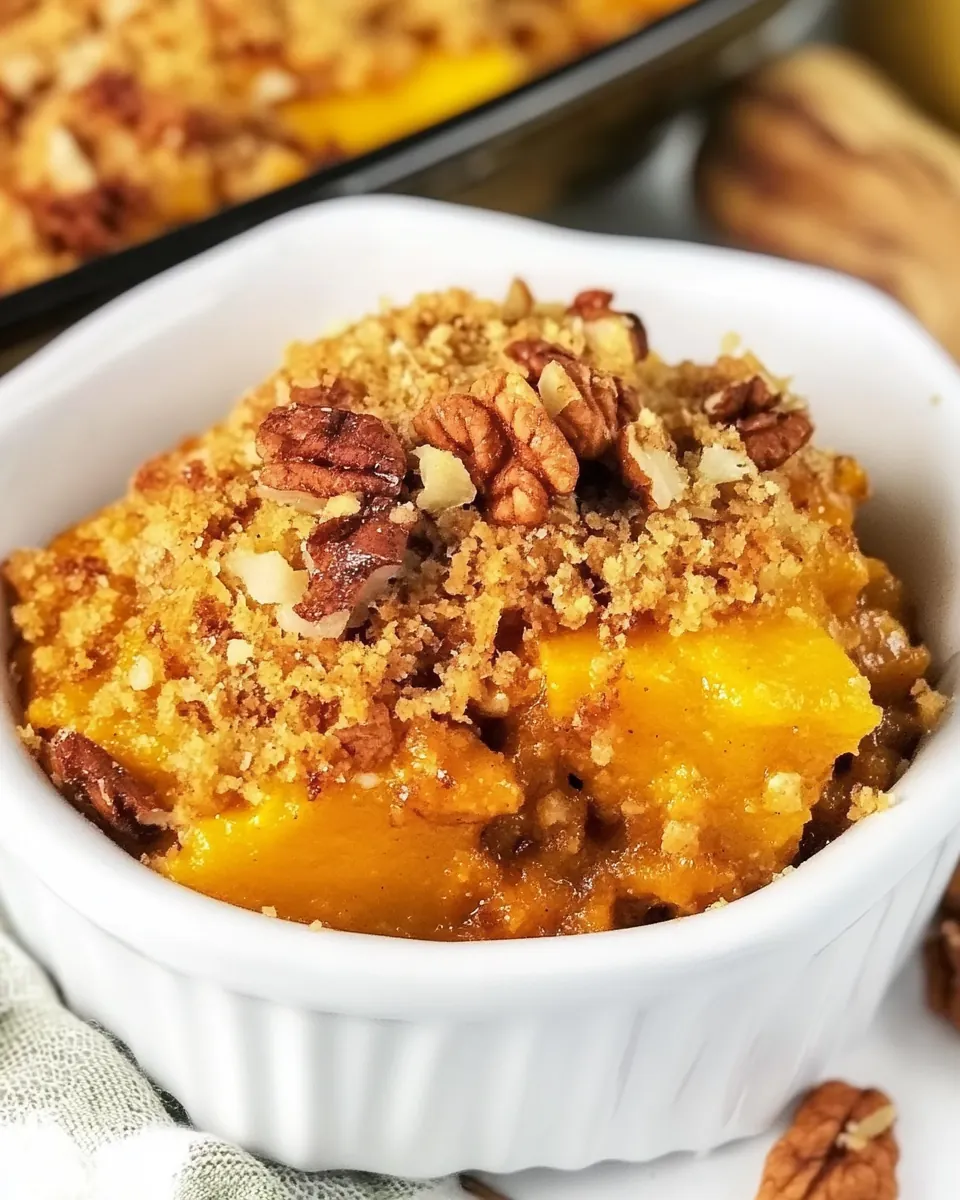
Sweet Butternut Squash Casserole
Sweet Butternut Squash Casserole has been one of those dishes that I reach for when I want comfort with a little showmanship, and the first time I served it I watched my family fight over the crunchy topping before the spoon even hit the table. I remember carrying the warm casserole from the oven, the kitchen filling with a nutty, caramelized aroma, and a cousin declaring it worthy of a holiday centerpiece. That moment stuck with me, and ever since this recipe has been my go to whenever I want something that feels both homey and a bit special.
Over the years I’ve tweaked the balance between silky squash and crunchy topping until it sings. I like recipes that let simple pantry items do the heavy lifting, and this version relies on the natural sweetness of roasted squash, a touch of brown sugar, and the toasty snap of pecans to create contrast. There are days I assemble it in the morning, later I pop it in the oven and everyone drifts into the kitchen like clockwork. It is both forgiving and gratifying, and it teaches you how small techniques yield big payoff.
Recipe Snapshot
45 mins
20 mins
25 mins
Medium
300 kcal
American
Gluten-Free, Low FODMAP
Side Dishes
Hand Mixer, Mixing Bowls, Potato Masher, 9-inch Square Baking Dish
What We Adore About This Sweet Butternut Squash Casserole
Comfort with Texture
I love how Sweet Butternut Squash Casserole balances a smooth, velvety interior with a crunchy, nut studded topping. The contrast keeps every spoonful interesting, and I routinely catch people saying how they never expected a vegetable side to feel so indulgent. The combination of butter and brown sugar helps the topping crisp up while the squash stays moist, so each bite carries both warmth and snap.
Simple Ingredients, Big Flavors
This dish shines because the components are straightforward, yet they amplify one another. Using cooked, mashed butternut squash as the base lets the natural sweetness come forward, while small additions like milk, eggs, and a pinch of salt round out the texture and boost mouthfeel. I appreciate recipes where the ingredients list reads like a short story, not a novel, and this is one of them.
Make Ahead Friendly
I often assemble the casserole ahead of time and refrigerate it until I’m ready to bake. That flexibility is a lifesaver when I am juggling a holiday menu, because the flavors actually have time to meld and the topping holds up well in the oven. If you need to prep earlier in the week, this recipe adapts without losing its character.
Kid Approved and Crowd Ready
Families and guests both respond well to the creamy interior and sweet, nutty topping. I find it works equally well at a casual weeknight meal or on a holiday table. Because the textures and flavors are familiar, picky eaters often come around after one bite, which is always satisfying to witness.
Room for Small Tweaks
Finally, I love that the recipe tolerates gentle customization. You can swap the nuts or shift the sugar slightly and the overall vibe stays intact. That kind of flexibility makes it a go to when pantry contents are unpredictable, and I like recipes that welcome small improvisations.
What’s In This Sweet Butternut Squash Casserole
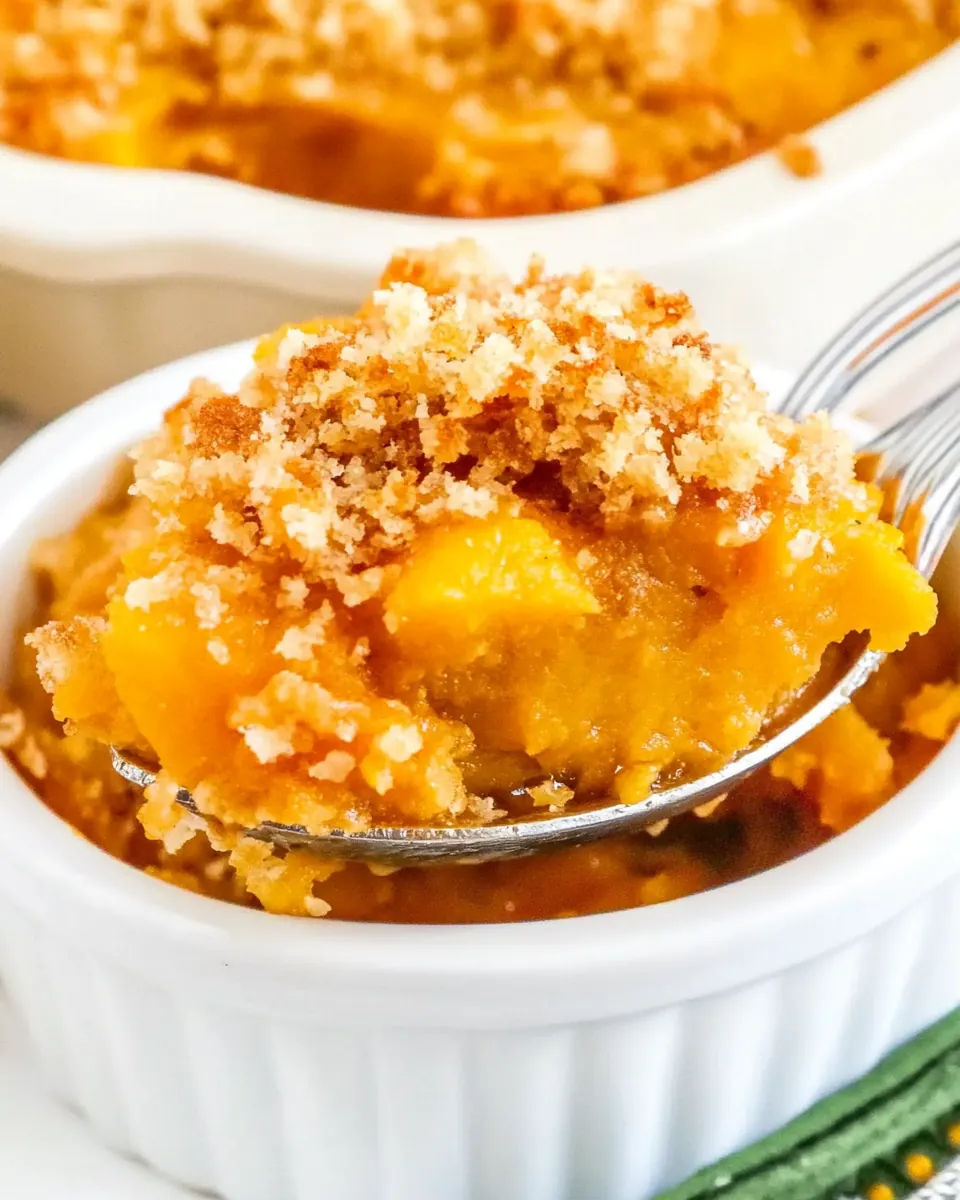
The ingredients here are chosen to create a creamy, sweet base with a crunchy, buttery topping. The mashed butternut squash forms the heart of the dish, while milk, eggs, and a touch of salt build a smooth texture and balance the sweetness. The topping components come together to add a toasted, nutty contrast that lifts each serving.
- 4 tbsp butter, melted: Melted and incorporated to add rich fat and glossy texture, enhancing flavor and helping bind the squash mixture while contributing buttery aroma during baking.
- 2 pounds peeled and cubed butternut squash: Peeled and cubed to provide the casserole's primary body and natural sweetness; cooks until tender and purees or softens to create a creamy base for the dish.
- 1/2 cup milk: Added to loosen and smooth the mashed squash, providing a creamy mouthfeel and helping dissolve sugar and eggs for a uniform custard-like consistency.
- 1/4 cup brown sugar: Mixed in to sweeten the squash base, promoting caramelization and depth of flavor; balances the savory elements and enhances the overall dessert profile.
- 1 tsp pure vanilla extract: Stirred in to impart a warm floral note that elevates sweetness and rounds the flavor profile; small quantities go a long way in adding aromatic complexity.
- 1/2 tsp kosher salt: Sprinkled to enhance and balance sweetness while highlighting other flavors; helps control overall seasoning and brings out natural squash taste.
- 2 eggs: Beaten and folded to provide structure and richness, coagulating during baking to set the custard and contribute to a tender, cohesive texture.
- 1/2 cup all-purpose flour: Sifted into the topping or batter as a binder to add structure and slight density; combines with butter and sugar to create a tender crumb or streusel.
- 1/2 cup brown sugar, packed: Packed and combined into the topping to provide additional sweetness and help form a caramelized, crunchy crust when baked.
- 4 tbsp butter, melted: Melted and mixed into the streusel or batter to add moisture, richness, and help bind dry ingredients together while promoting golden browning.
- 1/4 tsp salt: Measured to adjust seasoning balance in the topping or base, enhancing flavors without overwhelming sweetness; provides subtle contrast to the sweet components.
- 3/4 cup chopped pecans: Chopped and sprinkled into the topping to add crunchy texture, nutty flavor, and visual appeal; toasts in the oven and complements the sweet, buttery notes.
Step by Step Instructions for Sweet Butternut Squash Casserole
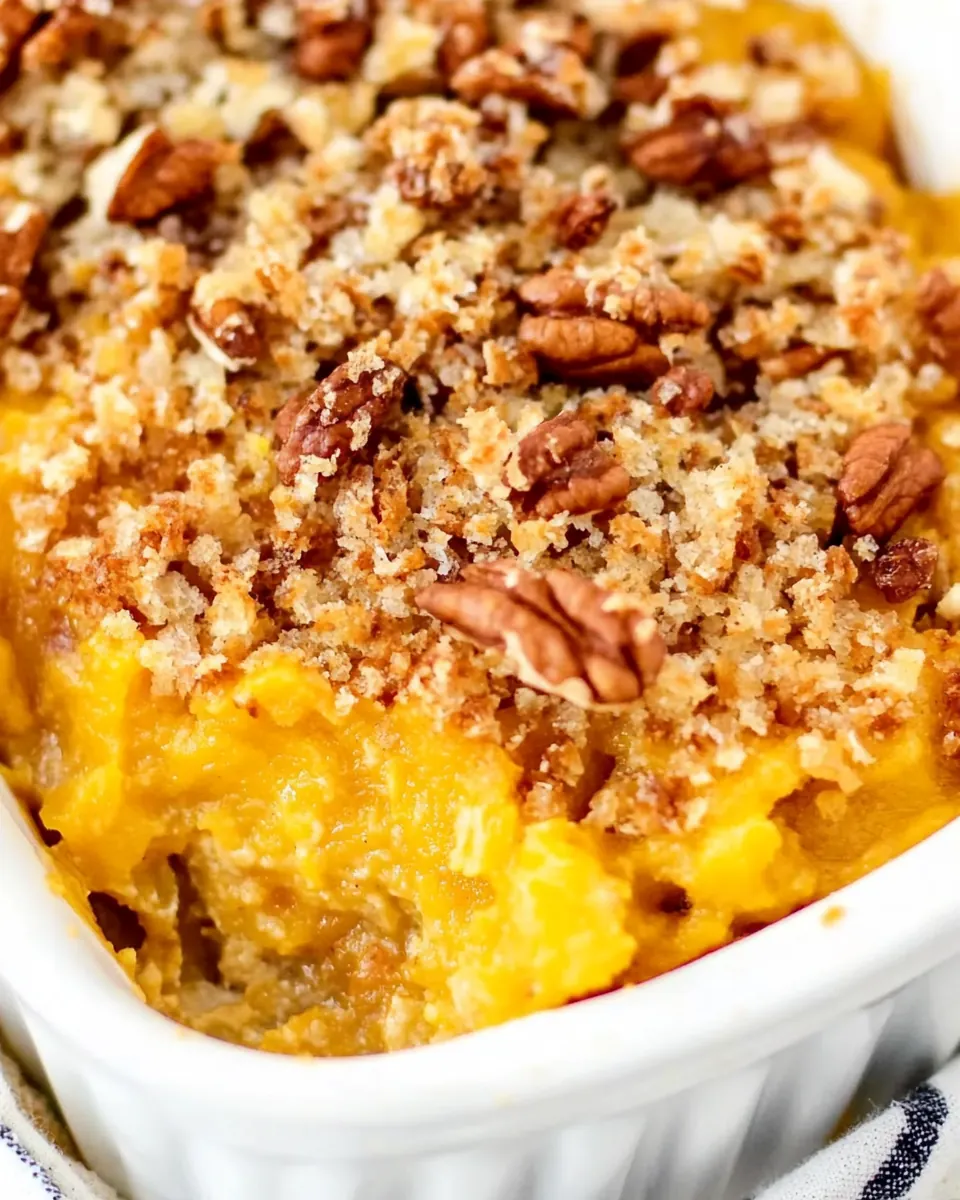
These directions take you from stovetop to golden skillet to table, with sensory cues and little fixes to help you get it right. I walk through each stage like I am standing beside you, pointing out the signs to look for and mistakes to avoid.
- Preheat the oven to 350º F. Lightly spray a 2-quart baking dish with cooking spray.: You will notice the kitchen warm slightly as the oven ramps to 350º F , and preheating ensures even baking and proper browning of the topping. Lightly spraying a 2 quart baking dish prevents sticking and helps the edges pull away cleanly, which also makes serving easier. If you skip preheating the oven the casserole can take longer to set and the topping may not crisp uniformly, so allow the oven to reach temperature before you start assembling. A common oversight is using a dish that is too large or too deep, which can change baking time and texture, so stick with a similar size for best results.
- Add butternut squash to a large pot of salted water. Bring to a boil over high heat, then lower the heat to a simmer and cook until the squash is very tender, 15 to 20 minutes. Drain and cool. Mash the squash.: When the salted water comes to a rolling boil you will see steam and hear a steady rumble, and as the cubes simmer the squash softens and releases a sweet, earthy scent. Cooking until the squash is very tender is crucial because it determines the final mouthfeel, creamy rather than fibrous. After draining, allow the cubes to cool slightly so you can mash them without steam thinning the mixture. Use a potato masher or fork and aim for a smooth, slightly rustic texture with small pockets of squash for interest. If you undercook, the mash will be grainy and require more liquid to become smooth, so resist the urge to rush this step. One slip is overcrowding the pot which extends cooking time unevenly, so give those cubes room to boil gently.
- Whisk together 4 tbsp butter, mashed butternut squash, milk, brown sugar, vanilla, salt, and eggs in a large bowl. Transfer to the prepared baking dish.: As you whisk, the mixture will take on a satiny sheen and a warm, sweet aroma from the brown sugar and vanilla . Whisking helps incorporate the eggs so the casserole sets uniformly and it blends the melted butter into the mash for richness. The texture at this point should be smooth and slightly loose, not thin or soup like, so adjust with a splash more milk only if necessary. Transfer into the prepared dish with a spatula, smoothing the top so the topping adheres evenly. A typical mistake is adding hot squash directly to eggs without tempering, which can scramble them, so mix gently and allow the mash to cool briefly if it is steaming.
- For the topping: Combine the flour, brown sugar, 4 tbsp melted butter, and salt in a medium bowl until moist and the mixture clumps together. Stir in the pecans. Spread the mixture over the top of the butternut squash.: Combine the flour, brown sugar, 4 tbsp melted butter, and salt in a medium bowl until moist and the mixture clumps together. Stir in the pecans. Spread the mixture over the top of the butternut squash. : When the dry ingredients meet the melted butter they should form coarse, moist clumps that feel slightly tacky between your fingers. Stirring in the chopped pecans distributes their crunchy texture so each bite gets a nutty hit. Spread the topping evenly so it bakes uniformly and watch for areas that are too thick or too thin. The mixture should not be wet or greasy, if it is, you may have used too much butter or packed the sugar too tightly. A common mistake is overworking the topping until it becomes pasty, which prevents crisping, so handle it until just combined.
- Bake for 25 to 30 minutes.: As the casserole bakes at 350º F , you will notice the aroma deepen and the topping will gradually turn golden brown and give off a toasty scent. The edges should bubble gently and the center will set so a small shake does not make it slosh. Baking until the topping is crisp and the filling is set creates the contrast that defines the dish. If you pull it out too early the center can be loose and the topping soft, so check for a lightly browned top and steady filling. One common error is opening the oven repeatedly which lengthens baking time and cools the oven, so try to make your checks brief and decisive.
Customization Ideas
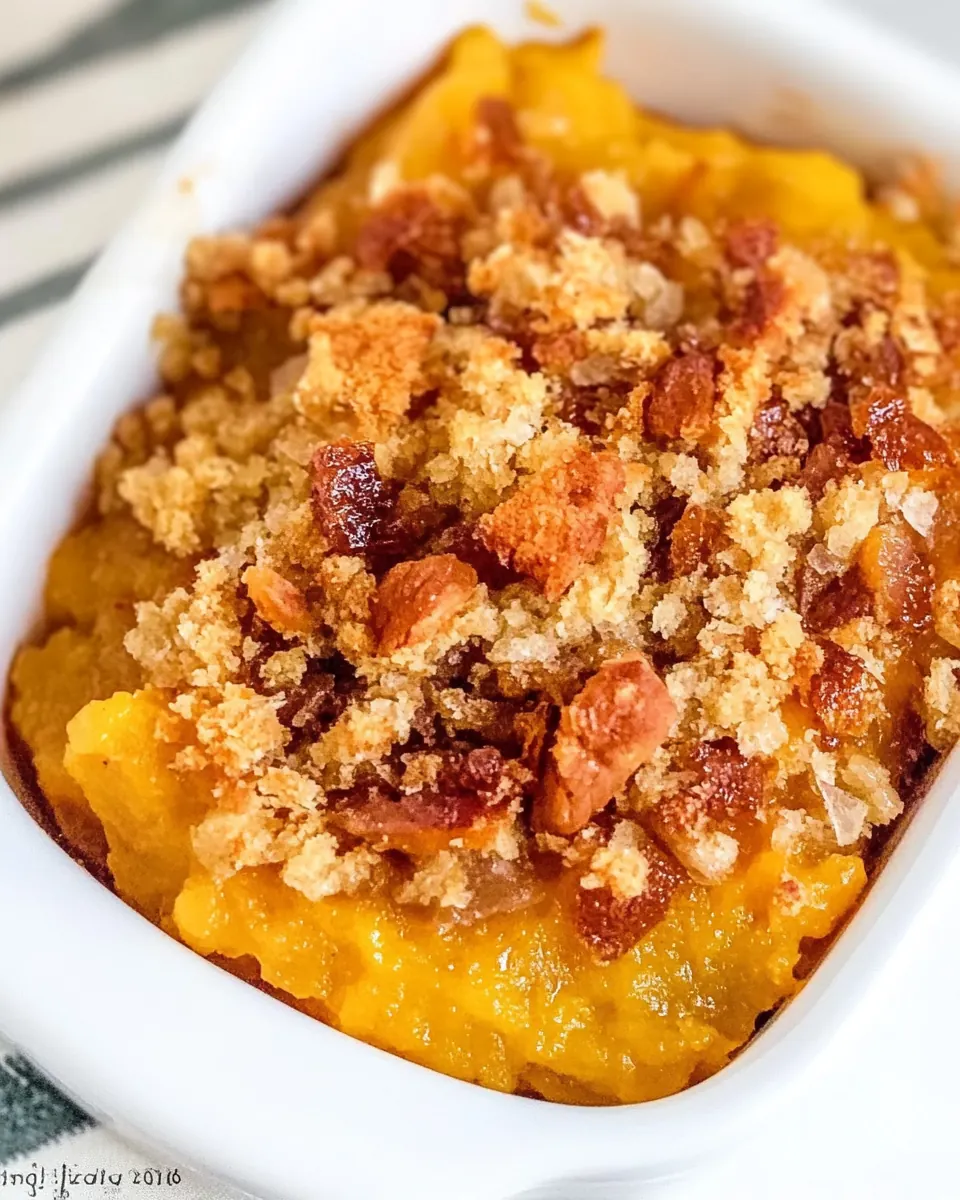
If you want to personalize the Sweet Butternut Squash Casserole there are simple swaps and subtle boosts that keep the spirit of the dish intact. Below are practical ideas to adjust texture, sweetness, and presentation without changing the basic method.
- Swap nuts — If you prefer a different crunch, replace the pecans with chopped walnuts for a slightly earthier note, or omit nuts entirely for a nut free topping while keeping the crumb mix the same.
- Adjust sweetness — Reduce either measure of brown sugar by one to two tablespoons if you like a less sweet side, tasting the mash before baking to ensure balance.
- Make it ahead — Assemble the casserole up to the point of baking and refrigerate for several hours; bring it near room temperature before baking to cut down on oven time and ensure even cooking.
- Texture tune — For a silkier interior, pass the cooked butternut squash through a ricer or food mill; for a heartier feel, mash by hand and leave small chunks intact.
- Swap starch — Use an equal amount of cooked sweet potato in place of butternut squash for a different but familiar flavor profile and similar texture.
- Pan options — If you do not have a 2 quart baking dish, use an 11 by 7 inch or 8 by 8 inch dish and monitor the bake time as indicated in recipe notes.
- Make it nut free — Omit the pecans and increase the flour slightly, or add oats for a different crisp without nuts.
- Control browning — If the topping browns too quickly, tent the dish with foil for the last part of baking to allow the filling to finish without burning the top.
- Freeze for later — Assemble in a freezer safe dish and freeze; thaw thoroughly before baking, and expect slightly longer oven time from chilled.
- Presentation — Garnish with a few whole pecans after baking for an elegant finish and added textural contrast.
How to Serve Sweet Butternut Squash Casserole
This casserole works beautifully as a center stage side for gatherings or a cozy weeknight accompaniment. Below are serving suggestions, pairings, and storage notes to help you present and preserve the dish at its best.
- Holiday centerpiece — Serve the casserole alongside roasted mains and green vegetables for a classic Thanksgiving spread, placing it in a warm dish so it stays inviting.
- Weeknight side — Pair with simply grilled or roasted proteins and a bright salad to add sweetness and texture to a weekday plate without fuss.
- Family potluck — Transport in the baking dish, keep warm wrapped in foil, and reheat briefly in a hot oven to revive crispness before serving.
- Storage short term — Refrigerate leftovers in an airtight container for up to four days; reheat in a moderate oven to bring back the topping’s crunch.
- Freezing — Assemble and freeze before baking or bake then freeze; when reheating from frozen, thaw completely and bake covered until warmed through, then uncover to crisp the topping.
- Seasonal pairing — This casserole shines in the fall with roasted root vegetables, braised greens, and warm spices, making it ideal for cooler month menus and comfort focused meals.
- Portioning — For larger crowds, use an 11 by 7 inch dish and adjust baking time, watching for bubbling edges and golden topping to signal doneness.
- Serving temperature — Serve warm rather than piping hot so the texture settles and flavors are more pronounced, making it easier to scoop neat portions.
- Make ahead strategy — If assembling ahead, let the dish sit at room temperature for about 30 minutes before baking to promote even oven time and prevent chilled centers.
- Garnish idea — Sprinkle a few toasted pecans on top just before serving for a fresh, crunchy finish that looks intentional and polished.
FAQ
Conclusion
This Sweet Butternut Squash Casserole stands out for its cozy, creamy interior and a crunchy, nutty topping that makes each spoonful satisfying. Give it a try the next time you want a reliable side that feels special without a lot of fuss. It’s forgiving, adaptable, and consistently a crowd pleaser, so I hope you find it becomes a regular on your table.
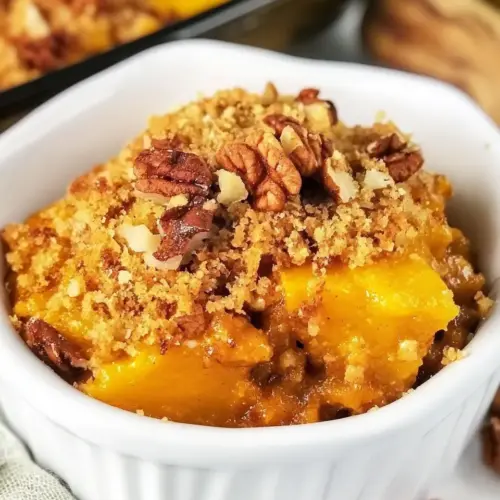
Sweet Butternut Squash Casserole
Equipment
- Hand Mixer
- Mixing Bowls
- Potato Masher
- 9-inch Square Baking Dish
Ingredients
- 4 tbsp butter, melted Melted and incorporated to add rich fat and glossy texture, enhancing flavor and helping bind the squash mixture while contributing buttery aroma during baking.
- 2 pounds peeled and cubed butternut squash Peeled and cubed to provide the casserole's primary body and natural sweetness; cooks until tender and purees or softens to create a creamy base for the dish.
- 1/2 cup milk Added to loosen and smooth the mashed squash, providing a creamy mouthfeel and helping dissolve sugar and eggs for a uniform custard-like consistency.
- 1/4 cup brown sugar Mixed in to sweeten the squash base, promoting caramelization and depth of flavor; balances the savory elements and enhances the overall dessert profile.
- 1 tsp pure vanilla extract Stirred in to impart a warm floral note that elevates sweetness and rounds the flavor profile; small quantities go a long way in adding aromatic complexity.
- 1/2 tsp kosher salt Sprinkled to enhance and balance sweetness while highlighting other flavors; helps control overall seasoning and brings out natural squash taste.
- 2 eggs Beaten and folded to provide structure and richness, coagulating during baking to set the custard and contribute to a tender, cohesive texture.
- 1/2 cup all-purpose flour Sifted into the topping or batter as a binder to add structure and slight density; combines with butter and sugar to create a tender crumb or streusel.
- 1/2 cup brown sugar, packed Packed and combined into the topping to provide additional sweetness and help form a caramelized, crunchy crust when baked.
- 4 tbsp butter, melted Melted and mixed into the streusel or batter to add moisture, richness, and help bind dry ingredients together while promoting golden browning.
- 1/4 tsp salt Measured to adjust seasoning balance in the topping or base, enhancing flavors without overwhelming sweetness; provides subtle contrast to the sweet components.
- 3/4 cup chopped pecans Chopped and sprinkled into the topping to add crunchy texture, nutty flavor, and visual appeal; toasts in the oven and complements the sweet, buttery notes.
Instructions
- Preheat the oven to 350º F. Lightly spray a 2-quart baking dish with cooking spray.: You will notice the kitchen warm slightly as the oven ramps to 350º F , and preheating ensures even baking and proper browning of the topping. Lightly spraying a 2 quart baking dish prevents sticking and helps the edges pull away cleanly, which also makes serving easier. If you skip preheating the oven the casserole can take longer to set and the topping may not crisp uniformly, so allow the oven to reach temperature before you start assembling. A common oversight is using a dish that is too large or too deep, which can change baking time and texture, so stick with a similar size for best results.
- Add butternut squash to a large pot of salted water. Bring to a boil over high heat, then lower the heat to a simmer and cook until the squash is very tender, 15 to 20 minutes. Drain and cool. Mash the squash.: When the salted water comes to a rolling boil you will see steam and hear a steady rumble, and as the cubes simmer the squash softens and releases a sweet, earthy scent. Cooking until the squash is very tender is crucial because it determines the final mouthfeel, creamy rather than fibrous. After draining, allow the cubes to cool slightly so you can mash them without steam thinning the mixture. Use a potato masher or fork and aim for a smooth, slightly rustic texture with small pockets of squash for interest. If you undercook, the mash will be grainy and require more liquid to become smooth, so resist the urge to rush this step. One slip is overcrowding the pot which extends cooking time unevenly, so give those cubes room to boil gently.
- Whisk together 4 tbsp butter, mashed butternut squash, milk, brown sugar, vanilla, salt, and eggs in a large bowl. Transfer to the prepared baking dish.: As you whisk, the mixture will take on a satiny sheen and a warm, sweet aroma from the brown sugar and vanilla . Whisking helps incorporate the eggs so the casserole sets uniformly and it blends the melted butter into the mash for richness. The texture at this point should be smooth and slightly loose, not thin or soup like, so adjust with a splash more milk only if necessary. Transfer into the prepared dish with a spatula, smoothing the top so the topping adheres evenly. A typical mistake is adding hot squash directly to eggs without tempering, which can scramble them, so mix gently and allow the mash to cool briefly if it is steaming.
- For the topping: Combine the flour, brown sugar, 4 tbsp melted butter, and salt in a medium bowl until moist and the mixture clumps together. Stir in the pecans. Spread the mixture over the top of the butternut squash.: Combine the flour, brown sugar, 4 tbsp melted butter, and salt in a medium bowl until moist and the mixture clumps together. Stir in the pecans. Spread the mixture over the top of the butternut squash. : When the dry ingredients meet the melted butter they should form coarse, moist clumps that feel slightly tacky between your fingers. Stirring in the chopped pecans distributes their crunchy texture so each bite gets a nutty hit. Spread the topping evenly so it bakes uniformly and watch for areas that are too thick or too thin. The mixture should not be wet or greasy, if it is, you may have used too much butter or packed the sugar too tightly. A common mistake is overworking the topping until it becomes pasty, which prevents crisping, so handle it until just combined.
- Bake for 25 to 30 minutes.: As the casserole bakes at 350º F , you will notice the aroma deepen and the topping will gradually turn golden brown and give off a toasty scent. The edges should bubble gently and the center will set so a small shake does not make it slosh. Baking until the topping is crisp and the filling is set creates the contrast that defines the dish. If you pull it out too early the center can be loose and the topping soft, so check for a lightly browned top and steady filling. One common error is opening the oven repeatedly which lengthens baking time and cools the oven, so try to make your checks brief and decisive.
Notes
- Swap nuts — If you prefer a different crunch, replace the pecans with chopped walnuts for a slightly earthier note, or omit nuts entirely for a nut free topping while keeping the crumb mix the same.
- Adjust sweetness — Reduce either measure of brown sugar by one to two tablespoons if you like a less sweet side, tasting the mash before baking to ensure balance.
- Make it ahead — Assemble the casserole up to the point of baking and refrigerate for several hours; bring it near room temperature before baking to cut down on oven time and ensure even cooking.
- Texture tune — For a silkier interior, pass the cooked butternut squash through a ricer or food mill; for a heartier feel, mash by hand and leave small chunks intact.
- Swap starch — Use an equal amount of cooked sweet potato in place of butternut squash for a different but familiar flavor profile and similar texture.
- Pan options — If you do not have a 2 quart baking dish, use an 11 by 7 inch or 8 by 8 inch dish and monitor the bake time as indicated in recipe notes.
- Make it nut free — Omit the pecans and increase the flour slightly, or add oats for a different crisp without nuts.
- Control browning — If the topping browns too quickly, tent the dish with foil for the last part of baking to allow the filling to finish without burning the top.
- Freeze for later — Assemble in a freezer safe dish and freeze; thaw thoroughly before baking, and expect slightly longer oven time from chilled.
- Presentation — Garnish with a few whole pecans after baking for an elegant finish and added textural contrast.