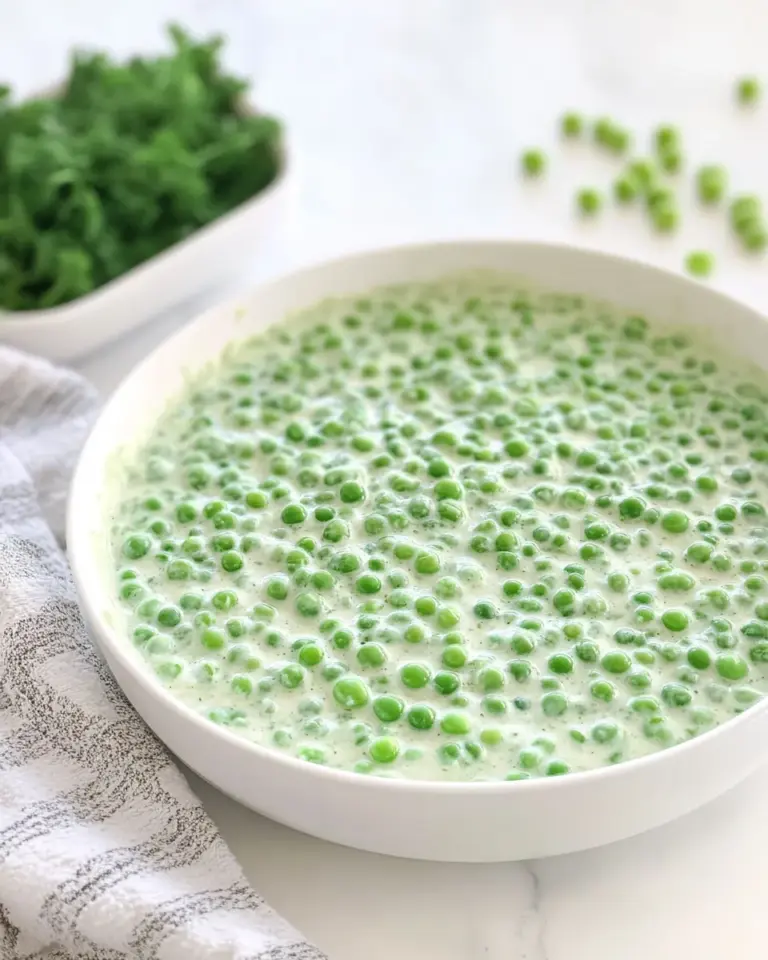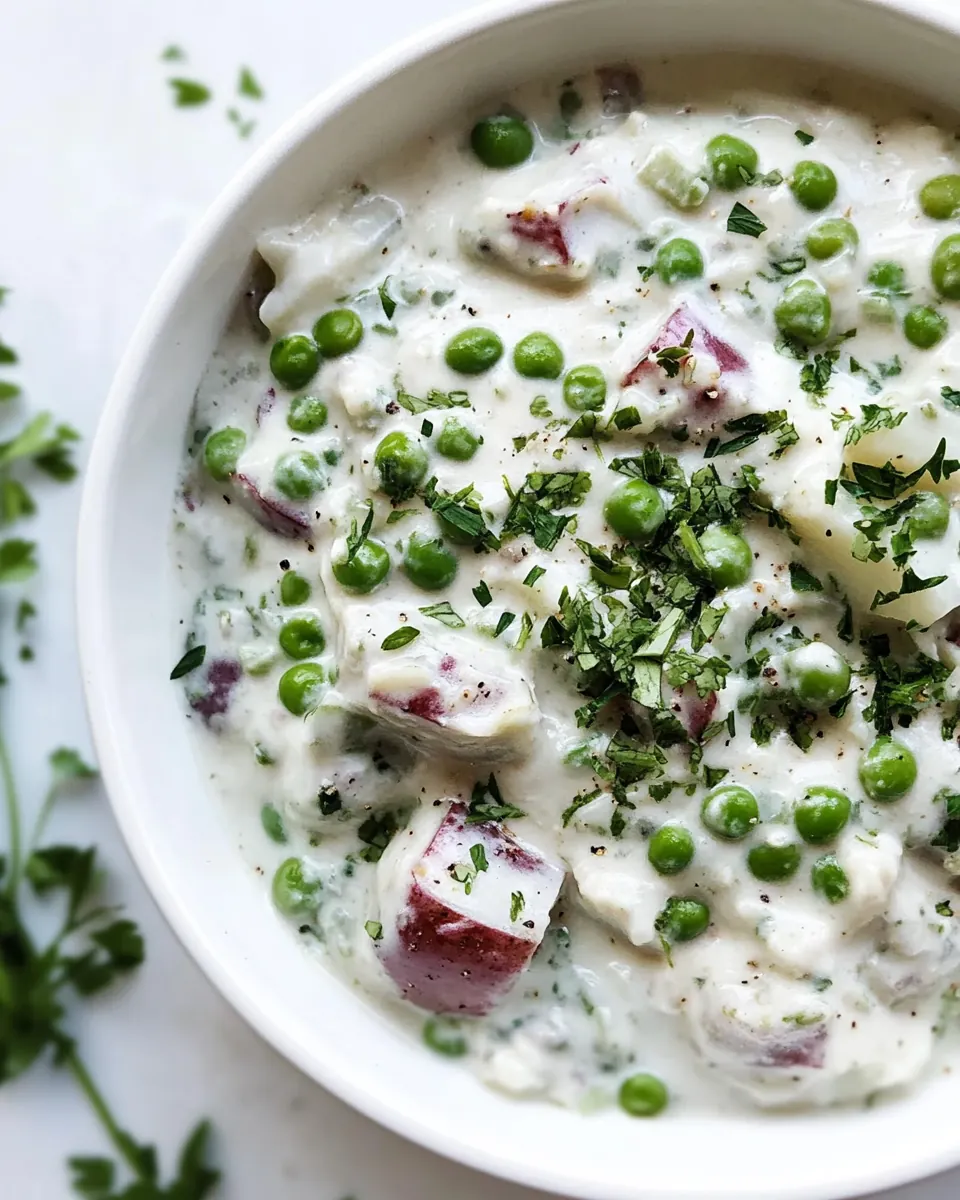
Creamed Peas and Potatoes
Creamed Peas and Potatoes is one of those cozy, old fashioned dishes that makes me think of family dinners around a worn wooden table, steam fogging the windows on a cool spring evening.
I remember the first time I made Creamed Peas and Potatoes for friends who were visiting after a long day of hiking, and how the simple combination of potatoes and peas felt wholesome and restorative. There was nothing showy about it, just honest comfort: creamy sauce clinging to tender cubes of potatoes, pearls of peas popping with a bright green bite, and a whisper of parmesan that made everyone lean in for seconds. That night I learned that a recipe does not need to be complicated to be memorable. The dish invited conversation, and by the time dessert was barely a thought, plates were scraped clean.
Over the years I’ve adjusted proportions and techniques so the texture is just right, and I’ve come to love how adaptable Creamed Peas and Potatoes is. Sometimes I make it as a cozy dinner on a weeknight, other times it becomes a star side at a casual supper. The method is forgiving, and it rewards attention to small details like the thickness of the sauce and the tenderness of the potatoes. When the sauce smells faintly nutty from the parmesan and the kitchen hums with the soft bubbling of milk and cream, you know good things are coming.
Recipe Snapshot
25 mins
10 mins
15 mins
Easy
250 kcal
American
Gluten-Free, Low FODMAP
Side Dishes
Large pot, Large saucepan, Whisk, Colander
Why You’ll Love This Creamed Peas and Potatoes
Comforting, not fussy
I love that Creamed Peas and Potatoes takes simple ingredients and turns them into something that feels indulgent without being heavy. The interplay between creamy sauce and tender potatoes creates a texture that is both smooth and substantial, a quality I value on nights when I want food that soothes.
Bright, seasonal snap
Using fresh or frozen peas gives the dish a lively burst of color and a bright flavor that balances the richness of the milk and heavy cream. I especially reach for this recipe in spring, when green vegetables are at their peak, but frozen peas make it possible any time of year.
Versatile as a side or main
I appreciate recipes that pull double duty. Creamed Peas and Potatoes works as a hearty side for dinner, and it can also stand alone as a light main for a casual lunch. Its comforting nature makes it ideal for family meals and for guests who crave familiarity.
Easy technique, big payoff
The method centers on a classic thickened sauce, which you can master quickly. Once you get comfortable whisking butter and flour into a roux and gradually adding milk and heavy cream, you can adapt this base to other vegetables and cheeses. That technique is a small skill with big returns.
Minimal ingredients, maximum flavor
There is a pleasing honesty to a recipe that uses few components well. Creamed Peas and Potatoes relies on quality staples like parmesan, butter, and fresh or frozen peas to deliver flavor without fuss. I find that this simplicity is part of why dinner feels effortless and satisfying.
Main Ingredients for Creamed Peas and Potatoes
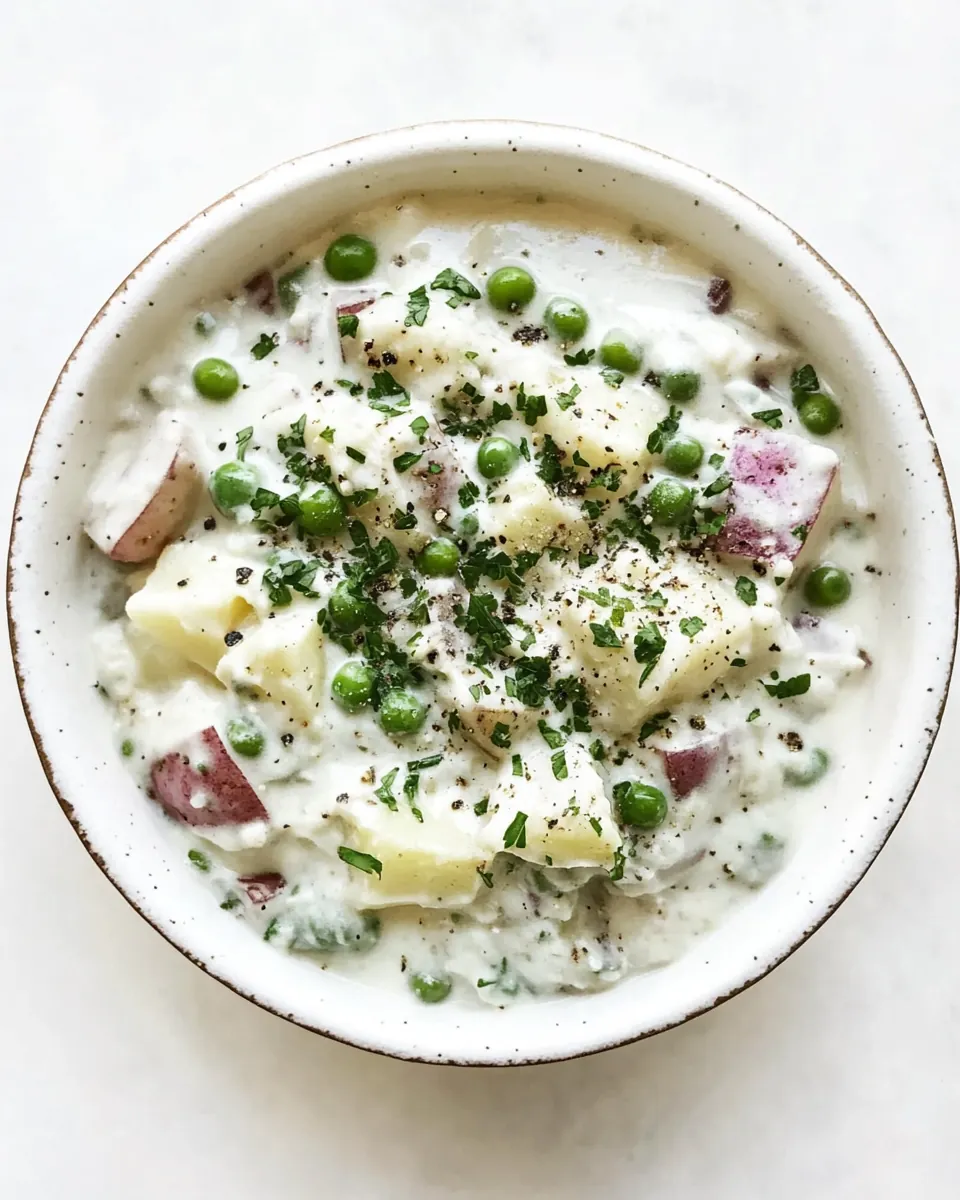
These ingredients form a short, harmonious cast. The philosophy here is about balance: starchy potatoes give body, sweet peas add brightness, and a creamy sauce built from butter, flour, milk, and heavy cream binds everything together. Each player supports the others, creating a comforting texture and a gentle savory finish from the parmesan.
- 1 pound red potatoes: Boil and cube to provide a hearty, starchy base that soaks up the creamy sauce and adds texture contrast. Peel if desired and cook until tender but not falling apart, then combine with other components to create a comforting dish.
- 4 cups peas fresh or frozen: Blanch or thaw and add bright, sweet pops of flavor and color that balance the richness of the sauce. Maintain slight firmness when cooking to preserve texture and visual appeal in the finished creamed mixture.
- 2 tablespoons butter: Melt and use to develop a silky mouthfeel while also browning slightly for a subtle nutty note if desired. Incorporate early to help bind flour and create a smooth, cohesive sauce for the peas and potatoes.
- 2 tablespoons flour: Whisk in to thicken the sauce and create a cohesive, velvety coating for the vegetables. Cook briefly to remove the raw flour taste, allowing it to combine with butter and milk for a classic roux-based creaminess.
- 1 teaspoon salt: Season and enhance overall flavor by bringing out subtle savory notes and balancing the creaminess. Add gradually and taste as you go to avoid over-salting, especially if using other salty components.
- 1/2 teaspoon pepper: Ground and sprinkle to introduce mild heat and complexity that complements the cream and cheese. Adjust according to preference to ensure a gentle background spiciness without overpowering the dish.
- 2 cups milk: Heat and pour in to form the liquid backbone of the sauce, adding body and mellow dairy flavors. Warm before combining with the roux to prevent curdling and to ensure a smooth, lump-free consistency.
- 1 cup heavy cream: Stir in for rich, indulgent creaminess and a silky texture that elevates the sauce’s decadence. Use alongside milk to control richness and to create a lush, smooth finish for the creamed vegetables.
- 1/4 cup parmesan grated: Grate and sprinkle to contribute a savory, umami-packed finish that deepens the overall flavor profile. Fold in near the end to melt gently into the sauce and add a subtle tangy, salty kick.
How to Assemble Creamed Peas and Potatoes
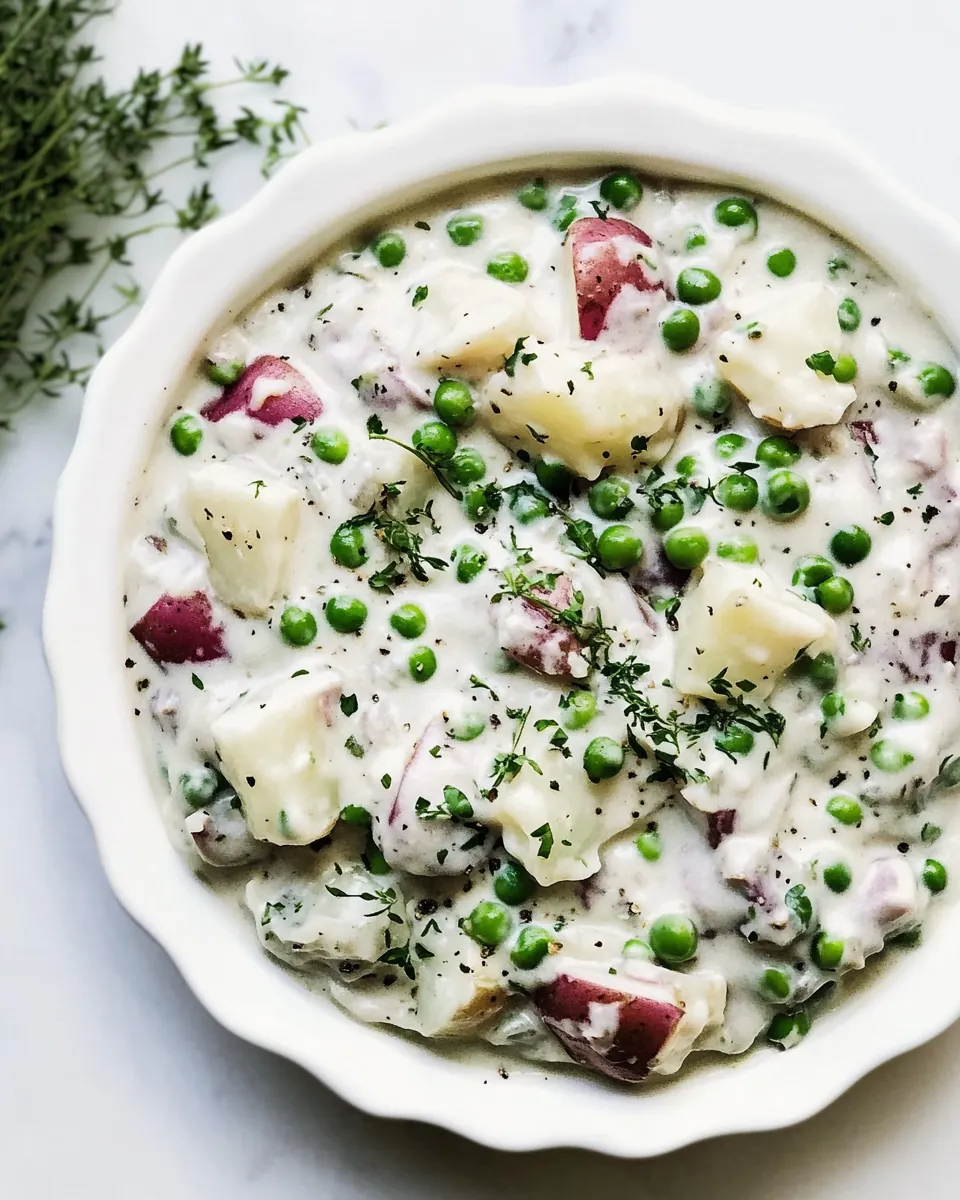
Assembling this dish is comforting and straightforward. I like to approach it with a calm rhythm, cooking the potatoes first, preparing the sauce, then folding everything together so the texture stays perfect.
- Bring a large pot to boil and boil the potatoes for 10-12 minutes or until fork tender.: The kitchen will start to smell faintly of warm starch as the water simmers, and you should hear a gentle, rolling boil. Test with a fork for resistance, aiming for tender but intact pieces that yield without disintegrating, because overcooked potatoes can turn mushy and absorb too much sauce. To avoid uneven cooking, cut the potatoes into similar sized pieces and watch that the boil remains steady not violent, which causes chipping and rough edges.
- Add the peas the last 3 minutes of cooking time. Drain.: When the timing nears, slide in the peas , and you will notice the pot brightening as the green color blooms. The short cooking keeps the peas sweet and slightly firm, which contrasts with the soft potatoes . A common mistake is overcooking the peas until they turn dull and mealy, so set a timer and avoid letting them sit in hot water after draining.
- In a large saucepan over medium high heat add the butter and melt. Whisk in the flour, salt and pepper until it thickens up.: Steam escapes as you pour, and the potatoes and peas will glisten slightly when properly drained. Removing excess water prevents a watery sauce that cannot cling to the ingredients. If you rush this step and leave too much water, the sauce will be thin and the dish may separate, so let them drain fully, and if needed return briefly to the pot on low heat to evaporate lingering moisture.
- Whisk in the milk, heavy cream, and parmesan over medium high heat until thick.: The butter will foam and then settle, releasing a warm, buttery aroma. Maintaining medium high heat helps the butter melt quickly without browning, which preserves a clean flavor for the roux. A typical error is letting the butter brown, which introduces an unintended nutty note and can overpower the delicate peas , so watch it closely and reduce heat if it starts to color.
- Add the potatoes and peas back to the sauce for 2-3 minutes and serve.: As you whisk the flour into the melted butter , the mixture will turn from glossy to slightly matte and smell of cooked starch, signaling the roux is ready. Cook briefly so the raw flour taste disappears, but do not let it darken. If lumps form, keep whisking patiently and consider lowering the heat; persistent lumps can create a grainy sauce, while a smooth roux ensures a silky finish.
- Whisk in the milk, heavy cream, and parmesan over medium high heat until thick: When you add the milk and heavy cream in a slow steady stream while whisking, the sauce will emulsify and become glossy. The aroma becomes rich and slightly sweet as the dairy warms, and the parmesan melts in to lend a savory depth. Simmer gently so the sauce reduces and coats the back of a spoon; boiling aggressively risks breaking the sauce or curdling. If the sauce seems thin at first, be patient and simmer to concentrate flavors and reach the proper consistency.
- Add the potatoes and peas back to the sauce for 2 to 3 minutes and serve: Once combined, you'll see the sauce cling to each piece of potato and pop of pea , creating a glossy, comforting presentation. Heat them just long enough for flavors to marry without softening the peas further, and stir gently to avoid smashing the potatoes . Overstirring or cooking too long can break textures, so aim for 2 to 3 minutes of gentle warming, then transfer to plates and enjoy immediately while the sauce is warm and silky.
Make It Your Own
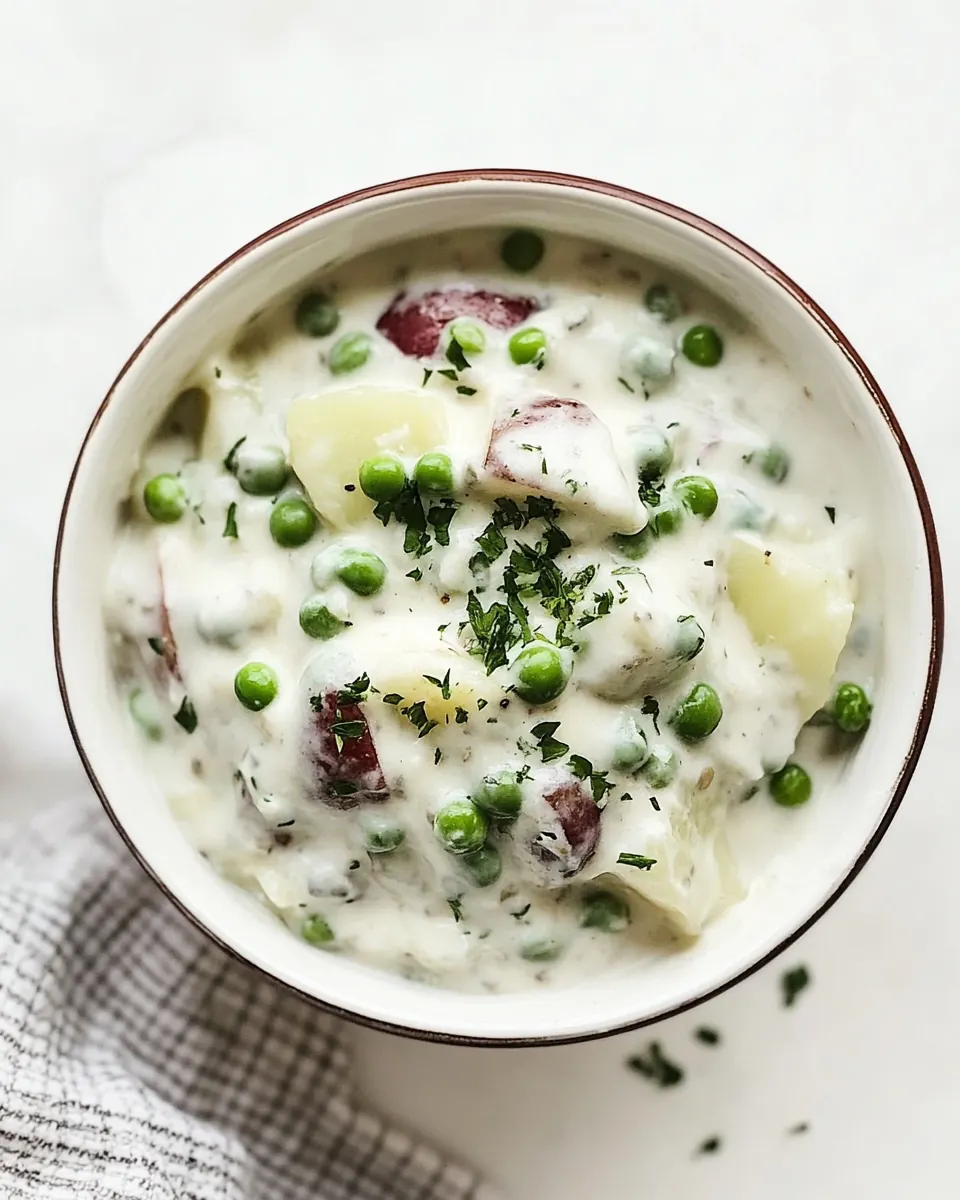
I like to offer small adjustments that let you tailor Creamed Peas and Potatoes to your pantry and preferences. Below are practical tips I use when I want to tweak texture, richness, and seasoning.
- Adjust creaminess — If you prefer a lighter sauce, substitute part of the heavy cream with extra milk. This reduces richness while keeping a pleasing mouthfeel, but be mindful that the sauce will be slightly less glossy and will need a bit more simmering to thicken.
- Parmesan tip — Grate the parmesan fresh and add it off the heat to avoid graininess. Freshly grated cheese melts more smoothly into the warm sauce, giving a silkier texture than pre grated varieties, which can clump and resist fully incorporating.
- Pea timing — Add frozen peas toward the end of potato boiling to preserve color and snap. Overcooked peas lose their bright taste and become mushy, so a short blanch keeps them lively and appealing.
- Roux control — Whisk the flour into melted butter until the mixture smells slightly toasty but not dark. This removes raw notes, and a properly made roux ensures your sauce will be smooth; any rush here risks lumps.
- Salt carefully — Season after adding the parmesan because the cheese contributes salt. Taste the sauce before adding more, balancing the seasoning slowly to avoid over salting.
- Serving temperature — Serve immediately while the sauce is warm and silky so the texture is at its best. If it sits and cools, the sauce can thicken and lose its sheen, so rewarm gently over low heat with a splash of milk if needed.
Great Combinations for Creamed Peas and Potatoes
This dish pairs beautifully with a range of menus and occasions. Whether you need a cozy weeknight dinner accompaniment or a gentle side for a holiday table, these suggestions will help you plan. Think about temperature contrasts, textural variety, and seasonal context to round out the meal.
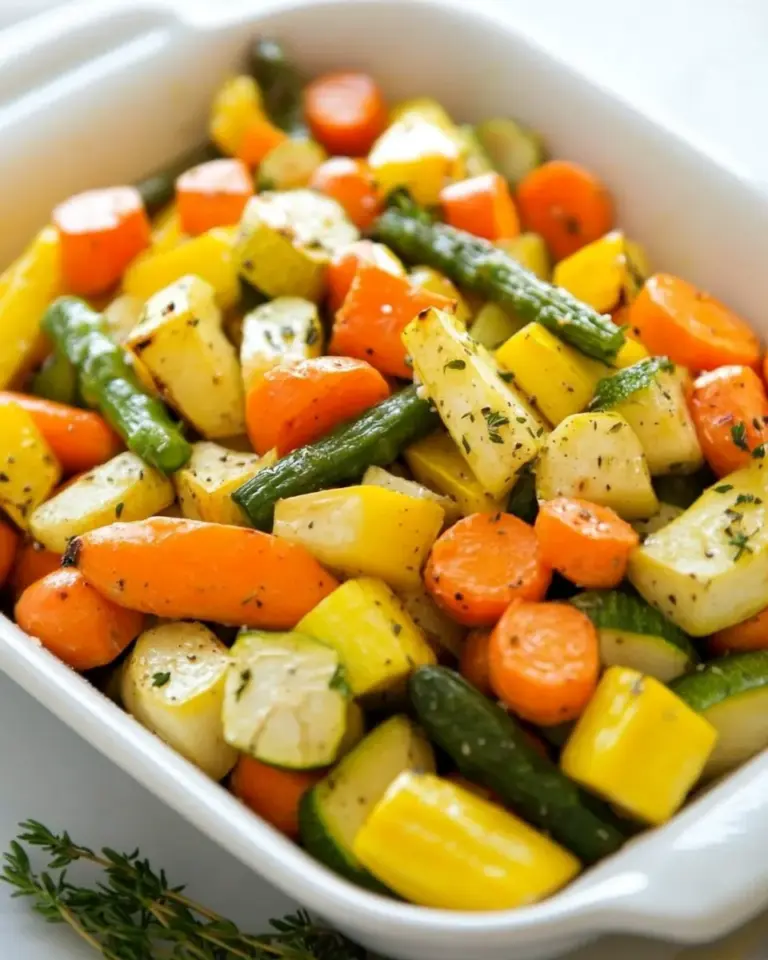
- Simple roasted vegetables — A tray of crisp roasted root vegetables adds contrasting texture and caramelized flavor, complementing the creamy mouthfeel of Creamed Peas and Potatoes.
- Light green salad — A fresh salad with a bright vinaigrette cuts through the richness, offering a palate cleansing bite that keeps the meal balanced.
- Casual family dinners — Serve this as a warm, comforting side for everyday dinners where simplicity and satisfaction are the goal, ideal for weeknight gatherings.
- Spring occasions — The fresh green notes of this recipe make it fitting for spring lunches or brunches, when lighter, vegetable forward dishes are welcome.
- Storage tips — Refrigerate leftovers in an airtight container for up to three days, and rewarm gently on the stovetop with a little milk to restore the sauce’s sheen.
- Seasonal pairings — Pair with other spring vegetables to highlight the season, keeping flavors bright and the menu cohesive.
FAQ
Conclusion
Creamed Peas and Potatoes is special because it transforms humble ingredients into a comforting, elegant dish that feels like home. The harmony between tender potatoes, bright peas, and a silky dairy sauce delivers satisfying texture and flavor with minimal fuss. I encourage you to give this recipe a try, whether for a simple weeknight meal or as a warming side at a small gathering. It’s forgiving, adaptable, and reliably crowd pleasing, so enjoy the process and the delicious result.
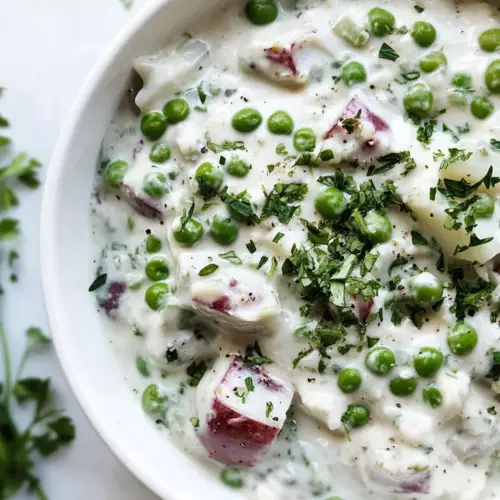
Creamed Peas and Potatoes
Equipment
- Large Pot
- Large saucepan
- Whisk
- Colander
Ingredients
- 1 pound red potatoes Boil and cube to provide a hearty, starchy base that soaks up the creamy sauce and adds texture contrast. Peel if desired and cook until tender but not falling apart, then combine with other components to create a comforting dish.
- 4 cups peas fresh or frozen Blanch or thaw and add bright, sweet pops of flavor and color that balance the richness of the sauce. Maintain slight firmness when cooking to preserve texture and visual appeal in the finished creamed mixture.
- 2 tablespoons butter Melt and use to develop a silky mouthfeel while also browning slightly for a subtle nutty note if desired. Incorporate early to help bind flour and create a smooth, cohesive sauce for the peas and potatoes.
- 2 tablespoons flour Whisk in to thicken the sauce and create a cohesive, velvety coating for the vegetables. Cook briefly to remove the raw flour taste, allowing it to combine with butter and milk for a classic roux-based creaminess.
- 1 teaspoon salt Season and enhance overall flavor by bringing out subtle savory notes and balancing the creaminess. Add gradually and taste as you go to avoid over-salting, especially if using other salty components.
- 1/2 teaspoon pepper Ground and sprinkle to introduce mild heat and complexity that complements the cream and cheese. Adjust according to preference to ensure a gentle background spiciness without overpowering the dish.
- 2 cups milk Heat and pour in to form the liquid backbone of the sauce, adding body and mellow dairy flavors. Warm before combining with the roux to prevent curdling and to ensure a smooth, lump-free consistency.
- 1 cup heavy cream Stir in for rich, indulgent creaminess and a silky texture that elevates the sauce’s decadence. Use alongside milk to control richness and to create a lush, smooth finish for the creamed vegetables.
- 1/4 cup parmesan grated Grate and sprinkle to contribute a savory, umami-packed finish that deepens the overall flavor profile. Fold in near the end to melt gently into the sauce and add a subtle tangy, salty kick.
Instructions
- Bring a large pot to boil and boil the potatoes for 10-12 minutes or until fork tender.: The kitchen will start to smell faintly of warm starch as the water simmers, and you should hear a gentle, rolling boil. Test with a fork for resistance, aiming for tender but intact pieces that yield without disintegrating, because overcooked potatoes can turn mushy and absorb too much sauce. To avoid uneven cooking, cut the potatoes into similar sized pieces and watch that the boil remains steady not violent, which causes chipping and rough edges.
- Add the peas the last 3 minutes of cooking time. Drain.: When the timing nears, slide in the peas , and you will notice the pot brightening as the green color blooms. The short cooking keeps the peas sweet and slightly firm, which contrasts with the soft potatoes . A common mistake is overcooking the peas until they turn dull and mealy, so set a timer and avoid letting them sit in hot water after draining.
- In a large saucepan over medium high heat add the butter and melt. Whisk in the flour, salt and pepper until it thickens up.: Steam escapes as you pour, and the potatoes and peas will glisten slightly when properly drained. Removing excess water prevents a watery sauce that cannot cling to the ingredients. If you rush this step and leave too much water, the sauce will be thin and the dish may separate, so let them drain fully, and if needed return briefly to the pot on low heat to evaporate lingering moisture.
- Whisk in the milk, heavy cream, and parmesan over medium high heat until thick.: The butter will foam and then settle, releasing a warm, buttery aroma. Maintaining medium high heat helps the butter melt quickly without browning, which preserves a clean flavor for the roux. A typical error is letting the butter brown, which introduces an unintended nutty note and can overpower the delicate peas , so watch it closely and reduce heat if it starts to color.
- Add the potatoes and peas back to the sauce for 2-3 minutes and serve.: As you whisk the flour into the melted butter , the mixture will turn from glossy to slightly matte and smell of cooked starch, signaling the roux is ready. Cook briefly so the raw flour taste disappears, but do not let it darken. If lumps form, keep whisking patiently and consider lowering the heat; persistent lumps can create a grainy sauce, while a smooth roux ensures a silky finish.
- Whisk in the milk, heavy cream, and parmesan over medium high heat until thick: When you add the milk and heavy cream in a slow steady stream while whisking, the sauce will emulsify and become glossy. The aroma becomes rich and slightly sweet as the dairy warms, and the parmesan melts in to lend a savory depth. Simmer gently so the sauce reduces and coats the back of a spoon; boiling aggressively risks breaking the sauce or curdling. If the sauce seems thin at first, be patient and simmer to concentrate flavors and reach the proper consistency.
- Add the potatoes and peas back to the sauce for 2 to 3 minutes and serve: Once combined, you'll see the sauce cling to each piece of potato and pop of pea , creating a glossy, comforting presentation. Heat them just long enough for flavors to marry without softening the peas further, and stir gently to avoid smashing the potatoes . Overstirring or cooking too long can break textures, so aim for 2 to 3 minutes of gentle warming, then transfer to plates and enjoy immediately while the sauce is warm and silky.
Notes
- Adjust creaminess — If you prefer a lighter sauce, substitute part of the heavy cream with extra milk. This reduces richness while keeping a pleasing mouthfeel, but be mindful that the sauce will be slightly less glossy and will need a bit more simmering to thicken.
- Parmesan tip — Grate the parmesan fresh and add it off the heat to avoid graininess. Freshly grated cheese melts more smoothly into the warm sauce, giving a silkier texture than pre grated varieties, which can clump and resist fully incorporating.
- Pea timing — Add frozen peas toward the end of potato boiling to preserve color and snap. Overcooked peas lose their bright taste and become mushy, so a short blanch keeps them lively and appealing.
- Roux control — Whisk the flour into melted butter until the mixture smells slightly toasty but not dark. This removes raw notes, and a properly made roux ensures your sauce will be smooth; any rush here risks lumps.
- Salt carefully — Season after adding the parmesan because the cheese contributes salt. Taste the sauce before adding more, balancing the seasoning slowly to avoid over salting.
- Serving temperature — Serve immediately while the sauce is warm and silky so the texture is at its best. If it sits and cools, the sauce can thicken and lose its sheen, so rewarm gently over low heat with a splash of milk if needed.