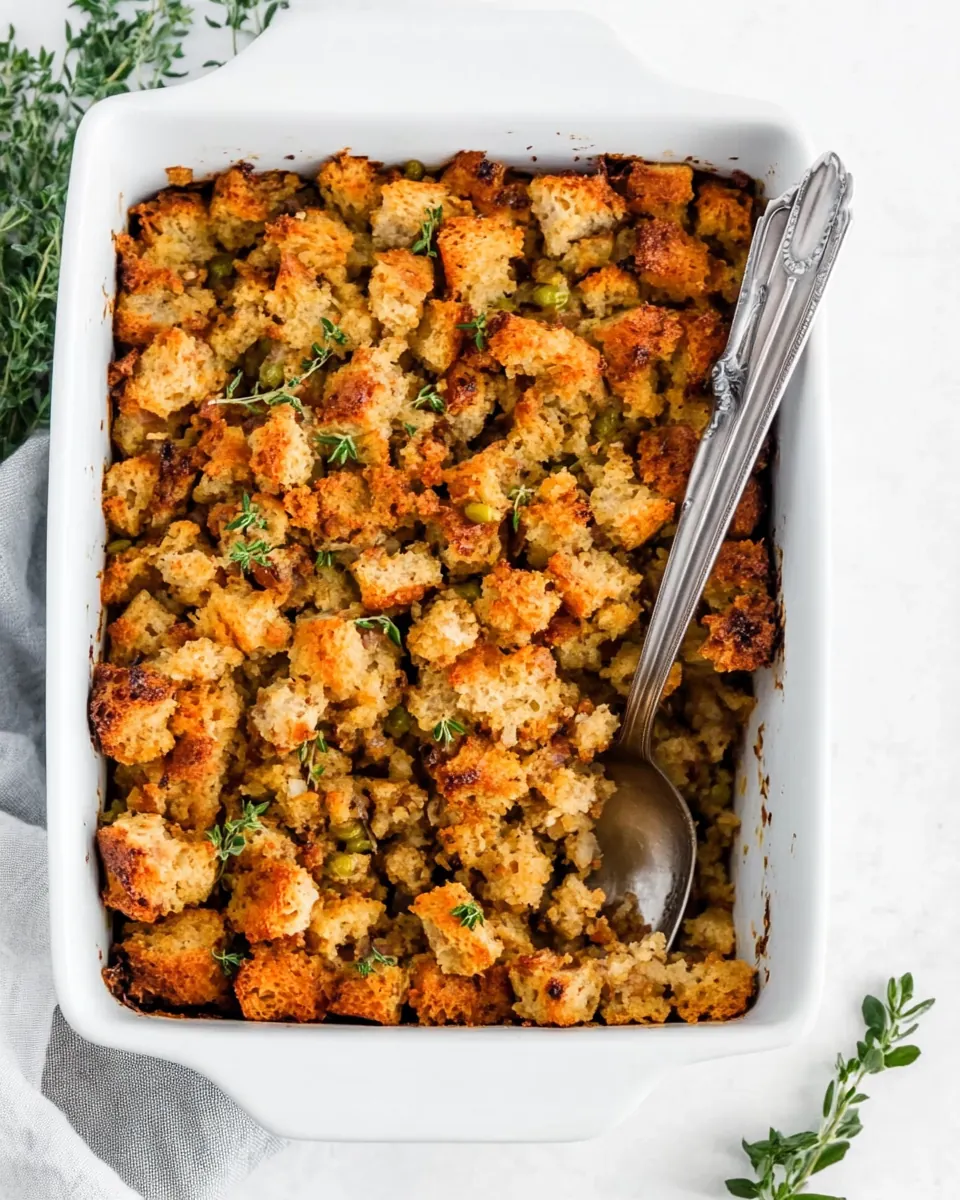
Classic Sausage Stuffing
Classic Sausage Stuffing is the recipe I reach for when the house fills with guests and warm, savory memories are on the menu.
There was a year I learned how much a simple dish could anchor a holiday table. I remember dicing a mountain of onions while a child wandered through the kitchen asking a hundred questions, and the smell of butter and sage carried through the rooms. That afternoon taught me that the best recipes are the ones that welcome conversation, not silence, and that a perfectly seasoned stuffing can become the star conversation piece. Over time I refined the balance between crisp top and moist center so every forkful offers contrast, and that careful attention makes this Classic Sausage Stuffing feel both elevated and homey.
Another memory that shaped this version was experimenting with texture. Toasting the white sandwich bread until it was dry but not overly browned created a structure that soaks up stock without becoming gluey. Browning the Italian Sausage properly released savory fat and caramelized bits that I can still taste when I close my eyes. When I serve this, guests compliment the aromatic herbs, and I always smile because it started with a small tweak in my kitchen. You will find rituals in the steps, and each one matters to the final result.
Recipe Snapshot
1 hr 40 mins
60 mins
40 mins
Medium
250 kcal
American
Gluten-Free, Keto
Side Dishes
Baking sheets, Large skillet, 2 1/2 quart baking dish, Large mixing bowl, Slotted spoon
What We Adore About This Classic Sausage Stuffing
Comfort with Contrast
I love how Classic Sausage Stuffing delivers a combination of textures. The crisp, golden top gives way to a soft, herb-scented interior. That textural contrast keeps every bite interesting, and I always notice how people reach for a second helping.
Herb Forward and Aromatic
Fresh sage, thyme, rosemary, and parsley elevate this stuffing in a way dried herbs cannot. I insist on mincing the herbs right before using them so the aroma stays vibrant. The herb mix sings with the richness of butter and savory Italian Sausage, making each forkful deeply fragrant.
Reliable Make Ahead Friendly
I appreciate recipes that respect a cook’s schedule. This one can be assembled ahead and baked later, which means less stress when guests arrive. I often prepare the night before, refrigerate, and then bake the next day, and it still turns out tender inside with a crisp top.
Flexible Heat and Seasoning
This stuffing is forgiving. If you choose mild or hot Italian Sausage, you control the heat level. I tend to start conservative with salt because the sausage contributes sodium. Tasting as you go prevents over seasoning, and I always remind myself and readers to trust their palate.
Feeds a Crowd Without Fuss
With about ten servings in mind, this dish scales easily. I find that the quantities create the right bread to liquid ratio, avoiding mushy or dry extremes. When I’m hosting, that reliability is priceless.
Key Ingredients for Classic Sausage Stuffing
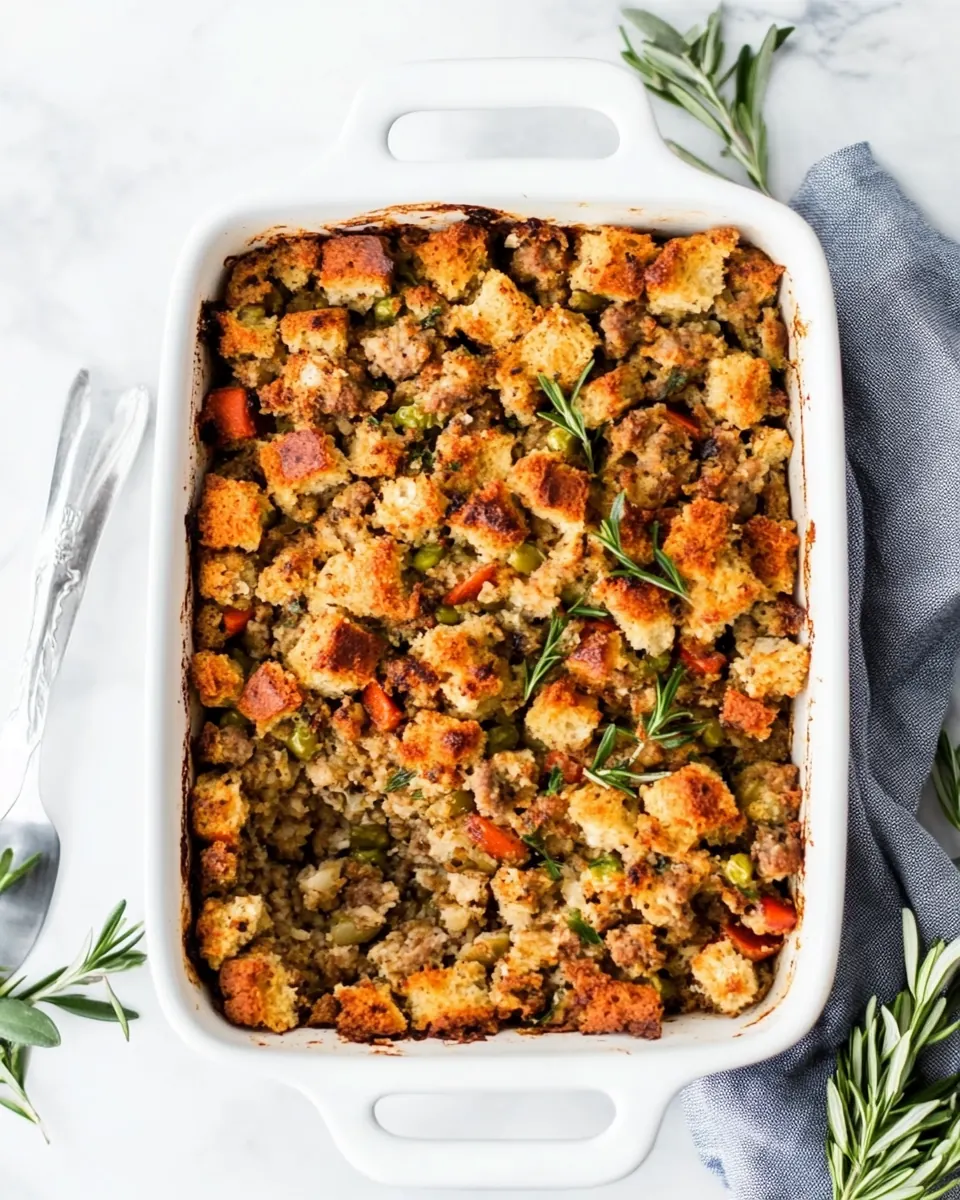
These ingredients work together to build depth, texture, and balance. The bread creates the structure, absorbing flavorful liquids, while butter and Italian Sausage bring richness and savory fat. Aromatic vegetables and fresh herbs add brightness so the dish never feels one dimensional. Each player has a clear role: texture, fat, aromatics, and moisture, and together they produce a stuffing that is both satisfying and nuanced.
- 1 loaf white sandwich bread Cubed. About 12-14 cups: Cubed into roughly 1-inch pieces to provide the bulk and texture for the stuffing; soak up savory liquids and bind with eggs while roasting for a crisp exterior and soft interior. Use slightly stale bread if possible to avoid sogginess and ensure even absorption of flavors throughout the dish.
- 8 tablespoons butter plus more for baking dish: Melted and used for sautéing aromatics and coating the bread to add richness and moisture; contributes a silky mouthfeel and a golden-brown finish when baked. Add additional butter to the baking dish to prevent sticking and promote browning on the top layer.
- 2 onions diced: Diced finely to release natural sweetness and aromatic depth when sautéed; provides a savory foundation that balances the richness of sausage and butter. Cook until translucent to soften texture and integrate flavor into the stuffing mix.
- 3 celery stalks finely diced: Finely diced to add a subtle vegetal crunch and aromatic freshness; complements onions and enriches the stuffing base with classic mirepoix character. Sauté gently to preserve a tender bite and to let its mild flavor meld with herbs and sausage.
- 4 cloves garlic minced: Minced and added to the sauté to impart a pungent, savory note that enhances overall depth; contributes an aromatic hit without overwhelming other flavors. Cook briefly to mellow sharpness and integrate with onion, celery, and herbs.
- 1 1/2 tablespoons fresh sage minced: Minced fresh to add warm, slightly peppery, and savory notes that evoke traditional holiday flavors; binds well with sausage and bread to create a characteristic stuffing profile. Use fresh leaves for brighter flavor, and add during sautéing to release oils.
- 1 1/2 tablespoons fresh thyme minced: Minced fresh to lend a fragrant, lemony-earthy lift that brightens the stuffing mixture; pairs well with sage and rosemary to create a layered herbaceous backbone. Add near the end of cooking aromatics to preserve delicate oils and fragrance.
- 1 1/2 tablespoons fresh rosemary minced: Minced fresh to contribute a pine-like, resinous aroma that cuts through richness and complements fatty sausage; use sparingly to avoid overpowering other herbs. Chop finely so the texture disperses evenly throughout the bread and filling.
- 3/4 cup fresh parsley minced: Minced fresh to bring a clean, grassy brightness and a hint of peppery bite; acts as a finishing herb that refreshes and balances rich components. Fold in near the end to maintain its color and lively flavor impact.
- 1 lbs Italian Sausage ground, or remove casings. Mild or hot. Hot makes the stuffing spicy.: Cooked and crumbled after removing casings or using ground sausage to deliver savory, spiced meatiness and fat that enriches texture and flavor; choose mild or hot depending on desired heat level. Brown thoroughly to develop Maillard flavors and render fat for sautéing the aromatics.
- 3 eggs beaten: Beaten and used to help bind the bread and other components together, creating a custardy interior when baked; contributes structure and a tender crumb. Whisk until smooth before combining with stock and bread for even texture throughout the stuffing.
- 2.5 cups low sodium chicken stock or Turkey stock: Added to moisten the bread cubes and create a cohesive, savory base; contributes diluted chicken or turkey flavors for depth without excessive salt. Pour slowly and mix to achieve the desired moist-but-not-soggy consistency before baking.
- kosher salt: Seasoned to taste to enhance and balance the overall flavor profile by bringing out natural savory notes; sprinkle cautiously and adjust after combining with stock and sausage. Prefer kosher salt for controlled seasoning and easy measuring during prep.
- fresh ground pepper: Freshly ground to taste to add bright heat and aromatic spice that lifts the stuffing; grind directly for best flavor intensity. Add in increments and taste as you go to avoid overpowering delicate herb and bread flavors.
How to Make Classic Sausage Stuffing
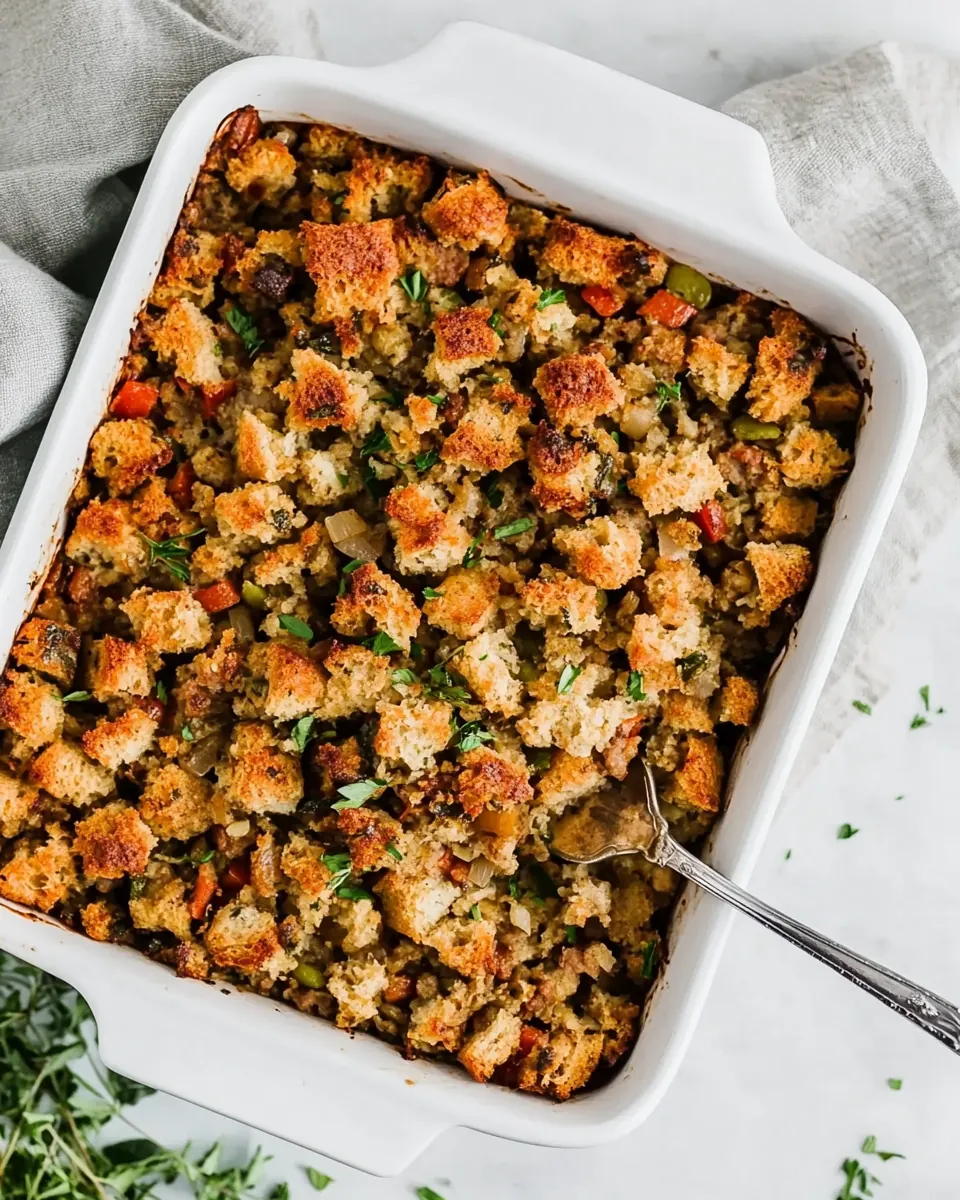
I like to think of this as a sequence of small rituals that build flavor. Each step adds a layer, from drying the bread to browning the Italian Sausage, culminating in a final bake that crisps the surface while keeping the center tender. Below I expand each direction so you can sense what success looks and smells like, and avoid common missteps.
- Preheat oven to 300°F degrees and spread bread cubes on 2 baking sheets in a single layer. Toast, stirring a few times until dry, about 30-40 minutes. Allow to cool then transfer to a large mixing bowl.: When you place the pans in the oven you will first notice a dry, warm scent as the cubes lose moisture, which is exactly what you want. The goal here is gentle drying, not browning, so the toaster like sound is minimal, and the cubes should rattle softly when shaken. This dryness lets the bread absorb stock later without collapsing into a pudding. A frequent error is overcrowding the pans, which traps steam and prevents even drying, so spread them carefully. If you see early browning, lower the oven slightly to preserve a neutral toasty color.
- Increase oven temperature to 375°F and butter a 2 1/2 quart baking dish.: As you stir the bread occasionally, you can hear the subtle change in texture, and the pieces will feel firm to the touch when they are ready. The aroma will shift from yeasty to gently toasted, and that smell signals that the internal crumb has shed moisture. Stirring redistributes heat so all cubes dry evenly; skipping this will leave pockets that are still moist and compromise the final texture. If you find any particularly soft pieces, separate and return them for a few extra minutes to match the rest.
- Brown sausage in large skillet over medium high heat, 6-10 minutes. Remove with a slotted spoon.: Cooling prevents the residual oven heat from softening the bread too much when you combine it with wet ingredients. You will note the bread feels crisp and light when cool, which is ideal. Bringing warm bread into contact with eggs and stock can start premature softening, so patience here pays off. Avoid rushing this step, because working with warm bread increases the risk of ending up with an overly dense stuffing.
- In a very large skillet or pot over medium-high heat, melt the butter. Add the onions, celery, and 1.5 teaspoons kosher salt. Cook until soft and golden, about 10 minutes.: Raising the oven temperature prepares the dish for a final bake that browns the top. Brushing or rubbing the dish with softened butter gives the edges a golden finish and prevents sticking, adding both flavor and presentation value. The higher heat creates a pleasing crust, so preheating fully is important. A common misstep is not greasing the dish enough, which can make serving messy and tear the edges of the stuffing when scooped.
- Add garlic, sage, rosemary, thyme, and 1/4 teaspoons pepper, cook, stirring often, for 2-3 minutes. Taste, add more salt if needed Remember that the sausage is salty, so don't add too much. Add mixture to the bowl with the bread cubes, along with the cooked sausage and the chopped parsley.: When the Italian Sausage hits the hot skillet it should sizzle, and as it cooks you'll see rendered fat and browned bits forming, which contribute deep savory notes. Break it apart so small pieces caramelize evenly. Browning concentrates flavor through Maillard reaction, and those browned bits are essential for character. Under cooking leaves raw texture and flavor, while overcrowding the pan prevents browning and yields steamed, pale sausage.
- Pour chicken/turkey stock and beaten eggs over bread mixture. Stir until mixture is fully combined and bread is moistened.: Using a slotted spoon drains excess fat and leaves the browned morsels behind, which prevents the stuffing from becoming greasy. Transfer the sausage to a plate or bowl so it can rest and cool slightly before combining. If you pour all the fat into the bread mixture, the result will be overly oily, so straining is a simple but impactful technique. A mistake is wiping the pan too clean at this stage, because those fond bits can be used for extra flavor when deglazing later if desired.
- Transfer to the baking dish, tightly wrap with foil.: As the butter melts, it will foam and then settle, releasing a nutty aroma if warmed gently. This warm fat is the base for softening the vegetables and coaxing out their sweetness, and it helps the herbs bloom. Be careful not to brown the butter at this point unless you want a deeper, nuttier flavor. Overheating can make the mixture bitter, so keep the heat controlled.
- Bake for 20 minutes. Remove foil, bake for another 20 minutes or until golden brown on top.: As you add the onions and celery , you should hear a steady but gentle sizzle and soon see the vegetables soften and become glossy. The salt helps draw moisture out, speeding the breakdown and concentrating flavor. Cook until soft and golden, which brings out natural sweetness and gives a rounded base. If the pan becomes dry and vegetables start to stick, add a touch more butter or a splash of stock to prevent burning.
- Cook until soft and golden, about 10 minutes: Ten minutes of attentive cooking transforms sharp raw vegetables into mellow, aromatic building blocks. You will notice a sweet, caramelized scent as edges take on color, and the skillet will reveal flavorful fond. This step is crucial because raw crunchy vegetables will feel out of place in the final stuffing. Avoid rushing by turning up the heat drastically, which can brown too fast and leave raw centers.
- Add garlic, sage, rosemary, thyme, and 1/4 teaspoons pepper, cook, stirring often, for 2 to 3 minutes: Adding the garlic and minced herbs at this stage releases essential oils that perfume the pan. The scent will shift to herbaceous and slightly floral, and the short cook time prevents the garlic from becoming bitter. Stirring distributes flavors and prevents small bits from burning. Overcooking here will mute the fresh herb notes, so keep the window tight and aromatic.
- Taste, add more salt if needed Remember that the sausage is salty, so don't add too much: Tasting at this point ensures the seasoning is balanced because the Italian Sausage already contributes salt. I always sample a small spoonful and adjust cautiously. A common error is over salting before accounting for the sausage, which leads to an overly salty dish after baking concentrates flavors further.
- Add mixture to the bowl with the bread cubes, along with the cooked sausage and the chopped parsley: As you fold these components together, you will see the colors mingle and smell a layered aroma of meat, herbs, and softened vegetables. The interplay of textures becomes evident as the crunchy cubes meet moist elements. Gently folding prevents the bread from mashing into paste, preserving those pleasant pockets of texture. Vigorous mixing at this stage can crush the cubes and produce a dense result.
- Pour chicken/turkey stock and beaten eggs over bread mixture: The liquid and beaten eggs bind and moisten the bread. Pour slowly and then fold to distribute evenly so the mixture is uniformly damp but not soupy. The eggs help set the stuffing so it slices cleanly after baking. Too much liquid will create a heavy, wet texture, while too little leaves it dry, so aim for a tacky, cohesive feel.
- Stir until mixture is fully combined and bread is moistened: When properly combined, the mixture should glisten and hold together when pressed gently. The aromas will become unified, and you will feel a slight resistance when shaping it into the baking dish. This tactile check is more reliable than guessing quantities. Overworking the mixture can compact it, so fold just until evenly moistened.
- Transfer to the baking dish, tightly wrap with foil: Pressing the stuffing into the prepared dish ensures even baking and a tidy presentation. Wrapping tightly with foil traps steam for the initial bake, which helps set the interior without drying the surface. If the foil is loose, moisture escapes and the center can dry out, so seal carefully.
- Bake for 20 minutes: During this covered bake, steam softens the interior and melds flavors. You will notice a warm, comforting aroma filling the kitchen, and the center will firm slightly. This stage is all about gentle finishing without over browning. Removing the dish too early can leave the center under set, so stick to the time guideline and check for a moderately firm texture.
- Remove foil, bake for another 20 minutes or until golden brown on top: Uncovering the dish allows the surface to crisp and brown, creating the textural contrast I love. You should see a golden, slightly blistered top and hear a faint crackle when a spoon breaks through. That browned surface adds flavor through caramelization and Maillard reaction. A common mistake is leaving the dish uncovered the entire time which can dry the stuffing out, so the two stage bake is key for balance.
Change It Up
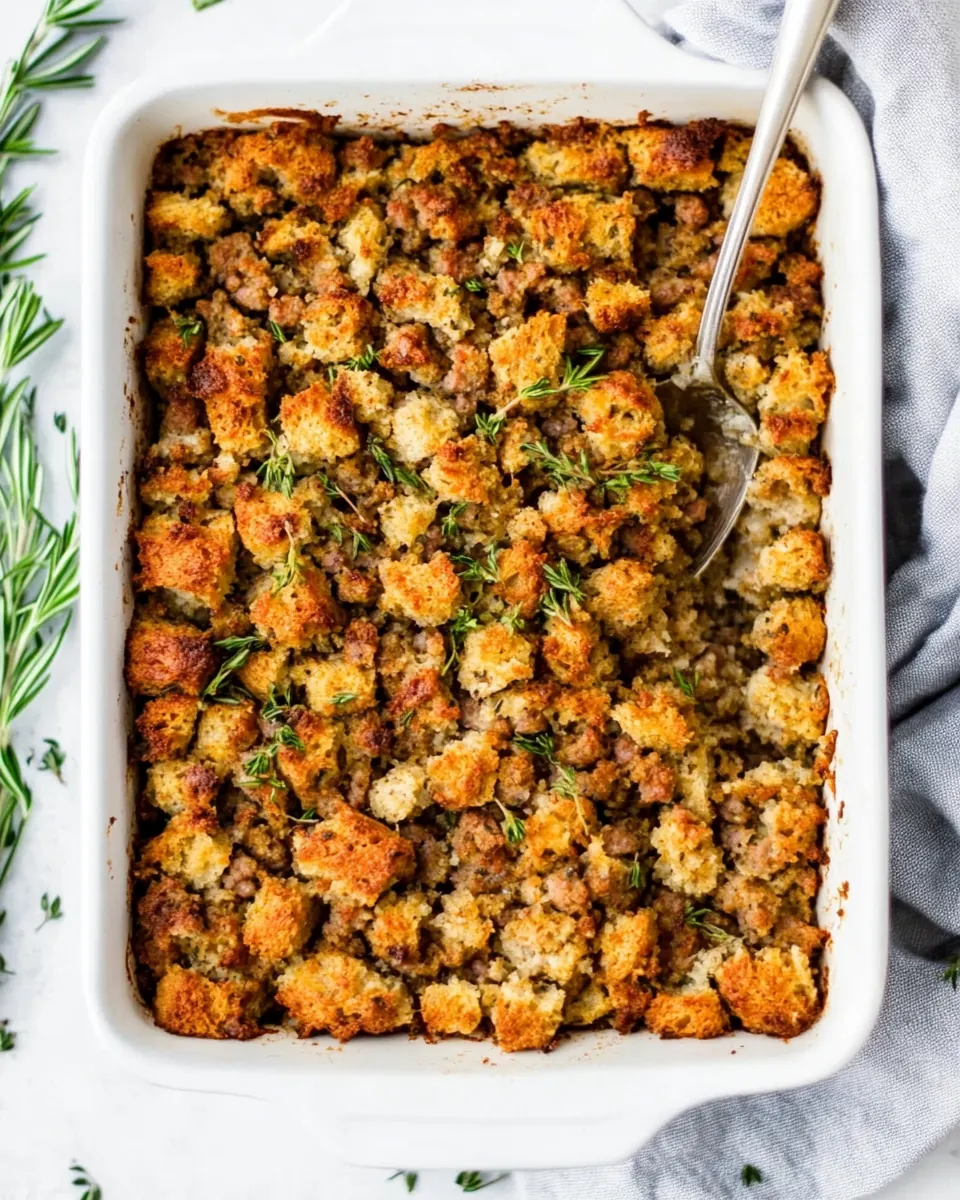
These suggestions help you personalize the dish while respecting the ingredient list. Each tip expands on a practical tweak to control texture, flavor, or timing.
- Swap sausage heat: Choose mild or hot Italian Sausage to match your guests tolerance, remembering hot will make the stuffing noticeably spicy.
- Toast bread purposefully: Dry the cubes until firm but not browned, which allows the proper absorption of stock without collapsing the structure.
- Herb timing: Add parsley at mix time to preserve fresh brightness, while sage, thyme, and rosemary are best cooked briefly with the aromatics to release oils.
- Make ahead strategy: Assemble through the foil wrap, refrigerate up to 24 hours, and bake from cold, adding a few minutes as needed to ensure it is heated through.
- Control moisture: Start with 2.5 cups of low sodium stock and add a splash more only if the mixture feels dry when pressed together, avoiding a soupy outcome.
- Presentation tip: For a crisper edge, bake in a shallow dish so more surface area is exposed to direct heat, creating additional crunchy bites.
Great Combinations for Classic Sausage Stuffing
This dish pairs well with a range of sides and occasions. Below are thoughtful serving ideas, storage guidance, and seasonal opportunities for presenting the stuffing.
- Traditional roast mains: Serve alongside roasted mains for a classic holiday spread, placing the stuffing on a platter so guests can choose portion sizes.
- Vegetable sides: Complement with roasted root vegetables or a green vegetable to balance the richness of the Italian Sausage and butter.
- Occasions: Ideal for Thanksgiving and large family gatherings, this recipe scales predictably and fits well into a make ahead plan.
- Storage tips: Refrigerate leftovers in an airtight container for up to three days, and reheat gently in the oven to restore crispness on top.
- Serving style: For buffet service, keep warm in a covered dish and offer spoonfuls so the textured top stays appealing, and provide a small ladle for easy portioning.
- Seasonal pairings: In fall, pair with baked apples or roasted squash to echo the herb and savory notes present in the stuffing.
FAQ
Conclusion
This Classic Sausage Stuffing stands out because it balances a crisp golden top with a tender, herb packed interior, delivering savory depth from browned sausage and fresh brightness from herbs. I encourage you to try it when you want a reliable, crowd pleasing side that also rewards a little attention to technique. It’s forgiving enough for make ahead plans, yet precise enough to impress, and I hope it becomes one of your go to recipes for holidays and gatherings.
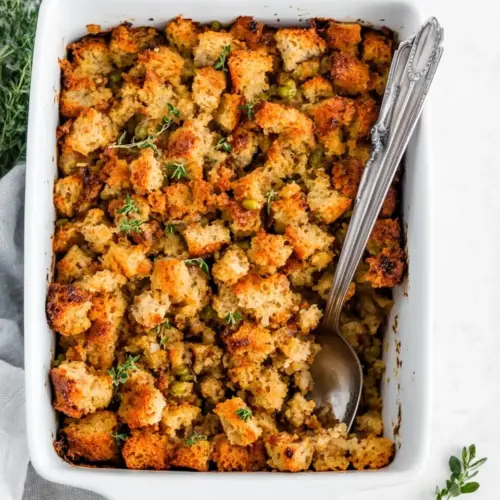
Classic Sausage Stuffing
Equipment
- Baking Sheets
- Large Skillet
- 2 1/2 quart baking dish
- Large Mixing Bowl
- Slotted Spoon
Ingredients
- 1 loaf white sandwich bread Cubed. About 12-14 cups Cubed into roughly 1-inch pieces to provide the bulk and texture for the stuffing; soak up savory liquids and bind with eggs while roasting for a crisp exterior and soft interior. Use slightly stale bread if possible to avoid sogginess and ensure even absorption of flavors throughout the dish.
- 8 tablespoons butter plus more for baking dish Melted and used for sautéing aromatics and coating the bread to add richness and moisture; contributes a silky mouthfeel and a golden-brown finish when baked. Add additional butter to the baking dish to prevent sticking and promote browning on the top layer.
- 2 onions diced Diced finely to release natural sweetness and aromatic depth when sautéed; provides a savory foundation that balances the richness of sausage and butter. Cook until translucent to soften texture and integrate flavor into the stuffing mix.
- 3 celery stalks finely diced Finely diced to add a subtle vegetal crunch and aromatic freshness; complements onions and enriches the stuffing base with classic mirepoix character. Sauté gently to preserve a tender bite and to let its mild flavor meld with herbs and sausage.
- 4 cloves garlic minced Minced and added to the sauté to impart a pungent, savory note that enhances overall depth; contributes an aromatic hit without overwhelming other flavors. Cook briefly to mellow sharpness and integrate with onion, celery, and herbs.
- 1 1/2 tablespoons fresh sage minced Minced fresh to add warm, slightly peppery, and savory notes that evoke traditional holiday flavors; binds well with sausage and bread to create a characteristic stuffing profile. Use fresh leaves for brighter flavor, and add during sautéing to release oils.
- 1 1/2 tablespoons fresh thyme minced Minced fresh to lend a fragrant, lemony-earthy lift that brightens the stuffing mixture; pairs well with sage and rosemary to create a layered herbaceous backbone. Add near the end of cooking aromatics to preserve delicate oils and fragrance.
- 1 1/2 tablespoons fresh rosemary minced Minced fresh to contribute a pine-like, resinous aroma that cuts through richness and complements fatty sausage; use sparingly to avoid overpowering other herbs. Chop finely so the texture disperses evenly throughout the bread and filling.
- 3/4 cup fresh parsley minced Minced fresh to bring a clean, grassy brightness and a hint of peppery bite; acts as a finishing herb that refreshes and balances rich components. Fold in near the end to maintain its color and lively flavor impact.
- 1 lbs Italian Sausage ground, or remove casings. Mild or hot. Hot makes the stuffing spicy. Cooked and crumbled after removing casings or using ground sausage to deliver savory, spiced meatiness and fat that enriches texture and flavor; choose mild or hot depending on desired heat level. Brown thoroughly to develop Maillard flavors and render fat for sautéing the aromatics.
- 3 eggs beaten Beaten and used to help bind the bread and other components together, creating a custardy interior when baked; contributes structure and a tender crumb. Whisk until smooth before combining with stock and bread for even texture throughout the stuffing.
- 2.5 cups low sodium chicken stock or Turkey stock Added to moisten the bread cubes and create a cohesive, savory base; contributes diluted chicken or turkey flavors for depth without excessive salt. Pour slowly and mix to achieve the desired moist-but-not-soggy consistency before baking.
- kosher salt Seasoned to taste to enhance and balance the overall flavor profile by bringing out natural savory notes; sprinkle cautiously and adjust after combining with stock and sausage. Prefer kosher salt for controlled seasoning and easy measuring during prep.
- fresh ground pepper Freshly ground to taste to add bright heat and aromatic spice that lifts the stuffing; grind directly for best flavor intensity. Add in increments and taste as you go to avoid overpowering delicate herb and bread flavors.
Instructions
- Preheat oven to 300°F degrees and spread bread cubes on 2 baking sheets in a single layer. Toast, stirring a few times until dry, about 30-40 minutes. Allow to cool then transfer to a large mixing bowl.: When you place the pans in the oven you will first notice a dry, warm scent as the cubes lose moisture, which is exactly what you want. The goal here is gentle drying, not browning, so the toaster like sound is minimal, and the cubes should rattle softly when shaken. This dryness lets the bread absorb stock later without collapsing into a pudding. A frequent error is overcrowding the pans, which traps steam and prevents even drying, so spread them carefully. If you see early browning, lower the oven slightly to preserve a neutral toasty color.
- Increase oven temperature to 375°F and butter a 2 1/2 quart baking dish.: As you stir the bread occasionally, you can hear the subtle change in texture, and the pieces will feel firm to the touch when they are ready. The aroma will shift from yeasty to gently toasted, and that smell signals that the internal crumb has shed moisture. Stirring redistributes heat so all cubes dry evenly; skipping this will leave pockets that are still moist and compromise the final texture. If you find any particularly soft pieces, separate and return them for a few extra minutes to match the rest.
- Brown sausage in large skillet over medium high heat, 6-10 minutes. Remove with a slotted spoon.: Cooling prevents the residual oven heat from softening the bread too much when you combine it with wet ingredients. You will note the bread feels crisp and light when cool, which is ideal. Bringing warm bread into contact with eggs and stock can start premature softening, so patience here pays off. Avoid rushing this step, because working with warm bread increases the risk of ending up with an overly dense stuffing.
- In a very large skillet or pot over medium-high heat, melt the butter. Add the onions, celery, and 1.5 teaspoons kosher salt. Cook until soft and golden, about 10 minutes.: Raising the oven temperature prepares the dish for a final bake that browns the top. Brushing or rubbing the dish with softened butter gives the edges a golden finish and prevents sticking, adding both flavor and presentation value. The higher heat creates a pleasing crust, so preheating fully is important. A common misstep is not greasing the dish enough, which can make serving messy and tear the edges of the stuffing when scooped.
- Add garlic, sage, rosemary, thyme, and 1/4 teaspoons pepper, cook, stirring often, for 2-3 minutes. Taste, add more salt if needed Remember that the sausage is salty, so don't add too much. Add mixture to the bowl with the bread cubes, along with the cooked sausage and the chopped parsley.: When the Italian Sausage hits the hot skillet it should sizzle, and as it cooks you'll see rendered fat and browned bits forming, which contribute deep savory notes. Break it apart so small pieces caramelize evenly. Browning concentrates flavor through Maillard reaction, and those browned bits are essential for character. Under cooking leaves raw texture and flavor, while overcrowding the pan prevents browning and yields steamed, pale sausage.
- Pour chicken/turkey stock and beaten eggs over bread mixture. Stir until mixture is fully combined and bread is moistened.: Using a slotted spoon drains excess fat and leaves the browned morsels behind, which prevents the stuffing from becoming greasy. Transfer the sausage to a plate or bowl so it can rest and cool slightly before combining. If you pour all the fat into the bread mixture, the result will be overly oily, so straining is a simple but impactful technique. A mistake is wiping the pan too clean at this stage, because those fond bits can be used for extra flavor when deglazing later if desired.
- Transfer to the baking dish, tightly wrap with foil.: As the butter melts, it will foam and then settle, releasing a nutty aroma if warmed gently. This warm fat is the base for softening the vegetables and coaxing out their sweetness, and it helps the herbs bloom. Be careful not to brown the butter at this point unless you want a deeper, nuttier flavor. Overheating can make the mixture bitter, so keep the heat controlled.
- Bake for 20 minutes. Remove foil, bake for another 20 minutes or until golden brown on top.: As you add the onions and celery , you should hear a steady but gentle sizzle and soon see the vegetables soften and become glossy. The salt helps draw moisture out, speeding the breakdown and concentrating flavor. Cook until soft and golden, which brings out natural sweetness and gives a rounded base. If the pan becomes dry and vegetables start to stick, add a touch more butter or a splash of stock to prevent burning.
- Cook until soft and golden, about 10 minutes: Ten minutes of attentive cooking transforms sharp raw vegetables into mellow, aromatic building blocks. You will notice a sweet, caramelized scent as edges take on color, and the skillet will reveal flavorful fond. This step is crucial because raw crunchy vegetables will feel out of place in the final stuffing. Avoid rushing by turning up the heat drastically, which can brown too fast and leave raw centers.
- Add garlic, sage, rosemary, thyme, and 1/4 teaspoons pepper, cook, stirring often, for 2 to 3 minutes: Adding the garlic and minced herbs at this stage releases essential oils that perfume the pan. The scent will shift to herbaceous and slightly floral, and the short cook time prevents the garlic from becoming bitter. Stirring distributes flavors and prevents small bits from burning. Overcooking here will mute the fresh herb notes, so keep the window tight and aromatic.
- Taste, add more salt if needed Remember that the sausage is salty, so don't add too much: Tasting at this point ensures the seasoning is balanced because the Italian Sausage already contributes salt. I always sample a small spoonful and adjust cautiously. A common error is over salting before accounting for the sausage, which leads to an overly salty dish after baking concentrates flavors further.
- Add mixture to the bowl with the bread cubes, along with the cooked sausage and the chopped parsley: As you fold these components together, you will see the colors mingle and smell a layered aroma of meat, herbs, and softened vegetables. The interplay of textures becomes evident as the crunchy cubes meet moist elements. Gently folding prevents the bread from mashing into paste, preserving those pleasant pockets of texture. Vigorous mixing at this stage can crush the cubes and produce a dense result.
- Pour chicken/turkey stock and beaten eggs over bread mixture: The liquid and beaten eggs bind and moisten the bread. Pour slowly and then fold to distribute evenly so the mixture is uniformly damp but not soupy. The eggs help set the stuffing so it slices cleanly after baking. Too much liquid will create a heavy, wet texture, while too little leaves it dry, so aim for a tacky, cohesive feel.
- Stir until mixture is fully combined and bread is moistened: When properly combined, the mixture should glisten and hold together when pressed gently. The aromas will become unified, and you will feel a slight resistance when shaping it into the baking dish. This tactile check is more reliable than guessing quantities. Overworking the mixture can compact it, so fold just until evenly moistened.
- Transfer to the baking dish, tightly wrap with foil: Pressing the stuffing into the prepared dish ensures even baking and a tidy presentation. Wrapping tightly with foil traps steam for the initial bake, which helps set the interior without drying the surface. If the foil is loose, moisture escapes and the center can dry out, so seal carefully.
- Bake for 20 minutes: During this covered bake, steam softens the interior and melds flavors. You will notice a warm, comforting aroma filling the kitchen, and the center will firm slightly. This stage is all about gentle finishing without over browning. Removing the dish too early can leave the center under set, so stick to the time guideline and check for a moderately firm texture.
- Remove foil, bake for another 20 minutes or until golden brown on top: Uncovering the dish allows the surface to crisp and brown, creating the textural contrast I love. You should see a golden, slightly blistered top and hear a faint crackle when a spoon breaks through. That browned surface adds flavor through caramelization and Maillard reaction. A common mistake is leaving the dish uncovered the entire time which can dry the stuffing out, so the two stage bake is key for balance.
Notes
- Swap sausage heat: Choose mild or hot Italian Sausage to match your guests tolerance, remembering hot will make the stuffing noticeably spicy.
- Toast bread purposefully: Dry the cubes until firm but not browned, which allows the proper absorption of stock without collapsing the structure.
- Herb timing: Add parsley at mix time to preserve fresh brightness, while sage, thyme, and rosemary are best cooked briefly with the aromatics to release oils.
- Make ahead strategy: Assemble through the foil wrap, refrigerate up to 24 hours, and bake from cold, adding a few minutes as needed to ensure it is heated through.
- Control moisture: Start with 2.5 cups of low sodium stock and add a splash more only if the mixture feels dry when pressed together, avoiding a soupy outcome.
- Presentation tip: For a crisper edge, bake in a shallow dish so more surface area is exposed to direct heat, creating additional crunchy bites.