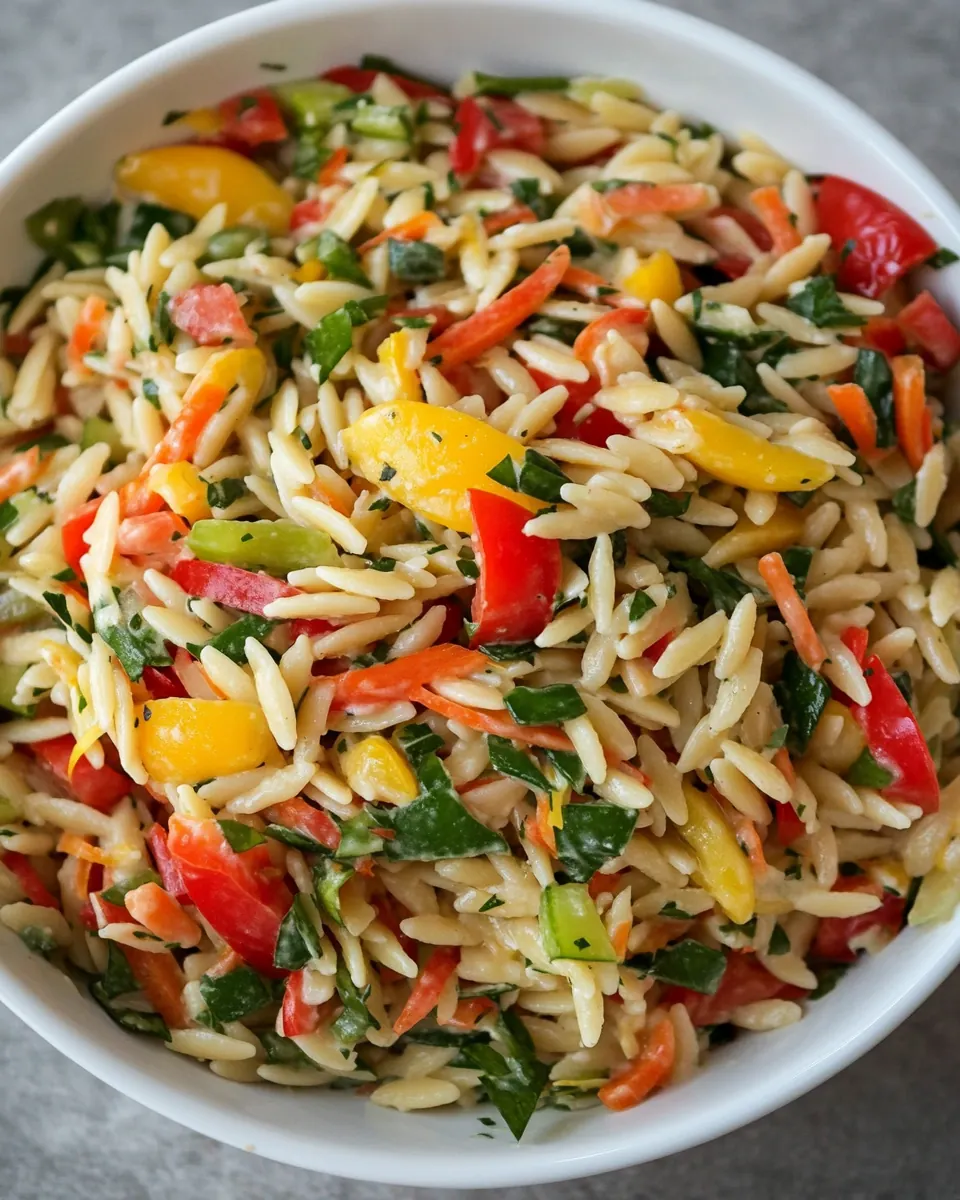
Macro Friendly Veggie Orzo Salad
Macro Friendly Veggie Orzo Salad landed on my table on a humid summer afternoon when I needed something that felt light but also kept me full until dinner. I remember carrying a tote full of farm stand finds and deciding to turn them into something bright and substantial, something I could portion out for the week and celebrate at the same time. That first bowl had warm orzo coated in a tangy dressing, bursts of grape tomatoes, and the sweet pop of corn kernels, and I was hooked instantly.
As I made it again and again, I learned small tricks that made the flavors sing. I like to toss warm orzo with the vegetables so the dressing clings, but I always finish it chilled so the textures stay crisp. Friends who tasted it at a picnic asked for the recipe, and now I often bring a big bowl to potlucks, where it disappears fast. I love that it stores well, and that each bite gives you different notes from the basil and the creamy reduced fat feta cheese.
Recipe Snapshot
25 mins
15 mins
10 mins
Easy
250 kcal
Mediterranean
Gluten-Free, Vegan
Salads
Large pot, Colander, Large bowl, Knife, Cutting board
The Beauty of This Macro Friendly Veggie Orzo Salad
Bright seasonal flavor
I adore how Macro Friendly Veggie Orzo Salad highlights summer produce. The combination of sweet corn, juicy grape tomatoes, and crisp sugar snap peas gives every spoonful a lively contrast. When I make this, I feel like I am celebrating the season in a single bowl, and that freshness is what keeps me coming back.
Macro conscious and satisfying
One reason I recommend this recipe is that it balances carbs and protein in a straightforward way. The orzo provides satisfying energy, while the reduced fat feta cheese and veggies add structure so you stay full. I appreciate recipes that are easy to portion, and this one helps me plan lunches without fuss.
Versatile for many occasions
I often serve this at casual gatherings because it travels well and appeals to picky eaters. It works for a picnic, a light lunch, or a side dish for a backyard dinner. I bring a jar of dressing on the side sometimes, so people can adjust seasoning, which is always a crowd pleaser.
Quick and low effort
From start to finish this comes together in under 30 minutes, which is a huge win on busy days. I like recipes where most work is simple prep, and that is exactly what we have here: a quick boil, a few chops, and an easy toss. That low fuss factor means I make it more often than more complicated salads.
Great make ahead behavior
I love recipes that taste as good day two as they do fresh, and this one improves after a short rest. The flavors meld and the basil and parsley perfume the dish. When I pack it for lunches, I portion it into containers so the texture stays consistent, and it feels like a small chef win every time.
What to Buy for Macro Friendly Veggie Orzo Salad
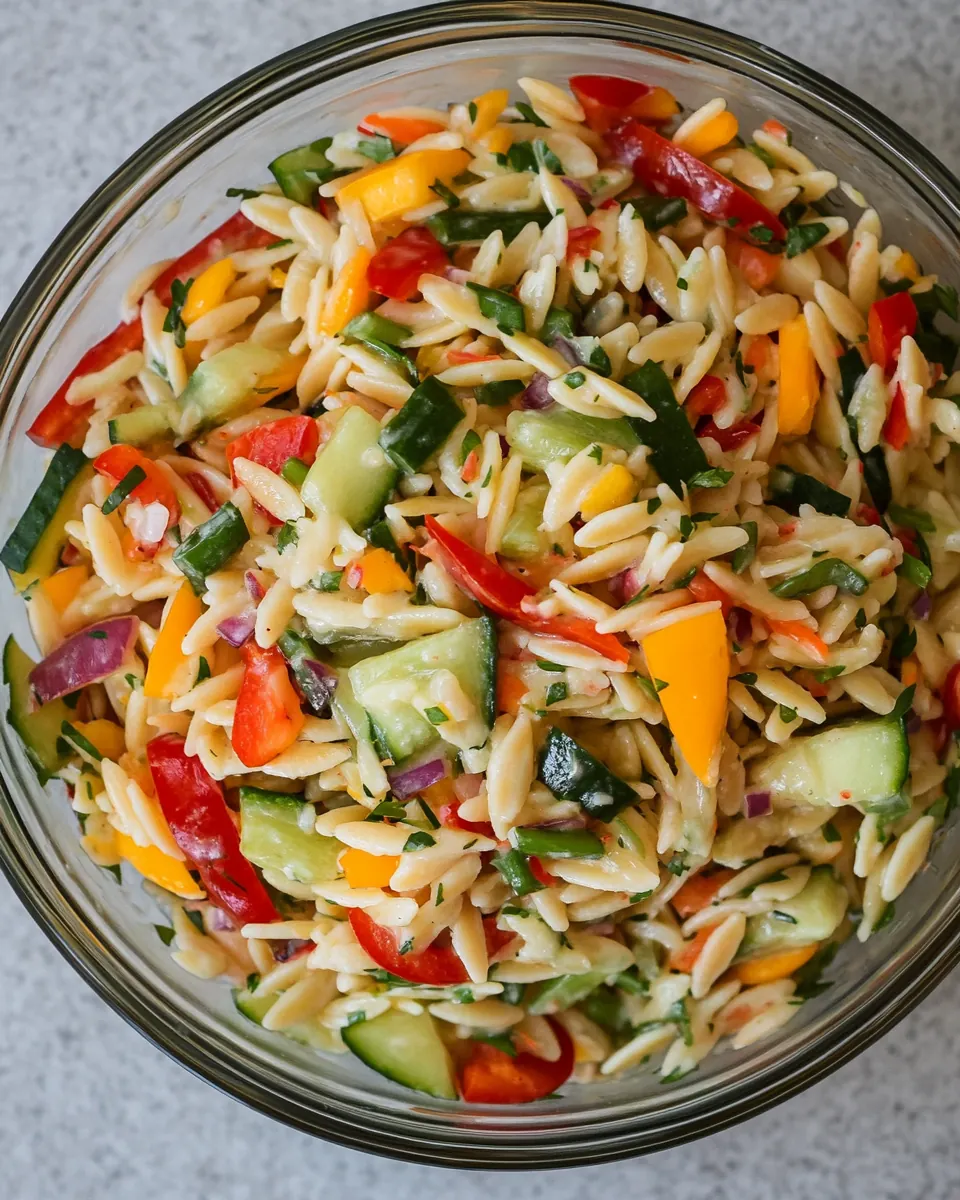
These ingredients were chosen to create a balanced, tasty bowl where texture and flavor play equal roles. The orzo acts as the creamy base, while crisp vegetables and fresh herbs add brightness and contrast. The reduced fat feta cheese and light dressing bring savory notes that tie everything together without overwhelming the vegetables.
- 8 oz Orzo pasta: Cooked to al dente and tossed into the salad to provide a tender, slightly chewy base that soaks up dressing and carries other flavors through each bite.
- 1 ear fresh sweet corn: Grilled or boiled and cut from the cob to contribute sweet, juicy kernels that add bright crunch and seasonal sweetness against the pasta and greens.
- 1/2 cup julienned carrot I use the store bought kind: Prepared julienned for consistent texture and mild sweetness, offering slender strands that blend smoothly with orzo while adding color and subtle earthiness.
- 1/4 cup red onion chopped: Chopped finely to introduce sharp, pungent notes that brighten the overall flavor and provide crisp textural contrast to softer components.
- 4 oz grape tomatoes: Halved or quartered to deliver bursts of juicy acidity and natural sweetness, balancing richer elements like feta and dressing with fresh tomato flavor.
- 1 whole roasted red pepper chopped: Chopped and incorporated to add smoky, roasted depth and tender flesh that enhances savory complexity and complements the salad's Mediterranean profile.
- 3 oz sugar snap peas chopped: Chopped into bite-sized pieces to supply a crisp, garden–fresh snap and mild pea sweetness that heightens texture variety and visual appeal.
- 1/4 cup fresh parsley chopped: Chopped fresh to impart herby, slightly peppery undertones and a verdant aroma that lifts the salad while harmonizing with other herbs and vegetables.
- 10 basil leaves: Torn or finely sliced to contribute a sweet, aromatic basil flavor that brings bright, aromatic notes and pairs well with tomatoes and olive oil-based dressings.
- 1/2 cup reduced fat feta cheese I used Athenos brand: Crumpled or cubed to add creamy, tangy richness with reduced fat for a lighter profile, supplying savory saltiness that complements vegetables and dressing.
- 10 medium black olives I used Lindsay brand: Sliced or halved to offer briny, slightly bitter olive flavor that intensifies savory complexity and contrasts creamy cheese and sweet vegetables.
- 2 cups baby spinach chopped: Chopped to provide a tender, leafy base with mild bitterness and nutrient density that mixes into the salad for bulk and color without overpowering other tastes.
- 1/2 cup light olive garden dressing: Added as a light, oil-based dressing to bind ingredients, introduce acidity and herbs, and coat the orzo and veggies for cohesive flavor in every forkful.
- salt & pepper to taste: Used sparingly to season and balance flavors, enhancing sweetness, acidity, and savory notes while allowing individual ingredients to remain distinct.
Recipe Directions for Macro Friendly Veggie Orzo Salad
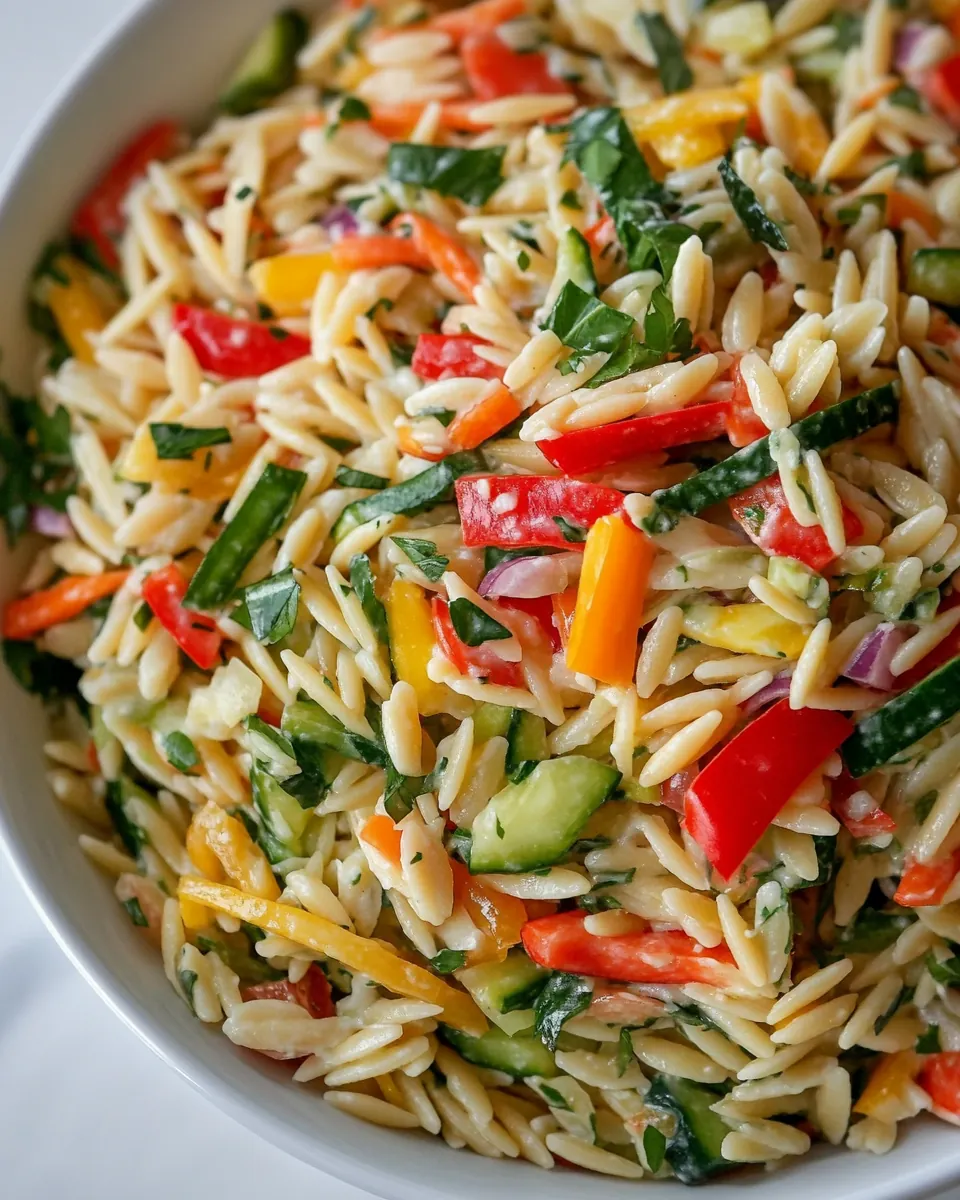
This recipe is straightforward, but I like to explain how each step builds toward a balanced salad. Follow the sequence and trust the sensory cues, and you will end up with a vibrant bowl that holds up for lunches and gatherings.
- Bring large pot of water to boil. Cook orzo according to package directions. When there is 1 minute left of cooking, add whole ear of corn and julienned carrot. Drain, rinse with cold water and set aside.: I notice a rolling boil produces even cooking for the orzo , and the water should sound lively as it moves, like a steady chatter, which means it will return to a boil quickly after adding pasta. This matters because orzo is small and can clump if water is not vigorously boiling. A common mistake is using too little water, which causes sticking and uneven cooking.
- While pasta is cooking, prep all ingredients by washing, chopping and putting into a large bowl. Cut kernels off corn and add to bowl with carrot and orzo.: When cooking the orzo , watch for an al dente bite, slightly firm in the center but tender at the edges, and listen for a gentle simmer rather than a violent boil that can break the pasta. The texture is crucial because overcooked orzo becomes mushy once combined with dressing and vegetables. Avoid stirring too infrequently, which can let the pasta settle and clump.
- Toss everything with the dressing, salt and pepper. Divide into six even portions (about 1 1/4 cups each) and enjoy.: Adding the whole ear of corn and the julienned carrot at this late stage briefly blanches the corn and softens the carrot just enough so they stay crisp tender. You will hear a faint, quickening hiss as the water returns to boil, and the colors will brighten, signaling they are nearly done. A common error is overcooking here, which makes the corn lose its sweet snap and the carrot go limp.
- Drain, rinse with cold water and set aside: Rinsing under cold water immediately stops residual cooking and cools the orzo and vegetables so the salad keeps a firm texture. You should feel the pasta cool under your fingers and see the steam vanish, which is the sign you have arrested the cooking. Skip rinsing only if you want a hot pasta salad, because residual heat will wilt delicate greens and herbs.
- While pasta is cooking, prep all ingredients by washing, chopping and putting into a large bowl: Preparing the grape tomatoes , red onion , roasted red pepper , sugar snap peas , parsley , basil , and baby spinach while the orzo cooks keeps the workflow efficient and maintains freshness. The sound of a knife on the cutting board and the aroma when tearing basil tells me the herbs are still bright. A typical slip is starting to mix before everything is uniformly chopped, which leads to uneven bites.
- Cut kernels off corn and add to bowl with carrot and orzo: When you strip the kernels from the cob, the sweet juice may bead on your fingers and glisten in the bowl, adding a natural glaze to the orzo . Toss them in right away so their warmth mingles slightly with the pasta, helping the dressing adhere. Be careful not to scrape the cob too harshly, which can introduce bits of fibrous core into the salad.
- Toss everything with the dressing, salt and pepper: As you combine the ingredients with the light olive garden dressing , you should hear gentle tinking of spoon on bowl and see the dressing become a thin sheen across the orzo and vegetables. This step builds cohesion and ensures each forkful carries balanced flavor. If you add too much dressing at once, the salad can become soggy, so add gradually and taste as you season.
- Divide into six even portions about 1 1/4 cups each: Portioning into six helps with macros and meal prep, and visually you should see evenly filled containers with layered colors from the grape tomatoes to the green vegetables. I press lightly into the container to compact slightly so it travels well. Avoid overpacking, which can bruise fragile leaves and crush delicate ingredients.
- Enjoy: When you taste a forkful, expect a mingling of warm and cool textures, sweet kernels, tangy feta cheese , and herbal brightness from the basil and parsley . If any component seems muted, a quick sprinkle of salt or a drizzle of extra dressing can lift it. A common finishing error is under seasoning; always taste before calling it done.
Recipe Variations about Macro Friendly Veggie Orzo Salad
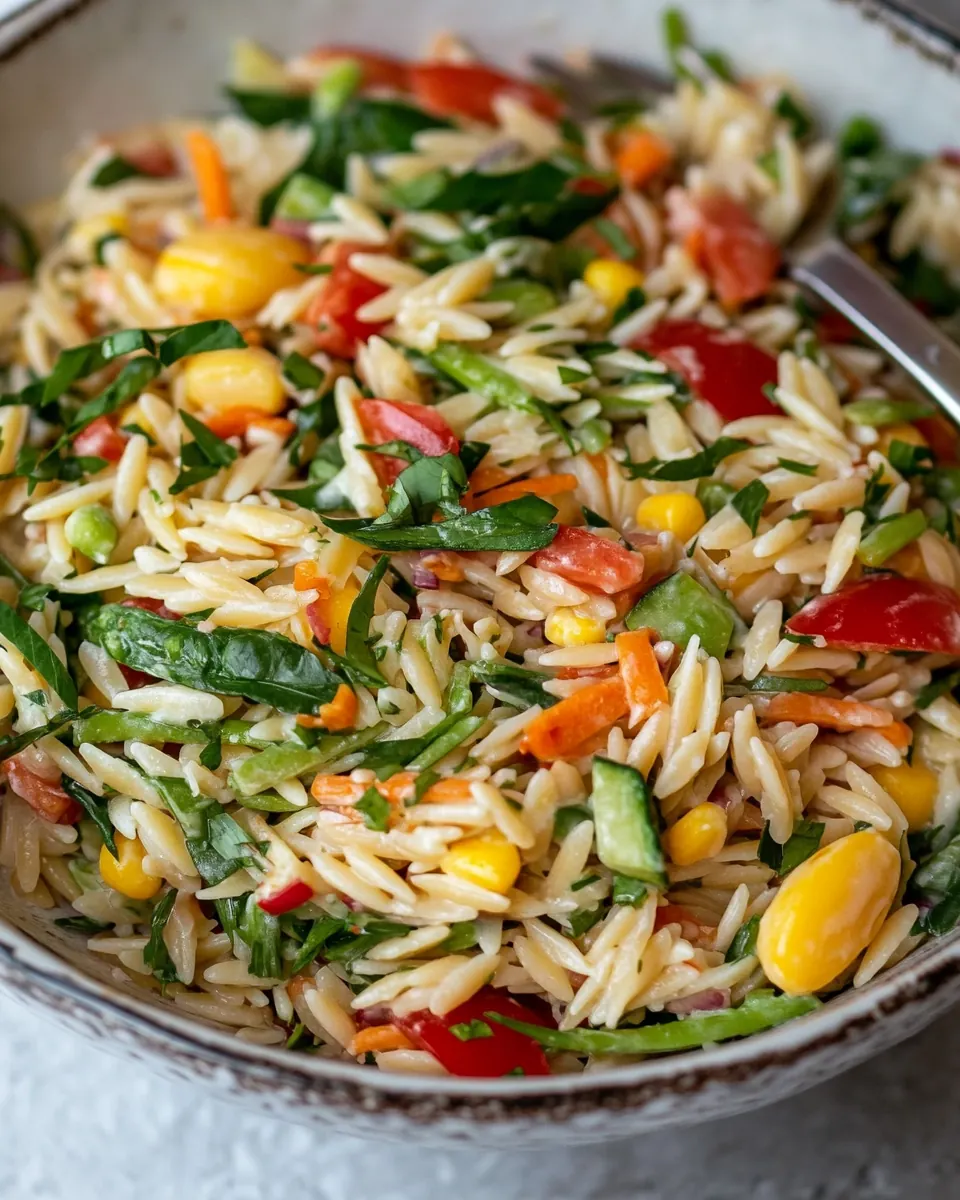
This salad adapts well to small shifts without losing its identity. Below are practical variations and ideas I often use to keep it interesting while preserving the core balance of textures and macros.
- Warm or Cold: Serve the salad warm by tossing orzo and vegetables while slightly warm for a comforting twist, or chill it for a crisp, refreshing lunch. Both approaches change mouthfeel, so pick depending on the occasion.
- Herb emphasis: Increase the amount of parsley and basil for a greener, herb forward profile that brightens every bite and pairs well with lighter dressings.
- Vegetable swaps: If you do not have sugar snap peas, substitute with thinly sliced cucumber for a similar crispness while keeping the overall balance intact.
- Olive and feta balance: Adjust black olives and reduced fat feta cheese to control brininess; a little goes a long way to enhance savory depth without overpowering vegetables.
- Dressing control: Start with half the listed dressing and add more to taste, so you can prevent over saturating the salad and keep textures firm for storage.
How to Serve Macro Friendly Veggie Orzo Salad
This salad is versatile and works across occasions, from casual lunches to festive outdoor gatherings. Present it simply or with small accompaniments to highlight its fresh, balanced profile.
- As a lunch bowl: Pack into containers for an easy, portion controlled midday meal that travels well and reheats slightly if you prefer warm bites.
- Picnic side: Bring it to a picnic in a large bowl with a chilled bottle of dressing on the side so guests can dress to taste and the salad stays crisp.
- Potluck contribution: Serve in a large shallow dish garnished with torn basil leaves and a sprinkle of extra feta cheese so it looks inviting and colorful.
- Weeknight dinner side: Pair with a simple grilled protein for an easy balanced meal, keeping the salad as a bright, textured companion on the plate.
- Storage tips: Refrigerate in airtight containers for up to four days, and keep dressing separate if you want the freshest texture on day one. Stir gently before serving to reincorporate any settled dressing.
- Seasonal pairing: Highlight the salad during summer when fresh corn and tomatoes are at their peak for the best flavor payoff.
FAQ
Conclusion
This recipe shines because it balances bright summer vegetables with satisfying orzo and a tangy dressing for a meal that feels both light and substantial. Give it a try when you want an easy make ahead salad that travels well and keeps you full. I hope it becomes a regular in your rotation, bringing fresh flavor and practical portioning to your week.
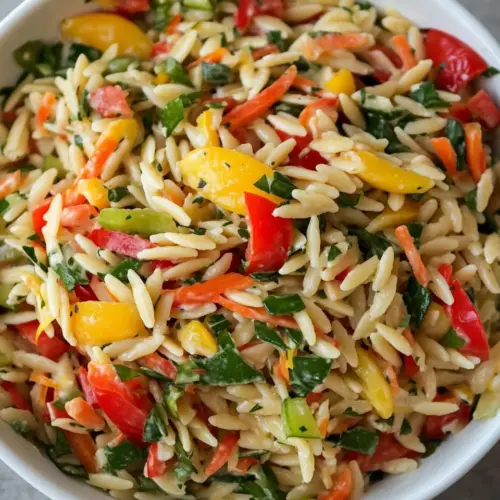
Macro Friendly Veggie Orzo Salad
Equipment
- Large Pot
- Colander
- Large Bowl
- Knife
- Cutting Board
Ingredients
- 8 oz Orzo pasta Cooked to al dente and tossed into the salad to provide a tender, slightly chewy base that soaks up dressing and carries other flavors through each bite.
- 1 ear fresh sweet corn Grilled or boiled and cut from the cob to contribute sweet, juicy kernels that add bright crunch and seasonal sweetness against the pasta and greens.
- 1/2 cup julienned carrot I use the store bought kind Prepared julienned for consistent texture and mild sweetness, offering slender strands that blend smoothly with orzo while adding color and subtle earthiness.
- 1/4 cup red onion chopped Chopped finely to introduce sharp, pungent notes that brighten the overall flavor and provide crisp textural contrast to softer components.
- 4 oz grape tomatoes Halved or quartered to deliver bursts of juicy acidity and natural sweetness, balancing richer elements like feta and dressing with fresh tomato flavor.
- 1 whole roasted red pepper chopped Chopped and incorporated to add smoky, roasted depth and tender flesh that enhances savory complexity and complements the salad's Mediterranean profile.
- 3 oz sugar snap peas chopped Chopped into bite-sized pieces to supply a crisp, garden-fresh snap and mild pea sweetness that heightens texture variety and visual appeal.
- 1/4 cup fresh parsley chopped Chopped fresh to impart herby, slightly peppery undertones and a verdant aroma that lifts the salad while harmonizing with other herbs and vegetables.
- 10 basil leaves Torn or finely sliced to contribute a sweet, aromatic basil flavor that brings bright, aromatic notes and pairs well with tomatoes and olive oil-based dressings.
- 1/2 cup reduced fat feta cheese I used Athenos brand Crumpled or cubed to add creamy, tangy richness with reduced fat for a lighter profile, supplying savory saltiness that complements vegetables and dressing.
- 10 medium black olives I used Lindsay brand Sliced or halved to offer briny, slightly bitter olive flavor that intensifies savory complexity and contrasts creamy cheese and sweet vegetables.
- 2 cups baby spinach chopped Chopped to provide a tender, leafy base with mild bitterness and nutrient density that mixes into the salad for bulk and color without overpowering other tastes.
- 1/2 cup light olive garden dressing Added as a light, oil-based dressing to bind ingredients, introduce acidity and herbs, and coat the orzo and veggies for cohesive flavor in every forkful.
- salt & pepper to taste Used sparingly to season and balance flavors, enhancing sweetness, acidity, and savory notes while allowing individual ingredients to remain distinct.
Instructions
- Bring large pot of water to boil. Cook orzo according to package directions. When there is 1 minute left of cooking, add whole ear of corn and julienned carrot. Drain, rinse with cold water and set aside.: I notice a rolling boil produces even cooking for the orzo , and the water should sound lively as it moves, like a steady chatter, which means it will return to a boil quickly after adding pasta. This matters because orzo is small and can clump if water is not vigorously boiling. A common mistake is using too little water, which causes sticking and uneven cooking.
- While pasta is cooking, prep all ingredients by washing, chopping and putting into a large bowl. Cut kernels off corn and add to bowl with carrot and orzo.: When cooking the orzo , watch for an al dente bite, slightly firm in the center but tender at the edges, and listen for a gentle simmer rather than a violent boil that can break the pasta. The texture is crucial because overcooked orzo becomes mushy once combined with dressing and vegetables. Avoid stirring too infrequently, which can let the pasta settle and clump.
- Toss everything with the dressing, salt and pepper. Divide into six even portions (about 1 1/4 cups each) and enjoy.: Adding the whole ear of corn and the julienned carrot at this late stage briefly blanches the corn and softens the carrot just enough so they stay crisp tender. You will hear a faint, quickening hiss as the water returns to boil, and the colors will brighten, signaling they are nearly done. A common error is overcooking here, which makes the corn lose its sweet snap and the carrot go limp.
- Drain, rinse with cold water and set aside: Rinsing under cold water immediately stops residual cooking and cools the orzo and vegetables so the salad keeps a firm texture. You should feel the pasta cool under your fingers and see the steam vanish, which is the sign you have arrested the cooking. Skip rinsing only if you want a hot pasta salad, because residual heat will wilt delicate greens and herbs.
- While pasta is cooking, prep all ingredients by washing, chopping and putting into a large bowl: Preparing the grape tomatoes , red onion , roasted red pepper , sugar snap peas , parsley , basil , and baby spinach while the orzo cooks keeps the workflow efficient and maintains freshness. The sound of a knife on the cutting board and the aroma when tearing basil tells me the herbs are still bright. A typical slip is starting to mix before everything is uniformly chopped, which leads to uneven bites.
- Cut kernels off corn and add to bowl with carrot and orzo: When you strip the kernels from the cob, the sweet juice may bead on your fingers and glisten in the bowl, adding a natural glaze to the orzo . Toss them in right away so their warmth mingles slightly with the pasta, helping the dressing adhere. Be careful not to scrape the cob too harshly, which can introduce bits of fibrous core into the salad.
- Toss everything with the dressing, salt and pepper: As you combine the ingredients with the light olive garden dressing , you should hear gentle tinking of spoon on bowl and see the dressing become a thin sheen across the orzo and vegetables. This step builds cohesion and ensures each forkful carries balanced flavor. If you add too much dressing at once, the salad can become soggy, so add gradually and taste as you season.
- Divide into six even portions about 1 1/4 cups each: Portioning into six helps with macros and meal prep, and visually you should see evenly filled containers with layered colors from the grape tomatoes to the green vegetables. I press lightly into the container to compact slightly so it travels well. Avoid overpacking, which can bruise fragile leaves and crush delicate ingredients.
- Enjoy: When you taste a forkful, expect a mingling of warm and cool textures, sweet kernels, tangy feta cheese , and herbal brightness from the basil and parsley . If any component seems muted, a quick sprinkle of salt or a drizzle of extra dressing can lift it. A common finishing error is under seasoning; always taste before calling it done.
Notes
- Warm or Cold: Serve the salad warm by tossing orzo and vegetables while slightly warm for a comforting twist, or chill it for a crisp, refreshing lunch. Both approaches change mouthfeel, so pick depending on the occasion.
- Herb emphasis: Increase the amount of parsley and basil for a greener, herb forward profile that brightens every bite and pairs well with lighter dressings.
- Vegetable swaps: If you do not have sugar snap peas, substitute with thinly sliced cucumber for a similar crispness while keeping the overall balance intact.
- Olive and feta balance: Adjust black olives and reduced fat feta cheese to control brininess; a little goes a long way to enhance savory depth without overpowering vegetables.
- Dressing control: Start with half the listed dressing and add more to taste, so you can prevent over saturating the salad and keep textures firm for storage.
