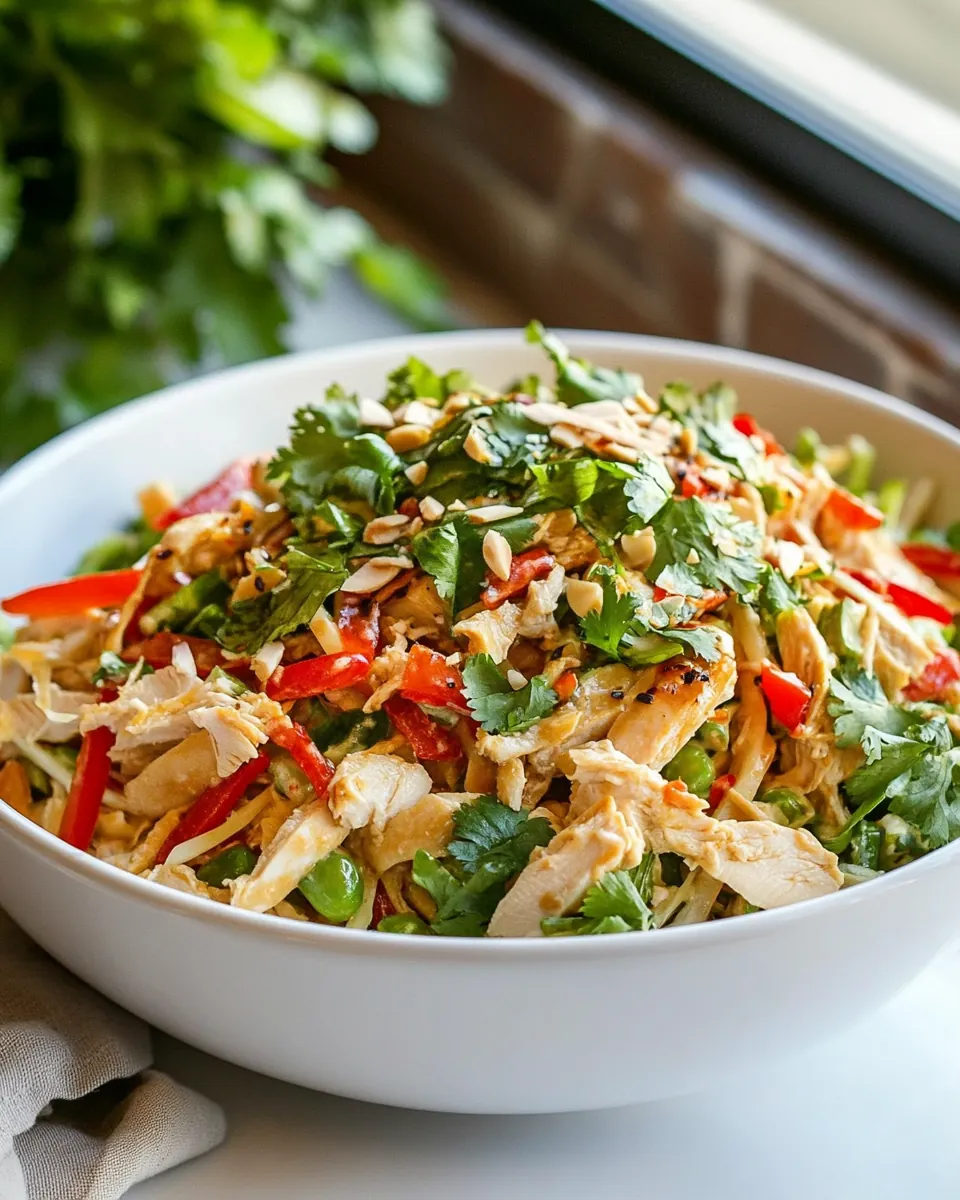
Chinese Chicken Salad
Chinese Chicken Salad has been one of my go to meals when I want something bright, crunchy, and satisfying without heating up the kitchen. The first time I tossed together this combination I was coming home from a long day, and the mix of tangy lime, nutty sesame, and savory soy felt like a small celebration in a bowl. I remember standing over the counter, adjusting the dressing until it hit that perfect mix of creamy and bright, while the aroma of minced garlic and ginger promised a depth that made every bite addictive.
I often make a big batch of the dressing and keep it in the fridge, because it improves as it rests and the flavors knit together. When guests arrive I pull out shredded chicken, crisp up some store bought wonton strips, and let people assemble their own bowls. There is something so satisfying about the contrast of crunchy lettuce and cabbage against tender chicken, with a scatter of peanuts that adds that irresistible crunch. Over the years I have learned little tweaks that elevate it, like a touch more lime for brightness or an extra spoonful of peanut butter for a silkier dressing.
Recipe Snapshot
30 mins
30 mins
Easy
400 kcal
Chinese
Gluten-Free, Vegan
Salads
Mixing bowl, Whisk, Large serving bowl, Knife, Cutting board
What Makes This Chinese Chicken Salad Special
Texture Contrast That Wins Every Time
I love how Chinese Chicken Salad pairs crisp leaves with crunchy nuts and soft shredded chicken. The textural play keeps each forkful interesting, and that crunch is a major reason I reach for this at weeknight dinners or casual get togethers.
Bright Balanced Dressing
The dressing manages to be creamy yet zesty, thanks to the mix of peanut butter, rice vinegar, and fresh lime juice. I find it both comforting and refreshing, which makes the salad versatile for warm weather meals or as a lighter main course.
Speed and Simplicity
I appreciate how quickly this comes together when you use pre cooked chicken. Tossing everything takes minutes, so it is a reliable option for busy evenings or impromptu lunches when you want something homemade but fast.
Customizable and Crowd Friendly
It scales easily, and you can add or omit optional touches like toasted sesame seeds or fried wonton strips based on what you have. I often double the recipe for potlucks, because people always go back for seconds.
Fresh Herbs and Aromatics
The cilantro and green onions give the salad a fragrant lift that balances the richer elements. Those little hits of freshness keep the bowl lively and make it feel thoughtfully composed.
Ingredients for Chinese Chicken Salad
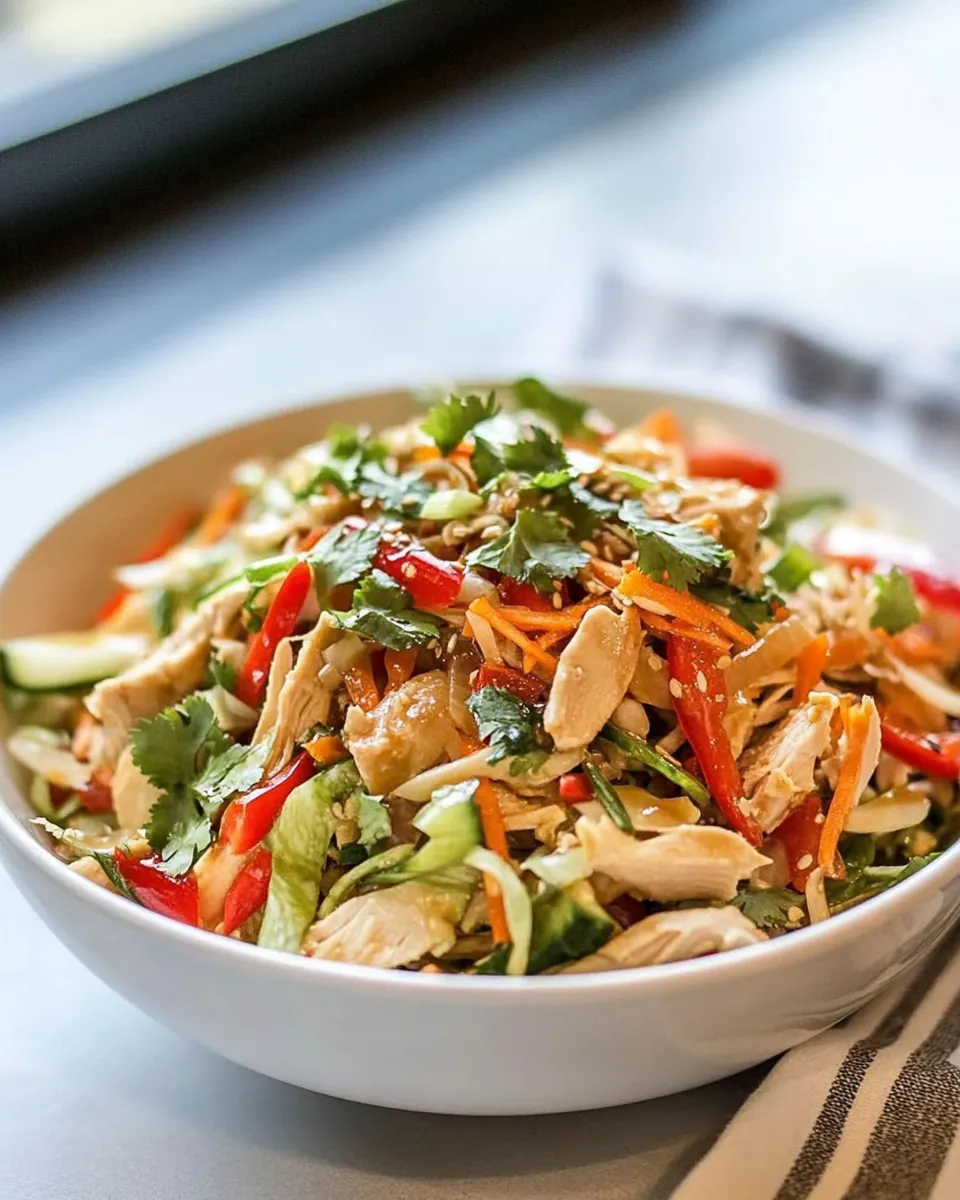
These ingredients were chosen to create a harmony of textures and flavors. The base leaves provide crisp freshness, the shredded chicken gives substance, and the dressing brings fat, acid, and umami together. Key players like peanut butter and toasted sesame oil add depth, while fresh lime and rice vinegar brighten the whole dish. Together they create a salad that feels both indulgent and light.
- 1/4 cup light olive oil or vegetable oil: Adds a light, neutral fat for dressing; helps emulsify flavors and provides a smooth mouthfeel to the salad dressing when whisked with other liquids.
- 3 tbsp creamy peanut butter: Provides creamy body and nutty depth to the dressing; balances salty and acidic components while contributing a rich, slightly sweet peanut flavor.
- 2 tbsp toasted sesame oil: Imparts a toasted, aromatic sesame note; intensifies nutty character and lends authentic Asian flavor to the dressing in small, potent amounts.
- 2 tbsp soy sauce: Delivers savory umami and salty balance; enhances overall flavor complexity and helps season the dressing and salad components.
- 2 tbsp rice vinegar: Contributes bright acidity and mild sweetness; cuts through the richness of oils and peanut butter to lighten the dressing.
- 2 tbsp fresh lime juice: Adds fresh citrus brightness and tang; lifts flavors, balances sweetness and salt, and brightens the overall dish.
- 2 tbsp honey: Provides sweetness and rounded flavor; mellows sharp edges from vinegar and soy sauce while adding a glossy finish to the dressing.
- 1 tbsp peeled and minced ginger: Offers warm, pungent, slightly spicy aromatics; adds fresh zesty complexity and complements the other Asian-inspired flavors in the dressing.
- 1 1/2 tsp minced garlic (1 large clove): Contributes pungent, savory bite; supports aromatic depth and enhances the overall savory profile of the dressing in small amounts.
- 1/2 tsp Chinese five spice () (optional): Adds warm, slightly sweet and licorice-like notes when used; optional inclusion introduces traditional Chinese spice complexity to the dressing.
- 1/4 tsp red pepper flakes (), or more to taste (optional): Provides a touch of heat and a subtle smoky spice when included; customizable for desired spiciness and balances sweeter elements in the dressing.
- 1/2 large head romaine lettuce, shredded: Supplies crisp, refreshing crunch and mild, slightly bitter greens; forms a sturdy leafy base that holds dressing and other mix-ins well.
- 1/2 medium head Napa cabbage, cored and shredded: Adds tender, mildly sweet, and slightly peppery crunch; increases volume and provides a delicate texture contrast in the salad.
- 3 cups cooked shredded rotisserie chicken breast: Provides lean protein and hearty texture; contributes savory flavor and makes the salad a substantial, protein-rich main course.
- 1 large red bell pepper, cored, seeded and sliced: Brings crisp, sweet, juicy crunch and bright color; adds fresh flavor and textural contrast that complements leafy greens.
- 1 large carrot, juliened: Adds sweet, earthy crunch and slight sweetness when julienned; contributes color and a pleasant crisp texture to each bite.
- 4 green onions, sliced: Provides mild oniony sharpness and fresh green flavor; adds a delicate aromatic brightness and slight crunch to the salad.
- 1/2 cup rough chopped cilantro: Adds bright, citrusy-herb aroma and freshness; contributes vibrant green color and a lively herbal lift to the dish.
- 1/2 cup rough chopped peanuts or cashews: Provides crunchy, nutty texture and savory richness; adds toasty flavor and an additional protein and fat component to the salad.
- 2 tbsp toasted sesame seeds () (optional): Adds extra nutty aroma and a subtle crunchy finish when toasted; optional sprinkle enhances visual appeal and sesame flavor.
- Fried wonton strips, homemade or store-bought () (optional): Supplies additional crispy, savory crunch and a playful texture contrast; optional topping adds indulgent crunch and familiar Chinese salad flair.
Making This Chinese Chicken Salad
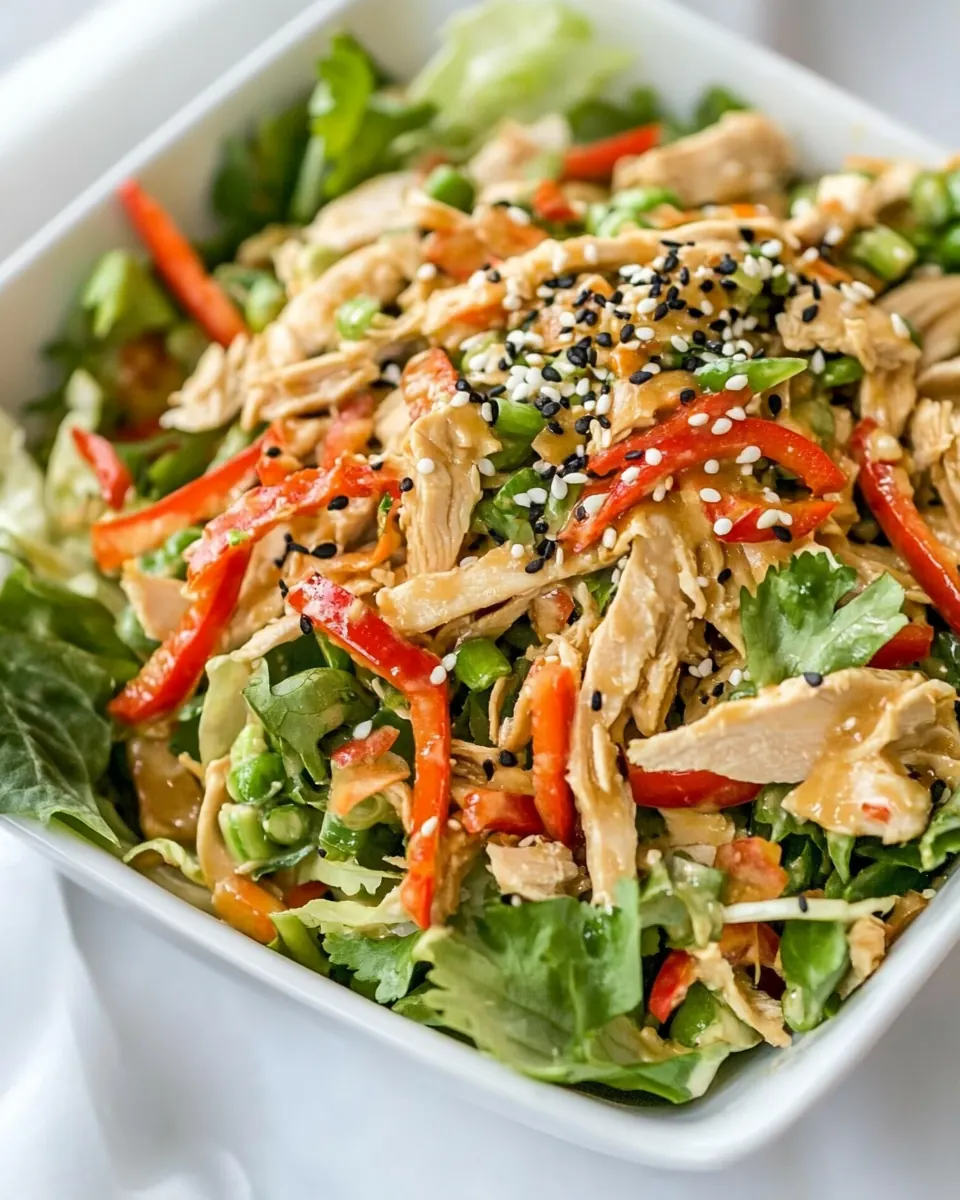
I like to approach the making of this salad with a relaxed rhythm: whip up the dressing first to let flavors marry, then prepare the greens and toppings so everything finishes quickly. Using pre cooked chicken keeps the process breezy, and assembling at the last minute preserves the crunch. Below I walk through each step with sensory cues and tips so you can be confident during every toss.
- Make the dressing: In a medium mixing bowl whisk together oil, peanut butter, sesame oil, soy sauce, rice vinegar, lime juice, honey, ginger, garlic, Chinese five spice and red pepper flakes.: In a medium mixing bowl whisk together oil, peanut butter, sesame oil, soy sauce, rice vinegar, lime juice, honey, ginger, garlic, Chinese five spice and red pepper flakes. : The bowl should smell bright and nutty when the dressing comes together, with the warm scent of minced ginger and garlic lifting through the creamy peanut butter . You may notice a slightly gritty texture at first as the peanut butter and oil emulsify, but steady whisking will smooth it out. Listen for the soft scraping of whisk against bowl as you blend, and watch for a glossy sheen that indicates the oil has integrated. This technique matters because a well emulsified dressing clings to leaves, preventing pools of oil at the bottom of the bowl. A common mistake is adding too much oil at once, which can make the dressing thin and oily. If that happens, add a touch more peanut butter or a small splash of acid like additional lime juice to rebalance the texture and flavor. Take a small taste and adjust salt and heat; the soy sauce and red pepper flakes are where most of that balance comes from.
- Transfer dressing to fridge and chill preferably for 30 minutes (or freeze for 15).: Chilling lets the flavors knit, so after refrigeration the dressing will taste more cohesive, with the heat of the red pepper flakes mellowed and the sweetness integrated. You will notice the aroma settle into a rounded profile, and the texture may thicken slightly as oils cool. This resting period is important because it allows the minced aromatics to infuse the liquid, making every bite more complex. Avoid skipping this step if you want a more nuanced dressing, though it will still be fine if you toss immediately. A common error is leaving the dressing out too long at room temperature, which can dull bright citrus notes; refrigerate promptly to maintain freshness. If pressed for time, freezing briefly speeds the chill but check frequently to avoid partial solidification.
- For the salad: In a large serving bowl toss together lettuce, cabbage, chicken, bell pepper, carrot, green onions and cilantro. Top with peanuts and sesame seeds.: In a large serving bowl toss together lettuce, cabbage, chicken, bell pepper, carrot, green onions and cilantro. Top with peanuts and sesame seeds. : When you combine the vegetables they should look lively and colorful, the shredded cabbage and romaine providing a variety of pale and deep greens, while the red bell pepper and orange carrot give contrast. As you toss, listen for the crisp rustle of leaves and feel the distinct resistance of crisp cabbage and dense romaine against the tines of your fork or salad servers. The shredded chicken adds a soft, substantial texture that contrasts with the veg. Sprinkle the chopped peanuts and sesame seeds last, observing how they add both visual interest and crunchy punctuation. This layering matters because adding nuts early can lead them to soften. One common mistake is over tossing with the nuts included, which can break them down and reduce crunch; reserve them for the final toss or for topping. Taste a small portion to ensure the raw aromatics are balanced before dressing, and adjust salt or lime if the vegetables feel flat.
- Add dressing to entire salad and toss or add dressing to individual servings. Serve immediately after adding dressing.: After adding the chilled dressing you should see a light glossy coating on the leaves, not a pool of liquid at the base of the bowl. The salad will release a fresh perfume of herbs and citrus, punctuated by the deeper, nutty dressing. Toss gently to avoid bruising the romaine, ensuring each bite has a mix of textures. Serving immediately preserves the crispness; waiting too long allows the greens to wilt and the wonton strips to go soggy if included. A typical mistake is overdressing, which drowns the delicate flavors, so start with a smaller amount and add more if needed. If plating individually, spoon dressing over each portion so guests can control their preferred level of sauciness. Serve right away to enjoy the full contrast of textures and flavors.
Recipe Notes about Chinese Chicken Salad
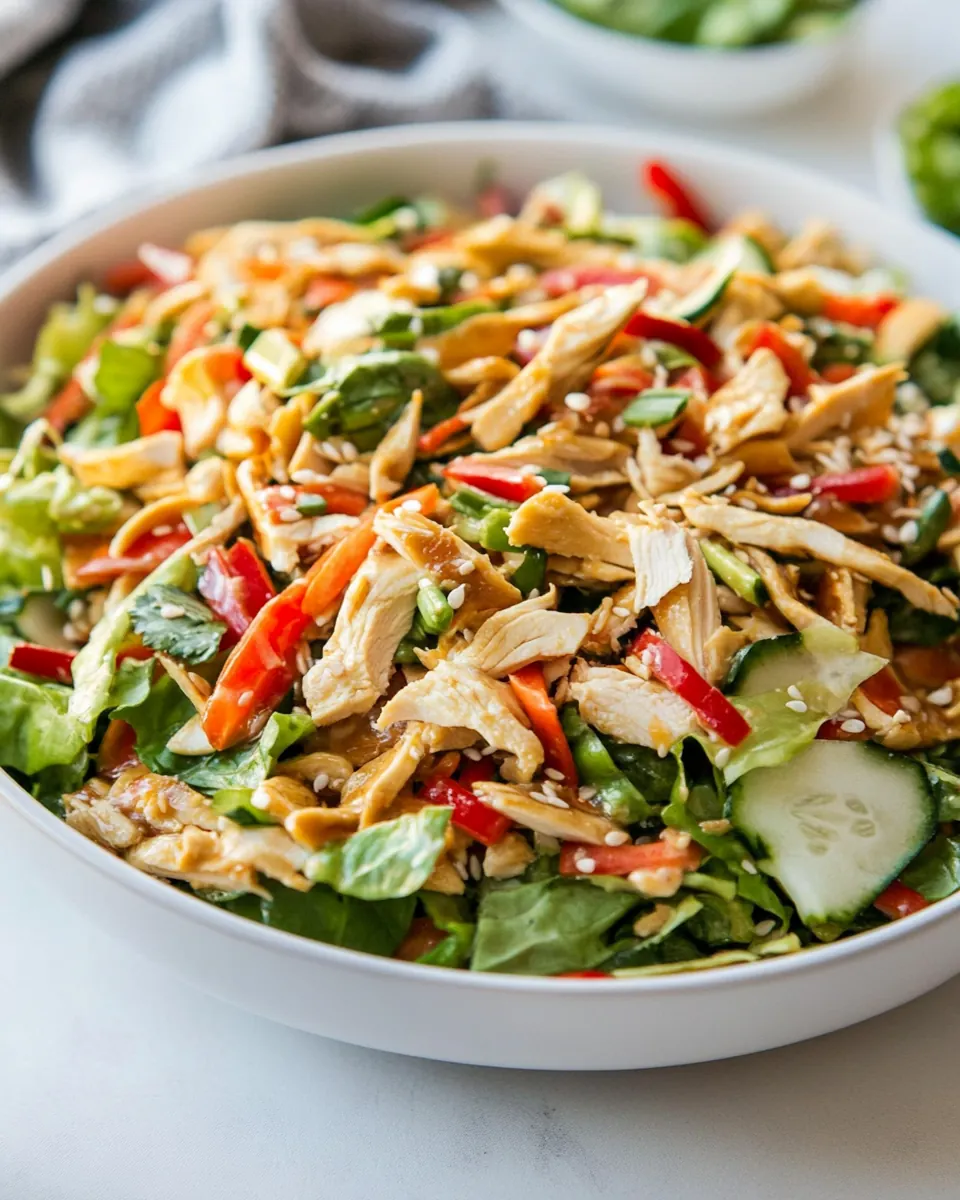
I keep a few practical notes in mind when I make this salad so it stays vibrant and texturally balanced. These tips expand on small choices that add up to a better bowl, from handling the dressing to timing the assembly.
- Control salt and soy: Taste the dressing before adding to the salad, because the soy sauce can vary in saltiness. Adjust with extra lime juice or a touch more honey rather than more soy if you need balance.
- Keep crunch fresh: Add peanuts and fried wonton strips at the end. If you add them too early they will soften, losing the satisfying texture contrast.
- Make ahead dressing: The dressing can be made up to three days in advance and stored in the fridge. Bring it to a pourable consistency by stirring, or let it sit at room temperature for a few minutes.
- Shred chicken finely: Small ribbons of chicken distribute better through the salad, ensuring each forkful has protein and flavor without overwhelming the greens.
- Adjust heat last: Add red pepper flakes sparingly and let guests add more at the table. It is easier to build heat than to remove it once incorporated.
What Goes Well With This Chinese Chicken Salad
This salad works beautifully as a stand alone main for a light lunch or as part of a larger spread for dinner gatherings. Think casual entertaining, warm weather meals, or a quick weeknight feast. Below are practical serving ideas, pairing suggestions, and storage notes to help you plan the meal.
- Serve as a main: Plate the salad in shallow bowls for lunches or light dinners, ensuring each portion gets a good distribution of chicken, vegetables, and nuts.
- Accompany with simple sides: Offer warm steamed rice or cold noodle salad for guests who want a heartier accompaniment. These neutral sides absorb extra dressing and complement the nutty flavors.
- Occasions: This salad is ideal for summer gatherings, casual dinner parties, or potluck contributions because it travels well when the dressing is kept separate until serving.
- Storage tips: Store the dressing in an airtight container in the fridge for up to three days. Keep the salad components separate, and combine just before serving to maintain maximum crunch.
- Seasonal pairings: In summer I add more fresh herbs and crunchy summer vegetables. In cooler months I might include heartier greens for a filling winter lunch.
- Presentation: Garnish with extra chopped peanuts and a lime wedge so guests can brighten their bowl further at the table.
FAQ
Conclusion
This Chinese Chicken Salad shines because it balances bright citrus, nutty richness, and crisp textures in every forkful. The combination of tender shredded chicken, crunchy greens, and a luscious peanut sesame dressing makes it both comforting and refreshing. Give it a try the next time you need a quick, flavorful meal that is easy to scale for guests. I think you will appreciate how small adjustments to the dressing or toppings let you tailor the salad to your taste while keeping the core, delightful character intact.
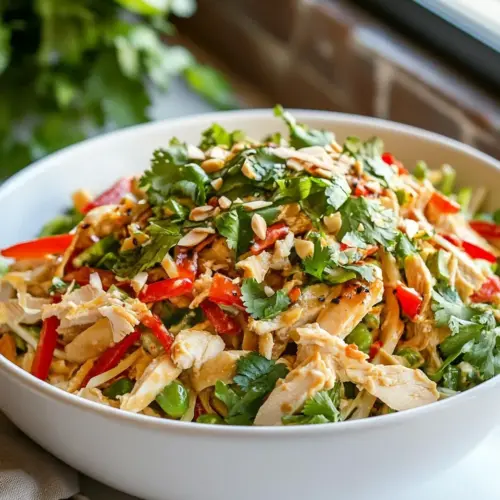
Chinese Chicken Salad
Equipment
- Mixing Bowl
- Whisk
- Large serving bowl
- Knife
- Cutting Board
Ingredients
- 1/4 cup light olive oil or vegetable oil Adds a light, neutral fat for dressing; helps emulsify flavors and provides a smooth mouthfeel to the salad dressing when whisked with other liquids.
- 3 tbsp creamy peanut butter Provides creamy body and nutty depth to the dressing; balances salty and acidic components while contributing a rich, slightly sweet peanut flavor.
- 2 tbsp toasted sesame oil Imparts a toasted, aromatic sesame note; intensifies nutty character and lends authentic Asian flavor to the dressing in small, potent amounts.
- 2 tbsp soy sauce Delivers savory umami and salty balance; enhances overall flavor complexity and helps season the dressing and salad components.
- 2 tbsp rice vinegar Contributes bright acidity and mild sweetness; cuts through the richness of oils and peanut butter to lighten the dressing.
- 2 tbsp fresh lime juice Adds fresh citrus brightness and tang; lifts flavors, balances sweetness and salt, and brightens the overall dish.
- 2 tbsp honey Provides sweetness and rounded flavor; mellows sharp edges from vinegar and soy sauce while adding a glossy finish to the dressing.
- 1 tbsp peeled and minced ginger Offers warm, pungent, slightly spicy aromatics; adds fresh zesty complexity and complements the other Asian-inspired flavors in the dressing.
- 1 1/2 tsp minced garlic (1 large clove) Contributes pungent, savory bite; supports aromatic depth and enhances the overall savory profile of the dressing in small amounts.
- 1/2 tsp Chinese five spice (optional) Adds warm, slightly sweet and licorice-like notes when used; optional inclusion introduces traditional Chinese spice complexity to the dressing.
- 1/4 tsp red pepper flakes (optional), or more to taste Provides a touch of heat and a subtle smoky spice when included; customizable for desired spiciness and balances sweeter elements in the dressing.
- 1/2 large head romaine lettuce, shredded Supplies crisp, refreshing crunch and mild, slightly bitter greens; forms a sturdy leafy base that holds dressing and other mix-ins well.
- 1/2 medium head Napa cabbage, cored and shredded Adds tender, mildly sweet, and slightly peppery crunch; increases volume and provides a delicate texture contrast in the salad.
- 3 cups cooked shredded rotisserie chicken breast Provides lean protein and hearty texture; contributes savory flavor and makes the salad a substantial, protein-rich main course.
- 1 large red bell pepper, cored, seeded and sliced Brings crisp, sweet, juicy crunch and bright color; adds fresh flavor and textural contrast that complements leafy greens.
- 1 large carrot, juliened Adds sweet, earthy crunch and slight sweetness when julienned; contributes color and a pleasant crisp texture to each bite.
- 4 green onions, sliced Provides mild oniony sharpness and fresh green flavor; adds a delicate aromatic brightness and slight crunch to the salad.
- 1/2 cup rough chopped cilantro Adds bright, citrusy-herb aroma and freshness; contributes vibrant green color and a lively herbal lift to the dish.
- 1/2 cup rough chopped peanuts or cashews Provides crunchy, nutty texture and savory richness; adds toasty flavor and an additional protein and fat component to the salad.
- 2 tbsp toasted sesame seeds (optional) Adds extra nutty aroma and a subtle crunchy finish when toasted; optional sprinkle enhances visual appeal and sesame flavor.
- Fried wonton strips, homemade or store-bought (optional) Supplies additional crispy, savory crunch and a playful texture contrast; optional topping adds indulgent crunch and familiar Chinese salad flair.
Instructions
- Make the dressing: In a medium mixing bowl whisk together oil, peanut butter, sesame oil, soy sauce, rice vinegar, lime juice, honey, ginger, garlic, Chinese five spice and red pepper flakes.: In a medium mixing bowl whisk together oil, peanut butter, sesame oil, soy sauce, rice vinegar, lime juice, honey, ginger, garlic, Chinese five spice and red pepper flakes. : The bowl should smell bright and nutty when the dressing comes together, with the warm scent of minced ginger and garlic lifting through the creamy peanut butter . You may notice a slightly gritty texture at first as the peanut butter and oil emulsify, but steady whisking will smooth it out. Listen for the soft scraping of whisk against bowl as you blend, and watch for a glossy sheen that indicates the oil has integrated. This technique matters because a well emulsified dressing clings to leaves, preventing pools of oil at the bottom of the bowl. A common mistake is adding too much oil at once, which can make the dressing thin and oily. If that happens, add a touch more peanut butter or a small splash of acid like additional lime juice to rebalance the texture and flavor. Take a small taste and adjust salt and heat; the soy sauce and red pepper flakes are where most of that balance comes from.
- Transfer dressing to fridge and chill preferably for 30 minutes (or freeze for 15).: Chilling lets the flavors knit, so after refrigeration the dressing will taste more cohesive, with the heat of the red pepper flakes mellowed and the sweetness integrated. You will notice the aroma settle into a rounded profile, and the texture may thicken slightly as oils cool. This resting period is important because it allows the minced aromatics to infuse the liquid, making every bite more complex. Avoid skipping this step if you want a more nuanced dressing, though it will still be fine if you toss immediately. A common error is leaving the dressing out too long at room temperature, which can dull bright citrus notes; refrigerate promptly to maintain freshness. If pressed for time, freezing briefly speeds the chill but check frequently to avoid partial solidification.
- For the salad: In a large serving bowl toss together lettuce, cabbage, chicken, bell pepper, carrot, green onions and cilantro. Top with peanuts and sesame seeds.: In a large serving bowl toss together lettuce, cabbage, chicken, bell pepper, carrot, green onions and cilantro. Top with peanuts and sesame seeds. : When you combine the vegetables they should look lively and colorful, the shredded cabbage and romaine providing a variety of pale and deep greens, while the red bell pepper and orange carrot give contrast. As you toss, listen for the crisp rustle of leaves and feel the distinct resistance of crisp cabbage and dense romaine against the tines of your fork or salad servers. The shredded chicken adds a soft, substantial texture that contrasts with the veg. Sprinkle the chopped peanuts and sesame seeds last, observing how they add both visual interest and crunchy punctuation. This layering matters because adding nuts early can lead them to soften. One common mistake is over tossing with the nuts included, which can break them down and reduce crunch; reserve them for the final toss or for topping. Taste a small portion to ensure the raw aromatics are balanced before dressing, and adjust salt or lime if the vegetables feel flat.
- Add dressing to entire salad and toss or add dressing to individual servings. Serve immediately after adding dressing.: After adding the chilled dressing you should see a light glossy coating on the leaves, not a pool of liquid at the base of the bowl. The salad will release a fresh perfume of herbs and citrus, punctuated by the deeper, nutty dressing. Toss gently to avoid bruising the romaine, ensuring each bite has a mix of textures. Serving immediately preserves the crispness; waiting too long allows the greens to wilt and the wonton strips to go soggy if included. A typical mistake is overdressing, which drowns the delicate flavors, so start with a smaller amount and add more if needed. If plating individually, spoon dressing over each portion so guests can control their preferred level of sauciness. Serve right away to enjoy the full contrast of textures and flavors.
Notes
- Control salt and soy: Taste the dressing before adding to the salad, because the soy sauce can vary in saltiness. Adjust with extra lime juice or a touch more honey rather than more soy if you need balance.
- Keep crunch fresh: Add peanuts and fried wonton strips at the end. If you add them too early they will soften, losing the satisfying texture contrast.
- Make ahead dressing: The dressing can be made up to three days in advance and stored in the fridge. Bring it to a pourable consistency by stirring, or let it sit at room temperature for a few minutes.
- Shred chicken finely: Small ribbons of chicken distribute better through the salad, ensuring each forkful has protein and flavor without overwhelming the greens.
- Adjust heat last: Add red pepper flakes sparingly and let guests add more at the table. It is easier to build heat than to remove it once incorporated.