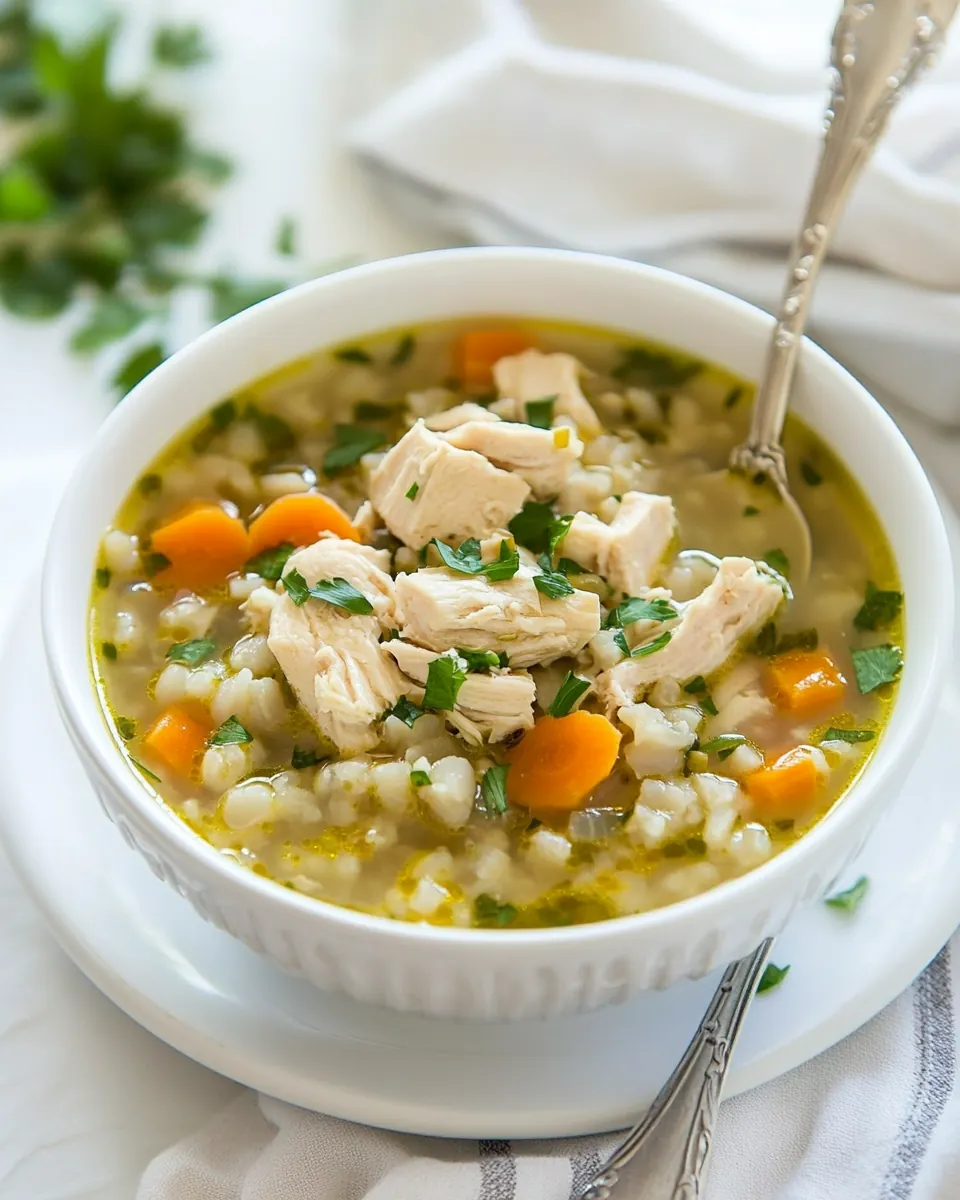
Chicken and Barley Soup
Chicken and Barley Soup is the kind of bowl I reach for when the air turns crisp and I want something honest, nourishing, and quietly restorative. I remember the first time I made it for a friend recovering from a long illness, carrying the pot like a talisman. The aroma that filled the kitchen that afternoon was gentle and grounding, a warm invitation to slow down and eat with intention.
Over the years I have tweaked the balance between broth and barley so the texture feels just right, neither too brothy nor too porridge like. What I love most about Chicken and Barley Soup is how forgiving it is. You can stretch it for a crowd or keep it intimate, and it always returns a sense of calm after a busy day. Cooking it has become a ritual I turn to when I need comfort or when friends drop by unexpectedly, because it warms the room as much as the stomach.
Recipe Snapshot
1 hr 25 mins
15 mins
70 mins
Medium
350 kcal
American
Paleo, Whole30
Soups
Large pot, Wooden spoon, Cutting board, Chef’s knife
The Beauty of This Chicken and Barley Soup
Hearty, yet light
I adore how Chicken and Barley Soup manages to be filling without feeling heavy. The pearl barley gives body and a subtle nutty chew, while the clear broth keeps everything bright. When I serve it, people comment on how satisfied they feel without that weighted fullness that can follow richer dishes.
Simple pantry friendly ingredients
One of the reasons I turn to this recipe often is its accessibility. Most of the components are staples I keep on hand, so I can pull this together on short notice. It has saved more than one weeknight when my schedule ran long, and I appreciate recipes that reward minimal effort with maximum comfort.
Layered, comforting flavors
I love how the herbs work in concert. The dried sage, rosemary, thyme and marjoram knit the broth into something savory and aromatic, while a splash of fresh lemon juice at the end brightens the whole pot. That contrast between warm herbs and a touch of acid is a little trick I rely on to lift soups from good to memorable.
Flexible for leftovers and meal prep
This soup improves as it sits, which makes it a perfect candidate for leftovers. The barley soaks up flavors in the fridge, and a quick reheat with a bit of extra broth restores the original consistency. I often make a big batch and portion it for lunches, because it reheats beautifully and still tastes homemade.
Comfort for many occasions
Whether you need gentle nourishment during a cold snap or a soothing bowl after a long day, Chicken and Barley Soup fits the bill. I find it equally at home on a quiet weeknight table or ladled into thermoses for a warming lunch on a chilly afternoon.
What You’ll Need for Chicken and Barley Soup
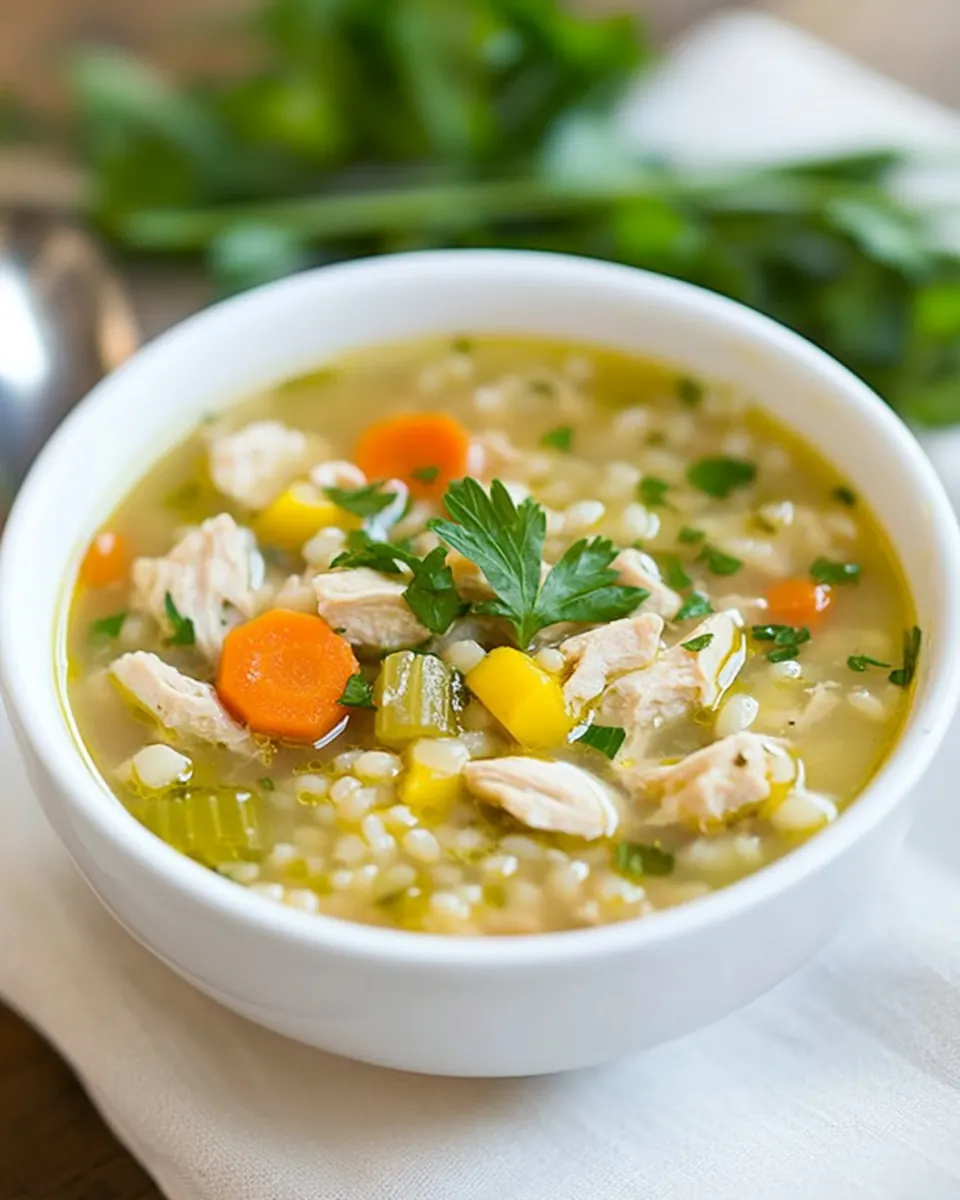
These ingredients come together to create a soup that balances texture, flavor and nourishment. The barley provides chew and thickness, the chicken adds protein and comfort, and the trio of aromatic vegetables forms the flavorful backbone. The dried herbs infuse the broth slowly, and a touch of fresh parsley and lemon at the end keeps each spoonful lively.
- 1 3/4 lbs boneless skinless chicken breast, cooked and shredded: Shredded to add hearty protein and tender texture while absorbing the soup's flavors; provides substance and satiety to each bowl and balances the grains and vegetables.
- 2 tbsp olive oil: Used to gently sauté aromatics and vegetables, creating a flavorful base while adding a subtle fruity richness and healthy fats that carry the herbs and seasonings.
- 1 1/2 cups chopped carrots (about 4): Chopped to contribute natural sweetness, color, and a pleasant bite; softens during cooking to meld with the broth and enhance overall mouthfeel and nutrition.
- 1 1/2 cups chopped celery (about 4): Chopped to provide crisp, aromatic backbone and a mild vegetal flavor; softens with simmering to complement carrots and onions and add body to the soup.
- 1 1/2 cups chopped yellow onion (1 large): Chopped to build savory depth and sweetness when sautéed; dissolves into the broth to create a rich foundation and enhance the aroma of the finished dish.
- 2 cloves garlic, minced: Minced to release pungent, aromatic oils that deepen flavor; adds a sharp, savory note that brightens the overall soup profile without overpowering other ingredients.
- 4 (14.5 oz) cans low-sodium chicken broth, plus more as desired: Added to supply the cooking liquid, concentrated savory flavor, and seasoning control; dilutes as needed to reach desired consistency while supporting the soup's aroma and depth.
- 3/4 cup pearl barley (uncooked): Cooked in the simmering broth to tenderize and impart nutty, chewy texture; absorbs flavor from the stock and herbs while contributing wholesome whole-grain nutrition.
- 2 bay leaves: Placed whole to slowly infuse a subtle, herbal bay leaf fragrance during the simmering process; removed before serving to avoid sharp bay leaf fragments.
- 1 tsp dried sage: Sprinkled to introduce warm, slightly piney and savory notes that echo classic poultry seasoning; helps lift and unify the soup's herbal profile.
- 1/2 tsp of each dried rosemary, thyme, and marjoram: Added in measured amounts to provide complementary woody, floral, and sweet herbal tones; balances the sage and enhances complexity without overwhelming delicacy.
- Salt and freshly ground black pepper, to taste: Seasoned to taste for balance and enhancement of all other flavors; salt brings out depth while freshly ground pepper provides a bright, mild heat.
- 1/4 cups lightly packed, chopped fresh parsley: Chopped and stirred in near the end to add fresh, bright herbaceousness and color; lightens and refreshes the flavor while adding a hint of earthiness.
- 1 tbsp fresh lemon juice: Squeezed at the finish to introduce bright acidity that lifts flavors, balances richness, and adds a fresh citrus note to the savory soup.
Cooking Method for Chicken and Barley Soup
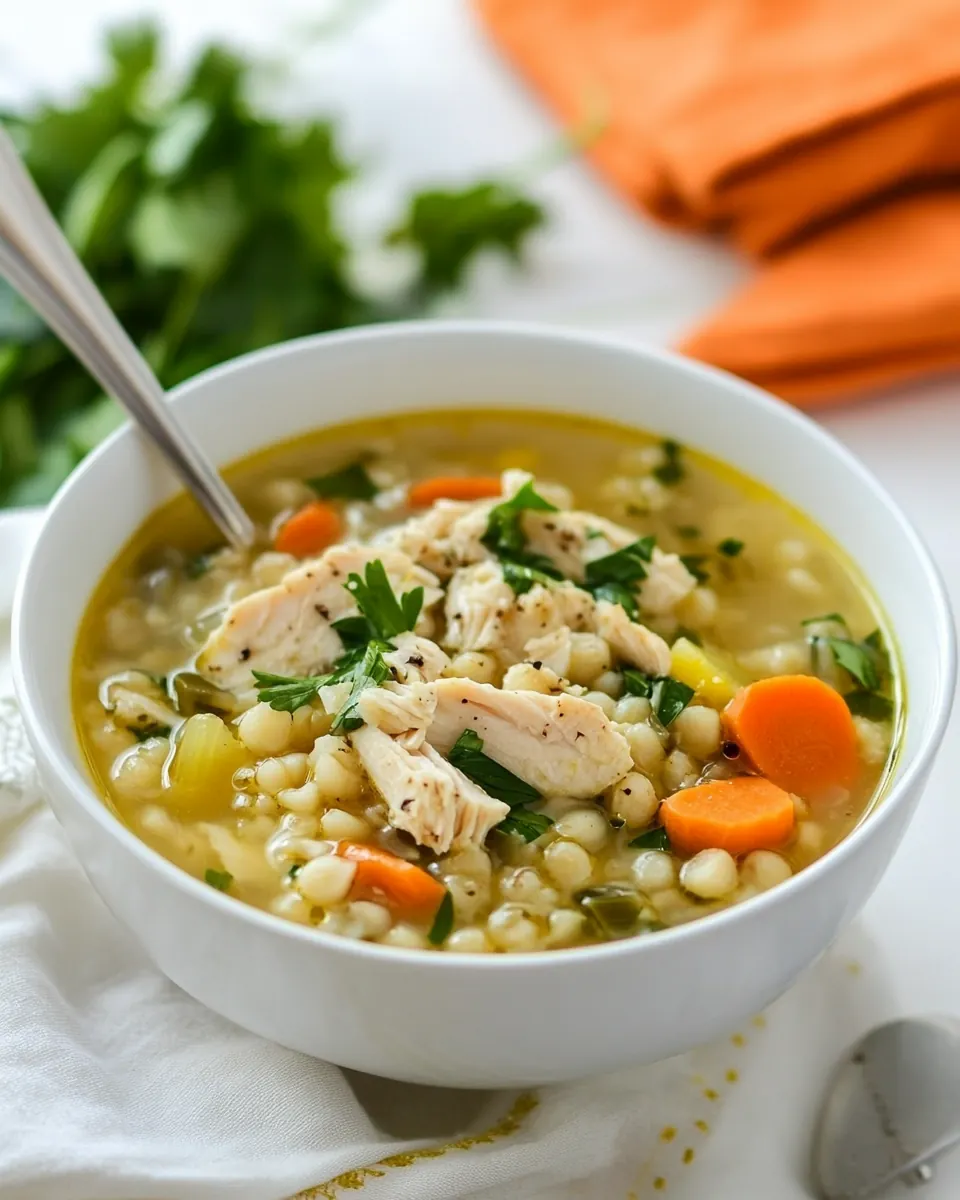
I like to approach this as a gentle, attentive process. The goal is to coax flavors steadily, so there is little hurry. As you follow the steps below, focus on the visual and aromatic cues to know you are on the right track.
- Heat oil in a large pot over medium heat. Add carrots, celery and onion and sauté 3 – 4 minutes, add garlic and sauté 30 seconds longer.: You will smell the vegetables as they begin to soften, a sweet and savory scent that signals the foundation is forming, while the sizzling is soft and steady. Cook until the onion becomes translucent and the edges of the carrots and celery give slightly under a spatula, this is the visual cue that sugars are releasing and the base is aromatic. This gentle sweat is important because it builds depth without browning, which keeps the broth clear and bright. Watch the heat carefully, because too high a flame will brown the vegetables and change the flavor profile. A common misstep here is rushing and letting the garlic burn; add the minced garlic only after the vegetables have softened and keep it moving so it warms through without charring.
- Stir in chicken broth, barley, bay leaves, sage, rosemary, thyme, marjoram and season with salt and pepper to taste. Bring mixture to a boil then reduce heat to low, cover and simmer until barley is tender, about 50 – 60 minutes.: The moment you add the hot or room temperature broth the kitchen will fill with an herb scented steam, and tiny bubbles will rise as you bring it to a boil. Once boiling, lower the heat to a gentle simmer so the barley cooks slowly and releases starch, which gives the broth body. Keeping the pot partially covered traps steam and ensures even cooking, while stirring occasionally prevents the barley from settling. This long simmer allows the dried herbs to infuse without becoming bitter. Check for tenderness after roughly 50 minutes, because overcooking will turn the barley mushy, altering texture. A frequent error is maintaining too high a boil, which can evaporate liquid too quickly, so add more broth if the soup looks too thick during cooking.
- Stir in chicken, parsley and lemon juice and serve warm. As soup rests the barley will absorb more liquid so add more chicken broth to thin as desired.: At this finishing stage the aroma shifts as the shredded chicken warms through and the fresh parsley releases a green, herbaceous note. The texture contrast between tender chicken strands and the chewy barley is what makes each spoonful satisfying. Add the fresh lemon juice last to brighten flavors, tasting to ensure the acid does not overpower. If the soup has thickened while resting, the barley will have absorbed liquid, so thin the broth with extra warm chicken broth to restore the desired consistency. One common oversight is failing to reheat gently; high heat at this point can toughen the chicken . Serve warm and remove the bay leaves before plating.
Pro Tips and Tweaks

This soup rewards small, thoughtful choices that build flavor. Below are practical suggestions to make the best pot possible and to customize it to your taste.
- Choose low sodium broth so you can season deliberately after the barley has softened and the broth has reduced a bit.
- Cook the chicken gently to retain moistness, poach in a shallow pan or roast briefly, then shred while warm for easier integration.
- Measure your barley because it expands substantially, affecting final thickness; add more broth rather than letting it become overly dense.
- Taste before adding salt since canned broths and reductions can concentrate saltiness as the soup simmers.
- Finish with acid and fresh herbs to lift flavors right before serving, a little lemon and parsley go a long way.
Serving Options for Chicken and Barley Soup
This soup is versatile across occasions, from cozy weeknights to light lunches for guests. Below are ideas for how to present and pair it, plus practical storage suggestions to keep leftovers tasting great.
- Weeknight dinner: Serve in deep bowls with crusty bread on the side for dipping, making for a simple and comforting meal.
- Lunch option: Ladle into thermoses for a warming packed lunch, ideal for chilly days when you need a substantial but not heavy midday meal.
- Family gatherings: Make a large pot and set out bowls of extra parsley and lemon wedges so guests can customize brightness to their taste.
- Storage tips: Cool quickly and refrigerate in airtight containers for up to four days, adding a splash of broth when reheating to refresh texture.
- Occasions: This is especially fitting for winter evenings and when you want nurturing, easy to digest food; it also works well during times when gentle nourishment is needed.
FAQ
Conclusion
Chicken and Barley Soup shines because it balances hearty texture with bright, herbaceous flavor in a way that feels both nurturing and familiar. It is easy to assemble, forgiving in technique, and perfect for feeding a family or prepping lunches for the week. If you are craving something warm and restorative, give this recipe a try and let the steady simmer do the rest; the aroma alone will tell you it was worth the effort.

Chicken and Barley Soup
Equipment
- Large Pot
- Wooden Spoon
- Cutting Board
- Chef's Knife
Ingredients
- 1 3/4 lbs boneless skinless chicken breast, cooked and shredded Shredded to add hearty protein and tender texture while absorbing the soup's flavors; provides substance and satiety to each bowl and balances the grains and vegetables.
- 2 tbsp olive oil Used to gently sauté aromatics and vegetables, creating a flavorful base while adding a subtle fruity richness and healthy fats that carry the herbs and seasonings.
- 1 1/2 cups chopped carrots (about 4) Chopped to contribute natural sweetness, color, and a pleasant bite; softens during cooking to meld with the broth and enhance overall mouthfeel and nutrition.
- 1 1/2 cups chopped celery (about 4) Chopped to provide crisp, aromatic backbone and a mild vegetal flavor; softens with simmering to complement carrots and onions and add body to the soup.
- 1 1/2 cups chopped yellow onion (1 large) Chopped to build savory depth and sweetness when sautéed; dissolves into the broth to create a rich foundation and enhance the aroma of the finished dish.
- 2 cloves garlic, minced Minced to release pungent, aromatic oils that deepen flavor; adds a sharp, savory note that brightens the overall soup profile without overpowering other ingredients.
- 4 (14.5 oz) cans low-sodium chicken broth, plus more as desired Added to supply the cooking liquid, concentrated savory flavor, and seasoning control; dilutes as needed to reach desired consistency while supporting the soup's aroma and depth.
- 3/4 cup pearl barley (uncooked) Cooked in the simmering broth to tenderize and impart nutty, chewy texture; absorbs flavor from the stock and herbs while contributing wholesome whole-grain nutrition.
- 2 bay leaves Placed whole to slowly infuse a subtle, herbal bay leaf fragrance during the simmering process; removed before serving to avoid sharp bay leaf fragments.
- 1 tsp dried sage Sprinkled to introduce warm, slightly piney and savory notes that echo classic poultry seasoning; helps lift and unify the soup's herbal profile.
- 1/2 tsp of each dried rosemary, thyme, and marjoram Added in measured amounts to provide complementary woody, floral, and sweet herbal tones; balances the sage and enhances complexity without overwhelming delicacy.
- Salt and freshly ground black pepper, to taste Seasoned to taste for balance and enhancement of all other flavors; salt brings out depth while freshly ground pepper provides a bright, mild heat.
- 1/4 cups lightly packed, chopped fresh parsley Chopped and stirred in near the end to add fresh, bright herbaceousness and color; lightens and refreshes the flavor while adding a hint of earthiness.
- 1 tbsp fresh lemon juice Squeezed at the finish to introduce bright acidity that lifts flavors, balances richness, and adds a fresh citrus note to the savory soup.
Instructions
- Heat oil in a large pot over medium heat. Add carrots, celery and onion and sauté 3 - 4 minutes, add garlic and sauté 30 seconds longer.: You will smell the vegetables as they begin to soften, a sweet and savory scent that signals the foundation is forming, while the sizzling is soft and steady. Cook until the onion becomes translucent and the edges of the carrots and celery give slightly under a spatula, this is the visual cue that sugars are releasing and the base is aromatic. This gentle sweat is important because it builds depth without browning, which keeps the broth clear and bright. Watch the heat carefully, because too high a flame will brown the vegetables and change the flavor profile. A common misstep here is rushing and letting the garlic burn; add the minced garlic only after the vegetables have softened and keep it moving so it warms through without charring.
- Stir in chicken broth, barley, bay leaves, sage, rosemary, thyme, marjoram and season with salt and pepper to taste. Bring mixture to a boil then reduce heat to low, cover and simmer until barley is tender, about 50 - 60 minutes.: The moment you add the hot or room temperature broth the kitchen will fill with an herb scented steam, and tiny bubbles will rise as you bring it to a boil. Once boiling, lower the heat to a gentle simmer so the barley cooks slowly and releases starch, which gives the broth body. Keeping the pot partially covered traps steam and ensures even cooking, while stirring occasionally prevents the barley from settling. This long simmer allows the dried herbs to infuse without becoming bitter. Check for tenderness after roughly 50 minutes, because overcooking will turn the barley mushy, altering texture. A frequent error is maintaining too high a boil, which can evaporate liquid too quickly, so add more broth if the soup looks too thick during cooking.
- Stir in chicken, parsley and lemon juice and serve warm. As soup rests the barley will absorb more liquid so add more chicken broth to thin as desired.: At this finishing stage the aroma shifts as the shredded chicken warms through and the fresh parsley releases a green, herbaceous note. The texture contrast between tender chicken strands and the chewy barley is what makes each spoonful satisfying. Add the fresh lemon juice last to brighten flavors, tasting to ensure the acid does not overpower. If the soup has thickened while resting, the barley will have absorbed liquid, so thin the broth with extra warm chicken broth to restore the desired consistency. One common oversight is failing to reheat gently; high heat at this point can toughen the chicken . Serve warm and remove the bay leaves before plating.
Notes
- Choose low sodium broth so you can season deliberately after the barley has softened and the broth has reduced a bit.
- Cook the chicken gently to retain moistness, poach in a shallow pan or roast briefly, then shred while warm for easier integration.
- Measure your barley because it expands substantially, affecting final thickness; add more broth rather than letting it become overly dense.
- Taste before adding salt since canned broths and reductions can concentrate saltiness as the soup simmers.
- Finish with acid and fresh herbs to lift flavors right before serving, a little lemon and parsley go a long way.