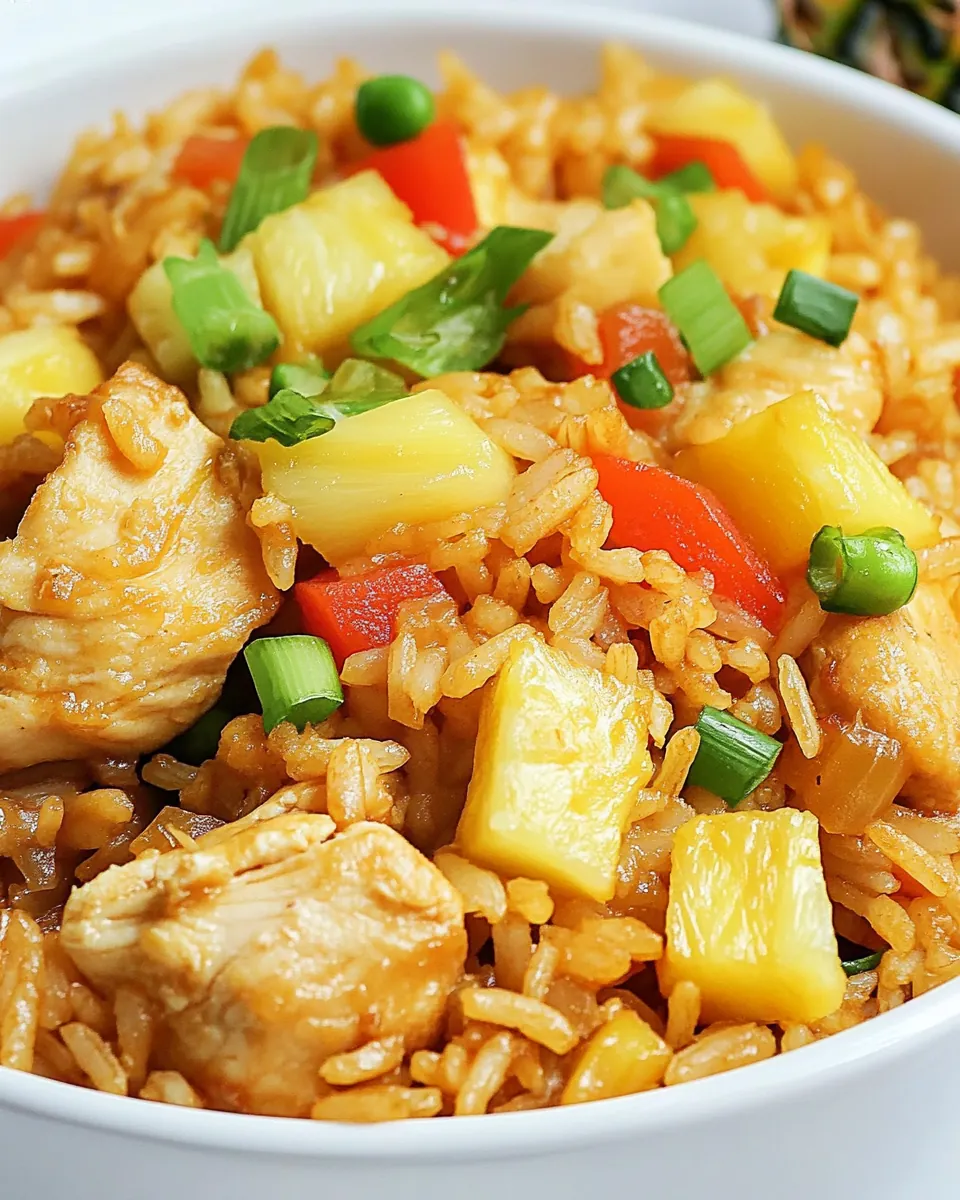
Chicken and Pineapple Fried Rice
Chicken and Pineapple Fried Rice has been my secret weeknight winner ever since a sunlit backyard barbecue introduced me to the joyful clash of savory meat and bright fruit.
I still remember the first time I served Chicken and Pineapple Fried Rice to a jumble of friends after a long day of running errands, and how everyone paused mid conversation to scoop a second helping. The mix of warm chicken and juicy pineapple against tender rice made casual dinner feel celebratory. Over time I refined the balance, nudging the seasoning a touch one way, softening the onions another, always listening to the sizzle in the pan.
Sometimes I make it when I need something quick that still feels like effort, and other times I pull it together for a laid back lunch where leftovers are welcome company. There is a comfort in the routine of searing cubes of golden chicken, the aroma of sautéed onion and garlic filling the kitchen, and the little pops of sweetness when the pineapple warms through. This dish taught me the art of balancing textures, and how a single ingredient, used well, can lift an entire meal.
Recipe Snapshot
35 mins
10 mins
25 mins
Easy
450 kcal
American
Gluten-Free, Paleo
Dinner
Large skillet, Spatula, Measuring cups
Why You’ll Love This Chicken and Pineapple Fried Rice
Bold sweet and savory contrast
I adore how Chicken and Pineapple Fried Rice pairs the caramelized notes of cooked chicken with the bright acidity and sweetness of pineapple. That contrast keeps each bite interesting, and it is the main reason I keep making it. When the pineapple heats, it loosens juices that mingle with the broth and soy, creating savory pockets that sing against the meat.
One pan ease, big flavor
We love recipes that minimize dishes without sacrificing complexity. Using a single skillet means you get layered flavors from bits left on the pan, and the simplicity makes it perfect for busy evenings. I appreciate that the same pan that sears the chicken becomes the vessel where onion, pepper, and rice all finish together, building harmony instead of washing flavor away.
Flexible and forgiving
I often swap pantry items based on what I have, yet the core of this recipe stands firm. The method allows a little improvisation while preserving texture. Rice absorbs flavors readily, so even small adjustments in seasoning make noticeable but manageable differences, which is reassuring when you are learning the dish.
Comfort that feels bright
This dish delivers the cozy warmth of a rice bowl while staying lively, thanks to the pineapple and red bell pepper. It is the kind of comfort food that does not weigh you down, perfect for warm months or when you crave something that tastes like an easy celebration.
Great for leftovers
We plan for leftovers because this retains structure in the fridge and reheats well. The rice soaks up flavors overnight, which deepens the taste, and a quick splash of broth when reheating restores moisture. That convenience makes it a reliable go to for meal prep or a flexible family dinner.
What You Need for Chicken and Pineapple Fried Rice
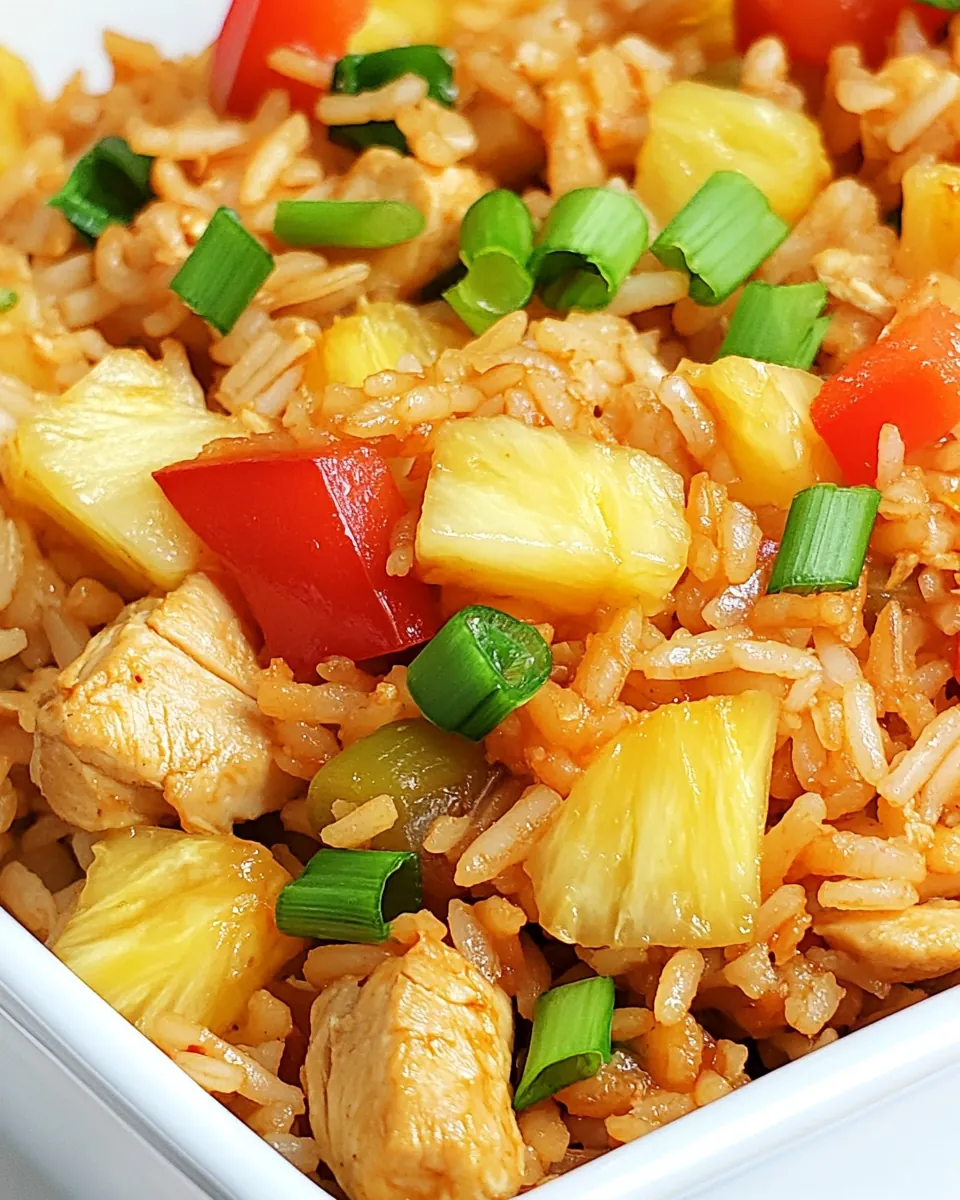
These ingredients work together like a small orchestra, where each player supports the others. The chicken provides protein and savory body, the pineapple adds acidity and sweetness, and the rice soaks up all the combined flavors. Aromatics such as onion and garlic build an aromatic foundation, while the chicken broth and soy sauce glue everything together with umami richness.
- 1 lb chicken breast cut into cubes: Cooked into tender, bite-sized pieces to provide the primary protein and bulk of the dish; cubes sear quickly for caramelized edges and juicy centers that complement the sweet rice.
- 20 oz pineapple chunks fresh or canned: Adds concentrated sweetness and tropical acidity that balances savory flavors; can be drained if canned or lightly sautéed if fresh to caramelize edges and enhance juice release.
- 2 tablespoons olive oil: Heats the pan and prevents sticking while lending a mild fruity flavor; used for sautéing aromatics and browning the chicken without overpowering other components.
- 1 yellow onion diced: Sweated until translucent to form a savory aromatic base, contributing sweetness and texture; diced pieces soften and mingle with rice for layered flavor.
- 1 tablespoon minced garlic: Infuses the dish with pungent, savory depth when minced and briefly sautéed; releases fragrant oils that enhance overall umami and aroma.
- 1 red bell pepper chopped: Provides vibrant color, crisp texture, and a sweet-vegetal note when chopped and briefly cooked; adds both visual appeal and a fresh bite to the fried rice.
- 1 cup uncooked white basmati rice or long-grain white rice: Absorbs flavors and serves as the starchy foundation; rinsed and cooked properly it yields separate grains that soak up sauce and juices without becoming mushy.
- 2 cups chicken broth: Simmered with rice to cook grains and impart savory depth; chicken broth replaces water to enrich the overall savory profile of the fried rice.
- 1 tablespoon soy sauce: Adds concentrated salty umami and savory depth when stirred into the rice; a small amount enhances soy and broth flavors and ties ingredients together.
- 1/2 teaspoon salt: Seasoned sparingly to elevate overall taste and balance sweetness; helps to bring out savory notes without overwhelming delicate flavors.
- 1/2 teaspoon ground ginger: Provides warm, slightly sweet spice that complements soy and pineapple; used in small amounts to add exotic depth and subtle warmth.
- 1/2 teaspoon ground black pepper: Seasoned to taste for mild heat and aromatic sharpness; freshly ground black pepper cuts through sweetness and rounds out the savory profile.
- Sliced green onions for serving: Garnishes the finished dish with a bright, fresh, oniony note and mild crunch; sliced pieces add color contrast and a crisp finish when sprinkled on top.
Making Chicken and Pineapple Fried Rice
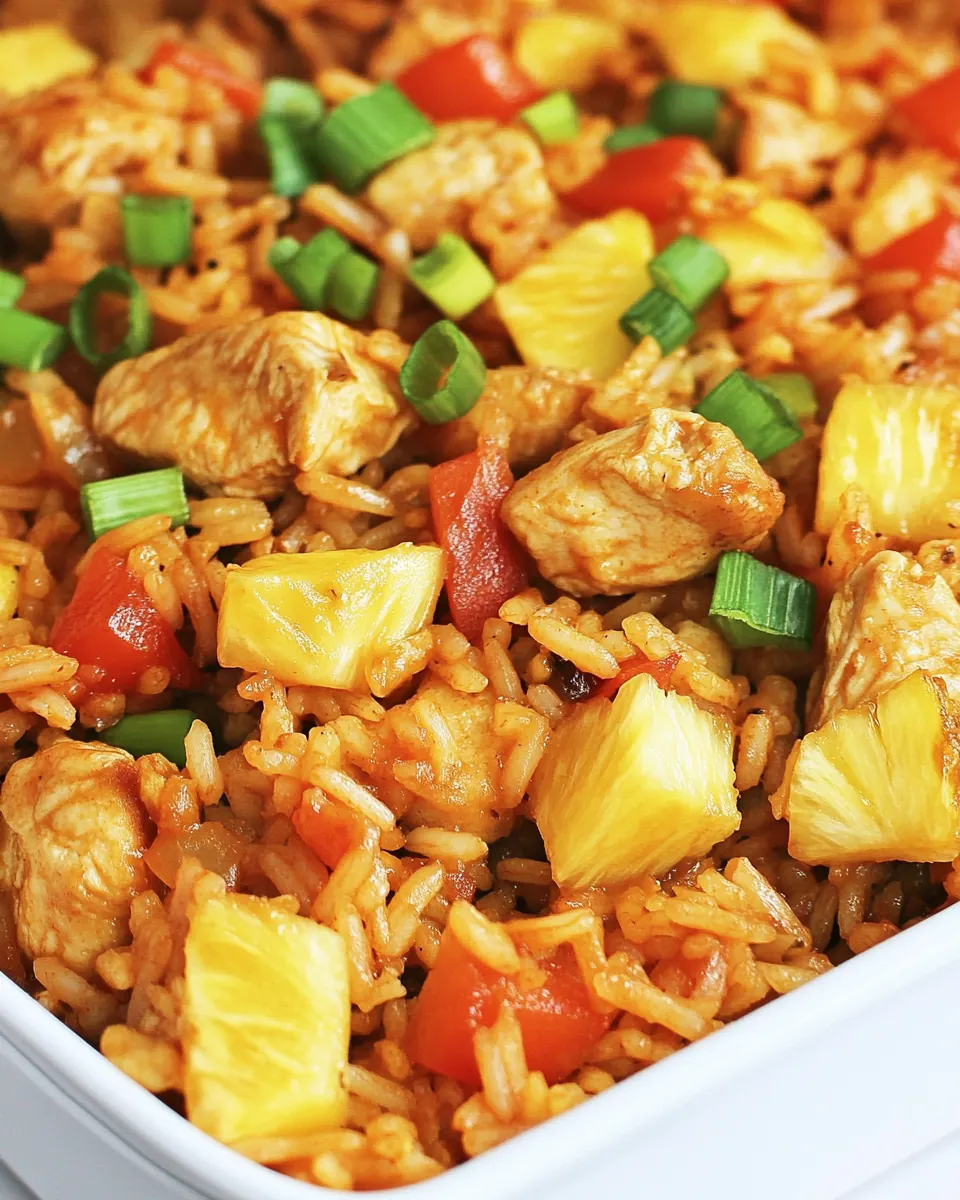
Bringing this dish together is about timing and paying attention to sensory cues. Work in a rhythm of searing, sautéing, and simmering so each component reaches the right level of doneness. Below you will find step by step guidance to help you trust your senses and avoid common pitfalls.
- In a large skillet, heat olive oil over medium heat. Add the cubed chicken breast and cook until golden and fully cooked through. Season with salt and pepper. Remove the chicken from the skillet and set aside.: The aroma of warm oil is the first signal that the pan is ready, a gentle shimmer indicates correct temperature. You'll hear a soft ripple as oil warms and see it thin across the surface. Using medium heat ensures the oil does not smoke while still giving enough heat to achieve a golden sear on the chicken . A common mistake is adding meat too early, which leads to sticking; wait until the oil moves freely in the pan.
- In the same skillet, add diced onion, garlic, and red bell pepper. Cook for about 5 minutes, stirring occasionally, until the onions begin to brown and the peppers soften. Stir in the pineapple chunks and cook for an additional 1–2 minutes to release some sweetness and reduce moisture.: When the chicken hits the pan you should hear a steady sizzle, and within a few minutes edges will turn a nutty, golden brown. These visual cues mean the Maillard reaction is happening, giving savory depth. Cut into the largest piece to check there is no pink; juices should run clear. Avoid crowding the pan because overcrowding causes steaming rather than browning, producing pale, rubbery pieces.
- Pour in the uncooked rice, chicken broth, and soy sauce. Season with salt, ground ginger, and black pepper. Stir everything together to evenly combine the flavors.: The first wave of seasoning wakes up the meat, and you will notice the aroma sharpen when salt and pepper hit warm chicken . Seasoning early helps flavor penetrate the surface as it cooks. A common mistake is over salting, especially if you will add broth and soy later; seasoning lightly now lets you adjust at the end.
- Bring the mixture to a boil. Once boiling, cover the skillet, reduce the heat to low, and simmer for about 20 minutes or until the rice is tender and the liquid is fully absorbed.: Lifting the chicken off the heat preserves its crust and frees the pan for vegetables, where leftover fond will flavor the next stage. You should see browned bits stuck to the pan, these are flavor gold. If you leave the meat in the pan, it will continue cooking and can dry out, so rest it briefly off the heat.
- Return the cooked chicken to the skillet and mix well. Heat through for another minute or two, then garnish with sliced green onions and serve warm.: The moment vegetables hit the pan you will sense a burst of fresh aroma as the onion softens and the pepper begins to release sweetness. Stir often so the garlic does not brown too quickly, and aim for the onion to go translucent with edges just starting to caramelize. If garlic darkens too fast it will taste bitter, so lower the heat if needed.
- Cook for about 5 minutes, stirring occasionally, until the onions begin to brown and the peppers soften: During these minutes you will observe the onion turning glossy and the pepper losing some firmness, and the scent will deepen into a sweeter, more savory direction. That slight browning develops complex flavors that echo through the finished dish. A frequent error is rushing this step; undercooked onions will taste raw and disruptive to the overall balance.
- Stir in the pineapple chunks and cook for an additional 1 to 2 minutes to release some sweetness and reduce moisture: As the pineapple heats you will notice steam and a sharper tropical perfume; a quick sizzle will concentrate the sugars and make them sing against the savory base. This short cook time avoids turning the fruit to mush while allowing juices to mingle with the vegetables. If you let pineapple sit too long, it will break down and make the dish overly wet.
- Pour in the uncooked rice, chicken broth, and soy sauce: When liquid and dry rice meet in the pan you will see grains begin to float and absorb, and the soy will tint the cooking liquid slightly. Stirring at this moment helps distribute seasoning and prevents clumping. The rice should be evenly coated so flavors penetrate as it simmers; failing to stir once can leave unevenly flavored pockets.
- Season with salt, ground ginger, and black pepper: Adding the spices now integrates their flavors into the cooking liquid so each grain of rice takes on the seasoning. The ginger will lend a warm, aromatic lift that complements the pineapple , while pepper adds a subtle backbone. Misjudging the ginger amount is common; too much will create an artificial bite, so keep it measured.
- Stir everything together to evenly combine the flavors: At this point you should see a consistent mixture of rice, vegetables, and flecks of seasoning. Stirring ensures pockets of flavor do not form and that the rice begins to absorb the broth uniformly. Neglecting to combine thoroughly can leave some rice under seasoned and others overly salty.
- Bring the mixture to a boil: A bubbling, rolling boil signals the water is hot enough to penetrate the rice quickly, and steam will rise. Boiling briefly before lowering heat jump starts cooking and helps prevent gummy texture. Watch the pan; letting it boil too long before covering can evaporate too much liquid and undercook the rice.
- Once boiling, cover the skillet, reduce the heat to low, and simmer for about 20 minutes or until the rice is tender and the liquid is fully absorbed: During simmer the rice will swell and whisper-soften, and the aroma will change from wet starch to fragrant, cooked grains. Keep the lid on to trap steam, which cooks the rice evenly. A common mistake is lifting the lid repeatedly, which releases steam and lengthens cooking time, possibly leading to uneven texture.
- Return the cooked chicken to the skillet and mix well: Reintroducing the chicken warms the meat through and allows it to mingle with the rice, so each forkful carries both protein and seasoned grains. The sound will be a gentle simmering as the pieces nestle into the rice, and you should see everything come together visually. If the meat is still cool, allow a couple more minutes to heat without drying it, adding a splash of broth if needed.
- Heat through for another minute or two, then garnish with sliced green onions and serve warm: Final heating lets flavors marry and the dish relax into a single cohesive plate, while the sliced green onions add a fresh, bright finish. Serve as soon as it is warmed through to preserve texture and color. Waiting too long before serving can make the garnish wilt and the rice firm up unevenly.
Expert Tips about Chicken and Pineapple Fried Rice
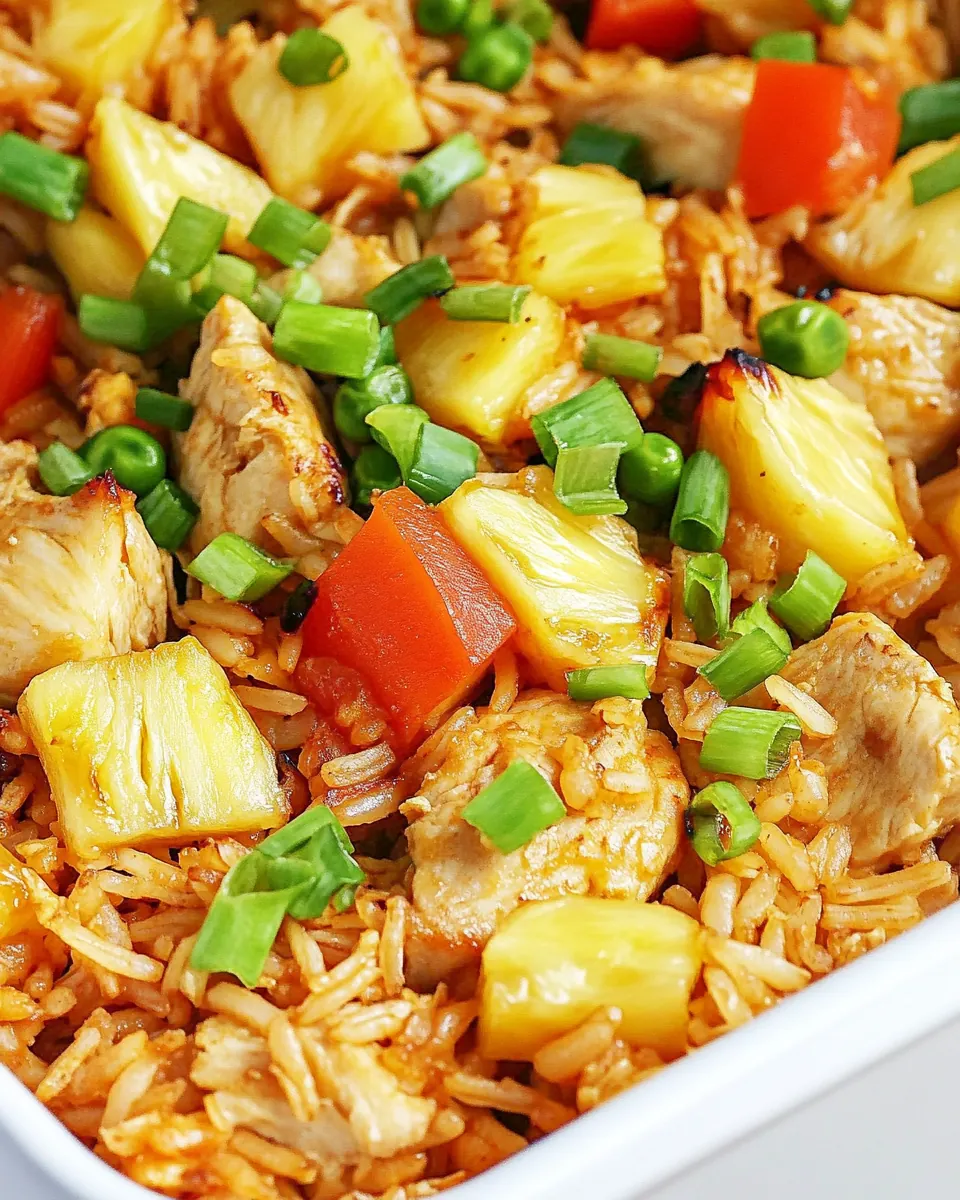
This dish rewards attention to small details. The tips below expand on technique, timing, and flavor balance so you can get consistent, delicious results. I wrote these based on dozens of iterations and the things I wish I had known from the start.
- Toast the rice first if you want a nuttier flavor, briefly toasting dry rice in the pan before adding liquid deepens the profile and helps keep grains separate.
- Dry the pineapple a bit by draining or patting with a paper towel, excess juice can water down the cooking liquid and change the rice texture.
- Cut chicken into even pieces so they cook uniformly, inconsistent sizes create a mix of overdone and underdone bites.
- Use low sodium broth to better control final salt level, you can always adjust with more soy sauce at the end.
- Add green onions last to preserve their fresh bite and color, they brighten the dish without wilting.
- Reheat with a splash of broth to refresh leftovers, it restores moisture and loosens grains without diluting flavor.
Accompaniments for Chicken and Pineapple Fried Rice
This recipe is versatile enough to suit many meals. Below I outline serving ideas, pairings, and storage tips in a practical format so you can plan the whole experience.
- Weeknight dinner Serve the rice warm with a side of crisp cucumber salad to add contrast and a cool crunchy element for everyday family meals.
- Casual lunch Pair with simple steamed vegetables, such as broccoli or snap peas, to keep the meal balanced and bright for midday eating.
- Meal prep Portion into airtight containers and refrigerate for up to three days, this helps midweek lunches come together quickly and retains texture when reheated properly.
- Entertaining Spoon the rice into a large shallow bowl and garnish with extra sliced green onions for a communal serving station at small gatherings.
- Seasonal pairing In summer, serve with a light green salad and citrus vinaigrette to echo the tropical notes of the pineapple, making the meal feel fresh and seasonal.
- Storage tip Cool to room temperature before refrigerating to avoid excess condensation, and reheat covered with a splash of broth to revive moisture.
FAQ
Conclusion
This Chicken and Pineapple Fried Rice stands out because it balances warm savory notes with bright, tropical sweetness and simple one pan technique. It is a dependable, flavorful meal that comes together quickly yet tastes like you spent more time on it, making weeknights feel a little more special. Try it when you want a comforting plate that still feels light and festive, and you may find it becoming a regular in your rotation.
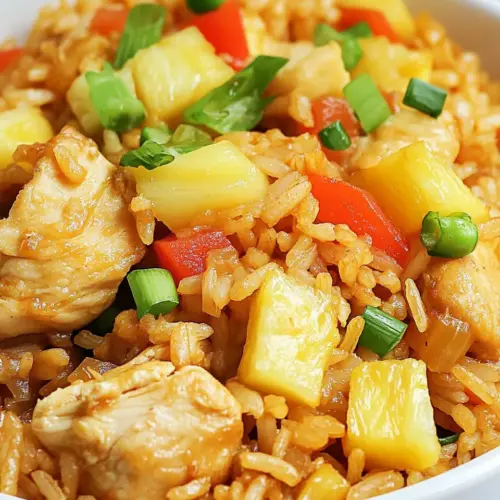
Chicken and Pineapple Fried Rice
Equipment
- Large Skillet
- Spatula
- Measuring Cups
Ingredients
- 1 lb chicken breast cut into cubes Cooked into tender, bite-sized pieces to provide the primary protein and bulk of the dish; cubes sear quickly for caramelized edges and juicy centers that complement the sweet rice.
- 20 oz pineapple chunks fresh or canned Adds concentrated sweetness and tropical acidity that balances savory flavors; can be drained if canned or lightly sautéed if fresh to caramelize edges and enhance juice release.
- 2 tablespoons olive oil Heats the pan and prevents sticking while lending a mild fruity flavor; used for sautéing aromatics and browning the chicken without overpowering other components.
- 1 yellow onion diced Sweated until translucent to form a savory aromatic base, contributing sweetness and texture; diced pieces soften and mingle with rice for layered flavor.
- 1 tablespoon minced garlic Infuses the dish with pungent, savory depth when minced and briefly sautéed; releases fragrant oils that enhance overall umami and aroma.
- 1 red bell pepper chopped Provides vibrant color, crisp texture, and a sweet-vegetal note when chopped and briefly cooked; adds both visual appeal and a fresh bite to the fried rice.
- 1 cup uncooked white basmati rice or long-grain white rice Absorbs flavors and serves as the starchy foundation; rinsed and cooked properly it yields separate grains that soak up sauce and juices without becoming mushy.
- 2 cups chicken broth Simmered with rice to cook grains and impart savory depth; chicken broth replaces water to enrich the overall savory profile of the fried rice.
- 1 tablespoon soy sauce Adds concentrated salty umami and savory depth when stirred into the rice; a small amount enhances soy and broth flavors and ties ingredients together.
- 1/2 teaspoon salt Seasoned sparingly to elevate overall taste and balance sweetness; helps to bring out savory notes without overwhelming delicate flavors.
- 1/2 teaspoon ground ginger Provides warm, slightly sweet spice that complements soy and pineapple; used in small amounts to add exotic depth and subtle warmth.
- 1/2 teaspoon ground black pepper Seasoned to taste for mild heat and aromatic sharpness; freshly ground black pepper cuts through sweetness and rounds out the savory profile.
- Sliced green onions for serving Garnishes the finished dish with a bright, fresh, oniony note and mild crunch; sliced pieces add color contrast and a crisp finish when sprinkled on top.
Instructions
- In a large skillet, heat olive oil over medium heat. Add the cubed chicken breast and cook until golden and fully cooked through. Season with salt and pepper. Remove the chicken from the skillet and set aside.: The aroma of warm oil is the first signal that the pan is ready, a gentle shimmer indicates correct temperature. You'll hear a soft ripple as oil warms and see it thin across the surface. Using medium heat ensures the oil does not smoke while still giving enough heat to achieve a golden sear on the chicken . A common mistake is adding meat too early, which leads to sticking; wait until the oil moves freely in the pan.
- In the same skillet, add diced onion, garlic, and red bell pepper. Cook for about 5 minutes, stirring occasionally, until the onions begin to brown and the peppers soften. Stir in the pineapple chunks and cook for an additional 1–2 minutes to release some sweetness and reduce moisture.: When the chicken hits the pan you should hear a steady sizzle, and within a few minutes edges will turn a nutty, golden brown. These visual cues mean the Maillard reaction is happening, giving savory depth. Cut into the largest piece to check there is no pink; juices should run clear. Avoid crowding the pan because overcrowding causes steaming rather than browning, producing pale, rubbery pieces.
- Pour in the uncooked rice, chicken broth, and soy sauce. Season with salt, ground ginger, and black pepper. Stir everything together to evenly combine the flavors.: The first wave of seasoning wakes up the meat, and you will notice the aroma sharpen when salt and pepper hit warm chicken . Seasoning early helps flavor penetrate the surface as it cooks. A common mistake is over salting, especially if you will add broth and soy later; seasoning lightly now lets you adjust at the end.
- Bring the mixture to a boil. Once boiling, cover the skillet, reduce the heat to low, and simmer for about 20 minutes or until the rice is tender and the liquid is fully absorbed.: Lifting the chicken off the heat preserves its crust and frees the pan for vegetables, where leftover fond will flavor the next stage. You should see browned bits stuck to the pan, these are flavor gold. If you leave the meat in the pan, it will continue cooking and can dry out, so rest it briefly off the heat.
- Return the cooked chicken to the skillet and mix well. Heat through for another minute or two, then garnish with sliced green onions and serve warm.: The moment vegetables hit the pan you will sense a burst of fresh aroma as the onion softens and the pepper begins to release sweetness. Stir often so the garlic does not brown too quickly, and aim for the onion to go translucent with edges just starting to caramelize. If garlic darkens too fast it will taste bitter, so lower the heat if needed.
- Cook for about 5 minutes, stirring occasionally, until the onions begin to brown and the peppers soften: During these minutes you will observe the onion turning glossy and the pepper losing some firmness, and the scent will deepen into a sweeter, more savory direction. That slight browning develops complex flavors that echo through the finished dish. A frequent error is rushing this step; undercooked onions will taste raw and disruptive to the overall balance.
- Stir in the pineapple chunks and cook for an additional 1 to 2 minutes to release some sweetness and reduce moisture: As the pineapple heats you will notice steam and a sharper tropical perfume; a quick sizzle will concentrate the sugars and make them sing against the savory base. This short cook time avoids turning the fruit to mush while allowing juices to mingle with the vegetables. If you let pineapple sit too long, it will break down and make the dish overly wet.
- Pour in the uncooked rice, chicken broth, and soy sauce: When liquid and dry rice meet in the pan you will see grains begin to float and absorb, and the soy will tint the cooking liquid slightly. Stirring at this moment helps distribute seasoning and prevents clumping. The rice should be evenly coated so flavors penetrate as it simmers; failing to stir once can leave unevenly flavored pockets.
- Season with salt, ground ginger, and black pepper: Adding the spices now integrates their flavors into the cooking liquid so each grain of rice takes on the seasoning. The ginger will lend a warm, aromatic lift that complements the pineapple , while pepper adds a subtle backbone. Misjudging the ginger amount is common; too much will create an artificial bite, so keep it measured.
- Stir everything together to evenly combine the flavors: At this point you should see a consistent mixture of rice, vegetables, and flecks of seasoning. Stirring ensures pockets of flavor do not form and that the rice begins to absorb the broth uniformly. Neglecting to combine thoroughly can leave some rice under seasoned and others overly salty.
- Bring the mixture to a boil: A bubbling, rolling boil signals the water is hot enough to penetrate the rice quickly, and steam will rise. Boiling briefly before lowering heat jump starts cooking and helps prevent gummy texture. Watch the pan; letting it boil too long before covering can evaporate too much liquid and undercook the rice.
- Once boiling, cover the skillet, reduce the heat to low, and simmer for about 20 minutes or until the rice is tender and the liquid is fully absorbed: During simmer the rice will swell and whisper-soften, and the aroma will change from wet starch to fragrant, cooked grains. Keep the lid on to trap steam, which cooks the rice evenly. A common mistake is lifting the lid repeatedly, which releases steam and lengthens cooking time, possibly leading to uneven texture.
- Return the cooked chicken to the skillet and mix well: Reintroducing the chicken warms the meat through and allows it to mingle with the rice, so each forkful carries both protein and seasoned grains. The sound will be a gentle simmering as the pieces nestle into the rice, and you should see everything come together visually. If the meat is still cool, allow a couple more minutes to heat without drying it, adding a splash of broth if needed.
- Heat through for another minute or two, then garnish with sliced green onions and serve warm: Final heating lets flavors marry and the dish relax into a single cohesive plate, while the sliced green onions add a fresh, bright finish. Serve as soon as it is warmed through to preserve texture and color. Waiting too long before serving can make the garnish wilt and the rice firm up unevenly.
Notes
- Toast the rice first if you want a nuttier flavor, briefly toasting dry rice in the pan before adding liquid deepens the profile and helps keep grains separate.
- Dry the pineapple a bit by draining or patting with a paper towel, excess juice can water down the cooking liquid and change the rice texture.
- Cut chicken into even pieces so they cook uniformly, inconsistent sizes create a mix of overdone and underdone bites.
- Use low sodium broth to better control final salt level, you can always adjust with more soy sauce at the end.
- Add green onions last to preserve their fresh bite and color, they brighten the dish without wilting.
- Reheat with a splash of broth to refresh leftovers, it restores moisture and loosens grains without diluting flavor.