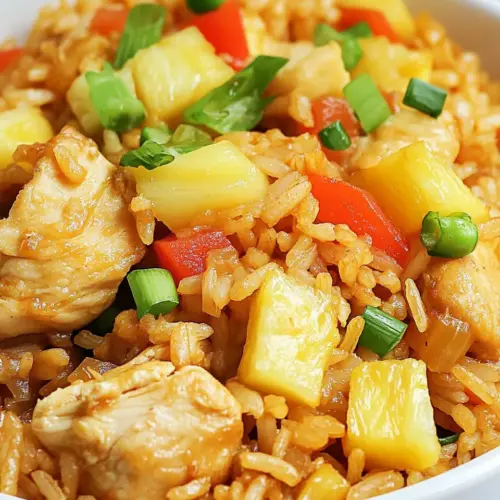
Chicken and Pineapple Fried Rice
Chicken and Pineapple Fried Rice is a vibrant, slightly sweet and savory one pan meal with tender chicken, juicy pineapple, and fluffy rice. It is an easy weeknight dinner that balances bright fruit tones with hearty umami, delivering crispy edges and comforting grains. Make it for quick family meals or when you want a simple dish that still feels special.
Equipment
- Large Skillet
- Spatula
- Measuring Cups
Ingredients
- 1 lb chicken breast cut into cubes Cooked into tender, bite-sized pieces to provide the primary protein and bulk of the dish; cubes sear quickly for caramelized edges and juicy centers that complement the sweet rice.
- 20 oz pineapple chunks fresh or canned Adds concentrated sweetness and tropical acidity that balances savory flavors; can be drained if canned or lightly sautéed if fresh to caramelize edges and enhance juice release.
- 2 tablespoons olive oil Heats the pan and prevents sticking while lending a mild fruity flavor; used for sautéing aromatics and browning the chicken without overpowering other components.
- 1 yellow onion diced Sweated until translucent to form a savory aromatic base, contributing sweetness and texture; diced pieces soften and mingle with rice for layered flavor.
- 1 tablespoon minced garlic Infuses the dish with pungent, savory depth when minced and briefly sautéed; releases fragrant oils that enhance overall umami and aroma.
- 1 red bell pepper chopped Provides vibrant color, crisp texture, and a sweet-vegetal note when chopped and briefly cooked; adds both visual appeal and a fresh bite to the fried rice.
- 1 cup uncooked white basmati rice or long-grain white rice Absorbs flavors and serves as the starchy foundation; rinsed and cooked properly it yields separate grains that soak up sauce and juices without becoming mushy.
- 2 cups chicken broth Simmered with rice to cook grains and impart savory depth; chicken broth replaces water to enrich the overall savory profile of the fried rice.
- 1 tablespoon soy sauce Adds concentrated salty umami and savory depth when stirred into the rice; a small amount enhances soy and broth flavors and ties ingredients together.
- 1/2 teaspoon salt Seasoned sparingly to elevate overall taste and balance sweetness; helps to bring out savory notes without overwhelming delicate flavors.
- 1/2 teaspoon ground ginger Provides warm, slightly sweet spice that complements soy and pineapple; used in small amounts to add exotic depth and subtle warmth.
- 1/2 teaspoon ground black pepper Seasoned to taste for mild heat and aromatic sharpness; freshly ground black pepper cuts through sweetness and rounds out the savory profile.
- Sliced green onions for serving Garnishes the finished dish with a bright, fresh, oniony note and mild crunch; sliced pieces add color contrast and a crisp finish when sprinkled on top.
Instructions
- In a large skillet, heat olive oil over medium heat. Add the cubed chicken breast and cook until golden and fully cooked through. Season with salt and pepper. Remove the chicken from the skillet and set aside.: The aroma of warm oil is the first signal that the pan is ready, a gentle shimmer indicates correct temperature. You'll hear a soft ripple as oil warms and see it thin across the surface. Using medium heat ensures the oil does not smoke while still giving enough heat to achieve a golden sear on the chicken . A common mistake is adding meat too early, which leads to sticking; wait until the oil moves freely in the pan.
- In the same skillet, add diced onion, garlic, and red bell pepper. Cook for about 5 minutes, stirring occasionally, until the onions begin to brown and the peppers soften. Stir in the pineapple chunks and cook for an additional 1–2 minutes to release some sweetness and reduce moisture.: When the chicken hits the pan you should hear a steady sizzle, and within a few minutes edges will turn a nutty, golden brown. These visual cues mean the Maillard reaction is happening, giving savory depth. Cut into the largest piece to check there is no pink; juices should run clear. Avoid crowding the pan because overcrowding causes steaming rather than browning, producing pale, rubbery pieces.
- Pour in the uncooked rice, chicken broth, and soy sauce. Season with salt, ground ginger, and black pepper. Stir everything together to evenly combine the flavors.: The first wave of seasoning wakes up the meat, and you will notice the aroma sharpen when salt and pepper hit warm chicken . Seasoning early helps flavor penetrate the surface as it cooks. A common mistake is over salting, especially if you will add broth and soy later; seasoning lightly now lets you adjust at the end.
- Bring the mixture to a boil. Once boiling, cover the skillet, reduce the heat to low, and simmer for about 20 minutes or until the rice is tender and the liquid is fully absorbed.: Lifting the chicken off the heat preserves its crust and frees the pan for vegetables, where leftover fond will flavor the next stage. You should see browned bits stuck to the pan, these are flavor gold. If you leave the meat in the pan, it will continue cooking and can dry out, so rest it briefly off the heat.
- Return the cooked chicken to the skillet and mix well. Heat through for another minute or two, then garnish with sliced green onions and serve warm.: The moment vegetables hit the pan you will sense a burst of fresh aroma as the onion softens and the pepper begins to release sweetness. Stir often so the garlic does not brown too quickly, and aim for the onion to go translucent with edges just starting to caramelize. If garlic darkens too fast it will taste bitter, so lower the heat if needed.
- Cook for about 5 minutes, stirring occasionally, until the onions begin to brown and the peppers soften: During these minutes you will observe the onion turning glossy and the pepper losing some firmness, and the scent will deepen into a sweeter, more savory direction. That slight browning develops complex flavors that echo through the finished dish. A frequent error is rushing this step; undercooked onions will taste raw and disruptive to the overall balance.
- Stir in the pineapple chunks and cook for an additional 1 to 2 minutes to release some sweetness and reduce moisture: As the pineapple heats you will notice steam and a sharper tropical perfume; a quick sizzle will concentrate the sugars and make them sing against the savory base. This short cook time avoids turning the fruit to mush while allowing juices to mingle with the vegetables. If you let pineapple sit too long, it will break down and make the dish overly wet.
- Pour in the uncooked rice, chicken broth, and soy sauce: When liquid and dry rice meet in the pan you will see grains begin to float and absorb, and the soy will tint the cooking liquid slightly. Stirring at this moment helps distribute seasoning and prevents clumping. The rice should be evenly coated so flavors penetrate as it simmers; failing to stir once can leave unevenly flavored pockets.
- Season with salt, ground ginger, and black pepper: Adding the spices now integrates their flavors into the cooking liquid so each grain of rice takes on the seasoning. The ginger will lend a warm, aromatic lift that complements the pineapple , while pepper adds a subtle backbone. Misjudging the ginger amount is common; too much will create an artificial bite, so keep it measured.
- Stir everything together to evenly combine the flavors: At this point you should see a consistent mixture of rice, vegetables, and flecks of seasoning. Stirring ensures pockets of flavor do not form and that the rice begins to absorb the broth uniformly. Neglecting to combine thoroughly can leave some rice under seasoned and others overly salty.
- Bring the mixture to a boil: A bubbling, rolling boil signals the water is hot enough to penetrate the rice quickly, and steam will rise. Boiling briefly before lowering heat jump starts cooking and helps prevent gummy texture. Watch the pan; letting it boil too long before covering can evaporate too much liquid and undercook the rice.
- Once boiling, cover the skillet, reduce the heat to low, and simmer for about 20 minutes or until the rice is tender and the liquid is fully absorbed: During simmer the rice will swell and whisper-soften, and the aroma will change from wet starch to fragrant, cooked grains. Keep the lid on to trap steam, which cooks the rice evenly. A common mistake is lifting the lid repeatedly, which releases steam and lengthens cooking time, possibly leading to uneven texture.
- Return the cooked chicken to the skillet and mix well: Reintroducing the chicken warms the meat through and allows it to mingle with the rice, so each forkful carries both protein and seasoned grains. The sound will be a gentle simmering as the pieces nestle into the rice, and you should see everything come together visually. If the meat is still cool, allow a couple more minutes to heat without drying it, adding a splash of broth if needed.
- Heat through for another minute or two, then garnish with sliced green onions and serve warm: Final heating lets flavors marry and the dish relax into a single cohesive plate, while the sliced green onions add a fresh, bright finish. Serve as soon as it is warmed through to preserve texture and color. Waiting too long before serving can make the garnish wilt and the rice firm up unevenly.
Notes
- Toast the rice first if you want a nuttier flavor, briefly toasting dry rice in the pan before adding liquid deepens the profile and helps keep grains separate.
- Dry the pineapple a bit by draining or patting with a paper towel, excess juice can water down the cooking liquid and change the rice texture.
- Cut chicken into even pieces so they cook uniformly, inconsistent sizes create a mix of overdone and underdone bites.
- Use low sodium broth to better control final salt level, you can always adjust with more soy sauce at the end.
- Add green onions last to preserve their fresh bite and color, they brighten the dish without wilting.
- Reheat with a splash of broth to refresh leftovers, it restores moisture and loosens grains without diluting flavor.