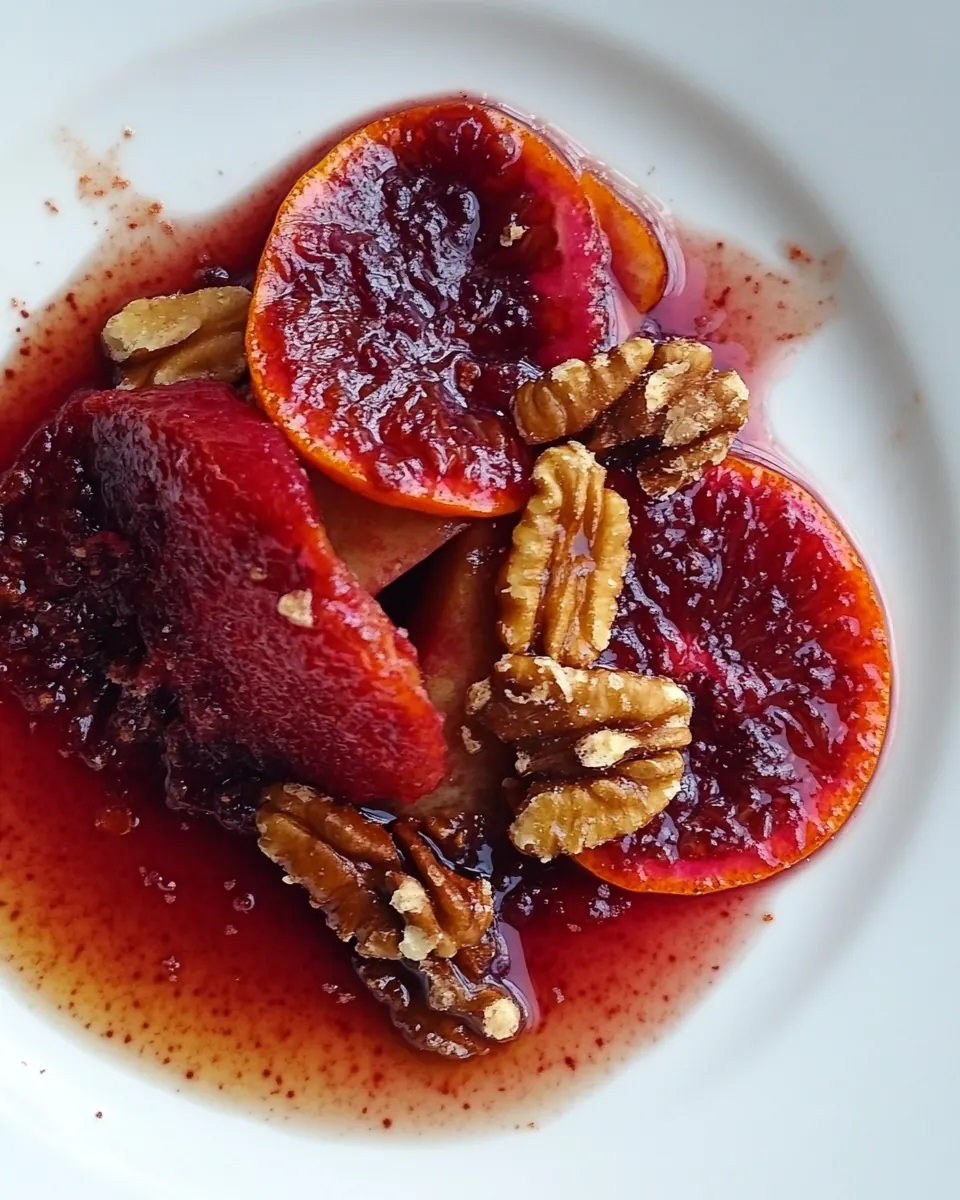
Blood Oranges in Simple Syrup with Walnuts
Blood Oranges in Simple Syrup with Walnuts is one of those small, bright recipes I turn to when winter feels long and I need a citrus lift. The first time I made it I was chasing color more than anything else, hauling home deeply hued blood oranges from the market because their flesh looked like a painter’s palette. I remember slicing through the skin, the sharp, slightly floral scent releasing and making the kitchen feel suddenly alive, and thinking this simple preparation would be an easy way to celebrate that color and flavor.
Weeks later I found myself returning to the skillet on a rainy afternoon, because the combination of warm, syrupy citrus and toasted walnuts felt like comfort that did not weigh you down. I enjoy the contrast between the tender, fragrant blood oranges and the slight crunch of walnuts, and how a touch of honey rounds the edges without hiding the fruit. Friends have asked for this after dinner, served warm with a spoon to catch the glossy syrup. That response made me realize how adaptable this recipe is, whether you want a simple dessert or a small, elegant garnish for brunch.
Recipe Snapshot
10 mins
0 mins
10 mins
Easy
180 kcal
Mediterranean
Paleo, Gluten-Free
Desserts
Skillet, Small bowl
Why We Love This Blood Oranges in Simple Syrup with Walnuts
Bright flavor from just a few ingredients
I love how Blood Oranges in Simple Syrup with Walnuts relies on a handful of pantry staples and one stunning seasonal fruit. The spotlight stays on the blood oranges, while the honey and cinnamon nudge the flavor toward warm and comforting. I find that recipes like this remind me cooking can be about enhancing rather than hiding a great ingredient.
Quick, elegant, and low fuss
This dish is ready in minutes, which I appreciate on busy days when I still want something pretty and thoughtful. The skillet method warms the segments gently so they keep shape, and because the syrup forms quickly you get glossy results without babysitting. I often make it when I need a fast, special finish to a meal.
Texture contrast that sings
The addition of walnuts is intentional, I like the way they provide a toasty crunch against the soft fruit. When the nuts warm slightly in the syrup they release oils that deepen the aroma, and that tiny textural punch makes each bite memorable. If you prefer a different crunch, nuts are easy to swap, but I keep coming back to walnuts.
Flexible serving options
I’ve served Blood Oranges in Simple Syrup with Walnuts as a light dessert, as a topping for yogurt, and as a companion to tea. It’s versatile, so I adapt it to what’s on hand and the mood of the meal. The syrup is also useful for drizzling over other dishes, which makes the recipe feel worth the few minutes it takes to make.
Seasonal celebration
Because blood oranges shine in winter, this recipe feels like a seasonal treat. I enjoy the ritual of buying fruits when they are at their peak, and turning them into something that showcases their best qualities. It’s a small way to mark the season that guests always notice.
What to Buy for Blood Oranges in Simple Syrup with Walnuts
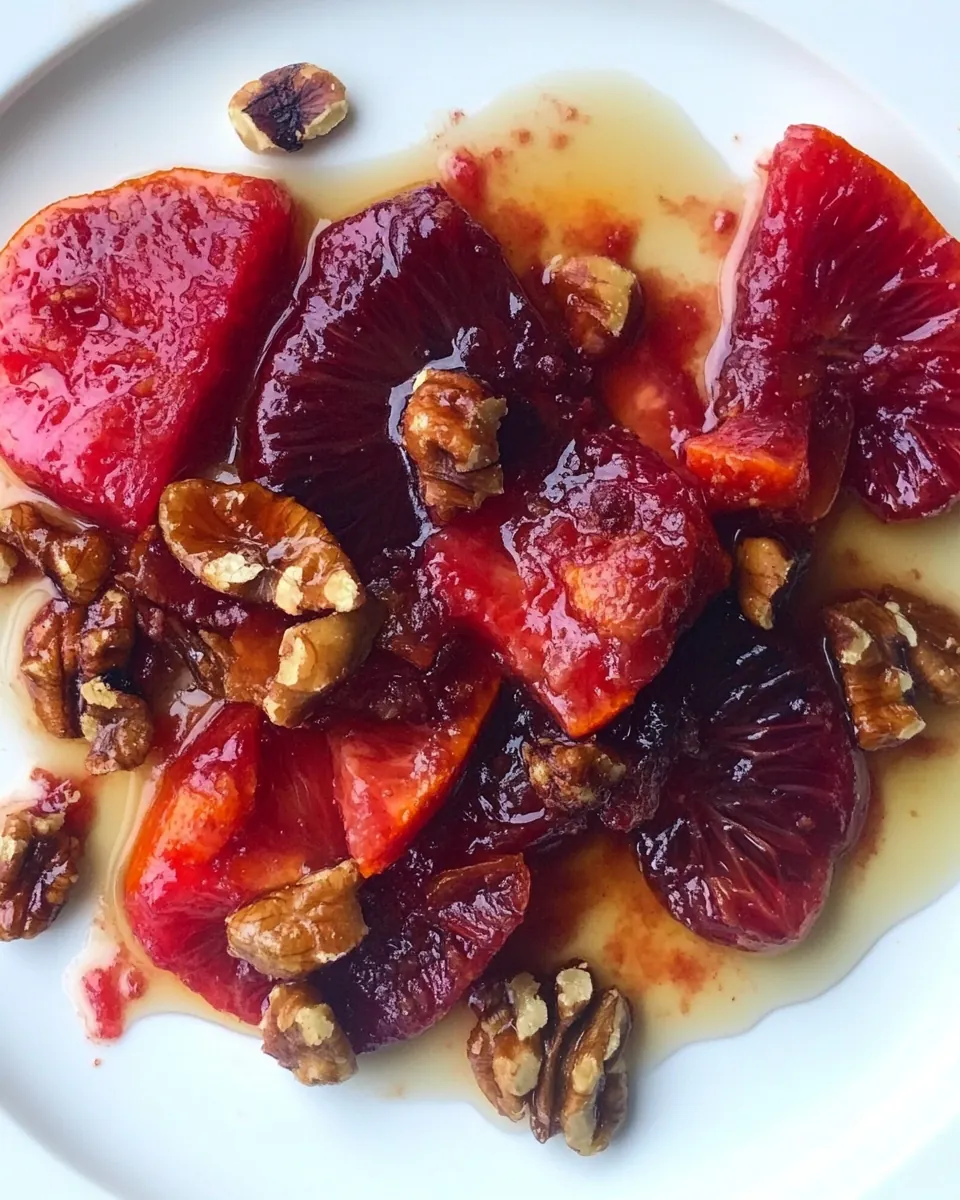
This ingredient list is intentionally short and thoughtful. I focus on bright, fragrant blood oranges as the hero, supported by a sweetening element, warm spice, a splash of water to coax a syrup, and crunchy walnuts for contrast. Each item plays a clear role, and together they create a balanced, cozy finish that highlights the fruit.
- 4 blood oranges cut into segments, peelings and seeds removed: Segment and prepare to provide the juicy, tart-sweet base for the dish; remove peelings and seeds to ensure a clean texture and bright flavor that pairs with syrup and spices. Offer visual contrast with deep red flesh and release juices that meld with the honey–water mixture during marination.
- 2 tablespoons honey agave nectar (optional): Add and dissolve to sweeten and balance the citrus acidity; honey contributes floral complexity while agave nectar can be used as a vegan alternative with a similar viscosity. Combine with water and spices so the syrup lightly coats the orange segments, enhancing mouthfeel and preserving natural fruit flavors.
- 2 tablespoons water: Combine and thin the sweetener into a pourable syrup; water helps dissolve honey or agave and creates a simple syrup that carries spices evenly over the fruit. Control syrup concentration to adjust sweetness and help macerate the orange segments for a glossy finish.
- 1/2 teaspoon cinnamon: Sprinkle and infuse to introduce warm, aromatic notes that complement citrus; cinnamon adds depth and a subtle spicy warmth that lifts the overall flavor profile. Use sparingly to avoid overpowering the delicate orange juices while providing a cozy, rounded background tone.
- 1/2 teaspoon pure vanilla extract: Stir in and enhance with a sweet, floral aroma; pure vanilla extract rounds flavors and adds a layer of complexity that harmonizes with both honey and cinnamon. Incorporate at the end of cooking or into the syrup so its volatile aromatics remain bright and integrated.
- 1/4 cup walnuts diced: Garnish and add crunchy texture and earthy richness; diced walnuts contribute contrast to the tender orange segments and soak up some syrup for a pleasant nutty bite. Toast lightly if desired to amplify aroma and bring out natural oils before sprinkling over the finished dish.
How to Make Blood Oranges in Simple Syrup with Walnuts
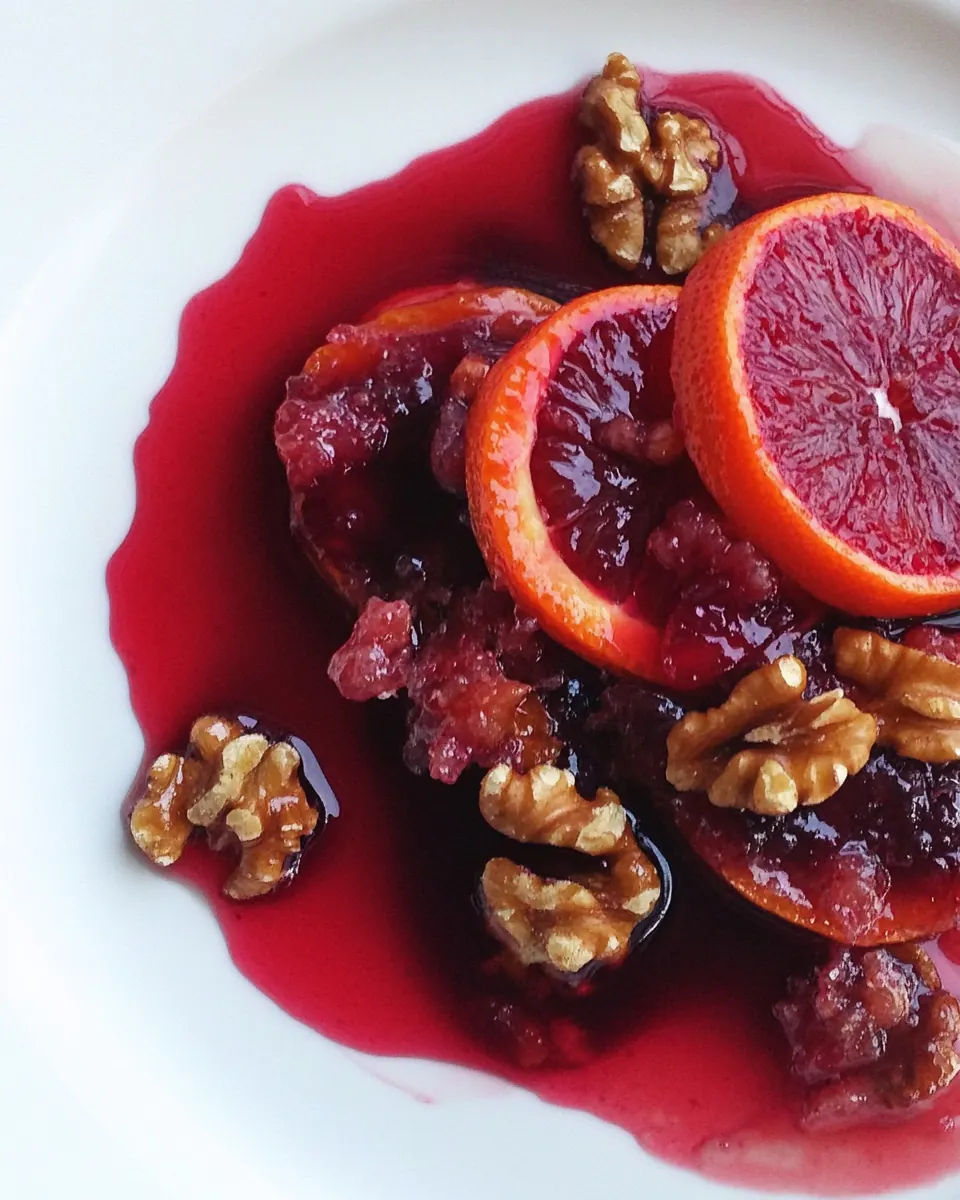
These steps are straightforward but I like to move slowly and pay attention to sensory cues. A low, patient heat and gentle tossing yield glossy segments that are warm without falling apart. Read each step, listen and smell as you go, and enjoy the process of coaxing flavor from a few simple ingredients.
- Combine honey, water, cinnamon and vanilla in a small bowl. In a medium skillet, heat to medium-low, add orange wedges, honey mixture and walnuts, toss to coat. Cover, reduce to low and warm oranges until honey thickens, about 4-6 minutes. Serve warm in dessert dishes, drizzled with syrup.: The first aroma you should notice is the warm scent of cinnamon and vanilla mingling with the sweetness of honey . Stirring them with water helps the sugars dissolve and the spices disperse evenly. This pre-mix ensures the syrup forms smoothly when it hits the pan, preventing gritty spots of undissolved sweetener. If you skip mixing, you might end up with uneven sweetness pockets or burnt honey on the pan surface.
- In a medium skillet, heat to medium-low, add orange wedges, honey mixture and walnuts, toss to coat: As the skillet warms on medium low, it should feel gentle, not searing; when you add the blood oranges you want a soft hiss rather than a loud sizzle. The honey mixture will gloss the fruit, and tossing helps every segment get a thin, even coating. The walnuts will begin to release a nutty perfume as they warm, enriching the overall aroma. Too high heat will break down the segments and make them watery, so keep it restrained.
- Cover, reduce to low and warm oranges until honey thickens, about 4-6 minutes: With the pan covered, steam circulates and warms the segments gently, creating a tender, syrupy finish. You should see the syrup bubble lightly around the fruit and become slightly syrupy, taking on a glossy sheen. The scent will deepen, showing a melding of citrus, spice, and toast from the nuts. Stir once or twice to keep syrup distribution even. A common mistake is leaving it uncovered at a high temperature, which can evaporate the liquid too quickly and leave hardened sugar spots.
- Serve warm in dessert dishes, drizzled with syrup: When plating, lift the segments with a slotted spoon so you get a mix of fruit and syrup, then spoon the remaining glossy liquid over the top. Warm servings bring out the aroma and make the texture yield tenderly against the teeth. The color should be bright and the syrup clear and shiny, not cloudy. If the mixture cools too much, the syrup can thicken and become less pourable, so serve soon after warming for the best presentation.
Expert Tips about Blood Oranges in Simple Syrup with Walnuts
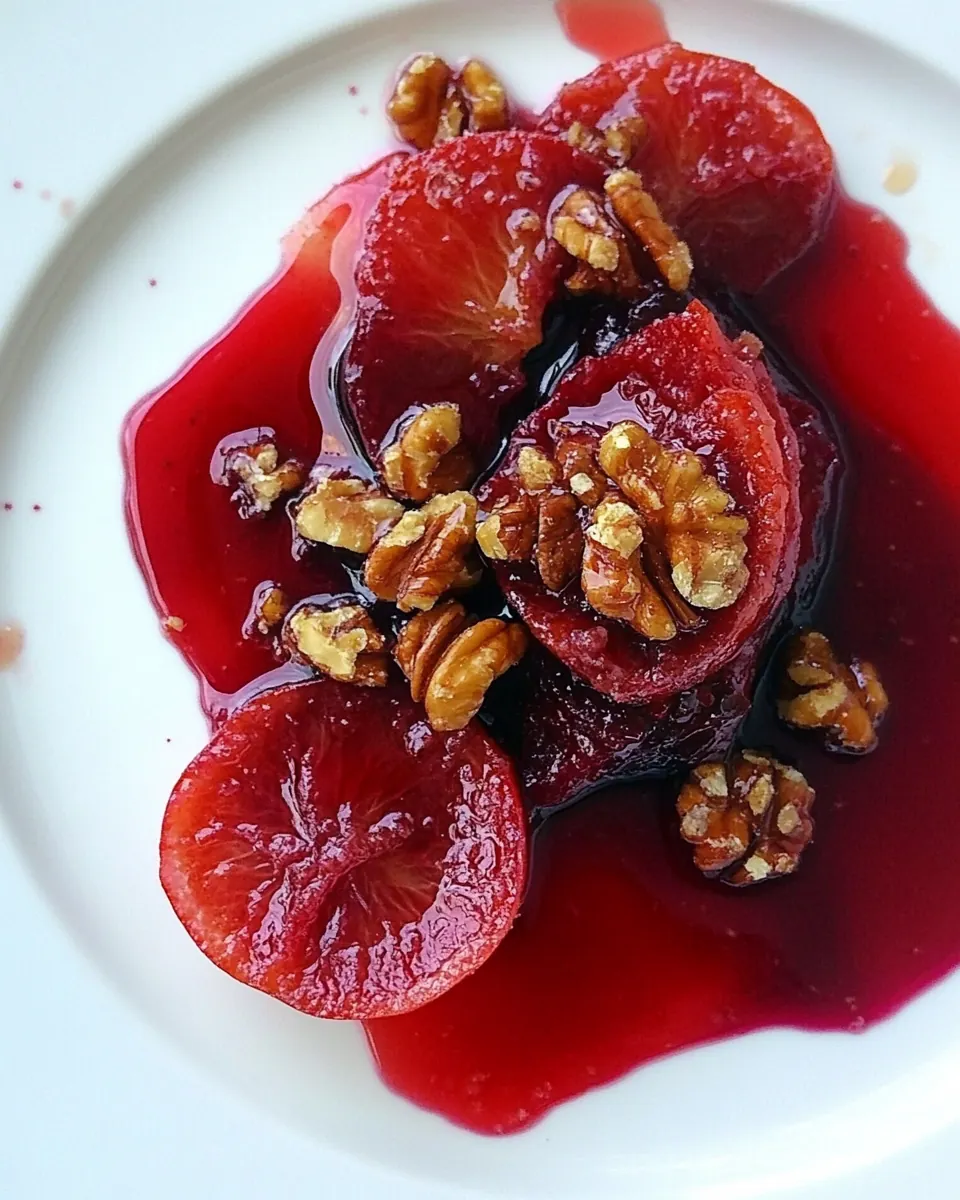
This recipe rewards attention to small details. A few thoughtful moves make the difference between pretty fruit and something that feels restaurant worthy. Below are expanded tips that I use every time, each with practical reasons and small tweaks that save time and elevate flavor.
- Choose ripe, fragrant blood oranges for the best flavor and color, selecting fruits that feel heavy for their size which indicates juiciness.
- Segment carefuly to remove membranes and pith, which keeps the dish silky and avoids bitterness in every bite.
- Pre mix the syrup ingredients so the honey, cinnamon, and vanilla distribute evenly, preventing hot spots or grainy texture in the final glaze.
- Use a medium skillet to give the fruit room and encourage even heat distribution, reducing the risk of overcrowding which can steam rather than gently warm the segments.
- Mind the heat once the blood oranges are in the pan; low, gentle warmth preserves texture while allowing the syrup to thicken nicely.
- Toast the walnuts briefly to amplify their aroma, but remove them as soon as they become fragrant to avoid bitterness from overcooking.
Serving Ideas for Blood Oranges in Simple Syrup with Walnuts
This recipe can be dressed up or kept simple depending on the occasion. Serve it warm for an intimate dessert, or use it as a garnish for breakfast or a seasonal spread. The list below explores pairings, occasions, and storage notes so you can adapt it to many meals and moments.
- As a warm dessert, spoon the blood oranges and walnuts into small dessert bowls, garnish with a sprig of fresh mint if you like, and serve with a spoon to catch the syrup.
- With yogurt, place a scoop of thick plain or Greek style yogurt in a bowl and top with the warm fruit and syrup for a bright, tangy contrast that works well for breakfast or a light dessert.
- At brunch, serve alongside pancakes or waffles as a fruity, citrusy topping that adds brightness and crunch without heaviness.
- For gatherings, prepare the fruit just before guests arrive and keep the syrup warm in a small pan, then transfer to a pretty serving dish so people can help themselves.
- Storage, cool the leftovers and refrigerate in an airtight container for up to three days, rewarm gently over low heat until pourable before serving.
- Seasonal pairings, this shines in winter when blood oranges are at their peak, and pairs well with other citrus or simple dairy based accompaniments.
FAQ
Conclusion
This recipe stands out because it transforms a few seasonal ingredients into a warm, aromatic treat that highlights the natural beauty of blood oranges. It is simple enough for a busy weeknight and pretty enough for guests, striking a lovely balance between ease and elegance. I encourage you to give it a try, taking a little time to notice the scents and textures as the syrup forms and the nuts toast. Once you taste the glossy, citrusy segments together with the crunchy walnuts you may find yourself reaching for this recipe whenever winter citrus appears at the market.
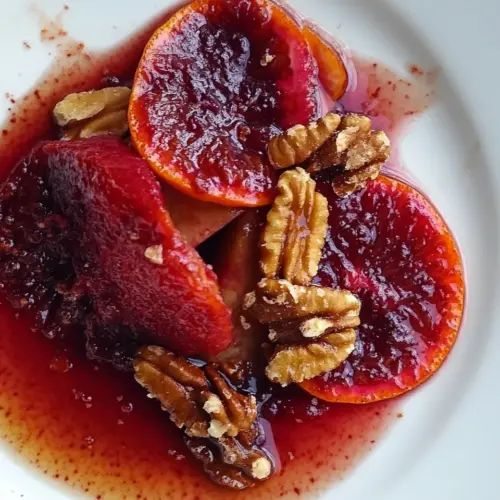
Blood Oranges in Simple Syrup with Walnuts
Equipment
- Skillet
- Small Bowl
Ingredients
- 4 blood oranges cut into segments, peelings and seeds removed Segment and prepare to provide the juicy, tart-sweet base for the dish; remove peelings and seeds to ensure a clean texture and bright flavor that pairs with syrup and spices. Offer visual contrast with deep red flesh and release juices that meld with the honey-water mixture during marination.
- 2 tablespoons honey optional agave nectar Add and dissolve to sweeten and balance the citrus acidity; honey contributes floral complexity while agave nectar can be used as a vegan alternative with a similar viscosity. Combine with water and spices so the syrup lightly coats the orange segments, enhancing mouthfeel and preserving natural fruit flavors.
- 2 tablespoons water Combine and thin the sweetener into a pourable syrup; water helps dissolve honey or agave and creates a simple syrup that carries spices evenly over the fruit. Control syrup concentration to adjust sweetness and help macerate the orange segments for a glossy finish.
- 1/2 teaspoon cinnamon Sprinkle and infuse to introduce warm, aromatic notes that complement citrus; cinnamon adds depth and a subtle spicy warmth that lifts the overall flavor profile. Use sparingly to avoid overpowering the delicate orange juices while providing a cozy, rounded background tone.
- 1/2 teaspoon pure vanilla extract Stir in and enhance with a sweet, floral aroma; pure vanilla extract rounds flavors and adds a layer of complexity that harmonizes with both honey and cinnamon. Incorporate at the end of cooking or into the syrup so its volatile aromatics remain bright and integrated.
- 1/4 cup walnuts diced Garnish and add crunchy texture and earthy richness; diced walnuts contribute contrast to the tender orange segments and soak up some syrup for a pleasant nutty bite. Toast lightly if desired to amplify aroma and bring out natural oils before sprinkling over the finished dish.
Instructions
- Combine honey, water, cinnamon and vanilla in a small bowl. In a medium skillet, heat to medium-low, add orange wedges, honey mixture and walnuts, toss to coat. Cover, reduce to low and warm oranges until honey thickens, about 4-6 minutes. Serve warm in dessert dishes, drizzled with syrup.: The first aroma you should notice is the warm scent of cinnamon and vanilla mingling with the sweetness of honey . Stirring them with water helps the sugars dissolve and the spices disperse evenly. This pre-mix ensures the syrup forms smoothly when it hits the pan, preventing gritty spots of undissolved sweetener. If you skip mixing, you might end up with uneven sweetness pockets or burnt honey on the pan surface.
- In a medium skillet, heat to medium-low, add orange wedges, honey mixture and walnuts, toss to coat: As the skillet warms on medium low, it should feel gentle, not searing; when you add the blood oranges you want a soft hiss rather than a loud sizzle. The honey mixture will gloss the fruit, and tossing helps every segment get a thin, even coating. The walnuts will begin to release a nutty perfume as they warm, enriching the overall aroma. Too high heat will break down the segments and make them watery, so keep it restrained.
- Cover, reduce to low and warm oranges until honey thickens, about 4-6 minutes: With the pan covered, steam circulates and warms the segments gently, creating a tender, syrupy finish. You should see the syrup bubble lightly around the fruit and become slightly syrupy, taking on a glossy sheen. The scent will deepen, showing a melding of citrus, spice, and toast from the nuts. Stir once or twice to keep syrup distribution even. A common mistake is leaving it uncovered at a high temperature, which can evaporate the liquid too quickly and leave hardened sugar spots.
- Serve warm in dessert dishes, drizzled with syrup: When plating, lift the segments with a slotted spoon so you get a mix of fruit and syrup, then spoon the remaining glossy liquid over the top. Warm servings bring out the aroma and make the texture yield tenderly against the teeth. The color should be bright and the syrup clear and shiny, not cloudy. If the mixture cools too much, the syrup can thicken and become less pourable, so serve soon after warming for the best presentation.
Notes
- Choose ripe, fragrant blood oranges for the best flavor and color, selecting fruits that feel heavy for their size which indicates juiciness.
- Segment carefuly to remove membranes and pith, which keeps the dish silky and avoids bitterness in every bite.
- Pre mix the syrup ingredients so the honey, cinnamon, and vanilla distribute evenly, preventing hot spots or grainy texture in the final glaze.
- Use a medium skillet to give the fruit room and encourage even heat distribution, reducing the risk of overcrowding which can steam rather than gently warm the segments.
- Mind the heat once the blood oranges are in the pan; low, gentle warmth preserves texture while allowing the syrup to thicken nicely.
- Toast the walnuts briefly to amplify their aroma, but remove them as soon as they become fragrant to avoid bitterness from overcooking.
