Balsamic Asparagus and Blistered Tomatoes
Balsamic Asparagus and Blistered Tomatoes started as a spring supper I threw together on a whim the first time asparagus hit the market in peak season. I remember carrying a bundle of stalks home, still damp with farmstand mist, and pairing them with a pint of grape tomatoes that looked too perfect to roast any other way. I wanted something bright, simple, and honest, a dish that let the vegetables sing without heavy sauces or complicated steps.
That evening I learned how a little heat concentrates sweetness, and how a splash of aged balsamic can lift the whole plate. The tomatoes blistered until their skins puckered, releasing fragrant steam that smelled faintly like caramelized sugar. Tossing the tender crisp asparagus with those juicy tomatoes felt like assembling a tiny celebration on a baking dish.
I serve Balsamic Asparagus and Blistered Tomatoes when friends pop by unannounced, because it is fast and forgiving, and because it always looks like you spent more time on it than you did. There is a balance here between the snap of the asparagus and the round, jammy tomato finish, and once you make it you will catch yourself adjusting the olive oil and salt until it matches your mood. I love it warm, but it also keeps beautifully at room temperature, which makes it excellent for casual dinners and al fresco lunches.
Recipe Snapshot
30 mins
5 mins
25 mins
Easy
150 kcal
Mediterranean
Paleo, Vegan
Side Dishes
Oven, Baking dish, Mixing bowl, Tongs
Why This Balsamic Asparagus and Blistered Tomatoes Works
Bright seasonal flavors
I adore how Balsamic Asparagus and Blistered Tomatoes showcases seasonal produce. In spring, asparagus is at its peak, tender and sweet. The tomatoes add bursts of concentrated juice after roasting, producing contrasts that feel lively on the plate. I often find myself savoring each bite simply to enjoy that interplay.
Speed without sacrificing depth
One reason I keep returning to this recipe is how quickly it comes together. You get deep, roasted flavors from the tomatoes with minimal hands on time. The oven does the heavy lifting, and a short second bake with the asparagus finishes everything to tender crisp perfection, so you get serious taste with tiny effort.
Versatile serving options
We can eat this as a side, a light main with crusty bread, or part of a composed salad. I love that it pairs equally well with a simple grain bowl or as a colorful plate at a picnic. The balsamic ties the components together, making it feel intentional whether served warm or at room temperature.
Minimal, pantry friendly ingredients
The ingredient list is short and approachable. A pint of tomatoes, a pound of asparagus, olive oil, salt, pepper, and aged balsamic are items I usually have on hand. That simplicity means you can improvise easily, and I find that this recipe rewards small adjustments like extra balsamic or a touch more oil when tomatoes are very sweet.
Textural contrast and presentation
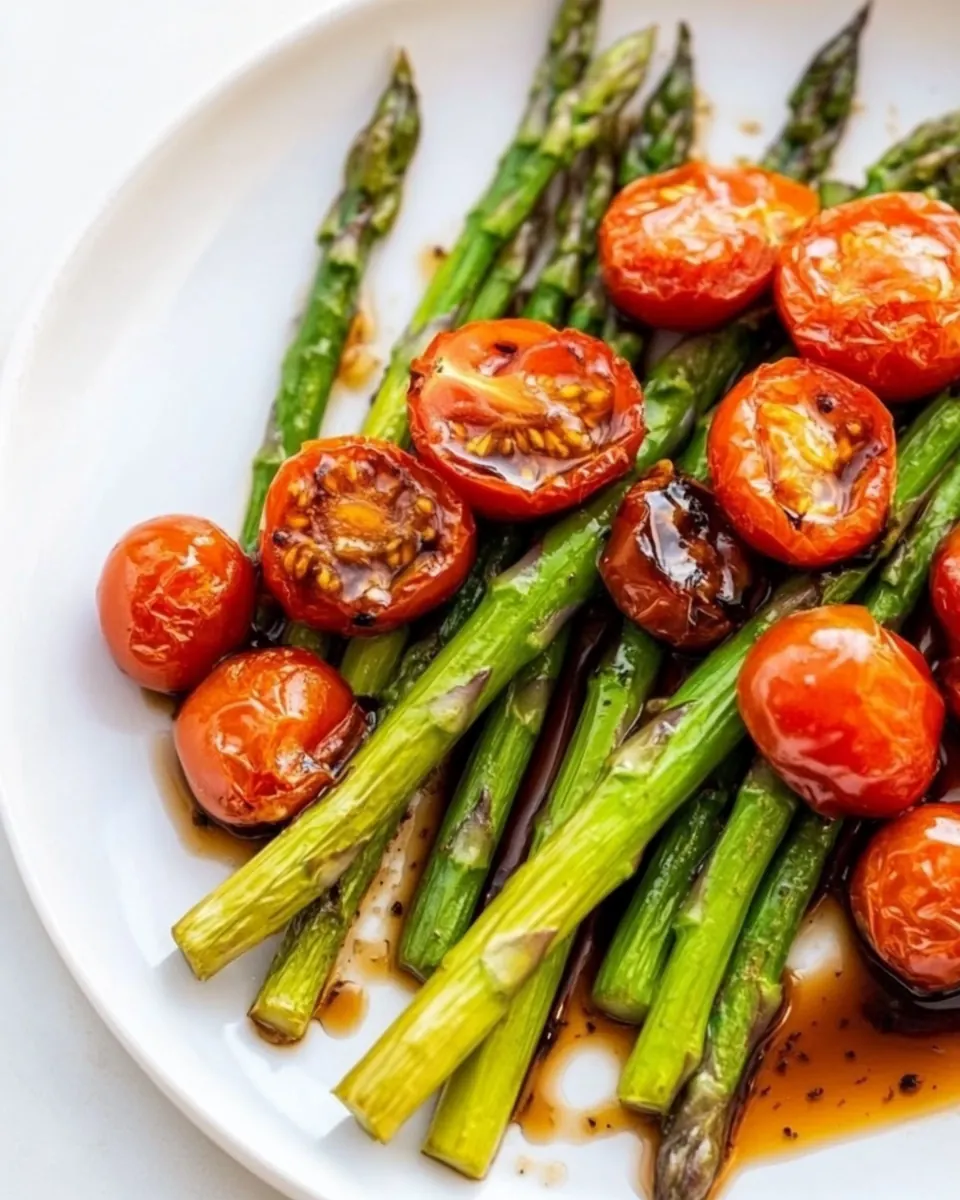
The visual and textural contrasts are part of the charm. Blistered, glossy tomatoes nestle against bright green spears, creating a dish that looks as good as it tastes. I like to serve it straight from the dish, letting steam lift the balsamic aroma and drawing people in before the first forkful.
Shopping List for Balsamic Asparagus and Blistered Tomatoes
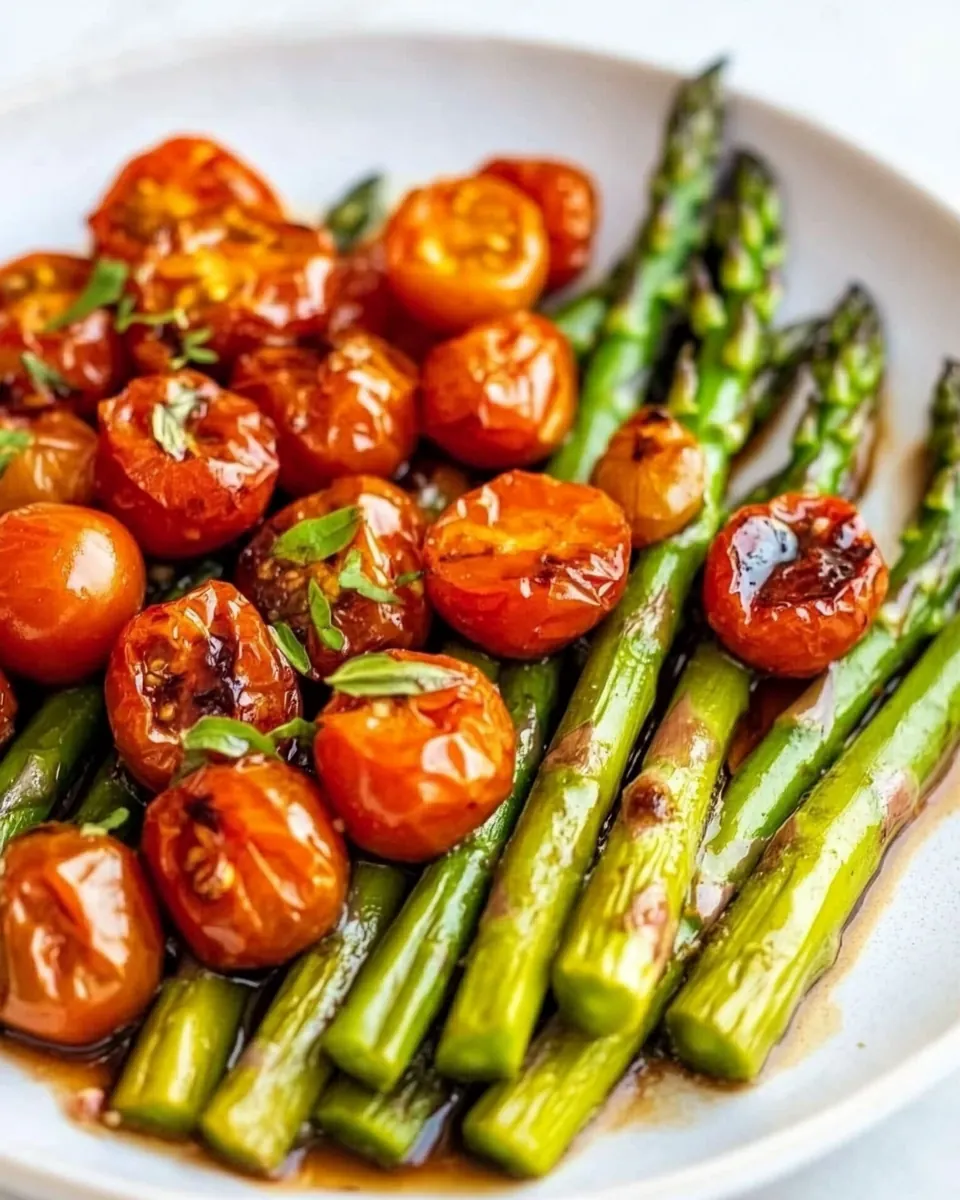
These ingredients are chosen for clarity and impact. The recipe relies on a handful of strong players to create aroma, texture, and balance. The tomatoes provide sweet, concentrated juiciness when blistered, while the asparagus contributes a snappy, slightly grassy note. Olive oil carries flavor and encourages browning, while aged balsamic adds bright acidity and a rounded finish. Salt and pepper sharpen and season every bite.
- 1 pint grape tomatoes halved: Halved to release juices and create small, blisterable pieces that caramelize quickly under high heat, adding sweet acidity and bright color to the dish. Useful for distributing concentrated tomato flavor throughout each bite without overwhelming the asparagus.
- 1/2 tbsp olive oil plus 2 teaspoons, divided: Divided to provide initial coating for roasting and finishing oil for flavor and shine; the larger measure helps conduct heat and promote browning while the teaspoons adjust seasoning at the end. Adds mouthfeel and carries fat-soluble flavors throughout the vegetables.
- 1 pound asparagus trimmed: Trimmed to remove tough woody ends so the stalks cook evenly and become tender without fibrous bits, improving overall texture and eating quality. Offers a fresh, slightly grassy backbone to the plate that benefits from quick, high-heat cooking.
- 1 tablespoon aged balsamic vinegar: Added as a finishing acid to contribute deep, slightly sweet-tart complexity and to balance the vegetables' natural sweetness. Enhances umami perception and ties together the roasted tomatoes and asparagus with a glossy, flavored coating.
- 1/2 teaspoons salt: Measured to season gently and enhance natural flavors while controlling sodium; helps bring out the sweetness of the tomatoes and the vegetal notes of the asparagus. Distributes evenly when mixed with oil, improving overall taste without overpowering.
- 1/4 teaspoon ground black pepper: Ground to provide a subtle, warm peppery note that complements the balsamic and brightens the roasted vegetables. Sprinkled in moderation to add mild heat and aromatic depth without dominating the palate.
How to Assemble Balsamic Asparagus and Blistered Tomatoes
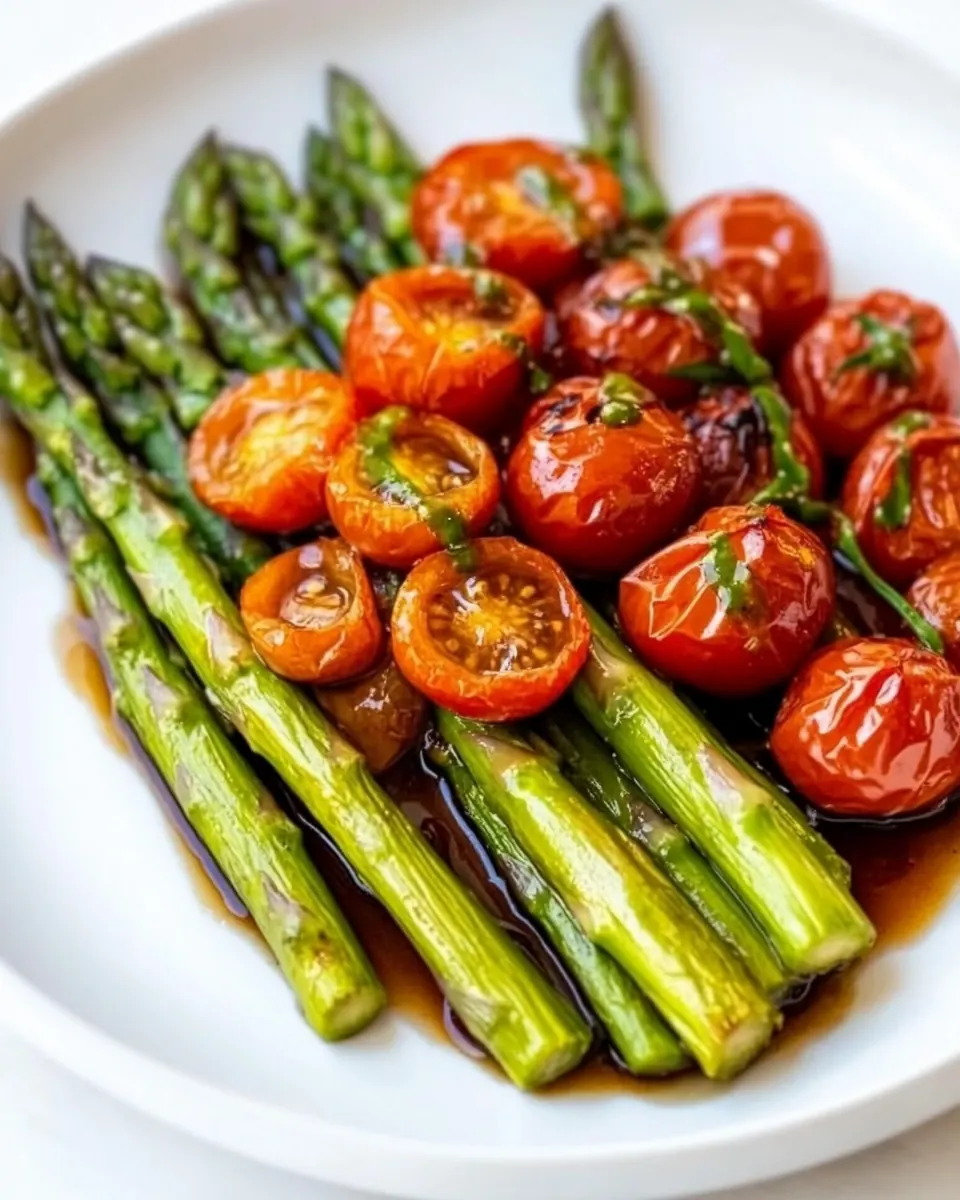
This assembly is straightforward, but paying attention to sensory cues will help you hit the perfect texture. The tomatoes should burst and blister, and the asparagus should be tender crisp. Move confidently, and you will have a dish that looks and tastes polished without fuss.
- Preheat oven to 400 degrees F.: You will feel warmth starting to radiate from the oven as it approaches the correct heat, and the internal fan may hum gently. A fully heated oven ensures the tomatoes blister quickly rather than steam, which is crucial for developing their concentrated, sweet flavor. If the oven is not hot enough, the tomatoes will release juice and become soggy instead of blistered. Be sure to place the rack in the center position for even roasting.
- Place tomatoes along with 2 teaspoons olive oil in a baking dish. Sprinkle with half the salt & pepper.: As the tomatoes hit the hot dish, their exposed cut sides will begin to sizzle softly, releasing a fragrant, fruity steam. The little pops and sizzles indicate the start of caramelization, which deepens the tomato flavor. Distributing oil and seasoning now encourages even blistering. Common mistake to avoid, overcrowding the dish can trap steam and prevent browning, so spread tomatoes out in a single layer.
- Bake for 15-20 minutes, until tomatoes are "burst" and slightly blistered on the outside.: You will notice the skins wrinkle and split, and pockets of syrupy juice will appear at the cuts, giving off a sweet roasted aroma. That visual gloss and the faint scent of caramelized tomato signal readiness. If you rely solely on time, you may miss the moment; instead, watch for those visual cues. An error people make is leaving them in too long, which can dry them out, so remove when they look glossy and slightly collapsed.
- Meanwhile, in a medium mixing bowl, toss trimmed asparagus with remaining olive oil, salt & pepper.: When you toss the asparagus, feel for even coating and listen for a light clink as the spears move together. The oil ensures a golden surface during the final roast, and seasoning now builds layers of flavor. Coating unevenly will create hot spots where some spears overbrown while others remain underdone, so take a moment to distribute oil thoroughly.
- Once tomatoes are blistered, add prepared asparagus to baking dish. Drizzle with balsamic vinegar and toss with tomatoes.: As you combine the vegetables, the hot tomatoes will release fragrant steam that blends with the balsamic's sweet acidity. The tossing action helps the asparagus pick up the sticky, savory-sweet juices, which both flavors and slightly softens the spears. If you add the asparagus too early, it can overcook and become limp, so timing here is key. Use tongs or a spatula to gently turn everything so the glossy balsamic coats evenly.
- Bake another 5 minutes. Asparagus should be tender-crisp.: During this short roast you will hear a gentle sizzle as the asparagus finishes cooking, and the color will deepen to a vibrant green with slight blistering at the tips. The goal is tender crisp, where a bite yields a pleasant snap and tender interior. Overbaking will cause limp, stringy stalks, so check at four minutes if your asparagus is thin. If it needs more time, add one minute increments to avoid overshooting the perfect texture.
Pro Tips and Tweaks
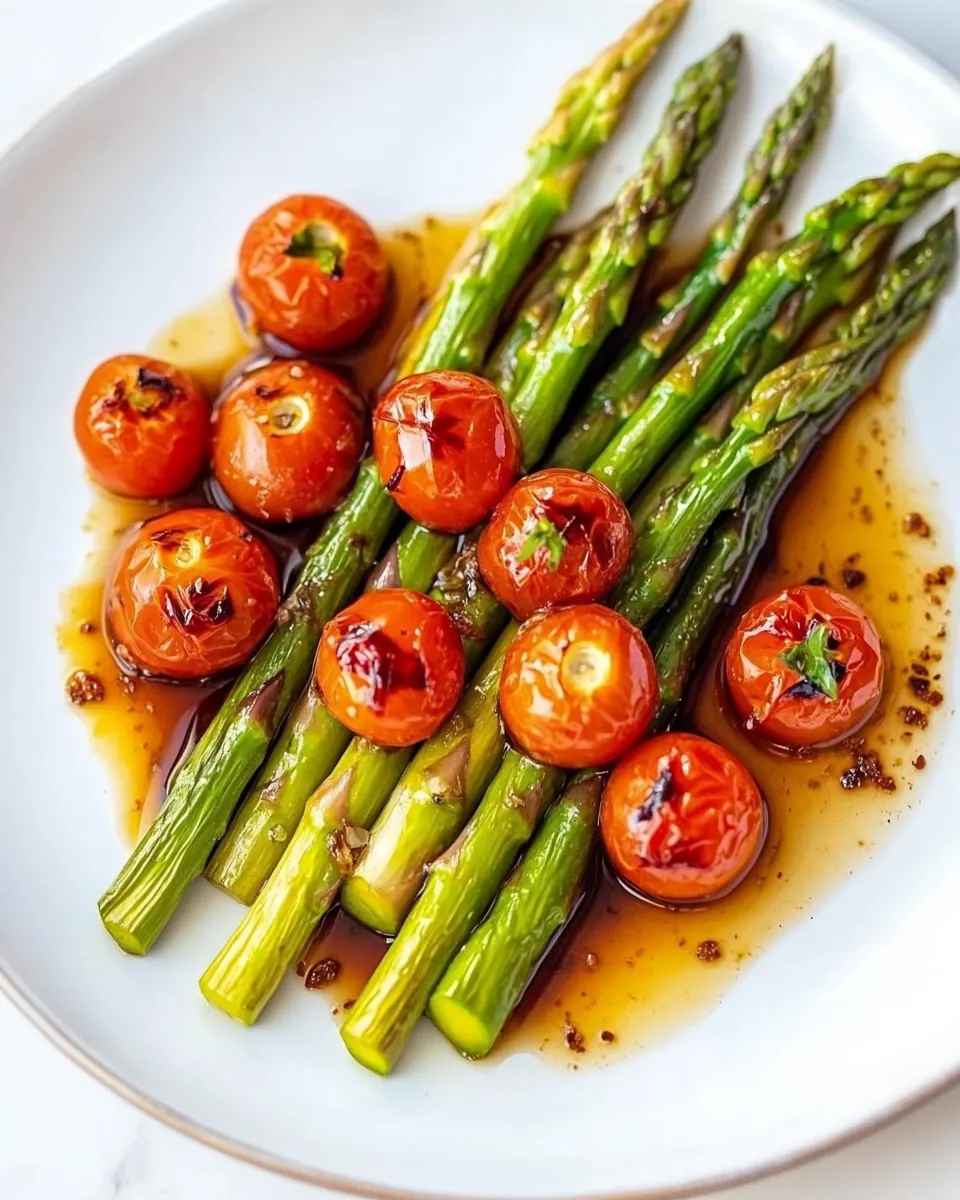
I like to keep these tips handy when I roast vegetables because small adjustments make a big difference. Below are practical tweaks that help with texture, timing, and presentation so you can tailor the dish to your preference.
- Choose firm asparagus: Thicker stalks need slightly more oven time, while very thin ones may only need a few minutes at the end to avoid limpness.
- Spread tomatoes evenly: A single layer allows for consistent blistering and prevents steaming, which dulls flavor and texture.
- Measure oil in portions: Using divided olive oil prevents the asparagus from becoming too oily while still promoting tomato caramelization.
- Add balsamic at the right time: Drizzle just before tossing so the vinegar clings and brightens flavors without evaporating completely under heat.
- Watch for visual cues: Rely on the tomatoes glossy split skins and the asparagus vibrant green with slight browning rather than strict times for best results.
- Serve warm or room temperature: The dish holds well, which makes it ideal for make-ahead sides or buffet style serving.
Serving Suggestions
This dish works beautifully across meals and occasions, and the list below highlights ways I like to present and enjoy it. Think about temperature, pairing, and context to make serving effortless and appealing.
- As a side for weeknight dinner: Serve warm alongside roasted chicken or grilled fish to add bright vegetable contrast and a balsamic finishing note.
- For casual lunches: Spoon over toasted bread for an easy bruschetta style treat or add to grain bowls with warm quinoa for a light meal.
- At spring gatherings: Plate at room temperature so guests can help themselves, the vivid colors make it especially pretty on buffets.
- Storage tips: Keep leftovers in an airtight container refrigerated for up to three days, reheat briefly in a warm oven to revive texture rather than microwaving to avoid sogginess.
- Seasonal pairing: Pair with early spring salads and lemony dressings to emphasize freshness and brighten the balsamic accents.
- Presentation style: Serve directly from the baking dish or arrange on a platter with whole lemon wedges nearby for guests who like extra brightness.
- Occasion flexibility: Suitable for casual weeknights, potlucks, or as part of a lighter dinner when you want something simple but thoughtful.
FAQ
Conclusion
This recipe stands out for its simplicity and the way it elevates two humble vegetables into a flavorful plate with minimal effort. Give Balsamic Asparagus and Blistered Tomatoes a try when asparagus is in season, and you will be surprised how quickly it becomes a go to side. It is forgiving, beautiful on the table, and works for weeknight dinners as well as casual gatherings. I hope you enjoy the bright contrasts and glossy finish, and that it becomes one of your favorite vegetable preparations.
Balsamic Asparagus and Blistered Tomatoes
Equipment
- Oven
- Baking Dish
- Mixing Bowl
- Tongs
Ingredients
- 1 pint grape tomatoes halved Halved to release juices and create small, blisterable pieces that caramelize quickly under high heat, adding sweet acidity and bright color to the dish. Useful for distributing concentrated tomato flavor throughout each bite without overwhelming the asparagus.
- 1/2 tbsp olive oil plus 2 teaspoons, divided Divided to provide initial coating for roasting and finishing oil for flavor and shine; the larger measure helps conduct heat and promote browning while the teaspoons adjust seasoning at the end. Adds mouthfeel and carries fat-soluble flavors throughout the vegetables.
- 1 pound asparagus trimmed Trimmed to remove tough woody ends so the stalks cook evenly and become tender without fibrous bits, improving overall texture and eating quality. Offers a fresh, slightly grassy backbone to the plate that benefits from quick, high-heat cooking.
- 1 tablespoon aged balsamic vinegar Added as a finishing acid to contribute deep, slightly sweet-tart complexity and to balance the vegetables' natural sweetness. Enhances umami perception and ties together the roasted tomatoes and asparagus with a glossy, flavored coating.
- 1/2 teaspoons salt Measured to season gently and enhance natural flavors while controlling sodium; helps bring out the sweetness of the tomatoes and the vegetal notes of the asparagus. Distributes evenly when mixed with oil, improving overall taste without overpowering.
- 1/4 teaspoon ground black pepper Ground to provide a subtle, warm peppery note that complements the balsamic and brightens the roasted vegetables. Sprinkled in moderation to add mild heat and aromatic depth without dominating the palate.
Instructions
- Preheat oven to 400 degrees F.: You will feel warmth starting to radiate from the oven as it approaches the correct heat, and the internal fan may hum gently. A fully heated oven ensures the tomatoes blister quickly rather than steam, which is crucial for developing their concentrated, sweet flavor. If the oven is not hot enough, the tomatoes will release juice and become soggy instead of blistered. Be sure to place the rack in the center position for even roasting.
- Place tomatoes along with 2 teaspoons olive oil in a baking dish. Sprinkle with half the salt & pepper.: As the tomatoes hit the hot dish, their exposed cut sides will begin to sizzle softly, releasing a fragrant, fruity steam. The little pops and sizzles indicate the start of caramelization, which deepens the tomato flavor. Distributing oil and seasoning now encourages even blistering. Common mistake to avoid, overcrowding the dish can trap steam and prevent browning, so spread tomatoes out in a single layer.
- Bake for 15-20 minutes, until tomatoes are "burst" and slightly blistered on the outside.: You will notice the skins wrinkle and split, and pockets of syrupy juice will appear at the cuts, giving off a sweet roasted aroma. That visual gloss and the faint scent of caramelized tomato signal readiness. If you rely solely on time, you may miss the moment; instead, watch for those visual cues. An error people make is leaving them in too long, which can dry them out, so remove when they look glossy and slightly collapsed.
- Meanwhile, in a medium mixing bowl, toss trimmed asparagus with remaining olive oil, salt & pepper.: When you toss the asparagus, feel for even coating and listen for a light clink as the spears move together. The oil ensures a golden surface during the final roast, and seasoning now builds layers of flavor. Coating unevenly will create hot spots where some spears overbrown while others remain underdone, so take a moment to distribute oil thoroughly.
- Once tomatoes are blistered, add prepared asparagus to baking dish. Drizzle with balsamic vinegar and toss with tomatoes.: As you combine the vegetables, the hot tomatoes will release fragrant steam that blends with the balsamic's sweet acidity. The tossing action helps the asparagus pick up the sticky, savory-sweet juices, which both flavors and slightly softens the spears. If you add the asparagus too early, it can overcook and become limp, so timing here is key. Use tongs or a spatula to gently turn everything so the glossy balsamic coats evenly.
- Bake another 5 minutes. Asparagus should be tender-crisp.: During this short roast you will hear a gentle sizzle as the asparagus finishes cooking, and the color will deepen to a vibrant green with slight blistering at the tips. The goal is tender crisp, where a bite yields a pleasant snap and tender interior. Overbaking will cause limp, stringy stalks, so check at four minutes if your asparagus is thin. If it needs more time, add one minute increments to avoid overshooting the perfect texture.
Notes
- Choose firm asparagus: Thicker stalks need slightly more oven time, while very thin ones may only need a few minutes at the end to avoid limpness.
- Spread tomatoes evenly: A single layer allows for consistent blistering and prevents steaming, which dulls flavor and texture.
- Measure oil in portions: Using divided olive oil prevents the asparagus from becoming too oily while still promoting tomato caramelization.
- Add balsamic at the right time: Drizzle just before tossing so the vinegar clings and brightens flavors without evaporating completely under heat.
- Watch for visual cues: Rely on the tomatoes glossy split skins and the asparagus vibrant green with slight browning rather than strict times for best results.
- Serve warm or room temperature: The dish holds well, which makes it ideal for make-ahead sides or buffet style serving.