Raspberry Bread Pudding
Raspberry Bread Pudding has been my cozy weekend fallback for years, the kind of dish I turn to when the house needs a warm, comforting hug. The first time I made it I was testing ways to rescue a leftover loaf of brioche after a holiday brunch, and the result felt like a tiny celebration, tart raspberries tucked into a lush, custardy base that somehow tasted both indulgent and homey. I still remember the soft crackle when I took it out of the oven, the steam carrying the gentle scent of cinnamon and vanilla extract down the hallway.
Over time I’ve tweaked little things, but the heart of the recipe stays true: cubes of day old brioche or challah soaking up a sweet, creamy custard, then baking until the top is lightly browned and the center is tender. I love serving this when friends stop by unexpectedly, because it reheats beautifully and the leftovers are a revelation the next morning. When we have berries in season I pile them on generously, but frozen raspberries work just as well when summer is a memory.
Recipe Snapshot
55 mins
10 mins
45 mins
Medium
300 kcal
American
Gluten-Free, Low FODMAP
Desserts
Baking dish, Mixing bowl, Whisk, Baking sheet
The Best Thing About This Raspberry Bread Pudding
Comforting Texture
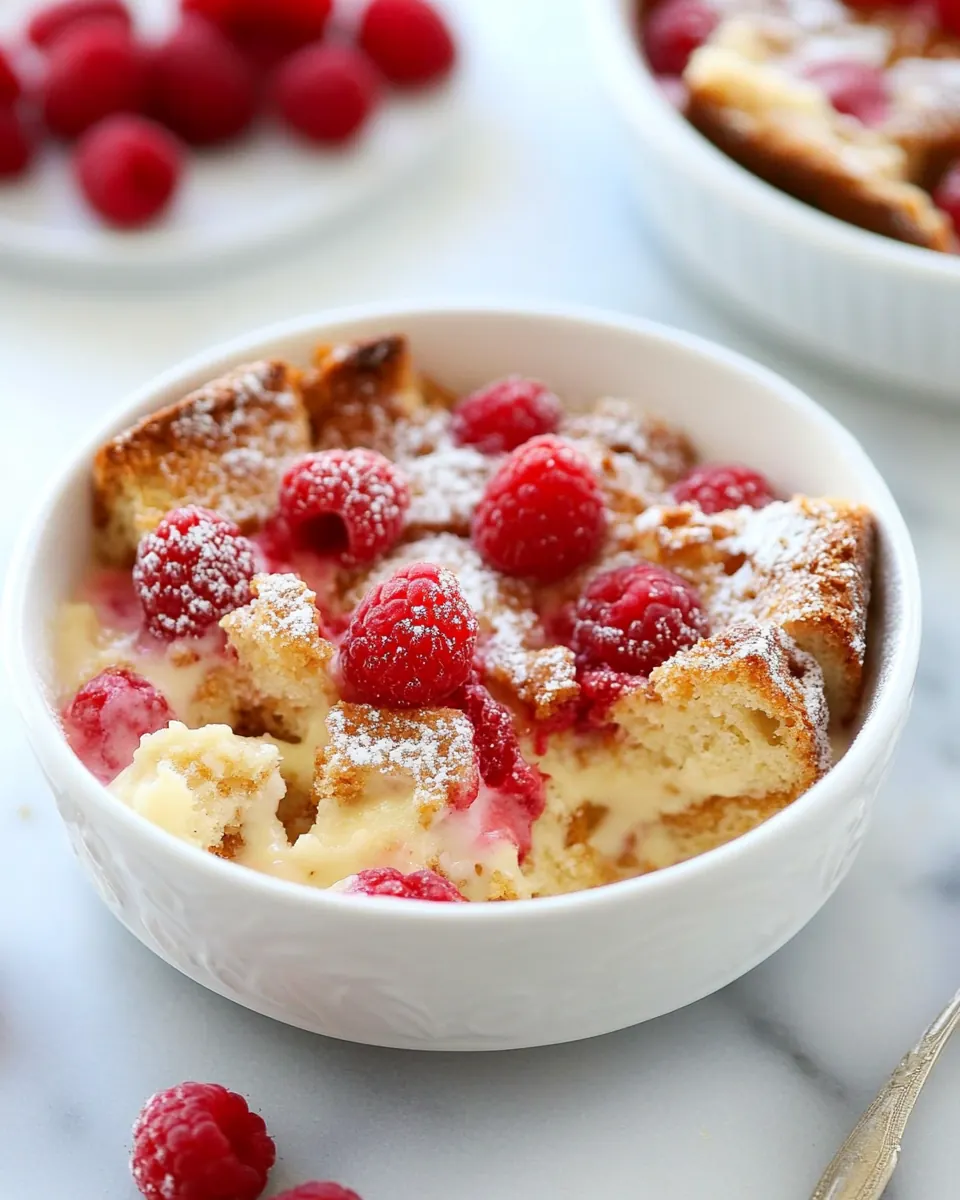
When I bite into Raspberry Bread Pudding I always notice the contrast between custard and bread. The soaked bread becomes silky from the half and half and eggs, while the edges crisp up just enough to add structure. That variance is what keeps each mouthful interesting.
Bright Fruit Balance
I appreciate how the raspberries cut through the richness. Their tartness lifts the dish, so it never feels overly heavy, especially when you use fresh berries. If frozen is your only option, thaw them slightly so they don’t release all their juices into the custard at once.
Simple Pantry Staples
This recipe uses things I almost always have on hand, like granulated sugar, butter, and a loaf of day old brioche bread. That makes it a reliable last minute dessert that looks and tastes special without fuss.
Flexible Serving Options
I love that Raspberry Bread Pudding can be served warm with a drizzle of Vanilla Cream Sauce, or at room temperature for a casual brunch. It pairs beautifully with coffee or a late afternoon tea, and it adapts to different portion sizes easily.
A Recipe That Rewards Small Tweaks
Over the years I’ve learned that a light sprinkle of ground cinnamon and a pinch of salt can transform the flavor depth. Small adjustments like melting the butter into the custard or letting the bread rest in the mixture for a few minutes before baking will change the final texture in pleasing ways.
Shopping List for Raspberry Bread Pudding
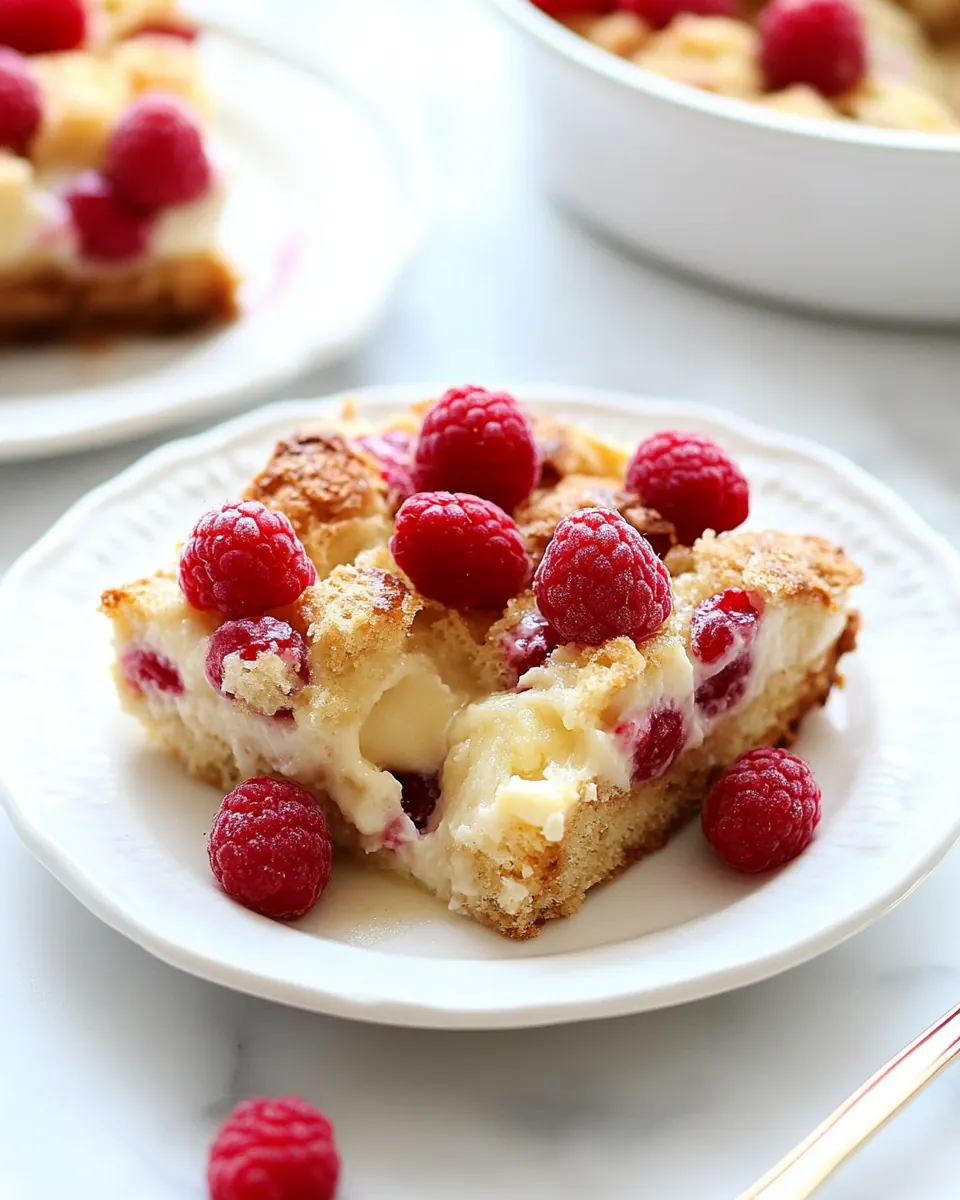
These ingredients come together to create a custardy, fruity comfort dessert. The core philosophy is simple: a creamy custard base soaks into sturdy, slightly stale brioche bread, while raspberries add bright, tart pops. The dairy and eggs are the structural players, the sugar and vanilla extract provide sweetness and aroma, and small touches like butter and cinnamon round the flavor into something warmly familiar.
- 2 cups half and half: Provide a rich, creamy base that adds body and moisture to the custard; gently heat to dissolve sugar and meld flavors before combining with eggs for a silky texture.
- 2 tablespoons butter: Add a small amount of fat and flavor to enrich the custard; melt and incorporate to give the pudding a glossy finish and subtle buttery notes.
- 1 teaspoon vanilla extract: Impart aromatic warmth and depth to the custard; stir in with the dairy to elevate the overall flavor profile and complement the sweet berries.
- 1/3 cup granulated sugar: Sweeten the custard to balance the tang of raspberries and enhance caramelization; dissolve fully into the warm half-and-half for even distribution.
- pinch of salt: Enhance and balance the sweetness by providing a contrast that brightens flavors; use a minimal pinch to make other ingredients pop without becoming salty.
- 3 eggs, beaten: Bind and set the custard by providing structure and richness; whisk beaten eggs into the warm milk mixture to create a smooth, firm pudding when baked.
- 1/2 teaspoon ground cinnamon: Contribute a warm, spicy note that complements fruit and brioche; sprinkle into the custard mixture to add complexity and an inviting aroma.
- 1 loaf day old brioche bread or challah bread, cut into 1-inch cubes, (about 7 cups): Serve as the primary starch component that soaks up the custard; use day-old brioche or challah cubes to achieve tender, custardy interiors with slightly crisp edges.
- 1 1/2 cups fresh or frozen raspberries, or your favorite type of berries: Provide bursts of bright, tart flavor and texture contrast throughout the pudding; fold fresh or frozen raspberries gently to avoid crushing while distributing fruity pockets.
- Vanilla Cream Sauce, for serving: Offer a creamy, sweet finishing touch that enhances serving; warm or drizzle vanilla cream sauce over slices to add richness and a restaurant-quality presentation.
The Method for Raspberry Bread Pudding
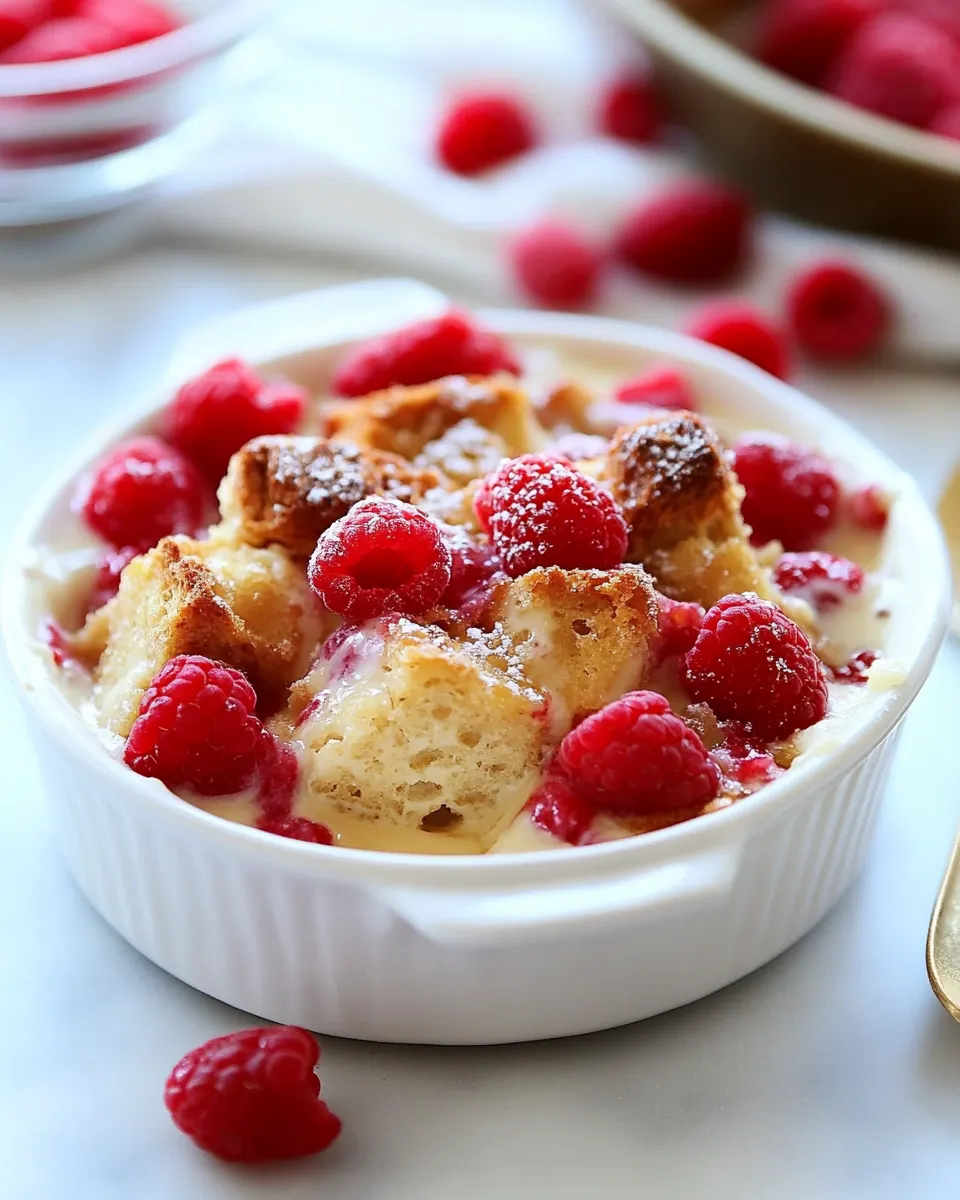
I like to walk through this recipe as if you are standing next to me in the kitchen. We will cover preparing dry bread if needed, building the custard, combining everything with care, and baking until the interior is tender and the edges are invitingly browned. Pay attention to sensory cues and small timing details for best results.
- (If you're not using old or stale bread, you can dry it out in the oven first. Place the bread cubes on a baking sheet and bake at 250 degrees F for about 30 minutes, tossing every 10 minutes, until the bread is dry and stale.): The smell of toasting bread will fill your kitchen as moisture leaves the cubes, producing a faintly sweet, warm aroma that promises a better texture. Drying prevents the bread from collapsing into mush, giving the custard something to cling to so pockets of soft custard alternate with slightly chewy bread. Listen for a change in the bread’s sound when you tap a cube with a spoon it should be noticeably firmer and not spongy. A common mistake is crowding the pan; spread cubes in a single layer so air circulates and they dry evenly. If they are still soft in the middle, return them for another 5 to 10 minutes.
- Heat oven to 350 degrees F. In a large bowl add half and half, butter, vanilla, sugar and salt. Microwave for about 1 minute, just until butter has melted.: As you warm the half and half and butter , a warm, rich scent will begin to rise, hinting at the custard to come. This gentle warming helps dissolve the granulated sugar and melds the butter with the dairy so you don’t end up with greasy pockets. The visual cue to look for is steam rising and the butter fully incorporated, not boiling. Avoid overheating because scorching will create off flavors and could separate the fat. If you prefer stovetop, warm over low heat while stirring until melted.
- Add the beaten eggs and cinnamon to the milk mixture and whisk well to combine.: As you whisk the eggs into the warm dairy, the mixture will take on a glossy, silky appearance and a lightly spiced perfume from the ground cinnamon . Whisk thoroughly to create a homogeneous custard base; streaks of egg indicate under mixing. The reason for mixing now is to temper the eggs gently so they set smoothly during baking, yielding a creamy interior rather than curds. A typical error is adding eggs to very hot liquid which may scramble them, so ensure the dairy is warm not scalding.
- Add the bread to the bowl and stir to coat. Pour half of the mixture into a greased baking dish large enough to fit the mixture (any shallow casserole dish; I used a 8 x 11’’ pan).: When the bread meets the custard you will see the cubes begin to glisten as they absorb liquid, and the bowl will feel heavier. Stir gently so all cubes get coated; pressing too hard can break them down. Pouring half into the baking dish creates a layered structure so berries can be distributed between layers for even fruit in each slice. Make sure your dish is greased so the edges do not stick when baking.
- Sprinkle half of the raspberries over the top. Pour the remaining bread pudding mixture on top and sprinkle with more raspberries.: The bright red of the raspberries will pop against the pale custard creating appealing visual contrast. The berries will release juices while baking, creating small pockets of concentrated fruit flavor. Distribute them evenly so each portion has a mix of custard soaked bread and fruit. A common pitfall is piling berries only on one side which leads to uneven texture and soggy spots where too much juice accumulates.
- Bake for 30 to 45 minutes, or until custard is set but still a little wobbly and edges of bread have lightly browned.: During baking you will notice steam rising and the top gently puffing; the aroma will shift toward baked butter and caramelized sugar. The center should jiggle slightly when nudged this indicates it remains creamy and will set as it cools. The edges turning light golden brown signal that exterior texture is developing. Avoid overbaking which dries out the custard, making it crumbly instead of tender.
- Serve warm or at room temperature.: Warm servings deliver the most comforting mouthfeel, the custard silky and the top slightly crisp, while room temperature slices are easier to cut and present nicely. If you add a warm Vanilla Cream Sauce , it will melt into the pudding and heighten the richness. A mistake to avoid is refrigerating the pudding immediately while hot which traps steam and can make the surface soggy; let it rest briefly before covering.
- Store leftover bread pudding in the refrigerator for up to 4-5 days.: Once cooled to room temperature, cover the dish or transfer portions to airtight containers; the pudding will keep well and often tastes better the next day as flavors meld. Reheat gently in a low oven or microwave until warm but not piping hot to avoid drying. A pitfall is leaving it uncovered where it can dry out and form an unappetizing crust on top.
Making Adjustments
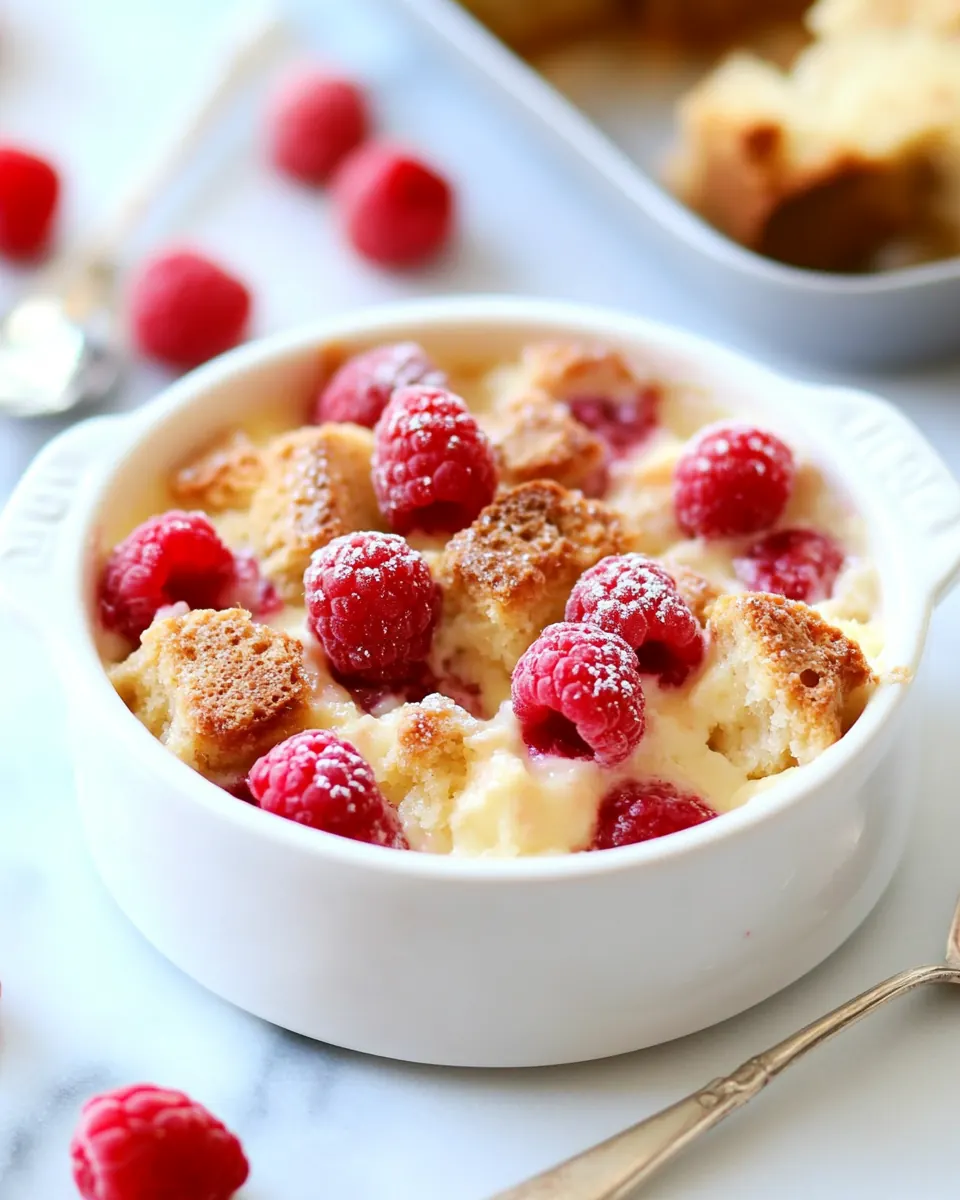
I like to think of adjustments as small nudges that let you tailor Raspberry Bread Pudding to your pantry and mood. Below are thoughtful tips you can use to tweak texture, sweetness, and serving temperature, while keeping the soul of the recipe intact.
- Reduce sugar incrementally if you prefer your pudding less sweet, subtract one to two tablespoons of the granulated sugar and taste the custard before baking to ensure it still reads balanced with the raspberries.
- Use frozen raspberries with care by thawing and draining slightly to avoid excess liquid, blotting gently with a paper towel so juices do not overly thin the custard.
- Adjust custard richness by swapping part of the half and half for milk if you want a lighter texture, but keep at least half the original ratio to maintain silkiness.
- Ensure even browning by rotating the baking dish halfway through the bake time so contact with oven heat is consistent and no edges brown faster than others.
- Reheat gently in a 325 degrees F oven for 10 to 15 minutes when serving leftovers to bring back the custard’s creaminess without drying it out.
- Add a crunchy finish by sprinkling a small amount of sugar on top in the last five minutes to create a lightly caramelized crust, watching closely to avoid burning.
Perfect Matches for Raspberry Bread Pudding
This pudding is versatile, fitting many occasions from casual brunches to intimate dessert courses. Here are ideas for pairing, serving styles, and storage to make it shine whether you serve it warm right from the oven or chilled as a make ahead treat.
- Brunch companion, serve slices with strong coffee and a crisp salad to contrast the pudding’s richness, making it a centerpiece rather than just a sweet afterthought.
- Dessert for small dinner parties, plate warm wedges with a spoon of Vanilla Cream Sauce and a few fresh raspberries for an elegant finish.
- Make ahead convenience, bake a day in advance and refrigerate uncovered until cool then cover, reheat gently before serving to save time on busy entertaining days.
- Storage tips, keep leftovers in an airtight container in the refrigerator for up to four days, and reheat single servings briefly in the microwave or in a low oven.
- Seasonal pairing ideas, in cooler months add a dusting of warm spices like extra cinnamon, while in summer emphasize fresh berries and lighter accompaniments.
- Occasion suggestions, this works for family gatherings, casual potlucks, or holiday brunches when you want something that feels special without last minute fuss.
FAQ
Conclusion
Raspberry Bread Pudding stands out because it marries silky custard with bright berries and the satisfying chew of toasted brioche. It’s forgiving, adaptable, and perfect for turning leftover bread into something memorable. I encourage you to give it a try this weekend, whether you serve it warm with a drizzle of Vanilla Cream Sauce or at room temperature for a laid back brunch. Enjoy the small ritual of prepping and the cozy reward when you pull it from the oven.
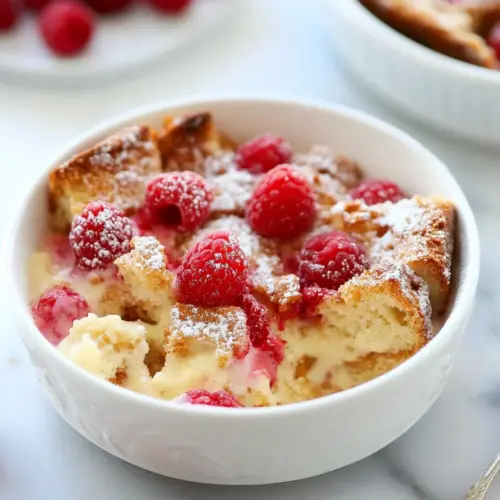
Raspberry Bread Pudding
Equipment
- Baking Dish
- Mixing Bowl
- Whisk
- Baking Sheet
Ingredients
- 2 cups half and half Provide a rich, creamy base that adds body and moisture to the custard; gently heat to dissolve sugar and meld flavors before combining with eggs for a silky texture.
- 2 tablespoons butter Add a small amount of fat and flavor to enrich the custard; melt and incorporate to give the pudding a glossy finish and subtle buttery notes.
- 1 teaspoon vanilla extract Impart aromatic warmth and depth to the custard; stir in with the dairy to elevate the overall flavor profile and complement the sweet berries.
- 1/3 cup granulated sugar Sweeten the custard to balance the tang of raspberries and enhance caramelization; dissolve fully into the warm half-and-half for even distribution.
- pinch of salt Enhance and balance the sweetness by providing a contrast that brightens flavors; use a minimal pinch to make other ingredients pop without becoming salty.
- 3 eggs, beaten Bind and set the custard by providing structure and richness; whisk beaten eggs into the warm milk mixture to create a smooth, firm pudding when baked.
- 1/2 teaspoon ground cinnamon Contribute a warm, spicy note that complements fruit and brioche; sprinkle into the custard mixture to add complexity and an inviting aroma.
- 1 loaf day old brioche bread or challah bread, cut into 1-inch cubes, (about 7 cups) Serve as the primary starch component that soaks up the custard; use day-old brioche or challah cubes to achieve tender, custardy interiors with slightly crisp edges.
- 1 1/2 cups fresh or frozen raspberries, or your favorite type of berries Provide bursts of bright, tart flavor and texture contrast throughout the pudding; fold fresh or frozen raspberries gently to avoid crushing while distributing fruity pockets.
- Vanilla Cream Sauce, for serving Offer a creamy, sweet finishing touch that enhances serving; warm or drizzle vanilla cream sauce over slices to add richness and a restaurant-quality presentation.
Instructions
- (If you're not using old or stale bread, you can dry it out in the oven first. Place the bread cubes on a baking sheet and bake at 250 degrees F for about 30 minutes, tossing every 10 minutes, until the bread is dry and stale.): The smell of toasting bread will fill your kitchen as moisture leaves the cubes, producing a faintly sweet, warm aroma that promises a better texture. Drying prevents the bread from collapsing into mush, giving the custard something to cling to so pockets of soft custard alternate with slightly chewy bread. Listen for a change in the bread’s sound when you tap a cube with a spoon it should be noticeably firmer and not spongy. A common mistake is crowding the pan; spread cubes in a single layer so air circulates and they dry evenly. If they are still soft in the middle, return them for another 5 to 10 minutes.
- Heat oven to 350 degrees F. In a large bowl add half and half, butter, vanilla, sugar and salt. Microwave for about 1 minute, just until butter has melted.: As you warm the half and half and butter , a warm, rich scent will begin to rise, hinting at the custard to come. This gentle warming helps dissolve the granulated sugar and melds the butter with the dairy so you don’t end up with greasy pockets. The visual cue to look for is steam rising and the butter fully incorporated, not boiling. Avoid overheating because scorching will create off flavors and could separate the fat. If you prefer stovetop, warm over low heat while stirring until melted.
- Add the beaten eggs and cinnamon to the milk mixture and whisk well to combine.: As you whisk the eggs into the warm dairy, the mixture will take on a glossy, silky appearance and a lightly spiced perfume from the ground cinnamon . Whisk thoroughly to create a homogeneous custard base; streaks of egg indicate under mixing. The reason for mixing now is to temper the eggs gently so they set smoothly during baking, yielding a creamy interior rather than curds. A typical error is adding eggs to very hot liquid which may scramble them, so ensure the dairy is warm not scalding.
- Add the bread to the bowl and stir to coat. Pour half of the mixture into a greased baking dish large enough to fit the mixture (any shallow casserole dish; I used a 8 x 11’’ pan).: When the bread meets the custard you will see the cubes begin to glisten as they absorb liquid, and the bowl will feel heavier. Stir gently so all cubes get coated; pressing too hard can break them down. Pouring half into the baking dish creates a layered structure so berries can be distributed between layers for even fruit in each slice. Make sure your dish is greased so the edges do not stick when baking.
- Sprinkle half of the raspberries over the top. Pour the remaining bread pudding mixture on top and sprinkle with more raspberries.: The bright red of the raspberries will pop against the pale custard creating appealing visual contrast. The berries will release juices while baking, creating small pockets of concentrated fruit flavor. Distribute them evenly so each portion has a mix of custard soaked bread and fruit. A common pitfall is piling berries only on one side which leads to uneven texture and soggy spots where too much juice accumulates.
- Bake for 30 to 45 minutes, or until custard is set but still a little wobbly and edges of bread have lightly browned.: During baking you will notice steam rising and the top gently puffing; the aroma will shift toward baked butter and caramelized sugar. The center should jiggle slightly when nudged this indicates it remains creamy and will set as it cools. The edges turning light golden brown signal that exterior texture is developing. Avoid overbaking which dries out the custard, making it crumbly instead of tender.
- Serve warm or at room temperature.: Warm servings deliver the most comforting mouthfeel, the custard silky and the top slightly crisp, while room temperature slices are easier to cut and present nicely. If you add a warm Vanilla Cream Sauce , it will melt into the pudding and heighten the richness. A mistake to avoid is refrigerating the pudding immediately while hot which traps steam and can make the surface soggy; let it rest briefly before covering.
- Store leftover bread pudding in the refrigerator for up to 4-5 days.: Once cooled to room temperature, cover the dish or transfer portions to airtight containers; the pudding will keep well and often tastes better the next day as flavors meld. Reheat gently in a low oven or microwave until warm but not piping hot to avoid drying. A pitfall is leaving it uncovered where it can dry out and form an unappetizing crust on top.
Notes
- Reduce sugar incrementally if you prefer your pudding less sweet, subtract one to two tablespoons of the granulated sugar and taste the custard before baking to ensure it still reads balanced with the raspberries.
- Use frozen raspberries with care by thawing and draining slightly to avoid excess liquid, blotting gently with a paper towel so juices do not overly thin the custard.
- Adjust custard richness by swapping part of the half and half for milk if you want a lighter texture, but keep at least half the original ratio to maintain silkiness.
- Ensure even browning by rotating the baking dish halfway through the bake time so contact with oven heat is consistent and no edges brown faster than others.
- Reheat gently in a 325 degrees F oven for 10 to 15 minutes when serving leftovers to bring back the custard’s creaminess without drying it out.
- Add a crunchy finish by sprinkling a small amount of sugar on top in the last five minutes to create a lightly caramelized crust, watching closely to avoid burning.