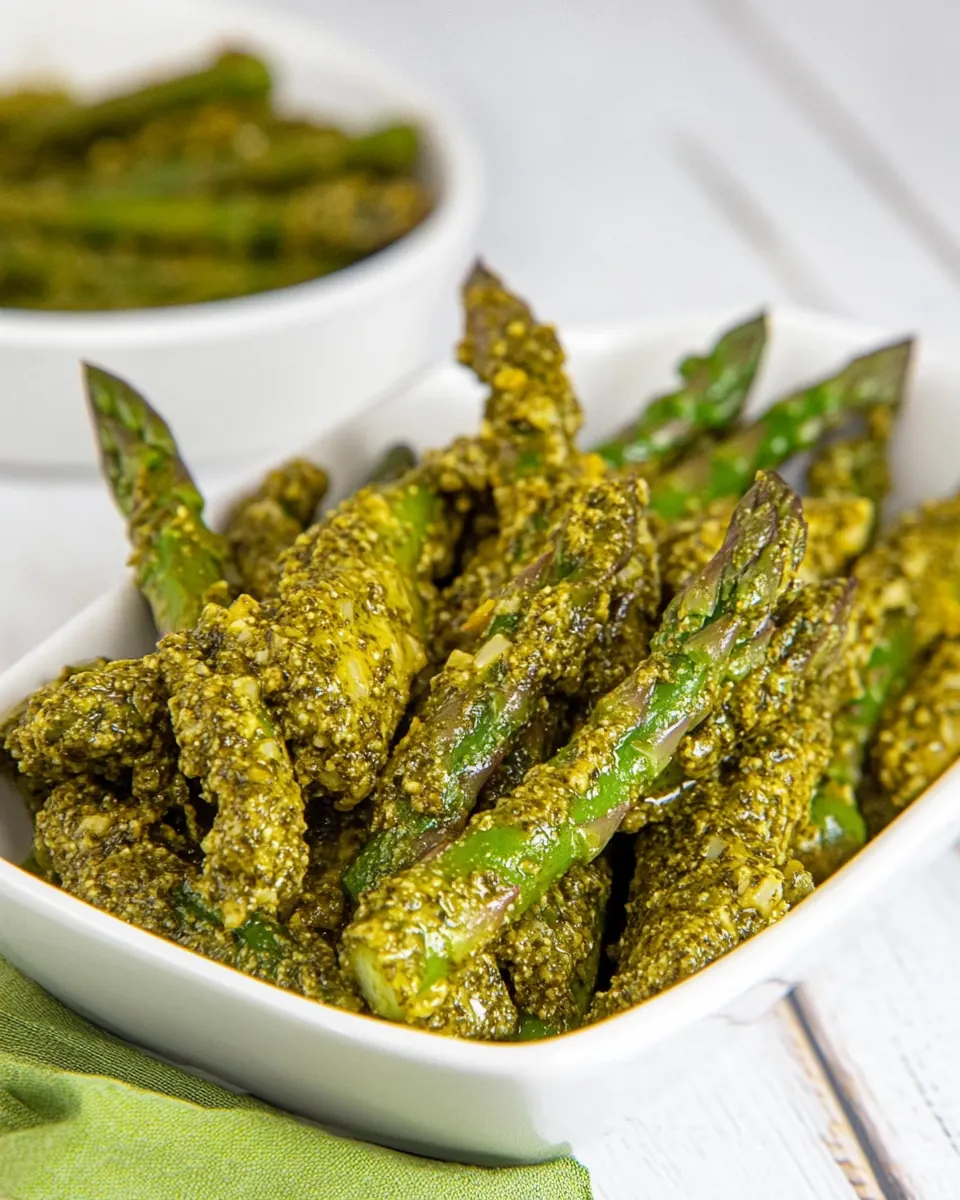
Asparagus with Pesto
Asparagus with Pesto was one of those simple dishes that taught me how small ingredients can sing together. The first time I made it I remember rushing home from the farmer’s market with a bundle of bright green asparagus, the stalks so fresh they snapped with a clean sound when I bent them, and a jar of vivid basil pesto that smelled like summer in a jar. I wanted a quick side that felt thoughtful, so I tossed the pieces into boiling water and let the fragrant sauce do the rest.
Over the years I have tweaked the timing until the texture felt just right, and I’ve learned to trust the sensory cues more than the clock. That afternoon I listened for the whisper of simmering water, watched for the tips to turn tender yet still stand tall, and smelled the pesto as it bloomed against hot asparagus. It became a go to when I needed a fresh side for an easy weeknight or a light plate for guests. I like to tell people that this recipe is less about instructions and more about paying attention to texture and aroma.
Recipe Snapshot
13 mins
10 mins
3 mins
Medium
150 kcal
Italian
Vegan, Gluten-Free
Side Dishes
Medium pot, Colander, Mixing bowl, Knife
Why This Asparagus with Pesto Is a Winner
Bright seasonal flavor
I love how Asparagus with Pesto showcases the season. When asparagus is in peak form the stalks are tender and sweet, and pairing them with herbaceous basil pesto amplifies that freshness. The contrast of crisp stalk to creamy sauce gives every bite a lively balance, and I often find myself closing my eyes for a second to savor it.
Speed without compromise
This dish comes together in minutes, which is exactly why I reach for it on busy nights. Boiling the asparagus briefly locks in color and texture, while the warm heat summons the oils and aromatics in the basil pesto. You get impressive results with minimal hands on time, and that feels like magic when you are juggling dinner and life.
Versatility on the table
I’ve served Asparagus with Pesto beside roasted fish, tucked into grain bowls, and even spooned over toasted bread as a rustic starter. The simple flavor profile lets it slide into many menus, so it adapts whether you want a light lunch or an elegant side for guests.
Textural harmony
What keeps me coming back is the mouthfeel. The slightly toothsome snap of the asparagus against the silky, slightly oily basil pesto is deeply satisfying. That interplay keeps each forkful engaging, and I often find people commenting on how each element complements the other.
Easy to personalize
I appreciate how this recipe invites tiny improvisations. A squeeze of lemon, a grind of pepper, or a scatter of toasted nuts can shift the mood without stealing the spotlight. For me, cooking is about those small choices, and Asparagus with Pesto rewards them beautifully.
What Goes Into Asparagus with Pesto
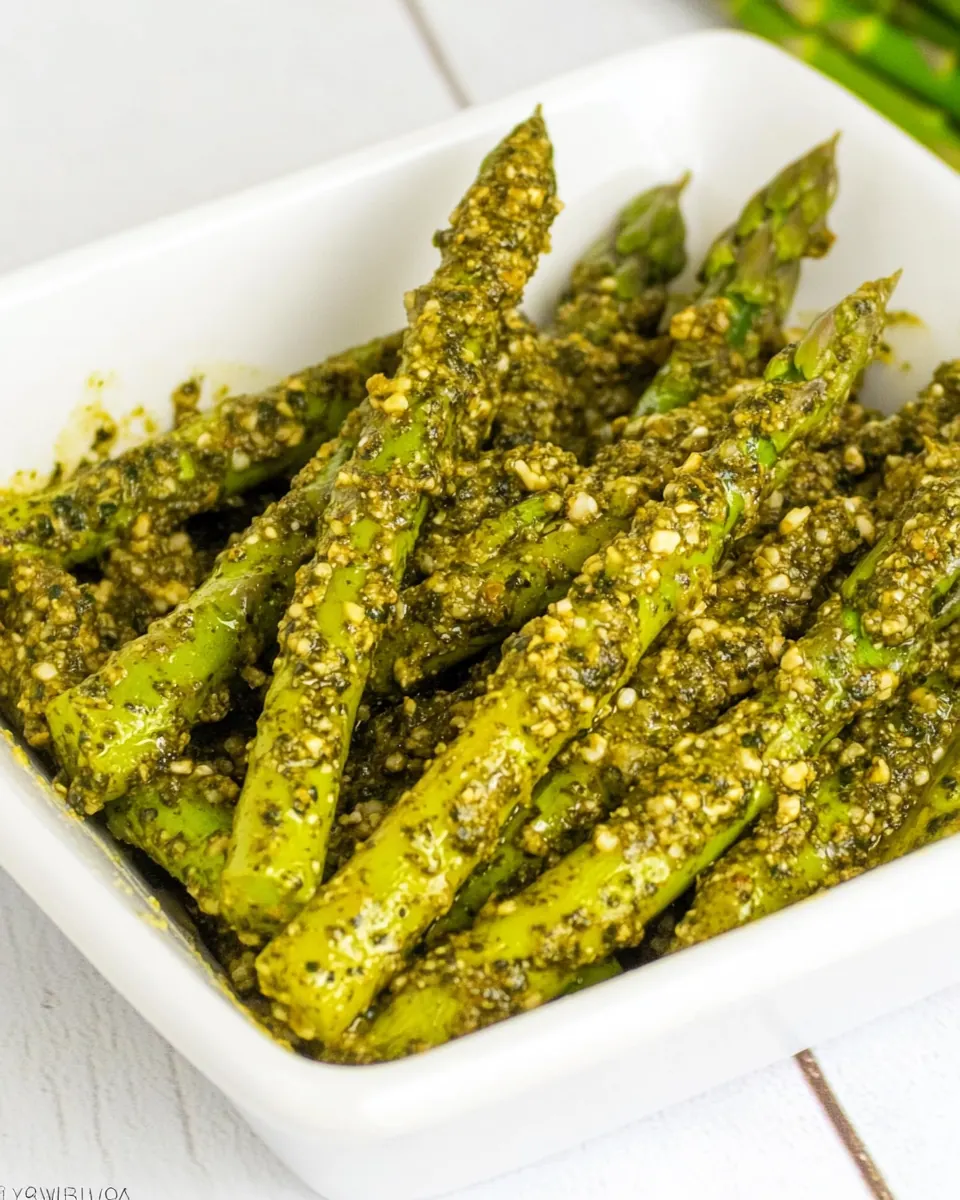
These ingredients follow a simple philosophy: highlight fresh produce and let quality condiments do the heavy lifting. The asparagus is the star, with texture and seasonal sweetness, while the basil pesto brings concentrated herb, oil, and savory notes. Salt seasons and a final grind of fresh-ground pepper ties everything together. Together they create a dish that feels light, intentional, and remarkably satisfying.
- 1 tsp . salt (for asparagus cooking water): Season generously to enhance the asparagus flavor and raise the boiling point of the cooking water; help tenderize stalks quickly and evenly while preserving bright color.
- 1 lb . fresh asparagus (or a little more): Provide a fresh, crisp vegetable base with natural vegetal sweetness and a satisfying snap; serve as the main component whose texture and size determine cooking time.
- 1/4 cup basil pesto (see notes): Add concentrated herbaceous and oily flavor to coat and bind the asparagus, supplying basil, garlic, and cheese notes that amplify savory depth; use sparingly to avoid overpowering delicate greens.
- salt and fresh-ground pepper to taste: Season finally to balance flavors and customize heat; provide finishing contrast through adjustable saltiness and bright, aromatic cracked pepper.
Step by Step Instructions for Asparagus with Pesto
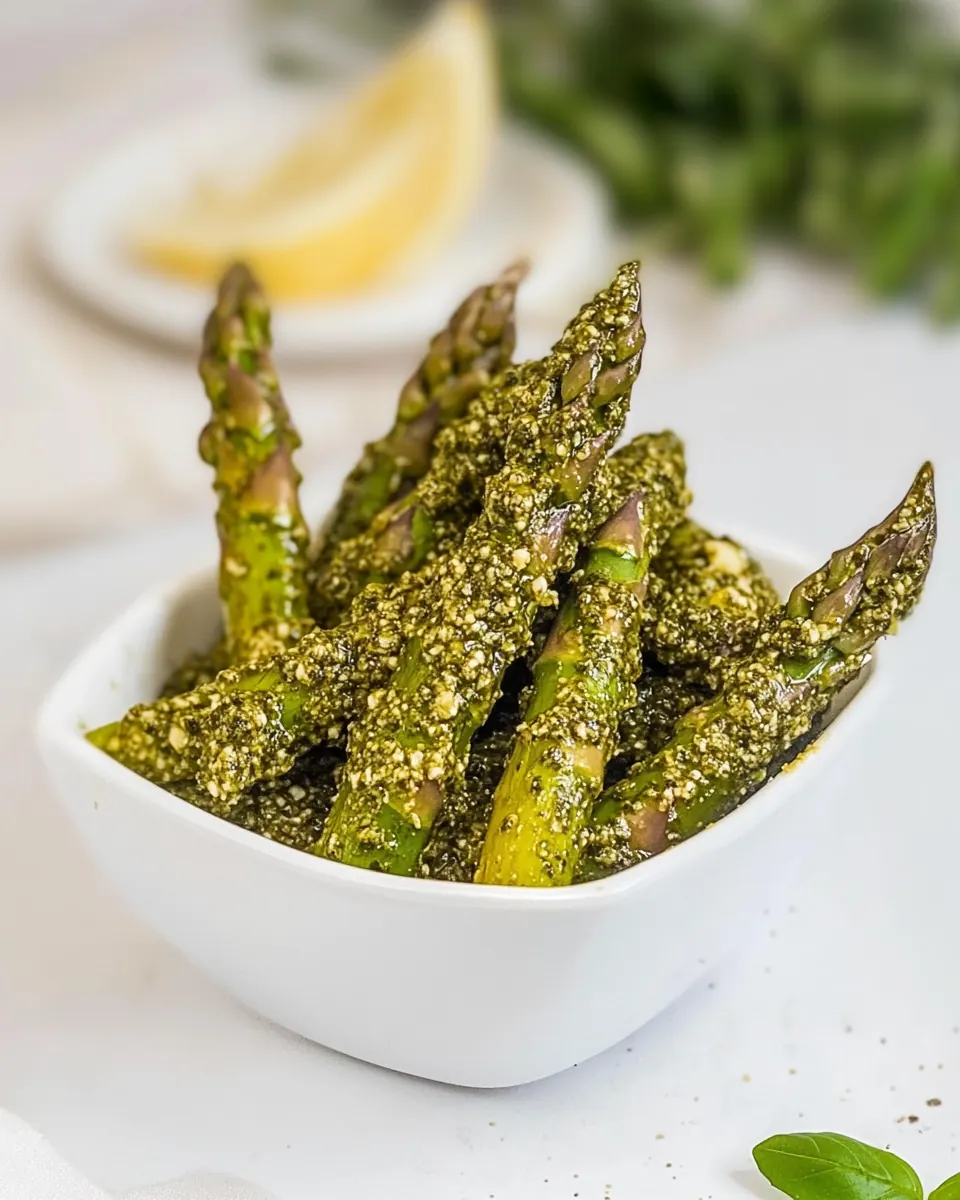
This is a quick recipe that relies on precise timing and attention to sensory cues. Below I expand each original direction into rich, practical steps so you can feel confident about texture, aroma, and the final balance of flavors.
- Fill medium sized pot with water, add a generous amount of salt (as if you were salting the water for pasta) and bring to a boil.: You will hear a rolling boil before you add the asparagus , and that vigorous sound signals the water is hot enough to cook quickly. The smell is neutral but the salted steam will carry a faint briny note, which helps infuse the asparagus as it cooks. Bringing the water fully to a boil shortens cook time and keeps the stalks vibrant. A common mistake is adding the asparagus to water that is not hot enough, which can lead to a limp, waterlogged texture.
- Be sure asparagus is clean, then break off the end of one piece to see where the woody stalk starts.: When you snap one stalk, you should hear a clean break and see where the tender part begins, which is a tactile cue I always use. Visually the broken end is paler and fibrous compared to the tender green above it. Cleaning removes any grit that will affect mouthfeel. Avoid skipping this step, because leaving woody ends will create chewiness that distracts from the overall pleasure.
- Trim the other asparagus pieces to that size, then cut asparagus on the diagonal into pieces about 2 inches long.: Cutting on the diagonal exposes more surface area, so each piece soaks up the basil pesto better and looks more elegant on the plate. You will see clean green crescents; the diagonal slices also cook evenly. If you leave uneven lengths, some pieces will overcook while others remain underdone, so take a little extra time to match sizes.
- When the water comes to a boil, add the asparagus and cook 2-3 minutes, depending on the thickness of the asparagus. Don’t overcook, use a timer!: Listen for the water to quiet slightly after adding the asparagus , and watch as the color intensifies to a vivid green. The aroma will shift toward vegetal sweetness. Test a piece for tenderness, it should be slightly crisp yet yielding when pierced. Overcooking makes the stalks mushy and dull in flavor, which is the most common misstep here.
- When asparagus is lightly cooked but still fairly crisp, drain it into a colander placed in the sink.: Draining stops the cooking instantly, and the sound of water rushing away is a small victory. The surface will glisten with residual water, which allows the basil pesto to spread without diluting too much. Avoid letting it sit in the hot pot, as residual heat continues cooking and can push the texture past the point of no return.
- When the water has drained, put the hot asparagus into a bowl; add the pesto, and let it melt for a minute or two.: The warmth of the asparagus will coax the oils in the basil pesto to loosen, releasing aroma and making the sauce more fluid. You will notice a fragrant lift as the basil aroma becomes more pronounced. Allowing a minute for melding helps the flavors marry. A frequent error is adding cold pesto and tossing immediately, which can leave the sauce clumpy and less aromatic.
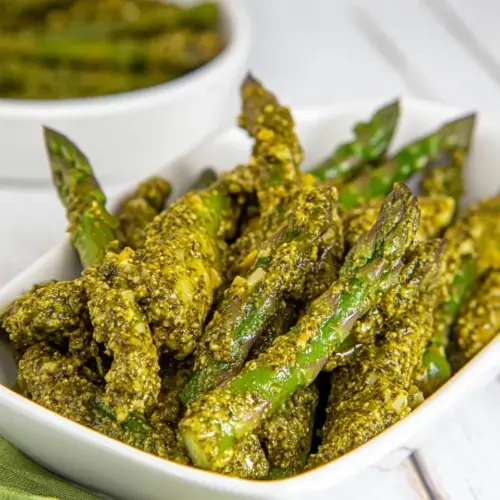
- Then toss the asparagus with the pesto and serve immediately.: Tossing distributes the glossy basil pesto so each piece is coated, and you will see a slight sheen and smell a layered herbaceous bouquet. Serve right away to enjoy the contrast of warm stalk and cool pesto oils. Waiting too long makes the dish lose its vibrancy, so aim to serve promptly.
Make It Your Own
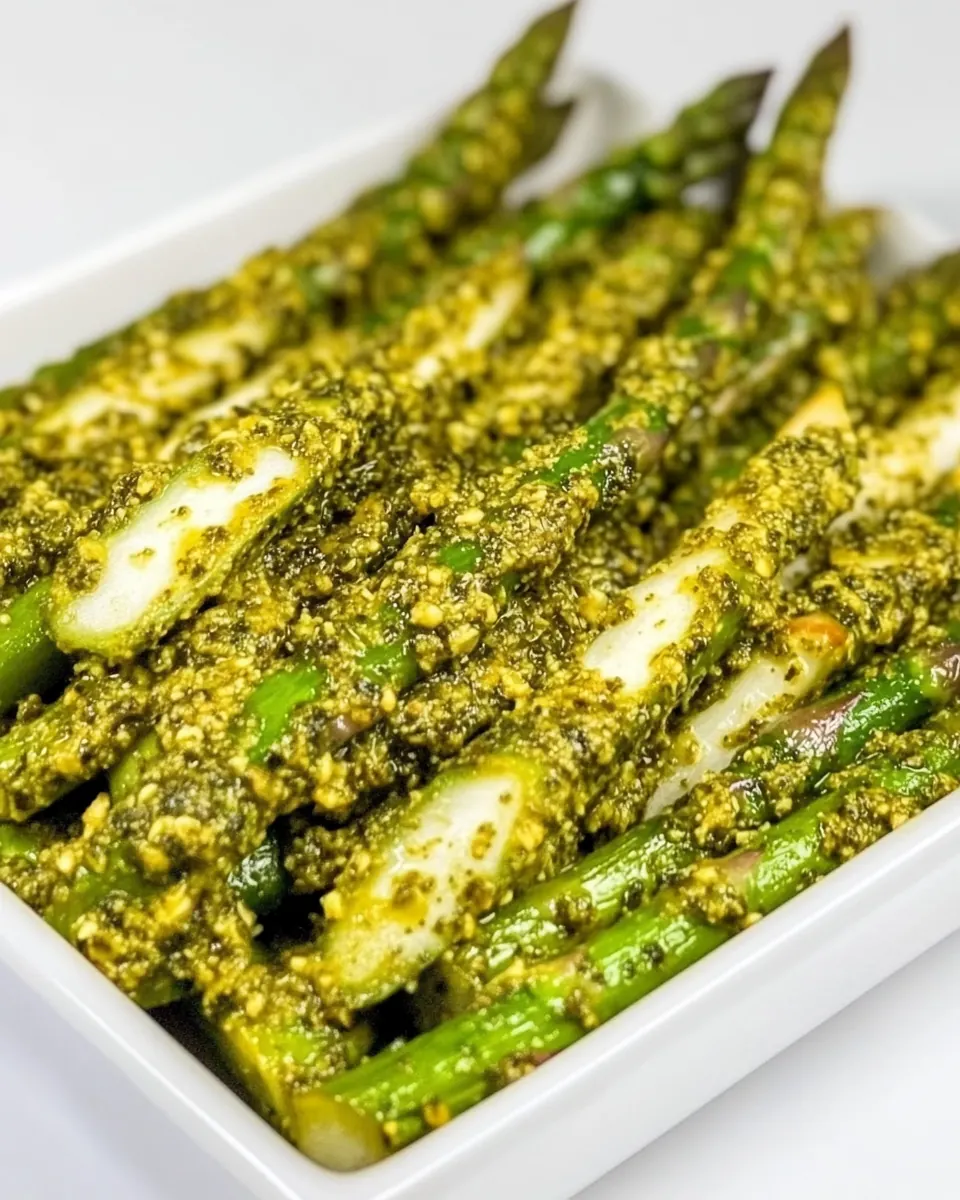
I like to offer practical ways to personalize this simple dish without changing its heart. Below are tips that expand on small choices you can make to adjust texture, seasoning, and presentation. Each is designed so you can pick one or two to suit your mood.
- Choose stalk thickness: Thicker asparagus benefits from the full end of the cooking window, while thin stalks need only a brief simmer, so match timing to size.
- Adjust pesto amount: If your basil pesto is robust, start with less and add more after tasting so it does not overpower the asparagus.
- Room temperature pesto: Let refrigerated basil pesto sit a few minutes before tossing with hot asparagus to help it loosen up and coat evenly.
- Finish with pepper: Fresh–ground pepper at the end brightens the dish more than pre-ground pepper added earlier.
- Warm bowl trick: Toss in a warmed bowl to keep the asparagus hot longer when serving, which preserves aroma and mouthfeel.
What to Serve With Asparagus with Pesto
Asparagus with Pesto pairs beautifully with a range of mains and occasions. Below I outline options for casual weeknights, light lunches, and more formal gatherings, and explain how to store and present the dish for best results.
- Simple protein pairings: Serve alongside roasted or grilled fish for a light dinner, the fresh herb notes complement delicate proteins without overwhelming them.
- Grain bowls and salads: Add to warm quinoa or farro bowls for a spring lunch, the pesto and asparagus add herbal richness and a pleasant textural contrast.
- Casual entertaining: Present as part of a vegetable platter or family style spread, the vibrant green makes for an attractive addition to the table.
- Seasonal occasions: Ideal for spring gatherings and Ramadan if you seek a light, fresh side; it plays well with celebratory mains and lighter menus.
- Storage tips: Keep leftovers in an airtight container in the refrigerator for up to two days, but know the texture softens with time, so I recommend enjoying it the day it is made.
- Serving style: Serve warm or at room temperature; toss again briefly if chilled to revive the pesto coating and aromatics before plating.
FAQ
Conclusion
This recipe shines because it celebrates simplicity, letting fresh asparagus and herbaceous basil pesto do the work. You get bright color, satisfying texture, and vibrant flavor in minutes. Give it a try the next time you have fresh stalks at the market, and enjoy how a few quality ingredients can make an impression. It’s an easy way to add a seasonal, elegant side to any meal and a reliable choice when you want something quick and memorable.
Asparagus with Pesto
Equipment
- Medium Pot
- Colander
- Mixing Bowl
- Knife
Ingredients
- 1 tsp . salt (for asparagus cooking water) Season generously to enhance the asparagus flavor and raise the boiling point of the cooking water; help tenderize stalks quickly and evenly while preserving bright color.
- 1 lb . fresh asparagus (or a little more) Provide a fresh, crisp vegetable base with natural vegetal sweetness and a satisfying snap; serve as the main component whose texture and size determine cooking time.
- 1/4 cup basil pesto (see notes) Add concentrated herbaceous and oily flavor to coat and bind the asparagus, supplying basil, garlic, and cheese notes that amplify savory depth; use sparingly to avoid overpowering delicate greens.
- salt and fresh-ground pepper to taste Season finally to balance flavors and customize heat; provide finishing contrast through adjustable saltiness and bright, aromatic cracked pepper.
Instructions
- Fill medium sized pot with water, add a generous amount of salt (as if you were salting the water for pasta) and bring to a boil.: You will hear a rolling boil before you add the asparagus , and that vigorous sound signals the water is hot enough to cook quickly. The smell is neutral but the salted steam will carry a faint briny note, which helps infuse the asparagus as it cooks. Bringing the water fully to a boil shortens cook time and keeps the stalks vibrant. A common mistake is adding the asparagus to water that is not hot enough, which can lead to a limp, waterlogged texture.
- Be sure asparagus is clean, then break off the end of one piece to see where the woody stalk starts.: When you snap one stalk, you should hear a clean break and see where the tender part begins, which is a tactile cue I always use. Visually the broken end is paler and fibrous compared to the tender green above it. Cleaning removes any grit that will affect mouthfeel. Avoid skipping this step, because leaving woody ends will create chewiness that distracts from the overall pleasure.
- Trim the other asparagus pieces to that size, then cut asparagus on the diagonal into pieces about 2 inches long.: Cutting on the diagonal exposes more surface area, so each piece soaks up the basil pesto better and looks more elegant on the plate. You will see clean green crescents; the diagonal slices also cook evenly. If you leave uneven lengths, some pieces will overcook while others remain underdone, so take a little extra time to match sizes.
- When the water comes to a boil, add the asparagus and cook 2-3 minutes, depending on the thickness of the asparagus. Don’t overcook, use a timer!: Listen for the water to quiet slightly after adding the asparagus , and watch as the color intensifies to a vivid green. The aroma will shift toward vegetal sweetness. Test a piece for tenderness, it should be slightly crisp yet yielding when pierced. Overcooking makes the stalks mushy and dull in flavor, which is the most common misstep here.
- When asparagus is lightly cooked but still fairly crisp, drain it into a colander placed in the sink.: Draining stops the cooking instantly, and the sound of water rushing away is a small victory. The surface will glisten with residual water, which allows the basil pesto to spread without diluting too much. Avoid letting it sit in the hot pot, as residual heat continues cooking and can push the texture past the point of no return.
- When the water has drained, put the hot asparagus into a bowl; add the pesto, and let it melt for a minute or two.: The warmth of the asparagus will coax the oils in the basil pesto to loosen, releasing aroma and making the sauce more fluid. You will notice a fragrant lift as the basil aroma becomes more pronounced. Allowing a minute for melding helps the flavors marry. A frequent error is adding cold pesto and tossing immediately, which can leave the sauce clumpy and less aromatic.
- Then toss the asparagus with the pesto and serve immediately.: Tossing distributes the glossy basil pesto so each piece is coated, and you will see a slight sheen and smell a layered herbaceous bouquet. Serve right away to enjoy the contrast of warm stalk and cool pesto oils. Waiting too long makes the dish lose its vibrancy, so aim to serve promptly.
Notes
- Choose stalk thickness: Thicker asparagus benefits from the full end of the cooking window, while thin stalks need only a brief simmer, so match timing to size.
- Adjust pesto amount: If your basil pesto is robust, start with less and add more after tasting so it does not overpower the asparagus.
- Room temperature pesto: Let refrigerated basil pesto sit a few minutes before tossing with hot asparagus to help it loosen up and coat evenly.
- Finish with pepper: Fresh-ground pepper at the end brightens the dish more than pre-ground pepper added earlier.
- Warm bowl trick: Toss in a warmed bowl to keep the asparagus hot longer when serving, which preserves aroma and mouthfeel.