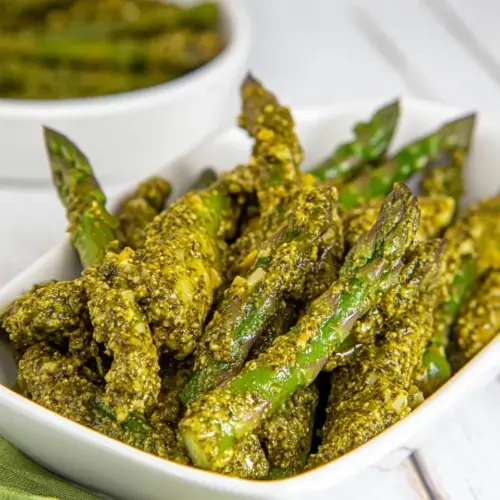
Asparagus with Pesto
Asparagus with Pesto is a bright, easy side that pairs crisp, tender asparagus with herbaceous basil pesto for a creamy and fresh bite. This simple recipe delivers vibrant color, lively texture, and speedy prep, ideal for an easy weeknight dinner or spring gathering. Make it to enjoy a fast, flavorful vegetable dish that feels both elegant and effortless.
Equipment
- Medium Pot
- Colander
- Mixing Bowl
- Knife
Ingredients
- 1 tsp . salt (for asparagus cooking water) Season generously to enhance the asparagus flavor and raise the boiling point of the cooking water; help tenderize stalks quickly and evenly while preserving bright color.
- 1 lb . fresh asparagus (or a little more) Provide a fresh, crisp vegetable base with natural vegetal sweetness and a satisfying snap; serve as the main component whose texture and size determine cooking time.
- 1/4 cup basil pesto (see notes) Add concentrated herbaceous and oily flavor to coat and bind the asparagus, supplying basil, garlic, and cheese notes that amplify savory depth; use sparingly to avoid overpowering delicate greens.
- salt and fresh-ground pepper to taste Season finally to balance flavors and customize heat; provide finishing contrast through adjustable saltiness and bright, aromatic cracked pepper.
Instructions
- Fill medium sized pot with water, add a generous amount of salt (as if you were salting the water for pasta) and bring to a boil.: You will hear a rolling boil before you add the asparagus , and that vigorous sound signals the water is hot enough to cook quickly. The smell is neutral but the salted steam will carry a faint briny note, which helps infuse the asparagus as it cooks. Bringing the water fully to a boil shortens cook time and keeps the stalks vibrant. A common mistake is adding the asparagus to water that is not hot enough, which can lead to a limp, waterlogged texture.
- Be sure asparagus is clean, then break off the end of one piece to see where the woody stalk starts.: When you snap one stalk, you should hear a clean break and see where the tender part begins, which is a tactile cue I always use. Visually the broken end is paler and fibrous compared to the tender green above it. Cleaning removes any grit that will affect mouthfeel. Avoid skipping this step, because leaving woody ends will create chewiness that distracts from the overall pleasure.
- Trim the other asparagus pieces to that size, then cut asparagus on the diagonal into pieces about 2 inches long.: Cutting on the diagonal exposes more surface area, so each piece soaks up the basil pesto better and looks more elegant on the plate. You will see clean green crescents; the diagonal slices also cook evenly. If you leave uneven lengths, some pieces will overcook while others remain underdone, so take a little extra time to match sizes.
- When the water comes to a boil, add the asparagus and cook 2-3 minutes, depending on the thickness of the asparagus. Don’t overcook, use a timer!: Listen for the water to quiet slightly after adding the asparagus , and watch as the color intensifies to a vivid green. The aroma will shift toward vegetal sweetness. Test a piece for tenderness, it should be slightly crisp yet yielding when pierced. Overcooking makes the stalks mushy and dull in flavor, which is the most common misstep here.
- When asparagus is lightly cooked but still fairly crisp, drain it into a colander placed in the sink.: Draining stops the cooking instantly, and the sound of water rushing away is a small victory. The surface will glisten with residual water, which allows the basil pesto to spread without diluting too much. Avoid letting it sit in the hot pot, as residual heat continues cooking and can push the texture past the point of no return.
- When the water has drained, put the hot asparagus into a bowl; add the pesto, and let it melt for a minute or two.: The warmth of the asparagus will coax the oils in the basil pesto to loosen, releasing aroma and making the sauce more fluid. You will notice a fragrant lift as the basil aroma becomes more pronounced. Allowing a minute for melding helps the flavors marry. A frequent error is adding cold pesto and tossing immediately, which can leave the sauce clumpy and less aromatic.
- Then toss the asparagus with the pesto and serve immediately.: Tossing distributes the glossy basil pesto so each piece is coated, and you will see a slight sheen and smell a layered herbaceous bouquet. Serve right away to enjoy the contrast of warm stalk and cool pesto oils. Waiting too long makes the dish lose its vibrancy, so aim to serve promptly.
Notes
- Choose stalk thickness: Thicker asparagus benefits from the full end of the cooking window, while thin stalks need only a brief simmer, so match timing to size.
- Adjust pesto amount: If your basil pesto is robust, start with less and add more after tasting so it does not overpower the asparagus.
- Room temperature pesto: Let refrigerated basil pesto sit a few minutes before tossing with hot asparagus to help it loosen up and coat evenly.
- Finish with pepper: Fresh-ground pepper at the end brightens the dish more than pre-ground pepper added earlier.
- Warm bowl trick: Toss in a warmed bowl to keep the asparagus hot longer when serving, which preserves aroma and mouthfeel.