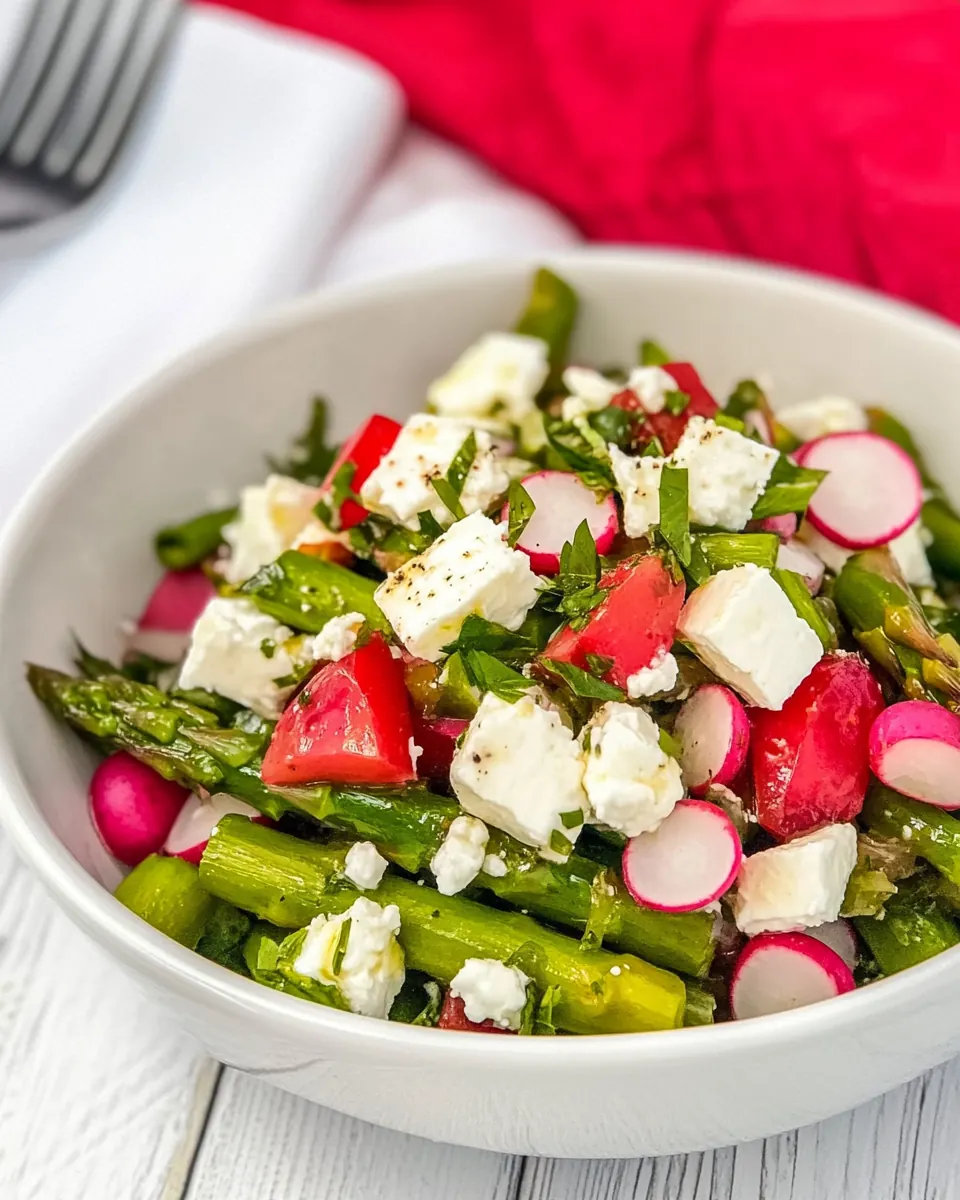
Asparagus and Radish Salad with Feta
Asparagus and Radish Salad with Feta came into my weeknight rotation the first spring I was determined to eat brighter, fresher meals, and it still makes me smile every time I serve it.
I remember buying a bunch of radishes at the farmers market because their color stopped me in my tracks, then pairing them with stalks of tender asparagus I could not resist. I wanted something that felt lively and simple, something I could toss together between calls and errands. This salad does exactly that, the crunch of the radish playing off the snap of the asparagus, while the salty tang of Feta pulls everything into a savory, satisfying bite. I often make it when friends pop by unexpectedly, because it looks beautiful on the table and comes together fast.
Over time I learned a few little rituals that keep the flavors bright and the textures spot on. I always slice the radish into half moons so the red rim shows, and I cut the asparagus on the diagonal so each piece catches the dressing. The dressing itself is tiny but crucial, a lemon and olive oil vinaigrette that lets the produce shine. I promise it is not fussy, but it rewards small attention to detail. Serve it slightly chilled or at room temperature depending on the weather, and watch it vanish.
Recipe Snapshot
15 mins
15 mins
Medium
150 kcal
American
Keto, Gluten-Free
Salads
Knife, Cutting board, Mixing bowl, Whisk
Why We Love This Asparagus and Radish Salad with Feta
Vibrant seasonal appeal
I love how Asparagus and Radish Salad with Feta feels like spring in a bowl. The crisp radish and tender asparagus are peak-season stars, and the colors alone make the salad compelling. When I bring this to a lunch or picnic, people comment first on how fresh it looks, and that attention makes me smile.
Quick to pull together
We all have nights when time is tight, and this salad answers that need. From trimming to tossing, it takes hardly any time, so it works for easy weeknight dinners or last-minute guests. I value recipes that respect a busy life, and this one does that without sacrificing flavor.
Textural balance
The crunch of the radish contrasts with the tender bite of the asparagus, while the creamy tang of Feta ties everything together. I enjoy how each forkful offers a little variety, and that mix keeps people reaching back for more. That balance is what makes the salad memorable.
Versatile and forgiving
I often adapt the dressing slightly depending on my mood, but the core combination remains reliable. The vinaigrette is forgiving, so if you add a touch more olive oil or lemon, the salad still sings. I’ve learned to trust that small adjustments will not break the harmony.
Great for sharing
Whether it’s a casual family meal or a potluck contribution, Asparagus and Radish Salad with Feta is easy to scale. It holds up well in a shallow bowl and stays pleasant for a day in the fridge, so you can prep ahead and enjoy the ease of a prepared dish. I often make a double batch for leftovers that stay bright and tasty.
What to Buy for Asparagus and Radish Salad with Feta
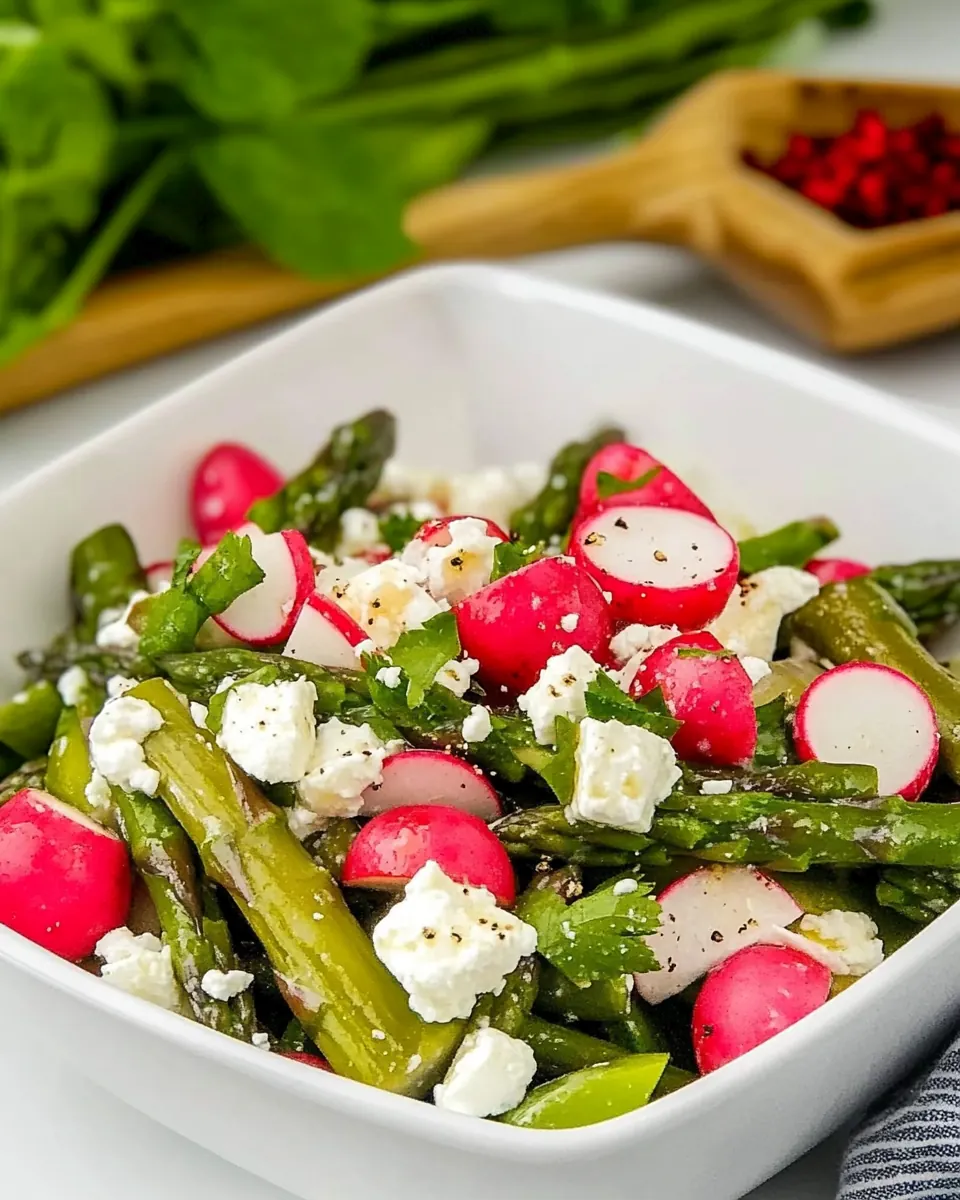
This ingredient list favors brightness and simplicity. I believe in letting crisp vegetables and a punchy dressing do the work. The key players are the radish and the asparagus, while the Feta brings savory creaminess. The green onion adds a mild bite, and the dressing ingredients are there to highlight the vegetables rather than overpower them.
- 2 cups of half-moon radish slices (about 8 oz.): Provide bright, crisp texture and a peppery bite; thin half–moon slices create visual appeal and distribute evenly throughout the salad, balancing softer components.
- 2 cups raw asparagus pieces, cut into 1.5 inch lengths (about 8 oz.): Add tender-crisp vegetal body and mild grassy flavor when cut into 1.5 inch pieces; quick blanching or raw use preserves color and pleasant snap.
- 4 oz . Feta cheese, cut into 1/2 inch cubes: Contribute creamy, tangy, and salty richness through 1/2 inch cubes; cubed format delivers pockets of flavor and contrasts the crunchy vegetables.
- 1/2 cup diagonally sliced green onion: Offer subtle oniony fragrance and mild sharpness when diagonally sliced; thin slices meld with dressing while adding delicate green color.
- 2 T lemon juice (see notes): Bring citrusy acidity to brighten and balance the richness; measured amount seasons the salad and helps meld flavors together.
- 3 T extra-virgin olive oil: Provide silky mouthfeel and fruity depth to the dressing; extra–virgin olive oil emulsifies with lemon juice to coat ingredients evenly.
- 1 tsp . Spike Seasoning (or another all-purpose seasoning blend): Introduce an all-purpose savory blend of herbs and spices for layered umami; a small amount enhances overall seasoning without overpowering.
- salt and fresh-ground black pepper to taste (remember the Feta is salty): Season to personal preference with granular salt and freshly ground black pepper; use sparingly because the feta already contributes significant saltiness.
Making This Asparagus and Radish Salad with Feta
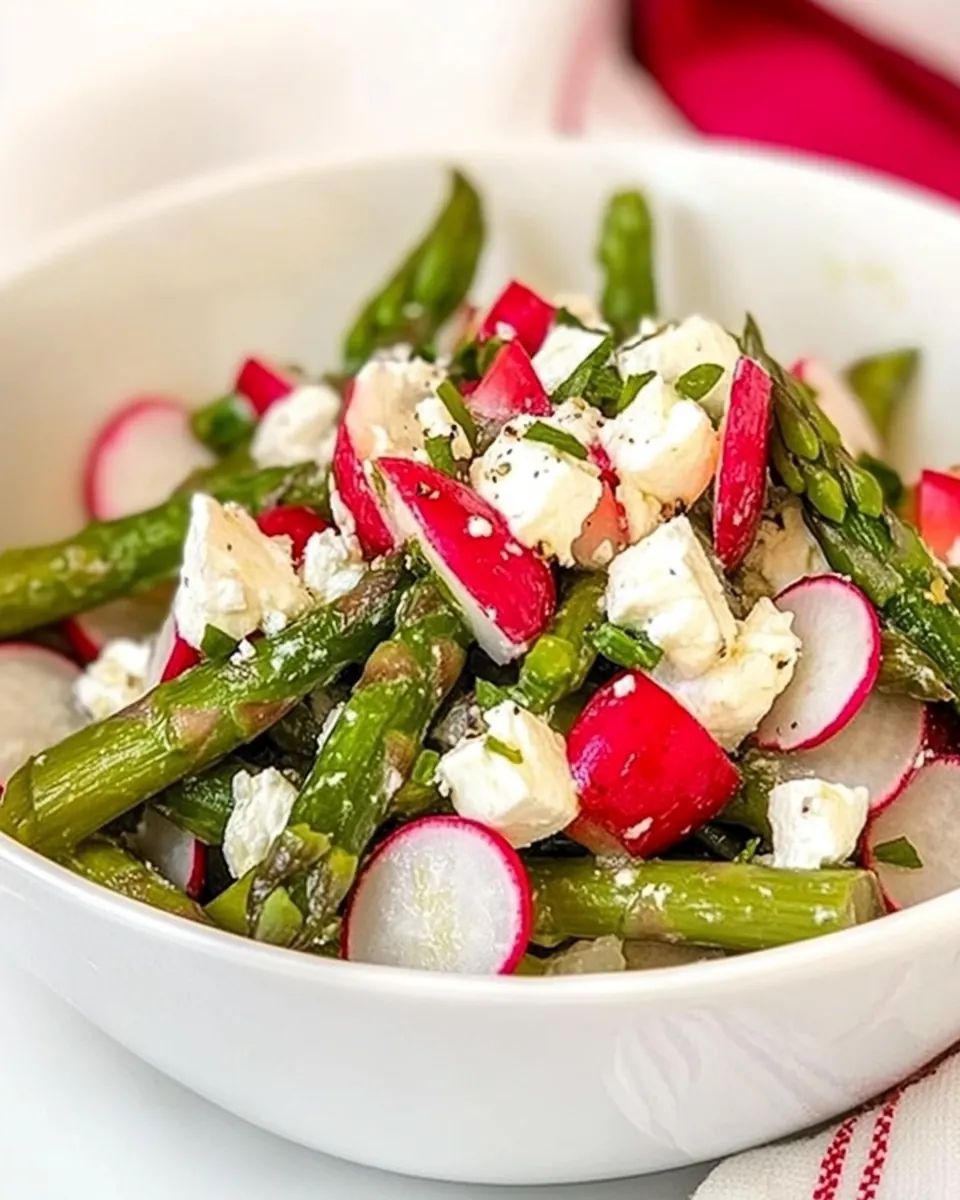
This salad comes together in straightforward steps that respect the integrity of each ingredient. I like to prepare everything on the counter so I can assemble quickly, and I give a little attention to how each element is cut. That small focus makes a big difference in texture and presentation.
- Trim the stem and root end of each radish, and then cut radishes in half lengthwise and slice into thick half-moon shapes (so each piece of radish is red on the outside edge.): The first thing you notice while slicing the radish is the pop of color on each half moon, and the crisp sound as your knife meets the firm bulb. This visual and auditory feedback tells you the radish is fresh and properly trimmed. Thick half-moons hold up well in the dressing and show the red edge in the bowl. Why it matters, the thickness preserves crunch and prevents the pieces from becoming soggy. Troubleshooting tip, if the radish feels soft while slicing it may be past its prime, so swap it out rather than forcing a texture that will disappoint.
- Grab one piece of asparagus by both ends and snap the end off to see where the woody part is, then trim the asparagus pieces to that size. Cut trimmed asparagus on the diagonal into pieces about 1.5 inches long.: When you snap an asparagus stalk you hear a clean break and see a fibrous end separate, that sound is your cue you have removed the woody portion. Cutting on the diagonal creates elongated surfaces that catch the dressing and look attractive in the bowl. These angled cuts release a faint green aroma when you slice, hinting at the vegetal freshness to come. Why it matters, trimming ensures every bite is tender rather than stringy. Troubleshooting tip, avoid leaving the woody ends in the salad as they can be chewy and detract from the overall mouthfeel.
- Slice enough green onions to make 1/2 cup sliced green onion.: As you slice the green onion , the mild onion fragrance gently fills the air, adding a subtle savory note before anything is tossed. The diagonal slices give a delicate, grassy look, and they mingle well among the other shapes. Why it matters, the green onion adds a mild bite that complements both the radish and the Feta . Troubleshooting tip, if your slices are too thick, the onion will overpower; if too thin, they may disappear in the mix, so aim for consistent half moon shapes for balance.
- Slice Feta Cheese into thick slices and then cut into 1/2 inch cubes, or slightly smaller if you prefer. (We loved the cubes of Feta, but you can also use crumbled Feta if you prefer.): Cutting the Feta into cubes gives you satisfying pockets of creamy, salty flavor, and the tactile contrast with the crisp vegetables is appealing. The cool, slightly tangy aroma of the Feta is gentle but distinct as you slice. Why it matters, cubes allow for occasional concentrated bites of cheese rather than an even spread, which I find more interesting. Troubleshooting tip, if the Feta is too crumbly to cube, switch to gentle crumbling to maintain texture without losing the cheese entirely.
- Whisk together lemon juice, olive oil, and a little Spike Seasoning (or another all-purpose seasoning blend) to make the dressing.: As you whisk the vinaigrette, you will notice the lemon fragrance lift and the olive oil become glossy as it emulsifies slightly with the juice. This fragrant mix should smell bright and inviting, the acidity balanced by the oil. Why it matters, a well-emulsified dressing clings to the vegetables for even flavor distribution. Troubleshooting tip, if the dressing separates, whisk more vigorously or add a tiny extra splash of oil to help bind the mixture.
- Put the radish slices, asparagus pieces, and sliced green onion into a bowl and toss together with the dressing.: When you toss these ingredients, listen for the soft rustle as the pieces move against one another and watch the dressing coat the colors, giving them a subtle sheen. The vinaigrette should lightly cling to each piece without pooling. Why it matters, tossing ensures each bite has a bit of dressing so the flavors marry consistently. Troubleshooting tip, if the dressing pools at the bottom, the toss likely needs more folding; gently lift and fold rather than over stirring to avoid bruising delicate pieces.
- Gently stir in the cubes of Feta Cheese.: As you fold in the Feta , the cool, creamy chunks settle among the vegetables and add a tactile contrast; you will hear very little sound, mostly the soft settling of cubes. This step is delicate, you want the cheese preserved in shape for visual appeal and texture. Why it matters, stirring gently maintains the integrity of the Feta so you get those pockets of salty cream. Troubleshooting tip, over mixing can break the cubes and turn the dressing creamy in an unintended way, so be gentle.
- Season the salad with fresh-ground pepper and salt to taste.: Freshly ground black pepper adds a final aromatic note, and a light sprinkle of salt may be needed if your Feta is mild. After seasoning, take a small taste to judge balance, the lemon should brighten and the olive oil should smooth flavors together. Why it matters, final seasoning ties the components into a cohesive whole. Troubleshooting tip, since Feta contributes salt, add any additional salt sparingly and taste between additions to avoid over salting.
- I'm guessing this would keep in the fridge for a couple of days, although mine didn't last nearly that long.: Stored chilled, the salad retains much of its texture for a day or two, though the radish and asparagus will slowly lose crispness as they absorb the dressing. You may notice the Feta soften and mingle more with the vegetables over time, which can be pleasant but different from the freshly tossed version. Why it matters, planning storage helps you serve at the ideal texture. Troubleshooting tip, if you prefer maximum crunch, dress only what you will eat immediately and keep extra undressed vegetables separate.
Change It Up
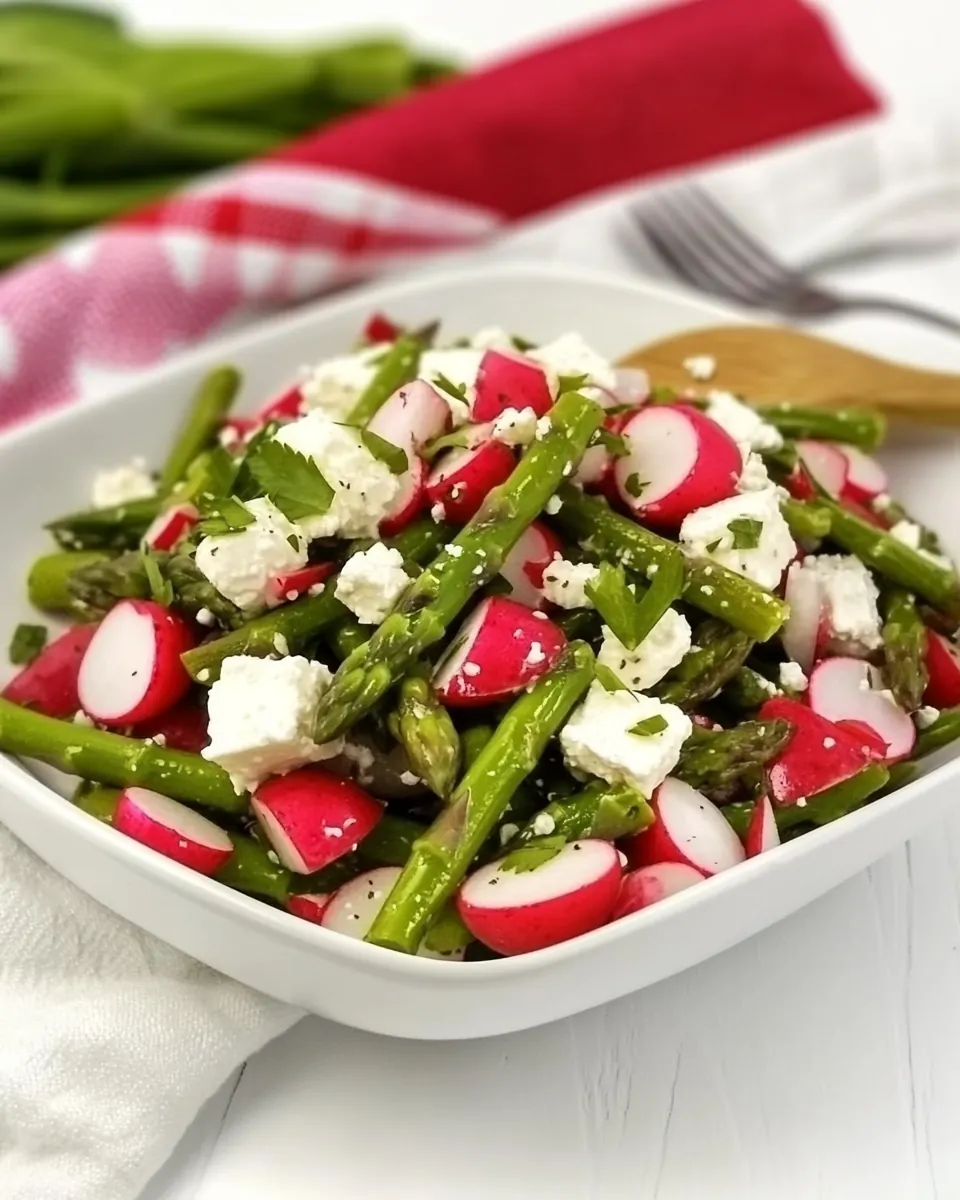
I like to offer small variations that respect the salad’s simplicity. These ideas help you adapt the recipe for different occasions while keeping the core flavors intact.
- Serve chilled or room temperature – If it is warm out, chill the salad briefly for a refreshing bite, otherwise serve at room temperature so the flavors are more pronounced.
- Cube or crumble Feta – Cubes give distinct creamy pockets, crumbled Feta spreads the salt and tang throughout each forkful, choose based on your presentation preference.
- Adjust lemon to taste – Add a touch more lemon juice for extra brightness if your radish is milder, but add slowly and taste as you go.
- Reserve dressing for later – If you want maximum crunch later, keep the dressing separate and toss just before serving to avoid sogginess.
- Use fresh seasonal produce – When asparagus and radish are in season they will be at their best, so seek out farmers market picks for the liveliest results.
What to Pair With Asparagus and Radish Salad with Feta
This salad is versatile and pairs well with light mains and casual meals. Consider the season and occasion when choosing accompaniments, and use side dishes that echo the salad’s fresh character rather than overpower it.
- Simple grilled chicken or fish – Serve alongside a simply seasoned grilled protein for a balanced plate where the salad provides brightness and a crisp counterpoint.
- Hearty grain bowls – Add the salad to a bowl of warm grains for contrast, the crisp greens and creamy Feta make the bowl feel fresher and lighter.
- Springtime brunch – This salad fits naturally into a spring brunch spread, pairing well with quiche or an egg dish for a morning to midday meal.
- Potluck or picnic – Because it holds up for a day in the fridge, it is a reliable choice for gatherings; keep the dressing separate if travel time is long.
- Storage tips – Store in an airtight container for up to two days, and if you want to preserve crunch, keep the dressing apart until ready to serve.
- Seasonal pairing – Best in spring when asparagus and radish are fresh at the market, this salad reads like a seasonal celebration on the plate.
FAQ
Conclusion
This salad is special because it captures spring flavors with minimal fuss, pairing crisp radish and tender asparagus with salty Feta and a bright lemon dressing. Give it a try when you want a fresh, colorful side that is quick to prepare and pleasing to most palates. I hope it becomes a go to for light lunches, easy dinners, or anything in between.
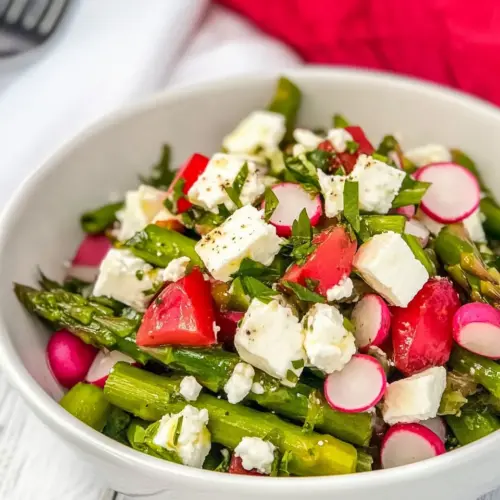
Asparagus and Radish Salad with Feta
Equipment
- Knife
- Cutting Board
- Mixing Bowl
- Whisk
Ingredients
- 2 cups of half-moon radish slices (about 8 oz.) Provide bright, crisp texture and a peppery bite; thin half-moon slices create visual appeal and distribute evenly throughout the salad, balancing softer components.
- 2 cups raw asparagus pieces, cut into 1.5 inch lengths (about 8 oz.) Add tender-crisp vegetal body and mild grassy flavor when cut into 1.5 inch pieces; quick blanching or raw use preserves color and pleasant snap.
- 4 oz . Feta cheese, cut into 1/2 inch cubes Contribute creamy, tangy, and salty richness through 1/2 inch cubes; cubed format delivers pockets of flavor and contrasts the crunchy vegetables.
- 1/2 cup diagonally sliced green onion Offer subtle oniony fragrance and mild sharpness when diagonally sliced; thin slices meld with dressing while adding delicate green color.
- 2 T lemon juice (see notes) Bring citrusy acidity to brighten and balance the richness; measured amount seasons the salad and helps meld flavors together.
- 3 T extra-virgin olive oil Provide silky mouthfeel and fruity depth to the dressing; extra-virgin olive oil emulsifies with lemon juice to coat ingredients evenly.
- 1 tsp . Spike Seasoning (or another all-purpose seasoning blend) Introduce an all-purpose savory blend of herbs and spices for layered umami; a small amount enhances overall seasoning without overpowering.
- salt and fresh-ground black pepper to taste (remember the Feta is salty) Season to personal preference with granular salt and freshly ground black pepper; use sparingly because the feta already contributes significant saltiness.
Instructions
- Trim the stem and root end of each radish, and then cut radishes in half lengthwise and slice into thick half-moon shapes (so each piece of radish is red on the outside edge.): The first thing you notice while slicing the radish is the pop of color on each half moon, and the crisp sound as your knife meets the firm bulb. This visual and auditory feedback tells you the radish is fresh and properly trimmed. Thick half-moons hold up well in the dressing and show the red edge in the bowl. Why it matters, the thickness preserves crunch and prevents the pieces from becoming soggy. Troubleshooting tip, if the radish feels soft while slicing it may be past its prime, so swap it out rather than forcing a texture that will disappoint.
- Grab one piece of asparagus by both ends and snap the end off to see where the woody part is, then trim the asparagus pieces to that size. Cut trimmed asparagus on the diagonal into pieces about 1.5 inches long.: When you snap an asparagus stalk you hear a clean break and see a fibrous end separate, that sound is your cue you have removed the woody portion. Cutting on the diagonal creates elongated surfaces that catch the dressing and look attractive in the bowl. These angled cuts release a faint green aroma when you slice, hinting at the vegetal freshness to come. Why it matters, trimming ensures every bite is tender rather than stringy. Troubleshooting tip, avoid leaving the woody ends in the salad as they can be chewy and detract from the overall mouthfeel.
- Slice enough green onions to make 1/2 cup sliced green onion.: As you slice the green onion , the mild onion fragrance gently fills the air, adding a subtle savory note before anything is tossed. The diagonal slices give a delicate, grassy look, and they mingle well among the other shapes. Why it matters, the green onion adds a mild bite that complements both the radish and the Feta . Troubleshooting tip, if your slices are too thick, the onion will overpower; if too thin, they may disappear in the mix, so aim for consistent half moon shapes for balance.
- Slice Feta Cheese into thick slices and then cut into 1/2 inch cubes, or slightly smaller if you prefer. (We loved the cubes of Feta, but you can also use crumbled Feta if you prefer.): Cutting the Feta into cubes gives you satisfying pockets of creamy, salty flavor, and the tactile contrast with the crisp vegetables is appealing. The cool, slightly tangy aroma of the Feta is gentle but distinct as you slice. Why it matters, cubes allow for occasional concentrated bites of cheese rather than an even spread, which I find more interesting. Troubleshooting tip, if the Feta is too crumbly to cube, switch to gentle crumbling to maintain texture without losing the cheese entirely.
- Whisk together lemon juice, olive oil, and a little Spike Seasoning (or another all-purpose seasoning blend) to make the dressing.: As you whisk the vinaigrette, you will notice the lemon fragrance lift and the olive oil become glossy as it emulsifies slightly with the juice. This fragrant mix should smell bright and inviting, the acidity balanced by the oil. Why it matters, a well-emulsified dressing clings to the vegetables for even flavor distribution. Troubleshooting tip, if the dressing separates, whisk more vigorously or add a tiny extra splash of oil to help bind the mixture.
- Put the radish slices, asparagus pieces, and sliced green onion into a bowl and toss together with the dressing.: When you toss these ingredients, listen for the soft rustle as the pieces move against one another and watch the dressing coat the colors, giving them a subtle sheen. The vinaigrette should lightly cling to each piece without pooling. Why it matters, tossing ensures each bite has a bit of dressing so the flavors marry consistently. Troubleshooting tip, if the dressing pools at the bottom, the toss likely needs more folding; gently lift and fold rather than over stirring to avoid bruising delicate pieces.
- Gently stir in the cubes of Feta Cheese.: As you fold in the Feta , the cool, creamy chunks settle among the vegetables and add a tactile contrast; you will hear very little sound, mostly the soft settling of cubes. This step is delicate, you want the cheese preserved in shape for visual appeal and texture. Why it matters, stirring gently maintains the integrity of the Feta so you get those pockets of salty cream. Troubleshooting tip, over mixing can break the cubes and turn the dressing creamy in an unintended way, so be gentle.
- Season the salad with fresh-ground pepper and salt to taste.: Freshly ground black pepper adds a final aromatic note, and a light sprinkle of salt may be needed if your Feta is mild. After seasoning, take a small taste to judge balance, the lemon should brighten and the olive oil should smooth flavors together. Why it matters, final seasoning ties the components into a cohesive whole. Troubleshooting tip, since Feta contributes salt, add any additional salt sparingly and taste between additions to avoid over salting.
- I'm guessing this would keep in the fridge for a couple of days, although mine didn't last nearly that long.: Stored chilled, the salad retains much of its texture for a day or two, though the radish and asparagus will slowly lose crispness as they absorb the dressing. You may notice the Feta soften and mingle more with the vegetables over time, which can be pleasant but different from the freshly tossed version. Why it matters, planning storage helps you serve at the ideal texture. Troubleshooting tip, if you prefer maximum crunch, dress only what you will eat immediately and keep extra undressed vegetables separate.
Notes
- Serve chilled or room temperature - If it is warm out, chill the salad briefly for a refreshing bite, otherwise serve at room temperature so the flavors are more pronounced.
- Cube or crumble Feta - Cubes give distinct creamy pockets, crumbled Feta spreads the salt and tang throughout each forkful, choose based on your presentation preference.
- Adjust lemon to taste - Add a touch more lemon juice for extra brightness if your radish is milder, but add slowly and taste as you go.
- Reserve dressing for later - If you want maximum crunch later, keep the dressing separate and toss just before serving to avoid sogginess.
- Use fresh seasonal produce - When asparagus and radish are in season they will be at their best, so seek out farmers market picks for the liveliest results.