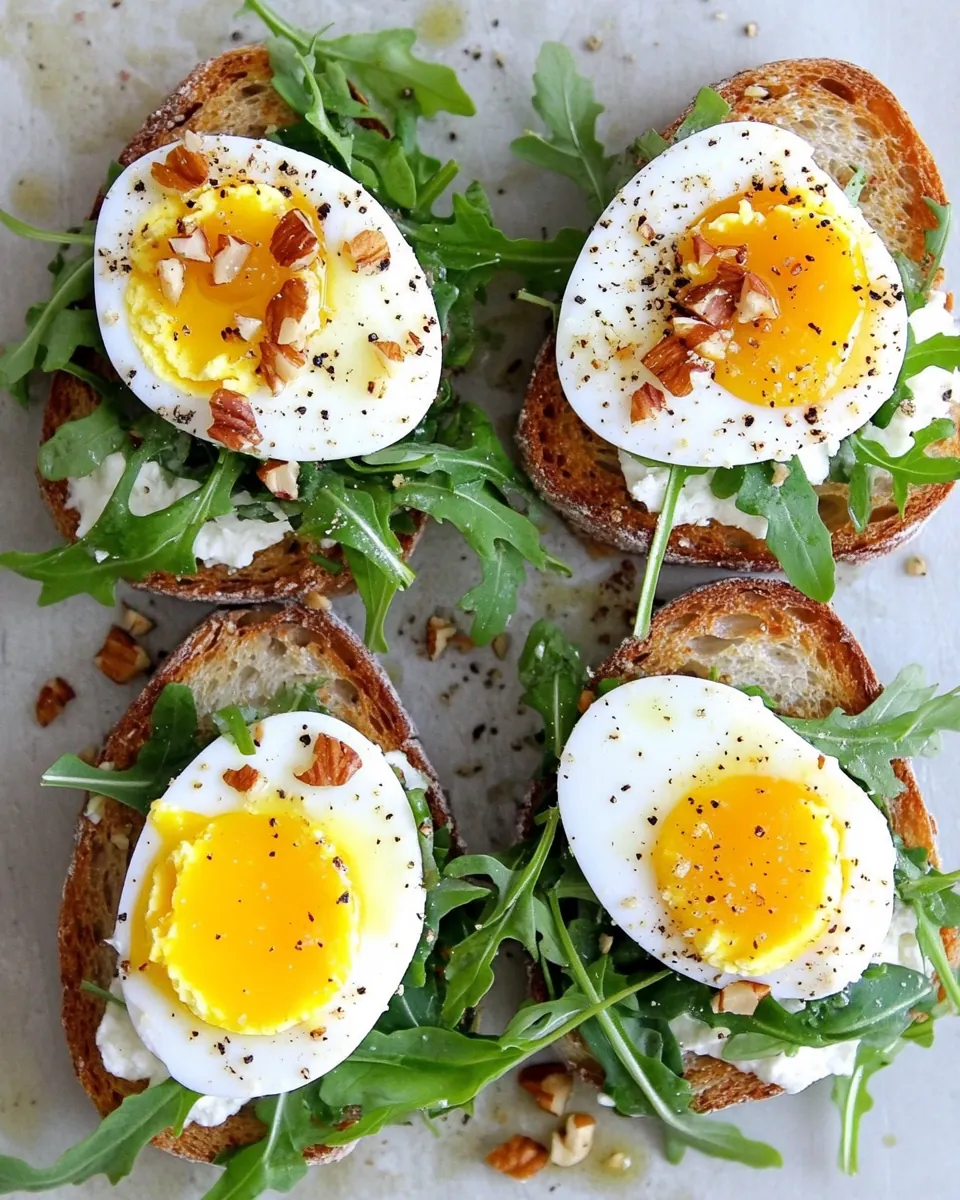
Walnut Ricotta Crostini with Arugula and Soft Boiled Eggs
Walnut Ricotta Crostini with Arugula and Soft Boiled Eggs began for me as a scratched together lunch on a sunlit afternoon when I had more curiosity than plan, and I still return to it whenever I want something bright, textured, and a little bit celebratory. I remember the crunch of toasted whole bread under my fork, the creamy whisper of ricotta cheese warmed just slightly by the residual heat, and the pop of a yolk that turned into a silky sauce across the crostini. That first bite felt like a small moment worth savoring, one that I wanted to make again and again.
Over the years I have adapted the little ritual around this plate. Sometimes I’ll set out a small board for guests, other times I’ll make a batch to graze on while I read. The interplay of the nutty walnut pieces with the soft, milky ricotta cheese and peppery arugula never gets old. When I add a soft egg, the experience shifts, turning each crostini into a comforting, slightly indulgent mouthful. I love how simple elements transform with a quick technique and a few thoughtful touches of seasoning.
Recipe Snapshot
30 mins
15 mins
15 mins
Easy
320 kcal
Italian
Gluten-Free, Low FODMAP
Appetizers
Large skillet, Food processor, Small saucepan
The Best Thing About This Walnut Ricotta Crostini with Arugula and Soft Boiled Eggs
1. Texture that sings
I adore how the recipe balances crisp and creamy. The toasted whole bread gives a sturdy crunch, while the walnut ricotta spread melts into each crevice. That contrast is what keeps me coming back, because every bite offers a new mouthfeel, and it makes this dish feel more composed than a simple open faced sandwich.
2. Flavor layers that are easy to achieve
We layer bright lemon juice into the ricotta and onto the arugula, which lifts the fat of the ricotta cheese and the oil from the drizzle. The toasted walnut pieces add warmth and a hint of bitterness that plays beautifully against the mild cheese. I like to taste as I go, and adjust salt and pepper so the final board sings without being heavy.
3. Fast but impressive
This is a recipe I reach for when I want to impress with minimal fuss. With a short sequence of toasting, pulsing, and a quick kitchen trick for soft boiling eggs, you get something that looks restaurant ready. I’ve used it for casual brunches and also plated it for guests that expected something more formal, and it always feels thoughtfully done.
4. Flexible for many occasions
I’ll make this for a weekday lunch, a light dinner, or to bring to a potluck where it disappears fast. The core components are pantry friendly, and I love that you can scale the idea for a crowd without losing the personality of the dish. It’s one of those recipes that travels well through different parts of the year.
5. Fresh ingredients make the difference
When I use good ricotta cheese and ripe, peppery arugula, the result feels effortless yet refined. A small flake of flaky sea salt at the end elevates everything, and the little drizzle of extra virgin olive oil ties the textures together. I find that this dish rewards attention to quality, even though the techniques are straightforward.
Ingredients to Make Walnut Ricotta Crostini with Arugula and Soft Boiled Eggs
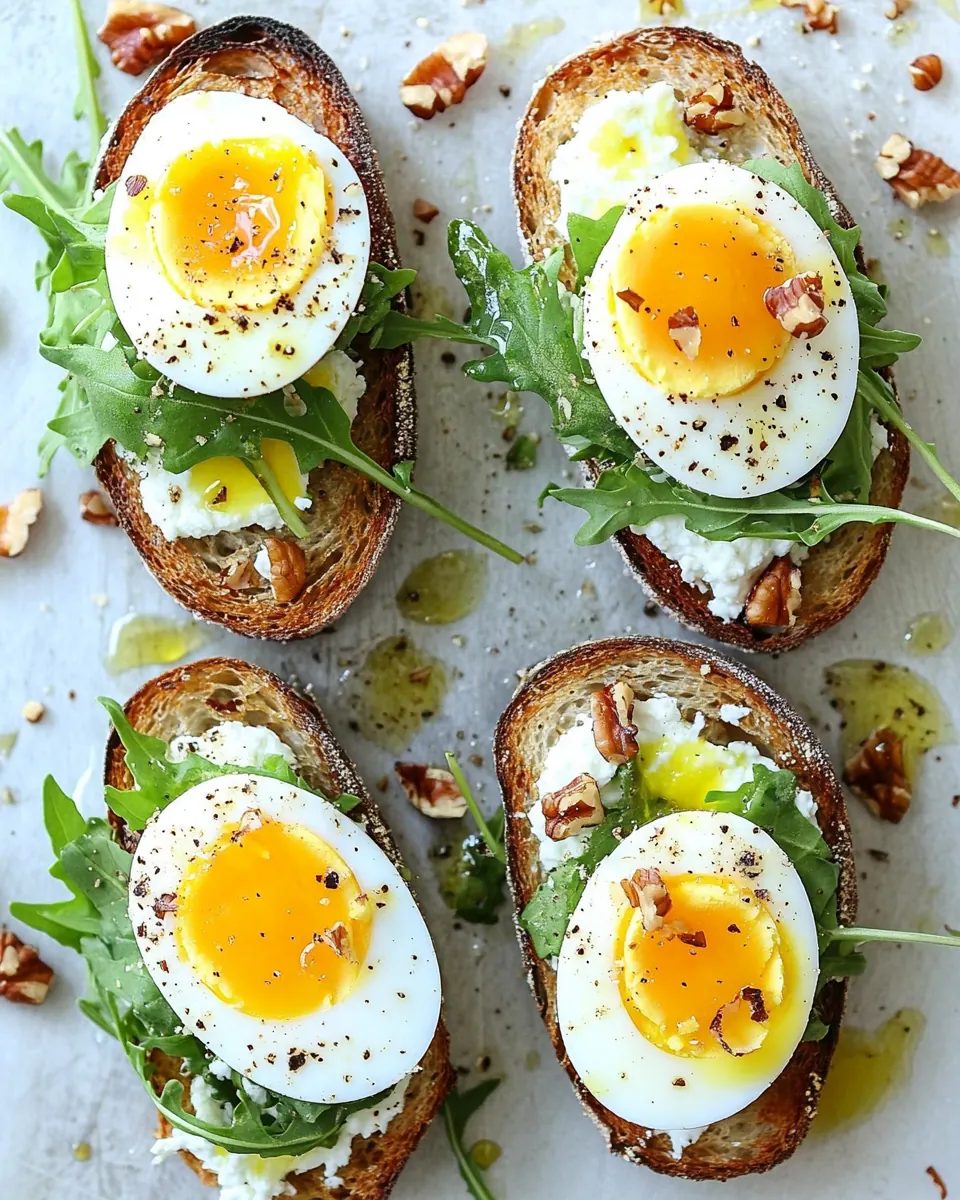
The ingredient list for Walnut Ricotta Crostini with Arugula and Soft Boiled Eggs reads like a study in balance. Each component plays a clear role, from the crunchy base to the creamy spread, the bright green bite, and the rich, runny egg. I aim for simple, honest ingredients that harmonize rather than compete, so the crostini feel layered but clean.
- 4 tablespoons unsalted butter, divided (3 tablespoons for the bread, 1 for the walnuts): Melted and divided to brown bread slices and toast walnuts, contributing richness and a silky mouthfeel to the crostini when spread on warm toast and incorporated into the walnut topping.
- Whole whole bread, cut into 6 even slices (a little larger than 1/4-inch thickness): Sliced into six even pieces to provide the crunchy base for the ricotta and toppings, offering structure and a contrast of texture to the creamy ricotta and soft eggs.
- 1/2 cup walnut pieces: Toasted briefly to deepen flavor and add crunch, supplying nutty, slightly bitter notes that complement the creamy ricotta and peppery arugula when chopped and sprinkled on the crostini.
- 1/2 cup ricotta cheese, preferably homemade: Whipped with lemon and salt to create a creamy, tangy spread that adds moisture, mild dairy richness, and a soft counterpoint to the crisp bread and crunchy walnuts.
- 2 tablespoons lemon juice, divided (1 tablespoon for the ricotta, 1 for the arugula): Divided to brighten both the ricotta and the arugula, delivering fresh acidity that balances the richness of butter and cheese while enhancing overall flavor clarity.
- Kosher salt: Used sparingly to season the ricotta, eggs, and arugula, providing necessary saltiness to build balanced flavors and bring out the natural taste of other components.
- Freshly ground black pepper: Freshly ground to finish and season the dish, adding pungent heat and aromatic complexity that lifts the ricotta and pairs well with walnuts and lemon.
- 6 cold eggs: Cooked gently to soft-boiled doneness and halved to add a silky, runny yolk element that enriches the crostini and ties together the creamy and crunchy components.
- 2 cups arugula: Tossed with lemon and a touch of olive oil to add peppery, leafy freshness that cuts through the richness and adds a bright, herbal note to each bite.
- Extra-virgin olive oil, for drizzling: Drizzled sparingly over assembled crostini to add fruitiness and a glossy finish, enhancing mouthfeel and melding flavors of cheese, egg, and greens.
- Flaky sea salt, for topping: Sprinkled at the end to provide bright, crunchy crystals that accentuate flavors and add a final textural pop to each bite of crostini.
Making Walnut Ricotta Crostini with Arugula and Soft Boiled Eggs
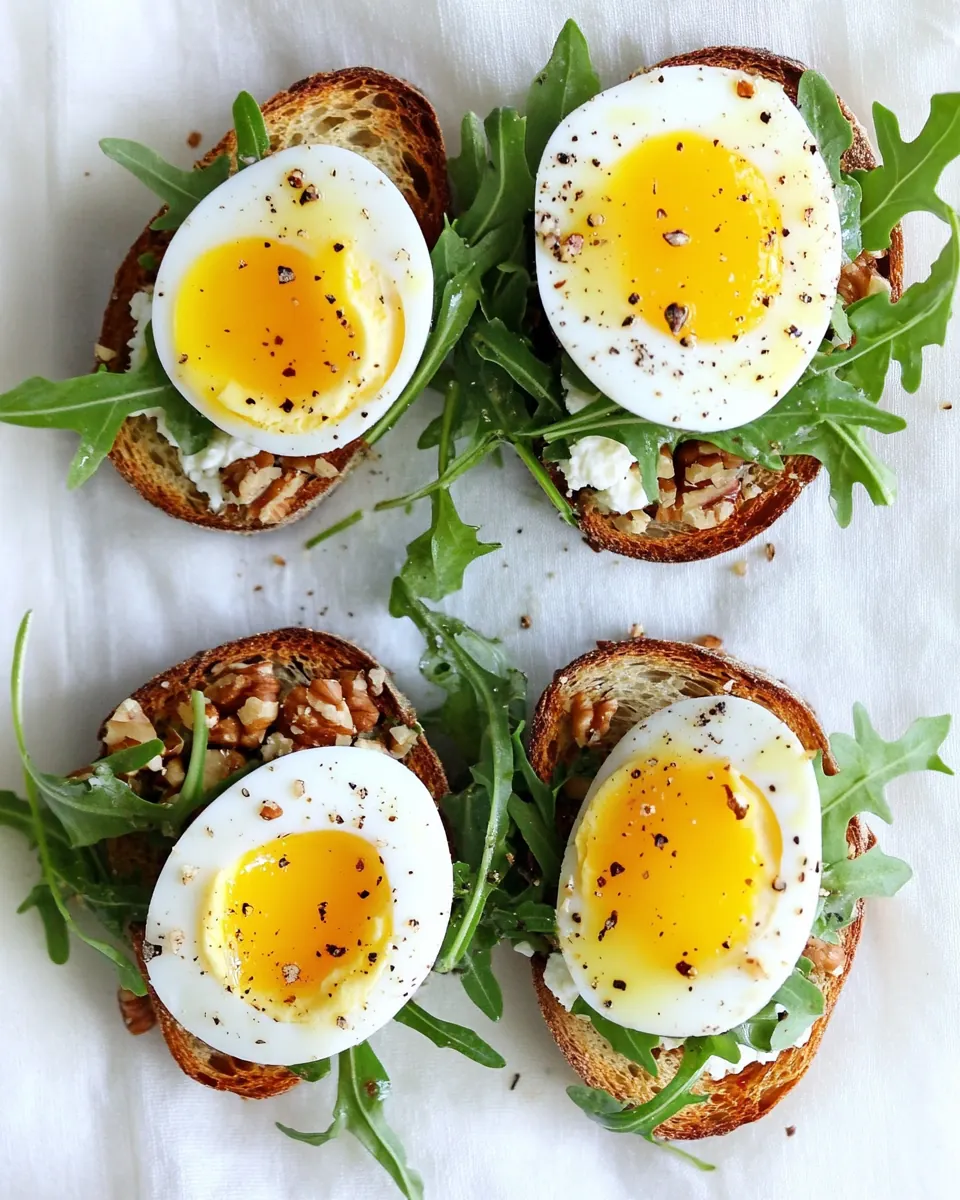
These directions are straightforward, and I like to move with rhythm. Start by toasting the whole bread and toasting the walnut pieces, then pulse the spread, coax the perfect soft egg, dress the arugula, and assemble. The technique is fast, and taking small sensory checks along the way makes a big difference.
- Warm 3 tablespoons butter in a large skillet over medium heat. Add sliced bread and toast until golden brown, flipping occasionally (about 3 minutes). Take the bread from the skillet and add the walnuts with additional 1 tablespoon of butter. Once the butter has melted, stir the walnuts to coat. Cook until lightly brown and fragrant (about 3 minutes), stirring occasionally. Set walnuts aside to cool.: The aroma of melting unsalted butter should be gentle and nutty, not browned; it creates a glossy surface that helps the whole bread toast evenly. Listen for a soft, steady sizzle as you add the slices, which signals that the pan is at the right temperature. If the butter smokes or darkens quickly, reduce the heat immediately, because burnt butter will give the bread a bitter note. A common error is crowding the pan, which causes uneven browning and steam instead of crisping, so give each slice a little space.
- In a food processor, combine cooled walnuts, ricotta cheese, 1 tablespoon lemon juice, 1/4 teaspoon kosher salt and 1/2 teaspoon freshly ground black pepper. Pulse until just smooth. Season to taste with additional kosher salt (you may need about 1/4 teaspoon more if your ricotta is unsalted).: You'll see the edges color first, then the surface become golden and slightly glossy where the butter has soaked in. The sound is a lower pitched crisping, not a fierce sizzle. Flip the slices when the underside is deeply golden to develop even texture. If a slice seems pale after a few minutes, press gently with a spatula to ensure contact with the pan. Avoid leaving them until dark brown, because the flavor shifts from toasty to bitter.
- Place eggs in a small saucepan and cover with lukewarm water. Place the saucepan over high heat and bring the water to a boil. As soon as the water starts to boil, turn the heat off and cover the saucepan. Let sit for 1 minute then transfer to the sink. Run cold water over the eggs while tipping the pan to let the hot water drain for about 30 seconds. Peel eggs under cold, running water.: When you add the walnut pieces to the warm skillet with the last tablespoon of unsalted butter , you should smell a toasty, woody fragrance almost immediately as the walnut oils bloom. Stir them so each piece gets coated, and watch them carefully because nuts can go from golden to burnt within moments. If they start smelling acrid, remove them right away. Cooling the walnuts on a plate after toasting helps preserve their crispness before pulsing with the ricotta cheese .
- Toss arugula with remaining 1 tablespoon lemon juice and a small pinch of kosher salt.: Coating the walnut pieces with melted butter deepens their sheen and flavor, and it helps the nuts bind into the ricotta cheese later. You want to see a light gloss, not pools of butter; any excess can be blotted with a paper towel. Overcooking at this stage will make the nuts oily and reduce their crunch, so remove them as soon as they become fragrant.
- To serve, spread walnut-ricotta mixture on the whole wheat crostini. Divide arugula amongst the slices. Place a soft-boiled egg on each slice then gently cut in half to break the yolk. Finish each crostini with a very light drizzle of extra-virgin olive oil, black pepper and a few flakes of sea salt.: The walnuts will darken gently and the kitchen will fill with a warm, toasted scent. Stirring occasionally ensures even color and prevents a single patch from burning. Once they are lightly browned, transfer them to cool, because warm nuts can release oil and turn the final spread too loose. A typical mistake is blending them while too hot, which can create an oily paste instead of a slightly textured mixture.
- In a food processor, combine cooled walnuts, ricotta cheese, 1 tablespoon lemon juice, 1/4 teaspoon kosher salt and 1/2 teaspoon freshly ground black pepper: The first whiff as you pulse should be nutty and bright from the lemon juice , with the creaminess of the ricotta cheese providing a soft backbone. Pulse in short bursts so you can control texture; you want mostly smooth with tiny flecks of nut for interest. If the motor runs too long in one go, the mixture can become gluey. Taste and adjust salt incrementally because the seasoning level of ricotta varies widely.
- Pulse until just smooth: You should stop when the spread holds together but still shows traces of nut texture. The spread should spread easily without being runny. Overprocessing removes the pleasant tooth of the walnut pieces , while underprocessing leaves large chunks that might fall off the crostini. If the spread seems too dry, add a few drops of extra virgin olive oil or a scant teaspoon of water.
- Season to taste with additional kosher salt: Tasting is essential here because ricotta cheese can be salty or bland depending on brand. Add small increments of kosher salt , mix, and taste again. The right balance will make the spread sing without masking the walnut's warmth. Too much salt is hard to reverse, so add cautiously.
- Place eggs in a small saucepan and cover with lukewarm water: As you set the eggs into lukewarm water, you should notice they settle quietly, and the water barely moves. Using lukewarm water helps prevent cracking from sudden temperature change. If you start with boiling water, eggs sometimes crack and leak; a gentle ramp up gives more reliable results.
- Place the saucepan over high heat and bring the water to a boil: Watch for a lively boil, where rolling bubbles rise to the surface. This stage is electric with small high pitched gurgles and steam, and once it reaches a full boil you will turn the heat off, which traps just enough residual heat to cook the centers to soft set. Leaving the pan on heat will overcook them and create chalky yolks, so timing is the control point here.
- As soon as the water starts to boil, turn the heat off and cover the saucepan: The trapped steam completes the cook gently, and this method prevents the eggs from banging around in a rolling boil which can crack them. The kitchen will smell faintly of warm, mineral water, and the shells will feel slightly firmer to the touch once cooled. Overcooking at this step leads to a dry yolk, so follow the timing.
- Let sit for 1 minute then transfer to the sink: This very brief rest stabilizes the temperature before plunging into cold water. It helps ensure the whites are set while the yolks remain plush. Rushing to peel while too hot can cause the whites to tear, so let them cool a touch before handling.
- Run cold water over the eggs while tipping the pan to let the hot water drain for about 30 seconds: The sudden cool down stops carryover cooking and firms the exterior so peeling is easier. You will hear a steady hiss of water and feel the shells cool quickly. If you skip the cold rinse, the eggs will continue to cook in residual heat and become firmer than intended.
- Peel eggs under cold, running water: Peeling under running water helps lift away stray shell pieces and keeps the surface clean. The peeled eggs should reveal a tender white and a slightly soft center. If the shell clings badly, the egg may be very fresh; an older egg peels more easily. If you encounter stubborn shell, peel a bit of the wide end first to release trapped air.
- Toss arugula with remaining 1 tablespoon lemon juice and a small pinch of kosher salt: The leaves should glisten and smell bright after the toss, with just enough acid to temper their peppery bite. This light dressing softens the leaves slightly and helps them sit neatly on the crostini without sliding. Overdressing will wilt the arugula too much, so keep it minimal.
- To serve, spread walnut ricotta mixture on the whole wheat crostini: The spread should cling to the warm, toasted whole bread , filling its nooks without sliding off. The aroma will be nut forward with a creamy undertone. If the bread is too hot, the spread may melt and become sloppy, so allow it to cool briefly if necessary.
- Divide arugula amongst the slices: Nest the dressed arugula gently so it provides fresh contrast and a bright visual pop. Pile it modestly to keep each crostini easy to pick up. Avoid overfilling which makes them hard to eat neatly.
- Place a soft boiled egg on each slice then gently cut in half to break the yolk: As you cut through the egg , the yolk should spill slowly like a golden ribbon over the walnut ricotta and arugula . The sound is a soft whisper as the knife passes through, and the resulting sheen is irresistible. If the yolk is fully set, the egg was overcooked; if it pours wildly like a runny sauce, it may have been undercooked for this assembly style.
- Finish each crostini with a very light drizzle of extra virgin olive oil, black pepper and a few flakes of sea salt: The final drizzle adds fruitiness and a glossy finish, while the freshly ground black pepper and flaky sea salt introduce aromatic lift and crunch. These last touches should be sparing, used to highlight rather than mask the components. Overdoing the oil or salt can flatten the balance you worked to create.
Customization Ideas
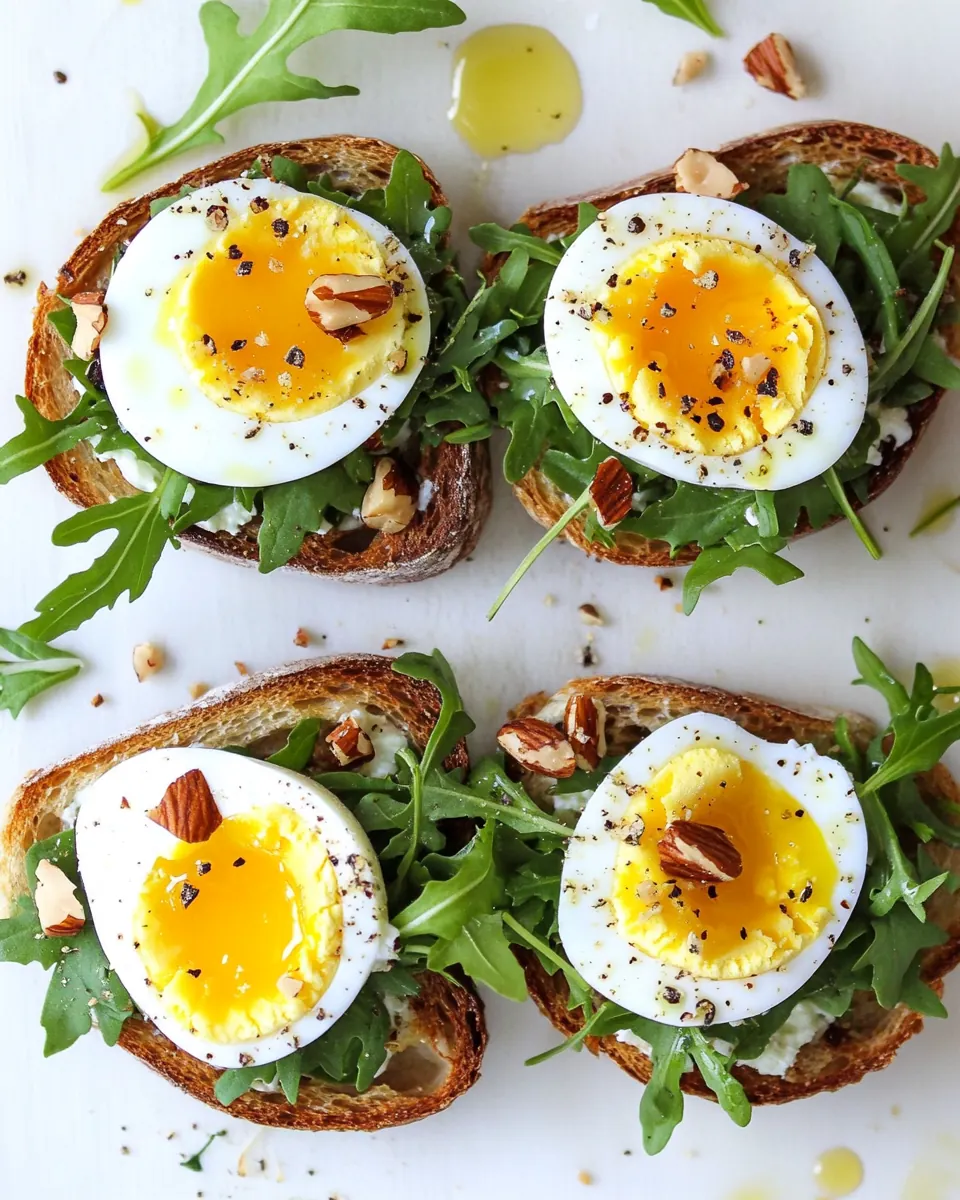
I enjoy tweaking small elements to fit mood or pantry. Below are ideas to customize texture, temperature, and presentation without changing the dish’s essence. Each tip starts with a bold phrase for clarity and is meant to be practical and immediate.
- Boost nut texture by pulsing the walnuts less for more crunch, leaving discernible pieces that contrast the creamy ricotta cheese.
- Brighten the ricotta by adding a touch more lemon juice if your ricotta tastes too mild, balancing the richness of the walnut pieces.
- Make the crostini heartier by choosing a denser slice of whole bread which holds up better under the walnut ricotta and soft egg.
- Control the pepperiness by adjusting the amount of arugula; a smaller pile softens the bite for sensitive eaters.
- Serve warm or room temperature by toasting the whole bread just before assembly so the spread warms slightly without melting.
- Finish with a delicate oil by using a fruity extra virgin olive oil and apply it sparingly to avoid overpowering the walnut and cheese flavors.
What Goes Well With This Walnut Ricotta Crostini with Arugula and Soft Boiled Eggs
This dish is versatile for many occasions, from a light lunch to an elegant starter. Think about serving it with simple, complementary sides and choosing the right moment to highlight the fresh textures. I often pair it with seasonal produce and relaxed company to let conversation and small bites flow together.
- Light salad pairing A side of mixed greens dressed lightly with lemon juice and extra virgin olive oil complements the crostini and keeps the meal feeling fresh for lunch gatherings.
- Soup as a duo A clear vegetable broth or a simple tomato based soup can warm up the table without stealing the spotlight from the crostini.
- Brunch occasion Serve these crostini as part of a brunch spread alongside roasted vegetables and fruit, they work especially well when you want a savory counterpoint to sweeter items.
- Evening appetizer For a relaxed dinner party, plate two crostini per guest with a small side of arugula and a lemon wedge so people can top to taste.
- Storage tips Keep the walnut ricotta refrigerated in an airtight container for up to two days; assemble crostini just before serving to preserve crispness.
- Seasonal pairing In spring, emphasize peppery arugula and bright lemon juice, while in cooler months you might opt for heartier whole bread slices to make it feel more substantial.
FAQ
Conclusion
This recipe stands out because it combines simple pantry ingredients into a layered bite that is both textural and flavorful. The contrast of crunchy toasted whole bread, nutty walnut pieces, creamy ricotta cheese, peppery arugula, and a soft, runny egg makes for a memorable mouthful. I encourage you to give it a try the next time you want an elegant yet effortless plate to share, and enjoy how small techniques like toasting and timing elevate everyday ingredients into something special. Take pleasure in the textures and the bright finishing touches, and let this become one of your go to recipes for light meals and entertaining.
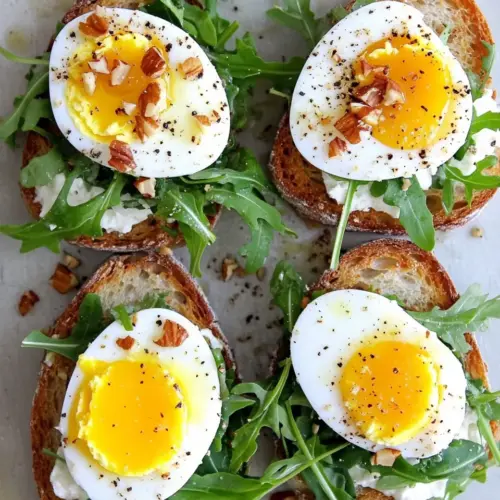
Walnut Ricotta Crostini with Arugula and Soft Boiled Eggs
Equipment
- Large Skillet
- Food Processor
- Small Saucepan
Ingredients
- 4 tablespoons unsalted butter, divided (3 tablespoons for the bread, 1 for the walnuts) Melted and divided to brown bread slices and toast walnuts, contributing richness and a silky mouthfeel to the crostini when spread on warm toast and incorporated into the walnut topping.
- Whole whole bread, cut into 6 even slices (a little larger than 1/4-inch thickness) Sliced into six even pieces to provide the crunchy base for the ricotta and toppings, offering structure and a contrast of texture to the creamy ricotta and soft eggs.
- 1/2 cup walnut pieces Toasted briefly to deepen flavor and add crunch, supplying nutty, slightly bitter notes that complement the creamy ricotta and peppery arugula when chopped and sprinkled on the crostini.
- 1/2 cup ricotta cheese, preferably homemade Whipped with lemon and salt to create a creamy, tangy spread that adds moisture, mild dairy richness, and a soft counterpoint to the crisp bread and crunchy walnuts.
- 2 tablespoons lemon juice, divided (1 tablespoon for the ricotta, 1 for the arugula) Divided to brighten both the ricotta and the arugula, delivering fresh acidity that balances the richness of butter and cheese while enhancing overall flavor clarity.
- Kosher salt Used sparingly to season the ricotta, eggs, and arugula, providing necessary saltiness to build balanced flavors and bring out the natural taste of other components.
- Freshly ground black pepper Freshly ground to finish and season the dish, adding pungent heat and aromatic complexity that lifts the ricotta and pairs well with walnuts and lemon.
- 6 cold eggs Cooked gently to soft-boiled doneness and halved to add a silky, runny yolk element that enriches the crostini and ties together the creamy and crunchy components.
- 2 cups arugula Tossed with lemon and a touch of olive oil to add peppery, leafy freshness that cuts through the richness and adds a bright, herbal note to each bite.
- Extra-virgin olive oil, for drizzling Drizzled sparingly over assembled crostini to add fruitiness and a glossy finish, enhancing mouthfeel and melding flavors of cheese, egg, and greens.
- Flaky sea salt, for topping Sprinkled at the end to provide bright, crunchy crystals that accentuate flavors and add a final textural pop to each bite of crostini.
Instructions
- Warm 3 tablespoons butter in a large skillet over medium heat. Add sliced bread and toast until golden brown, flipping occasionally (about 3 minutes). Take the bread from the skillet and add the walnuts with additional 1 tablespoon of butter. Once the butter has melted, stir the walnuts to coat. Cook until lightly brown and fragrant (about 3 minutes), stirring occasionally. Set walnuts aside to cool.: The aroma of melting unsalted butter should be gentle and nutty, not browned; it creates a glossy surface that helps the whole bread toast evenly. Listen for a soft, steady sizzle as you add the slices, which signals that the pan is at the right temperature. If the butter smokes or darkens quickly, reduce the heat immediately, because burnt butter will give the bread a bitter note. A common error is crowding the pan, which causes uneven browning and steam instead of crisping, so give each slice a little space.
- In a food processor, combine cooled walnuts, ricotta cheese, 1 tablespoon lemon juice, 1/4 teaspoon kosher salt and 1/2 teaspoon freshly ground black pepper. Pulse until just smooth. Season to taste with additional kosher salt (you may need about 1/4 teaspoon more if your ricotta is unsalted).: You'll see the edges color first, then the surface become golden and slightly glossy where the butter has soaked in. The sound is a lower pitched crisping, not a fierce sizzle. Flip the slices when the underside is deeply golden to develop even texture. If a slice seems pale after a few minutes, press gently with a spatula to ensure contact with the pan. Avoid leaving them until dark brown, because the flavor shifts from toasty to bitter.
- Place eggs in a small saucepan and cover with lukewarm water. Place the saucepan over high heat and bring the water to a boil. As soon as the water starts to boil, turn the heat off and cover the saucepan. Let sit for 1 minute then transfer to the sink. Run cold water over the eggs while tipping the pan to let the hot water drain for about 30 seconds. Peel eggs under cold, running water.: When you add the walnut pieces to the warm skillet with the last tablespoon of unsalted butter , you should smell a toasty, woody fragrance almost immediately as the walnut oils bloom. Stir them so each piece gets coated, and watch them carefully because nuts can go from golden to burnt within moments. If they start smelling acrid, remove them right away. Cooling the walnuts on a plate after toasting helps preserve their crispness before pulsing with the ricotta cheese .
- Toss arugula with remaining 1 tablespoon lemon juice and a small pinch of kosher salt.: Coating the walnut pieces with melted butter deepens their sheen and flavor, and it helps the nuts bind into the ricotta cheese later. You want to see a light gloss, not pools of butter; any excess can be blotted with a paper towel. Overcooking at this stage will make the nuts oily and reduce their crunch, so remove them as soon as they become fragrant.
- To serve, spread walnut-ricotta mixture on the whole wheat crostini. Divide arugula amongst the slices. Place a soft-boiled egg on each slice then gently cut in half to break the yolk. Finish each crostini with a very light drizzle of extra-virgin olive oil, black pepper and a few flakes of sea salt.: The walnuts will darken gently and the kitchen will fill with a warm, toasted scent. Stirring occasionally ensures even color and prevents a single patch from burning. Once they are lightly browned, transfer them to cool, because warm nuts can release oil and turn the final spread too loose. A typical mistake is blending them while too hot, which can create an oily paste instead of a slightly textured mixture.
- In a food processor, combine cooled walnuts, ricotta cheese, 1 tablespoon lemon juice, 1/4 teaspoon kosher salt and 1/2 teaspoon freshly ground black pepper: The first whiff as you pulse should be nutty and bright from the lemon juice , with the creaminess of the ricotta cheese providing a soft backbone. Pulse in short bursts so you can control texture; you want mostly smooth with tiny flecks of nut for interest. If the motor runs too long in one go, the mixture can become gluey. Taste and adjust salt incrementally because the seasoning level of ricotta varies widely.
- Pulse until just smooth: You should stop when the spread holds together but still shows traces of nut texture. The spread should spread easily without being runny. Overprocessing removes the pleasant tooth of the walnut pieces , while underprocessing leaves large chunks that might fall off the crostini. If the spread seems too dry, add a few drops of extra virgin olive oil or a scant teaspoon of water.
- Season to taste with additional kosher salt: Tasting is essential here because ricotta cheese can be salty or bland depending on brand. Add small increments of kosher salt , mix, and taste again. The right balance will make the spread sing without masking the walnut's warmth. Too much salt is hard to reverse, so add cautiously.
- Place eggs in a small saucepan and cover with lukewarm water: As you set the eggs into lukewarm water, you should notice they settle quietly, and the water barely moves. Using lukewarm water helps prevent cracking from sudden temperature change. If you start with boiling water, eggs sometimes crack and leak; a gentle ramp up gives more reliable results.
- Place the saucepan over high heat and bring the water to a boil: Watch for a lively boil, where rolling bubbles rise to the surface. This stage is electric with small high pitched gurgles and steam, and once it reaches a full boil you will turn the heat off, which traps just enough residual heat to cook the centers to soft set. Leaving the pan on heat will overcook them and create chalky yolks, so timing is the control point here.
- As soon as the water starts to boil, turn the heat off and cover the saucepan: The trapped steam completes the cook gently, and this method prevents the eggs from banging around in a rolling boil which can crack them. The kitchen will smell faintly of warm, mineral water, and the shells will feel slightly firmer to the touch once cooled. Overcooking at this step leads to a dry yolk, so follow the timing.
- Let sit for 1 minute then transfer to the sink: This very brief rest stabilizes the temperature before plunging into cold water. It helps ensure the whites are set while the yolks remain plush. Rushing to peel while too hot can cause the whites to tear, so let them cool a touch before handling.
- Run cold water over the eggs while tipping the pan to let the hot water drain for about 30 seconds: The sudden cool down stops carryover cooking and firms the exterior so peeling is easier. You will hear a steady hiss of water and feel the shells cool quickly. If you skip the cold rinse, the eggs will continue to cook in residual heat and become firmer than intended.
- Peel eggs under cold, running water: Peeling under running water helps lift away stray shell pieces and keeps the surface clean. The peeled eggs should reveal a tender white and a slightly soft center. If the shell clings badly, the egg may be very fresh; an older egg peels more easily. If you encounter stubborn shell, peel a bit of the wide end first to release trapped air.
- Toss arugula with remaining 1 tablespoon lemon juice and a small pinch of kosher salt: The leaves should glisten and smell bright after the toss, with just enough acid to temper their peppery bite. This light dressing softens the leaves slightly and helps them sit neatly on the crostini without sliding. Overdressing will wilt the arugula too much, so keep it minimal.
- To serve, spread walnut ricotta mixture on the whole wheat crostini: The spread should cling to the warm, toasted whole bread , filling its nooks without sliding off. The aroma will be nut forward with a creamy undertone. If the bread is too hot, the spread may melt and become sloppy, so allow it to cool briefly if necessary.
- Divide arugula amongst the slices: Nest the dressed arugula gently so it provides fresh contrast and a bright visual pop. Pile it modestly to keep each crostini easy to pick up. Avoid overfilling which makes them hard to eat neatly.
- Place a soft boiled egg on each slice then gently cut in half to break the yolk: As you cut through the egg , the yolk should spill slowly like a golden ribbon over the walnut ricotta and arugula . The sound is a soft whisper as the knife passes through, and the resulting sheen is irresistible. If the yolk is fully set, the egg was overcooked; if it pours wildly like a runny sauce, it may have been undercooked for this assembly style.
- Finish each crostini with a very light drizzle of extra virgin olive oil, black pepper and a few flakes of sea salt: The final drizzle adds fruitiness and a glossy finish, while the freshly ground black pepper and flaky sea salt introduce aromatic lift and crunch. These last touches should be sparing, used to highlight rather than mask the components. Overdoing the oil or salt can flatten the balance you worked to create.
Notes
- Boost nut texture by pulsing the walnuts less for more crunch, leaving discernible pieces that contrast the creamy ricotta cheese.
- Brighten the ricotta by adding a touch more lemon juice if your ricotta tastes too mild, balancing the richness of the walnut pieces.
- Make the crostini heartier by choosing a denser slice of whole bread which holds up better under the walnut ricotta and soft egg.
- Control the pepperiness by adjusting the amount of arugula; a smaller pile softens the bite for sensitive eaters.
- Serve warm or room temperature by toasting the whole bread just before assembly so the spread warms slightly without melting.
- Finish with a delicate oil by using a fruity extra virgin olive oil and apply it sparingly to avoid overpowering the walnut and cheese flavors.
