Veggie Fajita Stuffed Sweet Potatoes
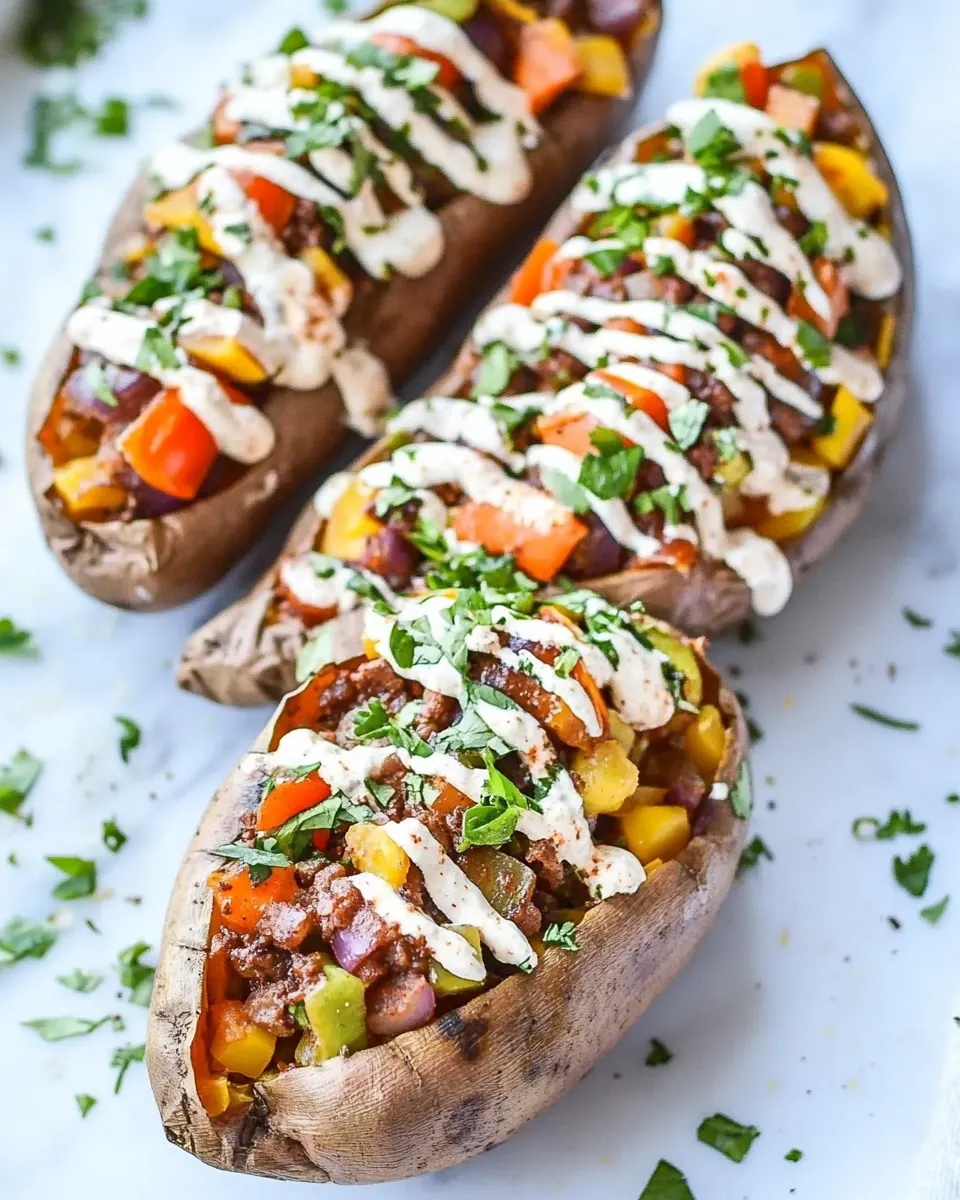
Veggie Fajita Stuffed Sweet Potatoes quietly became my go to weeknight fix when I needed something cozy, colorful, and satisfying without turning on a grill or fussing over complicated steps. The first time I made this, I was coming home from a long day and wanted a meal that felt like a celebration but still landed on the table in under an hour and a half. I loved how the soft, caramelized flesh of the sweet potatoes held a vibrant pile of sizzling red bell pepper, yellow bell pepper, and portobello mushrooms, and that contrast made each bite interesting and comforting.
Since then I’ve tweaked the flavors: a bright squeeze of lime here, a whisper of chipotle powder there, and a creamy drizzle to cool the spice. The team of simple pantry players like olive oil, garlic, and a pinch of salt pulls everything together, while fresh bits like cherry tomatoes and cilantro keep it lively. I love serving these when friends drop by because they look impressive, but they are forgiving to make when life is a mess.
Recipe Snapshot
1 hr 15 mins
15 mins
60 mins
Medium
350 kcal
Mexican
Vegan, Gluten-Free
Dinner
Baking sheet, Foil, Large bowl, Measuring cup, Large non stick or cast iron skillet, Whisk
The Beauty of This Veggie Fajita Stuffed Sweet Potatoes
Bold, layered flavor without fuss
I often reach for Veggie Fajita Stuffed Sweet Potatoes because the marinade and quick sear turn simple vegetables into something smoky and deeply seasoned. The balance of sweet, tangy, and smoky notes means you get complexity from minimal effort, and I enjoy watching people react to the depth of flavor.
Comforting, but still bright
These potatoes feel indulgent thanks to the creamy chipotle drizzle and crumbled queso fresco, yet the fresh salsa and lime keep each bite from feeling heavy. I love that contrast, it’s one reason I return to this bowl again and again.
Flexible enough for weeknights or company
I’ve made this for solo dinners and scaled up easily for guests. The components can be prepped ahead, and the assembly is satisfyingly quick. When I need a last minute dinner that still impresses, this recipe is my fallback.
Vegetarian focus with hearty texture
Because this recipe centers on robust vegetables like portobello mushrooms and sweet potatoes, it delivers a meaty mouthfeel that satisfies even when I skip animal proteins. The stuffed potatoes hold up well and travel nicely for potlucks, which makes them a joy to bring along.
Bright finishing touches that elevate every bite
The final touches, from grilled corn to a squeeze of fresh lime, add textural and flavor contrasts that make it feel thoughtfully plated. I find those small moments of brightness keep people coming back for seconds.
What You’ll Need for Veggie Fajita Stuffed Sweet Potatoes
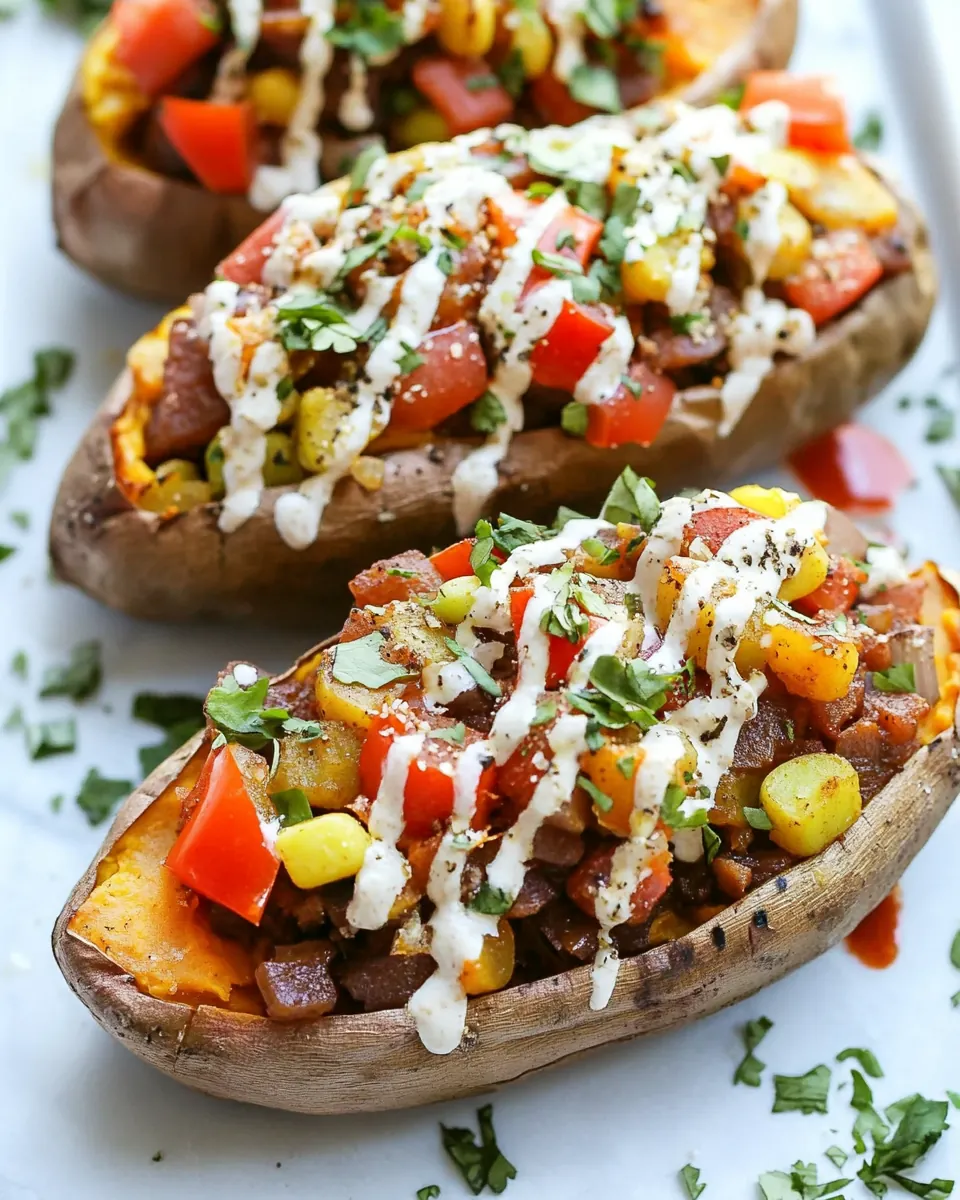
These ingredients are intentionally straightforward, designed to play off each other. The sweet potatoes act as the cozy base, while the marinated vegetables bring smoke, acid, and caramelized sweetness. The chipotle crema and crumbled queso fresco finish the dish with creamy tang and soft saltiness, and fresh elements like cilantro and lime brighten each forkful. Together, they create a balanced plate that feels both comforting and lively.
- 4 sweet potatoes: Bake until soft and caramelized to provide a sweet, sturdy base that holds the filling and contrasts savory toppings. Pierce and roast whole to develop deep flavor and fluffy interior ideal for stuffing. Serve warm to complement the spicy, tangy fajita vegetables and creamy sauces.
- 1/2 red bell pepper, thinly sliced: Slice thinly and sauté to add crisp, sweet-savory crunch and vibrant color to the fajita mix. Cook briefly over medium-high heat to retain texture and bright flavor. Combine with other peppers and onions for classic fajita aromatics.
- 1/2 yellow bell pepper, thinly sliced: Slice thinly and sauté to contribute mild sweetness and appealing color contrast in the vegetable medley. Cook quickly to keep a slight bite while melding flavors with spices and mushrooms. Layer into the stuffing for balanced taste and texture.
- 1/2 red onion, thinly sliced: Slice thinly and caramelize slightly to bring savory sweetness and aromatic depth to the fajita filling. Cook until softened but still slightly crisp to maintain textural variety. Pair with peppers and mushrooms for a well-rounded vegetable base.
- 1 cup sliced portobello mushrooms: Slice and sauté to provide meaty, umami-rich texture that mimics traditional fajita proteins. Cook mushrooms until golden to concentrate flavor and absorb the marinade or spices. Add to the pepper–onion mix for satisfying chew and depth.
- 1/4 cup olive oil: Whisk into dressings or use for sautéing to coat and cook vegetables evenly while adding rich mouthfeel. Balance acidic lime juice and spices in marinades and keep vegetables from sticking. Use sparingly to avoid greasiness while enhancing flavor delivery.
- 2 tablespoons fresh lime juice: Squeeze over the vegetables or finished potatoes to brighten flavors with fresh acidity and lift the overall dish. Mix into marinades to tenderize and balance sweetness from sugar. Add just before serving to preserve its zesty character.
- 1 tablespoon brown sugar: Dissolve into marinades to introduce caramelized sweetness that balances heat and acidity in the fajita mixture. Sprinkle sparingly to avoid overpowering while enhancing browning during cooking. Combine with spices for rounded, complex flavor.
- 1 teaspoon worcestershire sauce, omit for vegetarian: Stir into marinades to add savory, slightly tangy depth; omit for vegetarian to keep the dish meat-free. Include only if not avoiding fish-derived ingredients to boost umami complexity. Use small amounts so it complements rather than dominates.
- 1/2 teaspoon cumin: Sprinkle into the seasoning mix to contribute earthy, warm notes typical of Mexican-inspired dishes. Pair with chili powder and cumin to create a classic fajita spice profile. Measure carefully because its flavor can become pronounced.
- 1/2 teaspoon chili powder: Blend into the spice mix to provide gentle heat and a distinct chili flavor that complements the other seasonings. Balance with brown sugar and lime to avoid excessive spiciness. Use to season vegetables before sautéing for integrated taste.
- 1/4 teaspoons smoked paprika: Add a smoky layer with subtle sweetness to the spice blend, enhancing roasted depth in the vegetables. Use in small quantity to avoid overpowering more delicate flavors. Combine with chipotle for complex smokiness.
- 1/4 teaspoon chipotle chili powder: Incorporate for added smoky heat and complexity that elevates the fajita profile with a lingering warmth. Mix with smoked paprika and cumin for a cohesive chili-forward seasoning. Use sparingly as chipotle powder is potent.
- 1/4 teaspoons salt: Season sparingly to enhance overall flavor and balance the sweeter elements without masking spices. Dissolve into marinades or sprinkle on vegetables prior to cooking. Adjust to taste to maintain harmonious seasoning.
- 1/4 teaspoon black pepper: Grind into the spice mixture to add sharp, aromatic bite that complements richer flavors and lifts the dish. Use alongside salt to round out seasoning and emphasize savory notes. Add incrementally to control peppery intensity.
- 2 garlic cloves, minced: Mince and sauté to release pungent, aromatic compounds that deepen savory flavors in the fajita filling. Add early in cooking to mellow raw sharpness and infuse the oil with garlicky perfume. Use to enhance umami and complexity.
- 1/2 cup cooked corn, I like grilled or roasted: Fold into the filling to provide bursts of sweet, smoky kernels and pleasant textural contrast to soft potato flesh. Prefer grilling or roasting corn to intensify sweetness and add charred notes. Scatter into the stuffing for color and crunch.
- salsa of your choice, I used a verde and a pineapple: Spoon over the assembled potatoes to introduce zesty, saucy brightness and complementary flavor variations depending on choice. Use verde or pineapple-infused salsas to add tang, sweetness, or heat tailored to preference. Provide moisture and acidity to balance richness.
- 1/2 cup queso fresco cheese: Crumble on top as a salty, milky finishing cheese that adds creaminess and a slight tang to each bite. Sprinkle generously to mimic traditional Mexican queso experience without melting completely. Contrast against warm vegetables and sauces for texture.
- 1/2 cup cherry tomatoes, quartered: Quarter and mix in to bring juicy acidity and fresh sweetness that lightens the overall dish and adds vibrant bursts in each bite. Use ripe cherry tomatoes for best texture and flavor. They also add visual brightness to the filling.
- 1/2 jalapeno pepper, diced: Dice and include for variable heat and bright, vegetal heat; remove seeds to reduce spiciness if desired. Add sparingly to control overall kick and provide small spicy pops among the other fillings. Handle carefully to avoid overwhelming milder palate.
- 2 tablespoons diced sweet onion: Dice and sauté or scatter fresh to add mild sweetness and crisp bite distinct from red onion, enhancing complexity in the topping. Use to provide subtle background flavor and balance bolder ingredients like jalapeno and salsa. Keep small for even distribution.
- 2 tablespoons chopped fresh cilantro: Chop and sprinkle as a finishing herb to add bright, citrusy-green aroma that ties together the lime and spice elements. Use fresh cilantro to elevate freshness and provide color contrast. Add at the end to preserve its vibrant flavor.
- 1 lime, juiced: Squeeze over the finished dish to intensify acidity and brighten all flavors while complementing cilantro and other citrus notes. Use freshly juiced lime for best brightness and aroma. Adjust amount to taste to maintain balance with other seasonings.
- a pinch of salt: Add a tiny pinch to finish and harmonize flavors by subtly enhancing savory notes without salting aggressively. Use at the end to tweak seasoning after tasting. Be cautious, as repeated increments can quickly increase salinity.
- 3 tablespoons greek yogurt: Spoon dollops on top to introduce tangy creaminess that cools spicy components and adds richness without overpowering. Use Greek yogurt as a lighter alternative to sour cream while contributing protein and silkiness. Swirl into sauces or serve alongside.
- 1/3 cup half and half: Stir into dressings or sauces to add gentle creaminess and mellow acidity while thinning yogurt-based toppings as needed. Incorporate to adjust texture and richness of the adobo–lime cream. Use small quantities to maintain desired consistency.
- 1 tablespoon adobo sauce, from a can of chipotles in adobo: Mix in to provide smoky, tangy depth from chipotle preserved in adobo, enriching the sauce with heat and complexity. Blend with yogurt, lime, and half-and-half for a creamy, spicy drizzle. Use measured amounts to control spice level.
- juice of half a lime: Squeeze for a focused hit of citrus acidity to brighten sauces or dressings and tie together zesty flavors. Use interior juice to avoid bitterness and add fresh lime aromatics. Balance with other acidic elements for a lively finish.
- zest of half a lime: Zest finely to impart concentrated citrus oils that add fragrant brightness without additional acidity. Grate just the colored outer peel for the most aromatic result and avoid bitter pith. Sprinkle into sauces or over finished potatoes for an immediate aroma lift.
- 1/8 teaspoons salt: Add a very small pinch to season sauces or finishing garnishes and subtly amplify other flavors without salting too heavily. Use cautiously since multiple small salts are already present in the recipe. Taste as you go to achieve balance.
Directions for Veggie Fajita Stuffed Sweet Potatoes
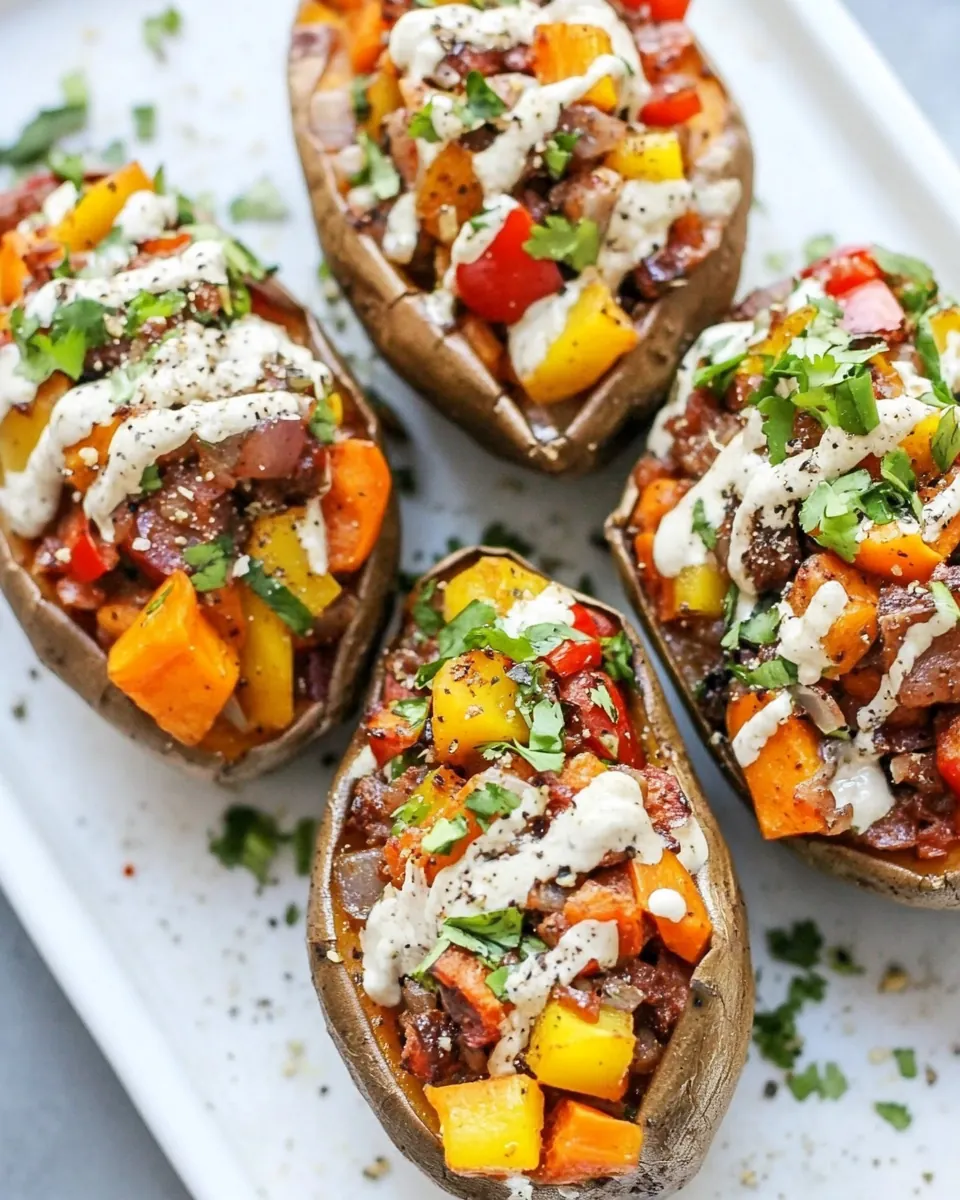
These directions move in a clear sequence from baking the base to transforming the vegetables into a richly flavored filling, then finishing with bright, cooling accents. Follow the sensory cues and timing here, and you will end up with stuffed potatoes that balance soft, smoky, and tangy notes.
- Preheat the oven to 400 degrees F. Poke the sweet potatoes all over with a fork and place them on a baking sheet that is lined with foil. Bake the potatoes for 45 to 60 minutes, or until the insides are soft.: As the oven warms to 400 degrees F you will begin to smell the faint caramel scent of the skin as it dries and tightens, a gentle sign that the internal starches are concentrating. When you poke the sweet potatoes with a fork, you want the tines to slide through with little resistance, which tells you the center is soft and velvety. The foil lined baking sheet helps catch any drips and makes cleanup painless, and it also slightly reflects heat back to the skins so they crisp a touch. A common misstep here is removing the potatoes too early, leaving a chalky center; if a fork meets resistance, give them another 10 to 15 minutes and test again. Visually the skins will dull and wrinkle slightly, and the potatoes will feel noticeably lighter when they are done because moisture has evaporated.
- While the potatoes are baking, add the peppers, onions and mushrooms to a bowl. In another bowl or large measuring cup, whisk together the olive oil, lime juice, sugar, worcestershire, cumin, paprika, chili powders, salt, pepper and garlic. Pour the marinade over the peppers and mushrooms. Let sit for 30 minutes.: As the vegetables rest in the marinade the olive oil and spices coat each piece, and you will notice the aroma of garlic and toasted cumin bloom. This pause allows acid to begin softening the edges of the peppers and for seasoning to permeate the portobello mushrooms , which helps them brown more evenly when seared. Stir the bowl occasionally so the liquid distributes, and if you find the mushrooms exuding too much moisture, drain a little to avoid a soggy sear later. An easy error is under marinating, which can result in flat tasting vegetables, so give them the full half hour when you can.
- Note: (Yes, I am doing something terrible here and advising you to add the mushrooms to a marinade with salt. If you reeeeally don’t want to do that (the mushrooms may get slightly tough but I haven’t experienced that with this recipe), make the marinade and leave out the salt. Put the mushrooms in a separate bowl and cover them with a bit of salt-less marinade. Then cook as advised.): (Yes, I am doing something terrible here and advising you to add the mushrooms to a marinade with salt. If you reeeeally don’t want to do that (the mushrooms may get slightly tough but I haven’t experienced that with this recipe), make the marinade and leave out the salt. Put the mushrooms in a separate bowl and cover them with a bit of salt-less marinade. Then cook as advised.) : This aside explains a delicate textural choice, because mushrooms can sometimes firm up when salted early. If you prefer a softer mushroom, separate it from the salted marinade and only add salt later, which preserves a more tender texture. Watch the mushrooms as they sit; if they begin to release a lot of liquid, blot them lightly before searing to preserve caramelization. People sometimes panic and over rinse, which loses flavor, so gently blot instead of washing.
- Heat a large non-stick or cast iron skillet over medium-high heat. Add the peppers, onions and mushrooms (either together or separately) and cook, stirring often, until softened and golden. I don’t add any oil to the pan since the marinade sticks to some of the peppers. Feel free to add a tablespoon or so to the skillet if you want.: When the skillet first hits medium-high the metal will shimmer and you may hear a faint sizzle when vegetables touch the surface, a reliable cue that browning will start. As the vegetables hit the pan the sound turns into a lively sizzling, and you will see edges go from glossy to matte and then to little caramelized char spots that add deep flavor. Stir frequently to prevent burning while still allowing some contact for browning, which creates the savory complexity in the filling. If you see a lot of liquid pooling, increase heat slightly to encourage evaporation, or remove the vegetables briefly to allow the pan to regain temperature. A typical mistake is crowding the pan, which causes steaming rather than searing; work in batches if your skillet is small.
- Slice open the sweet potatoes and mash some of the flesh inside. If you’d like, you can even sprinkle some seasoning in there! Cover the potatoes with the peppers, onions and mushrooms. Add on the corn and salsas of your choice, along with the pico. Drizzle with the chipotle crema. Top with crumbled queso fresco.: When you slice the roasted sweet potatoes open steam will whisper up and the interior will be soft and pillowy; using a fork to mash gently creates texture and makes a cozy bed for the filling. The contrast between the silky potato and the crisped vegetables is what makes each bite exciting, and the roasted corn adds kernels of sugary pop that cut through the creaminess. Spoon on salsas that offer a balance of acid and fruitiness, and finish with the smoky cilantro scented crema for a cool, spicy counterpoint. Watch portion sizes when assembling; piling too high makes them hard to eat neatly. Overloading can also dilute the balance of textures.
- Combine the tomatoes, peppers, onion and cilantro in a bowl. Toss with the lime juice and salt.: As you mix the pico the colors will pop and the juices will begin to mingle, brightening the entire dish. The fresh lime juice and pinch of salt pull the components together and create a lively contrast to the cooked vegetables. Taste and adjust the salt so it lifts the tomatoes without overwhelming the cilantro. A common misstep is adding too much salt at once; season gradually and taste.
- Combine yogurt, half and half, adobo, lime juice and zest and salt, whisking well to combine. Set aside until ready to use.: Whisking the Greek yogurt with half and half and adobo sauce yields a glossy, pourable crema that cools the heat and ties the plate together. The aroma of lime zest will lift the sauce, and the tiny flecks of adobo signal smoky spice. If the mixture appears too thick, add a touch more half and half to reach a drizzling consistency; if too thin, the crema will not cling to the filling. A frequent error is over thinning, which causes the crema to run off the potato; aim for a ribbon like pour.
Tips for Success
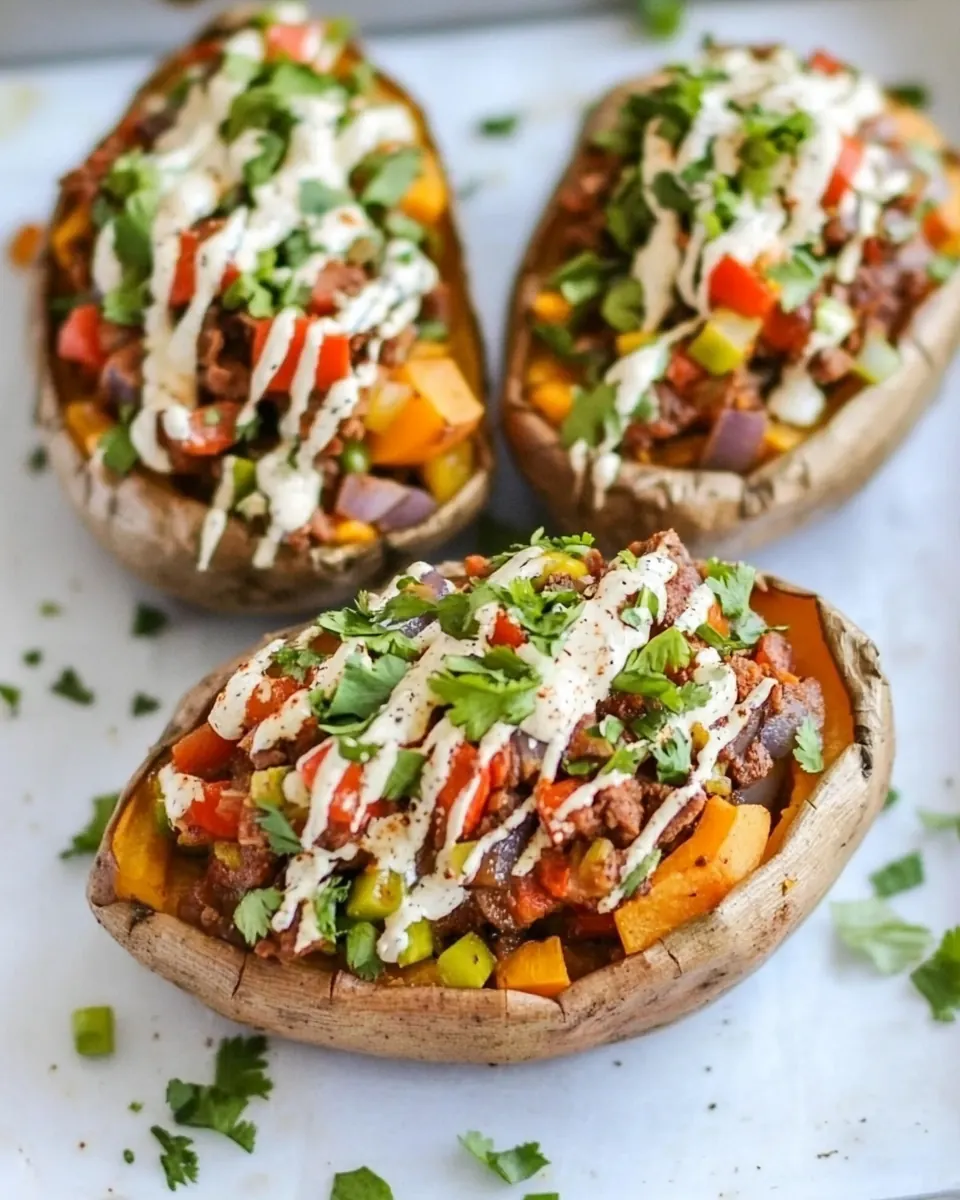
These tips reflect what I have learned from repeatedly making Veggie Fajita Stuffed Sweet Potatoes for busy weeknights and casual gatherings. Each suggestion focuses on small adjustments that make the finished dish more balanced, visually appealing, or easier to assemble.
- Choose similar sized potatoes: Picking sweet potatoes that are close in size ensures they finish roasting at the same time, eliminating guesswork and preventing some from being undercooked while others are overdone.
- Prep everything upfront: Having the peppers, onions, mushrooms, and salsa components ready before you start makes the assembly smooth and keeps a steady pace, especially once the potatoes come out of the oven and you want to build plates quickly.
- Control the heat of the crema: Start with the stated amount of adobo sauce in the chipotle crema and taste; you can always add more for smokier heat, but you cannot take it away once added.
- Dry mushrooms before searing: If your portobello mushrooms are releasing liquid after marinating, pat them lightly with a paper towel to promote better browning and avoid a soggy pan.
- Use a hot pan for color: A properly heated non stick or cast iron skillet delivers rapid searing and attractive caramelization on the peppers and onions, which builds the savory base of the filling.
- Make extra salsa: Preparing a bit more pico or salsa allows guests to customize heat and acidity, and leftover salsa is great on toast or mixed into grains the next day.
- Toast spices if you can: Briefly warming whole or ground spices in a dry pan before adding them to the marinade intensifies their aroma and contributes a deeper, more rounded flavor profile.
Best Served With
I find Veggie Fajita Stuffed Sweet Potatoes can anchor a casual weeknight meal or be part of a festive spread. Serve them with simple, complementary sides that echo the flavors in the potatoes and provide contrast in texture and temperature.
- Crisp green salad: A lightly dressed leafy salad with a citrus vinaigrette cuts through the richness and offers refreshing crunch.
- Extra salsas and pickles: A platter of extra verde and fruit salsas, along with quick pickled onions, allows guests to customize brightness and acidity on each bite.
- Grilled vegetables: Charred zucchini or asparagus pair nicely, adding another layer of smoky flavor without overshadowing the stuffed potatoes.
- Rice or grain side: A simple cilantro lime rice or warm quinoa can turn this into a heartier plate for larger appetites, absorbing any extra crema or salsa.
- Occasions: These are perfect for casual lunches, relaxed dinners, potlucks, and I often include them on menus for family gatherings or if friends come over during Ramadan evenings because they are filling and shareable.
- Storage tips: Store components separately in airtight containers: the roasted sweet potatoes, the sautéed vegetables, and the crema. Reheat gently in an oven to preserve texture, and add fresh salsa after warming.
- Seasonal pairings: In summer, use fresh grilled corn and bright salsas; in cooler months, roast the peppers and mushrooms longer for deeper caramelization.
FAQ
Conclusion
Veggie Fajita Stuffed Sweet Potatoes combine smoky seared vegetables, tender roasted sweet potato flesh, and a silky chipotle crema to create a meal that is both comforting and vibrant. Try this when you want a satisfying, colorful dinner that feels special but is simple enough for a busy evening. The balance of textures and bright finishing elements like lime and cilantro make each bite interesting, and once you taste it you may find it becomes a household staple for casual dinners and gatherings alike.
Veggie Fajita Stuffed Sweet Potatoes
Equipment
- Baking Sheet
- Foil
- Large Bowl
- Measuring Cup
- Large non stick or cast iron skillet
- Whisk
Ingredients
- 4 sweet potatoes Bake until soft and caramelized to provide a sweet, sturdy base that holds the filling and contrasts savory toppings. Pierce and roast whole to develop deep flavor and fluffy interior ideal for stuffing. Serve warm to complement the spicy, tangy fajita vegetables and creamy sauces.
- 1/2 red bell pepper, thinly sliced Slice thinly and sauté to add crisp, sweet-savory crunch and vibrant color to the fajita mix. Cook briefly over medium-high heat to retain texture and bright flavor. Combine with other peppers and onions for classic fajita aromatics.
- 1/2 yellow bell pepper, thinly sliced Slice thinly and sauté to contribute mild sweetness and appealing color contrast in the vegetable medley. Cook quickly to keep a slight bite while melding flavors with spices and mushrooms. Layer into the stuffing for balanced taste and texture.
- 1/2 red onion, thinly sliced Slice thinly and caramelize slightly to bring savory sweetness and aromatic depth to the fajita filling. Cook until softened but still slightly crisp to maintain textural variety. Pair with peppers and mushrooms for a well-rounded vegetable base.
- 1 cup sliced portobello mushrooms Slice and sauté to provide meaty, umami-rich texture that mimics traditional fajita proteins. Cook mushrooms until golden to concentrate flavor and absorb the marinade or spices. Add to the pepper-onion mix for satisfying chew and depth.
- 1/4 cup olive oil Whisk into dressings or use for sautéing to coat and cook vegetables evenly while adding rich mouthfeel. Balance acidic lime juice and spices in marinades and keep vegetables from sticking. Use sparingly to avoid greasiness while enhancing flavor delivery.
- 2 tablespoons fresh lime juice Squeeze over the vegetables or finished potatoes to brighten flavors with fresh acidity and lift the overall dish. Mix into marinades to tenderize and balance sweetness from sugar. Add just before serving to preserve its zesty character.
- 1 tablespoon brown sugar Dissolve into marinades to introduce caramelized sweetness that balances heat and acidity in the fajita mixture. Sprinkle sparingly to avoid overpowering while enhancing browning during cooking. Combine with spices for rounded, complex flavor.
- 1 teaspoon worcestershire sauce, omit for vegetarian Stir into marinades to add savory, slightly tangy depth; omit for vegetarian to keep the dish meat-free. Include only if not avoiding fish-derived ingredients to boost umami complexity. Use small amounts so it complements rather than dominates.
- 1/2 teaspoon cumin Sprinkle into the seasoning mix to contribute earthy, warm notes typical of Mexican-inspired dishes. Pair with chili powder and cumin to create a classic fajita spice profile. Measure carefully because its flavor can become pronounced.
- 1/2 teaspoon chili powder Blend into the spice mix to provide gentle heat and a distinct chili flavor that complements the other seasonings. Balance with brown sugar and lime to avoid excessive spiciness. Use to season vegetables before sautéing for integrated taste.
- 1/4 teaspoons smoked paprika Add a smoky layer with subtle sweetness to the spice blend, enhancing roasted depth in the vegetables. Use in small quantity to avoid overpowering more delicate flavors. Combine with chipotle for complex smokiness.
- 1/4 teaspoon chipotle chili powder Incorporate for added smoky heat and complexity that elevates the fajita profile with a lingering warmth. Mix with smoked paprika and cumin for a cohesive chili-forward seasoning. Use sparingly as chipotle powder is potent.
- 1/4 teaspoons salt Season sparingly to enhance overall flavor and balance the sweeter elements without masking spices. Dissolve into marinades or sprinkle on vegetables prior to cooking. Adjust to taste to maintain harmonious seasoning.
- 1/4 teaspoon black pepper Grind into the spice mixture to add sharp, aromatic bite that complements richer flavors and lifts the dish. Use alongside salt to round out seasoning and emphasize savory notes. Add incrementally to control peppery intensity.
- 2 garlic cloves, minced Mince and sauté to release pungent, aromatic compounds that deepen savory flavors in the fajita filling. Add early in cooking to mellow raw sharpness and infuse the oil with garlicky perfume. Use to enhance umami and complexity.
- 1/2 cup cooked corn, I like grilled or roasted Fold into the filling to provide bursts of sweet, smoky kernels and pleasant textural contrast to soft potato flesh. Prefer grilling or roasting corn to intensify sweetness and add charred notes. Scatter into the stuffing for color and crunch.
- salsa of your choice, I used a verde and a pineapple Spoon over the assembled potatoes to introduce zesty, saucy brightness and complementary flavor variations depending on choice. Use verde or pineapple-infused salsas to add tang, sweetness, or heat tailored to preference. Provide moisture and acidity to balance richness.
- 1/2 cup queso fresco cheese Crumble on top as a salty, milky finishing cheese that adds creaminess and a slight tang to each bite. Sprinkle generously to mimic traditional Mexican queso experience without melting completely. Contrast against warm vegetables and sauces for texture.
- 1/2 cup cherry tomatoes, quartered Quarter and mix in to bring juicy acidity and fresh sweetness that lightens the overall dish and adds vibrant bursts in each bite. Use ripe cherry tomatoes for best texture and flavor. They also add visual brightness to the filling.
- 1/2 jalapeno pepper, diced Dice and include for variable heat and bright, vegetal heat; remove seeds to reduce spiciness if desired. Add sparingly to control overall kick and provide small spicy pops among the other fillings. Handle carefully to avoid overwhelming milder palate.
- 2 tablespoons diced sweet onion Dice and sauté or scatter fresh to add mild sweetness and crisp bite distinct from red onion, enhancing complexity in the topping. Use to provide subtle background flavor and balance bolder ingredients like jalapeno and salsa. Keep small for even distribution.
- 2 tablespoons chopped fresh cilantro Chop and sprinkle as a finishing herb to add bright, citrusy-green aroma that ties together the lime and spice elements. Use fresh cilantro to elevate freshness and provide color contrast. Add at the end to preserve its vibrant flavor.
- 1 lime, juiced Squeeze over the finished dish to intensify acidity and brighten all flavors while complementing cilantro and other citrus notes. Use freshly juiced lime for best brightness and aroma. Adjust amount to taste to maintain balance with other seasonings.
- a pinch of salt Add a tiny pinch to finish and harmonize flavors by subtly enhancing savory notes without salting aggressively. Use at the end to tweak seasoning after tasting. Be cautious, as repeated increments can quickly increase salinity.
- 3 tablespoons greek yogurt Spoon dollops on top to introduce tangy creaminess that cools spicy components and adds richness without overpowering. Use Greek yogurt as a lighter alternative to sour cream while contributing protein and silkiness. Swirl into sauces or serve alongside.
- 1/3 cup half and half Stir into dressings or sauces to add gentle creaminess and mellow acidity while thinning yogurt-based toppings as needed. Incorporate to adjust texture and richness of the adobo-lime cream. Use small quantities to maintain desired consistency.
- 1 tablespoon adobo sauce, from a can of chipotles in adobo Mix in to provide smoky, tangy depth from chipotle preserved in adobo, enriching the sauce with heat and complexity. Blend with yogurt, lime, and half-and-half for a creamy, spicy drizzle. Use measured amounts to control spice level.
- juice of half a lime Squeeze for a focused hit of citrus acidity to brighten sauces or dressings and tie together zesty flavors. Use interior juice to avoid bitterness and add fresh lime aromatics. Balance with other acidic elements for a lively finish.
- zest of half a lime Zest finely to impart concentrated citrus oils that add fragrant brightness without additional acidity. Grate just the colored outer peel for the most aromatic result and avoid bitter pith. Sprinkle into sauces or over finished potatoes for an immediate aroma lift.
- 1/8 teaspoons salt Add a very small pinch to season sauces or finishing garnishes and subtly amplify other flavors without salting too heavily. Use cautiously since multiple small salts are already present in the recipe. Taste as you go to achieve balance.
Instructions
- Preheat the oven to 400 degrees F. Poke the sweet potatoes all over with a fork and place them on a baking sheet that is lined with foil. Bake the potatoes for 45 to 60 minutes, or until the insides are soft.: As the oven warms to 400 degrees F you will begin to smell the faint caramel scent of the skin as it dries and tightens, a gentle sign that the internal starches are concentrating. When you poke the sweet potatoes with a fork, you want the tines to slide through with little resistance, which tells you the center is soft and velvety. The foil lined baking sheet helps catch any drips and makes cleanup painless, and it also slightly reflects heat back to the skins so they crisp a touch. A common misstep here is removing the potatoes too early, leaving a chalky center; if a fork meets resistance, give them another 10 to 15 minutes and test again. Visually the skins will dull and wrinkle slightly, and the potatoes will feel noticeably lighter when they are done because moisture has evaporated.
- While the potatoes are baking, add the peppers, onions and mushrooms to a bowl. In another bowl or large measuring cup, whisk together the olive oil, lime juice, sugar, worcestershire, cumin, paprika, chili powders, salt, pepper and garlic. Pour the marinade over the peppers and mushrooms. Let sit for 30 minutes.: As the vegetables rest in the marinade the olive oil and spices coat each piece, and you will notice the aroma of garlic and toasted cumin bloom. This pause allows acid to begin softening the edges of the peppers and for seasoning to permeate the portobello mushrooms , which helps them brown more evenly when seared. Stir the bowl occasionally so the liquid distributes, and if you find the mushrooms exuding too much moisture, drain a little to avoid a soggy sear later. An easy error is under marinating, which can result in flat tasting vegetables, so give them the full half hour when you can.
- Note: (Yes, I am doing something terrible here and advising you to add the mushrooms to a marinade with salt. If you reeeeally don’t want to do that (the mushrooms may get slightly tough but I haven’t experienced that with this recipe), make the marinade and leave out the salt. Put the mushrooms in a separate bowl and cover them with a bit of salt-less marinade. Then cook as advised.): (Yes, I am doing something terrible here and advising you to add the mushrooms to a marinade with salt. If you reeeeally don’t want to do that (the mushrooms may get slightly tough but I haven’t experienced that with this recipe), make the marinade and leave out the salt. Put the mushrooms in a separate bowl and cover them with a bit of salt-less marinade. Then cook as advised.) : This aside explains a delicate textural choice, because mushrooms can sometimes firm up when salted early. If you prefer a softer mushroom, separate it from the salted marinade and only add salt later, which preserves a more tender texture. Watch the mushrooms as they sit; if they begin to release a lot of liquid, blot them lightly before searing to preserve caramelization. People sometimes panic and over rinse, which loses flavor, so gently blot instead of washing.
- Heat a large non-stick or cast iron skillet over medium-high heat. Add the peppers, onions and mushrooms (either together or separately) and cook, stirring often, until softened and golden. I don’t add any oil to the pan since the marinade sticks to some of the peppers. Feel free to add a tablespoon or so to the skillet if you want.: When the skillet first hits medium-high the metal will shimmer and you may hear a faint sizzle when vegetables touch the surface, a reliable cue that browning will start. As the vegetables hit the pan the sound turns into a lively sizzling, and you will see edges go from glossy to matte and then to little caramelized char spots that add deep flavor. Stir frequently to prevent burning while still allowing some contact for browning, which creates the savory complexity in the filling. If you see a lot of liquid pooling, increase heat slightly to encourage evaporation, or remove the vegetables briefly to allow the pan to regain temperature. A typical mistake is crowding the pan, which causes steaming rather than searing; work in batches if your skillet is small.
- Slice open the sweet potatoes and mash some of the flesh inside. If you’d like, you can even sprinkle some seasoning in there! Cover the potatoes with the peppers, onions and mushrooms. Add on the corn and salsas of your choice, along with the pico. Drizzle with the chipotle crema. Top with crumbled queso fresco.: When you slice the roasted sweet potatoes open steam will whisper up and the interior will be soft and pillowy; using a fork to mash gently creates texture and makes a cozy bed for the filling. The contrast between the silky potato and the crisped vegetables is what makes each bite exciting, and the roasted corn adds kernels of sugary pop that cut through the creaminess. Spoon on salsas that offer a balance of acid and fruitiness, and finish with the smoky cilantro scented crema for a cool, spicy counterpoint. Watch portion sizes when assembling; piling too high makes them hard to eat neatly. Overloading can also dilute the balance of textures.
- Combine the tomatoes, peppers, onion and cilantro in a bowl. Toss with the lime juice and salt.: As you mix the pico the colors will pop and the juices will begin to mingle, brightening the entire dish. The fresh lime juice and pinch of salt pull the components together and create a lively contrast to the cooked vegetables. Taste and adjust the salt so it lifts the tomatoes without overwhelming the cilantro. A common misstep is adding too much salt at once; season gradually and taste.
- Combine yogurt, half and half, adobo, lime juice and zest and salt, whisking well to combine. Set aside until ready to use.: Whisking the Greek yogurt with half and half and adobo sauce yields a glossy, pourable crema that cools the heat and ties the plate together. The aroma of lime zest will lift the sauce, and the tiny flecks of adobo signal smoky spice. If the mixture appears too thick, add a touch more half and half to reach a drizzling consistency; if too thin, the crema will not cling to the filling. A frequent error is over thinning, which causes the crema to run off the potato; aim for a ribbon like pour.
Notes
- Choose similar sized potatoes: Picking sweet potatoes that are close in size ensures they finish roasting at the same time, eliminating guesswork and preventing some from being undercooked while others are overdone.
- Prep everything upfront: Having the peppers, onions, mushrooms, and salsa components ready before you start makes the assembly smooth and keeps a steady pace, especially once the potatoes come out of the oven and you want to build plates quickly.
- Control the heat of the crema: Start with the stated amount of adobo sauce in the chipotle crema and taste; you can always add more for smokier heat, but you cannot take it away once added.
- Dry mushrooms before searing: If your portobello mushrooms are releasing liquid after marinating, pat them lightly with a paper towel to promote better browning and avoid a soggy pan.
- Use a hot pan for color: A properly heated non stick or cast iron skillet delivers rapid searing and attractive caramelization on the peppers and onions, which builds the savory base of the filling.
- Make extra salsa: Preparing a bit more pico or salsa allows guests to customize heat and acidity, and leftover salsa is great on toast or mixed into grains the next day.
- Toast spices if you can: Briefly warming whole or ground spices in a dry pan before adding them to the marinade intensifies their aroma and contributes a deeper, more rounded flavor profile.