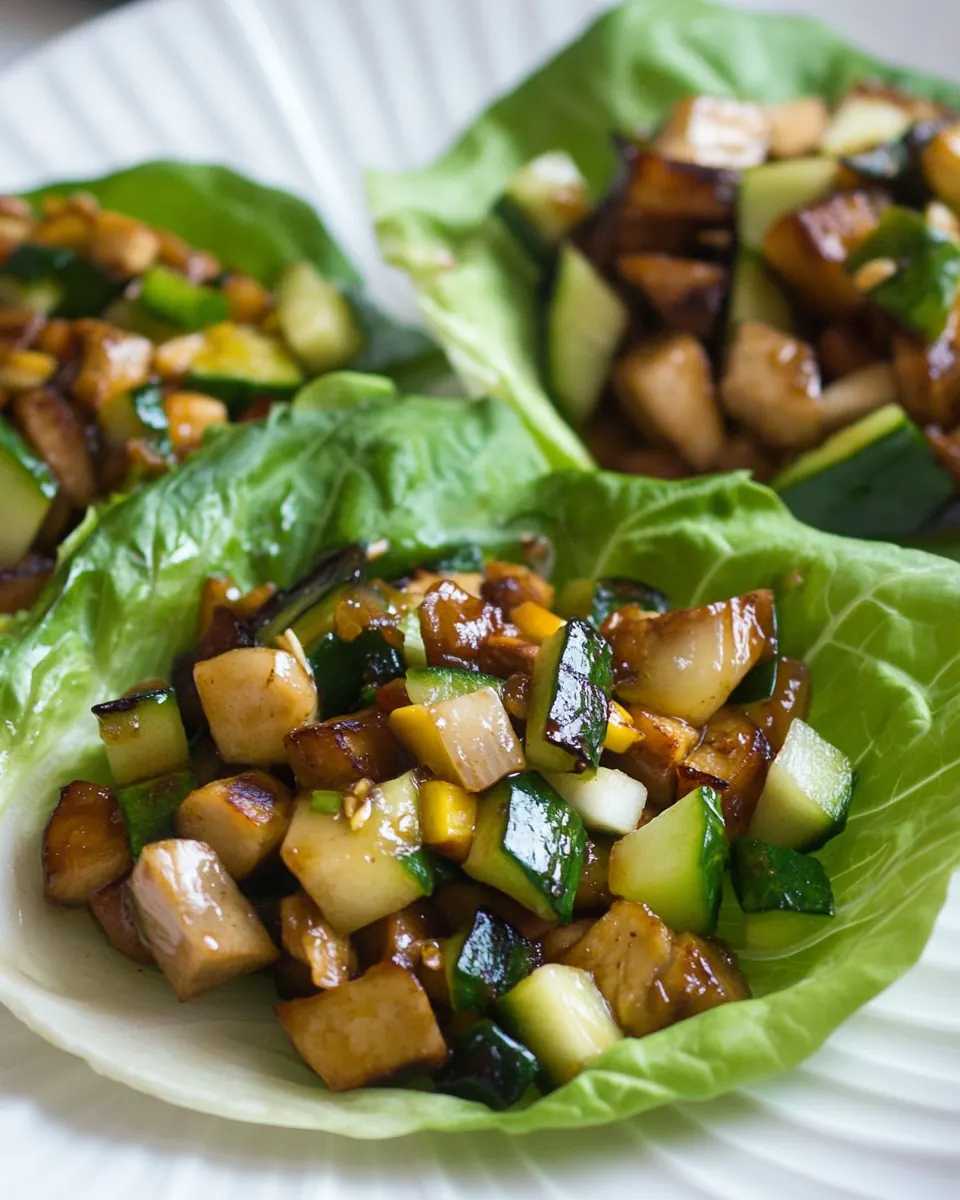
Vegetarian Lettuce Wraps
Vegetarian Lettuce Wraps have been one of my go to weeknight meals for years, because they are quick, bright, and endlessly adaptable when the fridge is only half full. The first time I tossed together a filling of sautéed vegetables and lentils and spooned it into crisp leaves, I remember how the contrast of warm, savory filling and cool, tender lettuce made every bite sing. I love how easy it is to tailor the mix to what you have on hand, and how satisfying a simple assembly can be after a busy day.
One rainy Saturday I decided to make a big batch and invite a friend over, and we ended up rearranging the kitchen table so we could sit and build wraps together, laughing as we tried to make the neatest-looking cups. I tend to keep the components straightforward: softened onion, browned zucchini, some savory mushrooms, and a protein like cooked lentils or diced tofu. A splash of teriyaki sauce brings everything together and a handful of crunchy garnishes adds texture. It’s casual, interactive, and perfect for those times when you want something healthy without fuss.
I also find they work beautifully for outdoor lunches in summer, because the wraps stay crisp if you pack the filling separately and assemble at the table. Over time I learned a few timing tricks to keep the vegetables caramelized rather than steamed, and how to balance salty, sweet, and crunchy notes so every mouthful feels complete. Whether you serve these as an appetizer for friends or a light dinner for yourself, they’re a recipe I come back to again and again.
Recipe Snapshot
15 mins
5 mins
10 mins
Easy
180 kcal
American
Vegan, Gluten-Free
Dinner
Non stick pan, Spatula
What We Adore About This Vegetarian Lettuce Wraps
Bright contrast of textures
I adore how Vegetarian Lettuce Wraps pair warm, savory filling with crisp, refreshing lettuce. That cold crisp against the hot, slightly caramelized vegetables gives a satisfying mouthfeel that keeps me reaching for more. When I take a bite, I want crunch, softness, and a little chew all at once, and this dish delivers.
Speed without sacrifice
I often need dinner on the table fast, and these wraps take about the time it takes to boil pasta. The short cook time means you still get layered flavors from browning, rather than one note of blandness. I appreciate recipes that respect my time but do not shortchange taste, and these do exactly that.
Flexible for pantry cooks
One big reason I make these again and again is flexibility. You can swap the protein between lentils, tofu, or extra mushrooms, and the filling still sings. I love being able to raid the fridge and have everything come together, which is why this is a staple on busy nights.
Great for sharing and entertaining
I enjoy serving these when friends drop by because assembly becomes part of the fun. Lay out the leaves, bowl up the warm filling, and let people customize their own cups. It creates a casual, interactive meal that feels generous without a lot of prep.
Healthy, satisfying bites
These wraps are light but filling, thanks to the fiber from lentils and vegetables. They make me feel nourished, not weighed down, so I often choose them when I want dinner to be both wholesome and delicious.
Ingredients for Vegetarian Lettuce Wraps
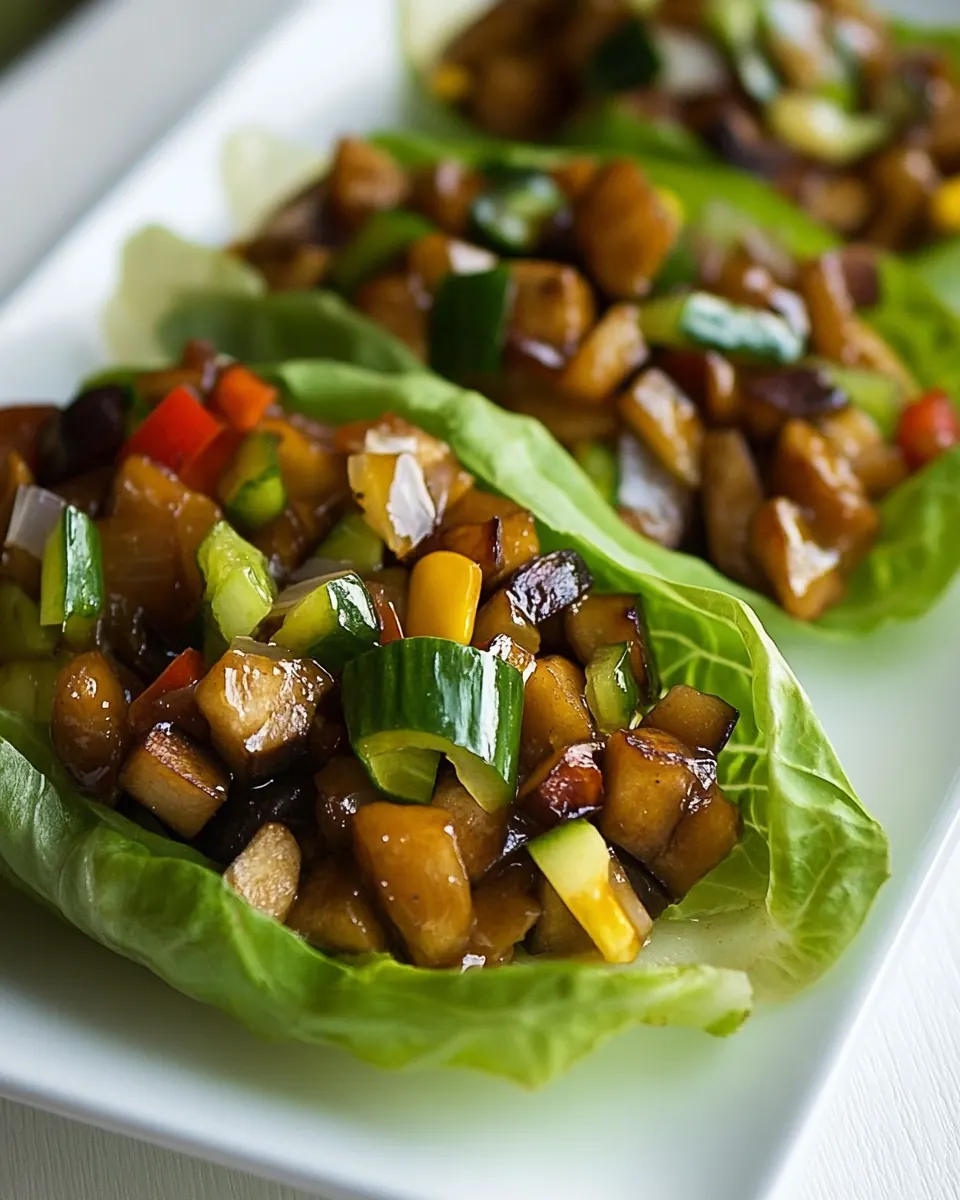
The philosophy here is simple: keep the building blocks fresh and let contrast do the work. Crunchy lettuce cups act as a clean vessel, while the sautéed vegetables and protein bring savory depth. Aromatics like onion and garlic form the backbone, and a little teriyaki sauce adds savory sweetness to tie everything together.
- 1/2 cup diced onion: Sauté gently to develop sweetness and a mild aromatic base for the filling; diced size helps distribute flavor evenly throughout the mixture and softens during cooking.
- oil or oil spray for sautéing: Use sparingly to prevent sticking and to facilitate even sautéing; oil spray yields a lower-fat option while liquid oil adds richer mouthfeel to the vegetables.
- 1/2 cup diced mushrooms: Sauté until tender to contribute an earthy, umami-rich component; dicing ensures quick, uniform cooking and helps blend mushrooms into the overall texture.
- 1 cup cooked lentils or diced tofu or tempeh or additional diced mushrooms: Provide bulk protein and a hearty texture; cooked lentils give a slightly grainy bite while tofu or tempeh offer firmer, chewable alternatives that absorb seasonings well.
- 1 zucchini, diced: Sauté or lightly cook to add moisture, mild sweetness, and slight crunch; dicing ensures quick cooking and helps the zucchini meld with the other filling ingredients.
- 1/4 cup diced water chestnuts (optional): Add optional crunch and a subtle sweet, watery texture; dicing small ensures even distribution and preserves a crisp contrast in the finished wraps.
- 2 tsp minced garlic: Mince finely to release bright, savory aromatics; cooking briefly mellows sharpness and layers complexity into the filling’s overall flavor profile.
- 1/4 tsp salt: Season lightly to enhance flavors and control overall saltiness; adding gradually allows tuning to taste without overpowering delicate components.
- 3 tbsp teriyaki sauce or coconut aminos: Incorporate to provide a savory-sweet glaze that binds flavors; teriyaki or coconut aminos add umami and caramelized notes when heated into the filling.
- lettuce or chard: Use as the vessel for serving and eating the filling; sturdy lettuces or tender chard leaves create a fresh, crisp wrap that complements warm fillings.
- salt, pepper, sesame seeds, scallions, nuts, or other garnishes as desired: Garnish liberally to add texture, contrast, and flavor brightness; salt, pepper, seeds, scallions, or nuts elevate appearance and provide finishing touches.
How to Make Vegetarian Lettuce Wraps
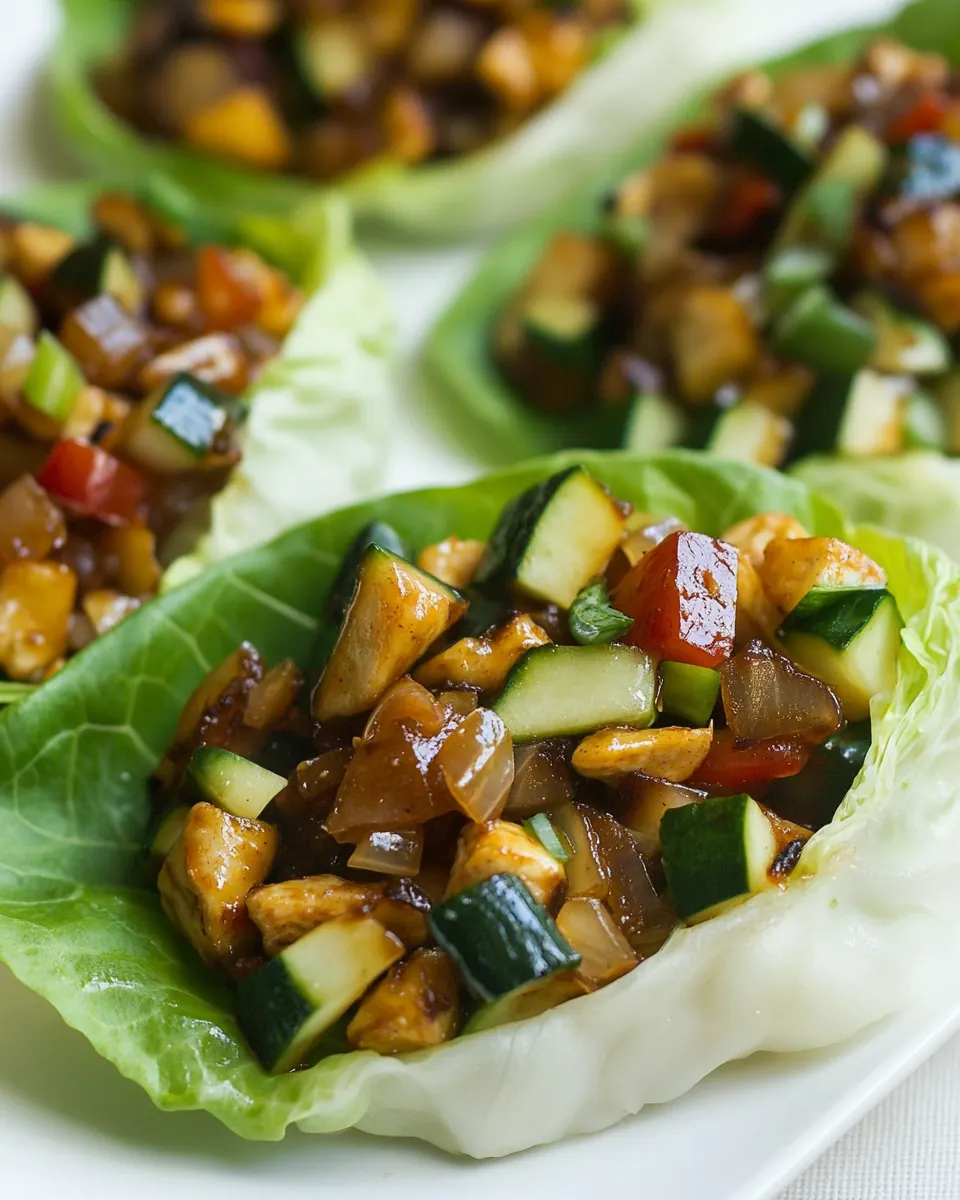
These steps are straightforward, and I like to keep the process conversational and relaxed. Focus on browning and texture, and you will be rewarded with a filling that tastes deeper than the short cook time suggests. Read each step before starting so you can prep quickly and keep the pan hot enough for caramelization.
- You can double the recipe, but I’d probably do it in two batches because overcrowding the pan can cause the vegetables to steam instead of fry. In a large non-stick pan, sauté the onion in oil or oil spray—over medium high heat—until lightly browned. Stir in everything but the sauce and lettuce. Cook, stirring occasionally, until the zucchini is nicely browned. Stir in the sauce, and cook—stirring—2 minutes. Garnish as desired, and serve either hot or cold in the lettuce cups or chard leaves.: The moment you start cooking, your nose will tell you what matters most here, which is space. When the pan is crowded, moisture gets trapped, creating steam instead of allowing surfaces to develop those tiny golden edges that carry so much flavor. You want each piece of zucchini and mushroom to touch hot metal, not each other, so they brown and create a slightly crisp surface. Listen for individual sizzling sounds rather than a muffled hiss, that indicates items are searing properly. A common mistake is trying to rush the process by turning up the heat, which can burn the outsides while leaving centers underdone. If doubling, cook in two batches, and keep the first batch just warm, not soggy, as you finish the second.
- In a large non-stick pan, sauté the onion in oil or oil spray: As the onion hits the warm oil, you will hear a gentle sizzle that signals the start of aroma building. Stir occasionally to encourage even coloring, aiming for translucence and light browning rather than raw sharpness. The scent will shift from sharp to sweet and inviting, which is the cue to move to the next ingredients. If the pan smokes or the onion blacks, lower the heat; burnt onion tastes acrid and will throw the whole dish off. Keep the oil just enough to coat the pan so vegetables slide and caramelize instead of sticking.
- over medium high heat—until lightly browned: That specific heat range encourages Maillard reactions, which create a complex toasted flavor. Watch the edges for a warm golden color and enjoy the increased aromatics as sugars in the vegetables begin to caramelize. You want a few brown bits on the pan bottom, those are flavor gold and useful for deglazing later. Avoid leaving the pan unattended, because color can shift quickly from perfect caramel to bitter char. If you see black spots, reduce the heat and give the pan a quick scrape to incorporate those tasty bits back into the mix.
- Stir in everything but the sauce and lettuce: Once your base is fragrant, add the remaining vegetables and protein, excluding the sauce and the lettuce which should stay raw and crisp. The pan will go from sputtering to busy, with the aroma deepening as juices release. Stirring occasionally helps develop even browning and lets smaller pieces cook without overcooking larger ones. A frequent error is adding the sauce too early, which can prevent browning and make the filling soggy. Keep the sauce for the final glaze to concentrate flavor.
- Cook, stirring occasionally, until the zucchini is nicely browned: This is where patience pays off. When the zucchini hits hot metal, its surface will shed moisture, then slowly caramelize, turning a warm amber color. You will notice tiny browning spots and a sweeter scent as natural sugars toast. Stir occasionally to expose different sides of the pieces, but not constantly, because intermittent contact with the pan is necessary for browning. A common slip is adding salt too early, which draws out extra moisture and inhibits caramelization.
- Stir in the sauce, and cook—stirring—2 minutes: Adding the teriyaki or coconut aminos at this stage allows the liquid to reduce just slightly and cling to the vegetables, forming a glossy coating. You will see the sauce bubble and thicken a little, and the aroma will shift to a balanced sweet and savory note. Stirring ensures every piece is coated and heated through. Watch for over reduction which can make the filling sticky, and if the sauce thickens too much, splash a teaspoon of water to loosen it.
- Garnish as desired, and serve either hot or cold in the lettuce cups or chard leaves: This final part is where presentation and texture meet. Scatter sesame seeds, sliced scallions, or chopped nuts for crunch, and season with a final pinch of salt and a grind of pepper to brighten the flavors. Serving hot emphasizes comfort, while slightly chilled filling highlights freshness, especially when paired with crisp lettuce . Avoid overfilling each leaf, which will make assembly messy and eating awkward. Keep garnishes restrained so they complement rather than overwhelm the filling.
Helpful Notes about Vegetarian Lettuce Wraps
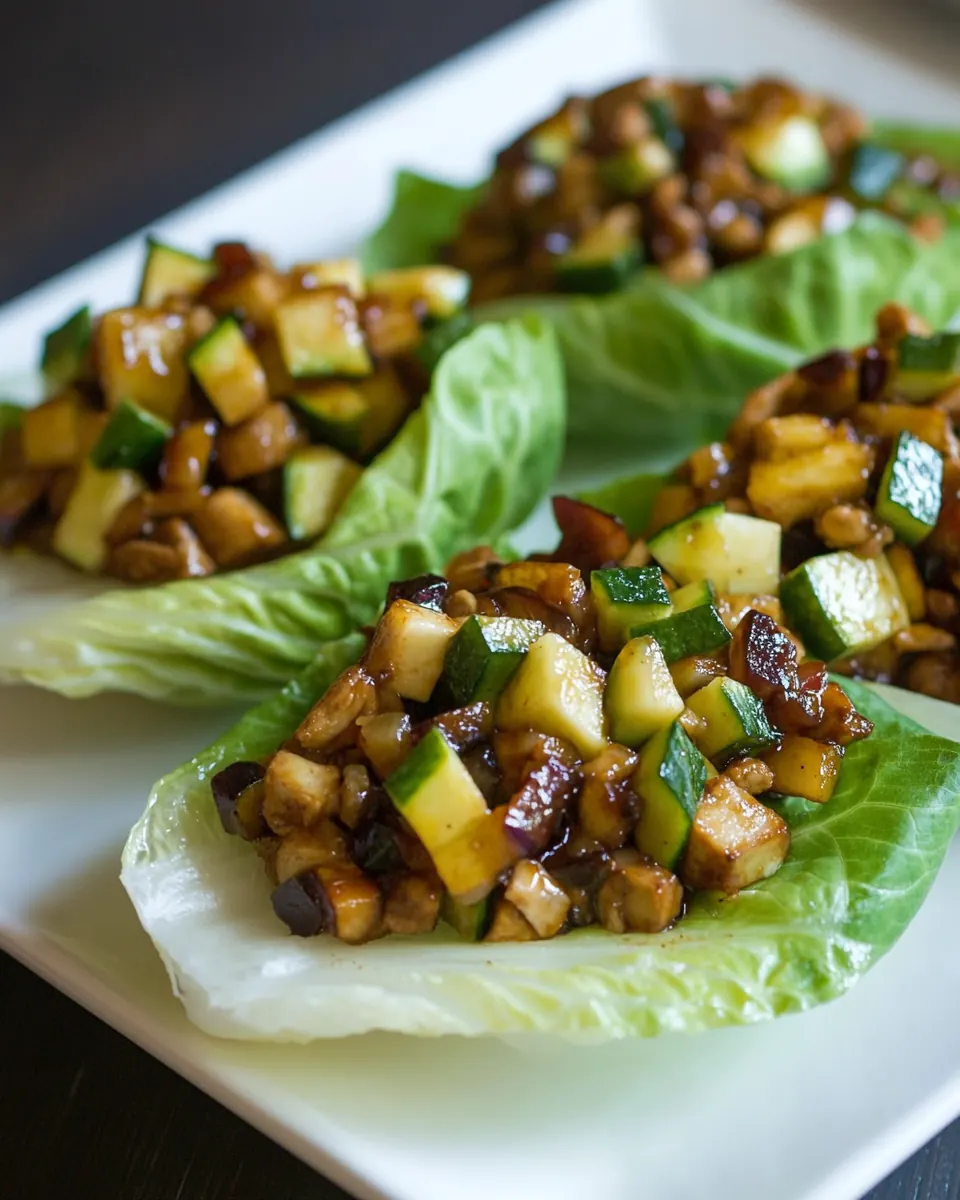
These notes capture practical tweaks I use often when I make Vegetarian Lettuce Wraps. They reflect small habits that make cooking smoother and the final dish more balanced, whether you are cooking for one or for a crowd.
- Layer flavors: Start by properly browning the onion and mushrooms, because those caramelized bits provide a savory foundation that makes the short cook time feel much more developed. Patience at this stage yields depth of flavor that you will notice in every bite.
- Control moisture: Avoid adding salt too early to the zucchini or tofu, as it draws out water and prevents browning. If the pan becomes watery, raise the heat slightly and cook uncovered until the liquid evaporates so the filling doesn’t turn soggy.
- Protein swaps: If you substitute lentils for tofu or vice versa, adjust timing; pre cooked lentils only need warming, while diced tofu benefits from a few extra minutes to develop crust. This helps preserve texture and makes the wraps more satisfying.
- Make ahead: You can prepare the filling in advance and refrigerate it, then reheat quickly in a hot pan to refresh the caramelized edges. Keep the lettuce chilled and assemble at serving time for maximum crispness.
- Garnish thoughtfully: A sprinkle of sesame seeds or a few chopped nuts adds contrast, but keep portions small so the wrap remains balanced. Fresh scallions lend brightness, use them sparingly if you want a subtler finish.
Best Served With
These wraps shine in casual settings, and a few simple pairings make the meal feel complete. Think easy sides, seasonal salads, or beverages that keep the palate refreshed. They are versatile enough for a light dinner or as part of a larger spread.
- Light salad sides: Pair with a simple cucumber salad or pickled vegetables to add a vinegary counterpoint that cuts through the savory filling. These bright sides work well for lunch or a light dinner.
- Rice or grain bowls: Serve alongside a small bowl of steamed rice or quinoa to make the meal heartier, especially if you need something more filling for dinner. The grains absorb any extra sauce and complement the wraps.
- Occasions: Great for summer gatherings, casual weeknight dinners, or a Ramadan iftar where you want something light and nutritious. They are easy to scale and encourage communal assembly.
- Storage tips: Keep the filling and lettuce separate, refrigerate in airtight containers, and consume the filling within three days for best quality. Reheat the filling briefly in a hot pan to revive its caramelized edges before serving.
- Seasonal pairings: In summer, add fresh herbs or quick pickled veggies for brightness; in cooler months, serve with a warm side like steamed sweet potatoes for heartier comfort.
FAQ
Conclusion
What makes these Vegetarian Lettuce Wraps special is the combination of quick cooking and big flavor, where simple ingredients transform into a satisfying, textured meal. They are perfect when you want something light but still filling, and their customizable nature means they adapt to what you have in the kitchen. Give them a try on a busy weeknight or for a casual dinner with friends, and enjoy how little effort yields a bright, tasty meal.
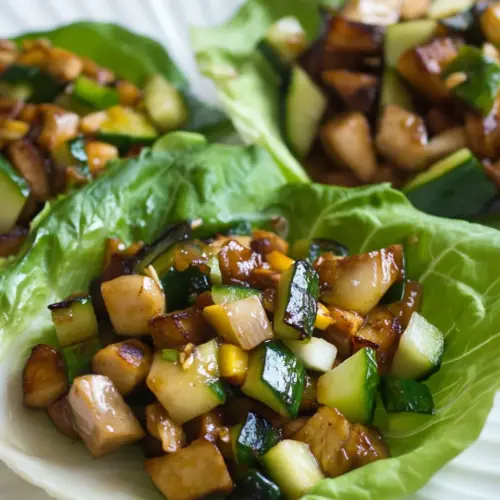
Vegetarian Lettuce Wraps
Equipment
- Non-stick pan
- Spatula
Ingredients
- 1/2 cup diced onion Sauté gently to develop sweetness and a mild aromatic base for the filling; diced size helps distribute flavor evenly throughout the mixture and softens during cooking.
- oil or oil spray for sautéing Use sparingly to prevent sticking and to facilitate even sautéing; oil spray yields a lower-fat option while liquid oil adds richer mouthfeel to the vegetables.
- 1/2 cup diced mushrooms Sauté until tender to contribute an earthy, umami-rich component; dicing ensures quick, uniform cooking and helps blend mushrooms into the overall texture.
- 1 cup cooked lentils or diced tofu or tempeh or additional diced mushrooms Provide bulk protein and a hearty texture; cooked lentils give a slightly grainy bite while tofu or tempeh offer firmer, chewable alternatives that absorb seasonings well.
- 1 zucchini, diced Sauté or lightly cook to add moisture, mild sweetness, and slight crunch; dicing ensures quick cooking and helps the zucchini meld with the other filling ingredients.
- 1/4 cup diced water chestnuts, optional Add optional crunch and a subtle sweet, watery texture; dicing small ensures even distribution and preserves a crisp contrast in the finished wraps.
- 2 tsp minced garlic Mince finely to release bright, savory aromatics; cooking briefly mellows sharpness and layers complexity into the filling’s overall flavor profile.
- 1/4 tsp salt Season lightly to enhance flavors and control overall saltiness; adding gradually allows tuning to taste without overpowering delicate components.
- 3 tbsp teriyaki sauce or coconut aminos Incorporate to provide a savory-sweet glaze that binds flavors; teriyaki or coconut aminos add umami and caramelized notes when heated into the filling.
- lettuce or chard Use as the vessel for serving and eating the filling; sturdy lettuces or tender chard leaves create a fresh, crisp wrap that complements warm fillings.
- salt, pepper, sesame seeds, scallions, nuts, or other garnishes as desired Garnish liberally to add texture, contrast, and flavor brightness; salt, pepper, seeds, scallions, or nuts elevate appearance and provide finishing touches.
Instructions
- You can double the recipe, but I’d probably do it in two batches because overcrowding the pan can cause the vegetables to steam instead of fry. In a large non-stick pan, sauté the onion in oil or oil spray—over medium high heat—until lightly browned. Stir in everything but the sauce and lettuce. Cook, stirring occasionally, until the zucchini is nicely browned. Stir in the sauce, and cook—stirring—2 minutes. Garnish as desired, and serve either hot or cold in the lettuce cups or chard leaves.: The moment you start cooking, your nose will tell you what matters most here, which is space. When the pan is crowded, moisture gets trapped, creating steam instead of allowing surfaces to develop those tiny golden edges that carry so much flavor. You want each piece of zucchini and mushroom to touch hot metal, not each other, so they brown and create a slightly crisp surface. Listen for individual sizzling sounds rather than a muffled hiss, that indicates items are searing properly. A common mistake is trying to rush the process by turning up the heat, which can burn the outsides while leaving centers underdone. If doubling, cook in two batches, and keep the first batch just warm, not soggy, as you finish the second.
- In a large non-stick pan, sauté the onion in oil or oil spray: As the onion hits the warm oil, you will hear a gentle sizzle that signals the start of aroma building. Stir occasionally to encourage even coloring, aiming for translucence and light browning rather than raw sharpness. The scent will shift from sharp to sweet and inviting, which is the cue to move to the next ingredients. If the pan smokes or the onion blacks, lower the heat; burnt onion tastes acrid and will throw the whole dish off. Keep the oil just enough to coat the pan so vegetables slide and caramelize instead of sticking.
- over medium high heat—until lightly browned: That specific heat range encourages Maillard reactions, which create a complex toasted flavor. Watch the edges for a warm golden color and enjoy the increased aromatics as sugars in the vegetables begin to caramelize. You want a few brown bits on the pan bottom, those are flavor gold and useful for deglazing later. Avoid leaving the pan unattended, because color can shift quickly from perfect caramel to bitter char. If you see black spots, reduce the heat and give the pan a quick scrape to incorporate those tasty bits back into the mix.
- Stir in everything but the sauce and lettuce: Once your base is fragrant, add the remaining vegetables and protein, excluding the sauce and the lettuce which should stay raw and crisp. The pan will go from sputtering to busy, with the aroma deepening as juices release. Stirring occasionally helps develop even browning and lets smaller pieces cook without overcooking larger ones. A frequent error is adding the sauce too early, which can prevent browning and make the filling soggy. Keep the sauce for the final glaze to concentrate flavor.
- Cook, stirring occasionally, until the zucchini is nicely browned: This is where patience pays off. When the zucchini hits hot metal, its surface will shed moisture, then slowly caramelize, turning a warm amber color. You will notice tiny browning spots and a sweeter scent as natural sugars toast. Stir occasionally to expose different sides of the pieces, but not constantly, because intermittent contact with the pan is necessary for browning. A common slip is adding salt too early, which draws out extra moisture and inhibits caramelization.
- Stir in the sauce, and cook—stirring—2 minutes: Adding the teriyaki or coconut aminos at this stage allows the liquid to reduce just slightly and cling to the vegetables, forming a glossy coating. You will see the sauce bubble and thicken a little, and the aroma will shift to a balanced sweet and savory note. Stirring ensures every piece is coated and heated through. Watch for over reduction which can make the filling sticky, and if the sauce thickens too much, splash a teaspoon of water to loosen it.
- Garnish as desired, and serve either hot or cold in the lettuce cups or chard leaves: This final part is where presentation and texture meet. Scatter sesame seeds, sliced scallions, or chopped nuts for crunch, and season with a final pinch of salt and a grind of pepper to brighten the flavors. Serving hot emphasizes comfort, while slightly chilled filling highlights freshness, especially when paired with crisp lettuce . Avoid overfilling each leaf, which will make assembly messy and eating awkward. Keep garnishes restrained so they complement rather than overwhelm the filling.
Notes
- Layer flavors: Start by properly browning the onion and mushrooms, because those caramelized bits provide a savory foundation that makes the short cook time feel much more developed. Patience at this stage yields depth of flavor that you will notice in every bite.
- Control moisture: Avoid adding salt too early to the zucchini or tofu, as it draws out water and prevents browning. If the pan becomes watery, raise the heat slightly and cook uncovered until the liquid evaporates so the filling doesn't turn soggy.
- Protein swaps: If you substitute lentils for tofu or vice versa, adjust timing; pre cooked lentils only need warming, while diced tofu benefits from a few extra minutes to develop crust. This helps preserve texture and makes the wraps more satisfying.
- Make ahead: You can prepare the filling in advance and refrigerate it, then reheat quickly in a hot pan to refresh the caramelized edges. Keep the lettuce chilled and assemble at serving time for maximum crispness.
- Garnish thoughtfully: A sprinkle of sesame seeds or a few chopped nuts adds contrast, but keep portions small so the wrap remains balanced. Fresh scallions lend brightness, use them sparingly if you want a subtler finish.