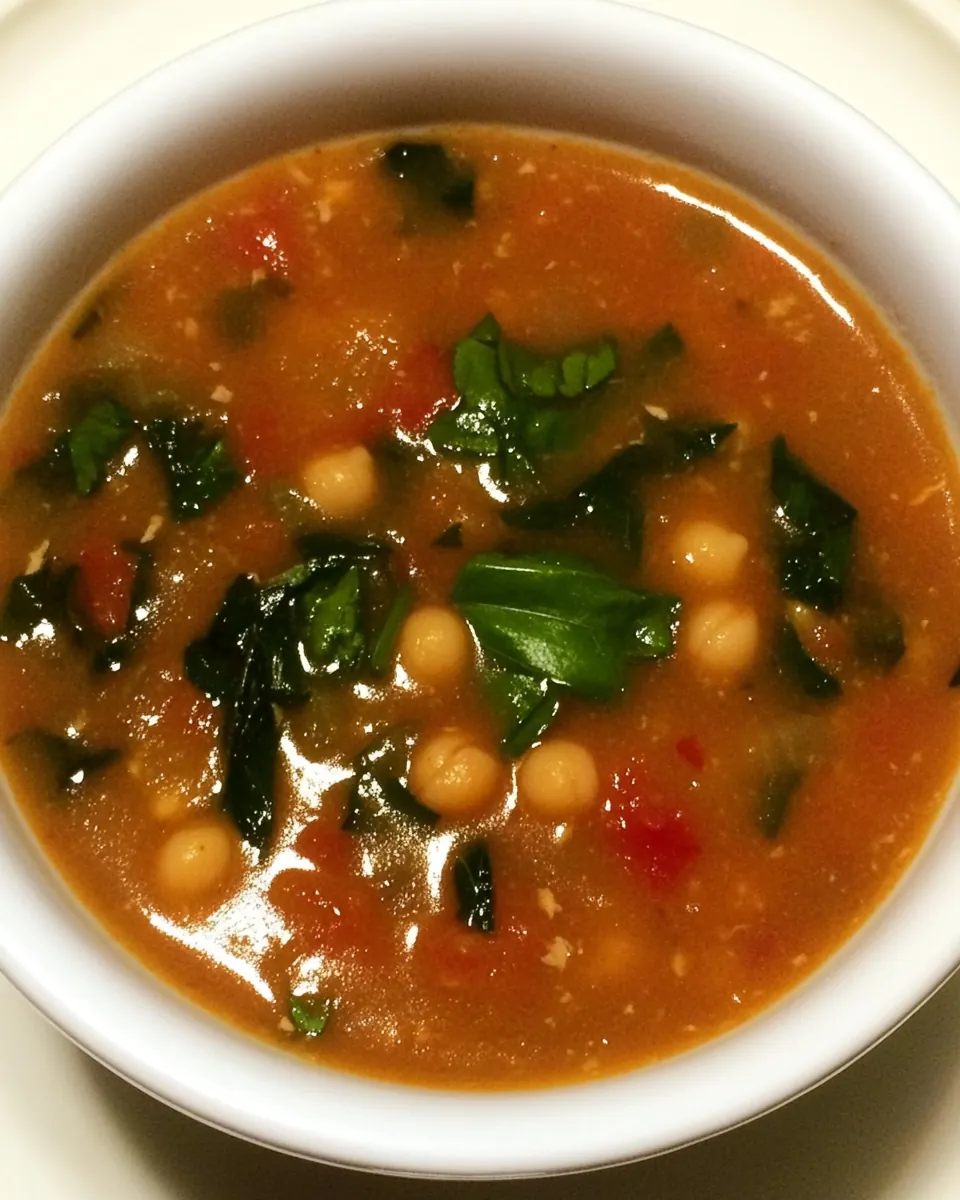
Tomato Chickpea Soup
Tomato Chickpea Soup has been that bowl of comfort I reach for when the weather leans cool and I need something honest and filling. The first time I made it, I was juggling a stack of mail and a sleepy toddler, and the way the kitchen filled with warm tomato and garlic notes felt like a small rescue mission accomplished. From that afternoon on, this soup became my go to for quiet weeknights and easy lunches when I wanted to feel nourished without fuss.
Years of cooking have taught me that a few humble ingredients can sing together if you treat them with a little patience. I love how the earthy chickpeas stand up to the bright acidity of canned tomatoes, while handfuls of fresh spinach and ribbons of basil lift the bowl into something green and lively. There is a rhythm to preparing it, the soak, the slow simmer, the brief sauté, and that moment when the aroma tells you it is coming together.
When I bring out the ladle, I think about feeding people who matter, not just filling plates. This soup is forgiving, so it has saved me on nights when plans changed and I had to stretch what was in the pantry into something warm. It is honest food that rewards a little time and attention, and once you smell that garlic melting into softened onion, you will understand why I keep making it.
Recipe Snapshot
2 hr
60 mins
60 mins
Medium
200 kcal
American
Vegan, Gluten-Free
Soups
Heavy soup pot, Heavy frying pan, Spoon or stock skimmer, Immersion blender or blender
The Charm of This Tomato Chickpea Soup
I love how simple ingredients transform
I find it magical that dried chickpeas hydrate into tender bites that feel almost meaty, while canned tomatoes bring a pantry brightening punch. The combination is rustic yet refined, and it proves you do not need complex shopping lists to make something memorable.
The texture balance is satisfying
What keeps me coming back to Tomato Chickpea Soup is the harmony between creamy body and occasional bite. When you partially blend the soup, you get a silky base studded with whole chickpeas, so every spoonful varies. I like that contrast because it makes each mouthful interest the palate differently.
It is flexible and forgiving
I appreciate recipes that let me adapt on the fly. This soup tolerates timing differences and small swaps, and it will still reward you if you accidentally simmer an extra ten minutes or use frozen basil instead of fresh. That forgiving nature means I trust it as a weeknight anchor.
Comfort food with a bright finish
There is comfort in the warmth and heartiness, and then the fresh basil at the end adds a final lift. I serve it when I want something cozy yet not heavy, for quiet dinners or light lunches that feel thoughtfully made.
Nutrition without fuss
This bowl delivers plant driven protein from chickpeas, iron and vitamins from spinach, and lycopene from tomatoes. It is the kind of meal that keeps you full and steady, which is why I often make a double batch and savor the leftovers.
Tomato Chickpea Soup Shopping List
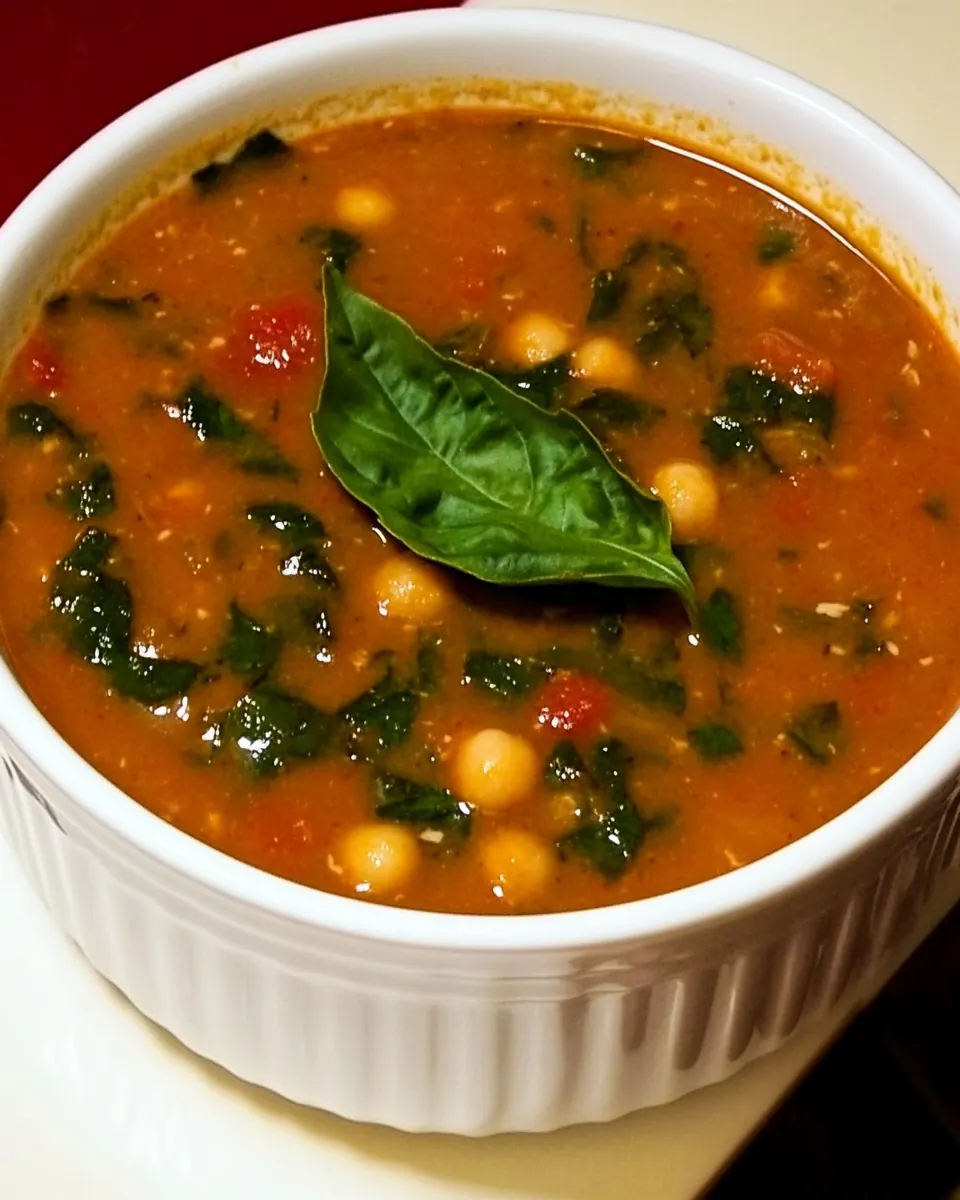
I cook with an ingredient first philosophy, trusting each item to carry the recipe. For Tomato Chickpea Soup, the players are straightforward: starchy chickpeas for substance, canned tomatoes for brightness, aromatic onion and garlic for depth, leafy spinach and fragrant basil for freshness, plus a simple vegetable broth to tie everything together. Together they create a bowl that feels layered yet approachable.
- 1 cup dried chickpeas (garbanzo beans), soaked at least 8 hours or overnight in cold water (see notes): Soak to rehydrate and tenderize dried chickpeas, making them cook evenly and absorb flavors; soaked beans also reduce cooking time and improve digestibility. Rinse thoroughly after soaking and simmer until tender before adding to the soup to ensure a creamy, hearty texture.
- 6 cups vegetable broth (see notes): Use as the liquid base to simmer and meld flavors while contributing savory depth; vegetable broth provides umami and balances the acidity of tomatoes. Choose low-sodium broth to control seasoning and adjust salt near the end of cooking.
- 1 yellow onion, diced: Dice finely to build the aromatic foundation and add natural sweetness and body when softened; onions create a flavor backbone when sautéed. Cook until translucent to release sugars and integrate with garlic and tomatoes for a balanced soup.
- 8 cloves garlic, diced very small: Mince very small to release pungent, aromatic oils that infuse the soup with savory depth; garlic brightens and enhances other flavors when gently cooked. Add early in the sautéing process but avoid burning to prevent bitterness.
- 1 T olive oil (or less, depending on your pan): Heat briefly to sauté aromatics and prevent sticking while contributing a subtle fruity richness; olive oil helps soften onions and garlic and carries fat-soluble flavors. Use a minimal amount to keep the soup lighter and ensure even cooking.
- one 14.5 oz can diced tomatoes with liquid: Add with its liquid to provide tomato flavor, acidity, and body; diced tomatoes contribute texture and bright acidity that balances the chickpeas. Stir into the pot to deglaze and simmer so the tomato flavor melds with the broth and aromatics.
- 4 cups chopped baby spinach (measure before chopping): Chop before measuring to ensure consistent volume and to wilt evenly, adding fresh color, nutrients, and a tender leafy texture. Stir in near the end of cooking so the spinach lightly wilts and retains some vibrancy and nutrition.
- 4 T chopped fresh basil (see notes): Chop fresh to release aromatic oils and add bright, herbaceous flavor; basil lifts the tomato and garlic notes with a sweet, peppery finish. Add most toward the end of cooking or as a garnish to preserve its fragrance.
- salt and fresh ground black pepper to taste: Season sparingly to enhance and balance all flavors, using salt to elevate sweetness and acidity while black pepper adds mild heat and aroma. Taste and adjust at the end so seasoning complements the chickpeas and tomatoes without overpowering them.
Putting Together Tomato Chickpea Soup
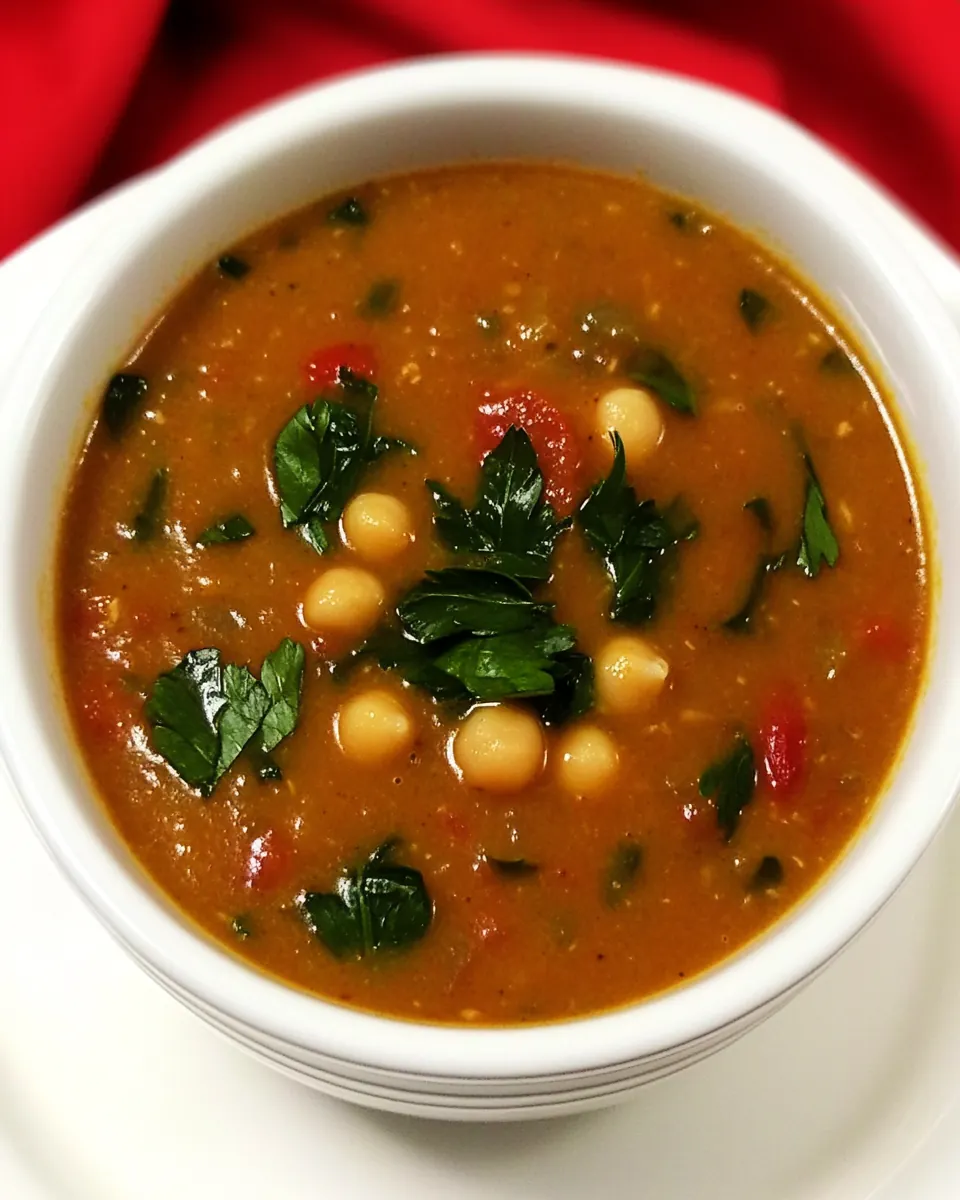
This soup comes together in stages, and I like to move through each with calm attention. Start by preparing your soaked chickpeas and build flavor with a quick sauté of onion and garlic. From there, simmering allows the flavors to knit, and finishing with spinach and basil keeps the bowl lively.
- Soak chickpeas overnight or for at least 8 hours in cold water.: The soaked chickpeas will feel cool and heavy when you lift the bowl, and the water will look slightly cloudy from released starches. Soaking hydrates them so they cook evenly instead of staying chalky in the center. A common mistake is under soaking, which leads to longer simmering and uneven texture, so give them the full time. If you are short on time, use the longest soak you can and expect a firmer result that will need extra simmering to reach proper tenderness.
- Drain chickpeas and discard water, and pick out any loose skins that have come off.: After draining, the chickpeas smell faintly nutty and the discarded water will contain dust and loose skins, which you want removed for a cleaner broth. Picking out skins prevents excess foam and grit. People often skip this step, which can produce a cloudy broth with extra foam, so take a minute to rinse and inspect the legumes.
- Put chickpeas in heavy soup pot with vegetable stock and bring to a boil, then reduce heat and simmer until chickpeas are tender. This will depend on how fresh the dried chickpeas were, but for me it took about an hour.: When the pot first comes to a boil you will hear a lively rolling sound and see steam; once you lower the heat to a gentle simmer, small steady bubbles should rise, not a frantic boil. Simmering slowly softens the chickpeas uniformly and lets flavors infuse. If you boil too hard you can toughen skins and lose liquid too quickly, requiring extra adjustment, so maintain a steady simmer and test a bean periodically for the ideal tender bite.
- Use a spoon or stock skimmer to remove any foam that appears.: As the chickpeas cook, a pale foam may collect on the surface, with an earthy smell. Skimming keeps the broth clearer and the flavor cleaner. Leaving foam is a harmless shortcut, but it can leave a slightly bitter edge and a cloudy finish, so I usually skim once or twice early on for clarity.
- When chickpeas are tender, heat olive oil in heavy frying pan, then saute onions about 5 minutes, until fairly soft.: The onion will sizzle as it hits the hot oil and gradually soften, releasing a sweet aroma and becoming translucent with glossy edges. This step builds savory depth that the broth absorbs. A common error is cooking over too high heat, which browns rather than softens the onion, altering the soup's gentle profile, so keep the heat moderate and stir to encourage even caramelization.
- Add garlic and cook 2-3 minutes more.: When you add the minced garlic you will notice a bright, pungent scent that permeates the pan quickly; cook just until fragrant and slightly softened so it blends without burning. Burnt garlic tastes acrid and will overpower the soup, so watch closely and remove from direct heat if it starts to darken prematurely.
- Add onions and garlic to soup pot with diced tomatoes.: When you combine the sautéed aromatics with the simmering pot, you will hear a soft melding and smell a deeper, layered tomato aroma. The sautéed pieces bring caramelized sweetness that rounds the acidity of the canned tomatoes . Avoid dumping everything in from a very hot pan at once, which can cause a sudden aggressive simmer; instead add gently and stir to incorporate.
- Let soup simmer on low heat about 30 minutes.: During this period the flavors marry and the broth darkens slightly, releasing a warm, fragrant steam. The simmer should be low enough to produce occasional gentle bubbles, which is the sign that the ingredients are marrying without breaking down too rapidly. Over simmering at high heat can reduce liquid too much and concentrate acidity, so keep an eye on the pot and stir occasionally to prevent sticking.
- Add chopped spinach to soup (adding a bit more water or stock if needed) and simmer 15-30 minutes more.: When you fold in the chopped spinach , it will initially float, then collapse into the broth, turning a brighter green. It softens quickly and contributes fresh vegetal notes and body. If the soup looks too thick, add a splash of stock, but avoid watering it down excessively, which can dull the flavor. A mistake here is adding spinach too early, which can make it overly mushy, so time it for that tender but still present texture.
- I used my beloved Immersion Blender (affiliate link) at this point to slightly break up the ingredients. If you don’t have an immersion blender, you can put about 1/3 of the soup into a Food Processor (affiliate link) or blender and pulse a few times. You can skip this step completely too, if you’d like a chunkier soup.: The partially blended soup develops a silky mouthfeel as some solids puree into the broth while others remain whole, creating that satisfying contrast. If you use a blender instead, work in batches and vent lids to avoid hot splatter. Over blending will eliminate the pleasant chunkiness, so pulse briefly and check the texture as you go.
- Stir in chopped basil (I used my frozen basil, can also use basil pesto if you don’t have any basil) and cook 5 minutes.: Adding the chopped basil releases a bright, aromatic top note that lifts the whole pot; after five minutes its scent will perfume the kitchen and meld with the tomatoes. This short finish preserves fresh herb flavor without making it grassy. A common misstep is cooking the basil too long, which dulls its fragrance, so add it near the end for maximum aroma.
- Season soup with salt and fresh ground black pepper to taste and serve hot.: The final seasoning lets you balance and tune the flavors; the soup will taste different when hot than when cool, so season and taste from a warm spoon. Freshly ground black pepper adds a gentle warmth that complements the tomato and chickpea base. Over salting is easy to do, so add sparingly, taste, then adjust until it feels balanced to your palate.
Recipe Notes about Tomato Chickpea Soup
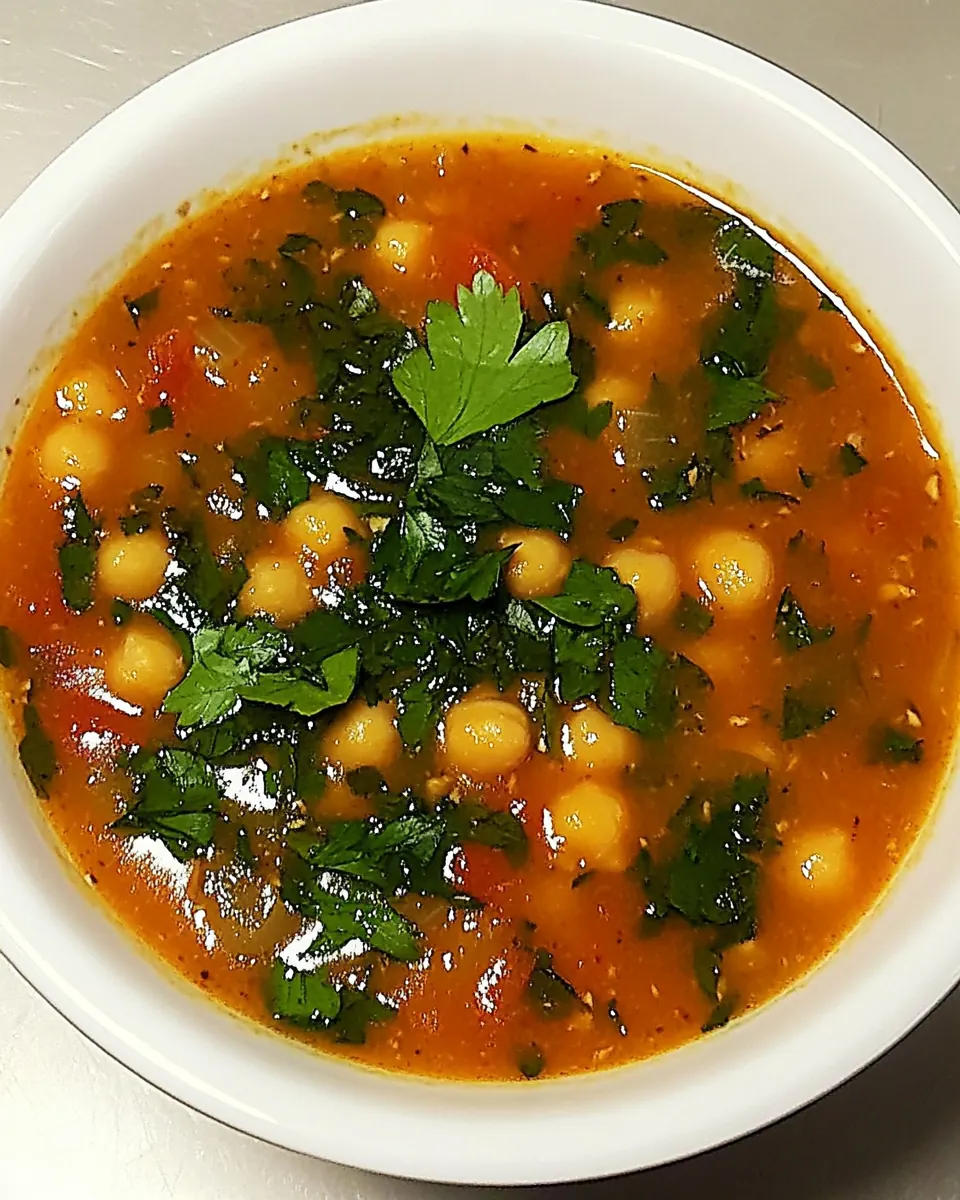
These notes collect practical pointers I use every time I make Tomato Chickpea Soup. I aim for clarity so you can adapt the soup to your pantry and taste without losing its heart.
- Soaking tip Allow the dried chickpeas to soak at least eight hours, ideally overnight, so they rehydrate fully and cook in predictable time. If you find some are still firm after an hour of simmering, continue cooking and test frequently.
- Broth choice Use a good quality vegetable broth since it forms the soup’s foundation; low sodium variants let you control salt levels at the end.
- Oil control Start with one tablespoon of olive oil and reduce it if your pan runs hot, because too much oil can make the sauté greasy instead of glossy.
- Tomato texture The canned tomatoes add acidity and body; if you want a smoother finish, pulse a third of the soup in a blender and return it to the pot.
- Herb swap If fresh basil is unavailable, frozen basil works in a pinch, but add it slightly earlier to allow the flavors to bloom.
How to Serve Tomato Chickpea Soup
Serving this soup offers many possibilities depending on the occasion, and I like to adapt presentation to the moment. For a casual weeknight, ladle directly into bowls and keep it simple. For company, garnish thoughtfully to make the bowl feel special.
- Simple lunch Serve a bowl of hot Tomato Chickpea Soup with crusty bread for dunking, letting the bread absorb the tomato broth for a cozy pairing.
- Weeknight dinner Accompany the soup with a small green salad dressed lightly so the meal feels balanced and not overly heavy.
- Meal prep Store cooled portions in airtight containers in the refrigerator for up to four days, reheating gently on the stove to preserve texture.
- Freezing Freeze portions in freezer safe containers for up to three months; thaw overnight in the fridge before reheating to maintain flavor and consistency.
- Seasonal pairing This soup fits perfectly into fall menus, offering warming flavors that pair well with roasted vegetables or simple grain salads for heartier spreads.
- Occasions I often serve it during casual family dinners or as a starter for informal gatherings, because it is both comforting and easy to scale up.
FAQ
Conclusion
This Tomato Chickpea Soup brings together pantry staples to create a bowl that is both comforting and bright. It is easy to make, forgiving to adapt, and reliably satisfying for weeknights or simple gatherings. Give it a try the next time you want a nourishing meal without fuss, and enjoy how a few minutes of preparation rewards you with deep, layered flavors.
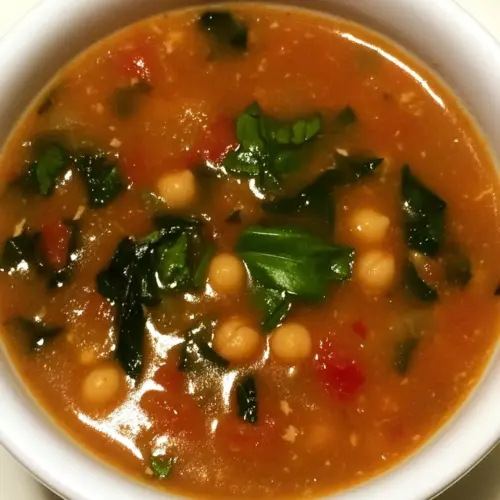
Tomato Chickpea Soup
Equipment
- Heavy soup pot
- Heavy frying pan
- Spoon or stock skimmer
- Immersion blender or blender
Ingredients
- 1 cup dried chickpeas (garbanzo beans), soaked at least 8 hours or overnight in cold water (see notes) Soak to rehydrate and tenderize dried chickpeas, making them cook evenly and absorb flavors; soaked beans also reduce cooking time and improve digestibility. Rinse thoroughly after soaking and simmer until tender before adding to the soup to ensure a creamy, hearty texture.
- 6 cups vegetable broth (see notes) Use as the liquid base to simmer and meld flavors while contributing savory depth; vegetable broth provides umami and balances the acidity of tomatoes. Choose low-sodium broth to control seasoning and adjust salt near the end of cooking.
- 1 yellow onion, diced Dice finely to build the aromatic foundation and add natural sweetness and body when softened; onions create a flavor backbone when sautéed. Cook until translucent to release sugars and integrate with garlic and tomatoes for a balanced soup.
- 8 cloves garlic, diced very small Mince very small to release pungent, aromatic oils that infuse the soup with savory depth; garlic brightens and enhances other flavors when gently cooked. Add early in the sautéing process but avoid burning to prevent bitterness.
- 1 T olive oil (or less, depending on your pan) Heat briefly to sauté aromatics and prevent sticking while contributing a subtle fruity richness; olive oil helps soften onions and garlic and carries fat-soluble flavors. Use a minimal amount to keep the soup lighter and ensure even cooking.
- one 14.5 oz can diced tomatoes with liquid Add with its liquid to provide tomato flavor, acidity, and body; diced tomatoes contribute texture and bright acidity that balances the chickpeas. Stir into the pot to deglaze and simmer so the tomato flavor melds with the broth and aromatics.
- 4 cups chopped baby spinach (measure before chopping) Chop before measuring to ensure consistent volume and to wilt evenly, adding fresh color, nutrients, and a tender leafy texture. Stir in near the end of cooking so the spinach lightly wilts and retains some vibrancy and nutrition.
- 4 T chopped fresh basil (see notes) Chop fresh to release aromatic oils and add bright, herbaceous flavor; basil lifts the tomato and garlic notes with a sweet, peppery finish. Add most toward the end of cooking or as a garnish to preserve its fragrance.
- salt and fresh ground black pepper to taste Season sparingly to enhance and balance all flavors, using salt to elevate sweetness and acidity while black pepper adds mild heat and aroma. Taste and adjust at the end so seasoning complements the chickpeas and tomatoes without overpowering them.
Instructions
- Soak chickpeas overnight or for at least 8 hours in cold water.: The soaked chickpeas will feel cool and heavy when you lift the bowl, and the water will look slightly cloudy from released starches. Soaking hydrates them so they cook evenly instead of staying chalky in the center. A common mistake is under soaking, which leads to longer simmering and uneven texture, so give them the full time. If you are short on time, use the longest soak you can and expect a firmer result that will need extra simmering to reach proper tenderness.
- Drain chickpeas and discard water, and pick out any loose skins that have come off.: After draining, the chickpeas smell faintly nutty and the discarded water will contain dust and loose skins, which you want removed for a cleaner broth. Picking out skins prevents excess foam and grit. People often skip this step, which can produce a cloudy broth with extra foam, so take a minute to rinse and inspect the legumes.
- Put chickpeas in heavy soup pot with vegetable stock and bring to a boil, then reduce heat and simmer until chickpeas are tender. This will depend on how fresh the dried chickpeas were, but for me it took about an hour.: When the pot first comes to a boil you will hear a lively rolling sound and see steam; once you lower the heat to a gentle simmer, small steady bubbles should rise, not a frantic boil. Simmering slowly softens the chickpeas uniformly and lets flavors infuse. If you boil too hard you can toughen skins and lose liquid too quickly, requiring extra adjustment, so maintain a steady simmer and test a bean periodically for the ideal tender bite.
- Use a spoon or stock skimmer to remove any foam that appears.: As the chickpeas cook, a pale foam may collect on the surface, with an earthy smell. Skimming keeps the broth clearer and the flavor cleaner. Leaving foam is a harmless shortcut, but it can leave a slightly bitter edge and a cloudy finish, so I usually skim once or twice early on for clarity.
- When chickpeas are tender, heat olive oil in heavy frying pan, then saute onions about 5 minutes, until fairly soft.: The onion will sizzle as it hits the hot oil and gradually soften, releasing a sweet aroma and becoming translucent with glossy edges. This step builds savory depth that the broth absorbs. A common error is cooking over too high heat, which browns rather than softens the onion, altering the soup's gentle profile, so keep the heat moderate and stir to encourage even caramelization.
- Add garlic and cook 2-3 minutes more.: When you add the minced garlic you will notice a bright, pungent scent that permeates the pan quickly; cook just until fragrant and slightly softened so it blends without burning. Burnt garlic tastes acrid and will overpower the soup, so watch closely and remove from direct heat if it starts to darken prematurely.
- Add onions and garlic to soup pot with diced tomatoes.: When you combine the sautéed aromatics with the simmering pot, you will hear a soft melding and smell a deeper, layered tomato aroma. The sautéed pieces bring caramelized sweetness that rounds the acidity of the canned tomatoes . Avoid dumping everything in from a very hot pan at once, which can cause a sudden aggressive simmer; instead add gently and stir to incorporate.
- Let soup simmer on low heat about 30 minutes.: During this period the flavors marry and the broth darkens slightly, releasing a warm, fragrant steam. The simmer should be low enough to produce occasional gentle bubbles, which is the sign that the ingredients are marrying without breaking down too rapidly. Over simmering at high heat can reduce liquid too much and concentrate acidity, so keep an eye on the pot and stir occasionally to prevent sticking.
- Add chopped spinach to soup (adding a bit more water or stock if needed) and simmer 15-30 minutes more.: When you fold in the chopped spinach , it will initially float, then collapse into the broth, turning a brighter green. It softens quickly and contributes fresh vegetal notes and body. If the soup looks too thick, add a splash of stock, but avoid watering it down excessively, which can dull the flavor. A mistake here is adding spinach too early, which can make it overly mushy, so time it for that tender but still present texture.
- I used my beloved Immersion Blender (affiliate link) at this point to slightly break up the ingredients. If you don’t have an immersion blender, you can put about 1/3 of the soup into a Food Processor (affiliate link) or blender and pulse a few times. You can skip this step completely too, if you’d like a chunkier soup.: The partially blended soup develops a silky mouthfeel as some solids puree into the broth while others remain whole, creating that satisfying contrast. If you use a blender instead, work in batches and vent lids to avoid hot splatter. Over blending will eliminate the pleasant chunkiness, so pulse briefly and check the texture as you go.
- Stir in chopped basil (I used my frozen basil, can also use basil pesto if you don’t have any basil) and cook 5 minutes.: Adding the chopped basil releases a bright, aromatic top note that lifts the whole pot; after five minutes its scent will perfume the kitchen and meld with the tomatoes. This short finish preserves fresh herb flavor without making it grassy. A common misstep is cooking the basil too long, which dulls its fragrance, so add it near the end for maximum aroma.
- Season soup with salt and fresh ground black pepper to taste and serve hot.: The final seasoning lets you balance and tune the flavors; the soup will taste different when hot than when cool, so season and taste from a warm spoon. Freshly ground black pepper adds a gentle warmth that complements the tomato and chickpea base. Over salting is easy to do, so add sparingly, taste, then adjust until it feels balanced to your palate.
Notes
- Soaking tip Allow the dried chickpeas to soak at least eight hours, ideally overnight, so they rehydrate fully and cook in predictable time. If you find some are still firm after an hour of simmering, continue cooking and test frequently.
- Broth choice Use a good quality vegetable broth since it forms the soup's foundation; low sodium variants let you control salt levels at the end.
- Oil control Start with one tablespoon of olive oil and reduce it if your pan runs hot, because too much oil can make the sauté greasy instead of glossy.
- Tomato texture The canned tomatoes add acidity and body; if you want a smoother finish, pulse a third of the soup in a blender and return it to the pot.
- Herb swap If fresh basil is unavailable, frozen basil works in a pinch, but add it slightly earlier to allow the flavors to bloom.
