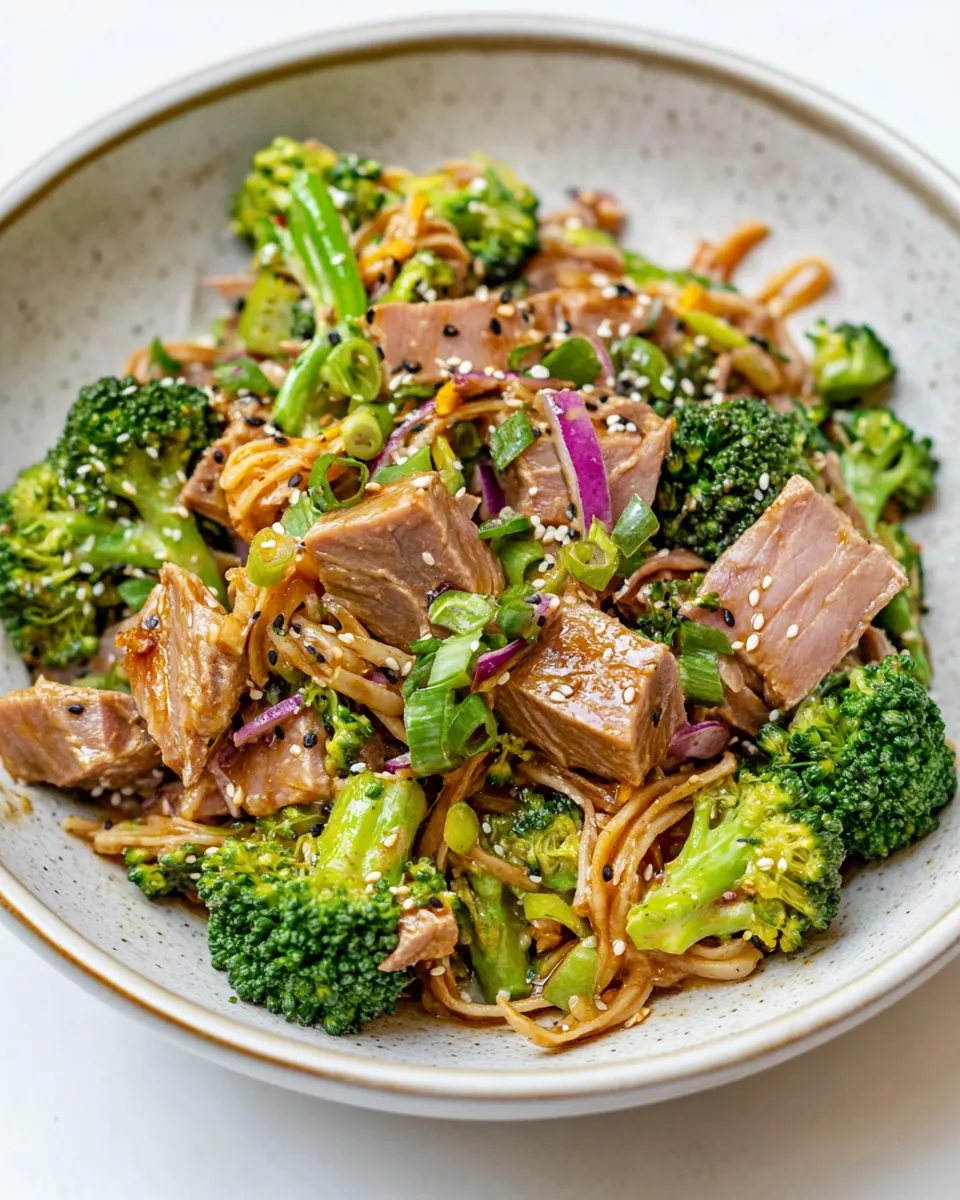
Thai Tuna and Broccoli Salad
Thai Tuna and Broccoli Salad arrived in my kitchen the night I needed something bright, fast, and a little unexpected.
I was coming home from a long day, hungry and restless, with a small stash of pantry staples and a fresh tuna steak that begged for attention. I wanted a bowl that felt like a meal rather than a hurried plate, something with contrasting textures and an assertive dressing to tie it together. The first bite convinced me this combination was a keeper, so I started tinkering with the seasoning and herb balance until it felt just right.
Over time I learned to rely on crisp broccoli for body, slippery soba noodles for comfort, and the seared tuna to lend richness without weighing the bowl down. Friends who came by for dinner noticed how the ginger and cilantro made the whole salad pop, and now this is a go to when I want a quick, impressive meal that doubles as leftovers the next day.
Recipe Snapshot
40 mins
20 mins
20 mins
Easy
350 kcal
Thai
Gluten-Free, Paleo
Salads
Large skillet, Sharp knife, Cutting board, Tongs or spatula
Why You Need This Thai Tuna and Broccoli Salad
Vivid contrasting textures
I love how Thai Tuna and Broccoli Salad pairs crunchy broccoli with tender, chewy soba noodles. The contrast keeps every bite interesting, offering crisp snaps and silky strands. I often tell guests that texture is as important as flavor, and this dish delivers both in equal measure.
Bright, balanced flavors
The marriage of minced ginger, minced garlic, soy sauce, and a touch of honey creates an interplay of savory, sweet, and pungent notes that dance around the palate. I prefer mild heat from the red pepper flakes, which lingers without overpowering the fresh herbs. You get complexity without needing exotic pantry items.
Fast and flexible weeknight star
I make this dish on busy evenings because it comes together quickly. With around twenty minutes of hands on time, you can have a chef style bowl on the table. The recipe is forgiving, so if you need to swap the protein or cook the broccoli a touch longer, it still holds up nicely.
Herbs that lift the whole bowl
Adding fresh cilantro and mint at the end brightens everything and gives the salad a signature lift. I always add them last to preserve their fresh aroma. They act like a finishing brushstroke, turning simple ingredients into something more elegant.
Protein forward yet light
The seared tuna provides a meaty, satisfying element that keeps the salad from feeling like a side. Because the tuna is quickly seared and kept slightly pink inside, it stays tender and flavorful, which makes the bowl feel substantial without being heavy.
Ingredients to Make Thai Tuna and Broccoli Salad
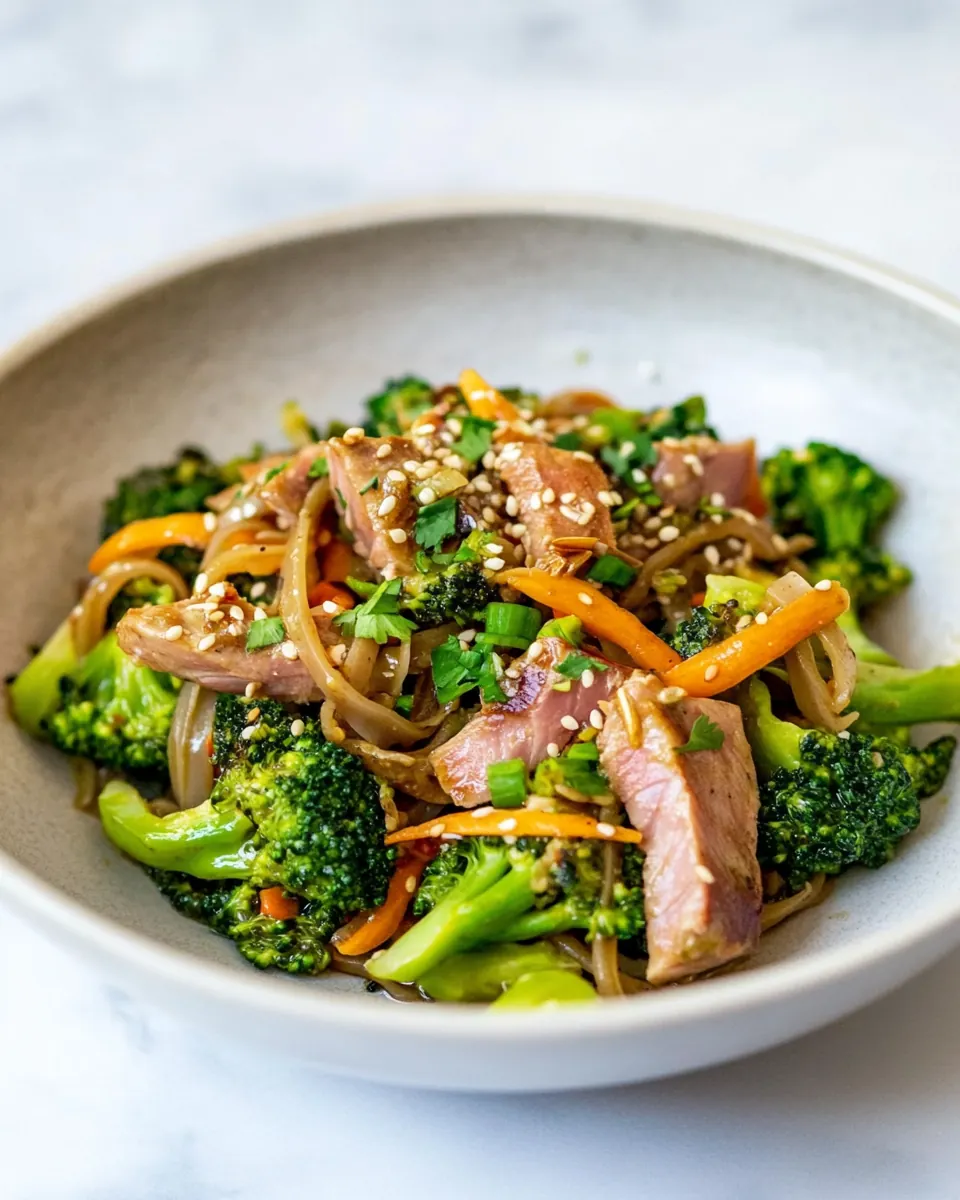
I believe a great salad starts with a clear idea of roles: crunchy veg for structure, noodles for substance, aromatics for depth, and a seared protein for heft. These ingredients are chosen to play those parts, each adding texture or flavor that supports the whole.
- 1 tablespoon sesame oil: Adds a nutty, aromatic base and helps to lightly coat ingredients for stir-frying and dressing; imparts depth without overpowering delicate flavors. Use sparingly to prevent greasiness while enhancing overall mouthfeel and sheen of the salad.
- 1 1/2 cups broccoli chopped into small florets: Provides bright, crunchy texture and a slightly bitter, vegetal note when chopped into small florets; holds up well to warm dressings and quick searing. Offers nutritional fiber and a satisfying bite that contrasts softer noodles and tuna.
- 1/2 cup red onion cut into thin strips: Contributes sharp, pungent sweetness and crispness when cut into thin strips; balances richer, oily components and adds visual color contrast. Releases aromatic compounds that brighten the salad and complement ginger and cilantro.
- 1/2 cup shredded carrot: Brings natural sweetness, moisture, and tender crispness when shredded, adding color and a mild earthy flavor. Helps to bulk the salad without adding heaviness and pairs well with Asian-inspired dressings and herbs.
- 1 tablespoon fresh ginger minced: Delivers fresh, zesty heat and aromatic complexity when minced, infusing the dish with bright citrusy-spicy notes. Works with garlic and soy to build the layered forward flavors characteristic of Thai-inspired salads.
- 2 garlic cloves minced: Provides savory depth and pungent aroma when minced, contributing umami and warmth; helps to balance sweetness and acidity in the dressing. Caramelizes slightly if cooked briefly, rounding out the salad's flavor profile.
- 2 tablespoons low sodium soy sauce: Adds salty, umami richness and savory backbone to the dressing; low sodium option controls overall saltiness while preserving flavor. Blends smoothly with honey and sesame oil to create a balanced, Asian-style vinaigrette.
- 1 tablespoon honey: Sweetens and rounds out the dressing while offsetting soy's saltiness and chili heat; dissolves into warm dressings for even sweetness. Helps to marry flavors and add a mellow, caramel-like note to the salad.
- 1 teaspoon red pepper flakes: Provides concentrated heat and a smoky, spicy kick that can be adjusted to taste; sprinkled sparingly to avoid overwhelming other flavors. Enhances the aromatic profile and gives the salad a lingering warmth typical of Thai cuisine.
- 2 cups soba noodles cooked: Supplies a chewy, nutty foundation and bulk to the salad when cooked; absorbs dressing flavors and provides a pleasing contrast to vegetables and fish. Cools quickly and holds texture, making it ideal for warm or room-temperature salads.
- 2 tablespoons fresh cilantro roughly chopped: Adds a bright, herbal freshness and citrusy lift when roughly chopped; complements spicy and savory elements while enhancing aroma. Sprinkled near the end to preserve volatile oils and keep the herbaceous character vibrant.
- 1 tablespoon fresh mint roughly chopped: Contributes cool, menthol-like freshness and aromatic complexity when roughly chopped; pairs well with cilantro and ginger to lighten rich flavors. Used sparingly to prevent overpowering other herbs while adding a refreshing note.
- 1 tablespoon olive oil: Provides a silky mouthfeel and subtle fruitiness when used to sear or finish the tuna; helps prevent sticking and adds richness to the salad. Combines well with sesame oil and herbs to create a balanced fat profile.
- 8 ounces fresh tuna steak: Supplies fresh, meaty protein with firm texture and mild flavor that pairs well with bold dressings and herbs; can be seared or served rare for best texture. Absorbs marinade and seasoning quickly, making it a focal point of the salad.
- 1/2 teaspoon Kosher salt: Enhances overall seasoning by bringing clean salinity that accentuates other components; kosher salt crystals dissolve to season both vegetables and tuna. Use measured amounts to avoid oversalting delicate ingredients and to balance flavors.
- 1 teaspoon ground black pepper: Adds sharp, warming spice and savory complexity that complements salt and herbal notes; ground black pepper heightens perception of other flavors. Freshly ground pepper provides a brighter, more pronounced aroma and finish.
Cooking Method for Thai Tuna and Broccoli Salad
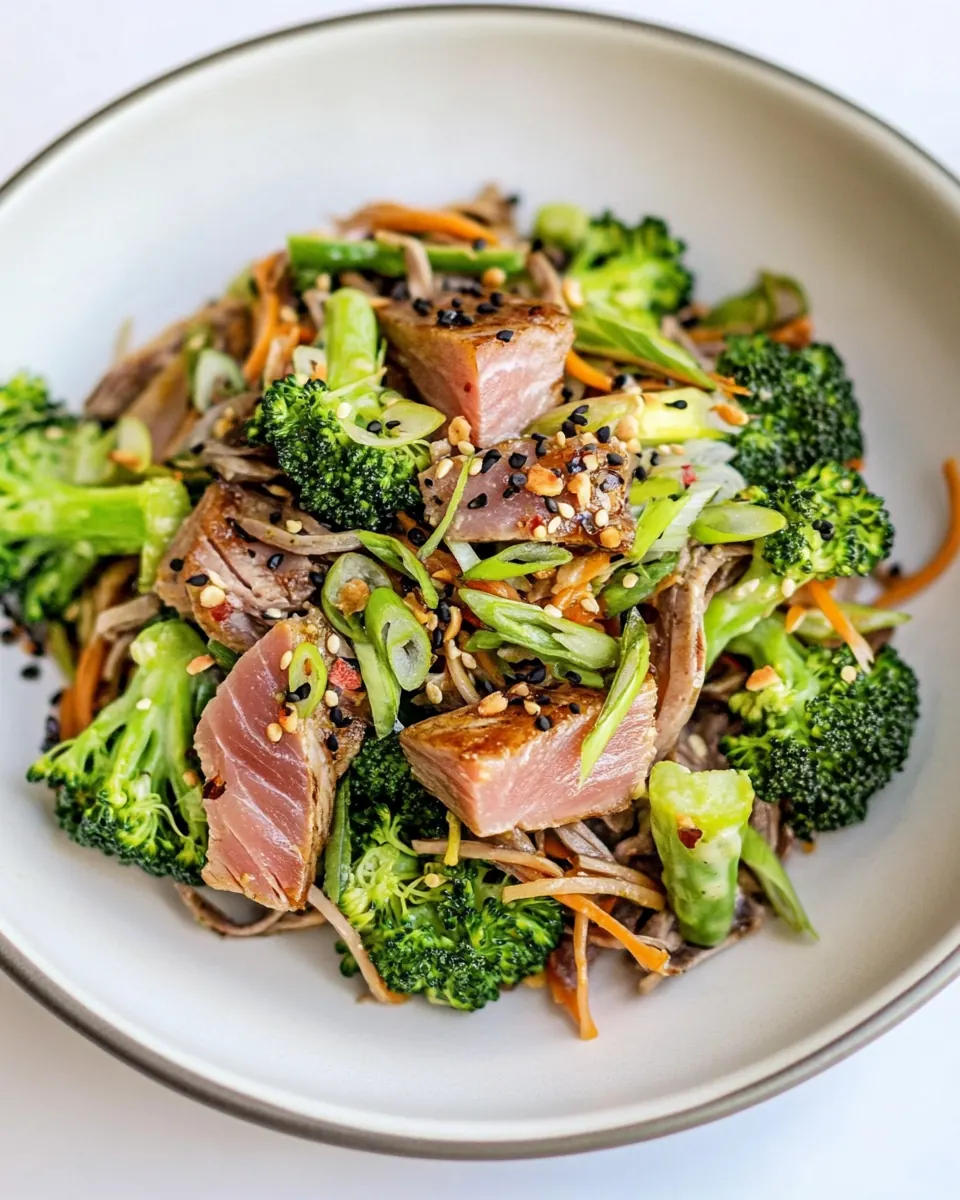
I like to think of the cooking as two acts: first coaxing brightness and crunch from the vegetables and noodles, then searing the tuna to provide a satisfying, savory finish. Keep your pan hot, time your sear, and add the herbs at the end so they stay lively.
- In a large skillet, heat the sesame oil. Once hot, add the broccoli and red onion until the onion just begins to soften.: The aroma of toasted oil should bloom as it warms, releasing a warm, nutty scent that signals readiness. When the oil shimmers lightly, it is hot enough to make the broccoli sing, producing a quick sizzle when the vegetables hit the pan. That sizzle is your audio cue that caramelization will begin. A common mistake is overheating so the oil smokes, which can impart bitterness, so watch for a gentle shimmer rather than heavy smoke. If your pan is too cool, the vegetables will steam instead of crisping, leaving them limp instead of pleasantly crunchy.
- Stir in the carrot, garlic clove, and minced ginger. Cook, stirring often, just until the garlic becomes fragrant. The vegetables should still be slightly crunchy.: You will hear an immediate sizzle and see the edges of the broccoli begin to turn bright and slightly blistered while the red onion starts to go translucent. The visual cue is important, the onion should show softened edges but still retain some structure, this preserves a layered texture. I often toss gently to ensure even contact with the pan, which helps small caramelized bits form, adding sweet savory notes. Avoid stirring constantly, which prevents browning and yields a steamed texture instead of the slight char you want.
- Mix in the soy sauce, honey, red pepper flakes, and soba noodles. Cook until the noodles are hot. Gently stir in the cilantro and mint. Spoon into serving bowls and set aside.: The moment you add minced garlic and minced ginger , the pan will give off an aromatic lift that suggests the dish is coming together. You want to cook just until the garlic becomes fragrant, a few quick stirs, because overcooking will lead to bitterness and a breakdown of the fresh ginger brightness. The carrot should warm through while maintaining a subtle resistance under the teeth. If the garlic starts browning quickly, lower the heat immediately to prevent a burnt taste.
- In the same pan the broccoli and noodles were cooked in, heat the olive oil on high heat.: As the savory soy melds with the sweet honey, the pan will steam slightly and the sauce will coat the vegetables and noodles, giving them a glossy sheen. The noodles will take on the sauce and warm through, and you should watch for steam rising steadily, indicating that the flavors are marrying. Toss gently so strands of soba noodles and pieces of broccoli are evenly coated. Avoid adding too much sauce at once, which can make the mixture soggy rather than lightly dressed.
- Season the tuna steaks with the salt and pepper. Place the tuna steak into the hot pan and sear each side until lightly browned. The pan should be very hot and each side should only take 2 to 3 minutes to sear.: You want the soba noodles to be warmed through but not mushy, with the sauce clinging to each strand. The texture should be supple and slightly springy, and you should notice a subtle aroma of soy and sesame mingling. A frequent error is overcooking the noodles in the pan, leading to a gummy mouthfeel; stop the heat as soon as they are warmed and toss in the herbs quickly.
- Let the tuna steak rest for about 2 minutes before slicing into thin strips. The tuna should still be pink in the center. Place on top of each serving of the broccoli salad. Drizzle with additional soy sauce if desired.: Adding the chopped cilantro and chopped mint at the end preserves their fresh, citrusy aromas and bright green color. When folded in, they release a fragrant lift that transforms the bowl. The herbs should remain visibly fresh and not wilted; fold them in only briefly to avoid losing their vibrancy. If added too early, their flavors will dissipate and the salad will lose its fragrant finish.
- Spoon into serving bowls and set aside: Transfer the dressed vegetable and noodle mixture into bowls so they maintain the intended texture and temperature while you sear the protein. Serving now prevents the noodles from sitting in residual heat that could soften them excessively. A common oversight is leaving the salad in the pan while searing the tuna , which can cause it to continue cooking and become limp; keep the salad separate until plating.
- In the same pan the broccoli and noodles were cooked in, heat the olive oil on high heat: The pan will still have fond and flavor, which helps build a crust on the tuna . Heating olive oil until it shimmers creates a surface hot enough for a quick sear. You should see small wisps of steam and be prepared to act quickly, because over heating can cause smoking and a burnt taste. If the pan is not hot enough, you will not achieve that desirable browned exterior.
- Season the tuna steaks with the salt and pepper: Even seasoning draws out the natural flavors of the tuna , giving the exterior a savory boost during searing. Press the salt and pepper gently into the surface so it adheres, and allow the seasoning to sit briefly if time permits to enhance the crust. One mistake is oversalting, especially since soy sauce may be added later; use the kosher salt judiciously.
- Place the tuna steak into the hot pan and sear each side until lightly browned: You will hear a sharp sizzle and quickly see a caramelized edge form. Each side should take about 2 to 3 minutes, resulting in a golden exterior and a warm, pink center if done correctly. The visual cue is a deepened color on the surface while the center remains rosy. Resist the urge to press down on the steak, that squeezes out juices and can dry the fish.
- Let the tuna steak rest for about 2 minutes before slicing into thin strips: Resting allows the juices to redistribute, resulting in a moister interior and easier slicing. The steak will finish cooking slightly from residual heat, so aim for a warm pink center when slicing thin strips. Use a sharp knife for clean cuts, and avoid slicing immediately off the heat which can cause juices to spill and leave the meat drier.
- The tuna should still be pink in the center: Serving the tuna slightly pink ensures tenderness and a pleasant, melt in your mouth texture. If you prefer it cooked more, be aware that extended searing will firm it up and reduce juiciness. A good guide is color and a gentle spring to the touch; overcooking will produce a chalky, dry interior, which is what we try to prevent.
- Place on top of each serving of the broccoli salad: Lay the thin strips of seared tuna across the dressed vegetables and noodles so each bite gets a piece of fish. The contrast of warm seared protein on cool dressed vegetables creates a layered eating experience. Consider a light drizzle of extra soy if desired, but avoid pouring too much on top, which can overwhelm the balance of flavors.
Helpful Hints
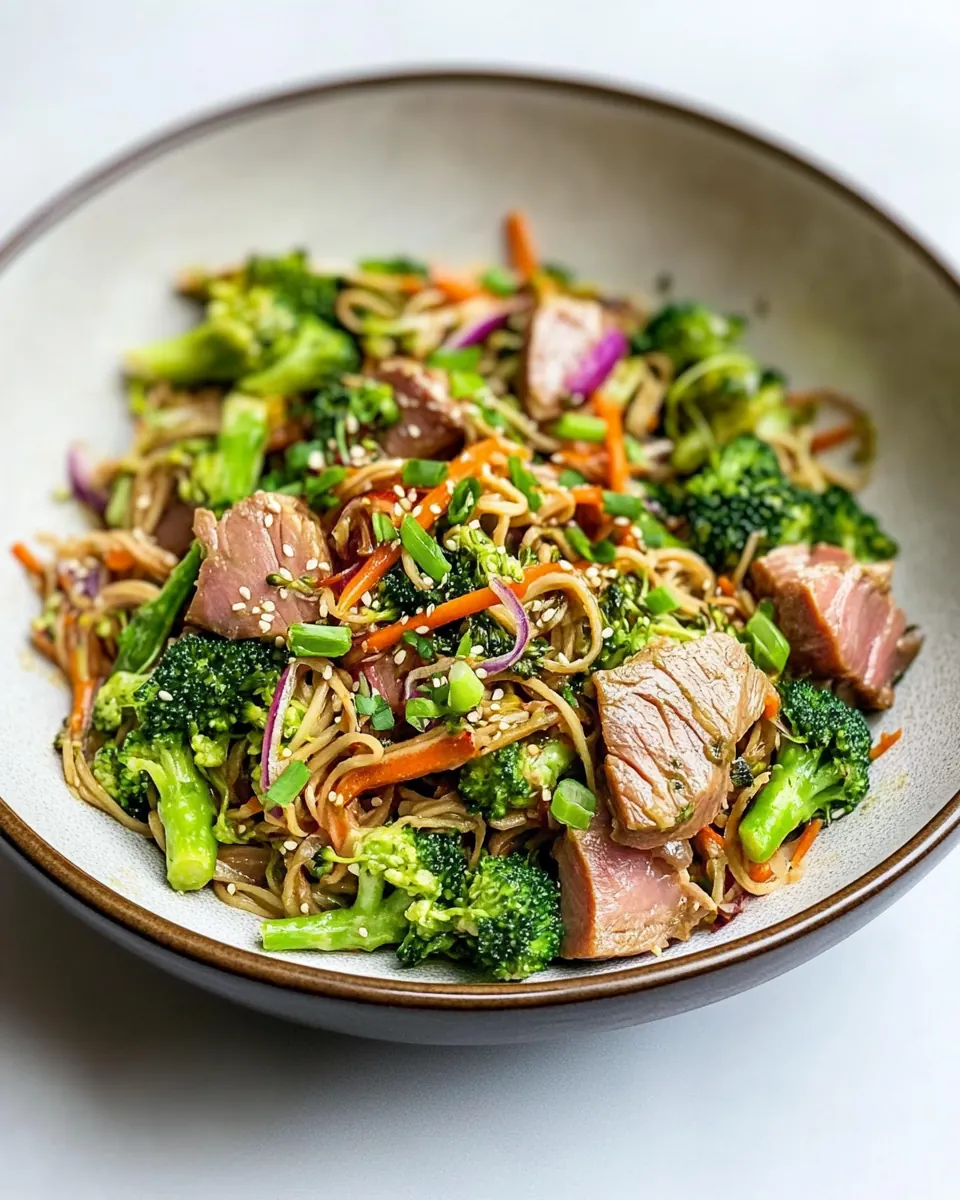
This salad rewards small details more than heavy handed technique. Below are focused hints I rely on to maintain texture, flavor, and presentation when I make Thai Tuna and Broccoli Salad. Each one is designed to help you avoid common pitfalls and maximize aroma and mouthfeel.
- Warm the pan properly: Make sure the skillet is sufficiently hot before adding the sesame oil, a properly heated pan prevents steaming and promotes quick browning of the broccoli.
- Rinse the soba after cooking: Cool rinsing stops residual cooking and prevents the noodles from becoming gluey while preserving their springy texture.
- Finish herbs off heat: Add the chopped cilantro and chopped mint only at the end so they remain bright and aromatic in the final bowl.
- Pat tuna dry: Remove surface moisture from the tuna before seasoning and searing to ensure a good crust forms quickly and the steak does not steam.
- Control the heat: If the oil starts to smoke, lower the heat; burnt oil will impart a bitter note and overshadow the delicate herbs and honey.
- Serve immediately: Assemble the bowls right after slicing the tuna so the contrast between warm steak and cool dressed vegetables is most pronounced.
Accompaniments for Thai Tuna and Broccoli Salad
This bowl stands well alone, but pairing it with complementary sides and serving contexts can elevate the experience. Below are suggested accompaniments, serving styles, and storage notes to help you present the dish beautifully for different occasions.
- Light rice or quinoa: Serve a small side of neutral grains to make the meal heartier for dinner occasions, they absorb extra sauce and balance the bowl.
- Chilled cucumber ribbons: Add a crisp, cooling element when serving during warm months, perfect for lunch or a casual dinner.
- Family style sharing: Present the components separately and let guests assemble their bowls, ideal for a relaxed weeknight gathering.
- Ramadan iftar friendly: This salad offers immediate protein and fresh vegetables, a restorative choice after a day of fasting and easily portioned for sharing.
- Make ahead elements: Cook the soba noodles and sautéed vegetables in advance and store separately from the seared tuna to maintain texture when reheating.
- Storage tips: Keep the dressed salad refrigerated up to two days, but reserve the tuna to sear the day of serving for best texture and flavor.
- Seasonal pairings: Swap the herbs to emphasize seasonal notes, but for spring and summer the bright mint and cilantro are especially complementary.
- Occasion match: Works beautifully for a casual lunch, elegant dinner, or any time you want a fast, balanced meal with a restaurant feel.
FAQ
Conclusion
What makes this recipe special is its harmony of textures and bright, layered flavors. The combination of crisp broccoli, silky soba noodles, fresh herbs, and a perfectly seared tuna creates a balanced bowl that feels both light and satisfying. I encourage you to give it a try on a busy weeknight or when you want a colorful, nutritious meal with minimal fuss. It is approachable, flavorful, and consistently earns compliments at the table.
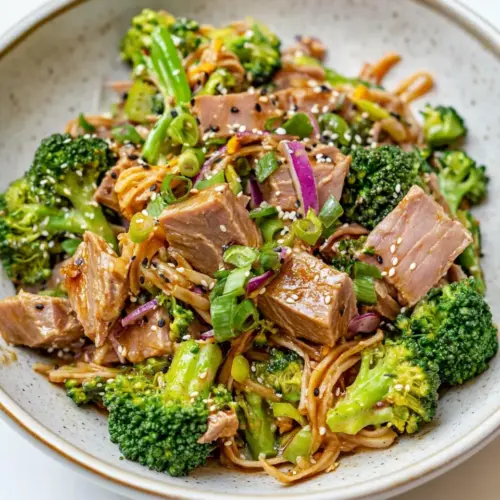
Thai Tuna and Broccoli Salad
Equipment
- Large Skillet
- Sharp Knife
- Cutting Board
- Tongs or spatula
Ingredients
- 1 tablespoon sesame oil Adds a nutty, aromatic base and helps to lightly coat ingredients for stir-frying and dressing; imparts depth without overpowering delicate flavors. Use sparingly to prevent greasiness while enhancing overall mouthfeel and sheen of the salad.
- 1 1/2 cups broccoli chopped into small florets Provides bright, crunchy texture and a slightly bitter, vegetal note when chopped into small florets; holds up well to warm dressings and quick searing. Offers nutritional fiber and a satisfying bite that contrasts softer noodles and tuna.
- 1/2 cup red onion cut into thin strips Contributes sharp, pungent sweetness and crispness when cut into thin strips; balances richer, oily components and adds visual color contrast. Releases aromatic compounds that brighten the salad and complement ginger and cilantro.
- 1/2 cup shredded carrot Brings natural sweetness, moisture, and tender crispness when shredded, adding color and a mild earthy flavor. Helps to bulk the salad without adding heaviness and pairs well with Asian-inspired dressings and herbs.
- 1 tablespoon fresh ginger minced Delivers fresh, zesty heat and aromatic complexity when minced, infusing the dish with bright citrusy-spicy notes. Works with garlic and soy to build the layered forward flavors characteristic of Thai-inspired salads.
- 2 garlic cloves minced Provides savory depth and pungent aroma when minced, contributing umami and warmth; helps to balance sweetness and acidity in the dressing. Caramelizes slightly if cooked briefly, rounding out the salad's flavor profile.
- 2 tablespoons low sodium soy sauce Adds salty, umami richness and savory backbone to the dressing; low sodium option controls overall saltiness while preserving flavor. Blends smoothly with honey and sesame oil to create a balanced, Asian-style vinaigrette.
- 1 tablespoon honey Sweetens and rounds out the dressing while offsetting soy's saltiness and chili heat; dissolves into warm dressings for even sweetness. Helps to marry flavors and add a mellow, caramel-like note to the salad.
- 1 teaspoon red pepper flakes Provides concentrated heat and a smoky, spicy kick that can be adjusted to taste; sprinkled sparingly to avoid overwhelming other flavors. Enhances the aromatic profile and gives the salad a lingering warmth typical of Thai cuisine.
- 2 cups soba noodles cooked Supplies a chewy, nutty foundation and bulk to the salad when cooked; absorbs dressing flavors and provides a pleasing contrast to vegetables and fish. Cools quickly and holds texture, making it ideal for warm or room-temperature salads.
- 2 tablespoons fresh cilantro roughly chopped Adds a bright, herbal freshness and citrusy lift when roughly chopped; complements spicy and savory elements while enhancing aroma. Sprinkled near the end to preserve volatile oils and keep the herbaceous character vibrant.
- 1 tablespoon fresh mint roughly chopped Contributes cool, menthol-like freshness and aromatic complexity when roughly chopped; pairs well with cilantro and ginger to lighten rich flavors. Used sparingly to prevent overpowering other herbs while adding a refreshing note.
- 1 tablespoon olive oil Provides a silky mouthfeel and subtle fruitiness when used to sear or finish the tuna; helps prevent sticking and adds richness to the salad. Combines well with sesame oil and herbs to create a balanced fat profile.
- 8 ounces fresh tuna steak Supplies fresh, meaty protein with firm texture and mild flavor that pairs well with bold dressings and herbs; can be seared or served rare for best texture. Absorbs marinade and seasoning quickly, making it a focal point of the salad.
- 1/2 teaspoon Kosher salt Enhances overall seasoning by bringing clean salinity that accentuates other components; kosher salt crystals dissolve to season both vegetables and tuna. Use measured amounts to avoid oversalting delicate ingredients and to balance flavors.
- 1 teaspoon ground black pepper Adds sharp, warming spice and savory complexity that complements salt and herbal notes; ground black pepper heightens perception of other flavors. Freshly ground pepper provides a brighter, more pronounced aroma and finish.
Instructions
- In a large skillet, heat the sesame oil. Once hot, add the broccoli and red onion until the onion just begins to soften.: The aroma of toasted oil should bloom as it warms, releasing a warm, nutty scent that signals readiness. When the oil shimmers lightly, it is hot enough to make the broccoli sing, producing a quick sizzle when the vegetables hit the pan. That sizzle is your audio cue that caramelization will begin. A common mistake is overheating so the oil smokes, which can impart bitterness, so watch for a gentle shimmer rather than heavy smoke. If your pan is too cool, the vegetables will steam instead of crisping, leaving them limp instead of pleasantly crunchy.
- Stir in the carrot, garlic clove, and minced ginger. Cook, stirring often, just until the garlic becomes fragrant. The vegetables should still be slightly crunchy.: You will hear an immediate sizzle and see the edges of the broccoli begin to turn bright and slightly blistered while the red onion starts to go translucent. The visual cue is important, the onion should show softened edges but still retain some structure, this preserves a layered texture. I often toss gently to ensure even contact with the pan, which helps small caramelized bits form, adding sweet savory notes. Avoid stirring constantly, which prevents browning and yields a steamed texture instead of the slight char you want.
- Mix in the soy sauce, honey, red pepper flakes, and soba noodles. Cook until the noodles are hot. Gently stir in the cilantro and mint. Spoon into serving bowls and set aside.: The moment you add minced garlic and minced ginger , the pan will give off an aromatic lift that suggests the dish is coming together. You want to cook just until the garlic becomes fragrant, a few quick stirs, because overcooking will lead to bitterness and a breakdown of the fresh ginger brightness. The carrot should warm through while maintaining a subtle resistance under the teeth. If the garlic starts browning quickly, lower the heat immediately to prevent a burnt taste.
- In the same pan the broccoli and noodles were cooked in, heat the olive oil on high heat.: As the savory soy melds with the sweet honey, the pan will steam slightly and the sauce will coat the vegetables and noodles, giving them a glossy sheen. The noodles will take on the sauce and warm through, and you should watch for steam rising steadily, indicating that the flavors are marrying. Toss gently so strands of soba noodles and pieces of broccoli are evenly coated. Avoid adding too much sauce at once, which can make the mixture soggy rather than lightly dressed.
- Season the tuna steaks with the salt and pepper. Place the tuna steak into the hot pan and sear each side until lightly browned. The pan should be very hot and each side should only take 2 to 3 minutes to sear.: You want the soba noodles to be warmed through but not mushy, with the sauce clinging to each strand. The texture should be supple and slightly springy, and you should notice a subtle aroma of soy and sesame mingling. A frequent error is overcooking the noodles in the pan, leading to a gummy mouthfeel; stop the heat as soon as they are warmed and toss in the herbs quickly.
- Let the tuna steak rest for about 2 minutes before slicing into thin strips. The tuna should still be pink in the center. Place on top of each serving of the broccoli salad. Drizzle with additional soy sauce if desired.: Adding the chopped cilantro and chopped mint at the end preserves their fresh, citrusy aromas and bright green color. When folded in, they release a fragrant lift that transforms the bowl. The herbs should remain visibly fresh and not wilted; fold them in only briefly to avoid losing their vibrancy. If added too early, their flavors will dissipate and the salad will lose its fragrant finish.
- Spoon into serving bowls and set aside: Transfer the dressed vegetable and noodle mixture into bowls so they maintain the intended texture and temperature while you sear the protein. Serving now prevents the noodles from sitting in residual heat that could soften them excessively. A common oversight is leaving the salad in the pan while searing the tuna , which can cause it to continue cooking and become limp; keep the salad separate until plating.
- In the same pan the broccoli and noodles were cooked in, heat the olive oil on high heat: The pan will still have fond and flavor, which helps build a crust on the tuna . Heating olive oil until it shimmers creates a surface hot enough for a quick sear. You should see small wisps of steam and be prepared to act quickly, because over heating can cause smoking and a burnt taste. If the pan is not hot enough, you will not achieve that desirable browned exterior.
- Season the tuna steaks with the salt and pepper: Even seasoning draws out the natural flavors of the tuna , giving the exterior a savory boost during searing. Press the salt and pepper gently into the surface so it adheres, and allow the seasoning to sit briefly if time permits to enhance the crust. One mistake is oversalting, especially since soy sauce may be added later; use the kosher salt judiciously.
- Place the tuna steak into the hot pan and sear each side until lightly browned: You will hear a sharp sizzle and quickly see a caramelized edge form. Each side should take about 2 to 3 minutes, resulting in a golden exterior and a warm, pink center if done correctly. The visual cue is a deepened color on the surface while the center remains rosy. Resist the urge to press down on the steak, that squeezes out juices and can dry the fish.
- Let the tuna steak rest for about 2 minutes before slicing into thin strips: Resting allows the juices to redistribute, resulting in a moister interior and easier slicing. The steak will finish cooking slightly from residual heat, so aim for a warm pink center when slicing thin strips. Use a sharp knife for clean cuts, and avoid slicing immediately off the heat which can cause juices to spill and leave the meat drier.
- The tuna should still be pink in the center: Serving the tuna slightly pink ensures tenderness and a pleasant, melt in your mouth texture. If you prefer it cooked more, be aware that extended searing will firm it up and reduce juiciness. A good guide is color and a gentle spring to the touch; overcooking will produce a chalky, dry interior, which is what we try to prevent.
- Place on top of each serving of the broccoli salad: Lay the thin strips of seared tuna across the dressed vegetables and noodles so each bite gets a piece of fish. The contrast of warm seared protein on cool dressed vegetables creates a layered eating experience. Consider a light drizzle of extra soy if desired, but avoid pouring too much on top, which can overwhelm the balance of flavors.
Notes
- Warm the pan properly: Make sure the skillet is sufficiently hot before adding the sesame oil, a properly heated pan prevents steaming and promotes quick browning of the broccoli.
- Rinse the soba after cooking: Cool rinsing stops residual cooking and prevents the noodles from becoming gluey while preserving their springy texture.
- Finish herbs off heat: Add the chopped cilantro and chopped mint only at the end so they remain bright and aromatic in the final bowl.
- Pat tuna dry: Remove surface moisture from the tuna before seasoning and searing to ensure a good crust forms quickly and the steak does not steam.
- Control the heat: If the oil starts to smoke, lower the heat; burnt oil will impart a bitter note and overshadow the delicate herbs and honey.
- Serve immediately: Assemble the bowls right after slicing the tuna so the contrast between warm steak and cool dressed vegetables is most pronounced.