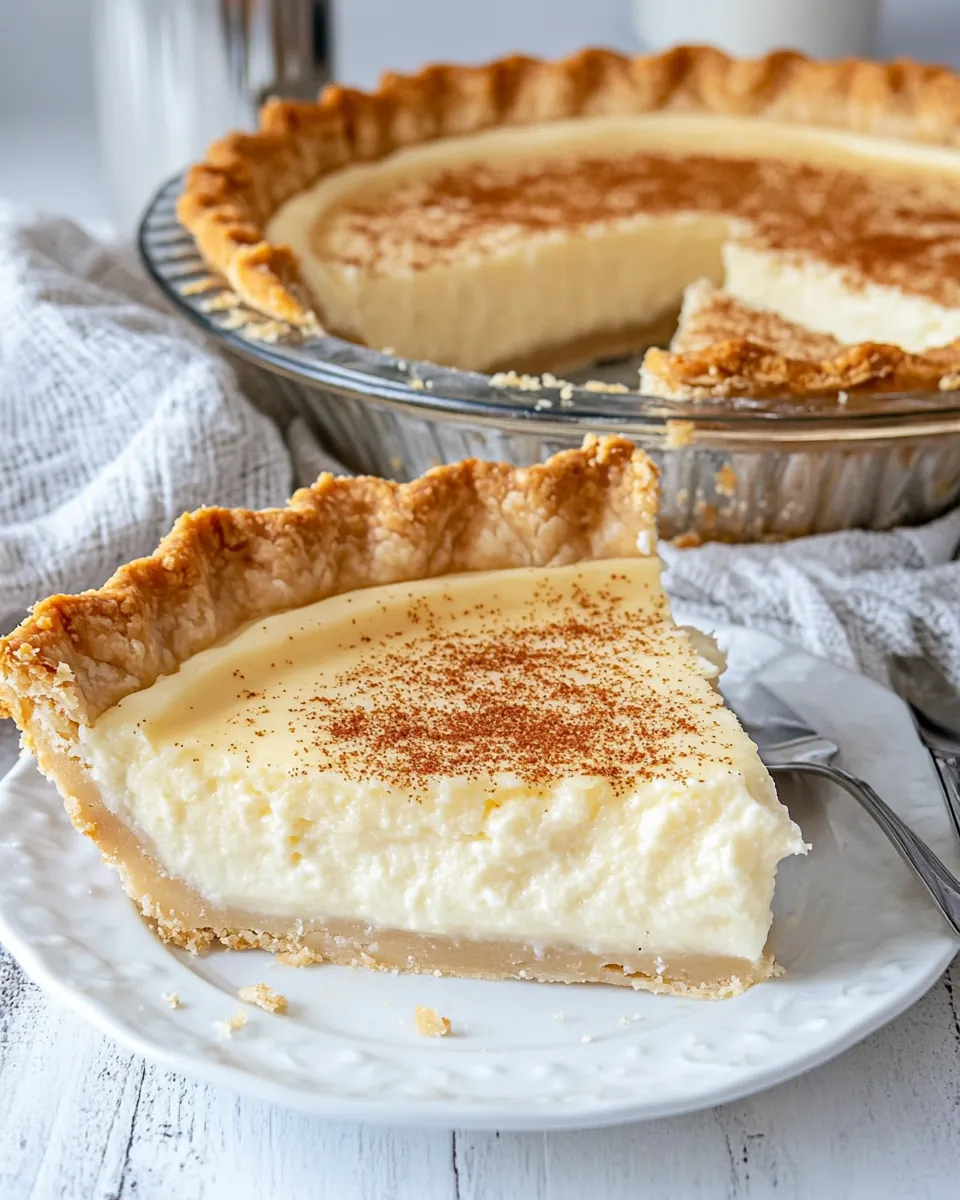
Sugar Cream Pie
Sugar Cream Pie has been the sort of dessert that sneaks into my life during chilly afternoons when I want something simple, nostalgic, and incredibly comforting.
I remember the first time I tasted a slice at a friend s kitchen table, the crust offering a gentle snap, followed by a filling that tasted like warm custard kissed with cinnamon and butter. That afternoon stuck with me because it felt like a recipe handed down without a story, something everyone seemed to claim as their favorite. Over the years I tried versions with store bought crusts and from scratch crusts, learning how a few small choices change texture and flavor in subtle ways. When I make Sugar Cream Pie now, I think about that table and the way a simple dessert can make company linger a little longer, stirring cups of coffee and trading small, satisfied smiles.
Making this pie has become my go to when I want to impress without fuss. The filling is almost whisperingly simple, relying on pantry staples to build a creamy, lightly spiced finish. What I love is how forgiving it is, and how it rewards attention during a couple of key moments, like watching the filling thicken on the stove and the crust take on a pale golden color in the oven. This recipe has a homely charm, and it feels right for crisp evenings, holiday tables, or when you need a dessert that comforts without calling for rare ingredients. Give it a try, you might find it becomes one of your own easy traditions.
Recipe Snapshot
1 hr 10 mins
30 mins
40 mins
Medium
350 kcal
American
Gluten-Free, Low FODMAP
Desserts
9-inch pie plate, Parchment paper, Pie weights or dried beans, Medium saucepan, Whisk, Spatula
Why This Sugar Cream Pie Works
Comforting, not fussy
I adore how Sugar Cream Pie feels approachable. The filling is built from everyday sugar, cornstarch, and half and half, so you do not need specialty ingredients. I often tell friends this is the pie to make when you want a soul soothing dessert without a long ingredient list.
Textural contrast
The interplay between a crisp pie crust and a lusciously smooth filling keeps each bite interesting. I find that a properly blind baked crust gives a clean crack against the silky interior, offering that classic pie experience that always earns second helpings.
Warm spices that whisper
A little cinnamon and a pinch of nutmeg go a long way. They lift the filling without stealing the show, giving the pie a cozy aroma that fills the kitchen as it bakes. I often inhale deeply as it comes together, it s part of the pleasure.
Flexible crust options
I love that Sugar Cream Pie welcomes different crust choices. Whether you use a homemade all butter crust, a refrigerated crust, or a frozen one, the filling adapts and still shines. That flexibility makes this recipe great for last minute plans.
Make ahead friendly
This pie stores well chilled, so you can bake the day before serving and let the flavors settle. I appreciate a dessert that reduces day of stress, and this one rewards patience with a more settled texture and flavor once chilled.
Ingredients You’ll Need for Sugar Cream Pie
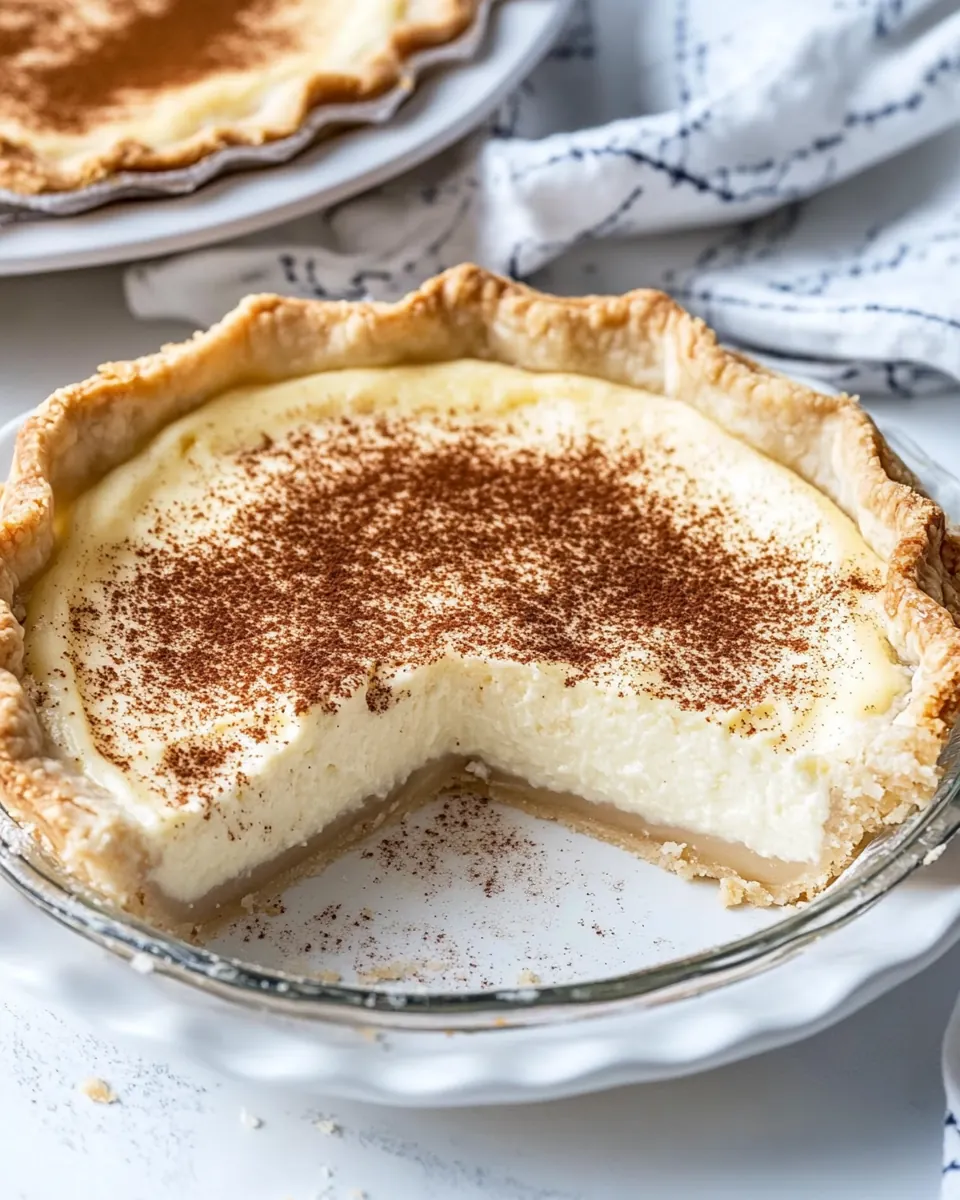
These ingredients are intentionally simple, each playing a clear role. The pie crust provides structure and crunch, while sugar and cornstarch create the sweet, thickened base. Half and half gives the filling its creamy body, and butter adds richness and a silky mouthfeel. Finally, the vanilla, cinnamon, and nutmeg supply warm aromatic notes that make this pie feel like a hug in pastry form.
- 19 inch pie crust (from scratch, frozen, or a box of 2 refrigerated): Prebaked or frozen crust provides a ready-made shell that holds the filling and yields a crisp edge; choose a 19-inch crust to fit the recipe and prevent shrinkage during baking. Ensure crust is thawed if frozen and dock or weight if blind-baking to avoid bubbles. For homemade crust, chill thoroughly before rolling for best texture.
- 1 cup (200 g) granulated sugar: Sweetens the custard filling and helps create a smooth, caramelized surface when heated; measure 1 cup (200 g) precisely for balanced sweetness. Dissolve sugar into the liquid base to avoid graininess and stir constantly while cooking to prevent scorching.
- 1/4 cup (32 g) cornstarch: Thickens the filling by gelatinizing when heated with liquid, producing a custard-like set; use 1/4 cup (32 g) cornstarch for a creamy but sliceable texture. Mix with a small amount of cold liquid first to form a slurry to prevent lumps when added to the hot mixture.
- 2 cups (474 ml) half and half: Adds richness, creaminess, and body to the custard while contributing to mouthfeel and flavor; 2 cups (474 ml) half and half provides a balance between milkiness and fat. Heat gently with sugar and cornstarch to activate thickening without scalding; higher-fat dairy will make a denser filling.
- 6 tablespoons (84 g) unsalted butter, sliced: Enriches the filling with butterfat for a silky finish and slight gloss; 6 tablespoons (84 g) sliced into pieces melt evenly into the warm custard. Add gradually off heat or at the end of cooking and whisk until fully incorporated to avoid separating.
- 1 teaspoon vanilla: Adds warm, sweet floral notes that enhance the custard's flavor profile; 1 teaspoon vanilla deepens overall taste without overpowering. Use pure vanilla extract for best results and stir in after removing from heat to preserve aroma.
- 1 teaspoon cinnamon: Introduces a warm, aromatic spice element that complements the sweet filling; 1 teaspoon cinnamon provides a classic pairing with creamy pies. Use ground cinnamon and adjust slightly to taste, but maintain the measured amount for intended balance.
- Pinch nutmeg: Provides a subtle warm, nutty background note that rounds out the spice blend; a pinch of nutmeg adds complexity without dominating the filling. Grate fresh nutmeg if possible for brighter flavor and sprinkle sparingly to keep it delicate.
Putting Together Sugar Cream Pie
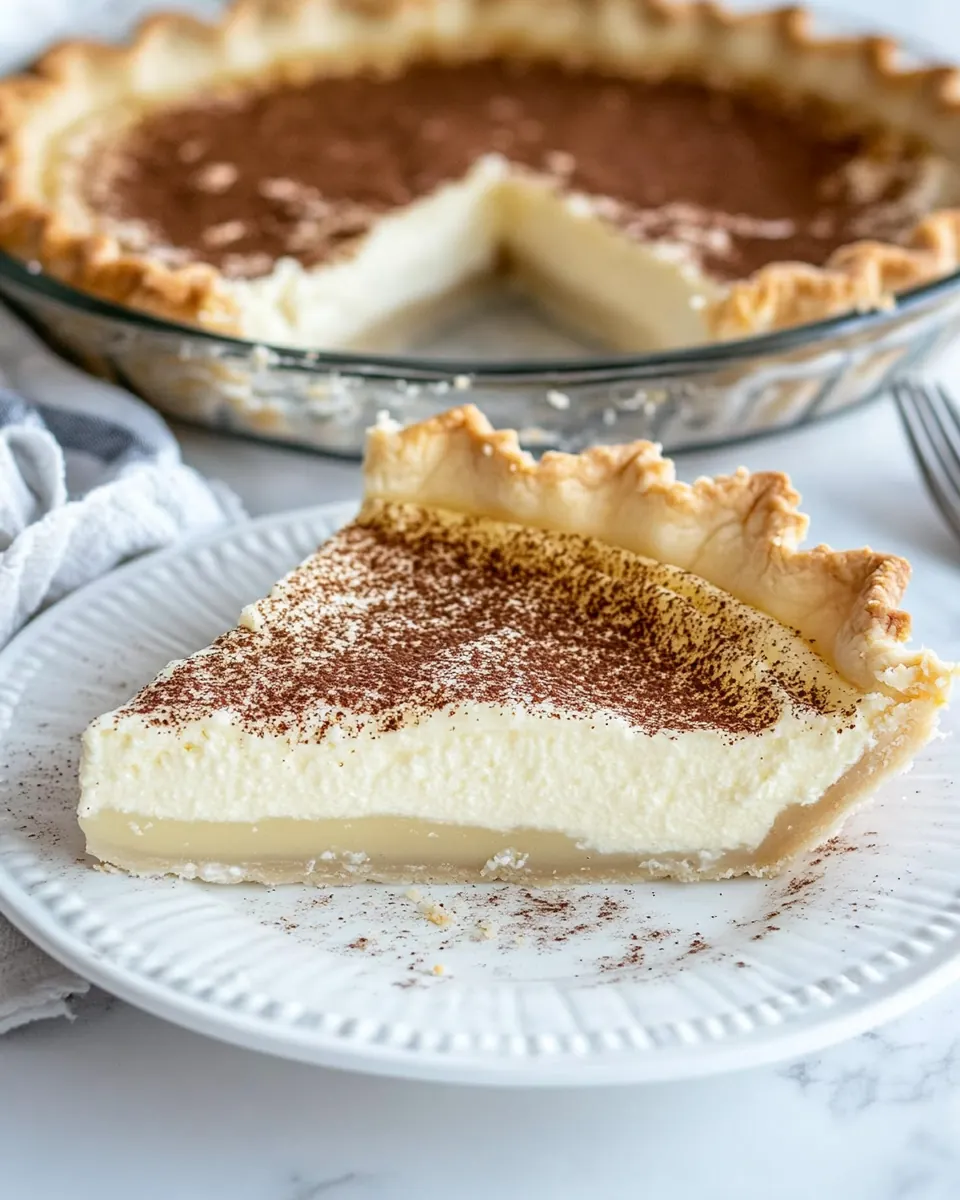
These directions guide you through blind baking your crust, making a silky filling, and finishing the pie with a gentle oven bake. Follow the cues about color, texture, and aroma, and resist the urge to rush cooling, as chilling improves the final set. Below I expand each provided direction into mindful, sensory rich guidance you can rely on.
- My all butter pie crust: Place crust in 9-inch pie plate and chill at least 30 minutes. Preheat oven to 400°F. Line cold crust with parchment paper and fill pie with beans or pie weights. Bake 15 minutes. Carefully remove parchment with pie weights. Poke holes all over the bottom of the crust with the tines of a fork and continue to bake for 5-8 minutes, or until the bottom of the crust is no longer opaque.: Place crust in 9-inch pie plate and chill at least 30 minutes. Preheat oven to 400°F. Line cold crust with parchment paper and fill pie with beans or pie weights. Bake 15 minutes. Carefully remove parchment with pie weights. Poke holes all over the bottom of the crust with the tines of a fork and continue to bake for 5-8 minutes, or until the bottom of the crust is no longer opaque : The oven s initial heat causes the butter in the pie crust to steam, creating flaky layers, while chilling the dough first helps it keep its shape. As the crust bakes the edges should take on a faint golden hue and you ll hear a faint crackle as moisture leaves, signaling progress. Removing the parchment and weights lets the bottom brown a bit, and pricking the base prevents air pockets. A common mistake is removing the weights too soon, which can cause the sides to slump, so wait until the edges have set. You want the bottom to lose its opaque, doughy look; that visual cue shows the starches have cooked and the crust will stay crisp once filled.
- Pillsbury refrigerated crust: Place crust in 9-inch pie plate and chill at least 30 minutes. Preheat oven to 400°F. Line cold crust with parchment paper and fill pie with beans or pie weights. Bake 12 minutes. Carefully remove parchment with pie weights. Poke holes all over the bottom of the crust with the tines of a fork and continue to bake for 5-8 minutes, or until the bottom of the crust is no longer opaque.: Place crust in 9-inch pie plate and chill at least 30 minutes. Preheat oven to 400°F. Line cold crust with parchment paper and fill pie with beans or pie weights. Bake 12 minutes. Carefully remove parchment with pie weights. Poke holes all over the bottom of the crust with the tines of a fork and continue to bake for 5-8 minutes, or until the bottom of the crust is no longer opaque : Refrigerated crusts often respond faster to heat, so the slightly shorter blind bake time helps prevent overbrowning. You ll notice a more uniform, paler golden tone compared with an all butter crust. When you take out the parchment and weights the surface should look set, and a fork used to prick the base will leave evenly spaced dots. Be cautious of overheating, as these crusts can brown quickly around the rim; if the edges deepen too soon, shield them with foil to avoid bitterness, because burnt edges will carry through to every bite.
- Other type of crust: Follow the directions on the package or recipe for blind baking a crust for a single crust filled pie.: Follow the directions on the package or recipe for blind baking a crust for a single crust filled pie : Different crusts have unique behaviors, from frozen to pressed crumb crusts, so following the manufacturer s or recipe s guidance is the safest path. You should observe whether the base firms up and loses that raw appearance, and listen for a faint toasting aroma that indicates proper baking. A typical pitfall is assuming all crusts need the same time or weight level; crumb crusts rarely take weights and can overbake if treated like dough based crusts. Adjust based on visual and olfactory cues rather than strictly on time.
- The pie crust doesn’t need to be cooled before filling and baking, so once the crust goes in for the second bake, start making the filling.: Starting the filling while the crust finishes saves time and ensures the filling is hot when poured into the warm shell, promoting a smooth integration and a glossy finish. As the filling heats you ll smell butter and warm dairy, which is a good sign the mixture is coming together. Avoid letting the crust sit too long before filling because trapped steam can soften the bottom; the residual oven heat helps drive off moisture when the pie finishes baking.
- Whisk sugar, cornstarch and half and half in a medium saucepan and set over medium heat. Add the butter and stir until butter is melted, then stir constantly until mixture thickens and bubbles and coats the back of a spoon. Remove from heat and stir in vanilla.: As you warm the half and half with the dry sugar and cornstarch , you ll see the mixture go from milk like to glossy and slightly translucent, thickening as the starch gelatinizes. Adding sliced butter lets it melt evenly, enriching the texture and giving a silky sheen. Stir constantly to avoid scorching on the pan bottom; you should see small, vigorous bubbles and the mixture will cling to the back of a spoon like a ribbon. If you skip constant stirring you risk lumps or a burnt flavor, so keep your attention focused until you remove it from heat, then stir in the vanilla off heat so its aroma remains bright.
- Pour hot mixture into pie crust. Sprinkle with cinnamon and nutmeg.: The scent of warm spices will bloom as the hot filling meets the shell, creating an inviting aroma that fills the kitchen. Pour steadily so the filling settles evenly, and use a spatula to catch drips and smooth the top if needed. Dusting with cinnamon and a pinch of nutmeg before baking forms a lightly spiced top layer that deepens the flavor without overpowering the custard. A common oversight is piling spices in one spot; try to distribute them evenly for balanced notes in every forkful.
- Bake pie at 350°F for 15-20 minutes, or until the top seems set and the pie just slightly jiggles when you tap it.: During this gentle bake the filling firms and the surface may take on a faint golden tone, while the center retains a slight wobble that will finish setting as it cools. Listen for a subtle settling sound and watch for the edges to be slightly puffed; avoid overbaking, since that leads to a dry, curdled texture. The right moment to remove it is when a gentle tap yields a soft jiggle in the center, like a softly set custard, because carryover heat will finish the set while it cools. Removing it too early can cause runny filling, so err on the side of a brief extra minute if needed, but keep a close eye.
- Cool completely on the counter then cover with plastic wrap and chill for at least 1 hour before serving.: Cooling is crucial because it allows the filling to firm and the flavors to meld; you ll notice the surface tighten and the aroma settle into a comforting, steady note. Once chilled the pie slices cleanly and the texture becomes satiny rather than loose. A frequent mistake is slicing while still warm, which causes weeping and an untidy presentation. Wrapping the pie after it reaches room temperature prevents refrigerator odors from contaminating the flavor and maintains moisture balance.
- Store in refrigerator. Pie can also be frozen for up to 3 months.: In the fridge the pie keeps its texture and freshness for several days, and chilling preserves the custard s stability. For freezing, wrap tightly in plastic and foil to avoid freezer burn; thaw overnight in the refrigerator before serving to let the texture recover. Avoid repeated thawing and refreezing, as temperature swings can create a grainy texture in the filling. When serving after freezing, allow the pie to come to a cool but not warm temperature so the filling regains its smoothness.
Tips and Variations
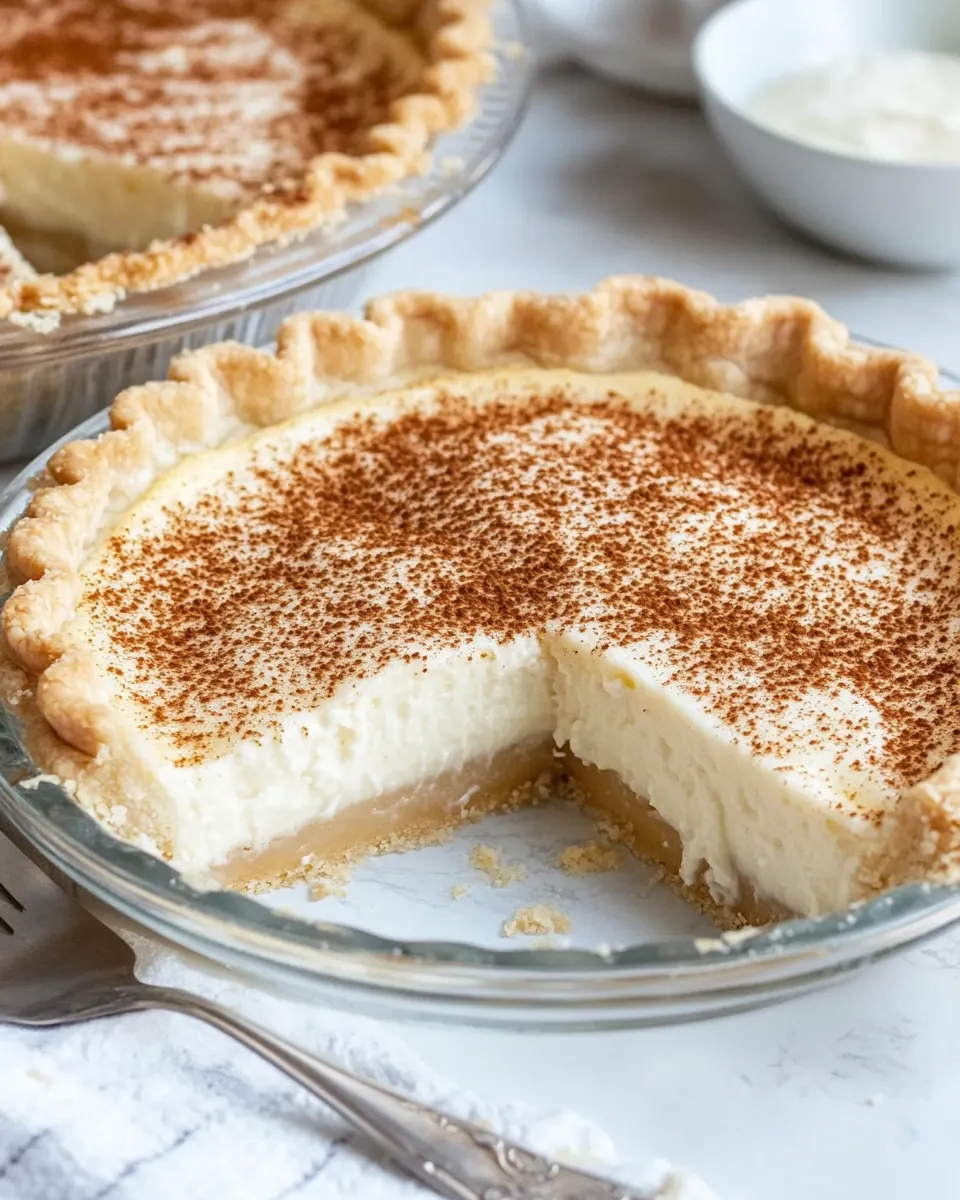
This pie invites small adjustments that can change texture or convenience without altering the core character of the dish. Below are practical tips and simple variations to help you tailor the pie to your pantry and timing.
- Use an all butter crust for flavor if you want a richer, flakier edge, the butter s steam creates distinct layers that enhance each bite.
- Refrigerated crust for speed choose a store bought refrigerated crust when you need to save time, it yields reliable results with less fuss.
- Prevent lumps by whisking combine cornstarch with the sugar before adding the half and half to ensure a smooth filling as it heats.
- Slice cleanly after chilling wait at least one hour in the refrigerator so the filling firms and the slices come out neat on the plate.
- Shield crust edges if browning too fast tent foil around the rim during the final bake to keep the crust from becoming overly dark while the filling finishes.
- Freeze for make ahead wrap the cooled pie tightly for up to three months, then thaw overnight in the fridge and serve chilled for best texture.
Perfect Pairings for Sugar Cream Pie
Sugar Cream Pie works beautifully across casual and festive occasions. Its gentle sweetness pairs well with coffee or tea, and it sits comfortably on dessert tables from cozy family dinners to holiday gatherings. Below are serving ideas, occasion suggestions, and storage notes to help you present the pie with confidence.
- Casual coffee break serve slices with a hot cup of coffee or tea for an afternoon pause, the warm spices complement bitter or tannic beverages.
- Holiday dessert bring this pie to holiday gatherings as a low maintenance, crowd pleasing option that fits alongside richer desserts on the table.
- After dinner treat conclude a simple dinner with a chilled slice; its modest sweetness leaves room for conversation and second helpings.
- Seasonal pairing in fall serve with spiced drinks and warm apple dishes to echo cozy autumn flavors and textures.
- Storage tip refrigerate covered for up to several days, or freeze tightly wrapped for up to three months, thawing overnight in the fridge before serving.
- Presentation tip dust a light sprinkle of extra cinnamon just before serving or add a simple dollop of lightly sweetened whipped cream if you want an extra touch without changing the pie s character.
FAQ
Conclusion
Sugar Cream Pie stands out because of its simplicity and the way basic pantry ingredients transform into a creamy, warmly spiced comfort dessert. Give it a slice and you ll appreciate how a crisp crust and silky filling deliver satisfying texture and flavor with minimal fuss. Try making it for a small gathering or a quiet evening, and observe how the aroma and gentle sweetness make conversation linger. It s a humble dessert that rewards patience and becomes a lovely ritual when shared.
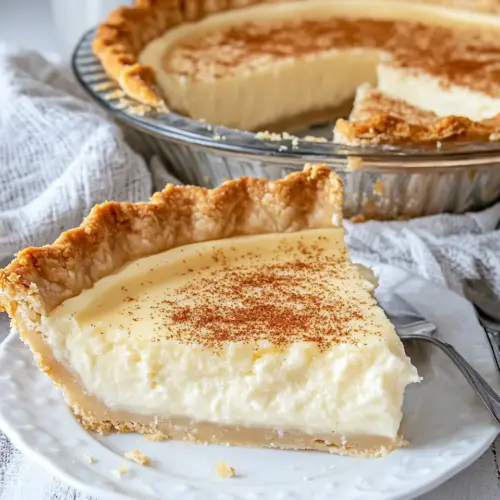
Sugar Cream Pie
Equipment
- 9-inch pie plate
- Parchment Paper
- Pie weights or dried beans
- Medium Saucepan
- Whisk
- Spatula
Ingredients
- 19 -inch pie crust (from scratch, frozen, or a box of 2 refrigerated) Prebaked or frozen crust provides a ready-made shell that holds the filling and yields a crisp edge; choose a 19-inch crust to fit the recipe and prevent shrinkage during baking. Ensure crust is thawed if frozen and dock or weight if blind-baking to avoid bubbles. For homemade crust, chill thoroughly before rolling for best texture.
- 1 cup (200 g) granulated sugar Sweetens the custard filling and helps create a smooth, caramelized surface when heated; measure 1 cup (200 g) precisely for balanced sweetness. Dissolve sugar into the liquid base to avoid graininess and stir constantly while cooking to prevent scorching.
- 1/4 cup (32 g) cornstarch Thickens the filling by gelatinizing when heated with liquid, producing a custard-like set; use 1/4 cup (32 g) cornstarch for a creamy but sliceable texture. Mix with a small amount of cold liquid first to form a slurry to prevent lumps when added to the hot mixture.
- 2 cups (474 ml) half and half Adds richness, creaminess, and body to the custard while contributing to mouthfeel and flavor; 2 cups (474 ml) half and half provides a balance between milkiness and fat. Heat gently with sugar and cornstarch to activate thickening without scalding; higher-fat dairy will make a denser filling.
- 6 tablespoons (84 g) unsalted butter, sliced Enriches the filling with butterfat for a silky finish and slight gloss; 6 tablespoons (84 g) sliced into pieces melt evenly into the warm custard. Add gradually off heat or at the end of cooking and whisk until fully incorporated to avoid separating.
- 1 teaspoon vanilla Adds warm, sweet floral notes that enhance the custard's flavor profile; 1 teaspoon vanilla deepens overall taste without overpowering. Use pure vanilla extract for best results and stir in after removing from heat to preserve aroma.
- 1 teaspoon cinnamon Introduces a warm, aromatic spice element that complements the sweet filling; 1 teaspoon cinnamon provides a classic pairing with creamy pies. Use ground cinnamon and adjust slightly to taste, but maintain the measured amount for intended balance.
- Pinch nutmeg Provides a subtle warm, nutty background note that rounds out the spice blend; a pinch of nutmeg adds complexity without dominating the filling. Grate fresh nutmeg if possible for brighter flavor and sprinkle sparingly to keep it delicate.
Instructions
- My all butter pie crust: Place crust in 9-inch pie plate and chill at least 30 minutes. Preheat oven to 400°F. Line cold crust with parchment paper and fill pie with beans or pie weights. Bake 15 minutes. Carefully remove parchment with pie weights. Poke holes all over the bottom of the crust with the tines of a fork and continue to bake for 5-8 minutes, or until the bottom of the crust is no longer opaque.: Place crust in 9-inch pie plate and chill at least 30 minutes. Preheat oven to 400°F. Line cold crust with parchment paper and fill pie with beans or pie weights. Bake 15 minutes. Carefully remove parchment with pie weights. Poke holes all over the bottom of the crust with the tines of a fork and continue to bake for 5-8 minutes, or until the bottom of the crust is no longer opaque : The oven s initial heat causes the butter in the pie crust to steam, creating flaky layers, while chilling the dough first helps it keep its shape. As the crust bakes the edges should take on a faint golden hue and you ll hear a faint crackle as moisture leaves, signaling progress. Removing the parchment and weights lets the bottom brown a bit, and pricking the base prevents air pockets. A common mistake is removing the weights too soon, which can cause the sides to slump, so wait until the edges have set. You want the bottom to lose its opaque, doughy look; that visual cue shows the starches have cooked and the crust will stay crisp once filled.
- Pillsbury refrigerated crust: Place crust in 9-inch pie plate and chill at least 30 minutes. Preheat oven to 400°F. Line cold crust with parchment paper and fill pie with beans or pie weights. Bake 12 minutes. Carefully remove parchment with pie weights. Poke holes all over the bottom of the crust with the tines of a fork and continue to bake for 5-8 minutes, or until the bottom of the crust is no longer opaque.: Place crust in 9-inch pie plate and chill at least 30 minutes. Preheat oven to 400°F. Line cold crust with parchment paper and fill pie with beans or pie weights. Bake 12 minutes. Carefully remove parchment with pie weights. Poke holes all over the bottom of the crust with the tines of a fork and continue to bake for 5-8 minutes, or until the bottom of the crust is no longer opaque : Refrigerated crusts often respond faster to heat, so the slightly shorter blind bake time helps prevent overbrowning. You ll notice a more uniform, paler golden tone compared with an all butter crust. When you take out the parchment and weights the surface should look set, and a fork used to prick the base will leave evenly spaced dots. Be cautious of overheating, as these crusts can brown quickly around the rim; if the edges deepen too soon, shield them with foil to avoid bitterness, because burnt edges will carry through to every bite.
- Other type of crust: Follow the directions on the package or recipe for blind baking a crust for a single crust filled pie.: Follow the directions on the package or recipe for blind baking a crust for a single crust filled pie : Different crusts have unique behaviors, from frozen to pressed crumb crusts, so following the manufacturer s or recipe s guidance is the safest path. You should observe whether the base firms up and loses that raw appearance, and listen for a faint toasting aroma that indicates proper baking. A typical pitfall is assuming all crusts need the same time or weight level; crumb crusts rarely take weights and can overbake if treated like dough based crusts. Adjust based on visual and olfactory cues rather than strictly on time.
- The pie crust doesn’t need to be cooled before filling and baking, so once the crust goes in for the second bake, start making the filling.: Starting the filling while the crust finishes saves time and ensures the filling is hot when poured into the warm shell, promoting a smooth integration and a glossy finish. As the filling heats you ll smell butter and warm dairy, which is a good sign the mixture is coming together. Avoid letting the crust sit too long before filling because trapped steam can soften the bottom; the residual oven heat helps drive off moisture when the pie finishes baking.
- Whisk sugar, cornstarch and half and half in a medium saucepan and set over medium heat. Add the butter and stir until butter is melted, then stir constantly until mixture thickens and bubbles and coats the back of a spoon. Remove from heat and stir in vanilla.: As you warm the half and half with the dry sugar and cornstarch , you ll see the mixture go from milk like to glossy and slightly translucent, thickening as the starch gelatinizes. Adding sliced butter lets it melt evenly, enriching the texture and giving a silky sheen. Stir constantly to avoid scorching on the pan bottom; you should see small, vigorous bubbles and the mixture will cling to the back of a spoon like a ribbon. If you skip constant stirring you risk lumps or a burnt flavor, so keep your attention focused until you remove it from heat, then stir in the vanilla off heat so its aroma remains bright.
- Pour hot mixture into pie crust. Sprinkle with cinnamon and nutmeg.: The scent of warm spices will bloom as the hot filling meets the shell, creating an inviting aroma that fills the kitchen. Pour steadily so the filling settles evenly, and use a spatula to catch drips and smooth the top if needed. Dusting with cinnamon and a pinch of nutmeg before baking forms a lightly spiced top layer that deepens the flavor without overpowering the custard. A common oversight is piling spices in one spot; try to distribute them evenly for balanced notes in every forkful.
- Bake pie at 350°F for 15-20 minutes, or until the top seems set and the pie just slightly jiggles when you tap it.: During this gentle bake the filling firms and the surface may take on a faint golden tone, while the center retains a slight wobble that will finish setting as it cools. Listen for a subtle settling sound and watch for the edges to be slightly puffed; avoid overbaking, since that leads to a dry, curdled texture. The right moment to remove it is when a gentle tap yields a soft jiggle in the center, like a softly set custard, because carryover heat will finish the set while it cools. Removing it too early can cause runny filling, so err on the side of a brief extra minute if needed, but keep a close eye.
- Cool completely on the counter then cover with plastic wrap and chill for at least 1 hour before serving.: Cooling is crucial because it allows the filling to firm and the flavors to meld; you ll notice the surface tighten and the aroma settle into a comforting, steady note. Once chilled the pie slices cleanly and the texture becomes satiny rather than loose. A frequent mistake is slicing while still warm, which causes weeping and an untidy presentation. Wrapping the pie after it reaches room temperature prevents refrigerator odors from contaminating the flavor and maintains moisture balance.
- Store in refrigerator. Pie can also be frozen for up to 3 months.: In the fridge the pie keeps its texture and freshness for several days, and chilling preserves the custard s stability. For freezing, wrap tightly in plastic and foil to avoid freezer burn; thaw overnight in the refrigerator before serving to let the texture recover. Avoid repeated thawing and refreezing, as temperature swings can create a grainy texture in the filling. When serving after freezing, allow the pie to come to a cool but not warm temperature so the filling regains its smoothness.
Notes
- Use an all butter crust for flavor if you want a richer, flakier edge, the butter s steam creates distinct layers that enhance each bite.
- Refrigerated crust for speed choose a store bought refrigerated crust when you need to save time, it yields reliable results with less fuss.
- Prevent lumps by whisking combine cornstarch with the sugar before adding the half and half to ensure a smooth filling as it heats.
- Slice cleanly after chilling wait at least one hour in the refrigerator so the filling firms and the slices come out neat on the plate.
- Shield crust edges if browning too fast tent foil around the rim during the final bake to keep the crust from becoming overly dark while the filling finishes.
- Freeze for make ahead wrap the cooled pie tightly for up to three months, then thaw overnight in the fridge and serve chilled for best texture.