
Stuffed Zucchini Flowers with Feta and Capers
Stuffed Zucchini Flowers with Feta and Capers have been one of those recipes I return to whenever summer’s produce table looks too good to pass up. The first time I made them I remember juggling a basket of delicate zucchini flowers while the kitchen filled with the sharp, tangy perfume of feta cheese and the briny pop of capers. I felt equal parts nervous and thrilled, because these flowers are fragile, but the payoff is an airy, savory bite that feels special without being fussy.
That early attempt took patience, and I learned to treat each zucchini flower like a little parcel. I would sit by the sink, stem in hand, and imagine I was sealing tiny savory gifts. As the batter hit the hot cooking oil they would sing with a soft sizzle, and the aroma that rose was more than worth the careful filling. Over time I refined the balance of tang from feta cheese, the bright snap of egg in the batter, and the fizzy lift from sparkling water to create a batter that puffs and crispens just right.
I tend to make these when friends drop by unexpectedly, because they are impressive yet easy to portion. People like to watch the process, and I enjoy explaining why a gentle hand matters when stuffing, and why a light batter makes all the difference. Every summer I tuck a few tips into the routine, and I still learn something new each time the flowers hit the oil. These moments in the kitchen remind me that simple ingredients handled with care can become unforgettable shared bites.
Recipe Snapshot
30 mins
10 mins
20 mins
Medium
200 kcal
Mediterranean
Gluten-Free, Low FODMAP
Appetizers
Deep fryer or heavy pot, Thermometer, Mixing bowls, Whisk, Wire rack
Why This Stuffed Zucchini Flowers with Feta and Capers Is So Good
Bright summer flavor
I love how Stuffed Zucchini Flowers with Feta and Capers capture summer in one bite. The combination of fresh zucchini flowers and salty feta cheese is lively and seasonal, and the capers add a little briny spark that wakes up the palate. Every mouthful tastes like sunshine and markets, which is why I keep coming back to this dish.
Light yet substantial
These bites feel indulgent without being heavy. The batter, made with plain flour, egg, and cold sparkling water, puffs into a thin, crisp shell around the filling. I appreciate how the texture plays off the creamy feta cheese, giving contrast that feels thoughtful rather than dense.
Quick to make for guests
From filling to frying, the recipe moves quickly, which makes it perfect for last minute entertaining. I like how you can prep the filling ahead and finish when guests arrive. The actual crisping in hot cooking oil takes only minutes, and the visual payoff never fails to impress.
Simple ingredient list
I find comfort in recipes that trust a few good ingredients to do the heavy lifting. The list here is short and focused: zucchini flowers, feta cheese, capers, egg, and pantry staples like plain flour and cooking oil. That focus means each component shines, and it is easy to source everything from a farmers market or grocery store.
Flexible and forgiving
One of the reasons I recommend Stuffed Zucchini Flowers with Feta and Capers is the forgiving nature of the technique. You can adjust salt, add more capers if you want a brighter note, or leave some flowers unstuffed for variety. The recipe tolerates small errors, and a slightly imperfect flower still becomes delicious once it hits the oil.
Stuffed Zucchini Flowers with Feta and Capers Ingredients
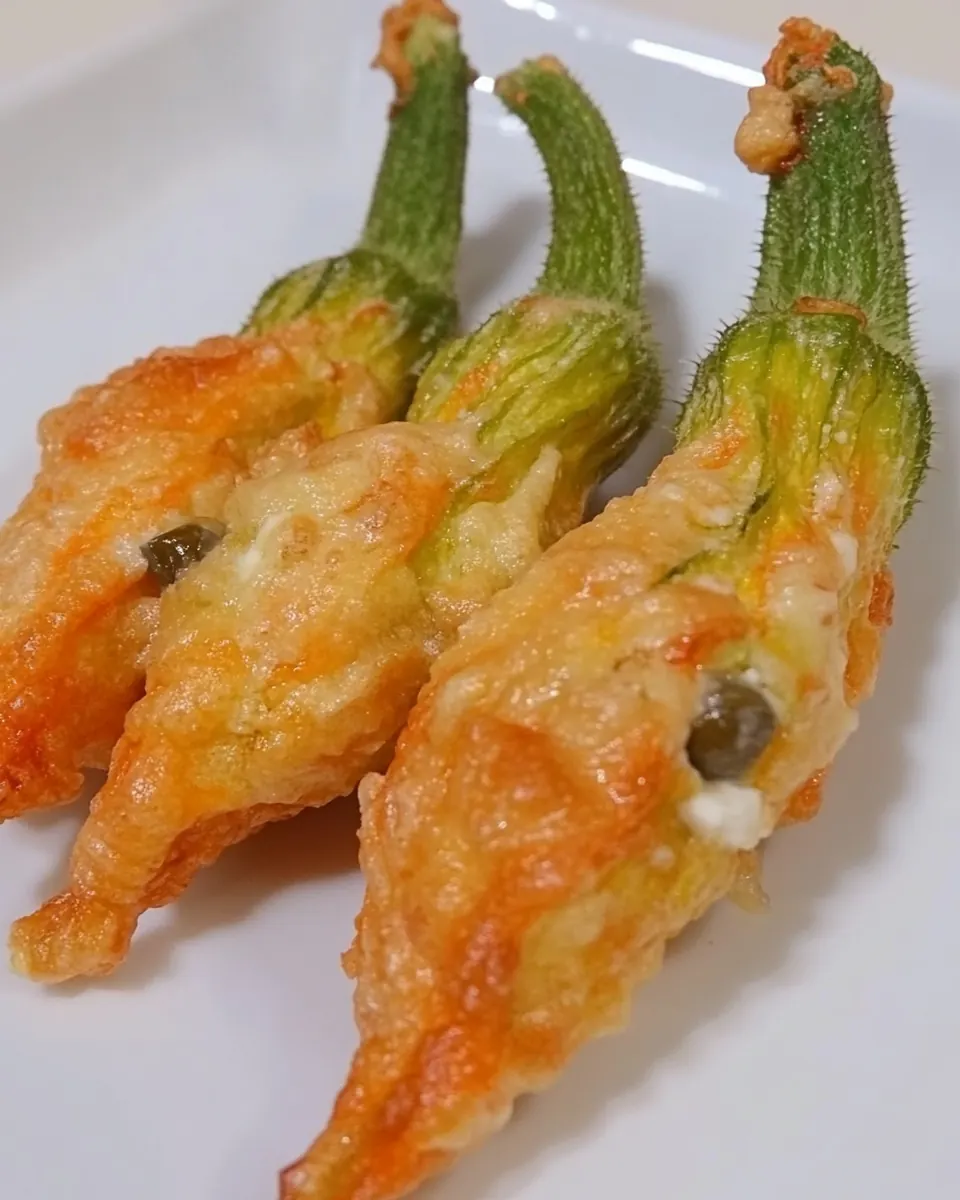
These ingredients are chosen to celebrate summer produce with clear supporting roles. The zucchini flowers provide a delicate vessel, while the feta cheese brings a creamy, salty center that contrasts beautifully with the crisp batter. Capers add bright, tangy pops, and the simple batter made from plain flour, egg, and chilled sparkling water puffs up for light crunch. The philosophy here is restraint, letting each element contribute texture or flavor without clutter.
- 10 zucchini flowers: Hand-stuff and present delicate blossoms for a visually striking main or appetizer; hollow centers hold the filling and support even cooking. Ensure petals are intact and gently cleaned to preserve fragile structure and prevent tearing during stuffing.
- 3 1/2 oz feta cheese (or Persian feta cheese): Crumble tangy white cheese to provide a salty, creamy contrast that binds filling ingredients and adds depth of flavor. Use a crumbly variety like Persian feta to maintain texture without becoming overly dense when mixed with egg.
- 1 1/2 tbsp Spanish capers: Rinse briny small buds and chop if desired to introduce bursts of salty, floral acidity that cut through the richness of the cheese. Scatter or fold capers into the filling to contribute bright, piquant notes and a pleasant textural pop.
- sea salt flakes: Flake to taste and sprinkle sparingly to enhance and balance flavors without overpowering the delicate flower and cheese mixture. Add at the end of seasoning adjustments to accentuate savory elements.
- freshly ground pepper: Grind freshly to taste to lift and balance savory components with subtle heat and aromatic complexity. Use light seasoning to avoid masking the floral and briny flavors of the blossoms and capers.
- 1 egg: Beat briefly to bind the feta and capers into a cohesive filling that sets during cooking and adds a silkier mouthfeel. Incorporate just enough to hold ingredients together while preserving some crumble for texture.
- 1 1/2 cups plain flour: Sift or whisk to create a base for a light batter that coats the stuffed flowers and crisps when fried. Use measured amounts to control batter thickness and achieve an even, airy crust.
- 1 2 cups cold sparkling water: Whisk cold and fizzy to aerate and thin the batter for an ultra-light, crisp frying finish; adjust quantity to reach the desired consistency. Keep chilled to maintain carbonation and ensure the coating puffs up quickly in hot oil.
- cooking oil: Heat neutral oil to the correct frying temperature to achieve a golden, crisp exterior while cooking the filling through gently. Use enough oil for shallow or deep frying and monitor temperature to prevent burning or undercooking.
Recipe Steps for Stuffed Zucchini Flowers with Feta and Capers

I like to think of the steps as a rhythm, each one preparing the next so the final fry is quick and confident. Keep tools close, temperature steady, and move deliberately when you lower the flowers into the oil. Below I expand each original direction into sensory cues, why each action matters, and common pitfalls to avoid.
- Preheat the oil to 180° C (350° F).: The moment the oil reaches the correct temperature you will notice a faint shimmer and a steady ripple across the surface, signaling it is ready for frying. Using a thermometer is the most reliable way to hit 180° C 350° F , which ensures the batter seals quickly and becomes crisp without soaking up oil. If the oil is too cool the coating will absorb grease and feel heavy, if it is too hot the batter may darken before the inside cooks. A common mistake is guessing the heat, so watch for consistent bubbling when a small drop of batter hits the oil.
- Combine the yolk, feta, capers, and a touch of salt and pepper in a mixing bowl and mix until it is slightly pasty.: As you blend the crumbled feta cheese with the egg yolk and chopped capers , the mixture should become cohesive yet still slightly textured. You will smell the tang of the feta cheese and the bright saline of the capers , which tells you the ratio is right. This pasty consistency keeps the filling from leaking when fried. Overmixing can make it too loose, while under-mixing leaves large chunks that may not heat evenly; aim for a spreadable, not runny, texture.
- Depending on the length of the zucchini stem, you may need to cut some off but leave approx 4 cm (2 inches) attached to the flower.: Trimming the stems creates a neat handle and makes the flowers easier to hold while stuffing and dipping. Leave about 4 cm 2 inches so you can grip without bruising the petals. Cut with a sharp pair of kitchen scissors for a clean edge. A common oversight is leaving stems too long or cutting them too short, which either makes dipping awkward or risks tearing the bloom.
- Gently open up the zucchini flowers and, using a teaspoon, gently spoon the cheese mixture into the flowers, filling to approx 2/3 rds.: When you open each zucchini flower , you should see a narrow cavity ready for the filling; spoon in small amounts so you can feel when the petal shoulders begin to bulge. Filling to roughly 2 3 rds prevents the mixture from spilling during frying while still delivering a satisfying center. The tactile feedback of the petals stretching slightly is key. Overstuffing is the main error here, which leads to leaks and uneven frying.
- Gently push the remaining air out of the flowers and squeeze the tips of the petals back together.: Pressing out air helps the petals sit close and form a neat package that keeps the filling contained. You may hear a soft sigh as trapped pockets release, and the petals should rest snugly together. This step matters because air pockets will expand in the oil and cause splattering or burst seams. Be careful not to compress the filling, which can force it out the seams.
- Sift the flour into a large mixing bowl, add a pinch of salt and pepper, and make a well in the center.: Sifting the plain flour aerates it, giving a finer batter texture that fries lighter. The well creates a controlled spot to add liquid, helping you whisk without forming lumps. You should see a soft powdery cloud when sifting, a good indicator that the batter will be smooth. A common mistake is skipping the sift which can leave granular bits in the batter.
- Slowly pour some of the soda water into the well and whisk as you add, slowly moving the whisk out from the well to incorporate more flour until the entire mixture is fluid and thick (it may not require all the soda water, so add it slowly).: Pouring cold sparkling water in stages and whisking outward creates a glossy, slightly viscous batter that clings to the flowers. The sound changes from heavy splashes to lighter, airy whisking and you will feel the batter transform from stiff to fluid. The goal is a consistency that coats but does not run off immediately. Adding too much liquid at once yields a thin batter that will not adhere properly, so add slowly and stop when the texture is right.
- Whisk the egg white until frothy and fold into the batter mixture.: Whipping the egg white until foamy introduces air that makes the final crust light and delicate. The foam will hold small bubbles that expand and crisp in the oil, giving a crisp shell around the filling. Folding rather than beating preserves those bubbles; you should see streaks of white gently disappear into the batter without collapsing. Overbeating or aggressive mixing will deflate the foam, producing a denser coating.
- Whether your flowers are stuffed or not, the process is the same.: This reminder frees you to make both stuffed and plain flowers with identical handling, which simplifies the workflow. The sensory cue here is that both will take the batter similarly and sizzle the same when introduced to hot cooking oil . Treat each flower with the same gentle handling to avoid tearing. A common slip is assuming unstuffed flowers cook faster; watch visual cues rather than timing alone.
- Holding on to the stem, drag the flowers through the batter until liberally covered (do not batter the stem). Hold the flower end and lower it into the deep fryer until the batter has sealed (a few seconds), and then drop the stem in as well. Cook until golden, they may require turning once.: As you dip each zucchini flower you will feel the batter cling like a soft coat, and the surface will look smooth and slightly bubbly. Lowering the flower tip first allows the batter edge to seal against the hot oil, creating a snug shell; you should hear an immediate gentle sizzle. After a few seconds the stem can follow and you will see the batter begin to set and color. Turn once for even browning, aiming for a deep golden hue. If you crowd the fryer the temperature will drop and the coating will absorb oil, resulting in sogginess, so fry in batches.
- Remove, drain, season with some sea salt, and serve. Serve un-stuffed flowers with a wedge of lemon.: When you lift the flowers from the oil they should glisten briefly and feel crisp to the touch, a sign the oil was correct. Drain them on paper or a rack to prevent steaming that softens the crust. Sprinkle a few flakes of sea salt right away to enhance the flavors, and offer a lemon wedge for those who prefer a bright squeeze. A frequent oversight is letting fried flowers sit too long before serving, which robs them of their optimal crunch, so serve promptly.
Recipe Tips about Stuffed Zucchini Flowers with Feta and Capers
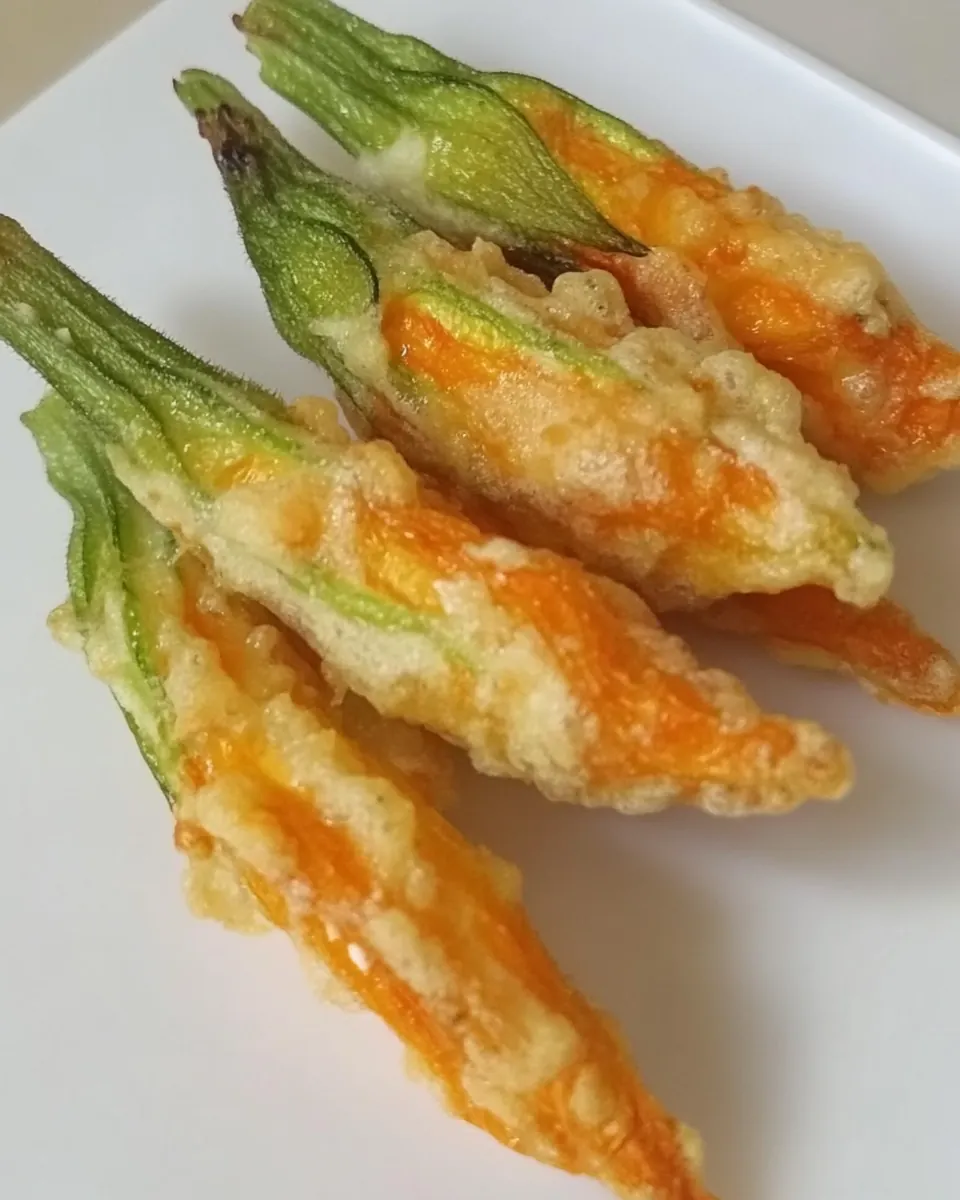
I like to offer tips that make the process more relaxed and the results repeatable. These focus on timing, texture, and presentation so you can plate confidently. Below are practical notes I use each summer.
- Chill the batter: Keep the batter bowl in the fridge for a few minutes before frying to ensure the mixture is cold, which helps the coating stay crisp and light when it meets hot oil.
- Test with a scrap: Fry a small spoonful of batter first to confirm the oil temperature and batter consistency, adjusting heat if it browns too fast or absorbs oil.
- Control portion size: Use a teaspoon for the filling so each zucchini flower gets an even amount and you avoid overstuffing that causes leaking during frying.
- Work in batches: Fry in small batches to maintain oil temperature, giving each flower enough room to brown evenly without sticking together.
- Serve immediately: Fried flowers are best hot and crisp, so time your frying to finish just before serving to guests for the best texture and flavor.
Perfect Pairings for Stuffed Zucchini Flowers with Feta and Capers
These stuffed flowers are versatile for several occasions, from a light summer lunch to an elegant appetizer at a dinner party. They pair well with crisp, fresh elements and simple sides that let the flavors shine. Here are thoughtful serving ideas and pairings to complement the dish.
- Light salad side: Serve with a simple salad of mixed greens tossed with lemon and olive oil to add freshness and acidity that balances the richness of the feta cheese.
- Family lunch: Offer as part of a casual midday spread alongside crusty bread and sliced seasonal tomatoes so guests can assemble bites and enjoy varied textures.
- Dinner appetizer: Present on a platter with lemon wedges and flakey sea salt for an elegant starter that opens the meal with bright, savory notes.
- Occasion serving: These are lovely for summer gatherings or Ramadan if served at Iftar, because they are easy to portion and shareable finger food that feels special.
- Storage tips: Keep any leftovers in a single layer in the fridge for up to one day, then re-crisp in a hot oven to revive texture, though they are best eaten fresh.
- Seasonal pairing: Highlight other summer produce like grilled zucchini or tomatoes on the same plate to create a cohesive seasonal menu.
FAQ
Conclusion
Stuffed Zucchini Flowers with Feta and Capers are special because they turn simple summer blooms into a memorable, textural bite. The contrast between the airy, golden batter and the creamy, briny filling makes them a standout at any table. I encourage you to try them the next time you find fresh zucchini flowers, because the technique is approachable and the results reward patience with something truly delightful. Share them warm and watch how quickly they disappear.

Stuffed Zucchini Flowers with Feta and Capers
Equipment
- Deep fryer or heavy pot
- Thermometer
- Mixing Bowls
- Whisk
- Wire Rack
Ingredients
- 10 zucchini flowers Hand-stuff and present delicate blossoms for a visually striking main or appetizer; hollow centers hold the filling and support even cooking. Ensure petals are intact and gently cleaned to preserve fragile structure and prevent tearing during stuffing.
- 3 1/2 oz feta cheese (or Persian feta cheese) Crumble tangy white cheese to provide a salty, creamy contrast that binds filling ingredients and adds depth of flavor. Use a crumbly variety like Persian feta to maintain texture without becoming overly dense when mixed with egg.
- 1 1/2 tbsp Spanish capers Rinse briny small buds and chop if desired to introduce bursts of salty, floral acidity that cut through the richness of the cheese. Scatter or fold capers into the filling to contribute bright, piquant notes and a pleasant textural pop.
- sea salt flakes Flake to taste and sprinkle sparingly to enhance and balance flavors without overpowering the delicate flower and cheese mixture. Add at the end of seasoning adjustments to accentuate savory elements.
- freshly ground pepper Grind freshly to taste to lift and balance savory components with subtle heat and aromatic complexity. Use light seasoning to avoid masking the floral and briny flavors of the blossoms and capers.
- 1 egg Beat briefly to bind the feta and capers into a cohesive filling that sets during cooking and adds a silkier mouthfeel. Incorporate just enough to hold ingredients together while preserving some crumble for texture.
- 1 1/2 cups plain flour Sift or whisk to create a base for a light batter that coats the stuffed flowers and crisps when fried. Use measured amounts to control batter thickness and achieve an even, airy crust.
- 1 -2 cups cold sparkling water Whisk cold and fizzy to aerate and thin the batter for an ultra-light, crisp frying finish; adjust quantity to reach the desired consistency. Keep chilled to maintain carbonation and ensure the coating puffs up quickly in hot oil.
- cooking oil Heat neutral oil to the correct frying temperature to achieve a golden, crisp exterior while cooking the filling through gently. Use enough oil for shallow or deep frying and monitor temperature to prevent burning or undercooking.
Instructions
- Preheat the oil to 180° C (350° F).: The moment the oil reaches the correct temperature you will notice a faint shimmer and a steady ripple across the surface, signaling it is ready for frying. Using a thermometer is the most reliable way to hit 180° C 350° F , which ensures the batter seals quickly and becomes crisp without soaking up oil. If the oil is too cool the coating will absorb grease and feel heavy, if it is too hot the batter may darken before the inside cooks. A common mistake is guessing the heat, so watch for consistent bubbling when a small drop of batter hits the oil.
- Combine the yolk, feta, capers, and a touch of salt and pepper in a mixing bowl and mix until it is slightly pasty.: As you blend the crumbled feta cheese with the egg yolk and chopped capers , the mixture should become cohesive yet still slightly textured. You will smell the tang of the feta cheese and the bright saline of the capers , which tells you the ratio is right. This pasty consistency keeps the filling from leaking when fried. Overmixing can make it too loose, while under-mixing leaves large chunks that may not heat evenly; aim for a spreadable, not runny, texture.
- Depending on the length of the zucchini stem, you may need to cut some off but leave approx 4 cm (2 inches) attached to the flower.: Trimming the stems creates a neat handle and makes the flowers easier to hold while stuffing and dipping. Leave about 4 cm 2 inches so you can grip without bruising the petals. Cut with a sharp pair of kitchen scissors for a clean edge. A common oversight is leaving stems too long or cutting them too short, which either makes dipping awkward or risks tearing the bloom.
- Gently open up the zucchini flowers and, using a teaspoon, gently spoon the cheese mixture into the flowers, filling to approx 2/3 rds.: When you open each zucchini flower , you should see a narrow cavity ready for the filling; spoon in small amounts so you can feel when the petal shoulders begin to bulge. Filling to roughly 2 3 rds prevents the mixture from spilling during frying while still delivering a satisfying center. The tactile feedback of the petals stretching slightly is key. Overstuffing is the main error here, which leads to leaks and uneven frying.
- Gently push the remaining air out of the flowers and squeeze the tips of the petals back together.: Pressing out air helps the petals sit close and form a neat package that keeps the filling contained. You may hear a soft sigh as trapped pockets release, and the petals should rest snugly together. This step matters because air pockets will expand in the oil and cause splattering or burst seams. Be careful not to compress the filling, which can force it out the seams.
- Sift the flour into a large mixing bowl, add a pinch of salt and pepper, and make a well in the center.: Sifting the plain flour aerates it, giving a finer batter texture that fries lighter. The well creates a controlled spot to add liquid, helping you whisk without forming lumps. You should see a soft powdery cloud when sifting, a good indicator that the batter will be smooth. A common mistake is skipping the sift which can leave granular bits in the batter.
- Slowly pour some of the soda water into the well and whisk as you add, slowly moving the whisk out from the well to incorporate more flour until the entire mixture is fluid and thick (it may not require all the soda water, so add it slowly).: Pouring cold sparkling water in stages and whisking outward creates a glossy, slightly viscous batter that clings to the flowers. The sound changes from heavy splashes to lighter, airy whisking and you will feel the batter transform from stiff to fluid. The goal is a consistency that coats but does not run off immediately. Adding too much liquid at once yields a thin batter that will not adhere properly, so add slowly and stop when the texture is right.
- Whisk the egg white until frothy and fold into the batter mixture.: Whipping the egg white until foamy introduces air that makes the final crust light and delicate. The foam will hold small bubbles that expand and crisp in the oil, giving a crisp shell around the filling. Folding rather than beating preserves those bubbles; you should see streaks of white gently disappear into the batter without collapsing. Overbeating or aggressive mixing will deflate the foam, producing a denser coating.
- Whether your flowers are stuffed or not, the process is the same.: This reminder frees you to make both stuffed and plain flowers with identical handling, which simplifies the workflow. The sensory cue here is that both will take the batter similarly and sizzle the same when introduced to hot cooking oil . Treat each flower with the same gentle handling to avoid tearing. A common slip is assuming unstuffed flowers cook faster; watch visual cues rather than timing alone.
- Holding on to the stem, drag the flowers through the batter until liberally covered (do not batter the stem). Hold the flower end and lower it into the deep fryer until the batter has sealed (a few seconds), and then drop the stem in as well. Cook until golden, they may require turning once.: As you dip each zucchini flower you will feel the batter cling like a soft coat, and the surface will look smooth and slightly bubbly. Lowering the flower tip first allows the batter edge to seal against the hot oil, creating a snug shell; you should hear an immediate gentle sizzle. After a few seconds the stem can follow and you will see the batter begin to set and color. Turn once for even browning, aiming for a deep golden hue. If you crowd the fryer the temperature will drop and the coating will absorb oil, resulting in sogginess, so fry in batches.
- Remove, drain, season with some sea salt, and serve. Serve un-stuffed flowers with a wedge of lemon.: When you lift the flowers from the oil they should glisten briefly and feel crisp to the touch, a sign the oil was correct. Drain them on paper or a rack to prevent steaming that softens the crust. Sprinkle a few flakes of sea salt right away to enhance the flavors, and offer a lemon wedge for those who prefer a bright squeeze. A frequent oversight is letting fried flowers sit too long before serving, which robs them of their optimal crunch, so serve promptly.
Notes
- Chill the batter: Keep the batter bowl in the fridge for a few minutes before frying to ensure the mixture is cold, which helps the coating stay crisp and light when it meets hot oil.
- Test with a scrap: Fry a small spoonful of batter first to confirm the oil temperature and batter consistency, adjusting heat if it browns too fast or absorbs oil.
- Control portion size: Use a teaspoon for the filling so each zucchini flower gets an even amount and you avoid overstuffing that causes leaking during frying.
- Work in batches: Fry in small batches to maintain oil temperature, giving each flower enough room to brown evenly without sticking together.
- Serve immediately: Fried flowers are best hot and crisp, so time your frying to finish just before serving to guests for the best texture and flavor.
