Stuffed Spaghetti Squash 4 Cheese Pesto Lasagna
Stuffed Spaghetti Squash 4 Cheese Pesto Lasagna is one of those recipes I reach for when I want something comforting yet unexpectedly light. The first time I made it I was chasing the cozy, gooey satisfaction of lasagna but wanted to skip the noodles and heavy layers. Armed with a couple of spaghetti squash and a jar of basil pesto, I ended up with a dish that felt both indulgent and bright, something to serve for a weeknight dinner when you still want to impress.
I remember standing over the cutting board as steam rose from the squash after a quick microwave, the scent of roasted flesh mixing with the herbal lift of basil pesto. That moment, when I scraped the strands and folded them into melted fontina cheese and creamy ricotta cheese, felt like hitting a delicious compromise between comfort food and simplicity. Friends asked for seconds, and I tucked the recipe away as a new staple.
Recipe Snapshot
55 mins
10 mins
45 mins
Medium
400 kcal
Italian
Keto, Gluten-Free
Dinner
Oven, Microwave, Baking dish, Mixing bowl, Spoon
The Magic of This Stuffed Spaghetti Squash 4 Cheese Pesto Lasagna
It mimics lasagna without the fuss
I love how Stuffed Spaghetti Squash 4 Cheese Pesto Lasagna recreates the layered creaminess of lasagna without boiling noodles, rolling sheets, or dealing with a heavy casserole. The spaghetti squash strands provide texture that holds sauce and cheese beautifully, while the cheeses melt into pockets that feel like little bites of comfort.
Bright herb flavor balances rich cheese
Using basil pesto brings a vibrant counterpoint to the lushness of the cheeses. I find that the herbal, slightly nutty notes keep each forkful from becoming too cloying. The pesto also infuses the entire dish with freshness, so it never feels one note.
Flexible and forgiving
This recipe is remarkably forgiving, which I appreciate when I am cooking on a hectic evening. If your squash is a hair larger or smaller, the filling still behaves. The bake time gives you some leeway, and that little bit of carryover heat after you pull it out finishes the texture perfectly.
Comfort without heaviness
I adore that you can serve this as a main or a hearty side. With creamy ricotta cheese and melted provolone and fontina cheese, it feels indulgent, yet the vegetable base keeps it balanced. It satisfies cravings for bubbling cheese but won’t leave you weighed down.
Beautiful and shareable
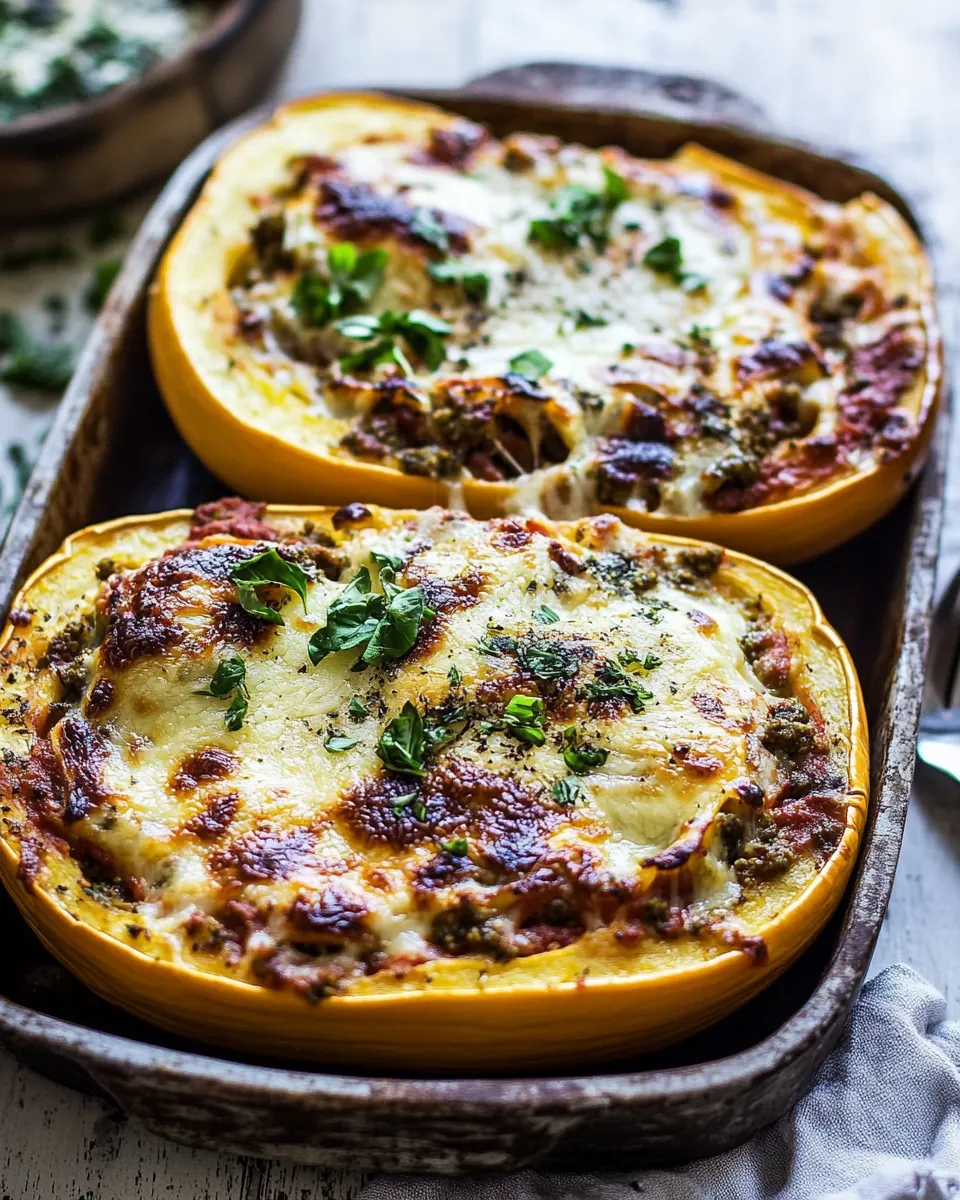
When I plate Stuffed Spaghetti Squash 4 Cheese Pesto Lasagna, the golden cheese, ribbons of squash, and flecks of fresh oregano make a striking presentation. It’s an easy recipe to bring to a casual dinner, because the halves look thoughtful and rustic, and everyone gets a personal portion.
What You’ll Need for Stuffed Spaghetti Squash 4 Cheese Pesto Lasagna
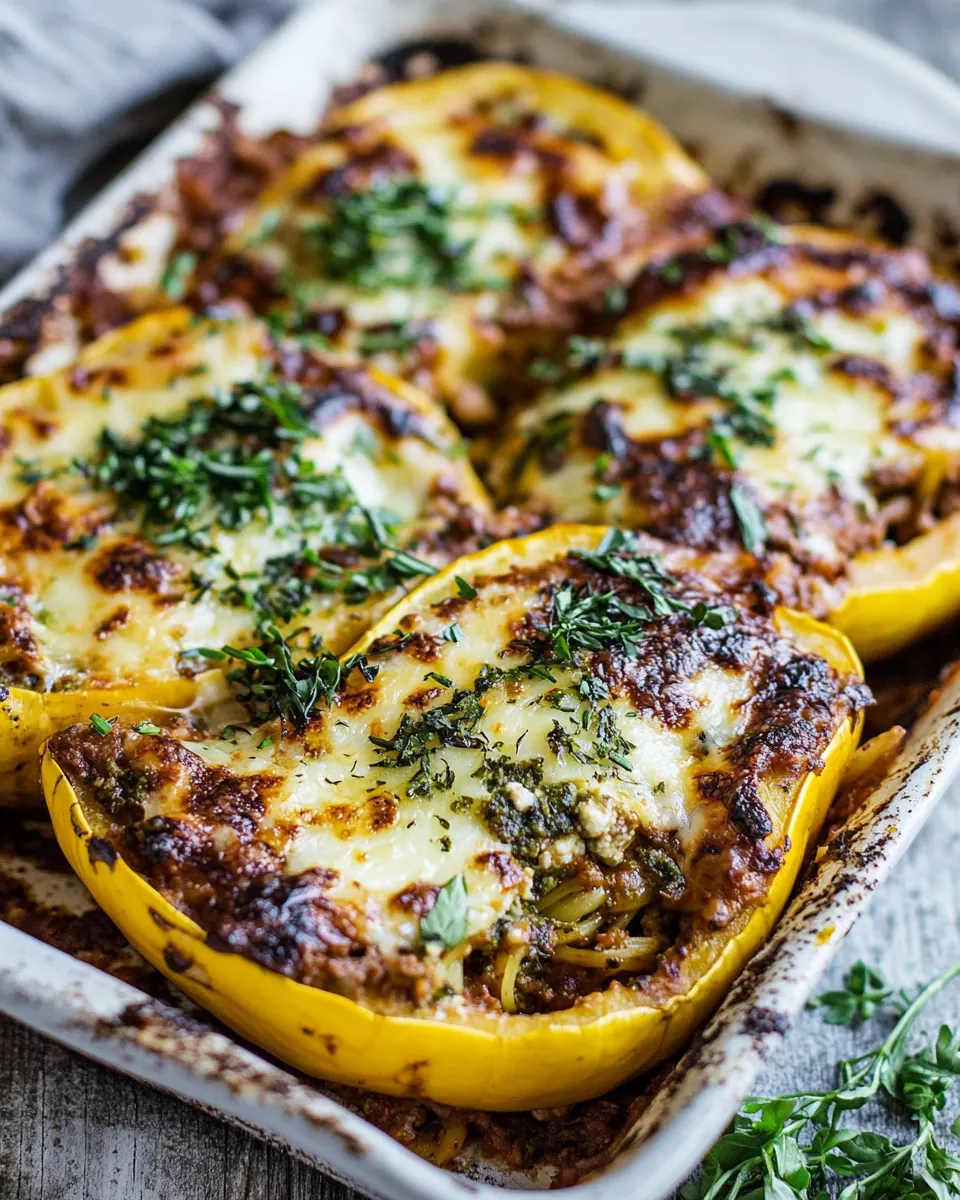
I like to think of the ingredients as a team where each player has a clear job. The spaghetti squash acts as the structural base and provides light, slightly sweet strands. The dairy players, especially ricotta cheese, fontina cheese, and provolone cheese, create the creamy, melty experience we all crave. The basil pesto and dried oregano bring herbaceous brightness, while a touch of crushed red pepper flakes and kosher salt and pepper lift the flavors. Together they balance texture, creaminess, and freshness.
- 2 medium spaghetti squash, halved and seeds removed: Halved and seed-removed to act as edible vessels, roasted until tender to hold the cheesy pesto filling and provide a low-carb pasta-like base.
- 1 cup whole milk or heavy cream: Used to create a rich, creamy binder for the filling, adding moisture and soft texture while helping cheeses meld together smoothly during baking.
- 1/3 cup basil pesto, homemade or store-bought: Blended into the filling to deliver concentrated basil flavor and savory umami, imparting herbaceous brightness and binding the cheeses with oil and pine nut notes.
- 1 teaspoon dried oregano: Sprinkled into the mixture to contribute warm, herbal depth and Italian-inspired aroma, enhancing overall flavor complexity without overpowering the dish.
- 8 ounces frozen chopped spinach, thawed and squeezed dried: Thawed and squeezed dry to add concentrated, mild leafy flavor and extra body to the filling while contributing moisture control and nutritional value.
- 1/2 cup whole milk ricotta cheese: Folded into the spinach and cheese mixture to lend creamy tang and a slightly grainy texture that balances richer melting cheeses for a lasagna-like consistency.
- 1 1/2 cups shredded fontina cheese: Shredded and layered into the filling to provide a buttery, meltable core with a mild nutty flavor that creates gooey, stretchy pockets when baked.
- 1 cup shredded provolone cheese: Shredded and incorporated to add sharp, mellow melting quality with a slightly smoky edge, contributing to overall cheesiness and pull in each bite.
- 1 pinch crushed red pepper flakes: Sprinkled in small amounts to introduce gentle heat and a subtle spicy kick that cuts through richness and brightens the layered flavors.
- kosher salt and pepper: Seasoned generously to enhance and balance all components, with salt elevating flavors and pepper adding a warm, sharp counterpoint to the creamy filling.
- fresh oregano, for serving: Used as a finishing garnish to introduce fresh, aromatic oregano notes and a pop of color, complementing the baked herbs and cheeses when served.
Stuffed Spaghetti Squash 4 Cheese Pesto Lasagna Instructions
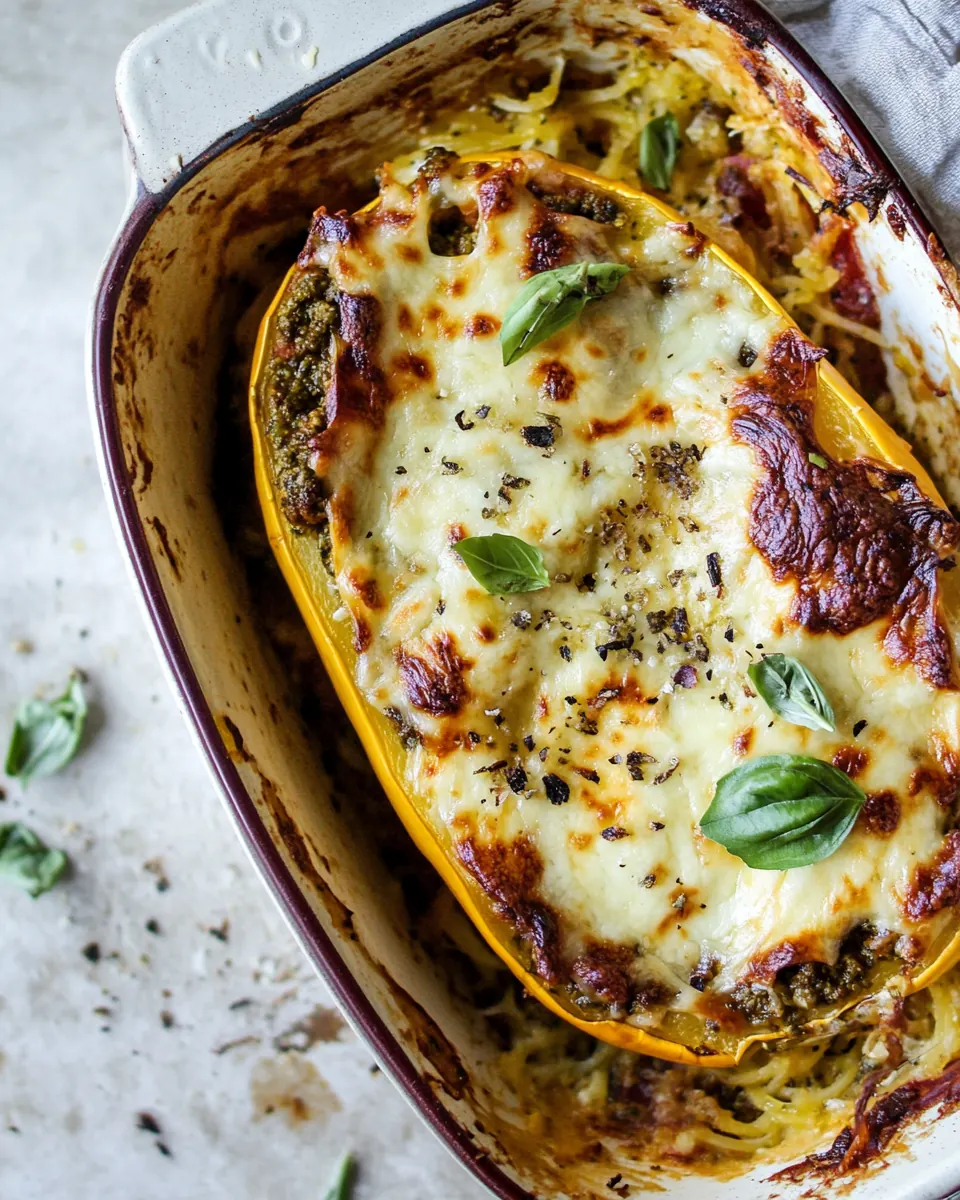
I enjoy the ritual of preparing this recipe because the steps move from simple prep to a rewarding finish. The process blends quick hacks like microwaving the squash with classic baking, and the aromatics and melting cheeses evolve through the bake into something wonderfully cohesive. Follow each stage and trust the sensory cues for best results.
- Preheat the oven to 425 degrees F. Place the squash on a plate and microwave 3 minutes. Let cool slightly, then cut in half lengthwise, scoop out the seeds and discard. Meanwhile, in a medium bowl, mix together the milk, pesto, oregano, spinach, and ricotta cheese. Season with red pepper flakes, salt and pepper. Stir in 1 cup fontina cheese and 1/2 cup provolone cheese. Place the squash in a baking dish and season the cut sides with salt and pepper. Sprinkle the remaining fontina cheese in the bottom of each squash, then evenly divide the milk mix among the squash cavities. Top with the remaining provolone cheese. Cover the squash loosely with foil. Transfer to the oven and bake 20 minutes. Remove the foil and continue baking another 15-20 minutes or until the squash is tender and the cheese is golden brown on top. The squash will seem a little soupy, this is OK. Let the squash sit 5 minutes, then use a fork to scrape the squash into strands, mixing the cheese with the squash. Serve topped with fresh oregano.: When you slide the dish into the oven you want an immediate burst of dry, hot air to start the browning process, which encourages the cheese to form a golden crust while the squash becomes tender. You should hear a faint hum of the oven as it settles at temperature, and the air will smell faintly warm and dry. A common mistake is not preheating long enough, which can extend bake time and yield less even browning; always wait until your oven fully reaches temperature.
- Place the squash on a plate and microwave 3 minutes.: This quick blast helps soften the squash so cutting and scooping are easier, and you may notice steam rising when you remove it. The flesh will feel slightly warm and yielding to the touch. Avoid microwaving too long because the flesh can become overly soft and watery, making it harder to keep the cavity intact for stuffing.
- Let cool slightly, then cut in half lengthwise, scoop out the seeds and discard.: Allowing the squash to cool makes handling safe and prevents burns, and when you cut lengthwise the interior will reveal the stringy flesh. Use a spoon to scrape and remove the seeds; they will be clustered at the center and should come away easily. A common error is rushing the cooling step, which can lead to slipping with the knife, so take a moment to let it rest.
- Meanwhile, in a medium bowl, mix together the milk, pesto, oregano, spinach, and ricotta cheese.: As you whisk these elements you will see the creamy ricotta cheese and basil pesto combine into a glossy, slightly green filling, and the spinach will distribute color and earthy notes. The mixture should be cohesive but not watery; texture here determines how the filling bakes. Overmixing is a pitfall because it can break down the spinach and flatten the texture, so combine gently.
- Season with red pepper flakes, salt and pepper.: Layering seasoning at this stage lets the heat and salt permeate the filling, creating depth. When you taste a small spoonful you should detect a hint of heat, balanced saltiness, and herb lift. Under seasoning is common, so taste and adjust carefully rather than adding too much at once.
- Stir in 1 cup fontina cheese and 1/2 cup provolone cheese.: These melting cheeses will give the filling its luxurious stretch and body once baked, and their aroma becomes more pronounced as they approach room temperature in the mix. The texture will become slightly thicker and silkier. A mistake to avoid is using pre shredded cheeses with anti caking agents that can reduce meltiness; freshly shredded yields the best texture.
- Place the squash in a baking dish and season the cut sides with salt and pepper.: Set the halves cut side up in a snug baking dish so they support the filling. Salting the cut surfaces brings out the squash sweetness and enhances the overall flavor. If your dish is too small the squash may tip and spill, so choose a pan that fits comfortably.
- Sprinkle the remaining fontina cheese in the bottom of each squash, then evenly divide the milk mix among the squash cavities.: Adding a layer of fontina cheese at the base creates a molten cushion that helps the strands cling when you later scrape them. Distribute the filling so each half is generously but not overflowing. Overfilling is a common oversight that leads to an overly soupy bake, so leave a slight gap at the rim.
- Top with the remaining provolone cheese.: The final blanket of provolone cheese forms a browning surface that will crisp in places and brown beautifully. Visually you should see a glossy cheese cap that will bubble and roast. Placing too much high moisture cheese on top can prevent proper browning, so keep the amounts as directed.
- Cover the squash loosely with foil.: Tent the foil so it does not touch the cheese directly, creating a gentle steam environment that cooks the squash through. You should see little condensation form on the foil during baking, which indicates even cooking. Wrapping too tightly traps excess moisture against the cheese and can hinder browning after the foil is removed.
- Transfer to the oven and bake 20 minutes.: During this first stage of baking the squash flesh will soften and the filling will heat through. You may smell the meld of basil pesto and cheeses as they warm. A common mistake is underbaking this phase, which can leave the center cool and the cheeses not fully integrated; rely on time and oven heat for a consistent result.
- Remove the foil and continue baking another 15 to 20 minutes or until the squash is tender and the cheese is golden brown on top.: With the foil off, the cheese will brown and develop those toasty, caramelized spots you want. Listen for gentle bubbling, and look for a golden hue. If you pull it too early the cheeses will be melted but not browned; if you leave it too long the strands can dry out, so watch closely in the final minutes.
- The squash will seem a little soupy, this is OK.: As the dish rests the liquid will settle into the squash strands, melding into a creamy sauce. You should notice a glossy sheen rather than watery separation. Trying to serve immediately while piping hot can make portions slide, so allow a short rest to let the texture stabilize.
- Let the squash sit 5 minutes, then use a fork to scrape the squash into strands, mixing the cheese with the squash.: Resting allows the juices to settle and the cheese to firm slightly. When you scrape with a fork the strands will separate easily and mingle with the melted cheeses, creating a luxurious ribboned texture. A common trap is shredding too vigorously, which can smash the strands rather than lift them, so use gentle strokes.
- Serve topped with fresh oregano.: A final scatter of fresh oregano adds bright herb aroma and a fresh finish that contrasts the warm, melted cheeses. The herb will steam slightly on contact with the hot squash, releasing fragrant oils. Avoid adding delicate garnishes too early, or they will wilt in the residual heat; add them just before serving.
Helpful Hints
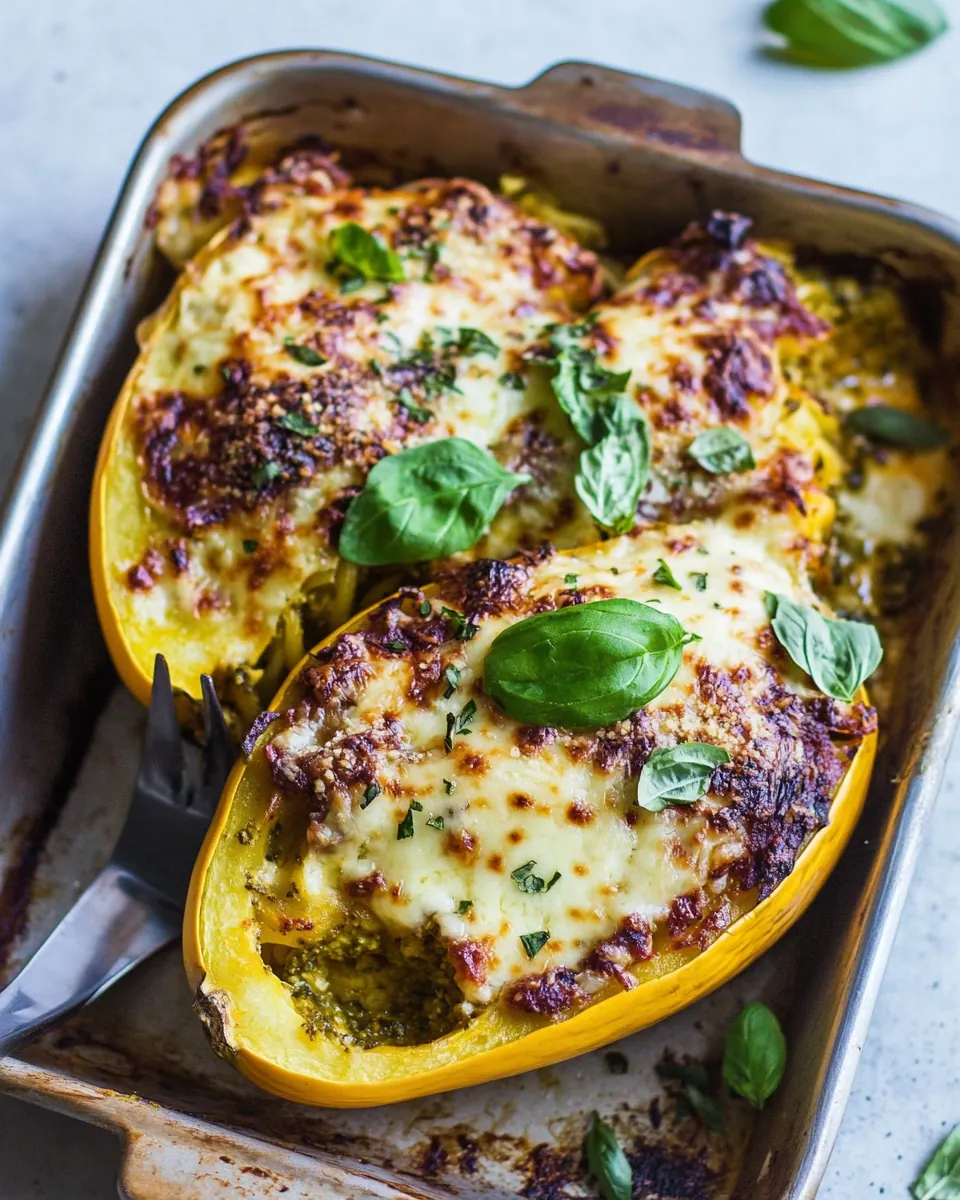
I like to share practical pointers that make this recipe easier and more reliable. These tips highlight small techniques and choices that consistently improve the final dish. Each one is rooted in things I have learned from trying the recipe multiple times and tuning it for texture and flavor.
- Microwave first for easier handling, then finish in the oven to get even cooking and nice browning; the short microwave step softens the squash so you can halve and seed it safely.
- Dry the spinach well, either by squeezing in a clean towel or using a salad spinner; excess moisture will thin the filling and make the bake watery.
- Prefer freshly shredded cheese over pre shredded for superior melt and a silkier texture because anti caking agents can affect how evenly the cheese melts.
- Tent the foil rather than wrapping tight so steam can circulate and the cheese does not stick to the foil during the covered bake stage.
- Use good quality pesto since its flavor carries through; if using store bought, pick one with fresh herb color and pronounceable ingredients.
- Season in stages, tasting the filling before stuffing so you can correct salt and heat rather than over compensating at the end.
- Let it rest for five minutes after baking so juices settle and the texture becomes cohesive, making serving neater and more appetizing.
Serving Ideas for Stuffed Spaghetti Squash 4 Cheese Pesto Lasagna
This recipe is versatile enough for weeknight family dinner or a casual gathering. Think about pairing it with crisp, simple sides and serving styles that highlight its rustic presentation. Below are ideas for occasions, pairings, and storage.
- Weeknight main: Serve a half of the stuffed squash as a satisfying main, paired with a simple green salad dressed lightly to cut through the richness.
- Vegetarian dinner party: Present halves on a large platter for guests to scoop from, offering extra fresh oregano for garnish and a basket of warm bread for soaking up any sauce.
- Ramadan iftar: This dish makes a comforting option to break fast, because it is nourishing and easy to portion, with the cheeses providing quick energy and the squash offering gentle fiber.
- Storage tips: Cool to room temperature, then refrigerate in an airtight container for up to three days; reheat gently in a 350 degree F oven until warmed through to preserve texture.
- Seasonal pairing: In fall, pair with roasted root vegetables or a roasted beet salad, their earthy sweetness complements the cheese and herb notes beautifully.
- Presentation: Serve the halves on individual plates, spooning any pan juices back over the strands and finishing with a few sprigs of fresh oregano for color and aroma.
- Occasion: Works well for casual family dinners, potlucks, and small dinner parties where you want something comforting but slightly elevated.
FAQ
Conclusion
This recipe stands out because it transforms humble spaghetti squash into a creamy, cheesy, herb forward dish that feels like lasagna without the pasta. I encourage you to give it a try, especially when you want something comforting but slightly lighter. It’s straightforward to assemble, forgiving in the oven, and rewards you with lovely melted cheese and herb accents. Share it with family or friends and enjoy the way the squash strands cradle the pesto and cheeses for a cozy, satisfying meal.
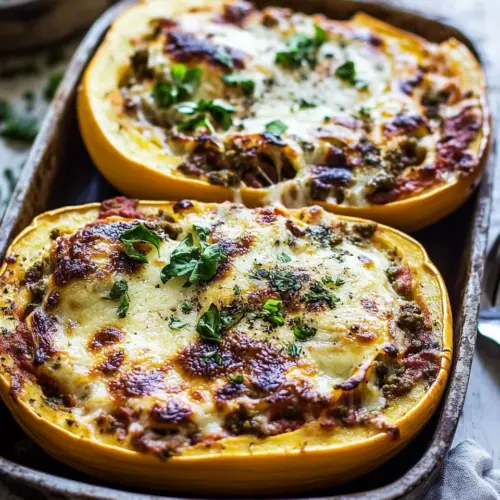
Stuffed Spaghetti Squash 4 Cheese Pesto Lasagna
Equipment
- Oven
- Microwave
- Baking Dish
- Mixing Bowl
- Spoon
Ingredients
- 2 medium spaghetti squash, halved and seeds removed Halved and seed-removed to act as edible vessels, roasted until tender to hold the cheesy pesto filling and provide a low-carb pasta-like base.
- 1 cup whole milk or heavy cream Used to create a rich, creamy binder for the filling, adding moisture and soft texture while helping cheeses meld together smoothly during baking.
- 1/3 cup basil pesto, homemade or store-bought Blended into the filling to deliver concentrated basil flavor and savory umami, imparting herbaceous brightness and binding the cheeses with oil and pine nut notes.
- 1 teaspoon dried oregano Sprinkled into the mixture to contribute warm, herbal depth and Italian-inspired aroma, enhancing overall flavor complexity without overpowering the dish.
- 8 ounces frozen chopped spinach, thawed and squeezed dried Thawed and squeezed dry to add concentrated, mild leafy flavor and extra body to the filling while contributing moisture control and nutritional value.
- 1/2 cup whole milk ricotta cheese Folded into the spinach and cheese mixture to lend creamy tang and a slightly grainy texture that balances richer melting cheeses for a lasagna-like consistency.
- 1 1/2 cups shredded fontina cheese Shredded and layered into the filling to provide a buttery, meltable core with a mild nutty flavor that creates gooey, stretchy pockets when baked.
- 1 cup shredded provolone cheese Shredded and incorporated to add sharp, mellow melting quality with a slightly smoky edge, contributing to overall cheesiness and pull in each bite.
- 1 pinch crushed red pepper flakes Sprinkled in small amounts to introduce gentle heat and a subtle spicy kick that cuts through richness and brightens the layered flavors.
- kosher salt and pepper Seasoned generously to enhance and balance all components, with salt elevating flavors and pepper adding a warm, sharp counterpoint to the creamy filling.
- fresh oregano, for serving Used as a finishing garnish to introduce fresh, aromatic oregano notes and a pop of color, complementing the baked herbs and cheeses when served.
Instructions
- Preheat the oven to 425 degrees F. Place the squash on a plate and microwave 3 minutes. Let cool slightly, then cut in half lengthwise, scoop out the seeds and discard. Meanwhile, in a medium bowl, mix together the milk, pesto, oregano, spinach, and ricotta cheese. Season with red pepper flakes, salt and pepper. Stir in 1 cup fontina cheese and 1/2 cup provolone cheese. Place the squash in a baking dish and season the cut sides with salt and pepper. Sprinkle the remaining fontina cheese in the bottom of each squash, then evenly divide the milk mix among the squash cavities. Top with the remaining provolone cheese. Cover the squash loosely with foil. Transfer to the oven and bake 20 minutes. Remove the foil and continue baking another 15-20 minutes or until the squash is tender and the cheese is golden brown on top. The squash will seem a little soupy, this is OK. Let the squash sit 5 minutes, then use a fork to scrape the squash into strands, mixing the cheese with the squash. Serve topped with fresh oregano.: When you slide the dish into the oven you want an immediate burst of dry, hot air to start the browning process, which encourages the cheese to form a golden crust while the squash becomes tender. You should hear a faint hum of the oven as it settles at temperature, and the air will smell faintly warm and dry. A common mistake is not preheating long enough, which can extend bake time and yield less even browning; always wait until your oven fully reaches temperature.
- Place the squash on a plate and microwave 3 minutes.: This quick blast helps soften the squash so cutting and scooping are easier, and you may notice steam rising when you remove it. The flesh will feel slightly warm and yielding to the touch. Avoid microwaving too long because the flesh can become overly soft and watery, making it harder to keep the cavity intact for stuffing.
- Let cool slightly, then cut in half lengthwise, scoop out the seeds and discard.: Allowing the squash to cool makes handling safe and prevents burns, and when you cut lengthwise the interior will reveal the stringy flesh. Use a spoon to scrape and remove the seeds; they will be clustered at the center and should come away easily. A common error is rushing the cooling step, which can lead to slipping with the knife, so take a moment to let it rest.
- Meanwhile, in a medium bowl, mix together the milk, pesto, oregano, spinach, and ricotta cheese.: As you whisk these elements you will see the creamy ricotta cheese and basil pesto combine into a glossy, slightly green filling, and the spinach will distribute color and earthy notes. The mixture should be cohesive but not watery; texture here determines how the filling bakes. Overmixing is a pitfall because it can break down the spinach and flatten the texture, so combine gently.
- Season with red pepper flakes, salt and pepper.: Layering seasoning at this stage lets the heat and salt permeate the filling, creating depth. When you taste a small spoonful you should detect a hint of heat, balanced saltiness, and herb lift. Under seasoning is common, so taste and adjust carefully rather than adding too much at once.
- Stir in 1 cup fontina cheese and 1/2 cup provolone cheese.: These melting cheeses will give the filling its luxurious stretch and body once baked, and their aroma becomes more pronounced as they approach room temperature in the mix. The texture will become slightly thicker and silkier. A mistake to avoid is using pre shredded cheeses with anti caking agents that can reduce meltiness; freshly shredded yields the best texture.
- Place the squash in a baking dish and season the cut sides with salt and pepper.: Set the halves cut side up in a snug baking dish so they support the filling. Salting the cut surfaces brings out the squash sweetness and enhances the overall flavor. If your dish is too small the squash may tip and spill, so choose a pan that fits comfortably.
- Sprinkle the remaining fontina cheese in the bottom of each squash, then evenly divide the milk mix among the squash cavities.: Adding a layer of fontina cheese at the base creates a molten cushion that helps the strands cling when you later scrape them. Distribute the filling so each half is generously but not overflowing. Overfilling is a common oversight that leads to an overly soupy bake, so leave a slight gap at the rim.
- Top with the remaining provolone cheese.: The final blanket of provolone cheese forms a browning surface that will crisp in places and brown beautifully. Visually you should see a glossy cheese cap that will bubble and roast. Placing too much high moisture cheese on top can prevent proper browning, so keep the amounts as directed.
- Cover the squash loosely with foil.: Tent the foil so it does not touch the cheese directly, creating a gentle steam environment that cooks the squash through. You should see little condensation form on the foil during baking, which indicates even cooking. Wrapping too tightly traps excess moisture against the cheese and can hinder browning after the foil is removed.
- Transfer to the oven and bake 20 minutes.: During this first stage of baking the squash flesh will soften and the filling will heat through. You may smell the meld of basil pesto and cheeses as they warm. A common mistake is underbaking this phase, which can leave the center cool and the cheeses not fully integrated; rely on time and oven heat for a consistent result.
- Remove the foil and continue baking another 15 to 20 minutes or until the squash is tender and the cheese is golden brown on top.: With the foil off, the cheese will brown and develop those toasty, caramelized spots you want. Listen for gentle bubbling, and look for a golden hue. If you pull it too early the cheeses will be melted but not browned; if you leave it too long the strands can dry out, so watch closely in the final minutes.
- The squash will seem a little soupy, this is OK.: As the dish rests the liquid will settle into the squash strands, melding into a creamy sauce. You should notice a glossy sheen rather than watery separation. Trying to serve immediately while piping hot can make portions slide, so allow a short rest to let the texture stabilize.
- Let the squash sit 5 minutes, then use a fork to scrape the squash into strands, mixing the cheese with the squash.: Resting allows the juices to settle and the cheese to firm slightly. When you scrape with a fork the strands will separate easily and mingle with the melted cheeses, creating a luxurious ribboned texture. A common trap is shredding too vigorously, which can smash the strands rather than lift them, so use gentle strokes.
- Serve topped with fresh oregano.: A final scatter of fresh oregano adds bright herb aroma and a fresh finish that contrasts the warm, melted cheeses. The herb will steam slightly on contact with the hot squash, releasing fragrant oils. Avoid adding delicate garnishes too early, or they will wilt in the residual heat; add them just before serving.
Notes
- Microwave first for easier handling, then finish in the oven to get even cooking and nice browning; the short microwave step softens the squash so you can halve and seed it safely.
- Dry the spinach well, either by squeezing in a clean towel or using a salad spinner; excess moisture will thin the filling and make the bake watery.
- Prefer freshly shredded cheese over pre shredded for superior melt and a silkier texture because anti caking agents can affect how evenly the cheese melts.
- Tent the foil rather than wrapping tight so steam can circulate and the cheese does not stick to the foil during the covered bake stage.
- Use good quality pesto since its flavor carries through; if using store bought, pick one with fresh herb color and pronounceable ingredients.
- Season in stages, tasting the filling before stuffing so you can correct salt and heat rather than over compensating at the end.
- Let it rest for five minutes after baking so juices settle and the texture becomes cohesive, making serving neater and more appetizing.