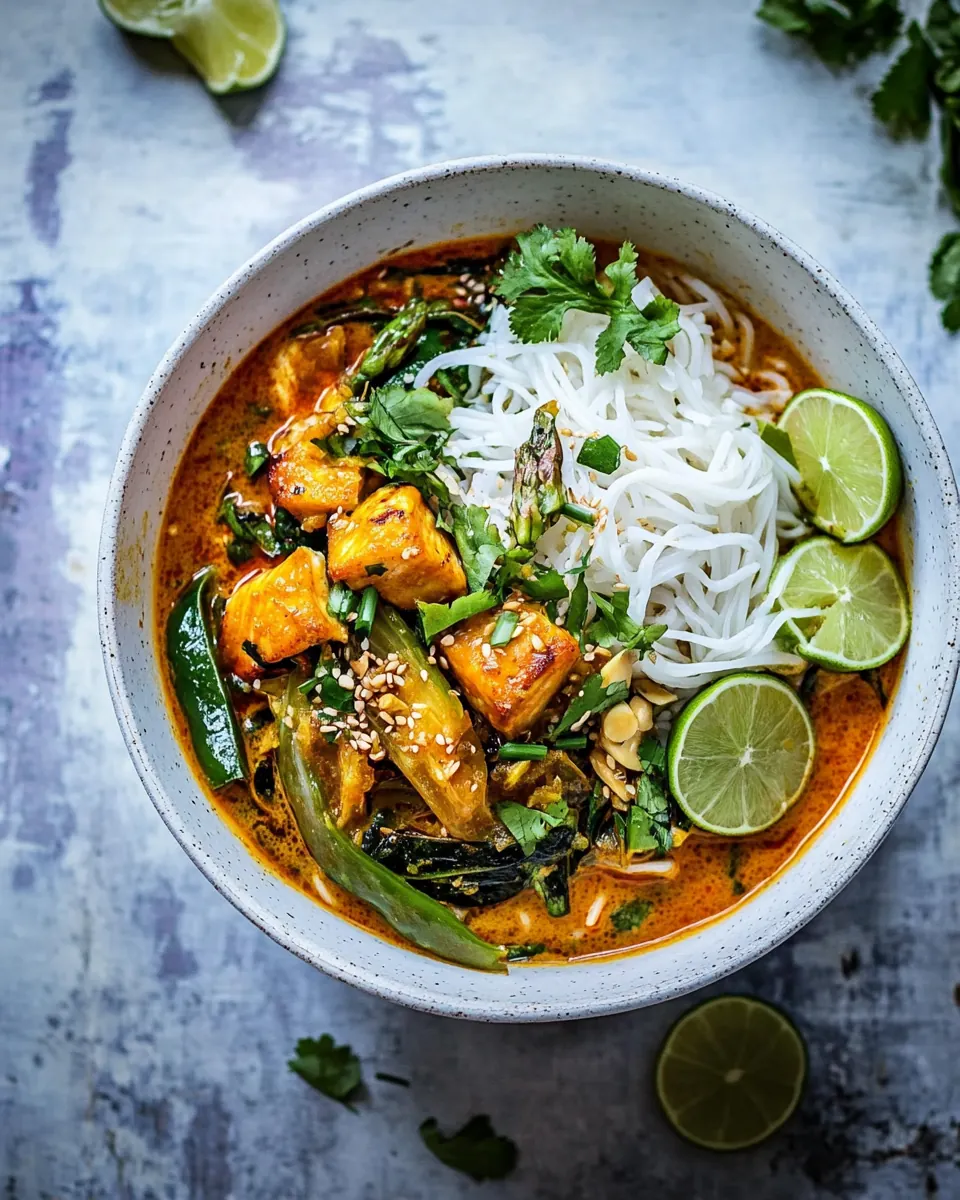
Springtime Thai Red Fish Curry Noodles
Springtime Thai Red Fish Curry Noodles has been one of those recipes that sneaks into my weeknights and special lunches alike. The first time I made it I was juggling a sweaty market bag of mangoes and a bag of sugar snap peas, and the way the aromatic thai red curry paste met the bright squeeze of lime juice felt like a tiny festival in my kitchen. I remember laughing at myself because the room filled with coconut steam and roasted peanut perfume, and it instantly felt like a meal you want to share.
I grew up around simple noodle bowls where a single bold sauce pulled everything together, and this version leans into that memory while keeping things modern. The tender cubes of mahi mahi cook quickly and flake into the rich, slightly spicy coconut sauce, while fresh mango and cilantro add a playful contrast. Every bite marries silky pad thai noodles with crunchy roasted peanuts and the snap of peas. I often make a double batch of the sauce, because sometimes I spoon it over rice the next day.
On busy nights this recipe is my shortcut to something that reads and tastes like effort without demanding hours. I love how flexible it is, so I’ve served it at casual lunches and brought bowls to outdoor gatherings when spring weather hits. The balance of savory, sweet, and sour keeps people coming back for seconds, and I always feel satisfied that I fed everyone something colorful and nourishing. Try it when you want a fragrant, easy to assemble dinner that still feels elevated.
Recipe Snapshot
25 mins
10 mins
15 mins
Easy
550 kcal
Thai
Gluten-Free, Low FODMAP
Dinner
Large high sided skillet, Mixing spoon, Bowls
Why You Need This Springtime Thai Red Fish Curry Noodles
Bright layered flavors
I adore how the combination of thai red curry paste, coconut milk, and lime juice creates a sauce that is at once creamy, tangy, and gently spicy. Each component plays a clear role, so the bowl never tastes muddled. I use this harmony to build tension in the dish, then let crunchy elements like roasted peanuts and fresh bean sprouts release it.
Fast and elegant protein
The choice of mahi mahi means the fish cooks quickly and stays tender. I love that you can sear it to get a little caramelization, which adds depth without long cooking. For weeknights this is a major win, because you get restaurant style texture in minutes.
Textural contrast
Between silky pad thai noodles, crisp sugar snap peas, and crunchy peanuts, every mouthful has contrast. I think about texture when I assemble the bowl, and that attention turns a simple curry into something memorable. The fresh mango adds a cool, juicy foil that cuts through the richness.
Flexible and forgiving
I often vary the amounts of coconut milk and lime juice depending on mood, which makes the recipe forgiving. You can thin or thicken the sauce without losing balance. This forgiving nature makes the dish accessible if you are adapting to what you have in the pantry.
Visual and seasonal appeal
Because it uses bright ingredients like cilantro and mango, the bowl screams spring on the table. I find guests respond to color, and this recipe checks that box while staying quick to assemble.
Springtime Thai Red Fish Curry Noodles Shopping List
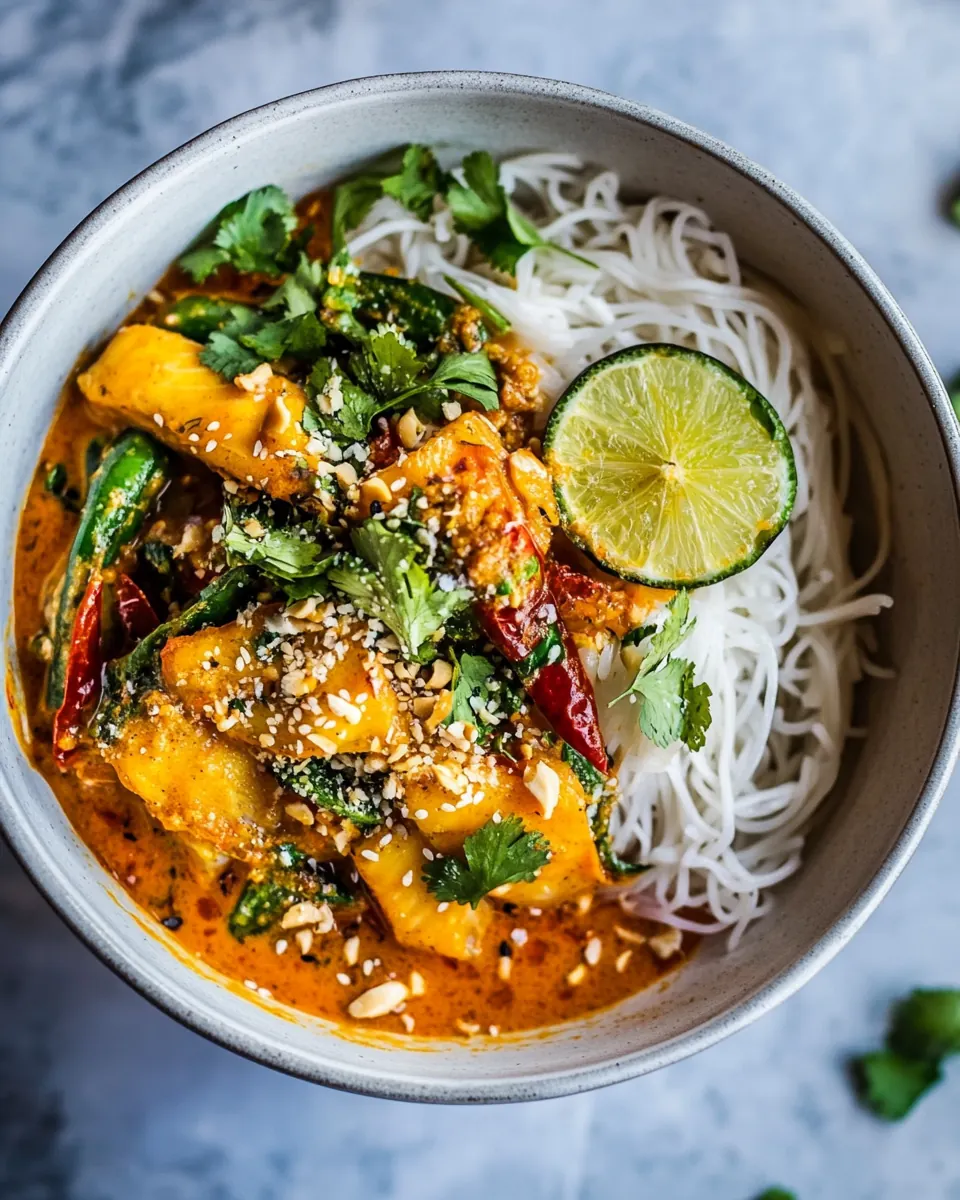
These ingredients are chosen to build a bold, balanced curry noodle bowl. I think of the pad thai noodles as the soft neutral base, while the sauce ingredients like thai red curry paste, coconut milk, and fish sauce supply depth and umami. Bright players such as lime juice, mango, and cilantro keep the bowl fresh and springlike.
- 7 ounces pad thai noodles: Boil until tender and slightly pliable, then drain and toss with a little oil to prevent sticking; provides the starchy base and absorbs the curry flavors for a hearty noodle bowl.
- 1/4 cup peanut oil: Heat gently to create a fragrant cooking medium; imparts a neutral, high-heat oil for stir-frying the fish and aromatics without overpowering the dish.
- 1 pound mahi mahi cut into cubes, or your favorite white meat fish: Cut into bite-sized cubes for quick, even cooking in the curry; offers a flaky, mild protein that soaks up the red curry and coconut milk.
- 2 cloves garlic minced or grated: Mince or grate finely to release strong savory aromatics; delivers pungent depth and a subtle sharpness that balances the sweetness and acidity.
- 6 green onions chopped: Chop into thin rounds to add freshness and mild oniony crunch; contributes a bright green color and a layered savory note to the finished dish.
- 1/4 cup thai red curry paste: Spoon in to provide concentrated spicy, savory, and aromatic Thai flavor; forms the curry's backbone and determines the heat and complexity.
- 2 tablespoons soy sauce: Measure and add to bring umami and salty balance; complements the curry paste and deepens the savory profile.
- 1 tablespoon fish sauce: Stir in to add authentic Southeast Asian salty-savoury depth; enhances fishiness and layers of savory complexity without overpowering other flavors.
- 1 tablespoon sambal oelek: Dollop to supply chili heat and a tangy fermented chili flavor; allows control over spice intensity while adding texture and brightness.
- 2 tablespoons lime juice: Squeeze to supply bright acidity and citrus aroma; cuts through the richness of coconut milk and honey to lift the overall flavor.
- 2 tablespoons honey: Drizzle to lend natural sweetness and a sticky glaze; balances the spiciness and acidity while enhancing caramelized notes in the sauce.
- 2/3 cup canned coconut milk plus more if needed: Spoon into the sauce to create a creamy, rich coconut base; provides silky mouthfeel and tropical flavor that mellows the curry paste.
- 8 ounces fresh sugar snap peas: Trim and leave whole or halved to add crisp, sweet-green crunch; brings a fresh, snappy texture and bright vegetal note to contrast the broth.
- 1/2 cup fresh cilantro chopped: Chop roughly to add fresh herbal brightness and vibrant green color; delivers citrusy, slightly peppery flavor that brightens each bite.
- 1 mango diced or sliced: Dice or slice to introduce juicy, sweet tropical fruitiness; adds a contrasting sweet-tart element and vibrant color that complements savory curry.
- 1/2 cup roasted peanuts chopped: Roughly chop to provide toasted, crunchy texture and nutty flavor; adds contrast to soft elements and reinforces the peanut oil flavor profile.
- bean sprouts red chilies + lime wedges, for serving: Serve alongside to provide extra freshness, crunch, heat, and acidity as desired; offers bean sprouts for crunch, sliced red chilies for heat, and lime wedges for bright acidity.
Recipe Steps for Springtime Thai Red Fish Curry Noodles
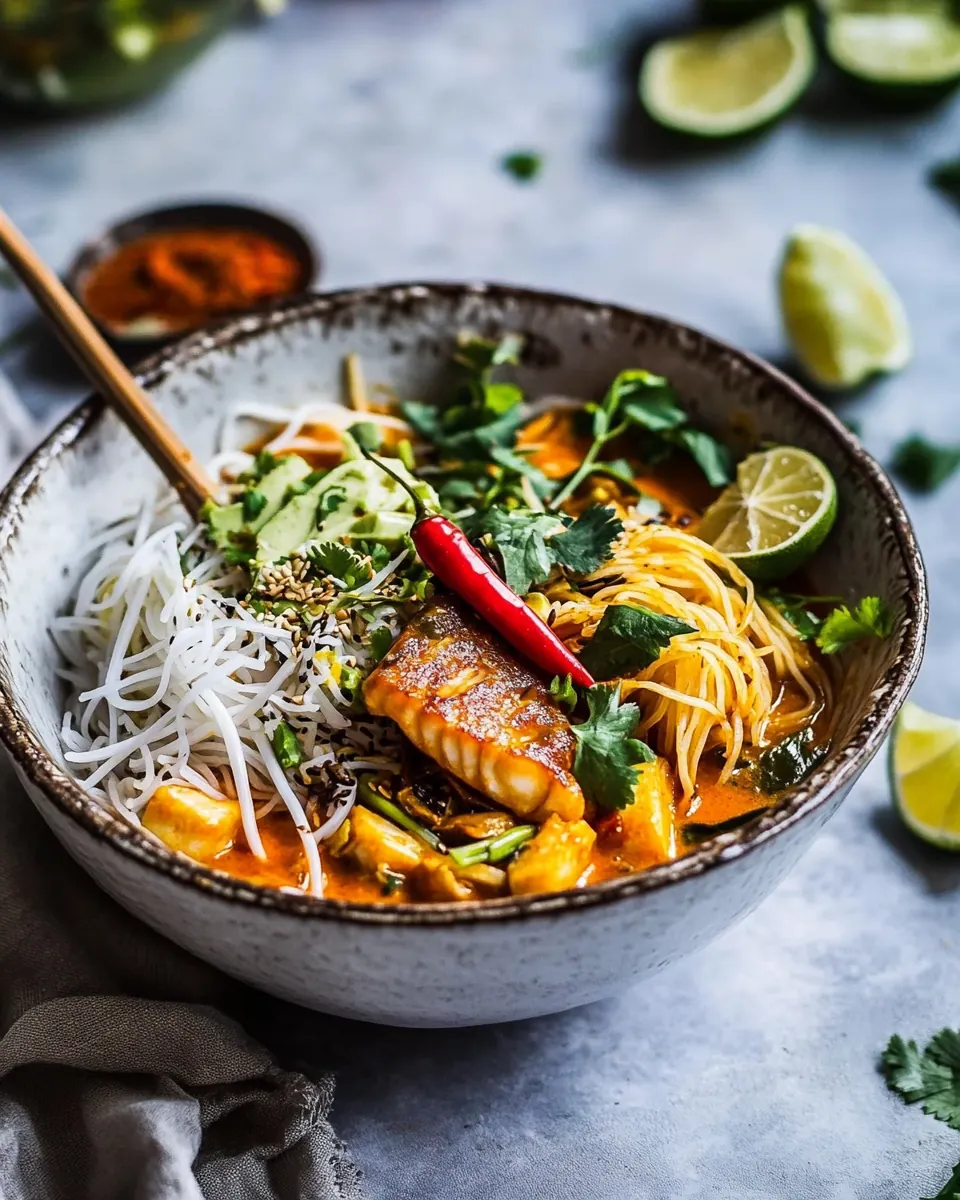
I like to keep the rhythm: hydrate the noodles, sear the fish, build the sauce, finish with herbs and garnishes. Follow each step closely so textures stay distinct and the sauce balances perfectly.
- Prepare the pad thai noodles according to package directions (mine said to soak my noodles in hot water for 10 minutes and then drain).: The noodles should be tender but still slightly firm to the bite, offering a slippery texture that soaks up sauce. When you soak them in hot water you will notice the strands separate and soften, releasing a faint wheaty steam. If they get gummy the sauce will weigh them down, so drain them thoroughly and spread them on a sheet to stop carryover cooking. A common mistake is leaving noodles stacked while hot, which traps steam and makes them soggy; shake or toss them gently to cool.
- Meanwhile heat a large high sided skillet over medium heat. Add a drizzle of peanut oil and once hot, add half the fish. Sear the fish until just cooked through, about 3-5 minutes depending on the thickness of your fish. Remove from the pan and place on a plate. Add another drizzle of oil to the pan and repeat with the remaining fish, again adding the fish to the plate once it is finished cooking.: A roomy skillet allows even searing and keeps the sauce contained. When the pan is properly heated you will hear a light sizzle as oil hits the surface, and droplets will shimmer rather than smoke. This is the cue to add oil and fish. If the pan is too cool the fish will stick and not develop color, while an overly hot pan risks burning the exterior before the interior cooks.
- Return the pan to medium heat and add another drizzle of peanut oil. Add the garlic and green onions, cook for about 1 minute then add the thai red curry paste and continue to cook another 2 minutes or until fragrant. Add the soy sauce, fish sauce, sambal oelek, lime juice, honey and coconut milk. Bring the mixture to a low boil and cook for 5 minutes. After five minutes, add the sugar snap peas and the fish to the sauce. Cook until the fish is warmed through and the sauce has thickened, about another 5 minutes. If desired, add more coconut milk to thin the sauce if it seems too thick for your liking.: When the fish meets the hot oil you should hear an assertive sizzle and see the edges begin to opacify, signaling the Maillard reaction. Let the fish sear without moving it for a minute or two so a little crust forms, then flip to finish. The goal is gentle browning, not charring, which adds savory notes. A frequent error is crowding the pan; that releases moisture and prevents browning, so cook in batches.
- Remove from the heat and stir in the cilantro.: You will notice the flesh change from translucent to opaque and flakes easily under a fork, which tells you it is done. The aroma will become sweeter and more savory as the sugars caramelize. Overcooking will dry the fish, so watch for those visual cues and remove it promptly.
- To serve, divide the noodles among bowls and top with curry. Serve with peanuts, fresh mango slices, bean sprouts and lime wedges if desired.: Resting the fish briefly allows juices to redistribute and keeps the pieces moist when added back to the sauce. As it rests the surface cools slightly and the interior retains tenderness. Avoid stacking pieces on top of each other while hot, because trapped steam can make the surface soggy.
- Add another drizzle of oil to the pan and repeat with the remaining fish: Using the same hot skillet and oil ensures consistent color and flavor. Repeat the searing rhythm so every cube has the same crust and texture. If you skip recharging the oil you risk uneven browning and sticking, which affects mouthfeel.
- Return the pan to medium heat and add another drizzle of peanut oil: Reintroducing a little oil gives you a glossy base for the aromatics, helping them bloom without burning. You will see the oil ripple in the pan; that reflection and the light scent change are good signs to add garlic. Too much heat here will scorch delicate aromatics, producing a bitter off note.
- Add the garlic and green onions, cook for about 1 minute then add the thai red curry paste: The moment you add the garlic and green onions the kitchen fills with sweet savory aromas. Cook briefly until the raw edge softens, then stir in the thai red curry paste to bloom its oils. You want a fragrant, glossy paste, which indicates essential flavors have been released. A common pitfall is rushing this step, which can leave the paste tasting raw.
- Continue to cook another 2 minutes or until fragrant: As the paste heats you will notice a complex fragrance of chilies, lime leaf, and warm spices. Stir constantly to prevent sticking and to meld flavors. This gentle toasting intensifies the paste, making the final sauce deeper. If you smell burning, lower the heat immediately to avoid bitterness.
- Add the soy sauce, fish sauce, sambal oelek, lime juice, honey and coconut milk: When the liquids hit the hot paste they will deglaze the pan, releasing browned bits and creating a silky sauce. The blend of soy sauce and fish sauce layers savory notes, while honey and lime juice bring sweet and bright balance. The sauce may hiss softly as it comes up to a low boil, and the aroma will deepen. Avoid adding all the coconut milk at once if you prefer a thicker sauce; you can adjust later.
- Bring the mixture to a low boil and cook for 5 minutes: A gentle simmer allows the flavors to marry and the sauce to reduce slightly, concentrating its taste. You will see small bubbles rise steadily and the surface might thicken a touch. Taste and adjust at this point; if the sauce is too sharp a touch more honey can round it out. A mistake is letting it rapidly boil, which can separate the coconut milk and alter texture.
- After five minutes, add the sugar snap peas and the fish to the sauce: Adding the peas now keeps them vibrant and crisp, and returning the seared fish warms it without overcooking. As the sauce embraces the fish you will hear a faint simmer and see the sauce cling to the pieces. This step seals flavors together while preserving texture. Be cautious not to stir aggressively, which can break the fish into small flakes.
- Cook until the fish is warmed through and the sauce has thickened, about another 5 minutes: The sauce will reduce and coat the back of a spoon, signaling readiness, while the fish should feel tender and springy. The peas will keep their bright green and slight crunch. Overcooking will dry the fish and soften peas too much, so aim for mindful timing.
- If desired, add more coconut milk to thin the sauce if it seems too thick for your liking: Adding a splash of coconut milk will loosen the sauce and mellow intensity, making it silkier on the noodles. Add a little at a time and stir until you reach the consistency you like. A common error is adding water instead, which dilutes flavor rather than smoothing texture.
- Remove from the heat and stir in the cilantro: Off the heat, the fresh cilantro releases its bright aroma without wilting, preserving a herbaceous top note. Stirring in the herb at the end keeps it vibrant and prevents bitterness from cooking. If you add cilantro too early it loses its lift and becomes muted.
- To serve, divide the noodles among bowls and top with curry: The final assembly is where texture and balance come together. Nestle the warm noodles, ladle the curry over them, and let each diner finish with garnishes. The contrast of silky noodles, rich sauce, and crunchy toppings should be evident. Serve while hot to enjoy the full aromatic impact.
- Serve with peanuts, fresh mango slices, bean sprouts and lime wedges if desired: These garnishes allow customization, adding crunch, sweet contrast, and bright acidity. Squeezing lime at the table and sprinkling peanuts last preserves their texture and fragrance. A mistake is pre tossing garnishes into the pot, which can soften them and blur the contrasts that make the bowl exciting.
Making Adjustments
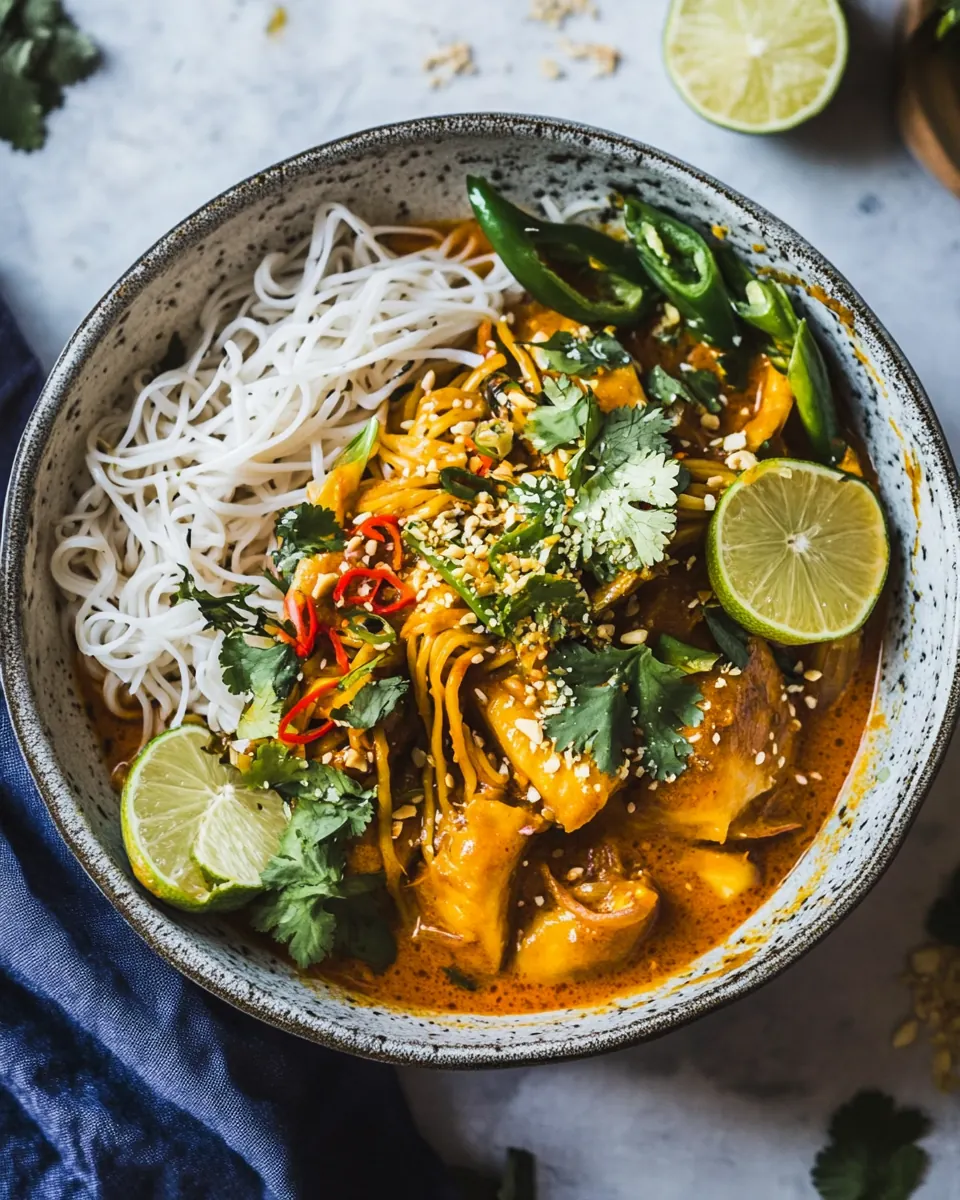
This recipe is forgiving by design, and small swaps change the profile without breaking the bowl. Below you’ll find practical adjustments and ways I tweak the dish depending on pantry choices and heat preference.
- Reduce spice: If you want less heat, start with half the thai red curry paste and add more after tasting; this lets you control the chili intensity without losing flavor.
- Thinner sauce: Add small amounts of extra coconut milk until you reach the desired pourable consistency, stirring between additions to avoid over thinning.
- More acidity: Increase the lime juice by small increments if the sauce tastes too rich; acidity brightens and balances coconut richness.
- Extra crunch: Toast additional peanuts briefly in a dry pan for a nuttier aroma before chopping and sprinkling on top just before serving.
- Swap the fish: The recipe accepts other firm white fish, but keep cube sizes consistent so all pieces finish at the same time and stay tender.
- Make it saucier: Simmer the sauce a bit longer to concentrate flavors and then stir in a touch more coconut milk to reach a glossy finish that clings to noodles.
Pairing Suggestions for Springtime Thai Red Fish Curry Noodles
This dish is flexible at the table, and the right accompaniments amplify its bright, creamy profile. Choose simple sides and fresh garnishes that highlight the curry‘s contrasts.
- Light salads: A crisp green salad with a citrus vinaigrette complements the richness, offering a refreshing bite between spoonfuls of curry.
- Casual lunch: Serve this bowl for a relaxed midday meal with lime wedges and extra bean sprouts on the side so everyone can customize heat and texture.
- Family dinner: Lay out a bowl of chopped roasted peanuts, mango, and extra cilantro so family members can tailor their plates, which turns dinner into an interactive experience.
- Seasonal occasions: In spring, bright garnishes and fresh peas make this ideal for outdoor meals when you want a lively, colorful offering.
- Storage tips: Keep sauce and noodles separate in the fridge for up to two days, reheating gently and adding a splash of coconut milk to revive texture before serving.
- Serving style: Present in deep bowls with garnishes on the side, allowing guests to finish their own with lime and chili for a personalized bowl.
- Special occasions: This works well for casual dinner parties where vibrant presentation and quick service matter, because most of the work finishes on the stovetop within minutes.
- Portioning: For heartier appetites, add more pad thai noodles or a larger portion of mahi mahi per serving, keeping sauce proportions balanced.
- Make ahead: Prepare the sauce in advance and reheat gently when ready to add fresh-cooked fish and blanched peas for the best texture.
- Seasonal pairings: Pair with other spring produce like thin asparagus or young greens, served lightly dressed on the side for a complete plate.
FAQ
Conclusion
Springtime Thai Red Fish Curry Noodles stand out because they blend bright, layered flavors with fast, approachable technique. This recipe brings creamy coconut, vibrant lime, and tender seared fish together in a bowl that feels both celebratory and everyday. I encourage you to try it on a weeknight when you want something colorful and satisfying yet uncomplicated. Share it with family or friends, and enjoy how simple adjustments like extra mango or peanuts let you tailor each bowl to your taste.
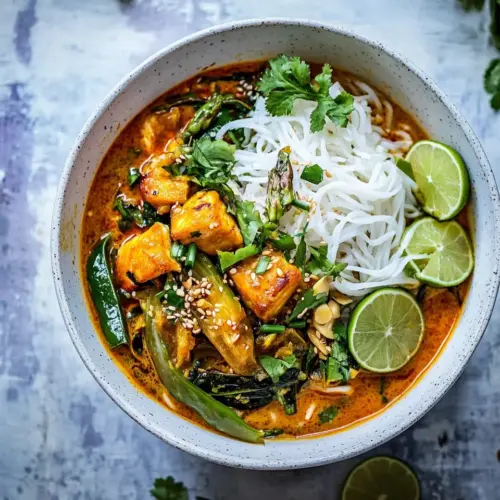
Springtime Thai Red Fish Curry Noodles
Equipment
- Large high sided skillet
- Mixing Spoon
- Bowls
Ingredients
- 7 ounces pad thai noodles Boil until tender and slightly pliable, then drain and toss with a little oil to prevent sticking; provides the starchy base and absorbs the curry flavors for a hearty noodle bowl.
- 1/4 cup peanut oil Heat gently to create a fragrant cooking medium; imparts a neutral, high-heat oil for stir-frying the fish and aromatics without overpowering the dish.
- 1 pound mahi mahi cut into cubes, or your favorite white meat fish Cut into bite-sized cubes for quick, even cooking in the curry; offers a flaky, mild protein that soaks up the red curry and coconut milk.
- 2 cloves garlic minced or grated Mince or grate finely to release strong savory aromatics; delivers pungent depth and a subtle sharpness that balances the sweetness and acidity.
- 6 green onions chopped Chop into thin rounds to add freshness and mild oniony crunch; contributes a bright green color and a layered savory note to the finished dish.
- 1/4 cup thai red curry paste Spoon in to provide concentrated spicy, savory, and aromatic Thai flavor; forms the curry's backbone and determines the heat and complexity.
- 2 tablespoons soy sauce Measure and add to bring umami and salty balance; complements the curry paste and deepens the savory profile.
- 1 tablespoon fish sauce Stir in to add authentic Southeast Asian salty-savoury depth; enhances fishiness and layers of savory complexity without overpowering other flavors.
- 1 tablespoon sambal oelek Dollop to supply chili heat and a tangy fermented chili flavor; allows control over spice intensity while adding texture and brightness.
- 2 tablespoons lime juice Squeeze to supply bright acidity and citrus aroma; cuts through the richness of coconut milk and honey to lift the overall flavor.
- 2 tablespoons honey Drizzle to lend natural sweetness and a sticky glaze; balances the spiciness and acidity while enhancing caramelized notes in the sauce.
- 2/3 cup canned coconut milk plus more if needed Spoon into the sauce to create a creamy, rich coconut base; provides silky mouthfeel and tropical flavor that mellows the curry paste.
- 8 ounces fresh sugar snap peas Trim and leave whole or halved to add crisp, sweet-green crunch; brings a fresh, snappy texture and bright vegetal note to contrast the broth.
- 1/2 cup fresh cilantro chopped Chop roughly to add fresh herbal brightness and vibrant green color; delivers citrusy, slightly peppery flavor that brightens each bite.
- 1 mango diced or sliced Dice or slice to introduce juicy, sweet tropical fruitiness; adds a contrasting sweet-tart element and vibrant color that complements savory curry.
- 1/2 cup roasted peanuts chopped Roughly chop to provide toasted, crunchy texture and nutty flavor; adds contrast to soft elements and reinforces the peanut oil flavor profile.
- bean sprouts red chilies + lime wedges, for serving Serve alongside to provide extra freshness, crunch, heat, and acidity as desired; offers bean sprouts for crunch, sliced red chilies for heat, and lime wedges for bright acidity.
Instructions
- Prepare the pad thai noodles according to package directions (mine said to soak my noodles in hot water for 10 minutes and then drain).: The noodles should be tender but still slightly firm to the bite, offering a slippery texture that soaks up sauce. When you soak them in hot water you will notice the strands separate and soften, releasing a faint wheaty steam. If they get gummy the sauce will weigh them down, so drain them thoroughly and spread them on a sheet to stop carryover cooking. A common mistake is leaving noodles stacked while hot, which traps steam and makes them soggy; shake or toss them gently to cool.
- Meanwhile heat a large high sided skillet over medium heat. Add a drizzle of peanut oil and once hot, add half the fish. Sear the fish until just cooked through, about 3-5 minutes depending on the thickness of your fish. Remove from the pan and place on a plate. Add another drizzle of oil to the pan and repeat with the remaining fish, again adding the fish to the plate once it is finished cooking.: A roomy skillet allows even searing and keeps the sauce contained. When the pan is properly heated you will hear a light sizzle as oil hits the surface, and droplets will shimmer rather than smoke. This is the cue to add oil and fish. If the pan is too cool the fish will stick and not develop color, while an overly hot pan risks burning the exterior before the interior cooks.
- Return the pan to medium heat and add another drizzle of peanut oil. Add the garlic and green onions, cook for about 1 minute then add the thai red curry paste and continue to cook another 2 minutes or until fragrant. Add the soy sauce, fish sauce, sambal oelek, lime juice, honey and coconut milk. Bring the mixture to a low boil and cook for 5 minutes. After five minutes, add the sugar snap peas and the fish to the sauce. Cook until the fish is warmed through and the sauce has thickened, about another 5 minutes. If desired, add more coconut milk to thin the sauce if it seems too thick for your liking.: When the fish meets the hot oil you should hear an assertive sizzle and see the edges begin to opacify, signaling the Maillard reaction. Let the fish sear without moving it for a minute or two so a little crust forms, then flip to finish. The goal is gentle browning, not charring, which adds savory notes. A frequent error is crowding the pan; that releases moisture and prevents browning, so cook in batches.
- Remove from the heat and stir in the cilantro.: You will notice the flesh change from translucent to opaque and flakes easily under a fork, which tells you it is done. The aroma will become sweeter and more savory as the sugars caramelize. Overcooking will dry the fish, so watch for those visual cues and remove it promptly.
- To serve, divide the noodles among bowls and top with curry. Serve with peanuts, fresh mango slices, bean sprouts and lime wedges if desired.: Resting the fish briefly allows juices to redistribute and keeps the pieces moist when added back to the sauce. As it rests the surface cools slightly and the interior retains tenderness. Avoid stacking pieces on top of each other while hot, because trapped steam can make the surface soggy.
- Add another drizzle of oil to the pan and repeat with the remaining fish: Using the same hot skillet and oil ensures consistent color and flavor. Repeat the searing rhythm so every cube has the same crust and texture. If you skip recharging the oil you risk uneven browning and sticking, which affects mouthfeel.
- Return the pan to medium heat and add another drizzle of peanut oil: Reintroducing a little oil gives you a glossy base for the aromatics, helping them bloom without burning. You will see the oil ripple in the pan; that reflection and the light scent change are good signs to add garlic. Too much heat here will scorch delicate aromatics, producing a bitter off note.
- Add the garlic and green onions, cook for about 1 minute then add the thai red curry paste: The moment you add the garlic and green onions the kitchen fills with sweet savory aromas. Cook briefly until the raw edge softens, then stir in the thai red curry paste to bloom its oils. You want a fragrant, glossy paste, which indicates essential flavors have been released. A common pitfall is rushing this step, which can leave the paste tasting raw.
- Continue to cook another 2 minutes or until fragrant: As the paste heats you will notice a complex fragrance of chilies, lime leaf, and warm spices. Stir constantly to prevent sticking and to meld flavors. This gentle toasting intensifies the paste, making the final sauce deeper. If you smell burning, lower the heat immediately to avoid bitterness.
- Add the soy sauce, fish sauce, sambal oelek, lime juice, honey and coconut milk: When the liquids hit the hot paste they will deglaze the pan, releasing browned bits and creating a silky sauce. The blend of soy sauce and fish sauce layers savory notes, while honey and lime juice bring sweet and bright balance. The sauce may hiss softly as it comes up to a low boil, and the aroma will deepen. Avoid adding all the coconut milk at once if you prefer a thicker sauce; you can adjust later.
- Bring the mixture to a low boil and cook for 5 minutes: A gentle simmer allows the flavors to marry and the sauce to reduce slightly, concentrating its taste. You will see small bubbles rise steadily and the surface might thicken a touch. Taste and adjust at this point; if the sauce is too sharp a touch more honey can round it out. A mistake is letting it rapidly boil, which can separate the coconut milk and alter texture.
- After five minutes, add the sugar snap peas and the fish to the sauce: Adding the peas now keeps them vibrant and crisp, and returning the seared fish warms it without overcooking. As the sauce embraces the fish you will hear a faint simmer and see the sauce cling to the pieces. This step seals flavors together while preserving texture. Be cautious not to stir aggressively, which can break the fish into small flakes.
- Cook until the fish is warmed through and the sauce has thickened, about another 5 minutes: The sauce will reduce and coat the back of a spoon, signaling readiness, while the fish should feel tender and springy. The peas will keep their bright green and slight crunch. Overcooking will dry the fish and soften peas too much, so aim for mindful timing.
- If desired, add more coconut milk to thin the sauce if it seems too thick for your liking: Adding a splash of coconut milk will loosen the sauce and mellow intensity, making it silkier on the noodles. Add a little at a time and stir until you reach the consistency you like. A common error is adding water instead, which dilutes flavor rather than smoothing texture.
- Remove from the heat and stir in the cilantro: Off the heat, the fresh cilantro releases its bright aroma without wilting, preserving a herbaceous top note. Stirring in the herb at the end keeps it vibrant and prevents bitterness from cooking. If you add cilantro too early it loses its lift and becomes muted.
- To serve, divide the noodles among bowls and top with curry: The final assembly is where texture and balance come together. Nestle the warm noodles, ladle the curry over them, and let each diner finish with garnishes. The contrast of silky noodles, rich sauce, and crunchy toppings should be evident. Serve while hot to enjoy the full aromatic impact.
- Serve with peanuts, fresh mango slices, bean sprouts and lime wedges if desired: These garnishes allow customization, adding crunch, sweet contrast, and bright acidity. Squeezing lime at the table and sprinkling peanuts last preserves their texture and fragrance. A mistake is pre tossing garnishes into the pot, which can soften them and blur the contrasts that make the bowl exciting.
Notes
- Reduce spice: If you want less heat, start with half the thai red curry paste and add more after tasting; this lets you control the chili intensity without losing flavor.
- Thinner sauce: Add small amounts of extra coconut milk until you reach the desired pourable consistency, stirring between additions to avoid over thinning.
- More acidity: Increase the lime juice by small increments if the sauce tastes too rich; acidity brightens and balances coconut richness.
- Extra crunch: Toast additional peanuts briefly in a dry pan for a nuttier aroma before chopping and sprinkling on top just before serving.
- Swap the fish: The recipe accepts other firm white fish, but keep cube sizes consistent so all pieces finish at the same time and stay tender.
- Make it saucier: Simmer the sauce a bit longer to concentrate flavors and then stir in a touch more coconut milk to reach a glossy finish that clings to noodles.
