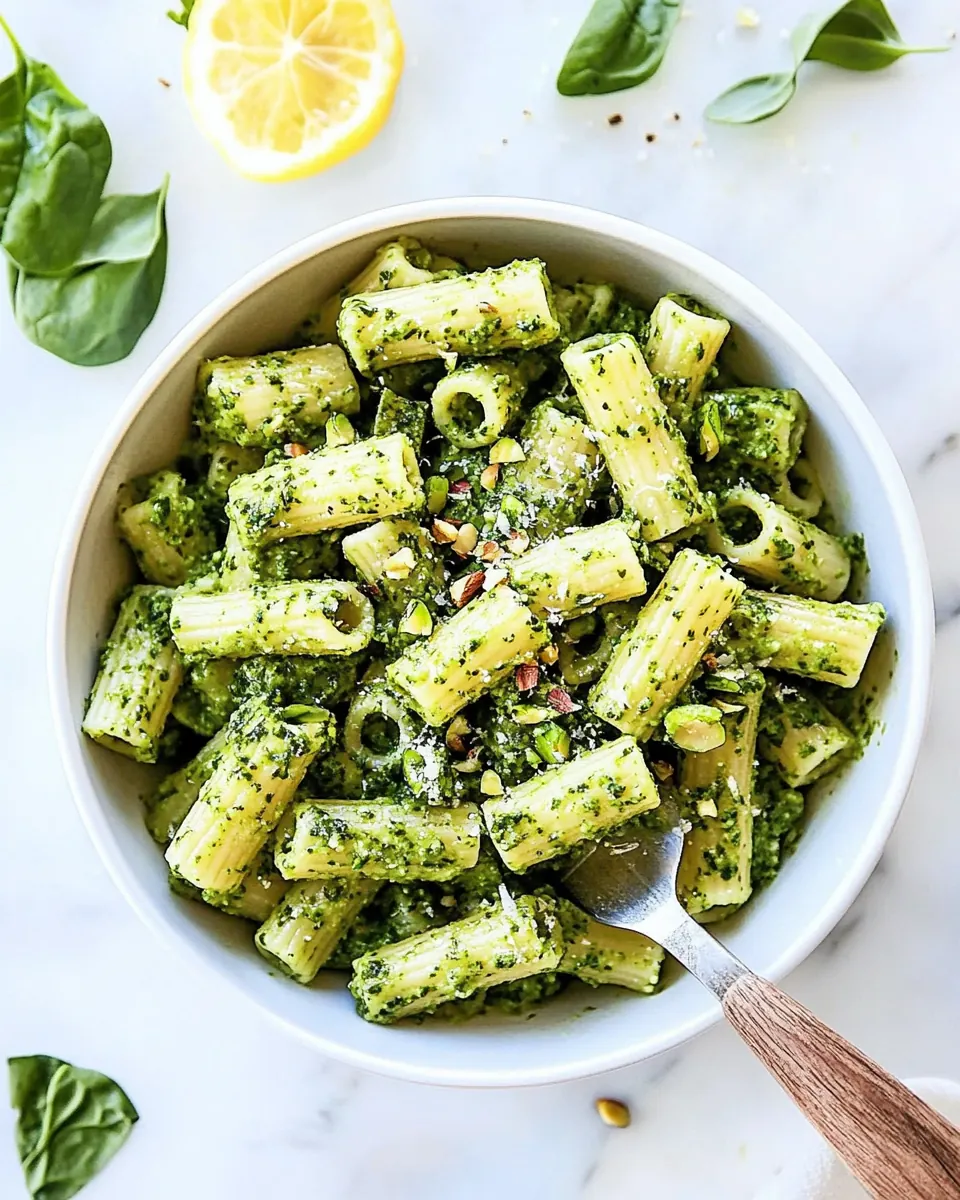
Spinach Pistachio Pesto Pasta
Spinach Pistachio Pesto Pasta arrived on my table one hectic weeknight and instantly became the kind of dish I reach for when I want something bright, green, and deeply comforting. I remember juggling grocery bags while the sky turned the color of late summer, and this pasta was born out of a fridge raid, a small bag of shelled pistachios, and a generous bunch of basil that refused to be ignored. From that first forkful I loved how the spinach made the sauce feel lush and the pistachios gave it a whisper of toasted nuttiness that felt sophisticated without fuss.
That evening taught me that a vibrant sauce does not need to be complicated. I like meals that come together quickly, let the ingredients do the talking, and still leave room for conversation at the table. When I toss hot rigatoni with glossy, green pesto and a splash of starchy pasta water, the steam lifts the aromas of garlic and lemon, and the bowl becomes a small celebration. Sometimes I add a pinch of red pepper flakes for a friendly kick, other times I let the Parmesan sing on its own.
Over time I refined the balance of oil, cheese, and nuts so the pesto clings to each strand of pasta instead of sliding off. I also learned to save a generous scoop of pasta water, because that cloudy liquid is the secret glue that brings everything together. Now when friends drop by, this Spinach Pistachio Pesto Pasta is my go to: quick, impressive, and endlessly adaptable. It’s the dish I make when I want to feel both rested and proud without spending hours in the kitchen. I hope you find the same joy in these green, nutty flavors that I do, and that it becomes a reliable weeknight treasure in your own rotation.
Recipe Snapshot
20 mins
10 mins
10 mins
Easy
350 kcal
Italian
Gluten-Free, Low FODMAP
Dinner
Large pot, Food processor, Large bowl, Spatula
Why Try This Spinach Pistachio Pesto Pasta
Bright, verdant flavor that still feels cozy
I adore how Spinach Pistachio Pesto Pasta tastes like a garden and a hug at once. The spinach gives a fresh, earthy backbone while the pistachios add a toasty richness, making every bite lively and comforting. You get vibrancy without harshness, and that balance makes it easy to serve at a casual dinner or a small gathering.
Speed and simplicity that save weeknights
This recipe comes together quickly, so I often reach for it on evenings when time is limited. The technique of reserving pasta water and tossing while hot streamlines the process, and the prep mostly involves tossing ingredients into a processor. I love that you can have an elegant plate in about the same time it takes to set a table.
Textural interest from nuts and cheese
There is a satisfying contrast between the smooth, oil laced pesto and the faint crunch of chopped pistachios. The grated Parmesan melts into the warm pasta, coating each piece with savory depth. That trio of textures keeps the dish interesting from the first forkful to the last.
Flexible and forgiving
I appreciate how forgiving this recipe is. If the pesto seems thick, a splash more olive oil or reserved pasta water will do the trick. If you prefer a bolder lemon note, a bit more lemon juice brightens things without overpowering. The recipe accommodates small adjustments without breaking, which makes it user friendly for cooks at any level.
Great for sharing and scaling
Because the core technique scales easily, I often double the pesto for potlucks or halve it for a solo meal. It keeps well in the fridge for a day or two, and reheats nicely when tossed with warm pasta. That versatility is part of why it has become a regular in my rotation.
Key Ingredients for Spinach Pistachio Pesto Pasta
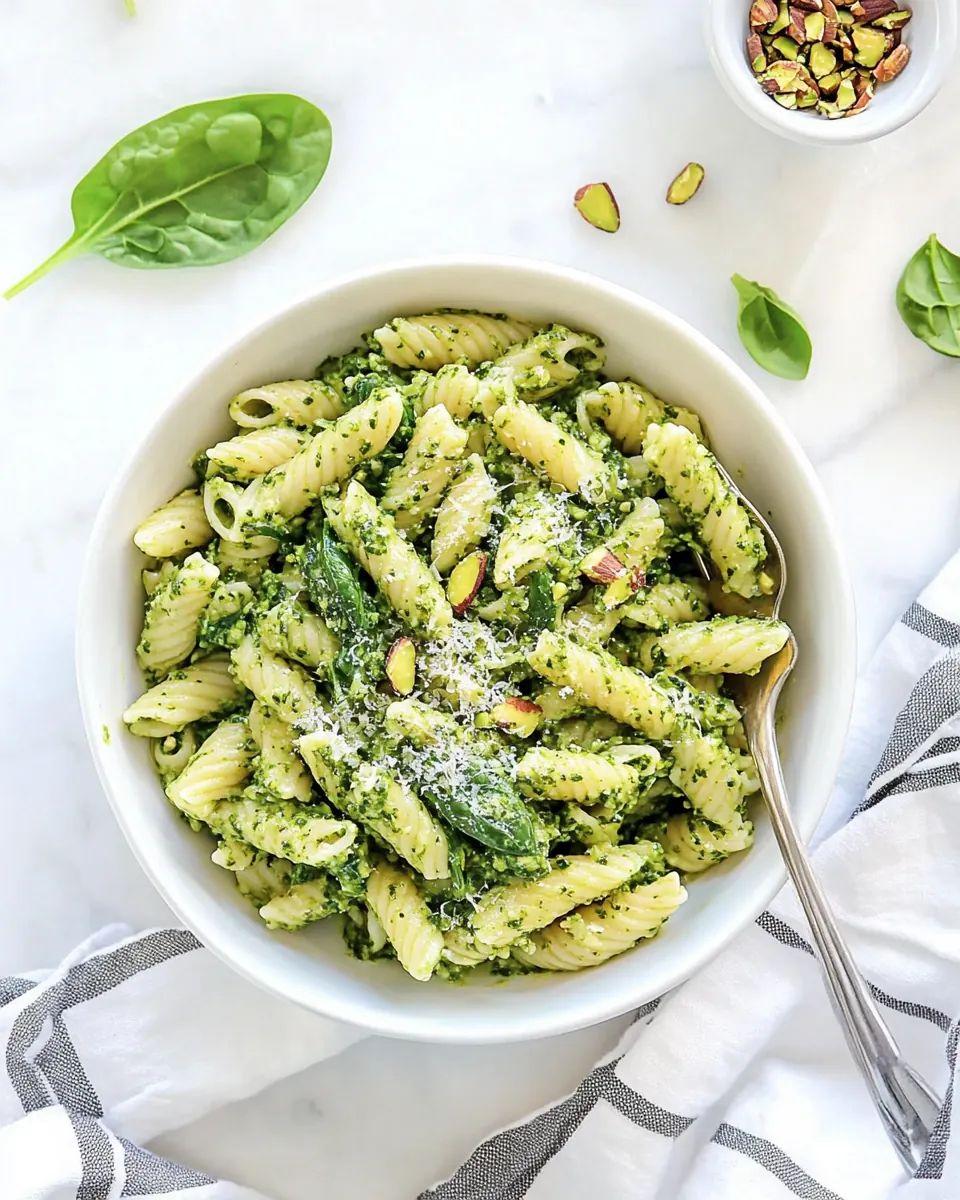
These few ingredients work in concert to create a pesto that is both bright and substantial. The philosophy here is simple: use leafy spinach and fragrant basil for color and freshness, add crunchy pistachios for body and nuttiness, and finish with Parmesan and lemon juice to round the flavor. Each component plays a specific role, and together they yield a sauce that clings beautifully to pasta.
- 1 lb rigatoni or your favorite pasta: Boil until al dente to provide a hearty base and soak up the pesto sauce for balanced texture and flavor in the dish.
- 4 cups packed Kroger spinach leaves: Pack tightly and blend into the pesto to contribute bright, iron-rich greens and a mild vegetal freshness that lightens the sauce.
- 2 cups packed Simple Truth basil leaves: Chop or pack and blend into the pesto to add aromatic basil fragrance and classic herbaceous depth essential to pesto flavor.
- 1/4 cups shelled pistachios: Toast lightly and pulse in the food processor to lend a buttery, nutty crunch and rich flavor that complements the herbs.
- 2 cloves garlic: Mince finely and incorporate into the pesto to introduce pungent, savory aroma and a sharp bite that rounds out the flavors.
- 3 tablespoons fresh lemon juice: Squeeze fresh and mix into the pesto to provide acidity that brightens and balances the richness of the nuts and olive oil.
- 1/4 cups shredded Parmesan cheese: Grate and add to the sauce to bring savory umami and creamy saltiness that enhances the overall pesto character.
- 1/2 teaspoons salt: Measure and season to taste to help elevate other flavors and ensure a well-balanced, properly seasoned final pasta.
- 1/4 teaspoon black pepper: Grind freshly and sprinkle to add mild heat and a subtle earthy note that complements the savory pesto elements.
- 1/2 cup olive oil: Drizzle in slowly while blending to emulsify the pesto, creating a smooth, silky texture and carrying the flavors evenly.
- Crushed red pepper flakes: Sprinkle optionally at the end to introduce a touch of heat and visual contrast that can enliven bites if desired.
- Shredded parmesan cheese: Shred and garnish generously to finish the dish with extra savory richness and a creamy, melty topping that guests will enjoy.
Cooking Instructions for Spinach Pistachio Pesto Pasta
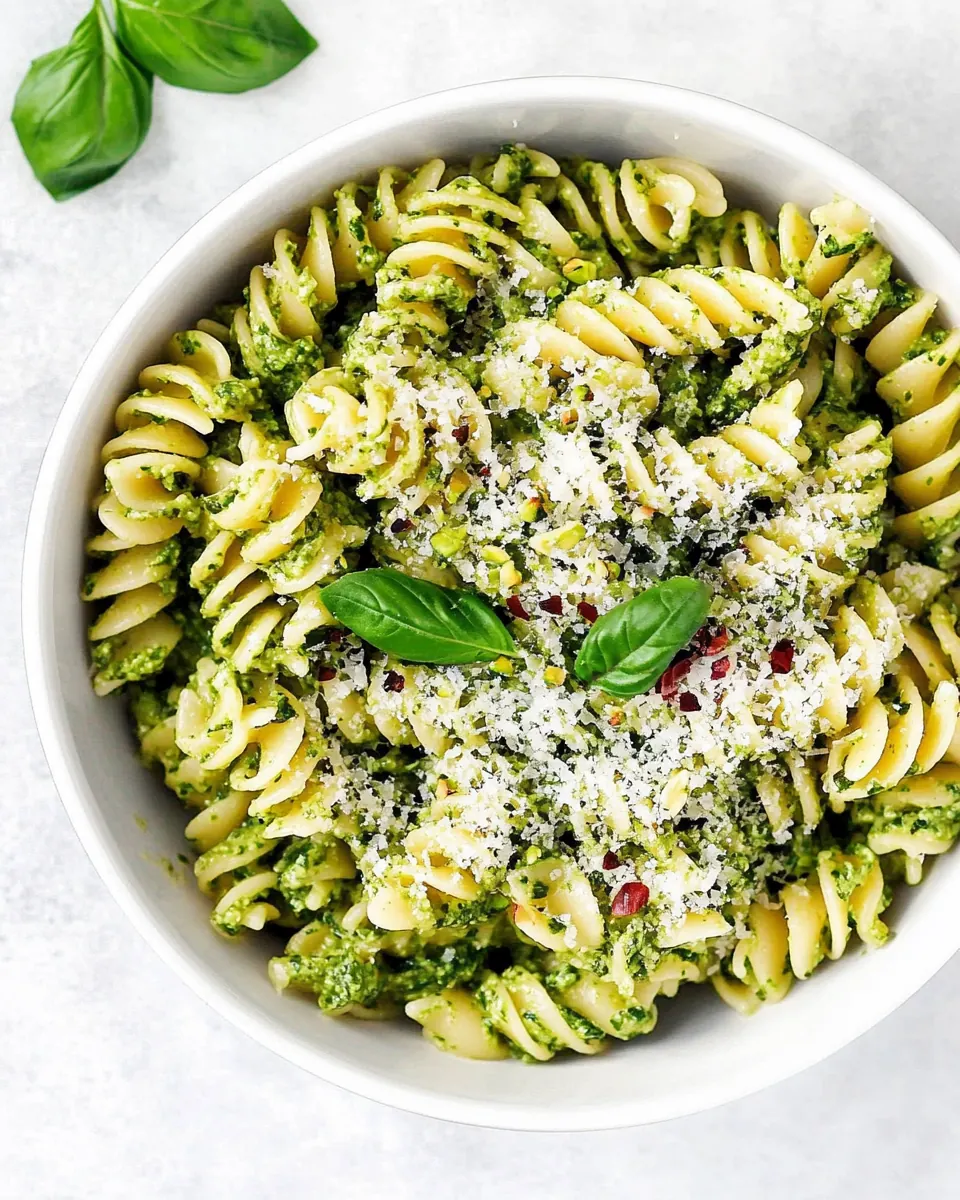
These steps are straightforward, but paying attention to sensory cues will make all the difference. I like to keep everything within arm’s reach, and to trust my nose and taste buds as much as the clock. Use the reserved pasta water as your secret binding element to achieve a glossy, clinging sauce.
- Bring a large pot of water to a rapid boil and add salt. Slowly add the pasta and stir gently. Return to a boil and cook for 8 to 10 minutes, or until desired tenderness.: You will smell the faint minerality as the water starts rolling and a properly salted pot should make the water taste like the sea, which seasons the rigatoni as it cooks. A vigorous boil creates movement so the pasta does not clump together. One common mistake is under salting the water, which leaves the pasta bland even after saucing.
- While the pasta is cooking, make the spinach pistachio pesto. In a food processor, add the spinach, basil, pistachios, garlic, lemon juice, parmesan cheese, salt, and pepper. Turn the food processor on and slowly stream in the olive oil. Mix until pesto is smooth. Stop the machine and remove the lid. Scrape down the sides with a spatula and mix again if necessary. Taste and adjust seasonings, if necessary. If you want the pesto to be a little thinner, you can add more olive oil.: As the rigatoni enters the pot you should hear the water return to a lively boil, and a gentle stir prevents sticking. The sound is a steady bubbling that changes pitch when pasta is crowded. Avoid vigorous stirring that can tear the pasta or cause hot splashes.
- Reserve 1 cup of the pasta water. Drain the pasta and put it in a large bowl. Add the pesto (start with half of the recipe) and 1/4 cup of the pasta water to the pasta and stir until pasta is well coated. Add additional pesto and pasta water, if necessary, until desired consistency and flavor is reached. Season with salt and pepper, to taste. Garnish with crushed red pepper flakes and parmesan cheese, if desired. Serve warm.: You will notice the aroma of cooked wheat rising as the pasta softens; begin tasting around 8 minutes to find the ideal al dente texture that has a slight chew. Overcooking results in mushy shapes that do not hold sauce well, so err toward the firmer side if unsure.
- While the pasta is cooking, make the spinach pistachio pesto: The processor will hum and the mixture will gradually turn a vibrant green as you combine the spinach , basil , pistachios , garlic , lemon juice , parmesan cheese , salt , and pepper . The aroma will be bright and herbaceous, and the texture will become thick and slightly granular from the nuts. A typical pitfall is over processing to a puree; stop when you still have a little texture so the pesto retains interest.
- Turn the food processor on and slowly stream in the olive oil: As the olive oil emulsifies into the mix you will see the color become more glossy and the texture smooth out. The sound is a steady, even hum; the smell grows richer and silkier. Pour slowly to ensure a stable emulsion; adding oil too fast can make the mixture separate.
- Mix until pesto is smooth: The goal is a cohesive sauce that is still slightly textured from the pistachios , with a clean lemon lift and mellow garlic warmth. A smooth, yet lively, mouthfeel indicates readiness. If the pesto stiffens in the processor, add a touch more olive oil or a teaspoon of reserved pasta water to loosen it gently.
- Stop the machine and remove the lid: You will notice the aroma intensify when the lid is removed, and a quick scrape will reveal pockets of herbs against the bowl. This pause is your chance to assess texture and seasoning. Failing to taste at this point can leave the sauce under seasoned or overly nut forward.
- Scrape down the sides with a spatula and mix again if necessary: Use a spatula to gather any herb or nut flecks clinging to the bowl, ensuring a uniform texture and flavor. It will look more vibrant once combined, and this step prevents uneven pockets of seasoning. Skipping it can give a sauce with inconsistent bursts of salty or oily bits.
- Taste and adjust seasonings, if necessary: A small spoonful on its own will reveal if the balance needs more lemon juice , salt , or Parmesan . The pesto should be lively but harmonious; tweak incrementally. Over correcting in one direction is an easy error, so add little adjustments and taste again.
- If you want the pesto to be a little thinner, you can add more olive oil: As you add olive oil , the sauce will become silkier and pour more easily, which helps it coat the rigatoni . The visual cue is a glossier sheen and a looser drip from your spoon. Be cautious adding too much oil, which can flatten the herb flavors, so add small amounts and reassess.
- Reserve 1 cup of the pasta water: That cloudy, starchy water is golden for binding the sauce to the rigatoni ; you will see it turn the pesto glossy and help it cling. Reserve before draining, and you will notice it becomes slightly viscous, a sign of good binding power. A mistake is draining without reserving, which makes it harder to marry sauce and pasta.
- Drain the pasta and put it in a large bowl: The residual steam and warmth from the freshly drained rigatoni help the pesto melt and coat the pasta evenly. You should see the shapes steaming gently as you work. If the bowl is too small you risk uneven saucing, so use a roomy vessel.
- Add the pesto start with half of the recipe and 1/4 cup of the pasta water to the pasta and stir until pasta is well coated: The initial addition will create a glossy, clingy coating; you should hear a soft swish as you toss and see the pasta take on a vibrant green hue. The reserved water helps the sauce adhere and smooth any graininess. A common oversight is drowning the pasta in sauce at once, making it heavy rather than balanced.
- Add additional pesto and pasta water, if necessary, until desired consistency and flavor is reached: Continue adding in small increments; the perfect texture is glossy and lightly sauced, with each piece carrying flavor. The sound of gentle tossing and the sight of even coating are your cues. Over saucing can make the dish oily and mask the fresh herb notes, so proceed gradually.
- Season with salt and pepper, to taste: After combining, tasting will reveal whether a touch more salt or black pepper is needed to brighten the flavors. Season incrementally and taste between additions. A typical misstep is heavy handed salting initially, which cannot be undone once combined.
- Garnish with crushed red pepper flakes and parmesan cheese if desired: The final flourish of crushed red pepper flakes adds a subtle warmth and the extra parmesan cheese provides a salty, nutty finish. Visual cues include a light dusting of cheese and tiny red flecks across the bowl. Over topping with cheese can overwhelm the delicate herbaceous notes, so garnish sparingly.
- Serve warm: Serve the pasta right away so the sauce clings while still glossy and the steam carries the aromas to the table. Warmth brings out the full perfume of the basil and garlic . Letting it sit too long will dull the vibrancy and can make the pesto settle into a denser coating, so offer it to guests promptly.
Make It Your Own
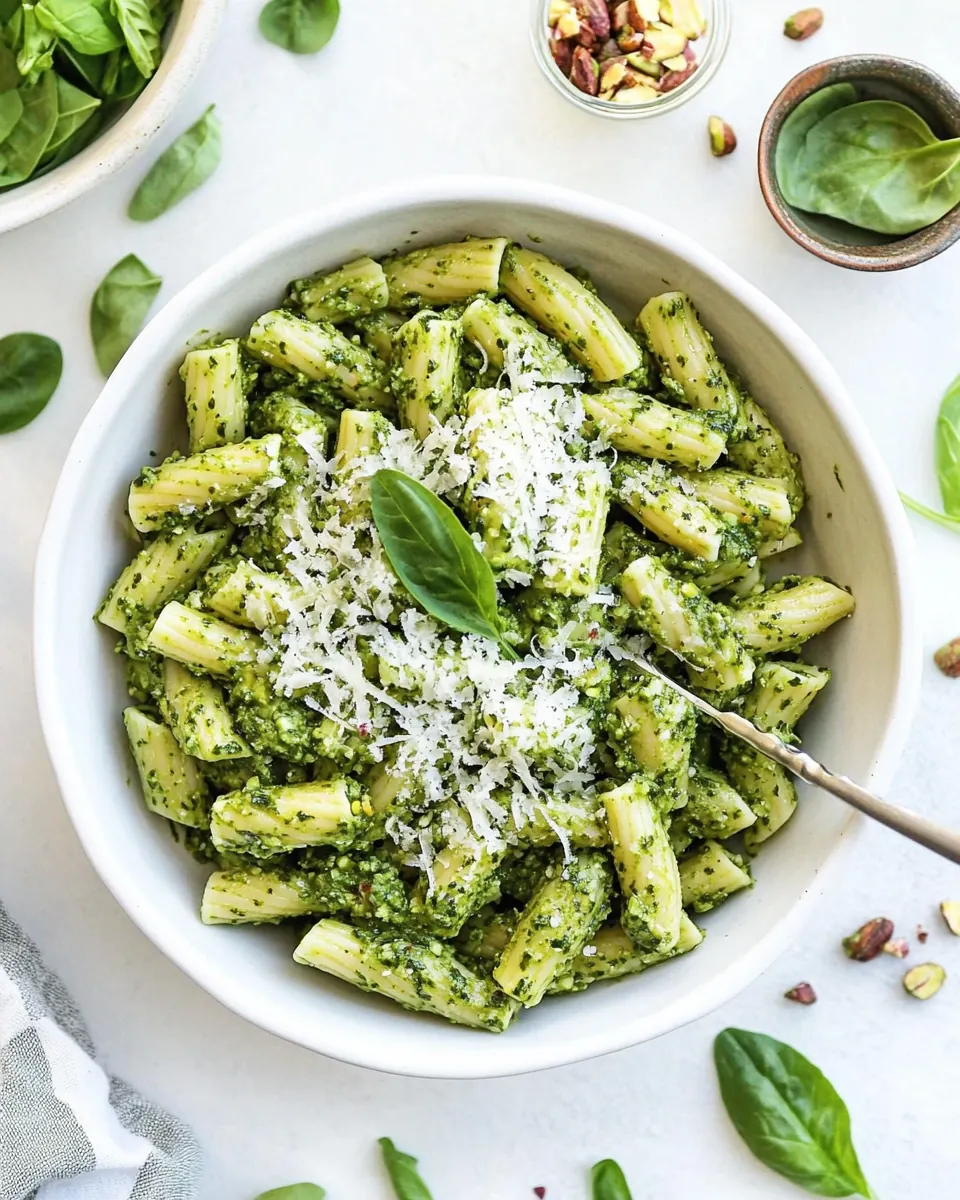
I like to think of this section as permission to experiment. These ideas will help you personalize the dish while keeping its bright, nutty character intact. Use the tips below as springboards rather than strict rules.
- Swap the pasta shape — While the recipe uses rigatoni, try tube shapes or short twists; choose shapes that capture the pesto in their crevices so every bite is saucy and satisfying.
- Adjust the nut ratio — If you prefer a milder nut presence, reduce the pistachios slightly and add more basil or spinach to keep the volume, tasting as you go to maintain balance.
- Make it spicier — For a friendlier heat, increase the crushed red pepper flakes in small increments and taste between additions, since the spice builds over time.
- Keep extra pesto on hand — Leftover pesto stores well in the refrigerator for a day or two when covered with a thin layer of olive oil, which prevents browning and preserves flavor.
- Finish with fresh cheese — Freshly shredded Parmesan at the end adds a bright, salty flourish that pre grated varieties cannot match, elevating the final presentation.
What to Serve With Spinach Pistachio Pesto Pasta
This dish pairs well with simple, fresh sides and suits a variety of occasions. Below are thoughtful pairings, storage notes, and serving contexts to help you plan a full meal around this vibrant pasta.
- Simple green salad — A crisp salad of mixed greens dressed lightly with lemon and olive oil complements the richness of the pesto and refreshes the palate between bites.
- Roasted vegetables — Oven roasted seasonal vegetables make a hearty side that contrasts the silky pesto with caramelized edges and deeper, savory notes.
- Light soup starter — A clear broth or vegetable based soup offers a gentle opening course that does not compete with the herb forward pesto flavors.
- Occasions — This recipe is excellent for weeknight dinners, casual dinner parties, and spring gatherings when basil and spinach are at their peak; it scales easily for small groups or potlucks.
- Storage tips — Store leftover pesto in an airtight container in the fridge with a thin film of olive oil on top to prevent discoloration; use within two days for best flavor.
- Seasonal pairings — In spring serve alongside lightly dressed asparagus or peas to echo the verdant notes of the pesto; in cooler months pair with roasted root vegetables for contrast.
FAQ
Conclusion
What makes this dish stand out is its ability to feel both luxurious and approachable, the verdant brightness of spinach and basil balanced with toasty pistachios and savory Parmesan. I encourage you to give it a try on a busy evening or when friends drop by, because it is quick to prepare and scales beautifully for company. The simple technique of reserving pasta water and tossing while warm makes all the difference, producing glossy, clingy noodles that carry the pesto evenly. Serve it warm, garnish with a little extra cheese and red pepper flakes if you like heat, and enjoy a meal that feels thoughtful without a lot of fuss.
Spinach Pistachio Pesto Pasta
Equipment
- Large Pot
- Food Processor
- Large Bowl
- Spatula
Ingredients
- 1 lb rigatoni or your favorite pasta Boil until al dente to provide a hearty base and soak up the pesto sauce for balanced texture and flavor in the dish.
- 4 cups packed Kroger spinach leaves Pack tightly and blend into the pesto to contribute bright, iron-rich greens and a mild vegetal freshness that lightens the sauce.
- 2 cups packed Simple Truth basil leaves Chop or pack and blend into the pesto to add aromatic basil fragrance and classic herbaceous depth essential to pesto flavor.
- 1/4 cups shelled pistachios Toast lightly and pulse in the food processor to lend a buttery, nutty crunch and rich flavor that complements the herbs.
- 2 cloves garlic Mince finely and incorporate into the pesto to introduce pungent, savory aroma and a sharp bite that rounds out the flavors.
- 3 tablespoons fresh lemon juice Squeeze fresh and mix into the pesto to provide acidity that brightens and balances the richness of the nuts and olive oil.
- 1/4 cups shredded Parmesan cheese Grate and add to the sauce to bring savory umami and creamy saltiness that enhances the overall pesto character.
- 1/2 teaspoons salt Measure and season to taste to help elevate other flavors and ensure a well-balanced, properly seasoned final pasta.
- 1/4 teaspoon black pepper Grind freshly and sprinkle to add mild heat and a subtle earthy note that complements the savory pesto elements.
- 1/2 cup olive oil Drizzle in slowly while blending to emulsify the pesto, creating a smooth, silky texture and carrying the flavors evenly.
- Crushed red pepper flakes Sprinkle optionally at the end to introduce a touch of heat and visual contrast that can enliven bites if desired.
- Shredded parmesan cheese Shred and garnish generously to finish the dish with extra savory richness and a creamy, melty topping that guests will enjoy.
Instructions
- Bring a large pot of water to a rapid boil and add salt. Slowly add the pasta and stir gently. Return to a boil and cook for 8 to 10 minutes, or until desired tenderness.: You will smell the faint minerality as the water starts rolling and a properly salted pot should make the water taste like the sea, which seasons the rigatoni as it cooks. A vigorous boil creates movement so the pasta does not clump together. One common mistake is under salting the water, which leaves the pasta bland even after saucing.
- While the pasta is cooking, make the spinach pistachio pesto. In a food processor, add the spinach, basil, pistachios, garlic, lemon juice, parmesan cheese, salt, and pepper. Turn the food processor on and slowly stream in the olive oil. Mix until pesto is smooth. Stop the machine and remove the lid. Scrape down the sides with a spatula and mix again if necessary. Taste and adjust seasonings, if necessary. If you want the pesto to be a little thinner, you can add more olive oil.: As the rigatoni enters the pot you should hear the water return to a lively boil, and a gentle stir prevents sticking. The sound is a steady bubbling that changes pitch when pasta is crowded. Avoid vigorous stirring that can tear the pasta or cause hot splashes.
- Reserve 1 cup of the pasta water. Drain the pasta and put it in a large bowl. Add the pesto (start with half of the recipe) and 1/4 cup of the pasta water to the pasta and stir until pasta is well coated. Add additional pesto and pasta water, if necessary, until desired consistency and flavor is reached. Season with salt and pepper, to taste. Garnish with crushed red pepper flakes and parmesan cheese, if desired. Serve warm.: You will notice the aroma of cooked wheat rising as the pasta softens; begin tasting around 8 minutes to find the ideal al dente texture that has a slight chew. Overcooking results in mushy shapes that do not hold sauce well, so err toward the firmer side if unsure.
- While the pasta is cooking, make the spinach pistachio pesto: The processor will hum and the mixture will gradually turn a vibrant green as you combine the spinach , basil , pistachios , garlic , lemon juice , parmesan cheese , salt , and pepper . The aroma will be bright and herbaceous, and the texture will become thick and slightly granular from the nuts. A typical pitfall is over processing to a puree; stop when you still have a little texture so the pesto retains interest.
- Turn the food processor on and slowly stream in the olive oil: As the olive oil emulsifies into the mix you will see the color become more glossy and the texture smooth out. The sound is a steady, even hum; the smell grows richer and silkier. Pour slowly to ensure a stable emulsion; adding oil too fast can make the mixture separate.
- Mix until pesto is smooth: The goal is a cohesive sauce that is still slightly textured from the pistachios , with a clean lemon lift and mellow garlic warmth. A smooth, yet lively, mouthfeel indicates readiness. If the pesto stiffens in the processor, add a touch more olive oil or a teaspoon of reserved pasta water to loosen it gently.
- Stop the machine and remove the lid: You will notice the aroma intensify when the lid is removed, and a quick scrape will reveal pockets of herbs against the bowl. This pause is your chance to assess texture and seasoning. Failing to taste at this point can leave the sauce under seasoned or overly nut forward.
- Scrape down the sides with a spatula and mix again if necessary: Use a spatula to gather any herb or nut flecks clinging to the bowl, ensuring a uniform texture and flavor. It will look more vibrant once combined, and this step prevents uneven pockets of seasoning. Skipping it can give a sauce with inconsistent bursts of salty or oily bits.
- Taste and adjust seasonings, if necessary: A small spoonful on its own will reveal if the balance needs more lemon juice , salt , or Parmesan . The pesto should be lively but harmonious; tweak incrementally. Over correcting in one direction is an easy error, so add little adjustments and taste again.
- If you want the pesto to be a little thinner, you can add more olive oil: As you add olive oil , the sauce will become silkier and pour more easily, which helps it coat the rigatoni . The visual cue is a glossier sheen and a looser drip from your spoon. Be cautious adding too much oil, which can flatten the herb flavors, so add small amounts and reassess.
- Reserve 1 cup of the pasta water: That cloudy, starchy water is golden for binding the sauce to the rigatoni ; you will see it turn the pesto glossy and help it cling. Reserve before draining, and you will notice it becomes slightly viscous, a sign of good binding power. A mistake is draining without reserving, which makes it harder to marry sauce and pasta.
- Drain the pasta and put it in a large bowl: The residual steam and warmth from the freshly drained rigatoni help the pesto melt and coat the pasta evenly. You should see the shapes steaming gently as you work. If the bowl is too small you risk uneven saucing, so use a roomy vessel.
- Add the pesto start with half of the recipe and 1/4 cup of the pasta water to the pasta and stir until pasta is well coated: The initial addition will create a glossy, clingy coating; you should hear a soft swish as you toss and see the pasta take on a vibrant green hue. The reserved water helps the sauce adhere and smooth any graininess. A common oversight is drowning the pasta in sauce at once, making it heavy rather than balanced.
- Add additional pesto and pasta water, if necessary, until desired consistency and flavor is reached: Continue adding in small increments; the perfect texture is glossy and lightly sauced, with each piece carrying flavor. The sound of gentle tossing and the sight of even coating are your cues. Over saucing can make the dish oily and mask the fresh herb notes, so proceed gradually.
- Season with salt and pepper, to taste: After combining, tasting will reveal whether a touch more salt or black pepper is needed to brighten the flavors. Season incrementally and taste between additions. A typical misstep is heavy handed salting initially, which cannot be undone once combined.
- Garnish with crushed red pepper flakes and parmesan cheese if desired: The final flourish of crushed red pepper flakes adds a subtle warmth and the extra parmesan cheese provides a salty, nutty finish. Visual cues include a light dusting of cheese and tiny red flecks across the bowl. Over topping with cheese can overwhelm the delicate herbaceous notes, so garnish sparingly.
- Serve warm: Serve the pasta right away so the sauce clings while still glossy and the steam carries the aromas to the table. Warmth brings out the full perfume of the basil and garlic . Letting it sit too long will dull the vibrancy and can make the pesto settle into a denser coating, so offer it to guests promptly.
Notes
- Swap the pasta shape — While the recipe uses rigatoni, try tube shapes or short twists; choose shapes that capture the pesto in their crevices so every bite is saucy and satisfying.
- Adjust the nut ratio — If you prefer a milder nut presence, reduce the pistachios slightly and add more basil or spinach to keep the volume, tasting as you go to maintain balance.
- Make it spicier — For a friendlier heat, increase the crushed red pepper flakes in small increments and taste between additions, since the spice builds over time.
- Keep extra pesto on hand — Leftover pesto stores well in the refrigerator for a day or two when covered with a thin layer of olive oil, which prevents browning and preserves flavor.
- Finish with fresh cheese — Freshly shredded Parmesan at the end adds a bright, salty flourish that pre grated varieties cannot match, elevating the final presentation.