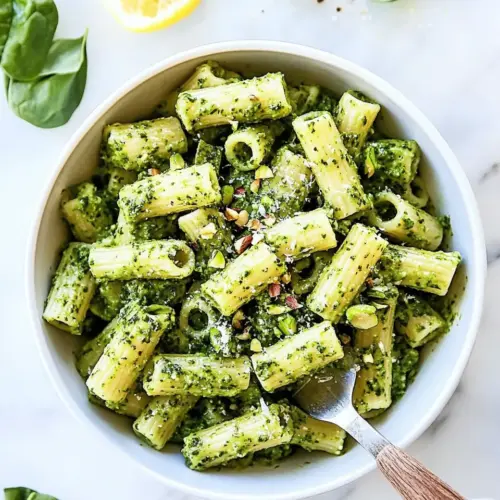
Spinach Pistachio Pesto Pasta
Spinach Pistachio Pesto Pasta is a creamy, bright, and nutty pasta that feels both elegant and easy. Fresh spinach and basil blended with toasted pistachios, Parmesan, and lemon juice creates a vibrant sauce that clings to rigatoni, making it an ideal easy weeknight dinner. It offers fresh herb notes and satisfying texture, a must make for quick entertaining.
Equipment
- Large Pot
- Food Processor
- Large Bowl
- Spatula
Ingredients
- 1 lb rigatoni or your favorite pasta Boil until al dente to provide a hearty base and soak up the pesto sauce for balanced texture and flavor in the dish.
- 4 cups packed Kroger spinach leaves Pack tightly and blend into the pesto to contribute bright, iron-rich greens and a mild vegetal freshness that lightens the sauce.
- 2 cups packed Simple Truth basil leaves Chop or pack and blend into the pesto to add aromatic basil fragrance and classic herbaceous depth essential to pesto flavor.
- 1/4 cups shelled pistachios Toast lightly and pulse in the food processor to lend a buttery, nutty crunch and rich flavor that complements the herbs.
- 2 cloves garlic Mince finely and incorporate into the pesto to introduce pungent, savory aroma and a sharp bite that rounds out the flavors.
- 3 tablespoons fresh lemon juice Squeeze fresh and mix into the pesto to provide acidity that brightens and balances the richness of the nuts and olive oil.
- 1/4 cups shredded Parmesan cheese Grate and add to the sauce to bring savory umami and creamy saltiness that enhances the overall pesto character.
- 1/2 teaspoons salt Measure and season to taste to help elevate other flavors and ensure a well-balanced, properly seasoned final pasta.
- 1/4 teaspoon black pepper Grind freshly and sprinkle to add mild heat and a subtle earthy note that complements the savory pesto elements.
- 1/2 cup olive oil Drizzle in slowly while blending to emulsify the pesto, creating a smooth, silky texture and carrying the flavors evenly.
- Crushed red pepper flakes Sprinkle optionally at the end to introduce a touch of heat and visual contrast that can enliven bites if desired.
- Shredded parmesan cheese Shred and garnish generously to finish the dish with extra savory richness and a creamy, melty topping that guests will enjoy.
Instructions
- Bring a large pot of water to a rapid boil and add salt. Slowly add the pasta and stir gently. Return to a boil and cook for 8 to 10 minutes, or until desired tenderness.: You will smell the faint minerality as the water starts rolling and a properly salted pot should make the water taste like the sea, which seasons the rigatoni as it cooks. A vigorous boil creates movement so the pasta does not clump together. One common mistake is under salting the water, which leaves the pasta bland even after saucing.
- While the pasta is cooking, make the spinach pistachio pesto. In a food processor, add the spinach, basil, pistachios, garlic, lemon juice, parmesan cheese, salt, and pepper. Turn the food processor on and slowly stream in the olive oil. Mix until pesto is smooth. Stop the machine and remove the lid. Scrape down the sides with a spatula and mix again if necessary. Taste and adjust seasonings, if necessary. If you want the pesto to be a little thinner, you can add more olive oil.: As the rigatoni enters the pot you should hear the water return to a lively boil, and a gentle stir prevents sticking. The sound is a steady bubbling that changes pitch when pasta is crowded. Avoid vigorous stirring that can tear the pasta or cause hot splashes.
- Reserve 1 cup of the pasta water. Drain the pasta and put it in a large bowl. Add the pesto (start with half of the recipe) and 1/4 cup of the pasta water to the pasta and stir until pasta is well coated. Add additional pesto and pasta water, if necessary, until desired consistency and flavor is reached. Season with salt and pepper, to taste. Garnish with crushed red pepper flakes and parmesan cheese, if desired. Serve warm.: You will notice the aroma of cooked wheat rising as the pasta softens; begin tasting around 8 minutes to find the ideal al dente texture that has a slight chew. Overcooking results in mushy shapes that do not hold sauce well, so err toward the firmer side if unsure.
- While the pasta is cooking, make the spinach pistachio pesto: The processor will hum and the mixture will gradually turn a vibrant green as you combine the spinach , basil , pistachios , garlic , lemon juice , parmesan cheese , salt , and pepper . The aroma will be bright and herbaceous, and the texture will become thick and slightly granular from the nuts. A typical pitfall is over processing to a puree; stop when you still have a little texture so the pesto retains interest.
- Turn the food processor on and slowly stream in the olive oil: As the olive oil emulsifies into the mix you will see the color become more glossy and the texture smooth out. The sound is a steady, even hum; the smell grows richer and silkier. Pour slowly to ensure a stable emulsion; adding oil too fast can make the mixture separate.
- Mix until pesto is smooth: The goal is a cohesive sauce that is still slightly textured from the pistachios , with a clean lemon lift and mellow garlic warmth. A smooth, yet lively, mouthfeel indicates readiness. If the pesto stiffens in the processor, add a touch more olive oil or a teaspoon of reserved pasta water to loosen it gently.
- Stop the machine and remove the lid: You will notice the aroma intensify when the lid is removed, and a quick scrape will reveal pockets of herbs against the bowl. This pause is your chance to assess texture and seasoning. Failing to taste at this point can leave the sauce under seasoned or overly nut forward.
- Scrape down the sides with a spatula and mix again if necessary: Use a spatula to gather any herb or nut flecks clinging to the bowl, ensuring a uniform texture and flavor. It will look more vibrant once combined, and this step prevents uneven pockets of seasoning. Skipping it can give a sauce with inconsistent bursts of salty or oily bits.
- Taste and adjust seasonings, if necessary: A small spoonful on its own will reveal if the balance needs more lemon juice , salt , or Parmesan . The pesto should be lively but harmonious; tweak incrementally. Over correcting in one direction is an easy error, so add little adjustments and taste again.
- If you want the pesto to be a little thinner, you can add more olive oil: As you add olive oil , the sauce will become silkier and pour more easily, which helps it coat the rigatoni . The visual cue is a glossier sheen and a looser drip from your spoon. Be cautious adding too much oil, which can flatten the herb flavors, so add small amounts and reassess.
- Reserve 1 cup of the pasta water: That cloudy, starchy water is golden for binding the sauce to the rigatoni ; you will see it turn the pesto glossy and help it cling. Reserve before draining, and you will notice it becomes slightly viscous, a sign of good binding power. A mistake is draining without reserving, which makes it harder to marry sauce and pasta.
- Drain the pasta and put it in a large bowl: The residual steam and warmth from the freshly drained rigatoni help the pesto melt and coat the pasta evenly. You should see the shapes steaming gently as you work. If the bowl is too small you risk uneven saucing, so use a roomy vessel.
- Add the pesto start with half of the recipe and 1/4 cup of the pasta water to the pasta and stir until pasta is well coated: The initial addition will create a glossy, clingy coating; you should hear a soft swish as you toss and see the pasta take on a vibrant green hue. The reserved water helps the sauce adhere and smooth any graininess. A common oversight is drowning the pasta in sauce at once, making it heavy rather than balanced.
- Add additional pesto and pasta water, if necessary, until desired consistency and flavor is reached: Continue adding in small increments; the perfect texture is glossy and lightly sauced, with each piece carrying flavor. The sound of gentle tossing and the sight of even coating are your cues. Over saucing can make the dish oily and mask the fresh herb notes, so proceed gradually.
- Season with salt and pepper, to taste: After combining, tasting will reveal whether a touch more salt or black pepper is needed to brighten the flavors. Season incrementally and taste between additions. A typical misstep is heavy handed salting initially, which cannot be undone once combined.
- Garnish with crushed red pepper flakes and parmesan cheese if desired: The final flourish of crushed red pepper flakes adds a subtle warmth and the extra parmesan cheese provides a salty, nutty finish. Visual cues include a light dusting of cheese and tiny red flecks across the bowl. Over topping with cheese can overwhelm the delicate herbaceous notes, so garnish sparingly.
- Serve warm: Serve the pasta right away so the sauce clings while still glossy and the steam carries the aromas to the table. Warmth brings out the full perfume of the basil and garlic . Letting it sit too long will dull the vibrancy and can make the pesto settle into a denser coating, so offer it to guests promptly.
Notes
- Swap the pasta shape — While the recipe uses rigatoni, try tube shapes or short twists; choose shapes that capture the pesto in their crevices so every bite is saucy and satisfying.
- Adjust the nut ratio — If you prefer a milder nut presence, reduce the pistachios slightly and add more basil or spinach to keep the volume, tasting as you go to maintain balance.
- Make it spicier — For a friendlier heat, increase the crushed red pepper flakes in small increments and taste between additions, since the spice builds over time.
- Keep extra pesto on hand — Leftover pesto stores well in the refrigerator for a day or two when covered with a thin layer of olive oil, which prevents browning and preserves flavor.
- Finish with fresh cheese — Freshly shredded Parmesan at the end adds a bright, salty flourish that pre grated varieties cannot match, elevating the final presentation.