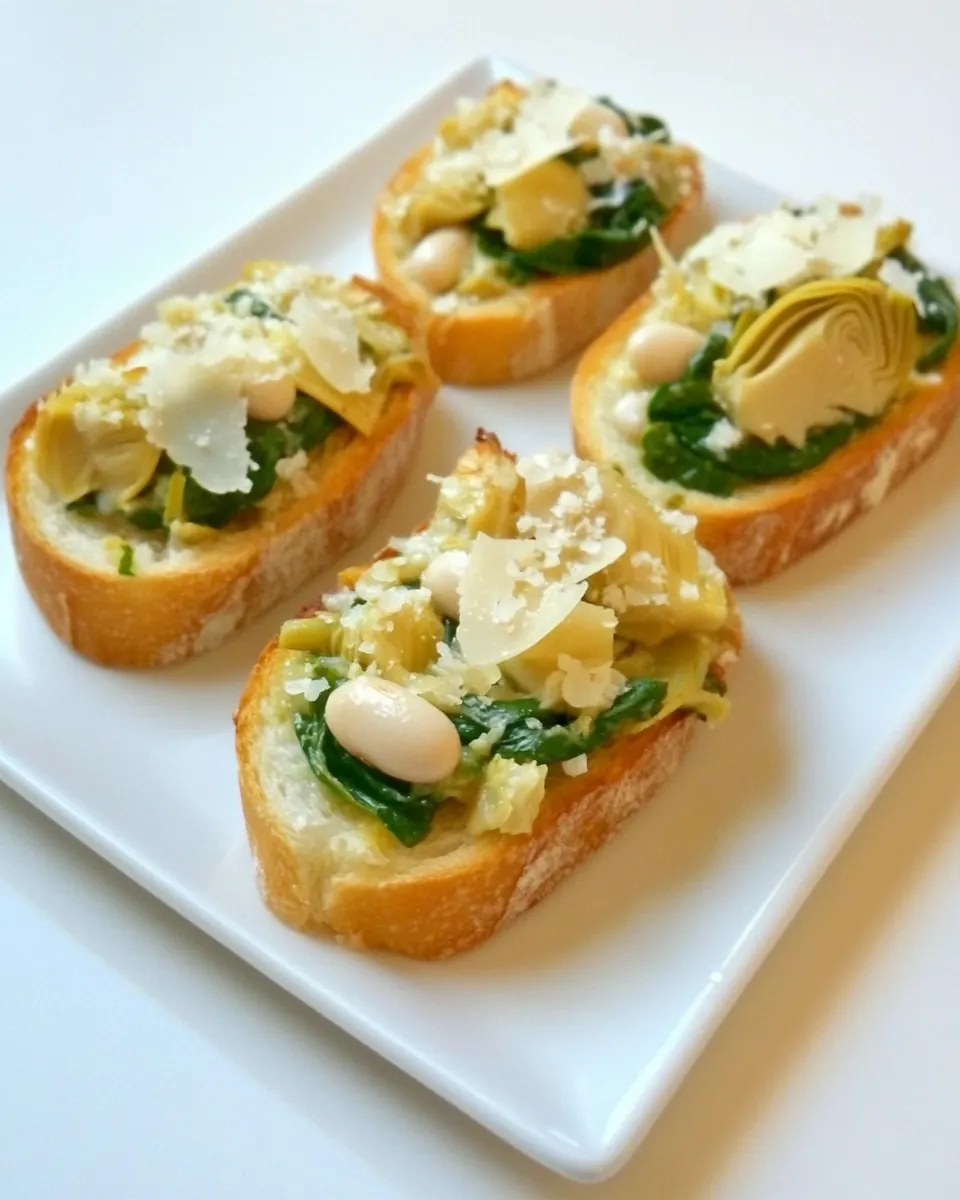
Spinach Artichoke White Bean Crostini
Spinach Artichoke White Bean Crostini is the kind of recipe I reach for when guests pop by unexpectedly or when I want a bright, no fuss snack that still feels thoughtful. The first time I made it, I was racing the clock between meetings and a dinner party, and the mix of creamy white beans and briny artichoke hearts turned a plain baguette into something people asked for twice. I remember standing at the counter, garlic scent filling the kitchen, and thinking that small things, like a warm crostini, can change an evening.
Since then, this version has become my fallback. I love how the crunchy toasted slices soak up the lemony juices just enough, while the fresh spinach and fragrant basil brighten every bite. It’s an easy recipe to scale, and it travels well, so I’ll sometimes bring a tray to a potluck or serve it with soup for a light supper. The feta adds a salty counterpoint that makes each mouthful complex but still approachable.
Recipe Snapshot
27 mins
15 mins
12 mins
Easy
150 kcal
Mediterranean
Gluten-Free, Vegan
Appetizers
Baking sheet, Pastry brush, Mixing bowl, Spoon
The Appeal of This Spinach Artichoke White Bean Crostini
Flavor layered with purpose
I adore how Spinach Artichoke White Bean Crostini balances creamy, tangy, and herbal notes. The white beans give a smooth, almost hummus like base, while the artichoke hearts bring a slightly acidic, savory lift. That contrast makes every bite interesting, and you don’t need a lot of adornment to make it sing.
Quick to pull together
This recipe is genuinely fast, which is why I reach for it on busy afternoons. With a few straightforward steps you get an elegant appetizer in under half an hour. I like that the most impressive parts only require simple tools, and the actual hands on time is minimal, so you can focus on company instead of long prep.
Flexible and crowd friendly
I love serving this because it appeals to many palates. It’s vegetarian friendly and easy to scale up, making it perfect for gatherings. You can arrange a platter and keep topping the crostini as people nibble. It’s forgiving, so if you make the bean mixture a little loose or a little dry, it still tastes great.
Bright, fresh ingredients
Fresh spinach and basil lighten the overall richness, and a splash of lemon juice wakes up the flavors. I always appreciate recipes that rely on a few high impact ingredients rather than complicated techniques. The texture play between crunchy bread and creamy topping makes it endlessly satisfying.
Perfect for many occasions
From casual snacks to elegant starters, this crostini fits. I’ve brought it to springtime brunches, evening get togethers, and relaxed dinners. Its simplicity makes it adaptable, and because it travels well, it’s one of my top make ahead options when I’m hosting.
Everything You Need for Spinach Artichoke White Bean Crostini
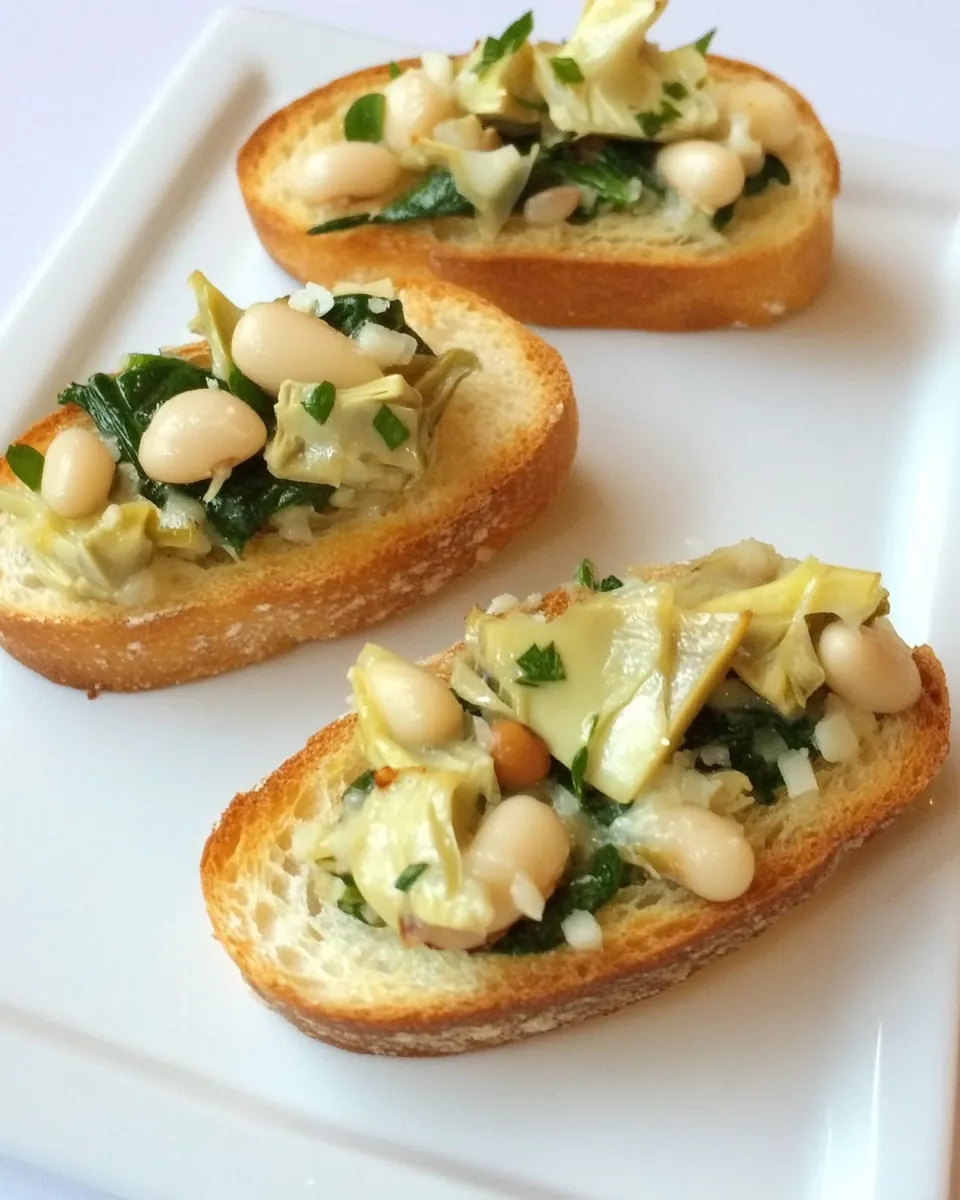
These ingredients are chosen to do specific jobs: the crunchy baguette provides structure, the creamy white beans give body, and the fresh herbs bring lift. Everything works together to create a layered bite where texture and brightness play equal parts. I keep quantities modest so the topping never overwhelms the toast.
- 15 1/4 inch thick slices French baguette: Provide slices for toasting and vehicle for toppings; brush with oil and bake until crisp and golden, offering a crunchy contrast to the creamy spread and holding up to moist toppings without becoming soggy.
- Olive oil for brushing baguette slices: Brush onto baguette slices to promote even browning and crisp texture when toasted, adding a subtle fruity richness that complements the savory and tangy flavors of the crostini.
- 1 15-ounce can cannellini or white beans, rinsed and drained: Add creamy body and mild, nutty flavor; rinse and drain to remove packing liquid, then mash or pulse for a smooth base that contributes protein, fiber, and a velvety texture to the spread.
- 1 cup artichoke hearts from jar, drained and chopped: Contribute tender, slightly tangy hearts that add a subtle artichoke flavor and pleasant textural pieces; chop and fold into the bean mixture to enhance complexity and Mediterranean character.
- 1 cup chopped fresh spinach: Bring fresh, mild leafy flavor and bright green color; chop finely and incorporate to add light vegetal notes, moisture balance, and nutritional value without overpowering other ingredients.
- 1/2 cup chopped fresh basil: Introduce aromatic herbaceousness and a sweet, peppery lift; chop and mix in to brighten the overall flavor profile and provide a fragrant counterpoint to the beans and cheese.
- 1 clove garlic minced: Deliver pungent, savory depth when minced; stir into the mixture to infuse subtle heat and a garlicky backbone that ties the elements together and enhances overall savory complexity.
- 1 tablespoon fresh lemon juice: Add bright acidity to balance richness; squeeze in fresh lemon juice to lift flavors, prevent the spread from tasting heavy, and provide a clean, refreshing finish.
- 1/4 cup crumbled feta cheese: Provide salty, tangy creaminess and a crumbly texture; sprinkle into the mixture to add savory umami notes and a Mediterranean flair that complements the beans and artichokes.
- Salt and pepper to taste: Season to enhance and balance flavors; add salt and pepper to taste to bring out each ingredient’s character and ensure the crostini is well-rounded and flavorful.
How to Assemble Spinach Artichoke White Bean Crostini
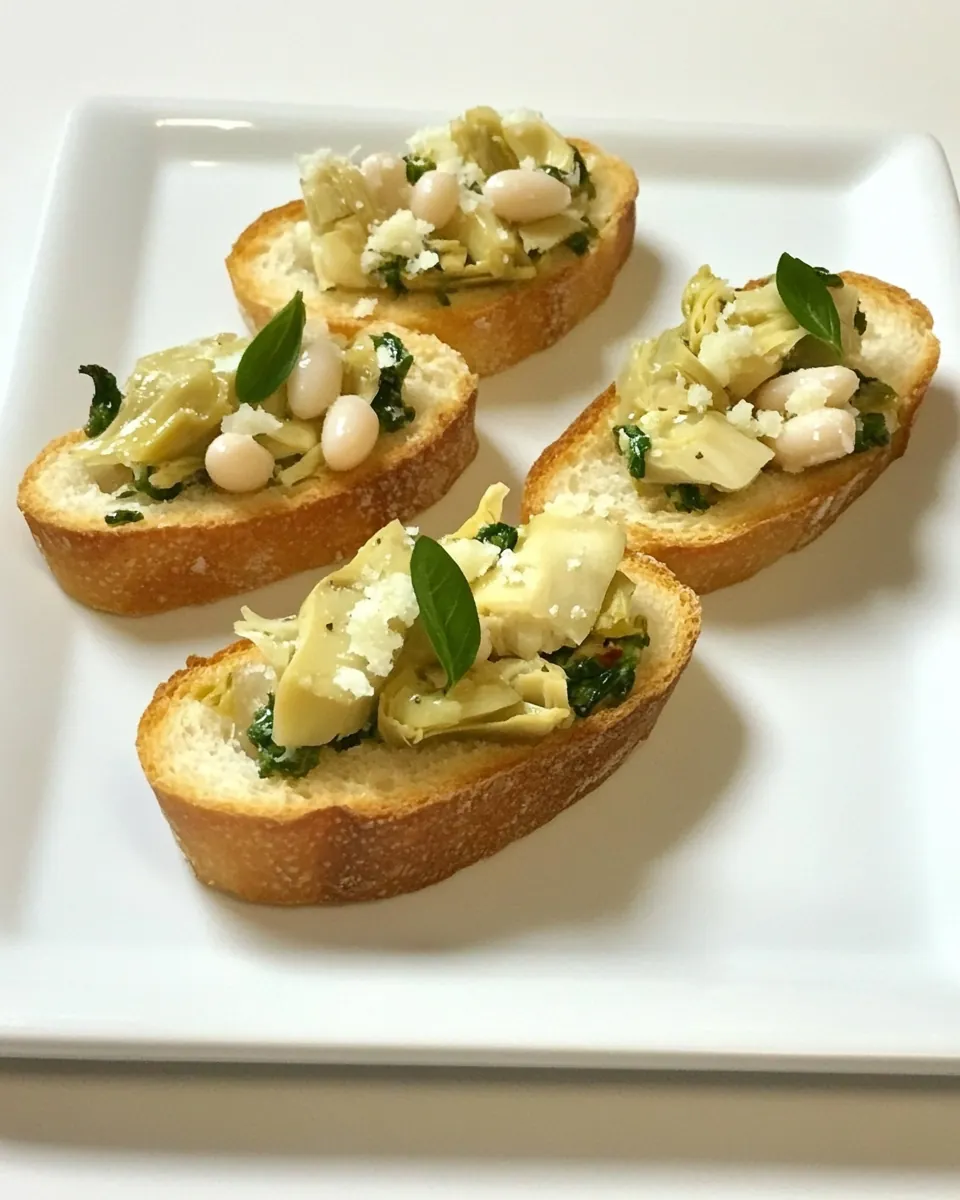
Assembling these crostini is joyful and tactile, and the few simple steps focus on toasting and combining. Pay attention to visual cues like golden bread and a cohesive but not soggy topping. Keep your tasting spoon nearby, because small adjustments can improve the final balance.
- Preheat the oven to 400 degrees F. On a large baking sheet, arrange the baguette slices in a single layer. Using a pastry brush, brush the baguette slices lightly with olive oil. Bake until golden, about 10-12 minutes. Remove the bread from the oven and set aside.: The air in the oven should feel dry and warm as it approaches temperature, which helps create even browning on the baguette slices. You may hear a faint hum from the elements, and the warm air will smell faintly toasty. This high temperature encourages a crisp exterior while leaving a slight chew inside. Why it matters, the intense heat quickly evaporates surface moisture so the bread becomes reliably crunchy. Common mistake to avoid, placing slices too close together can prevent air circulation and lead to uneven toasting.
- In a medium bowl, combine white beans, artichokes, spinach, basil, garlic, lemon juice, and feta cheese. Stir gently. Season with salt and pepper, to taste.: When you place the slices on a large baking sheet, they should sit with a little space around each piece so hot air can circulate and they brown uniformly. Visually they’ll go from pale to a soft golden within minutes, and the edges will firm up while the centers remain slightly tender. The single layer is essential because stacking or crowding keeps steam trapped and yields limp bread. Troubleshooting tip, if your pan is small, use two trays instead of overlapping slices.
- Spoon spinach and artichoke mixture onto the toasted baguette slices. Serve immediately.: The light sheen on the bread signals you applied just enough olive oil to promote browning and add flavor. Brush the top and a little of the cut sides, but avoid saturating the crumb. The oil helps create the sizzling sound when the slices hit the hot pan, and it contributes to a glossy, appealing color. Why this helps, oil conducts heat to the surface and encourages even caramelization. Mistake to avoid, too much oil leads to greasy, overly crisp edges that can darken quickly.
- Bake until golden, about 10 to 12 minutes: As the slices bake, you will smell a toasty, slightly nutty aroma and see them turn golden brown at the edges first. The sound clue is a faint, light crackle as moisture leaves the bread. This timing dries and crisps the slices without making them rock hard. Pay attention past the ten minute mark because ovens vary, and pull them when they reach an even golden color. One common error is leaving them in too long, which results in brittle crostini that are hard to bite cleanly.
- Remove the bread from the oven and set aside: Once out of the oven, the slices cool slightly and the exterior firms to the perfect bite size. They will continue to crisp a bit as they cool, but they should remain light and easy to chew. Setting them aside prevents the topping from warming and wilting the greens immediately. To avoid soggy crostini, do not stack the slices while still warm as condensation can form underneath.
- In a medium bowl, combine white beans, artichokes, spinach, basil, garlic, lemon juice, and feta cheese: As you work, press gently so the white beans break down a touch and bind the mixture, creating a creamy texture that clings to the toast. The chopped artichoke hearts and herbs will peek through, giving flecks of color. The mixture should smell bright from the lemon juice and aromatic from the basil , and the texture should be cohesive but not paste like. This combination matters because the beans act as a neutral canvas while the other ingredients provide pops of acidity, herb, and salt. A typical misstep here is over mashing the beans, which can make the topping too dense.
- Stir gently: When stirring, you want to preserve small pieces of artichoke and leaves of spinach so there is textural variety. The sound is minimal, a soft shuffling as the spoon moves through the mixture, and the aroma becomes layered and complex. Gentle mixing keeps the feta in small distinct curds rather than dissolving it completely. Why it matters, texture variety keeps each bite interesting. Avoid vigorous mixing that makes the mixture uniformly smooth and less interesting.
- Season with salt and pepper, to taste: Add a small pinch of salt and a few grinds of pepper , then taste. The interplay of salt and acidity should brighten the mixture without overpowering the delicate herb notes. Seasoning at the end lets you correct for canned ingredient saltiness. A common mistake is over salting because canned beans or feta can already carry significant sodium.
- Spoon spinach and artichoke mixture onto the toasted baguette slices: As you top each crostini, aim for a small mound that showcases color and texture, with some flecks of basil visible. The contrast between the warm crisp toast and the cool creamy topping is crucial for the ideal bite. When assembled, the crostini should be easy to pick up and eat in two bites. Troubleshooting note, if the topping is too loose, use a slotted spoon to transfer so excess liquid stays behind.
- Serve immediately: Serve the crostini right away so the toast retains its crispness and the topping feels fresh. The immediate service highlights the aromatic herbs, and the contrast in temperatures makes each bite lively. If you delay, the toast will soften and the texture will suffer, so plan to assemble close to serving time. A typical avoidable error is pre assembling too far in advance and ending up with limp crostini.
Tips and Variations
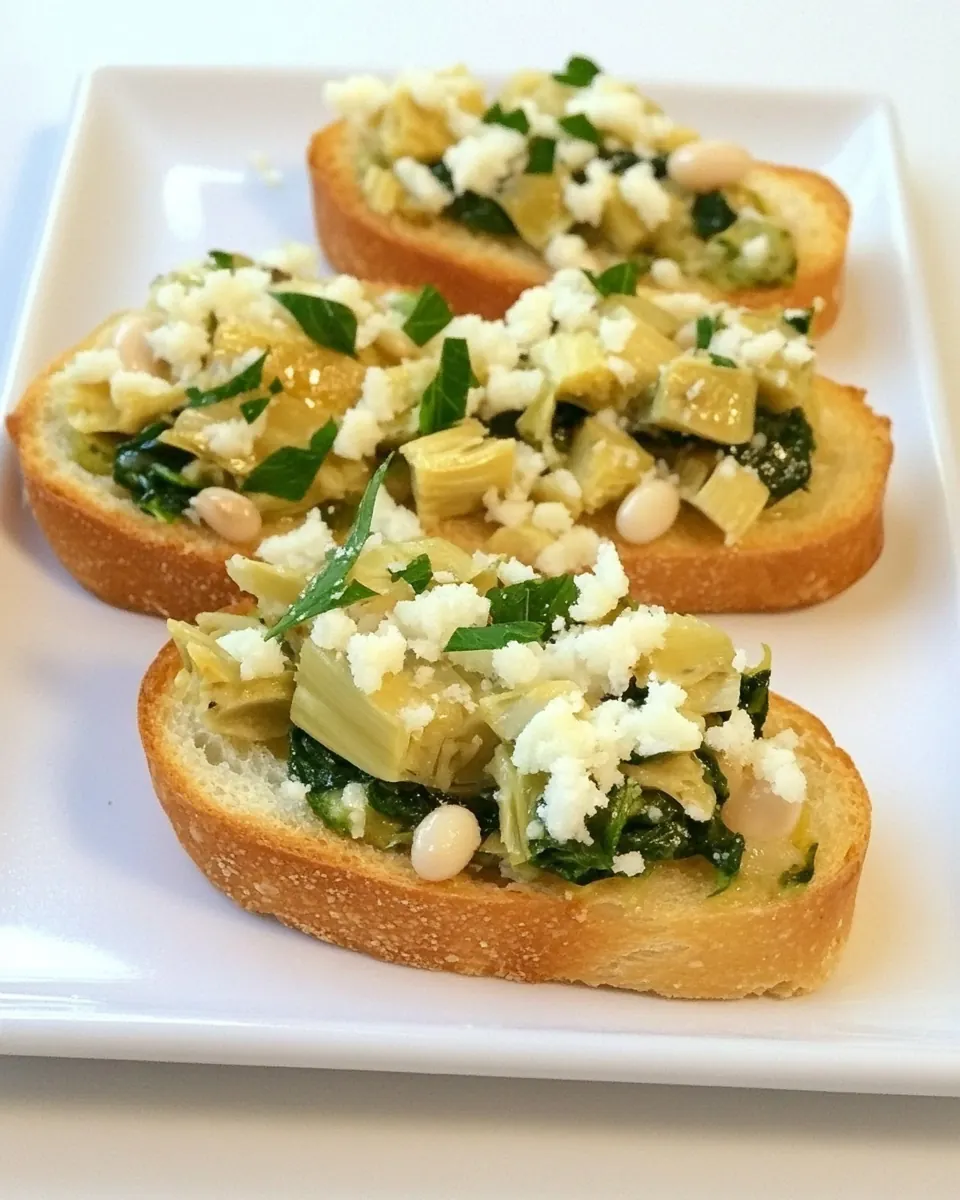
These tips will help you make the best possible platter of Spinach Artichoke White Bean Crostini. Small adjustments to texture and seasoning can elevate the final result significantly. Below are practical ideas and variations I use in my kitchen.
- Choose a sturdy baguette The right bread supports the topping without collapsing, so look for a loaf with a crisp crust and a tight crumb structure.
- Use high quality olive oil A fruity extra virgin olive oil adds aroma and depth when brushed on the bread, just a light coating is enough.
- Pat dry canned ingredients Always remove excess liquid from jarred artichoke hearts and canned white beans to keep the topping cohesive and prevent soggy crostini.
- Adjust lemon to taste Add lemon juice gradually, tasting between additions, so the acidity lifts the flavors without dominating them.
- Make ahead smartly Prepare the bean mixture up to a day in advance and refrigerate, but toast bread and assemble just before serving to maintain crunch.
- Serve warm or room temperature This topping works well slightly chilled or at room temperature, but the texture contrast is best when the toast is warm and the topping is cool.
Best Served With
Spinach Artichoke White Bean Crostini pairs easily with many simple accompaniments, and the presentation can be adapted for casual snacks or more formal starters. Below I describe serving ideas, occasions, and storage notes using a helpful list format.
- Light lunch pairing Pair the crostini with a crisp green salad for a satisfying midday meal, the freshness of the salad complements the creamy topping.
- Appetizer platter Arrange several crostini on a wooden board alongside olives and sliced vegetables for a relaxed sharing spread at gatherings.
- Springtime occasions This recipe is especially suited to spring, when fresh basil and tender spinach are at their peak; serve at brunches or garden parties.
- Serving size guidance Count on roughly one to two crostini per person as part of a larger appetizer selection, more if they are the primary starter.
- Storage tips Store the bean mixture in an airtight container in the refrigerator for up to two days. Keep toasted slices separate and assemble shortly before serving to retain crispness.
- Seasonal adjustments In cooler months, serve alongside a warm soup or roasted vegetable dish for a cozy contrast to the bright topping.
FAQ
Conclusion
What makes this recipe special is its harmonious balance of textures and bright flavors, turning simple pantry staples into a memorable bite. I encourage you to give it a try the next time you want an effortless yet impressive starter, because a few minutes of toasting and mixing yields a dish people will ask about. It’s approachable, versatile, and dependable, so whether you’re hosting friends or grabbing a quick snack, these crostini are sure to become a favorite.

Spinach Artichoke White Bean Crostini
Equipment
- Baking Sheet
- Pastry Brush
- Mixing Bowl
- Spoon
Ingredients
- 15 1/4 -inch thick slices French baguette Provide slices for toasting and vehicle for toppings; brush with oil and bake until crisp and golden, offering a crunchy contrast to the creamy spread and holding up to moist toppings without becoming soggy.
- Olive oil for brushing baguette slices Brush onto baguette slices to promote even browning and crisp texture when toasted, adding a subtle fruity richness that complements the savory and tangy flavors of the crostini.
- 1 15-ounce can cannellini or white beans, rinsed and drained Add creamy body and mild, nutty flavor; rinse and drain to remove packing liquid, then mash or pulse for a smooth base that contributes protein, fiber, and a velvety texture to the spread.
- 1 cup artichoke hearts from jar, drained and chopped Contribute tender, slightly tangy hearts that add a subtle artichoke flavor and pleasant textural pieces; chop and fold into the bean mixture to enhance complexity and Mediterranean character.
- 1 cup chopped fresh spinach Bring fresh, mild leafy flavor and bright green color; chop finely and incorporate to add light vegetal notes, moisture balance, and nutritional value without overpowering other ingredients.
- 1/2 cup chopped fresh basil Introduce aromatic herbaceousness and a sweet, peppery lift; chop and mix in to brighten the overall flavor profile and provide a fragrant counterpoint to the beans and cheese.
- 1 clove garlic minced Deliver pungent, savory depth when minced; stir into the mixture to infuse subtle heat and a garlicky backbone that ties the elements together and enhances overall savory complexity.
- 1 tablespoon fresh lemon juice Add bright acidity to balance richness; squeeze in fresh lemon juice to lift flavors, prevent the spread from tasting heavy, and provide a clean, refreshing finish.
- 1/4 cup crumbled feta cheese Provide salty, tangy creaminess and a crumbly texture; sprinkle into the mixture to add savory umami notes and a Mediterranean flair that complements the beans and artichokes.
- Salt and pepper to taste Season to enhance and balance flavors; add salt and pepper to taste to bring out each ingredient’s character and ensure the crostini is well-rounded and flavorful.
Instructions
- Preheat the oven to 400 degrees F. On a large baking sheet, arrange the baguette slices in a single layer. Using a pastry brush, brush the baguette slices lightly with olive oil. Bake until golden, about 10-12 minutes. Remove the bread from the oven and set aside.: The air in the oven should feel dry and warm as it approaches temperature, which helps create even browning on the baguette slices. You may hear a faint hum from the elements, and the warm air will smell faintly toasty. This high temperature encourages a crisp exterior while leaving a slight chew inside. Why it matters, the intense heat quickly evaporates surface moisture so the bread becomes reliably crunchy. Common mistake to avoid, placing slices too close together can prevent air circulation and lead to uneven toasting.
- In a medium bowl, combine white beans, artichokes, spinach, basil, garlic, lemon juice, and feta cheese. Stir gently. Season with salt and pepper, to taste.: When you place the slices on a large baking sheet, they should sit with a little space around each piece so hot air can circulate and they brown uniformly. Visually they’ll go from pale to a soft golden within minutes, and the edges will firm up while the centers remain slightly tender. The single layer is essential because stacking or crowding keeps steam trapped and yields limp bread. Troubleshooting tip, if your pan is small, use two trays instead of overlapping slices.
- Spoon spinach and artichoke mixture onto the toasted baguette slices. Serve immediately.: The light sheen on the bread signals you applied just enough olive oil to promote browning and add flavor. Brush the top and a little of the cut sides, but avoid saturating the crumb. The oil helps create the sizzling sound when the slices hit the hot pan, and it contributes to a glossy, appealing color. Why this helps, oil conducts heat to the surface and encourages even caramelization. Mistake to avoid, too much oil leads to greasy, overly crisp edges that can darken quickly.
- Bake until golden, about 10 to 12 minutes: As the slices bake, you will smell a toasty, slightly nutty aroma and see them turn golden brown at the edges first. The sound clue is a faint, light crackle as moisture leaves the bread. This timing dries and crisps the slices without making them rock hard. Pay attention past the ten minute mark because ovens vary, and pull them when they reach an even golden color. One common error is leaving them in too long, which results in brittle crostini that are hard to bite cleanly.
- Remove the bread from the oven and set aside: Once out of the oven, the slices cool slightly and the exterior firms to the perfect bite size. They will continue to crisp a bit as they cool, but they should remain light and easy to chew. Setting them aside prevents the topping from warming and wilting the greens immediately. To avoid soggy crostini, do not stack the slices while still warm as condensation can form underneath.
- In a medium bowl, combine white beans, artichokes, spinach, basil, garlic, lemon juice, and feta cheese: As you work, press gently so the white beans break down a touch and bind the mixture, creating a creamy texture that clings to the toast. The chopped artichoke hearts and herbs will peek through, giving flecks of color. The mixture should smell bright from the lemon juice and aromatic from the basil , and the texture should be cohesive but not paste like. This combination matters because the beans act as a neutral canvas while the other ingredients provide pops of acidity, herb, and salt. A typical misstep here is over mashing the beans, which can make the topping too dense.
- Stir gently: When stirring, you want to preserve small pieces of artichoke and leaves of spinach so there is textural variety. The sound is minimal, a soft shuffling as the spoon moves through the mixture, and the aroma becomes layered and complex. Gentle mixing keeps the feta in small distinct curds rather than dissolving it completely. Why it matters, texture variety keeps each bite interesting. Avoid vigorous mixing that makes the mixture uniformly smooth and less interesting.
- Season with salt and pepper, to taste: Add a small pinch of salt and a few grinds of pepper , then taste. The interplay of salt and acidity should brighten the mixture without overpowering the delicate herb notes. Seasoning at the end lets you correct for canned ingredient saltiness. A common mistake is over salting because canned beans or feta can already carry significant sodium.
- Spoon spinach and artichoke mixture onto the toasted baguette slices: As you top each crostini, aim for a small mound that showcases color and texture, with some flecks of basil visible. The contrast between the warm crisp toast and the cool creamy topping is crucial for the ideal bite. When assembled, the crostini should be easy to pick up and eat in two bites. Troubleshooting note, if the topping is too loose, use a slotted spoon to transfer so excess liquid stays behind.
- Serve immediately: Serve the crostini right away so the toast retains its crispness and the topping feels fresh. The immediate service highlights the aromatic herbs, and the contrast in temperatures makes each bite lively. If you delay, the toast will soften and the texture will suffer, so plan to assemble close to serving time. A typical avoidable error is pre assembling too far in advance and ending up with limp crostini.
Notes
- Choose a sturdy baguette The right bread supports the topping without collapsing, so look for a loaf with a crisp crust and a tight crumb structure.
- Use high quality olive oil A fruity extra virgin olive oil adds aroma and depth when brushed on the bread, just a light coating is enough.
- Pat dry canned ingredients Always remove excess liquid from jarred artichoke hearts and canned white beans to keep the topping cohesive and prevent soggy crostini.
- Adjust lemon to taste Add lemon juice gradually, tasting between additions, so the acidity lifts the flavors without dominating them.
- Make ahead smartly Prepare the bean mixture up to a day in advance and refrigerate, but toast bread and assemble just before serving to maintain crunch.
- Serve warm or room temperature This topping works well slightly chilled or at room temperature, but the texture contrast is best when the toast is warm and the topping is cool.
