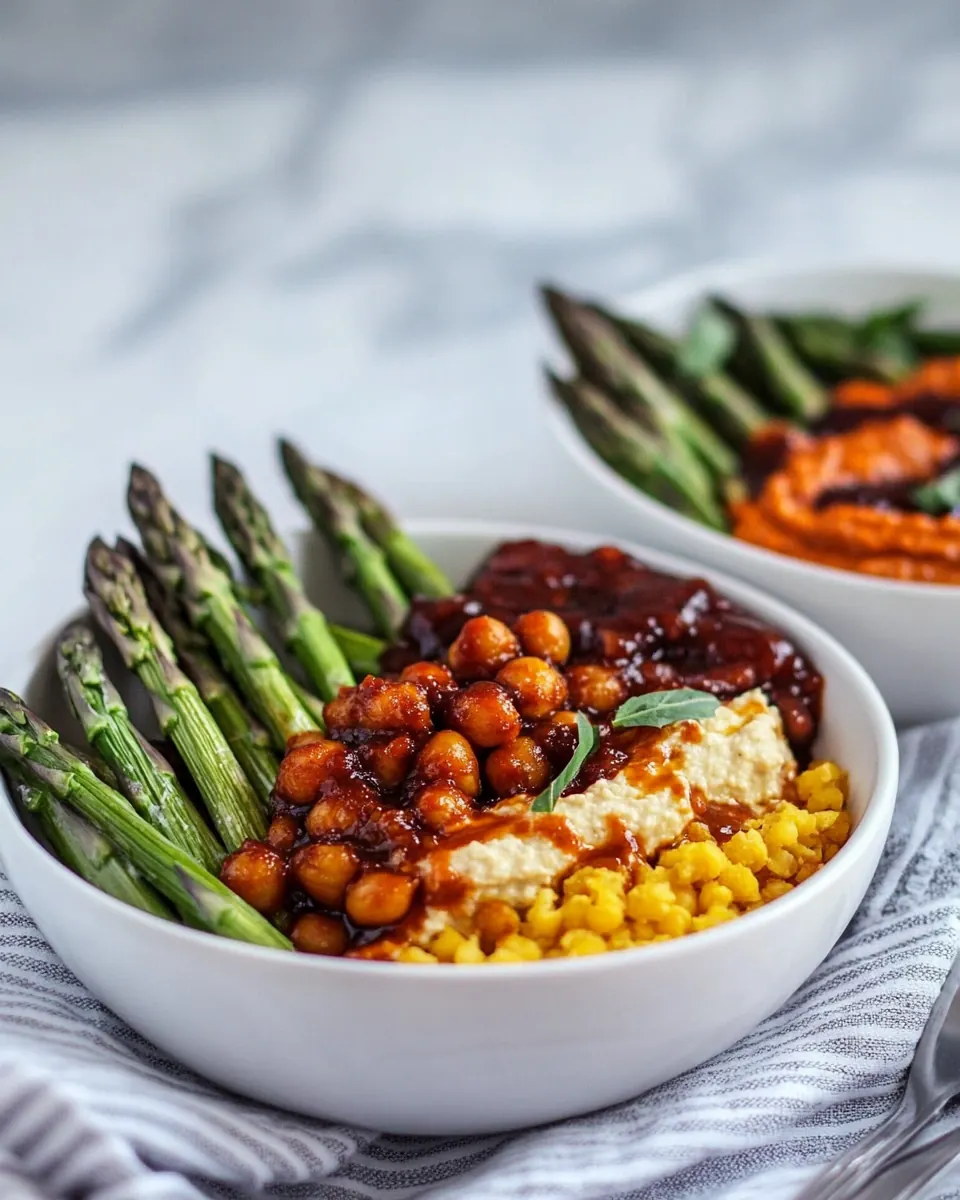
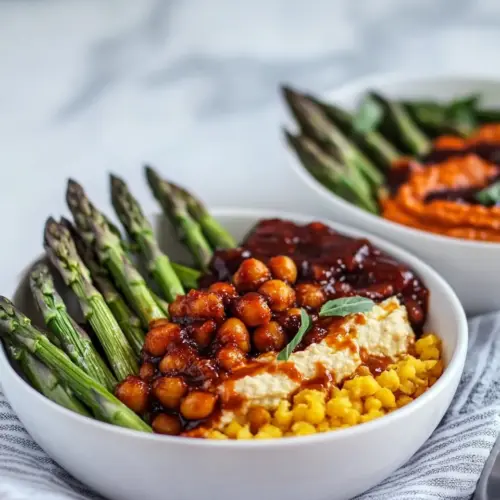
Spicy BBQ Chickpea and Crispy Polenta Bowls with Asparagus Ranch Hummus
Spicy BBQ Chickpea and Crispy Polenta Bowls with Asparagus Ranch Hummus started out as a pantry rescue meal I threw together on a busy spring evening when I wanted something bold, comforting, and entirely plant friendly.
I remember pulling a tube of polenta from the fridge, a jar of barbecue sauce, and two cans of chickpeas and thinking I could either order takeout or build something vibrant from those humble parts. I chose the latter, and that little experiment turned into one of my favorite weeknight bowls. The creamy ranch hummus balances the spicy, sticky BBQ chickpeas while the polenta provides a crisp, chewy base that makes every bite feel like a celebration of textures.
What I love about these bowls is how they let you mix quick techniques with thoughtful touches. Roasting the asparagus concentrates its flavor, the BBQ caramelizes on the chickpeas giving a satisfying chew, and searing the polenta creates a golden crust that sings against the soft hummus. I often switch the greens and cheese depending on what I have on hand, but the backbone of the dish stays the same: bold sauce, creamy hummus, crisp polenta, and fresh vegetables.
Recipe Snapshot
30 mins
5 mins
25 mins
Medium
480 kcal
American
Gluten-Free, Vegan
Dinner
Food processor, Oven, Roasting pan or baking sheet, Medium skillet, Glass measuring cup
Why We Love This Spicy BBQ Chickpea and Crispy Polenta Bowls with Asparagus Ranch Hummus
Bold Flavor Without Drama
I love how Spicy BBQ Chickpea and Crispy Polenta Bowls with Asparagus Ranch Hummus delivers pronounced, smoky, spicy notes without needing hours at the stove. The combination of creole and cajun seasoning with a sticky BBQ glaze gives the chickpeas a complex savory profile that feels indulgent, yet the method is straightforward. You get big flavor quickly, which is perfect when you want something impressive but practical.
Texture Play in Every Bite
These bowls are a textural joy. The crispy exterior of the seared polenta contrasts with the creamy hummus, while the roasted asparagus adds a tender snap. Warm, saucy chickpeas add chew and substance. I find that layering textures keeps the dish interesting across multiple servings, and guests often ask how I got everything so satisfying.
Vegetarian and Easily Customizable
One of the reasons I return to this bowl is how adaptable it is. Leave out the dairy to make it vegan, swap greens or cheese to match your pantry, and make extra hummus to use as a dip later in the week. The recipe scales nicely, which makes it great for feeding a small crowd or prepping components ahead for fast assembly.
Weeknight Friendly, Weekend Worthy
I often make this midweek because it comes together quickly, yet it looks and tastes like something I made with time. The roasted asparagus and seared polenta elevate the bowls in a way that feels special for weekend guests. It strikes a sweet spot between easy and memorable, which is why it’s become a regular in my rotation.
Balanced and Satisfying
The creamy Ranch Hummus tones down heat and adds a cooling, tangy component that keeps the dish balanced. The mix of legumes, vegetables, and starch means each bowl is filling on its own, so it works for lunch, dinner, or a potluck contribution. I love meals that satisfy both my craving for comfort and my desire for something wholesome.
Essential Ingredients for Spicy BBQ Chickpea and Crispy Polenta Bowls with Asparagus Ranch Hummus
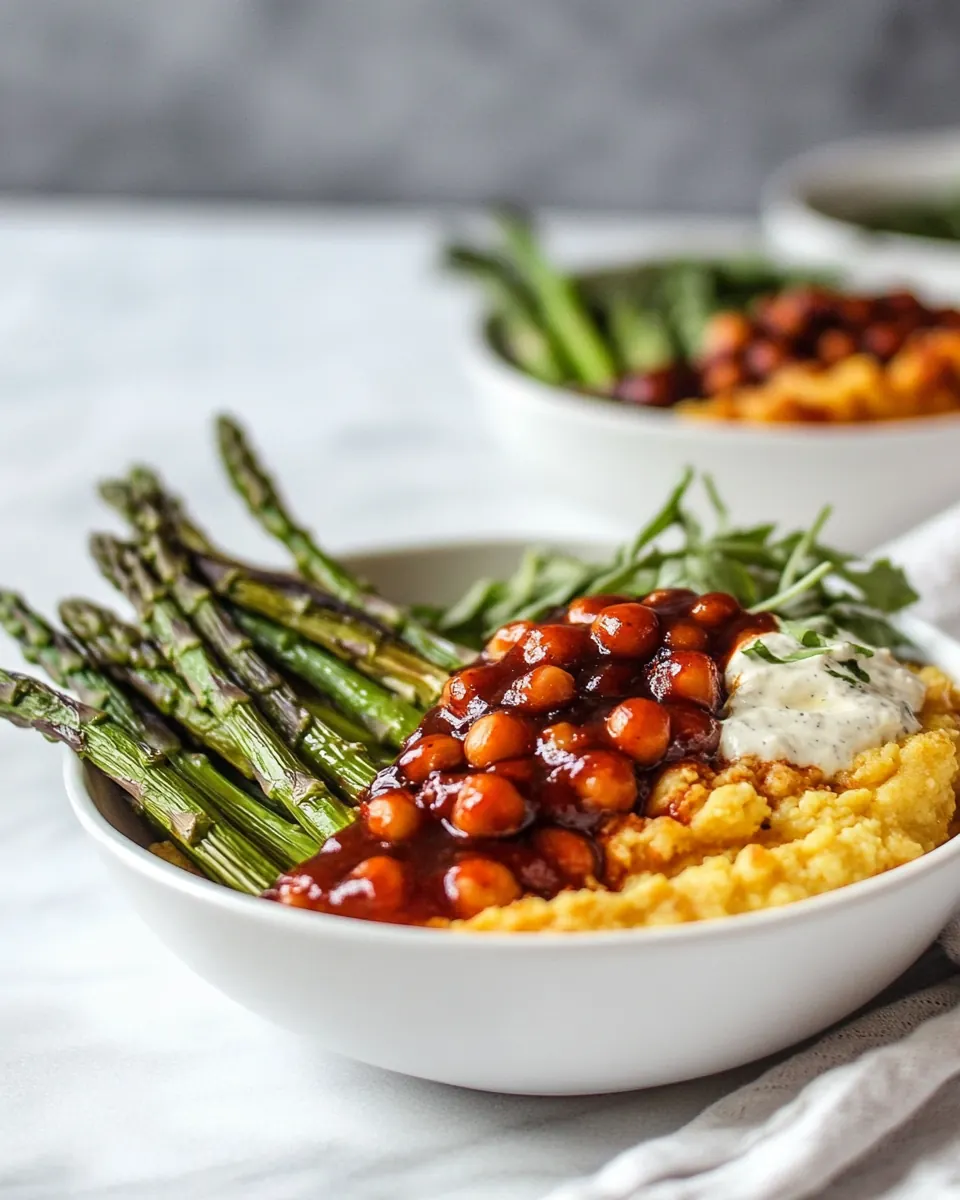
These ingredients come together to create a bowl that is layered in flavor and texture. The hummus base lends creaminess and tang, the BBQ chickpeas bring spice and stickiness, the polenta provides crispness, and the vegetables add freshness and brightness. Together they balance richness with brightness so every bite is satisfying.
- 1 1/2 cups cooked cannellini/great northern beans (or 1 can drained and rinsed): Provide a creamy, mild base and add protein and fiber; use cannellini or great northern beans to create a smooth hummus-like texture when blended with other ingredients and to help bind flavors together in the asparagus ranch hummus.
- 2 tablespoons tahini sesame paste: Contribute a rich, nutty flavor and silky mouthfeel; tahini lends depth and helps emulsify the hummus, balancing acidity from lemon and cutting through the beans' earthiness.
- 2 tablespoons greek yogurt or sour cream I like greek yogurt, leave out for vegan version: Add tangy creaminess and slight acidity to lighten the hummus; Greek yogurt or sour cream provides a luxurious texture and brightens flavors while increasing protein (omit for vegan version).
- 1 lemon juiced: Brighten and lift the overall flavor with fresh acidity; lemon juice balances richness, enhances other seasonings, and prevents the hummus from tasting flat.
- 1 clove garlic minced or grated: Introduce sharp, aromatic pungency and savory depth; minced or grated garlic permeates the hummus and complements the tahini and lemon for a classic flavor profile.
- 2 teaspoons dried parsley: Deliver subtle herbaceous warmth and a gentle green flavor; dried parsley helps round out the hummus' herbal notes and pairs well with dill and chives.
- 3/4 teaspoon dried dill: Offer a delicate, slightly sweet anise-like flavor; dried dill adds freshness and a light aromatic presence that enhances the asparagus and bean mixture.
- 1/2 teaspoon onion powder: Provide concentrated savory onion flavor without texture; onion powder seasons the hummus evenly and supports the other dried herbs.
- 1/2 teaspoon dried chives: Impart mild, oniony-sweet nuance with a delicate texture; dried chives contribute a fresh, scallion-like hint dispersed throughout the hummus.
- 1/2 teaspoon pepper: Add mild heat and complexity; freshly ground or pre-ground black pepper brightens the overall taste and balances richer components.
- 1/2 teaspoon salt: Enhance and season all components to taste; salt amplifies flavors in the hummus and throughout the bowl’s elements when used judiciously.
- 1/3 cup olive oil: Create a smooth, emollient dressing and help carry fat-soluble flavors; olive oil adds richness to the hummus and helps achieve a silky consistency.
- 1 bunch asparagus ends trimmed: Supply bright, vegetal crunch and pair with the hummus; trimmed asparagus spears roast or sauté quickly and bring a seasonal, slightly grassy note.
- 2 tablespoons olive oil divided: Enable cooking and roasting with controlled fat; dividing olive oil allows one portion for asparagus and another for crisping polenta or tossing chickpeas.
- Good pinch of salt and pepper: Season simply with a pinch to enhance natural flavors; a pinch of salt and pepper when cooking asparagus or finishing components ensures balanced taste.
- 1 1/2 cups of [your favorite BBQ sauce | https://www.halfbakedharvest.com/homemade-barbecue-sauce-just-like-sweet-baby-rays/]: Provide sweet, smoky-savoury flavor for coating the chickpeas; favorite BBQ sauce adds sticky glaze and bold barbecue character to the spicy chickpea topping.
- 1 tablespoon rounded creole seasoning: Introduce bold, Creole-style seasoning complexity; rounded creole seasoning brings paprika, garlic, and herb notes that complement the BBQ and chickpeas.
- 1 tablespoon rounded cajun seasoning: Contribute Cajun heat and savory depth; rounded cajun seasoning layers in spicy, earthy flavors to boost the chickpea mixture's Southern-inspired profile.
- Pinch of cayenne pepper: Add an extra kick of concentrated heat; a pinch of cayenne elevates the spiciness and can be adjusted to taste for the spicy BBQ chickpeas.
- 1 pound tube polenta cut into 1/2 inch slices (use 2 tubes for a hungrier crowd): Provide a firm, sliceable corn base that crisps nicely; polenta rounds create golden, crunchy platforms for toppings when pan-fried or baked.
- 1/4 cup parmesan cheese grated (leave out for vegan version): Offer salty umami and nutty finish when grated; parmesan melts slightly on warm polenta slices and reinforces savory flavors (omit for vegan version).
- 3 cups cooked chickpeas or 2 cans of rinsed + drained chickpeas: Deliver hearty texture, protein, and a nutty flavor; cooked chickpeas form the main BBQ-coated component and provide a satisfying bite in each bowl.
- 4 cups fresh arugula spinach or your favorite greens: Add a fresh, peppery bed for the bowls; arugula, spinach, or other greens bring color, lightness, and a bitter contrast to rich components.
- 1 pint grape tomatoes halved: Introduce juicy sweetness and bright acidity; halved grape tomatoes add pops of freshness and balance the smoky, spicy elements in the bowl.
- 1 avocado sliced: Provide creamy richness and silky texture when sliced; avocado contributes healthy fats and a cooling counterpoint to spicy BBQ chickpeas.
- 2 4 ounces sharp cheddar cheese shredded (leave out for vegan version): Bring sharp, melty cheesiness and savory depth when shredded; sharp cheddar tops the bowls with bold flavor and a pleasing contrast (omit for vegan version).
Recipe Steps for Spicy BBQ Chickpea and Crispy Polenta Bowls with Asparagus Ranch Hummus
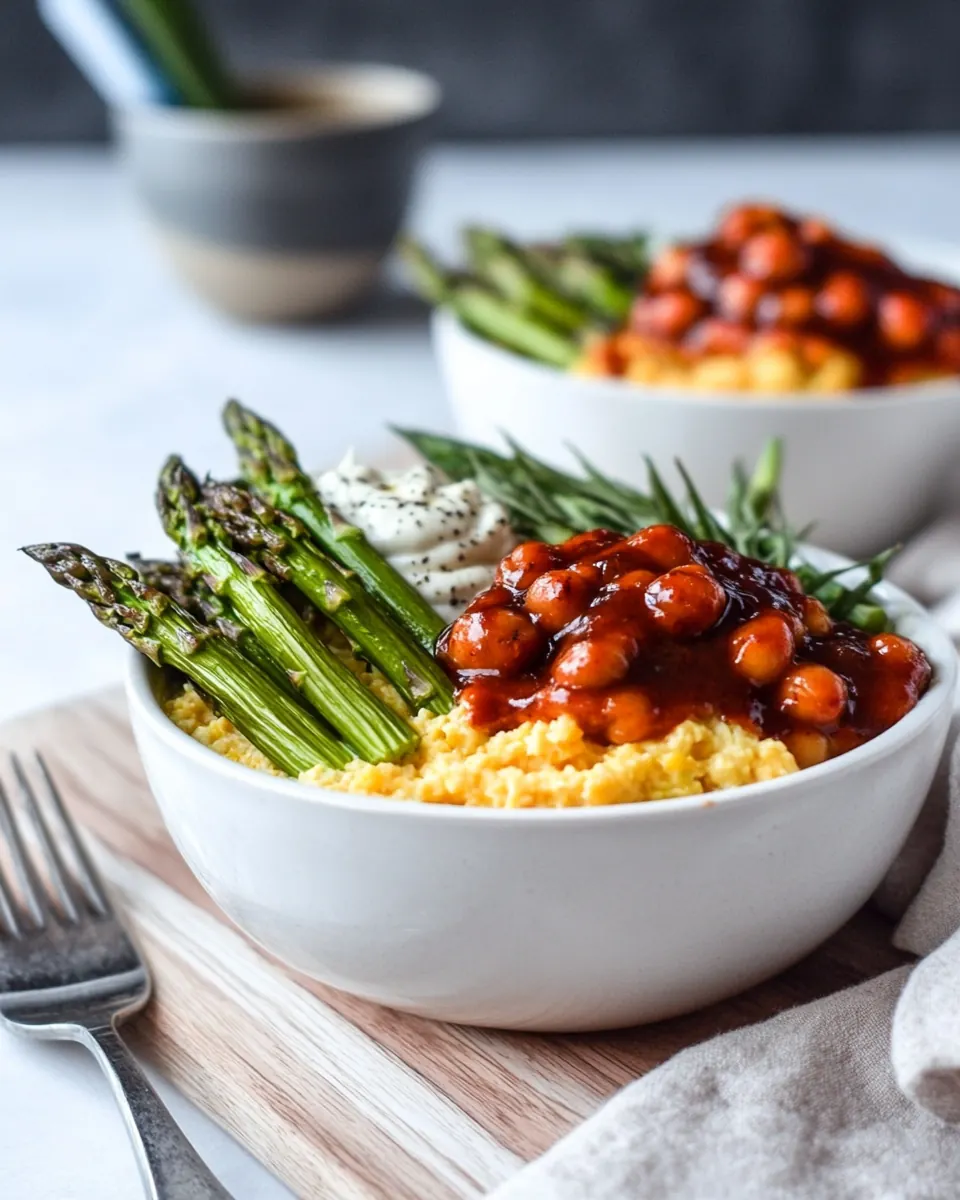
These steps guide you through making a creamy ranch hummus, roasting asparagus, crisping polenta, and glazing chickpeas. Take your time to layer flavors, and assemble warm components over fresh greens for the best contrast.
- To make the hummus add the beans, tahini, greek yogurt, lemon juice, garlic, parsley, dill, onion powder, chives, pepper and salt to the bowl of a food processor. Puree the mixture until smooth, scrapping down the sides if necessary. With the machine running stream in the olive oil until smooth. Taste and season with salt and pepper if desired. Place in the fridge until ready to use.: The bowl fills with a scent of bright lemon and aromatic garlic as you start blending, a clean, herbaceous fragrance that signals the hummus is coming together. The food processor creates a smooth, velvety emulsion when the beans and tahini break down into tiny particles, and you should notice the mixture losing any graininess as it purees. A silky texture is the cue that you processed enough, and if the mixture sounds thick and almost creamy against the walls, you are on the right path. One mistake people make at this stage is rushing the process, leaving visible bean bits that prevent the hummus from reaching that luxurious mouthfeel. Pause to scrape the sides, ensuring nothing is hiding near the blade, and keep the motor running until you have an even, homogeneous paste.
- For the bowls, preheat the oven to 400 degrees.: As the processor hums, the texture transforms and you will see a glossy sheen begin to appear, an important visual cue that air has been incorporated and the tahini is emulsifying. The hummus should spread slowly when spooned, not drip like a thin sauce, indicating the right body. If the hummus seems stiff, a splash of olive oil or a teaspoon of water helps loosen it, but add sparingly to avoid thinning. Commonly, folks underprocess and end up with a coarse texture, so give it extra pulses and scrape often to achieve that signature creaminess.
- Place the asparagus in a roasting pan or on a baking baking sheet and toss with the 1 tablespoon olive oil, salt and pepper. Roast in the preheated oven for 25-30 minutes or until tender and crisp. Remove and chop into thirds.: When you start to stream in olive oil , the sound changes slightly as the mixture glossy thickens and the hummus develops a more cohesive, rich mouthfeel. The oil emulsifies the tahini and beans, resulting in a smoother body and a sheen that reflects light. Add the oil slowly so the processor can bind it properly, and stop periodically to check the texture. A rough mistake is pouring the oil too fast which prevents proper emulsification and can make the hummus separate or feel oily.
- While asparagus are roasting, add the BBQ sauce, creole seasoning, cajun seasoning and a pinch of cayenne to a glass measuring cup. Place the chickpeas in a medium bowl and toss with half the BBQ sauce or enough to completely coat the chickpeas. Reserve the remaining sauce.: Sampling the hummus now lets you calibrate the balance of bright lemon , nutty tahini, and savory seasonings. Adjust with small increments, because a little more salt or pepper makes a noticeable difference. If the hummus tastes flat, a touch more acid brightens it, while additional tahini adds depth. Avoid over-salting; if you do, dilute with a few tablespoons of cooked beans or more oil to rebalance.
- Heat a medium sized skillet over medium heat. Add 1 tablespoon olive oil and the polenta slices. Let them sit undisturbed for 5 minutes. Flip and sear another 5, or until lightly crisped and golden on both sides. Remove and keep warm.: Cooling the hummus lets the flavors meld and the texture firm slightly, which makes spreading or dolloping easier during assembly. The chilled hummus will smell subdued compared to fresh, warm components, but the aromatics remain present. A common slip is leaving it out too long, which can soften the texture excessively; refrigerate within two hours to maintain freshness.
- To the skillet add the chickpea mixture and cook for about 5-10 minutes or until the BBQ sauce has a thick + sticky coating over the chickpeas. Remove from the heat and stir in one more tablespoon of the BBQ sauce.: The oven warms and hums as it reaches temperature, creating an environment that will roast asparagus evenly and encourage caramelization. Preheating ensures the vegetables enter a hot space immediately, promoting browning rather than steaming. Not preheating is a frequent cause of limp, under-roasted asparagus, so wait until the oven registers the full temperature before sliding the pan in.
- To assemble place some arugula in the bottom of you bowls. Add the warm + crispy polenta rounds, asparagus, tomatoes, warm BBQ chickpeas and avocado slices. Add a dollop of the Ranch Hummus and sprinkle the cheddar cheese or parmesan cheese on top. Serve with the remaining BBQ sauce.: Tossing coats each stalk in oil so they roast and sizzle rather than dry out, producing a sweet, slightly charred aroma as the sugars caramelize. The oil also helps the surface develop golden spots that indicate proper roast without burning. Overcrowding the pan traps steam and prevents crisping, so spread the asparagus into a single layer for even color and texture.
- Roast in the preheated oven for 25 to 30 minutes or until tender and crisp: As the asparagus roasts, you will notice a nutty scent and occasional popping as moisture escapes, and the tips darken to a pleasant deep green with browned edges. The right texture is tender with a slight bite, not mushy, and the visual cue is slight charring along some spears. A common mistake is leaving them too long, which makes them limp and dull in flavor, so check at the earlier end of the range.
- Remove and chop into thirds: Chopping the roasted asparagus adds bite size pieces that are easy to distribute across bowls and offer textural contrast. The interior should be tender and moist while the exterior retains slight caramelized edges. Let them cool briefly to avoid wilting the greens when assembling; if you add hot asparagus directly onto fresh leaves you risk sogginess.
- While asparagus are roasting add the BBQ sauce creole seasoning cajun seasoning and a pinch of cayenne to a glass measuring cup: Mixing these seasonings with BBQ sauce concentrates the spice profile and makes a cohesive glaze. The aroma will turn smoky and spiced, hinting at the bold coating to come. Stir until uniform, tasting carefully; the sauce should be lively but not overpowering. A misstep here is over-spicing, which can mask the sauce’s base flavor, so adjust the cayenne with restraint.
- Place the chickpeas in a medium bowl and toss with half the BBQ sauce or enough to completely coat the chickpeas: Tossing the chickpeas in sauce ensures each bean is evenly coated, so when cooked they develop a sticky exterior. The sauce clings and begins to penetrate the surface, giving a deep, sweet and savory aroma. Reserve the remaining sauce for finishing and serving to keep a fresh hit of glaze on your bowls. Applying too much sauce at once can make the skillet splatter and burn during cooking, so start with less and add if needed.
- Reserve the remaining sauce: Keeping some BBQ sauce back allows you to finish the dish with a bright, saucy accent at the table and prevents the chickpeas from becoming overly sweet. The reserved sauce also provides a garnish for those who want extra glaze. Be mindful of storage if not using immediately, as used sauce may pick up stray flavors from the bowl.
- Heat a medium sized skillet over medium heat: A properly preheated skillet develops an even heat that produces a golden sear on the polenta and allows the sauce to caramelize on the chickpeas. The pan should feel hot enough that a drop of water sizzles upon contact. Using a pan that is too cool results in sticking and a lack of color, a common regret in rushed preparations.
- Add 1 tablespoon olive oil and the polenta slices: The polenta will hiss as it hits the oil, and the surface will slowly brown into a crisp, golden crust. This crust gives way to a creamy interior, creating a satisfying contrast in each bite. Press gently and let the slices cook undisturbed so the Maillard reaction can occur; flipping too soon prevents proper browning.
- Let them sit undisturbed for 5 minutes: Patience here is rewarded with a uniform, crunchy exterior; you will hear a steady sizzle that quiets when the crust is ready to flip. The visual cue is deepening golden edges and a stable surface that releases easily from the pan. A common error is peeking and nudging too often, which interrupts crust formation and leads to tearing.
- Flip and sear another 5 or until lightly crisped and golden on both sides: After flipping, the second side will brown more quickly, often with a richer color. The aroma becomes toasty and slightly sweet, and the edges gain a pleasant crunch. Remove once both sides are golden to preserve a tender interior, as overcooking will dry the polenta out.
- Remove and keep warm: Holding the polenta in a warm spot keeps the crust crisp and prevents cooling too rapidly, which can soften the texture. I usually nestle the slices on a plate in a low oven or tent them lightly. Avoid stacking them directly, as trapped steam can make them soggy.
- To the skillet add the chickpea mixture and cook for about 5 to 10 minutes or until the BBQ sauce has a thick sticky coating over the chickpeas: As the chickpeas simmer, the sauce reduces and transforms from glossy to tacky, releasing a deep caramelized scent. Stirring occasionally helps the sauce bind to the beans, creating an almost lacquered finish. If the pan gets too dry, add a splash of reserved sauce or water; conversely, if you let it scorch you will taste bitter burnt notes.
- Remove from the heat and stir in one more tablespoon of the BBQ sauce: Off the heat, that final spoon of BBQ sauce amplifies gloss and flavor without risking burning, producing a shiny, clingy glaze that coats every chickpea. This finishing touch brightens aroma and adds a fresh saucy layer. A frequent slip is skipping this step, which can leave the chickpeas tasting flat compared to the vibrant hummus and vegetables.
- To assemble place some arugula in the bottom of you bowls: The fresh arugula provides peppery contrast and a crisp bed for the warm components, and its coolness offsets the hot chickpeas and polenta. Arrange the greens evenly so each bite has a balance of warm and cool elements. Forgetting to evenly distribute the greens can lead to bowls that feel top heavy rather than harmonized.
- Add the warm crispy polenta rounds asparagus tomatoes warm BBQ chickpeas and avocado slices: Layering creates interplay between textures and temperatures; the warm, savory elements sit atop cooling hummus and leafy greens, and the contrast is both aromatic and sensory. The visual variety of golden polenta, green asparagus, red tomatoes, and creamy avocado makes the dish inviting. Overcrowding the bowl can muddle flavors, so space components to let each shine.
- Add a dollop of the Ranch Hummus and sprinkle the cheddar cheese or parmesan cheese on top: The hummus offers a creamy counterpoint while the grated cheddar or parmesan introduces a sharp, salty finish that melts slightly over the warm ingredients. Place the hummus where it can be scooped with polenta or a forkful of chickpeas for a balanced taste. Be cautious with cheese quantities; too much can overshadow the hummus and fresh vegetables.
- Serve with the remaining BBQ sauce: Drizzle reserved BBQ sauce to taste at the table for added shine and extra sweet smoky notes. This lets diners control the level of glaze and adds a finishing aroma as you serve. Keep extra sauce on the side for those who like a bolder finish, and enjoy the layered flavors you created.
Helpful Notes about Spicy BBQ Chickpea and Crispy Polenta Bowls with Asparagus Ranch Hummus
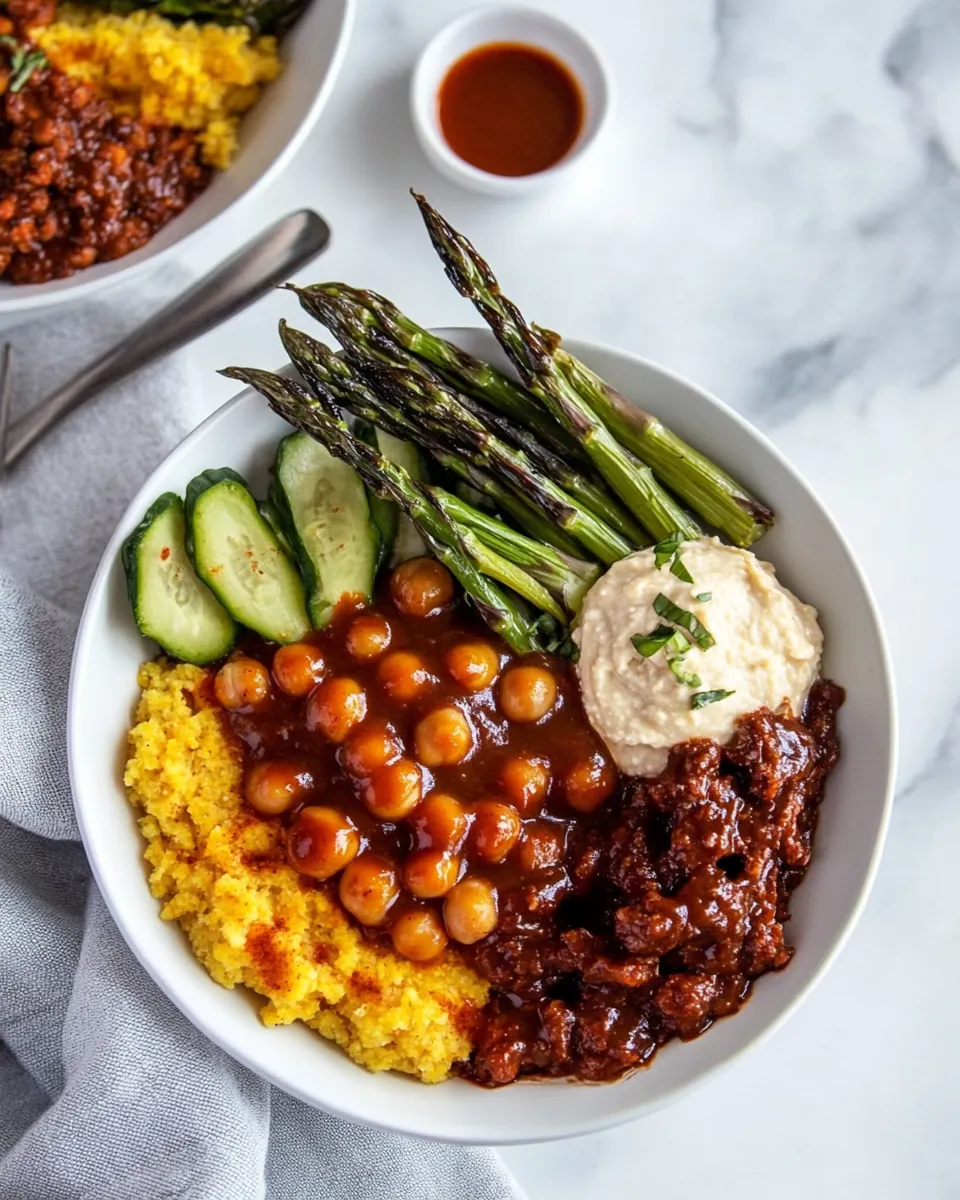
These notes will help you get consistent results and personalize the bowls. Below are practical tips I use to make the recipe faster, more flavorful, and easier to scale.
- Prep components ahead: Make the Ranch Hummus and roast the asparagus up to two days in advance, storing them separately in airtight containers to speed assembly on a busy evening.
- Keep polenta warm: If you need to hold the polenta while finishing chickpeas, place slices in a low oven to maintain crispness without overcooking the interior.
- Adjust spice to taste: Start with a pinch of cayenne pepper and increase incrementally; the combined creole and cajun should be flavorful without overwhelming the BBQ base.
- Swap greens freely: Use arugula, spinach, or any tender green you prefer to shift the peppery note and freshness of the bowl.
- Make it vegan easily: Omit the yogurt and cheeses, and the hummus remains creamy when you increase olive oil slightly during blending.
Serving Suggestions
These bowls are versatile for casual weeknights or gatherings. Here are several serving ideas and pairing suggestions to elevate the meal.
- Serve as a main course: Plate the bowls warm for a satisfying dinner that balances protein, starch, and vegetables in every bite.
- Lunch option: Make the components ahead and assemble smaller bowls for an easy, flavorful lunch that reheats well.
- Potluck friendly: Bring the hummus and chickpeas separately and crisp the polenta on site for a crowd pleasing sharing dish.
- Seasonal pairing: In spring highlight fresh asparagus and ripe tomatoes, while in other seasons swap in roasted seasonal veg.
- Storage tips: Store hummus and chickpeas in airtight containers in the fridge for up to four days, and keep polenta slices separate to preserve crispness.
- Occasions: These bowls work well for casual dinner parties, family meals, or Ramadan if you need a plant forward, filling option after fasting.
- Plate presentation: Arrange polenta in a fan, nestle warm chickpeas and asparagus around a central dollop of hummus, and finish with sliced avocado for a composed look.
- Make ahead strategy: Roast asparagus and prepare hummus up to 48 hours ahead, and just reheat chickpeas and crisp polenta before serving for minimal last minute work.
- Garnish ideas: Finish with an extra drizzle of reserved BBQ sauce or a light sprinkle of parmesan to add salt and umami at the table.
- Serving temperature: Serve the warm elements over cool greens so each bite has contrast, enhancing both flavor and mouthfeel.
FAQ
Conclusion
These Spicy BBQ Chickpea and Crispy Polenta Bowls with Asparagus Ranch Hummus shine because they balance bold, sticky BBQ flavor with creamy, cooling hummus and crisp polenta for a truly satisfying meal. Try it when you want something that feels both comforting and a little adventurous, whether for a weeknight dinner or a casual weekend lunch. The components are forgiving and adaptable, so experiment with your favorite greens or cheeses, but keep the core matches of creamy hummus, sticky chickpeas, roasted asparagus, and seared polenta to preserve the dish’s charm. Enjoy the layered textures and vibrant flavors, and don’t be surprised if this becomes a regular in your meal rotation.
Spicy BBQ Chickpea and Crispy Polenta Bowls with Asparagus Ranch Hummus
Equipment
- Food Processor
- Oven
- Roasting pan or baking sheet
- Medium skillet
- Glass measuring cup
Ingredients
- 1 1/2 cups cooked cannellini/great northern beans (or 1 can drained and rinsed) Provide a creamy, mild base and add protein and fiber; use cannellini or great northern beans to create a smooth hummus-like texture when blended with other ingredients and to help bind flavors together in the asparagus ranch hummus.
- 2 tablespoons tahini sesame paste Contribute a rich, nutty flavor and silky mouthfeel; tahini lends depth and helps emulsify the hummus, balancing acidity from lemon and cutting through the beans' earthiness.
- 2 tablespoons greek yogurt or sour cream I like greek yogurt, leave out for vegan version Add tangy creaminess and slight acidity to lighten the hummus; Greek yogurt or sour cream provides a luxurious texture and brightens flavors while increasing protein (omit for vegan version).
- 1 lemon juiced Brighten and lift the overall flavor with fresh acidity; lemon juice balances richness, enhances other seasonings, and prevents the hummus from tasting flat.
- 1 clove garlic minced or grated Introduce sharp, aromatic pungency and savory depth; minced or grated garlic permeates the hummus and complements the tahini and lemon for a classic flavor profile.
- 2 teaspoons dried parsley Deliver subtle herbaceous warmth and a gentle green flavor; dried parsley helps round out the hummus' herbal notes and pairs well with dill and chives.
- 3/4 teaspoon dried dill Offer a delicate, slightly sweet anise-like flavor; dried dill adds freshness and a light aromatic presence that enhances the asparagus and bean mixture.
- 1/2 teaspoon onion powder Provide concentrated savory onion flavor without texture; onion powder seasons the hummus evenly and supports the other dried herbs.
- 1/2 teaspoon dried chives Impart mild, oniony-sweet nuance with a delicate texture; dried chives contribute a fresh, scallion-like hint dispersed throughout the hummus.
- 1/2 teaspoon pepper Add mild heat and complexity; freshly ground or pre-ground black pepper brightens the overall taste and balances richer components.
- 1/2 teaspoon salt Enhance and season all components to taste; salt amplifies flavors in the hummus and throughout the bowl’s elements when used judiciously.
- 1/3 cup olive oil Create a smooth, emollient dressing and help carry fat-soluble flavors; olive oil adds richness to the hummus and helps achieve a silky consistency.
- 1 bunch asparagus ends trimmed Supply bright, vegetal crunch and pair with the hummus; trimmed asparagus spears roast or sauté quickly and bring a seasonal, slightly grassy note.
- 2 tablespoons olive oil divided Enable cooking and roasting with controlled fat; dividing olive oil allows one portion for asparagus and another for crisping polenta or tossing chickpeas.
- Good pinch of salt and pepper Season simply with a pinch to enhance natural flavors; a pinch of salt and pepper when cooking asparagus or finishing components ensures balanced taste.
- 1 1/2 cups of [your favorite BBQ sauce | https://www.halfbakedharvest.com/homemade-barbecue-sauce-just-like-sweet-baby-rays/] Provide sweet, smoky-savoury flavor for coating the chickpeas; favorite BBQ sauce adds sticky glaze and bold barbecue character to the spicy chickpea topping.
- 1 tablespoon rounded creole seasoning Introduce bold, Creole-style seasoning complexity; rounded creole seasoning brings paprika, garlic, and herb notes that complement the BBQ and chickpeas.
- 1 tablespoon rounded cajun seasoning Contribute Cajun heat and savory depth; rounded cajun seasoning layers in spicy, earthy flavors to boost the chickpea mixture's Southern-inspired profile.
- Pinch of cayenne pepper Add an extra kick of concentrated heat; a pinch of cayenne elevates the spiciness and can be adjusted to taste for the spicy BBQ chickpeas.
- 1 pound tube polenta cut into 1/2 inch slices (use 2 tubes for a hungrier crowd) Provide a firm, sliceable corn base that crisps nicely; polenta rounds create golden, crunchy platforms for toppings when pan-fried or baked.
- 1/4 cup parmesan cheese grated (leave out for vegan version) Offer salty umami and nutty finish when grated; parmesan melts slightly on warm polenta slices and reinforces savory flavors (omit for vegan version).
- 3 cups cooked chickpeas or 2 cans of rinsed + drained chickpeas Deliver hearty texture, protein, and a nutty flavor; cooked chickpeas form the main BBQ-coated component and provide a satisfying bite in each bowl.
- 4 cups fresh arugula spinach or your favorite greens Add a fresh, peppery bed for the bowls; arugula, spinach, or other greens bring color, lightness, and a bitter contrast to rich components.
- 1 pint grape tomatoes halved Introduce juicy sweetness and bright acidity; halved grape tomatoes add pops of freshness and balance the smoky, spicy elements in the bowl.
- 1 avocado sliced Provide creamy richness and silky texture when sliced; avocado contributes healthy fats and a cooling counterpoint to spicy BBQ chickpeas.
- 2 -4 ounces sharp cheddar cheese shredded (leave out for vegan version) Bring sharp, melty cheesiness and savory depth when shredded; sharp cheddar tops the bowls with bold flavor and a pleasing contrast (omit for vegan version).
Instructions
- To make the hummus add the beans, tahini, greek yogurt, lemon juice, garlic, parsley, dill, onion powder, chives, pepper and salt to the bowl of a food processor. Puree the mixture until smooth, scrapping down the sides if necessary. With the machine running stream in the olive oil until smooth. Taste and season with salt and pepper if desired. Place in the fridge until ready to use.: The bowl fills with a scent of bright lemon and aromatic garlic as you start blending, a clean, herbaceous fragrance that signals the hummus is coming together. The food processor creates a smooth, velvety emulsion when the beans and tahini break down into tiny particles, and you should notice the mixture losing any graininess as it purees. A silky texture is the cue that you processed enough, and if the mixture sounds thick and almost creamy against the walls, you are on the right path. One mistake people make at this stage is rushing the process, leaving visible bean bits that prevent the hummus from reaching that luxurious mouthfeel. Pause to scrape the sides, ensuring nothing is hiding near the blade, and keep the motor running until you have an even, homogeneous paste.
- For the bowls, preheat the oven to 400 degrees.: As the processor hums, the texture transforms and you will see a glossy sheen begin to appear, an important visual cue that air has been incorporated and the tahini is emulsifying. The hummus should spread slowly when spooned, not drip like a thin sauce, indicating the right body. If the hummus seems stiff, a splash of olive oil or a teaspoon of water helps loosen it, but add sparingly to avoid thinning. Commonly, folks underprocess and end up with a coarse texture, so give it extra pulses and scrape often to achieve that signature creaminess.
- Place the asparagus in a roasting pan or on a baking baking sheet and toss with the 1 tablespoon olive oil, salt and pepper. Roast in the preheated oven for 25-30 minutes or until tender and crisp. Remove and chop into thirds.: When you start to stream in olive oil , the sound changes slightly as the mixture glossy thickens and the hummus develops a more cohesive, rich mouthfeel. The oil emulsifies the tahini and beans, resulting in a smoother body and a sheen that reflects light. Add the oil slowly so the processor can bind it properly, and stop periodically to check the texture. A rough mistake is pouring the oil too fast which prevents proper emulsification and can make the hummus separate or feel oily.
- While asparagus are roasting, add the BBQ sauce, creole seasoning, cajun seasoning and a pinch of cayenne to a glass measuring cup. Place the chickpeas in a medium bowl and toss with half the BBQ sauce or enough to completely coat the chickpeas. Reserve the remaining sauce.: Sampling the hummus now lets you calibrate the balance of bright lemon , nutty tahini, and savory seasonings. Adjust with small increments, because a little more salt or pepper makes a noticeable difference. If the hummus tastes flat, a touch more acid brightens it, while additional tahini adds depth. Avoid over-salting; if you do, dilute with a few tablespoons of cooked beans or more oil to rebalance.
- Heat a medium sized skillet over medium heat. Add 1 tablespoon olive oil and the polenta slices. Let them sit undisturbed for 5 minutes. Flip and sear another 5, or until lightly crisped and golden on both sides. Remove and keep warm.: Cooling the hummus lets the flavors meld and the texture firm slightly, which makes spreading or dolloping easier during assembly. The chilled hummus will smell subdued compared to fresh, warm components, but the aromatics remain present. A common slip is leaving it out too long, which can soften the texture excessively; refrigerate within two hours to maintain freshness.
- To the skillet add the chickpea mixture and cook for about 5-10 minutes or until the BBQ sauce has a thick + sticky coating over the chickpeas. Remove from the heat and stir in one more tablespoon of the BBQ sauce.: The oven warms and hums as it reaches temperature, creating an environment that will roast asparagus evenly and encourage caramelization. Preheating ensures the vegetables enter a hot space immediately, promoting browning rather than steaming. Not preheating is a frequent cause of limp, under-roasted asparagus, so wait until the oven registers the full temperature before sliding the pan in.
- To assemble place some arugula in the bottom of you bowls. Add the warm + crispy polenta rounds, asparagus, tomatoes, warm BBQ chickpeas and avocado slices. Add a dollop of the Ranch Hummus and sprinkle the cheddar cheese or parmesan cheese on top. Serve with the remaining BBQ sauce.: Tossing coats each stalk in oil so they roast and sizzle rather than dry out, producing a sweet, slightly charred aroma as the sugars caramelize. The oil also helps the surface develop golden spots that indicate proper roast without burning. Overcrowding the pan traps steam and prevents crisping, so spread the asparagus into a single layer for even color and texture.
- Roast in the preheated oven for 25 to 30 minutes or until tender and crisp: As the asparagus roasts, you will notice a nutty scent and occasional popping as moisture escapes, and the tips darken to a pleasant deep green with browned edges. The right texture is tender with a slight bite, not mushy, and the visual cue is slight charring along some spears. A common mistake is leaving them too long, which makes them limp and dull in flavor, so check at the earlier end of the range.
- Remove and chop into thirds: Chopping the roasted asparagus adds bite size pieces that are easy to distribute across bowls and offer textural contrast. The interior should be tender and moist while the exterior retains slight caramelized edges. Let them cool briefly to avoid wilting the greens when assembling; if you add hot asparagus directly onto fresh leaves you risk sogginess.
- While asparagus are roasting add the BBQ sauce creole seasoning cajun seasoning and a pinch of cayenne to a glass measuring cup: Mixing these seasonings with BBQ sauce concentrates the spice profile and makes a cohesive glaze. The aroma will turn smoky and spiced, hinting at the bold coating to come. Stir until uniform, tasting carefully; the sauce should be lively but not overpowering. A misstep here is over-spicing, which can mask the sauce’s base flavor, so adjust the cayenne with restraint.
- Place the chickpeas in a medium bowl and toss with half the BBQ sauce or enough to completely coat the chickpeas: Tossing the chickpeas in sauce ensures each bean is evenly coated, so when cooked they develop a sticky exterior. The sauce clings and begins to penetrate the surface, giving a deep, sweet and savory aroma. Reserve the remaining sauce for finishing and serving to keep a fresh hit of glaze on your bowls. Applying too much sauce at once can make the skillet splatter and burn during cooking, so start with less and add if needed.
- Reserve the remaining sauce: Keeping some BBQ sauce back allows you to finish the dish with a bright, saucy accent at the table and prevents the chickpeas from becoming overly sweet. The reserved sauce also provides a garnish for those who want extra glaze. Be mindful of storage if not using immediately, as used sauce may pick up stray flavors from the bowl.
- Heat a medium sized skillet over medium heat: A properly preheated skillet develops an even heat that produces a golden sear on the polenta and allows the sauce to caramelize on the chickpeas. The pan should feel hot enough that a drop of water sizzles upon contact. Using a pan that is too cool results in sticking and a lack of color, a common regret in rushed preparations.
- Add 1 tablespoon olive oil and the polenta slices: The polenta will hiss as it hits the oil, and the surface will slowly brown into a crisp, golden crust. This crust gives way to a creamy interior, creating a satisfying contrast in each bite. Press gently and let the slices cook undisturbed so the Maillard reaction can occur; flipping too soon prevents proper browning.
- Let them sit undisturbed for 5 minutes: Patience here is rewarded with a uniform, crunchy exterior; you will hear a steady sizzle that quiets when the crust is ready to flip. The visual cue is deepening golden edges and a stable surface that releases easily from the pan. A common error is peeking and nudging too often, which interrupts crust formation and leads to tearing.
- Flip and sear another 5 or until lightly crisped and golden on both sides: After flipping, the second side will brown more quickly, often with a richer color. The aroma becomes toasty and slightly sweet, and the edges gain a pleasant crunch. Remove once both sides are golden to preserve a tender interior, as overcooking will dry the polenta out.
- Remove and keep warm: Holding the polenta in a warm spot keeps the crust crisp and prevents cooling too rapidly, which can soften the texture. I usually nestle the slices on a plate in a low oven or tent them lightly. Avoid stacking them directly, as trapped steam can make them soggy.
- To the skillet add the chickpea mixture and cook for about 5 to 10 minutes or until the BBQ sauce has a thick sticky coating over the chickpeas: As the chickpeas simmer, the sauce reduces and transforms from glossy to tacky, releasing a deep caramelized scent. Stirring occasionally helps the sauce bind to the beans, creating an almost lacquered finish. If the pan gets too dry, add a splash of reserved sauce or water; conversely, if you let it scorch you will taste bitter burnt notes.
- Remove from the heat and stir in one more tablespoon of the BBQ sauce: Off the heat, that final spoon of BBQ sauce amplifies gloss and flavor without risking burning, producing a shiny, clingy glaze that coats every chickpea. This finishing touch brightens aroma and adds a fresh saucy layer. A frequent slip is skipping this step, which can leave the chickpeas tasting flat compared to the vibrant hummus and vegetables.
- To assemble place some arugula in the bottom of you bowls: The fresh arugula provides peppery contrast and a crisp bed for the warm components, and its coolness offsets the hot chickpeas and polenta. Arrange the greens evenly so each bite has a balance of warm and cool elements. Forgetting to evenly distribute the greens can lead to bowls that feel top heavy rather than harmonized.
- Add the warm crispy polenta rounds asparagus tomatoes warm BBQ chickpeas and avocado slices: Layering creates interplay between textures and temperatures; the warm, savory elements sit atop cooling hummus and leafy greens, and the contrast is both aromatic and sensory. The visual variety of golden polenta, green asparagus, red tomatoes, and creamy avocado makes the dish inviting. Overcrowding the bowl can muddle flavors, so space components to let each shine.
- Add a dollop of the Ranch Hummus and sprinkle the cheddar cheese or parmesan cheese on top: The hummus offers a creamy counterpoint while the grated cheddar or parmesan introduces a sharp, salty finish that melts slightly over the warm ingredients. Place the hummus where it can be scooped with polenta or a forkful of chickpeas for a balanced taste. Be cautious with cheese quantities; too much can overshadow the hummus and fresh vegetables.
- Serve with the remaining BBQ sauce: Drizzle reserved BBQ sauce to taste at the table for added shine and extra sweet smoky notes. This lets diners control the level of glaze and adds a finishing aroma as you serve. Keep extra sauce on the side for those who like a bolder finish, and enjoy the layered flavors you created.
Notes
- Prep components ahead: Make the Ranch Hummus and roast the asparagus up to two days in advance, storing them separately in airtight containers to speed assembly on a busy evening.
- Keep polenta warm: If you need to hold the polenta while finishing chickpeas, place slices in a low oven to maintain crispness without overcooking the interior.
- Adjust spice to taste: Start with a pinch of cayenne pepper and increase incrementally; the combined creole and cajun should be flavorful without overwhelming the BBQ base.
- Swap greens freely: Use arugula, spinach, or any tender green you prefer to shift the peppery note and freshness of the bowl.
- Make it vegan easily: Omit the yogurt and cheeses, and the hummus remains creamy when you increase olive oil slightly during blending.
