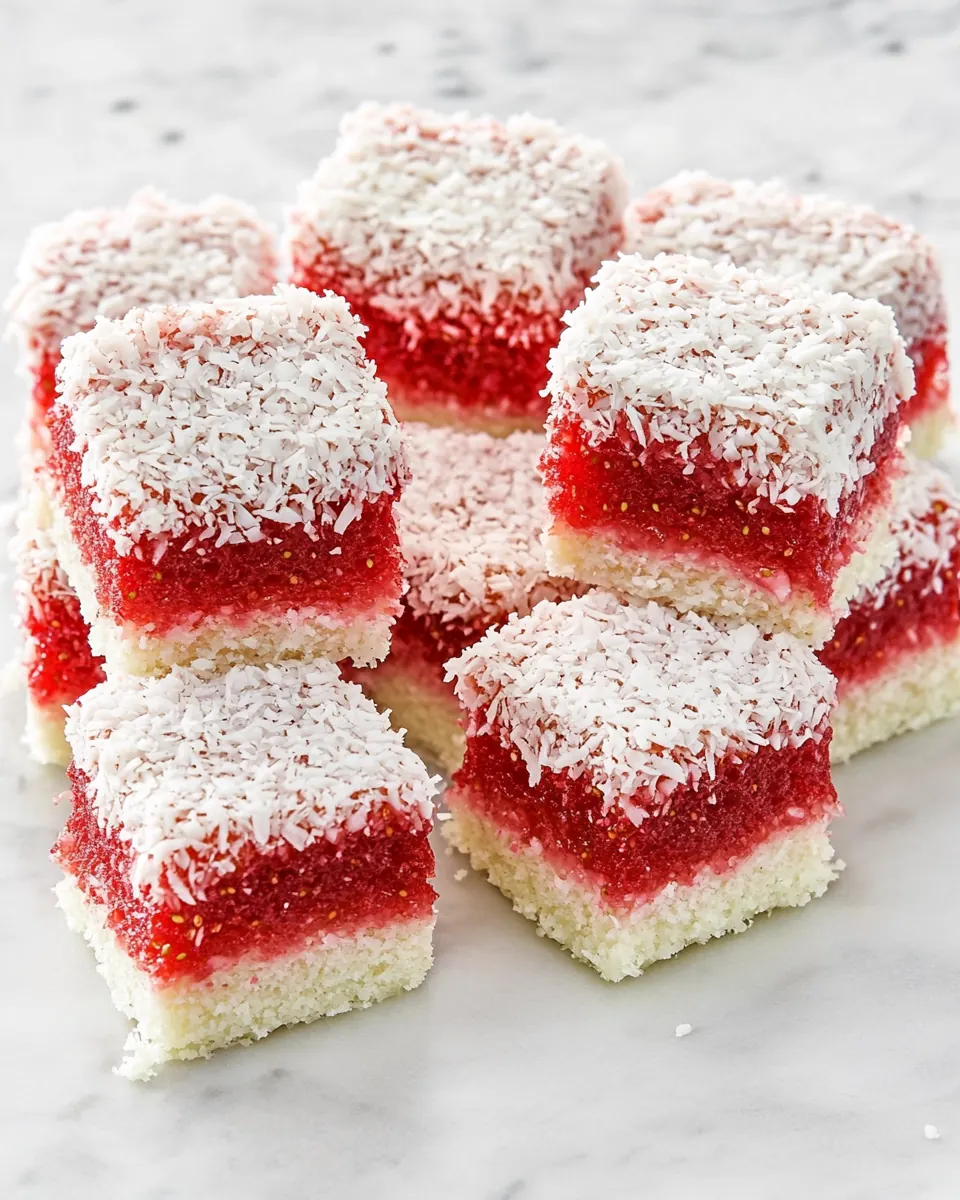
Strawberry Lime Coconut Lamingtons
Strawberry Lime Coconut Lamingtons began as a bright experiment one humid spring afternoon when I wanted something floral, tangy, and a little bit cheeky to bring to a neighborhood tea.
I remember the way the kitchen smelled as the cake baked, the lime perfume rising and mingling with a faint whisper of coconut. I kept darting back to the oven window, hands tucked into my apron, thinking about how the strawberries would play against the lime, and how the shredded coconut would give the outside that satisfying toothsome texture. I wanted each bite to feel like a small celebration, something you could hand to a friend with a smile and not worry about crumbs taking over their lap.
When I assembled the layers and let the preserves peek between them, I felt that small, honest thrill only home baking can give. The cool glaze sets into a thin shell, while the inside stays soft and delicate. I took one to the park and watched my neighbor close her eyes for a beat before asking for the recipe. That moment sold me on these treats: they are playful, nostalgic, and a little bit fancy without being fussy.
Recipe Snapshot
60 mins
30 mins
30 mins
Medium
300 kcal
American
Gluten-Free, Low FODMAP
Desserts
Stand mixer, Paddle attachment, Whisk attachment, 13 x 9-inch baking dish, Wire rack, Rimmed baking sheet, Tall narrow container, Long serrated knife
What’s Great About This Strawberry Lime Coconut Lamingtons
Bright, playful flavor
I love how Strawberry Lime Coconut Lamingtons balances sweet and tangy. The combination of strawberry preserves and lime juice and zest brings a lift that keeps the palate interested, so the cake never feels cloying. When I bite into one, I notice the initial kiss of sugar from the glaze, then the tart lime note, and finally the smooth, buttery cake. That layered flavor profile makes these lamingtons endlessly repeatable for gatherings.
Texture that surprises
One of the main reasons I make these is the contrast of textures. The tender cake crumb inside against the thin glazed shell and the grated coconut on the outside gives a satisfying contrast. I find guests often comment first on the plush interior, then get delightfully distracted by the coconut mouthfeel. Achieving that interplay is simple, and it’s what makes this recipe feel special without being complicated.
Approachable technique
I like that the methods here are familiar: creaming, folding, and dipping. Even if you hesitate around egg whites or worry about a glaze, the steps are forgiving. I’ve taught this to friends with minimal baking experience, and they come away feeling like pros. The recipe invites you to learn without pressure, and that confidence boost is why I return to it.
Perfect for spring and celebrations
Because of the citrus lift and the fresh strawberry element, these lamingtons feel especially suited to springtime brunches and afternoon teas. They look pretty on a platter, and they travel well if you need to bring treats to a potluck. I often pack a small box for a picnic, knowing they’ll hold up and still taste fresh.
Customizable sweetness
Finally, I adore how adaptable the recipe is. The glaze thickness and the amount of strawberry preserves can be nudged to your preference. I usually err on the side of slightly less glaze to let the coconut shine. That flexibility means you can tailor the end result to your crowd, which I appreciate when I bake for different tastes.
Ingredients to Make Strawberry Lime Coconut Lamingtons
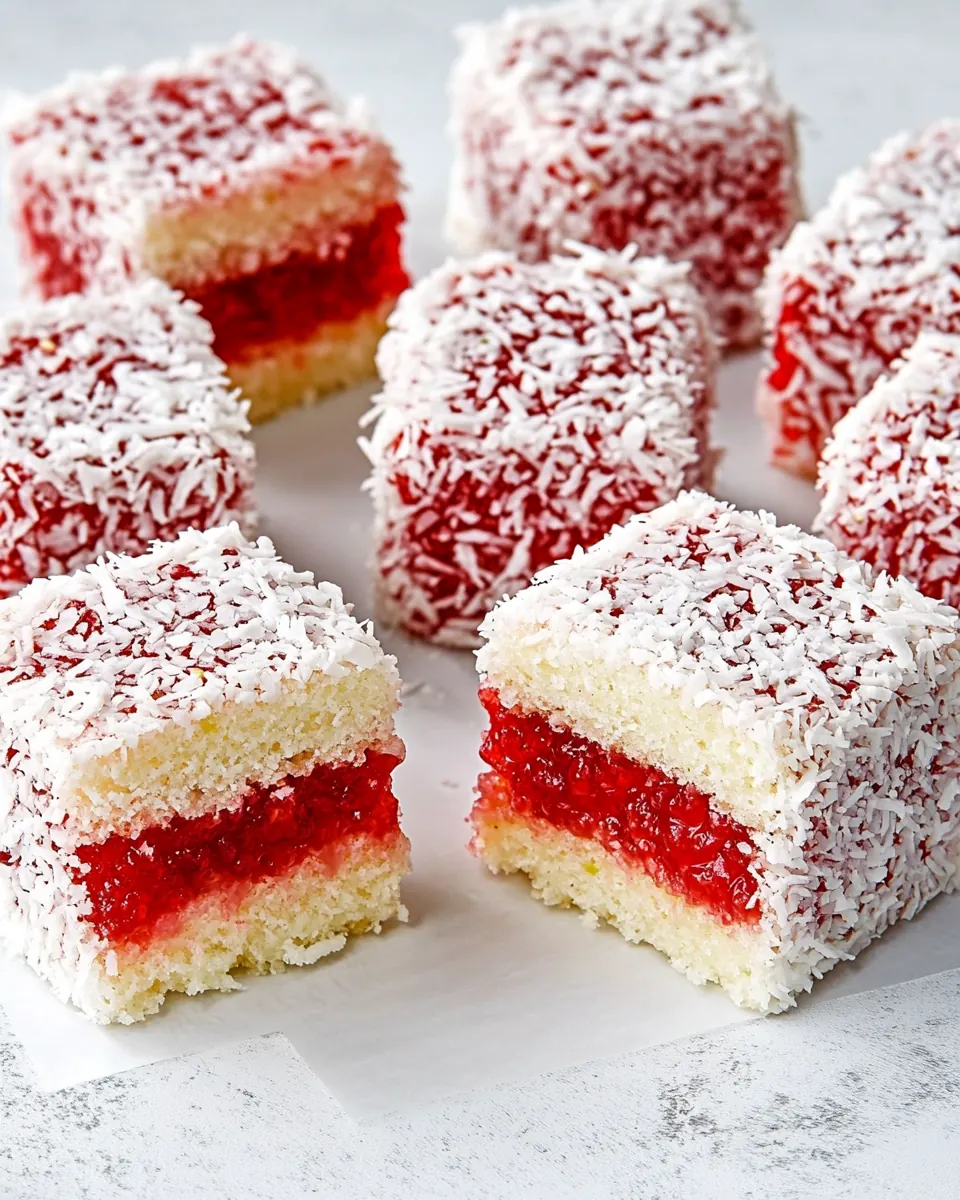
These ingredients work together to create a cake that is tender, fragrant, and well balanced. The key players are the butter and sugar which form the cake‘s rich base, the eggs which build structure and lift, and the interplay of lime and coconut which give the recipe its signature brightness and tropical hint. The strawberry element adds concentrated fruit sweetness and color, while the flaked coconut provides the exterior texture that makes lamingtons so recognizable.
- 1 cup (227 grams) unsalted butter, softened: Creamy and rich, used to provide tender structure, moisture, and a buttery flavor to the cake batter; softened to ensure even creaming with sugar for proper aeration.
- 1 1/2 cups (300 grams) granulated sugar: Granulated and fine, used to sweeten the batter and help incorporate air when creamed with butter to produce a light crumb and balanced sweetness.
- 1 tablespoon (6 grams) lime zest: Aromatic and zesty, used to add bright citrus fragrance and a concentrated lime flavor that lifts the overall profile of the lamingtons.
- 4 large eggs (200 grams), separated: Separated eggs provide structure and leavening; egg whites beaten create volume and lightness while yolks enrich the batter with fat and emulsifiers.
- 1 teaspoon (4 grams) vanilla extract: Fragrant and sweet, used to enhance the cake's flavor with warm, familiar vanilla notes and to round out the citrus and coconut accents.
- 3/4 teaspoon (3 grams) coconut extract: Strong and tropical, used sparingly to intensify coconut flavor without adding liquid, complementing the coconut milk and coating.
- 2 1/2 cups (313 grams) cake flour: Fine-textured and low-protein, used to create a delicate, tender crumb ideal for sponge-like lamingtons and to absorb the wet ingredients evenly.
- 1 1/2 teaspoons (7.5 grams) baking powder: Leavening powder used to provide lift and a gentle rise in the batter, contributing to a light, airy cake texture when combined with beaten eggs.
- 1 teaspoon (3 grams) kosher salt: Crystalline and savory, used to enhance overall flavor balance by highlighting sweetness and controlling bitterness while supporting gluten structure.
- 1/4 teaspoon (1.25 grams) baking soda: Fine and reactive, used to neutralize acidity from the buttermilk-like coconut milk and lime juice and provide additional lift when activated.
- 1 1/4 cups (300 grams) unsweetened coconut milk: Silky and dairy-free, used to contribute moisture, a subtle coconut flavor, and tender crumb similar to milk while keeping the cake light.
- 3 tablespoons (45 grams) fresh lime juice: Bright and acidic, used to activate leavening agents slightly and to add fresh lime tang that complements the coconut and strawberry elements.
- cup (107 grams) strawberry preserves: Thick and fruity, used to add concentrated strawberry flavor and moisture to the lamingtons or filling; quantity placeholder indicates room for recipe-specific adjustment.
- Strawberry Glaze (recipe follows): Combined components that form a glossy, flavored coating for the lamingtons; used to adhere coconut flakes and impart additional sweetness and strawberry–lime character.
- Unsweetened flaked (dessicated) coconut, for coating: Dry and chewy, used to coat the exterior of the lamingtons after glazing to provide texture, coconut aroma, and a classic appearance.
Cooking Instructions for Strawberry Lime Coconut Lamingtons
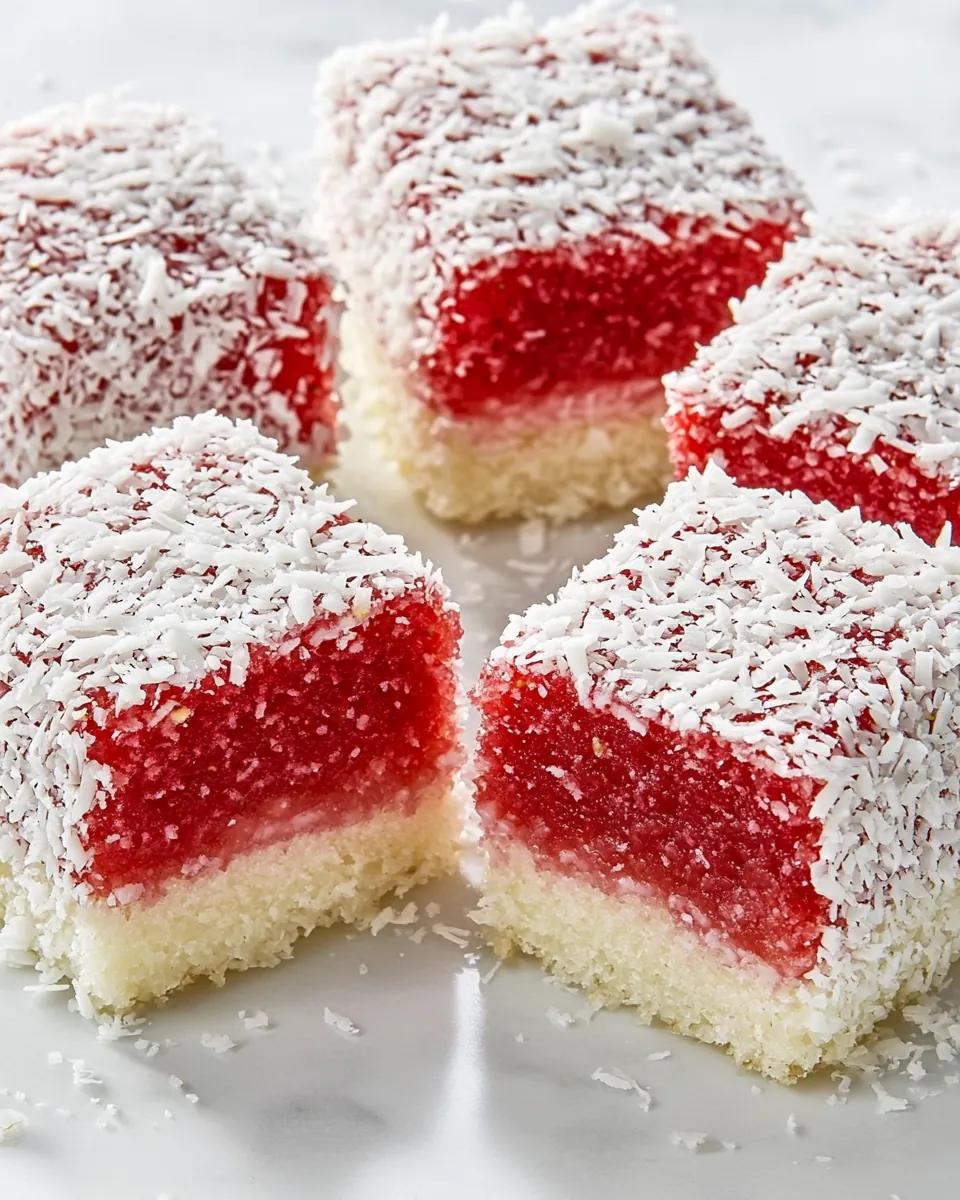
Working through these steps is a joyful, rhythmic process. I like to set out bowls and tools before starting so the rhythm of creaming, folding, and baking flows without pause. Keep your mise en place tidy and cool, including the glaze container, to make dipping easier.
- Preheat oven to 350°F (180°C). Spray a 13 x 9-inch baking dish with baking spray with flour.: As the oven warms, you can feel the kitchen change temperature, and the scent of heat primes your senses for baking. Preheating ensures even rise and structure, so the cake sets correctly rather than sinking. A well greased and floured pan helps release the cake cleanly, which is crucial because you will later level and slice it. If you skip preheating, the batter may bake unevenly. A common mistake is relying on a guessed oven temperature, so use an oven thermometer for accuracy.
- In the bowl of a stand mixer fitted with the paddle attachment, beat butter, sugar, and lime zest at medium speed until fluffy, 3 to 4 minutes, stopping to scrape sides of bowl. Add egg yolks, one at a time, beating well after each addition. Beat in extracts.: The sound of the mixer will change as air incorporates into the butter and sugar , becoming lighter and paler; that visual cue is essential for an airy cake. Adding the egg yolks gradually ensures a smooth emulsion, preventing curdling and providing richness. Scraping the bowl prevents pockets of unmixed butter or sugar that can lead to uneven texture. If you overbeat after adding yolks, you can break the emulsion, causing a grainy batter; stop when it looks cohesive and fluffy.
- In a medium bowl, whisk together flour, baking powder, salt, and baking soda. In a small bowl, combine coconut milk and lime juice. With mixer on low speed, gradually add flour mixture to butter mixture alternately with coconut milk mixture, beginning and ending with flour mixture, beating just until combined after each addition. Transfer batter to a large bowl.: The dry ingredients should look uniformly blended, which prevents streaks and lumps when folded in. Adding the dry and wet mixtures alternately gives the batter structure without overworking the gluten in the cake flour . You will notice the batter thicken and become velvety; that is the right moment to stop mixing to preserve tenderness. Overmixing here results in a tougher crumb, so fold with care and stop at homogeneity.
- Clean bowl of stand mixer. Using the whisk attachment, beat egg whites at high speed just until stiff peaks form. Gently fold egg whites into batter in three additions until well combined. Pour batter into prepared pan, smoothing top if necessary.: Whipped egg whites should shine and hold a peak that bends slightly; that texture traps air and makes the cake light. Folding should be done with a gentle hand, using a spatula to cut through the center and sweep under, preserving as much air as possible. The batter will look glossy and aerated when done, and pouring into the pan should be effortless. A frequent mistake is vigorous stirring that knocks out the air, so be patient and gentle.
- Bake until a wooden pick inserted in center comes out clean, about 30 minutes. Let cool completely in pan on a wire rack.: During baking you will see the surface set and edges pull slightly away from the pan, signs of doneness. The aroma of butter and lime will intensify. Letting the cake cool fully in the pan stabilizes it, reducing the chance of crumbling when you move it. If you rush to unmold while warm, the cake can break or compress, so resist the temptation to slice early.
- Transfer cake to a large cutting board. Using a long serrated knife, level cake to about 1 inch tall. With one long side closest to you, cut cake into 2 (8 1/4 x 6-inch) rectangles. Spread preserves onto 1 rectangle; top with remaining rectangle. Gently cut cake into 12 (2-inch) squares.: Leveling makes a uniform thickness so the lamingtons are even and stable. Spreading strawberry preserves creates a moist, flavorful layer that glues the two halves together. When slicing, a gentle sawing motion with the serrated knife minimizes tearing. A common error is applying too much pressure and crushing the cake; take your time and turn the board rather than forcing the knife.
- Place a wire rack on a rimmed baking sheet, and place cake squares 1 to 2 inches apart on wire rack. Freeze until firm, 45 minutes to 1 hour.: Freezing firms the cake so it holds up to dipping, and it helps the glaze set without saturating the crumb. You will notice the squares feel cool and almost solid to the touch when ready. Space them so air circulates and the freeze is even. If you skimp on chilling time, the glaze can pull crumbs away or make the squares soggy, so be sure they are solid before proceeding.
- Transfer Strawberry Glaze to a tall, narrow (no more than 3 inches wide) container. Working with 1 cake square at a time, using a wooden skewer, pick up each cake square, and dip into glaze until fully covered, letting excess drip back into container. Return to wire rack, and let stand until completely set, about 30 minutes.: The glaze should flow smoothly around the square, coating evenly; the narrow container helps you submerge the sides without dunking your hands. Listen for a faint patter as glaze drips back into the container, and watch the surface for even, glossy coverage. Letting excess drip prevents the glaze puddling under the cakes. If your glaze is too thick it will clump, and if too thin it will run off, so aim for a pourable consistency.
- Pour flaked coconut onto a small baking sheet. Using a spatula or wooden skewer, roll each cake square in coconut. Place on desired serving dish, and let come to room temperature, 1 to 2 hours. Refrigerate in an airtight container for up to 3 days.: Rolling in coconut adds the final texture and visual charm. The coconut should adhere lightly, creating a feathery coat. Bringing the lamingtons to room temperature calms the glaze and allows flavors to settle, giving the ideal eating experience. For storage, keep them sealed and slightly cool to preserve texture. Avoid stacking while still warm, or the coating can stick and pull off the glaze.
Helpful Hints
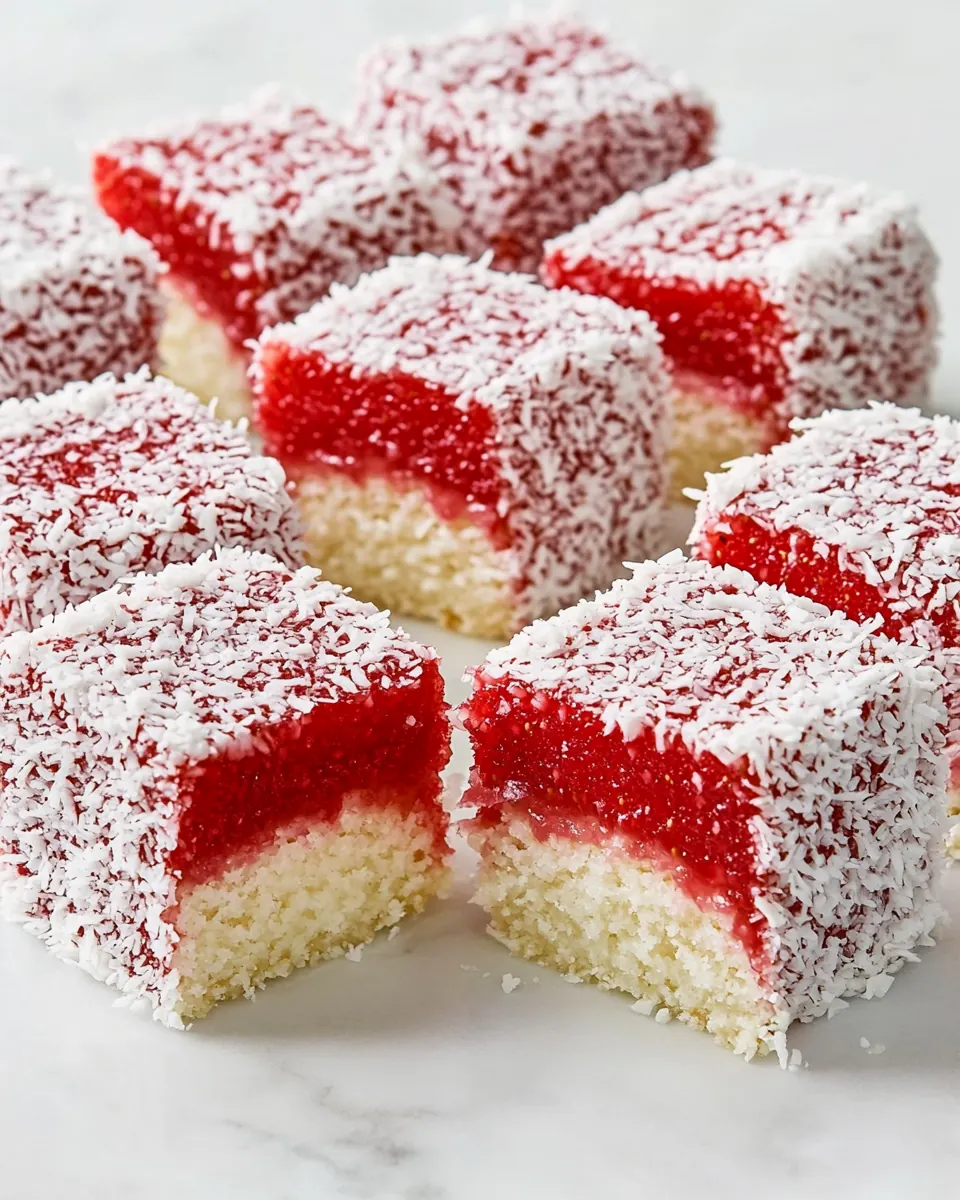
These hints come from hands on experience. I wrote them to help you avoid pitfalls and to make the process smoother from start to finish.
- Prep Your Tools Make sure your stand mixer bowl and whisk are clean and dry before beating egg whites to achieve full volume.
- Room Temperature Ingredients Bring butter and eggs to room temperature so they incorporate smoothly when creaming, giving a consistent batter.
- Measure Carefully Spoon and level the cake flour into your cup for accuracy; too much flour will make the cake dense.
- Alternate Wet and Dry When adding the flour and coconut milk, alternate additions to avoid overmixing and to preserve a tender crumb.
- Freeze Before Dipping Place the cut squares in the freezer until firm so they hold shape during glazing and coating with coconut.
- Use a Tall Vessel for Glaze A narrow container makes dipping easier and reduces wasted glaze as excess drips back.
- Storage Keep finished lamingtons in an airtight container in the fridge for up to three days, and bring to room temperature before serving for best flavor.
Best Served With
These little cakes are versatile and festive. I like to pair them with light drinks and simple accompaniments that let their bright flavors sing. They work well at brunch, afternoon tea, and spring gatherings.
- Afternoon Tea Present Strawberry Lime Coconut Lamingtons on a tiered stand alongside delicate finger sandwiches for a classic tea experience.
- Picnic Treat Pack lamingtons in a shallow box for a spring picnic; they travel well and make an attractive dessert for outdoors.
- Brunch Plate Serve alongside fresh fruit and simple pastries to balance textures and sweetness on a brunch spread.
- Celebration Platter Use these as part of a dessert board for birthdays or showers, where their color and shape add visual interest.
- Storage Tip Store in an airtight container in the refrigerator for up to three days, and bring to room temperature before serving to restore the best texture and flavor.
- Seasonal Pairing These shine in spring when berries are at their best, their bright lime lift complements early season produce.
FAQ
Conclusion
What makes these Strawberry Lime Coconut Lamingtons special is the playful balance of zesty lime, sweet strawberry, and tropical coconut wrapped around a tender, airy cake. The textures and flavors combine to create something nostalgic yet refreshingly bright, perfect for sharing. I encourage you to try the process step by step, from whipping the egg whites to the final coconut roll, because the payoff is a charming treat that looks as good as it tastes. Enjoy the baking moment and the smiles these will bring to your table.
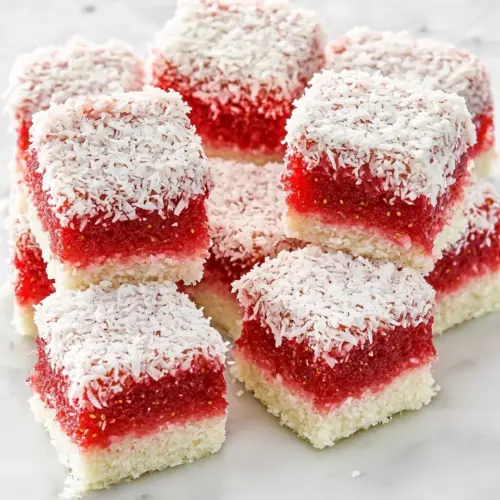
Strawberry Lime Coconut Lamingtons
Equipment
- Stand mixer
- Paddle attachment
- Whisk attachment
- 13 x 9-inch baking dish
- Wire Rack
- Rimmed Baking Sheet
- Tall narrow container
- Long serrated knife
Ingredients
- 1 cup (227 grams) unsalted butter, softened Creamy and rich, used to provide tender structure, moisture, and a buttery flavor to the cake batter; softened to ensure even creaming with sugar for proper aeration.
- 1 1/2 cups (300 grams) granulated sugar Granulated and fine, used to sweeten the batter and help incorporate air when creamed with butter to produce a light crumb and balanced sweetness.
- 1 tablespoon (6 grams) lime zest Aromatic and zesty, used to add bright citrus fragrance and a concentrated lime flavor that lifts the overall profile of the lamingtons.
- 4 large eggs (200 grams), separated Separated eggs provide structure and leavening; egg whites beaten create volume and lightness while yolks enrich the batter with fat and emulsifiers.
- 1 teaspoon (4 grams) vanilla extract Fragrant and sweet, used to enhance the cake's flavor with warm, familiar vanilla notes and to round out the citrus and coconut accents.
- 3/4 teaspoon (3 grams) coconut extract Strong and tropical, used sparingly to intensify coconut flavor without adding liquid, complementing the coconut milk and coating.
- 2 1/2 cups (313 grams) cake flour Fine-textured and low-protein, used to create a delicate, tender crumb ideal for sponge-like lamingtons and to absorb the wet ingredients evenly.
- 1 1/2 teaspoons (7.5 grams) baking powder Leavening powder used to provide lift and a gentle rise in the batter, contributing to a light, airy cake texture when combined with beaten eggs.
- 1 teaspoon (3 grams) kosher salt Crystalline and savory, used to enhance overall flavor balance by highlighting sweetness and controlling bitterness while supporting gluten structure.
- 1/4 teaspoon (1.25 grams) baking soda Fine and reactive, used to neutralize acidity from the buttermilk-like coconut milk and lime juice and provide additional lift when activated.
- 1 1/4 cups (300 grams) unsweetened coconut milk Silky and dairy-free, used to contribute moisture, a subtle coconut flavor, and tender crumb similar to milk while keeping the cake light.
- 3 tablespoons (45 grams) fresh lime juice Bright and acidic, used to activate leavening agents slightly and to add fresh lime tang that complements the coconut and strawberry elements.
- cup (107 grams) strawberry preserves Thick and fruity, used to add concentrated strawberry flavor and moisture to the lamingtons or filling; quantity placeholder indicates room for recipe-specific adjustment.
- Strawberry Glaze (recipe follows) Combined components that form a glossy, flavored coating for the lamingtons; used to adhere coconut flakes and impart additional sweetness and strawberry-lime character.
- Unsweetened flaked (dessicated) coconut, for coating Dry and chewy, used to coat the exterior of the lamingtons after glazing to provide texture, coconut aroma, and a classic appearance.
Instructions
- Preheat oven to 350°F (180°C). Spray a 13 x 9-inch baking dish with baking spray with flour.: As the oven warms, you can feel the kitchen change temperature, and the scent of heat primes your senses for baking. Preheating ensures even rise and structure, so the cake sets correctly rather than sinking. A well greased and floured pan helps release the cake cleanly, which is crucial because you will later level and slice it. If you skip preheating, the batter may bake unevenly. A common mistake is relying on a guessed oven temperature, so use an oven thermometer for accuracy.
- In the bowl of a stand mixer fitted with the paddle attachment, beat butter, sugar, and lime zest at medium speed until fluffy, 3 to 4 minutes, stopping to scrape sides of bowl. Add egg yolks, one at a time, beating well after each addition. Beat in extracts.: The sound of the mixer will change as air incorporates into the butter and sugar , becoming lighter and paler; that visual cue is essential for an airy cake. Adding the egg yolks gradually ensures a smooth emulsion, preventing curdling and providing richness. Scraping the bowl prevents pockets of unmixed butter or sugar that can lead to uneven texture. If you overbeat after adding yolks, you can break the emulsion, causing a grainy batter; stop when it looks cohesive and fluffy.
- In a medium bowl, whisk together flour, baking powder, salt, and baking soda. In a small bowl, combine coconut milk and lime juice. With mixer on low speed, gradually add flour mixture to butter mixture alternately with coconut milk mixture, beginning and ending with flour mixture, beating just until combined after each addition. Transfer batter to a large bowl.: The dry ingredients should look uniformly blended, which prevents streaks and lumps when folded in. Adding the dry and wet mixtures alternately gives the batter structure without overworking the gluten in the cake flour . You will notice the batter thicken and become velvety; that is the right moment to stop mixing to preserve tenderness. Overmixing here results in a tougher crumb, so fold with care and stop at homogeneity.
- Clean bowl of stand mixer. Using the whisk attachment, beat egg whites at high speed just until stiff peaks form. Gently fold egg whites into batter in three additions until well combined. Pour batter into prepared pan, smoothing top if necessary.: Whipped egg whites should shine and hold a peak that bends slightly; that texture traps air and makes the cake light. Folding should be done with a gentle hand, using a spatula to cut through the center and sweep under, preserving as much air as possible. The batter will look glossy and aerated when done, and pouring into the pan should be effortless. A frequent mistake is vigorous stirring that knocks out the air, so be patient and gentle.
- Bake until a wooden pick inserted in center comes out clean, about 30 minutes. Let cool completely in pan on a wire rack.: During baking you will see the surface set and edges pull slightly away from the pan, signs of doneness. The aroma of butter and lime will intensify. Letting the cake cool fully in the pan stabilizes it, reducing the chance of crumbling when you move it. If you rush to unmold while warm, the cake can break or compress, so resist the temptation to slice early.
- Transfer cake to a large cutting board. Using a long serrated knife, level cake to about 1 inch tall. With one long side closest to you, cut cake into 2 (8 1/4 x 6-inch) rectangles. Spread preserves onto 1 rectangle; top with remaining rectangle. Gently cut cake into 12 (2-inch) squares.: Leveling makes a uniform thickness so the lamingtons are even and stable. Spreading strawberry preserves creates a moist, flavorful layer that glues the two halves together. When slicing, a gentle sawing motion with the serrated knife minimizes tearing. A common error is applying too much pressure and crushing the cake; take your time and turn the board rather than forcing the knife.
- Place a wire rack on a rimmed baking sheet, and place cake squares 1 to 2 inches apart on wire rack. Freeze until firm, 45 minutes to 1 hour.: Freezing firms the cake so it holds up to dipping, and it helps the glaze set without saturating the crumb. You will notice the squares feel cool and almost solid to the touch when ready. Space them so air circulates and the freeze is even. If you skimp on chilling time, the glaze can pull crumbs away or make the squares soggy, so be sure they are solid before proceeding.
- Transfer Strawberry Glaze to a tall, narrow (no more than 3 inches wide) container. Working with 1 cake square at a time, using a wooden skewer, pick up each cake square, and dip into glaze until fully covered, letting excess drip back into container. Return to wire rack, and let stand until completely set, about 30 minutes.: The glaze should flow smoothly around the square, coating evenly; the narrow container helps you submerge the sides without dunking your hands. Listen for a faint patter as glaze drips back into the container, and watch the surface for even, glossy coverage. Letting excess drip prevents the glaze puddling under the cakes. If your glaze is too thick it will clump, and if too thin it will run off, so aim for a pourable consistency.
- Pour flaked coconut onto a small baking sheet. Using a spatula or wooden skewer, roll each cake square in coconut. Place on desired serving dish, and let come to room temperature, 1 to 2 hours. Refrigerate in an airtight container for up to 3 days.: Rolling in coconut adds the final texture and visual charm. The coconut should adhere lightly, creating a feathery coat. Bringing the lamingtons to room temperature calms the glaze and allows flavors to settle, giving the ideal eating experience. For storage, keep them sealed and slightly cool to preserve texture. Avoid stacking while still warm, or the coating can stick and pull off the glaze.
Notes
- Prep Your Tools Make sure your stand mixer bowl and whisk are clean and dry before beating egg whites to achieve full volume.
- Room Temperature Ingredients Bring butter and eggs to room temperature so they incorporate smoothly when creaming, giving a consistent batter.
- Measure Carefully Spoon and level the cake flour into your cup for accuracy; too much flour will make the cake dense.
- Alternate Wet and Dry When adding the flour and coconut milk, alternate additions to avoid overmixing and to preserve a tender crumb.
- Freeze Before Dipping Place the cut squares in the freezer until firm so they hold shape during glazing and coating with coconut.
- Use a Tall Vessel for Glaze A narrow container makes dipping easier and reduces wasted glaze as excess drips back.
- Storage Keep finished lamingtons in an airtight container in the fridge for up to three days, and bring to room temperature before serving for best flavor.
