Soba Noodle Salad with Cabbage and Kohlrabi
Soba Noodle Salad with Cabbage and Kohlrabi arrived in my life on a sunlit spring afternoon when I wanted something bright, crunchy, and utterly unfussy for lunch.
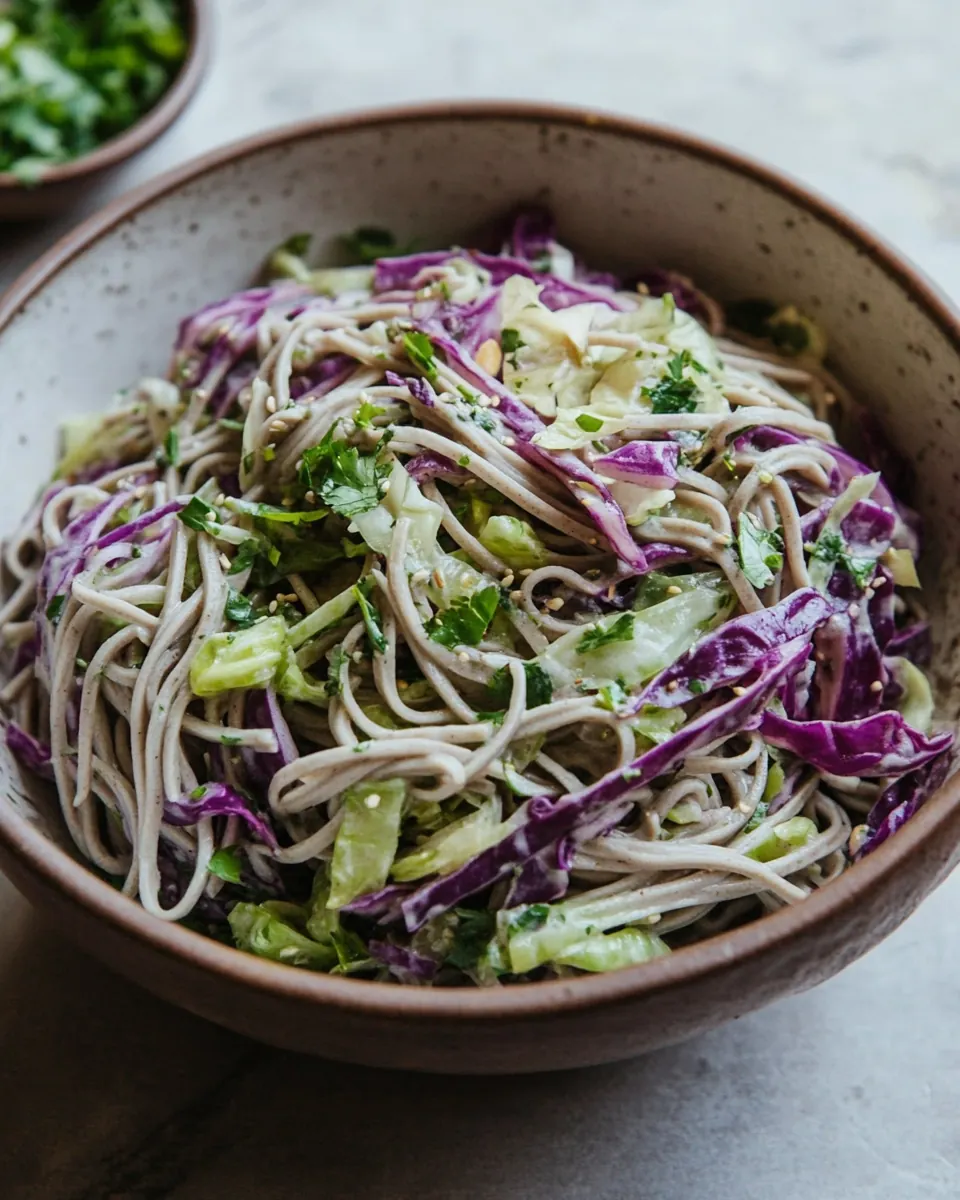
I remember standing at my kitchen counter with a head of red and Chinese cabbage tucked under one arm and a knobby kohlrabi on the cutting board, humming along to some old record as I worked the vegetable peeler. There is something satisfying about turning a humble pile of produce into a bowl that sings with texture and flavor, and this salad does exactly that. The first bite was all crisp snap from the cabbage, then a whisper of warm sesame oil, and finally the nutty chew of soba noodles, which made me think this would be perfect for lunches and light dinners alike.
Over the years I have adapted small things, like how thin to slice the scallions and whether to massage the dressing into the cabbage or let it rest and mingle slowly. Each change taught me something new about balance, and I now love how the assertive bite of the kohlrabi plays off the soft, slippery soba noodles. This recipe is an every day sort of recipe, nothing fussy, yet elegant enough to bring to a picnic or a potluck where it will disappear fast. You will find it’s forgiving, quick to pull together, and keeps its crunch for hours, which I appreciate when I make it ahead for a casual gathering.
Recipe Snapshot
30 mins
20 mins
10 mins
Easy
250 kcal
Japanese
Vegan, Gluten-Free
Salads
Large bowl, Sauce jar with lid, Pot, Colander, Vegetable peeler, Knife
Why This Soba Noodle Salad with Cabbage and Kohlrabi Is So Good
Bright, Crunchy Texture
I adore how the red and Chinese cabbage and kohlrabi deliver a satisfying snap in every bite. The contrast between crisp vegetables and the tender soba noodles gives the salad a lively mouthfeel. When I serve this, people often comment first on the texture, which makes me smile because simple produce can make the biggest impression.
Fast and Reliable
This is one of those recipes I turn to when time is tight. Between prepping the vegetables and boiling the soba noodles, it comes together in about half an hour. I appreciate recipes that respect a busy weeknight, and this one reliably tastes like you spent more time on it than you actually did.
Flavor That Layers
The dressing, built from toasted sesame oil, seasoned rice vinegar, and fresh minced ginger, is simple but layered. I love how shaking the dressing in a jar wakes up the aroma of sesame, and massaging it into the shredded cabbage mellows the sharpness, rounding everything into harmony.
Make Ahead Friendly
I often make this a few hours before serving because the flavors meld beautifully over time, yet the vegetables keep their crunch. If I know I need a no-hassle side or portable lunch, this is my go to because it holds up and tastes even better after a short rest.
Versatile and Crowd Pleasing
This salad plays well in many settings. It’s light enough for a spring lunch and substantial enough as a side for dinner. I like it for casual get togethers where people appreciate clean flavors and texture. It’s also forgiving to slight variations, so you can tailor it to pantry supplies without losing what makes it special.
What to Gather for Soba Noodle Salad with Cabbage and Kohlrabi
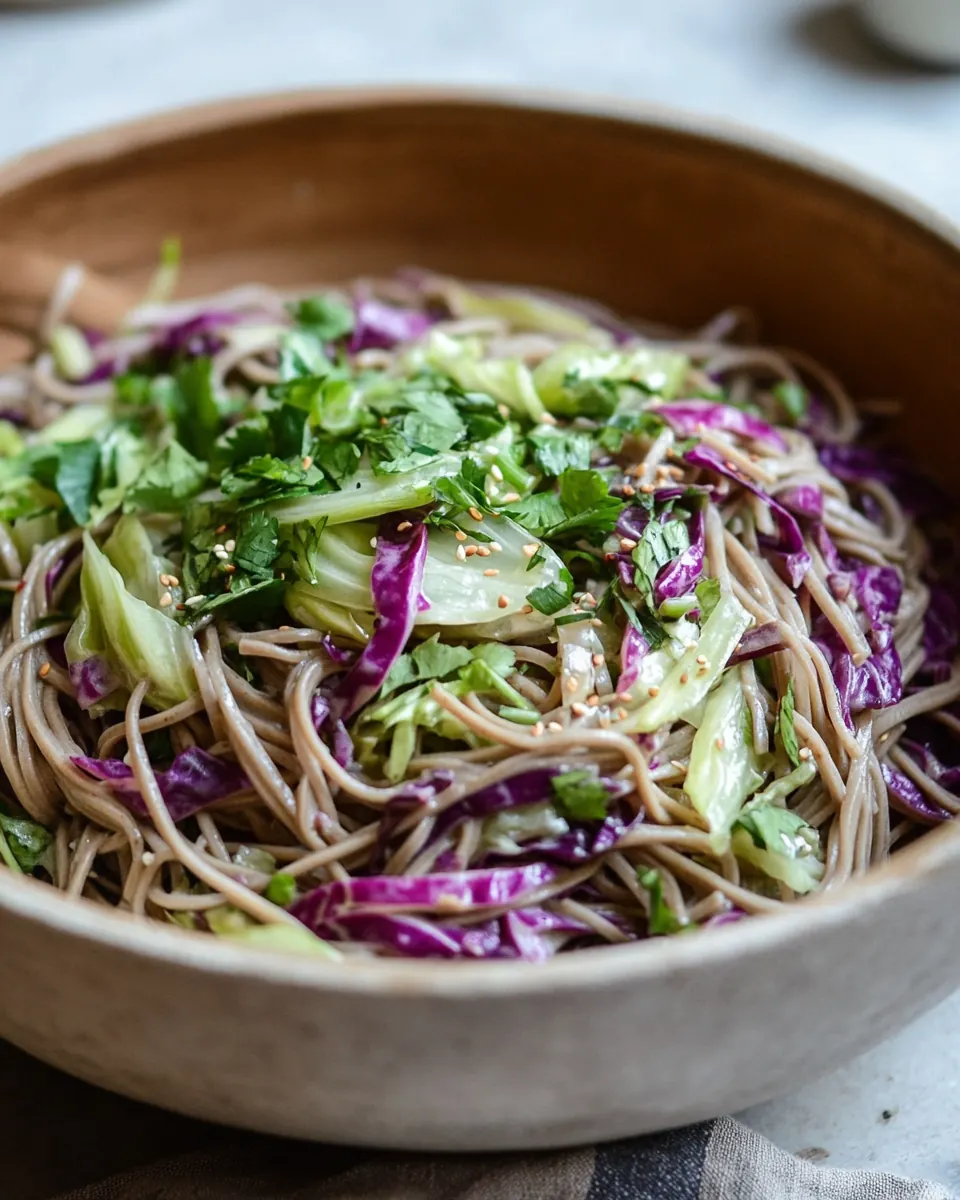
These ingredients come together like a small chorus where each voice matters. The key players are the crisp cabbage and kohlrabi, which provide crunch, the nutty soba noodles that add chew and body, and the toasted sesame elements that tie everything together with warm fragrance. I treat the seasoning as the conductor, ensuring balance so the vegetables remain bright and the noodles soak up gentle savory notes.
- 1/2 pound red and Chinese cabbage (shredded): Provide crunchy texture and a slightly peppery, tangy flavor; finely shredded red and Chinese cabbage adds bulk, color contrast, and a refreshing crispness that balances the soft noodles and dressing. Works as the primary vegetable base that soaks up the vinaigrette while retaining structure through chilling and tossing.
- 1/3 pound kohlrabi (about 1 medium one): Offer a mildly sweet, crisp bite with a subtle brassica note; thinly sliced kohlrabi contributes a firm, juicy crunch that complements the cabbage and adds visual interest. Functions as a sturdy, refreshing root vegetable that holds up well in cold salads and provides extra fiber.
- 2 scallions (about 1/4 cup sliced): Lend a sharp, onion-like brightness when thinly sliced; scallions add fresh green flavor and a tender crunch that lightens the salad. Serve raw to provide aromatic lift and small pops of savory intensity that enhance the dressing and noodles.
- 2 tablespoons toasted sesame oil: Impart rich, nutty flavor and aroma; toasted sesame oil acts as the primary fat component in the dressing, coating the ingredients and delivering depth. Use sparingly to prevent overpowering other flavors while providing essential mouthfeel and an Asian-inspired profile.
- 3 tablespoons seasoned rice vinegar: Introduce sweet-tart acidity and mild seasoning; seasoned rice vinegar brightens the salad and balances the oil and sesame, melding flavors together. Add to taste to create a harmonious vinaigrette that helps soften the vegetables slightly and elevates overall brightness.
- 2 to 3 teaspoons fresh minced ginger: Provide warm, peppery heat and aromatic lift when freshly minced; ginger brings zesty complexity to the dressing and pairs particularly well with sesame and vinegar. Use the lower amount for subtle warmth or increase for a more pronounced spicy-ginger note.
- 1 tablespoon toasted sesame seeds: Add toasty crunch and a subtle nutty finish; toasted sesame seeds garnish the salad and reinforce the sesame flavor from the oil. Sprinkle just before serving to preserve their crispness and provide small bursts of texture.
- 6 ounces soba noodles: Supply the chewy, earthy base of the dish; soba noodles contribute a tender bite and nutty buckwheat flavor that carries the dressing and vegetables. Cook until al dente, rinse to cool, and toss with the salad so the noodles absorb the vinaigrette.
- Salt (if needed): Season to taste to enhance overall flavor balance; salt adjusts and brings forward the natural tastes of the vegetables, noodles, and dressing. Add cautiously, tasting as you go, since seasoned rice vinegar may already contribute some saltiness.
Directions for Soba Noodle Salad with Cabbage and Kohlrabi
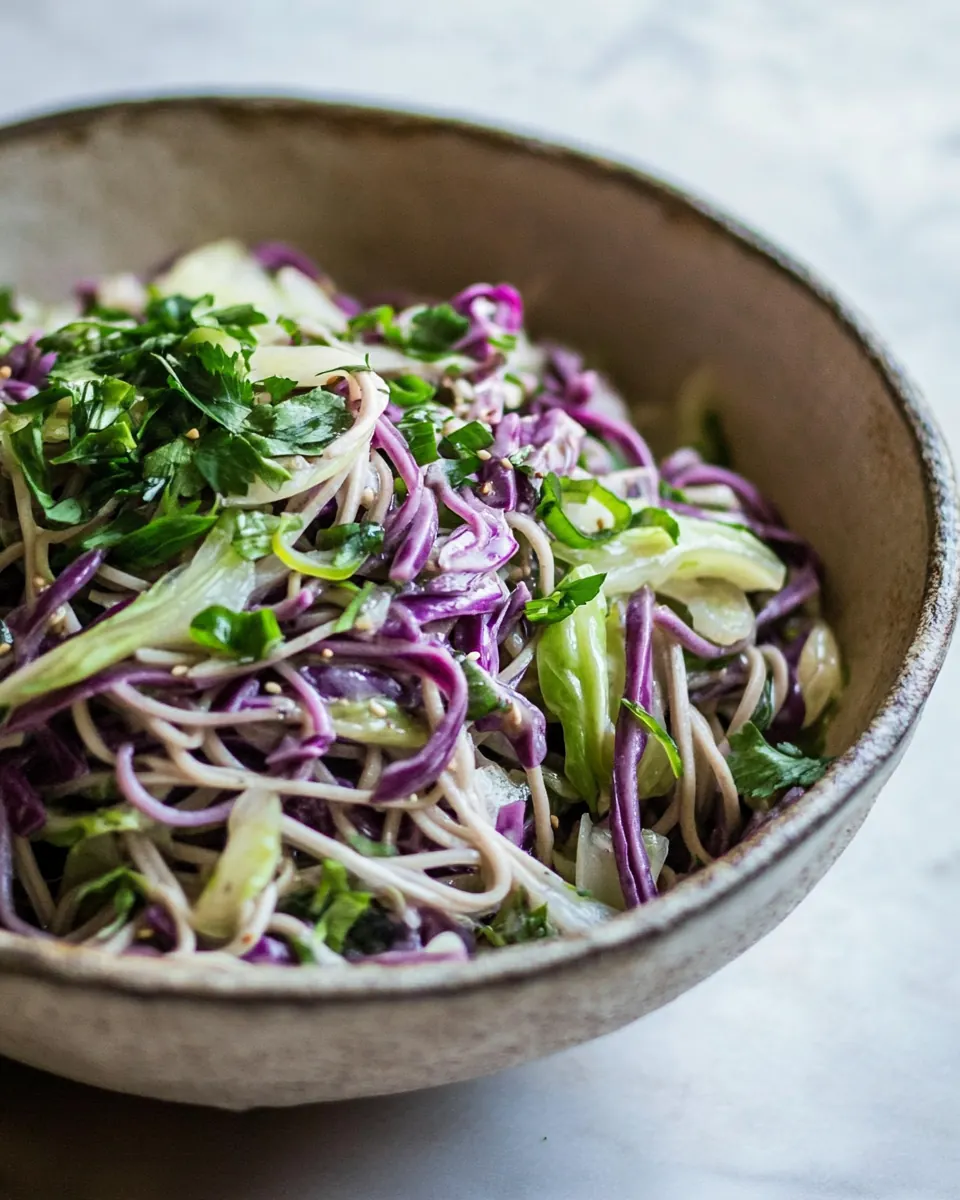
These directions guide you through crisp, aromatic steps that make the salad truly memorable. I like to work with mise en place so once the dressing is ready, assembly is fluid and quick. Read each step fully so you know the sensory cues to look for.
- Shred cabbage, removing the core as needed. Peel the outside of the kohlrabi and cut into thin, matchstick-sized cuts. Finally, prep the scallions by cutting, about 1/8" thick, on the bias. Add everything to a bowl and set aside.: The scent of fresh cabbage is mild and slightly sweet when you begin to shred, and the action of shredding releases a clean vegetal aroma. Use a sharp knife or a mandoline for even ribbons that will catch the dressing, and remove the core because it stays tough when thinly sliced. Visually you want uniform strands, not thick shards, which ensures balanced bites with the soba noodles . A common mistake is leaving large core pieces in, which can create tough bites; if you find any dense bits, discard them. As you work, notice the sound of the knife through the leaves, a steady, crisp rhythm that tells you the cabbage is fresh and properly prepped.
- In a small jar with lid, combine the sesame oil, rice vinegar, ginger, and sesame seeds. Shake vigorously until combined. Pour over the cabbage and massage in the dressing. Let sit while you cook the noodles.: When you peel the kohlrabi , a faint sweet, almost apple like aroma will become evident. Use a vegetable peeler to remove the tougher skin, then slice into paper thin sticks so they echo the texture of the shredded cabbage . Thin matchsticks allow the kohlrabi to mingle without overwhelming each forkful. If pieces are left too chunky they dominate the texture; aim for uniformity. The satisfying crunch under your knife is the best indicator you are getting the right thickness for a balanced bite.
- Cook the noodles according to the package. Drain, rinse, and toss with a teaspoon or so of sesame oil. Add to the bowl with cabbage and toss until everything is well combined. Taste and add salt as needed. Top with extra scallions, sesame seeds, and cilantro as desired.: Cutting scallions on the bias creates delicate, graceful ribbons that distribute their mild onion flavor. The aroma will be gently sharp and green, brightening the bowl. Slice at an angle for a more elegant appearance and a larger surface area that softens slightly when tossed with the dressing. Avoid cutting them too thick or too thin, as overly thick pieces can crowd a bite and overly thin slices can disappear into the mix.
- Add everything to a bowl and set aside: Once your cabbage , kohlrabi , and scallions are prepped, combine them in a roomy bowl so the dressing can reach every strand. At this stage the ingredients smell fresh and herbaceous, the colors contrast nicely, and the bowl should feel balanced to the eye. Setting the bowl aside gives you space to make the dressing and cook the soba noodles without rushing. A common oversight is crowding the bowl, which makes tossing difficult and can bruise the vegetables.
- In a small jar with lid combine the sesame oil rice vinegar ginger and sesame seeds: When you add the toasted sesame oil and seasoned rice vinegar together with minced ginger and sesame seeds , a fragrant, toasty aroma arises that hints at the finished dish. Shaking the jar vigorously emulsifies the dressing just enough so the oil and vinegar cling to the cabbage instead of separating. The audible clink of the jar and the visual swirls are satisfying signals that the dressing is well combined. Avoid under seasoning the dressing; taste and adjust, but beware adding too much vinegar at once which can make the dressing overly sharp.
- Shake vigorously until combined: Vigorous shaking spreads the aromatics and slightly thickens the mixture, creating a cohesive dressing. You will notice a sheen forming as the oil blends with the vinegar, and the minced ginger will disperse so each forkful gets flavor. If the dressing separates, keep shaking and taste again before use. A frequent misstep is skimping on the shake which leaves the dressing uneven, causing pockets of oil or vinegar in the salad rather than a unified coating.
- Pour over the cabbage and massage in the dressing: Pouring the dressing over the bowl releases a warm sesame scent and the massage physically softens the cabbage , helping it absorb flavor and mellow slightly without becoming limp. Use your hands to gently work the dressing through the leaves until they glisten and become a bit more pliable. Massaging also reduces bitterness and brings out natural sweetness. Over massaging can make the vegetables soggy, so stop when they are tender but still crisp.
- Let sit while you cook the noodles: Allowing the dressed vegetables to rest lets flavors meld and the textures knit together. You will notice a faint steam like aroma as the dressing soaks in and the cabbage softens slightly at the edges. This pause is intentional, it deepens the salad’s profile. Don’t skip this step if you can spare a few minutes, though leaving it too long without refrigeration could make the salad lose some crunch.
- Cook the noodles according to the package: As the soba noodles cook, they release a faint nutty fragrance and the water may foam slightly. Follow the package timing and aim for tender with a little bite, checking a minute early by tasting a noodle. The correct doneness ensures the noodles hold their shape when tossed with the vegetables. Overcooking leads to a limp, sticky texture, so watch the pot and set a timer to avoid that common mistake.
- Drain rinse and toss with a teaspoon or so of sesame oil: Rinsing the cooked soba noodles under cold water stops carryover cooking and removes excess starch, giving them a clean, slippery finish. Tossing with a teaspoon of toasted sesame oil prevents clumping and enhances the nutty aroma, making them ready to combine with the dressed vegetables. Be gentle while tossing so the noodles do not break. Skipping the rinse can result in sticky noodles that clump and stick to the other ingredients.
- Add to the bowl with cabbage and toss until everything is well combined: When you fold the soba noodles into the dressed cabbage and kohlrabi , pay attention to texture and distribution, aiming for even coating and color across the bowl. The combined aromas of sesame and ginger will be pronounced now, with a pleasing contrast between tender noodles and crisp vegetables. Use tongs or clean hands to lift and turn gently so the noodles and vegetables integrate without crushing the strands. A common error is overvigorous tossing which can bruise delicate ingredients and make the salad watery.
- Taste and add salt as needed: After combining, taste a forkful to assess balance. A small pinch of salt may be all that is needed to elevate the flavors, but add it gradually. The seasoned rice vinegar can already provide a degree of seasoning, so check before over salting. If you oversalt, a quick squeeze of additional rice vinegar or a small splash of water can help redistribute flavors, though prevention is better than correction.
- Top with extra scallions sesame seeds and cilantro as desired: Finishing with more sliced scallions and a sprinkle of sesame seeds adds freshness and a final crunchy note. If you like cilantro and it is available, a few leaves bring green perfume and brightness. These garnishes enhance visual appeal and textural contrast. Avoid adding too much garnish as it can overshadow the core flavors you worked to build.
Pro Tips and Tweaks
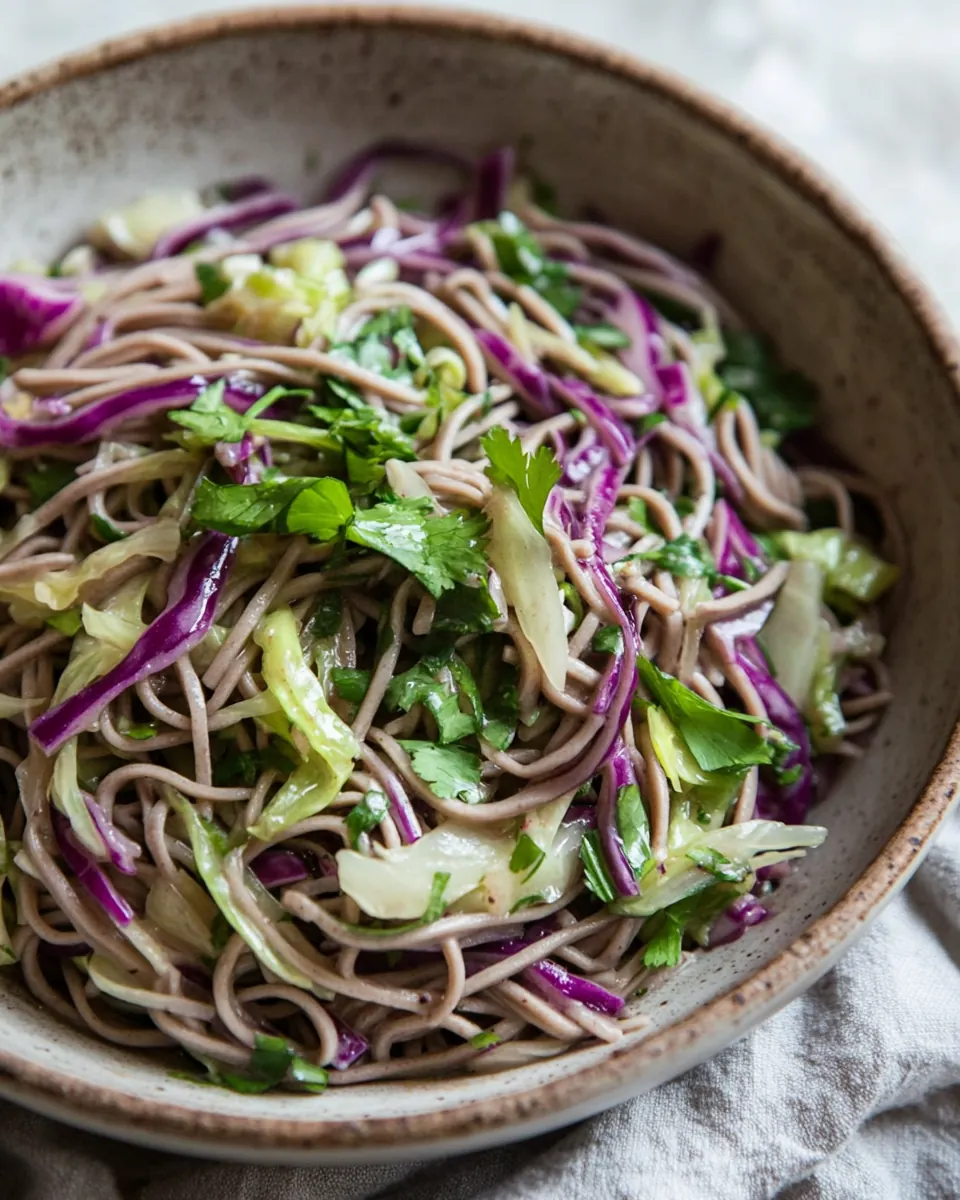
I like to keep a few tricks in my back pocket that make this salad sing every time. These tweaks focus on texture control and flavor balance, helping you adapt the recipe to your preferences and pantry. Below are detailed tips I use in my own kitchen.
- Trim and shred with care Ensure the cabbage and kohlrabi are uniformly thin so the dressing clings and each bite is balanced.
- Rinse soba noodles thoroughly After cooking, rinse under cold running water until the water runs clear to remove surface starch and prevent clumping.
- Use a jar for the dressing Shaking the dressing in a jar emulsifies it and layers the aroma, giving a more cohesive flavor than simply whisking.
- Reserve garnishes Keep some sliced scallions and sesame seeds back to sprinkle on top just before serving for a fresh look and extra crunch.
- Make ahead advantage Assemble the salad up to the point of combining noodles, then add the soba noodles just before serving if you want maximum crunch, or combine early if you prefer melded flavors.
- Adjust ginger intensity Start with two teaspoons of minced ginger and add more to taste, since fresh ginger can vary in potency.
Side Dish Ideas for Soba Noodle Salad with Cabbage and Kohlrabi
This salad is flexible in how it can be served, fitting many occasions and pairings. Think of it as a bright, crunchy companion that complements both lighter and heartier mains. Below are ideas and contexts that work especially well.
- Weeknight lunch Serve the salad with a simple protein on the side for an easy weeknight dinner that feels fresh and complete.
- Spring picnic Pack the salad in a shallow container to keep the cabbage crisp, and bring extra sesame seeds for a finishing touch outdoors.
- Potluck side This salad travels well and holds texture, making it a reliable choice for gatherings where you want a make ahead dish.
- Ramadan iftar Offer the salad as a light, refreshing starter to break the fast, pairing it with warm breads or mild mains.
- Seasonal pairing In spring, emphasize bright herbs and lighter mains; in cooler months, pair it with roasted vegetables to bridge seasonal flavors.
- Storage tips Store the salad in an airtight container for up to two days, though texture is best within the first 24 hours. If you plan longer storage, keep the dressing separate and toss before serving.
- Serving style Plate it family style in a wide bowl so guests can garnish their portions with extra scallions and sesame seeds for a fresh finish.
FAQ
Conclusion
This Soba Noodle Salad with Cabbage and Kohlrabi stands out for its lively textures and balanced sesame ginger dressing. Give it a try when you want a quick, make ahead dish that still feels special, and expect fresh, crunchy bites paired with tender noodles. I hope this salad earns a spot in your regular rotation because it’s simple to pull together, forgiving, and consistently satisfying, whether you serve it for a casual weekday lunch or as part of a larger gathering.
Soba Noodle Salad with Cabbage and Kohlrabi
Equipment
- Large Bowl
- Sauce jar with lid
- Pot
- Colander
- Vegetable Peeler
- Knife
Ingredients
- 1/2 pound red and Chinese cabbage (shredded) Provide crunchy texture and a slightly peppery, tangy flavor; finely shredded red and Chinese cabbage adds bulk, color contrast, and a refreshing crispness that balances the soft noodles and dressing. Works as the primary vegetable base that soaks up the vinaigrette while retaining structure through chilling and tossing.
- 1/3 pound kohlrabi (about 1 medium one) Offer a mildly sweet, crisp bite with a subtle brassica note; thinly sliced kohlrabi contributes a firm, juicy crunch that complements the cabbage and adds visual interest. Functions as a sturdy, refreshing root vegetable that holds up well in cold salads and provides extra fiber.
- 2 scallions (about 1/4 cup sliced) Lend a sharp, onion-like brightness when thinly sliced; scallions add fresh green flavor and a tender crunch that lightens the salad. Serve raw to provide aromatic lift and small pops of savory intensity that enhance the dressing and noodles.
- 2 tablespoons toasted sesame oil Impart rich, nutty flavor and aroma; toasted sesame oil acts as the primary fat component in the dressing, coating the ingredients and delivering depth. Use sparingly to prevent overpowering other flavors while providing essential mouthfeel and an Asian-inspired profile.
- 3 tablespoons seasoned rice vinegar Introduce sweet-tart acidity and mild seasoning; seasoned rice vinegar brightens the salad and balances the oil and sesame, melding flavors together. Add to taste to create a harmonious vinaigrette that helps soften the vegetables slightly and elevates overall brightness.
- 2 to 3 teaspoons fresh minced ginger Provide warm, peppery heat and aromatic lift when freshly minced; ginger brings zesty complexity to the dressing and pairs particularly well with sesame and vinegar. Use the lower amount for subtle warmth or increase for a more pronounced spicy-ginger note.
- 1 tablespoon toasted sesame seeds Add toasty crunch and a subtle nutty finish; toasted sesame seeds garnish the salad and reinforce the sesame flavor from the oil. Sprinkle just before serving to preserve their crispness and provide small bursts of texture.
- 6 ounces soba noodles Supply the chewy, earthy base of the dish; soba noodles contribute a tender bite and nutty buckwheat flavor that carries the dressing and vegetables. Cook until al dente, rinse to cool, and toss with the salad so the noodles absorb the vinaigrette.
- Salt (if needed) Season to taste to enhance overall flavor balance; salt adjusts and brings forward the natural tastes of the vegetables, noodles, and dressing. Add cautiously, tasting as you go, since seasoned rice vinegar may already contribute some saltiness.
Instructions
- Shred cabbage, removing the core as needed. Peel the outside of the kohlrabi and cut into thin, matchstick-sized cuts. Finally, prep the scallions by cutting, about 1/8" thick, on the bias. Add everything to a bowl and set aside.: The scent of fresh cabbage is mild and slightly sweet when you begin to shred, and the action of shredding releases a clean vegetal aroma. Use a sharp knife or a mandoline for even ribbons that will catch the dressing, and remove the core because it stays tough when thinly sliced. Visually you want uniform strands, not thick shards, which ensures balanced bites with the soba noodles . A common mistake is leaving large core pieces in, which can create tough bites; if you find any dense bits, discard them. As you work, notice the sound of the knife through the leaves, a steady, crisp rhythm that tells you the cabbage is fresh and properly prepped.
- In a small jar with lid, combine the sesame oil, rice vinegar, ginger, and sesame seeds. Shake vigorously until combined. Pour over the cabbage and massage in the dressing. Let sit while you cook the noodles.: When you peel the kohlrabi , a faint sweet, almost apple like aroma will become evident. Use a vegetable peeler to remove the tougher skin, then slice into paper thin sticks so they echo the texture of the shredded cabbage . Thin matchsticks allow the kohlrabi to mingle without overwhelming each forkful. If pieces are left too chunky they dominate the texture; aim for uniformity. The satisfying crunch under your knife is the best indicator you are getting the right thickness for a balanced bite.
- Cook the noodles according to the package. Drain, rinse, and toss with a teaspoon or so of sesame oil. Add to the bowl with cabbage and toss until everything is well combined. Taste and add salt as needed. Top with extra scallions, sesame seeds, and cilantro as desired.: Cutting scallions on the bias creates delicate, graceful ribbons that distribute their mild onion flavor. The aroma will be gently sharp and green, brightening the bowl. Slice at an angle for a more elegant appearance and a larger surface area that softens slightly when tossed with the dressing. Avoid cutting them too thick or too thin, as overly thick pieces can crowd a bite and overly thin slices can disappear into the mix.
- Add everything to a bowl and set aside: Once your cabbage , kohlrabi , and scallions are prepped, combine them in a roomy bowl so the dressing can reach every strand. At this stage the ingredients smell fresh and herbaceous, the colors contrast nicely, and the bowl should feel balanced to the eye. Setting the bowl aside gives you space to make the dressing and cook the soba noodles without rushing. A common oversight is crowding the bowl, which makes tossing difficult and can bruise the vegetables.
- In a small jar with lid combine the sesame oil rice vinegar ginger and sesame seeds: When you add the toasted sesame oil and seasoned rice vinegar together with minced ginger and sesame seeds , a fragrant, toasty aroma arises that hints at the finished dish. Shaking the jar vigorously emulsifies the dressing just enough so the oil and vinegar cling to the cabbage instead of separating. The audible clink of the jar and the visual swirls are satisfying signals that the dressing is well combined. Avoid under seasoning the dressing; taste and adjust, but beware adding too much vinegar at once which can make the dressing overly sharp.
- Shake vigorously until combined: Vigorous shaking spreads the aromatics and slightly thickens the mixture, creating a cohesive dressing. You will notice a sheen forming as the oil blends with the vinegar, and the minced ginger will disperse so each forkful gets flavor. If the dressing separates, keep shaking and taste again before use. A frequent misstep is skimping on the shake which leaves the dressing uneven, causing pockets of oil or vinegar in the salad rather than a unified coating.
- Pour over the cabbage and massage in the dressing: Pouring the dressing over the bowl releases a warm sesame scent and the massage physically softens the cabbage , helping it absorb flavor and mellow slightly without becoming limp. Use your hands to gently work the dressing through the leaves until they glisten and become a bit more pliable. Massaging also reduces bitterness and brings out natural sweetness. Over massaging can make the vegetables soggy, so stop when they are tender but still crisp.
- Let sit while you cook the noodles: Allowing the dressed vegetables to rest lets flavors meld and the textures knit together. You will notice a faint steam like aroma as the dressing soaks in and the cabbage softens slightly at the edges. This pause is intentional, it deepens the salad’s profile. Don’t skip this step if you can spare a few minutes, though leaving it too long without refrigeration could make the salad lose some crunch.
- Cook the noodles according to the package: As the soba noodles cook, they release a faint nutty fragrance and the water may foam slightly. Follow the package timing and aim for tender with a little bite, checking a minute early by tasting a noodle. The correct doneness ensures the noodles hold their shape when tossed with the vegetables. Overcooking leads to a limp, sticky texture, so watch the pot and set a timer to avoid that common mistake.
- Drain rinse and toss with a teaspoon or so of sesame oil: Rinsing the cooked soba noodles under cold water stops carryover cooking and removes excess starch, giving them a clean, slippery finish. Tossing with a teaspoon of toasted sesame oil prevents clumping and enhances the nutty aroma, making them ready to combine with the dressed vegetables. Be gentle while tossing so the noodles do not break. Skipping the rinse can result in sticky noodles that clump and stick to the other ingredients.
- Add to the bowl with cabbage and toss until everything is well combined: When you fold the soba noodles into the dressed cabbage and kohlrabi , pay attention to texture and distribution, aiming for even coating and color across the bowl. The combined aromas of sesame and ginger will be pronounced now, with a pleasing contrast between tender noodles and crisp vegetables. Use tongs or clean hands to lift and turn gently so the noodles and vegetables integrate without crushing the strands. A common error is overvigorous tossing which can bruise delicate ingredients and make the salad watery.
- Taste and add salt as needed: After combining, taste a forkful to assess balance. A small pinch of salt may be all that is needed to elevate the flavors, but add it gradually. The seasoned rice vinegar can already provide a degree of seasoning, so check before over salting. If you oversalt, a quick squeeze of additional rice vinegar or a small splash of water can help redistribute flavors, though prevention is better than correction.
- Top with extra scallions sesame seeds and cilantro as desired: Finishing with more sliced scallions and a sprinkle of sesame seeds adds freshness and a final crunchy note. If you like cilantro and it is available, a few leaves bring green perfume and brightness. These garnishes enhance visual appeal and textural contrast. Avoid adding too much garnish as it can overshadow the core flavors you worked to build.
Notes
- Trim and shred with care Ensure the cabbage and kohlrabi are uniformly thin so the dressing clings and each bite is balanced.
- Rinse soba noodles thoroughly After cooking, rinse under cold running water until the water runs clear to remove surface starch and prevent clumping.
- Use a jar for the dressing Shaking the dressing in a jar emulsifies it and layers the aroma, giving a more cohesive flavor than simply whisking.
- Reserve garnishes Keep some sliced scallions and sesame seeds back to sprinkle on top just before serving for a fresh look and extra crunch.
- Make ahead advantage Assemble the salad up to the point of combining noodles, then add the soba noodles just before serving if you want maximum crunch, or combine early if you prefer melded flavors.
- Adjust ginger intensity Start with two teaspoons of minced ginger and add more to taste, since fresh ginger can vary in potency.