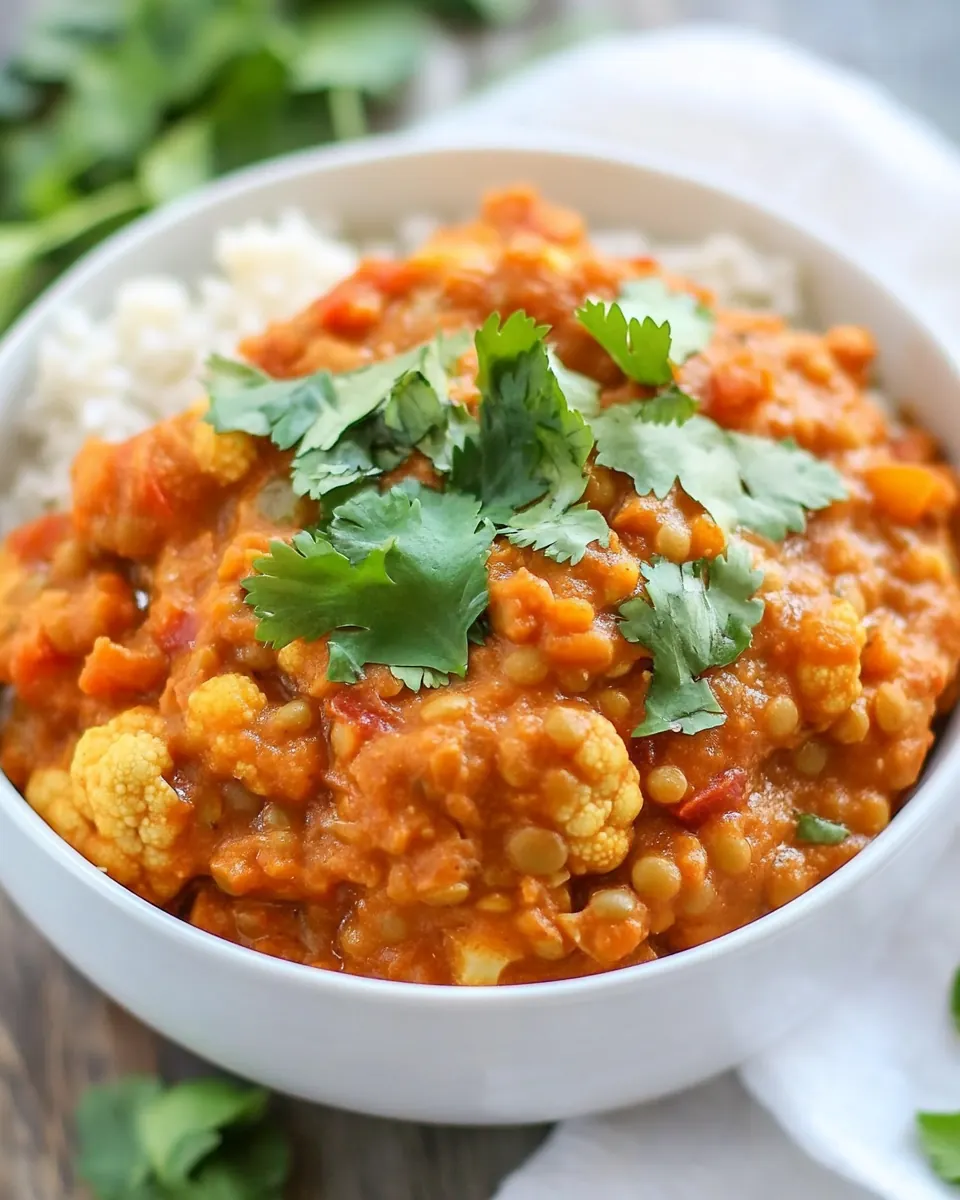
Slow Cooker Red Lentil Cauliflower Curry
Slow Cooker Red Lentil Cauliflower Curry is a bowl I turn to on chilly nights when I want something warm, nourishing, and effortless that still tastes like I put in work. The first time I made this, a snowstorm pinned us indoors and I riffed on flavors I already had in the pantry, stirring spices while the house filled with a fragrant, comforting perfume. I remember standing by the slow cooker window, watching tiny bubbles rise as the aroma of coconut milk and tomato puree mingled with toasted spices, feeling quietly proud of a simple plant forward dinner that everyone asked for seconds of.
Over the years I have learned little rituals that make this dish hum. I always rinse the lentils until the water runs clear, and I chop the cauliflower into chunky florets so they hold their texture during the long, slow braise. Once, I swapped in a spice blend for convenience and discovered the curry still tasted wildly homey, but I prefer to bloom whole spices first, because that first sizzle tells you the dish is going to be layered and deep.
Recipe Snapshot
7 hr 15 mins
15 mins
420 mins
Hard
350 kcal
Indian
Vegan, Gluten-Free
Dinner
4 quart or larger slow cooker, Can or measuring cup, Wooden spoon
Why This Slow Cooker Red Lentil Cauliflower Curry Shines
A truly hands free weeknight savior
I love how I can set the cooker, walk away, and come back to a pot that smells like hours of careful simmering, although I never babysit it. When life is busy, this recipe gives you time back while delivering a deeply flavored dinner.
Vibrant, nourishing plant based comfort
The combo of split red lentils and cauliflower creates a meal that feels indulgent yet full of fiber and protein, so you and your family leave the table satisfied without heaviness.
Bold spices, flexible approach
I’m partial to blooming the spices to release their oils, but the recipe accepts shortcuts and still rewards you. That makes it great for cooks who want bold results with minimal fuss.
Scales beautifully for a crowd
I often double this for potlucks since it holds its texture and flavor when reheated. Leftovers are actually better the next day because the spices continue to meld together.
Comfort that fits many diets
Because it is dairy free and plant based, it suits a wide range of diets while still delivering creamy, cozy satisfaction thanks to the coconut milk.
Slow Cooker Red Lentil Cauliflower Curry Ingredients
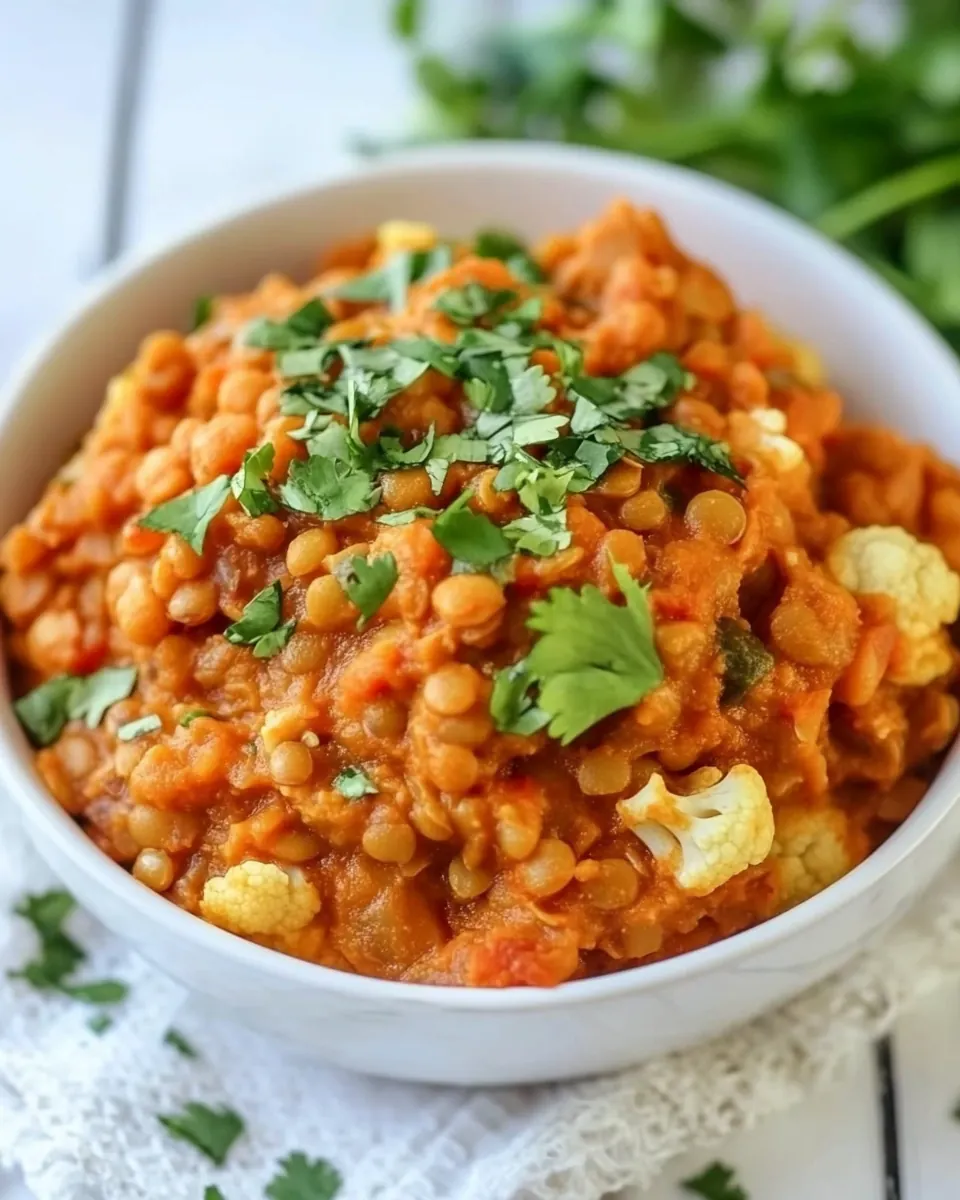
These ingredients are a study in balance. The red lentils provide body and gentle creaminess when they break down, while the cauliflower keeps textural interest. The aromatics, curry paste, and whole spices layer heat and earthiness, and the tomato puree plus coconut milk create a tangy, silky braising liquid that ties everything together.
- 2 cups split red lentils I like Bob’s Red Mill Red Lentils: Provide a starchy, protein-rich base that thickens the curry as it simmers and absorbs surrounding flavors, creating a creamy texture when fully cooked and gently breaking down.
- 1 yellow onion diced: Add a sweet, savory backbone and aromatic depth when sautéed or softened; diced pieces release sugars and meld with spices to build the curry’s flavor foundation.
- 2 cloves garlic minced: Contribute pungent, savory sharpness and aromatic heat when minced; releases sulfurous compounds that brighten and deepen the overall savory profile.
- 1 head cauliflower chopped: Offer a firm, textured vegetable that soaks up spices and liquid while adding bulk and mild, slightly nutty flavor; produces tender florets that complement the lentils.
- 1 tablespoon ginger minced: Lend warm, citrusy heat and aromatic freshness when minced; helps balance rich and spicy elements while layering bright, gingery notes throughout the dish.
- 2 tablespoons red curry paste: Introduce concentrated spicy, savory complexity with chili, aromatics, and umami; dissolves into the cooking liquid to provide curry character and heat.
- 1 1/2 teaspoons salt: Enhance seasoning balance by elevating flavors and controlling taste intensity; helps highlight spices and define the savory profile of the finished curry.
- 1 teaspoon ground turmeric: Impart warm, earthy color and gentle bitter-pungent notes that complement other spices while contributing a classic curry aroma and healthful properties.
- 1/2 teaspoon ground coriander: Provide citrusy, floral undertones and subtle warmth that lifts the spice blend and pairs well with turmeric and cumin in the curry profile.
- 1/2 teaspoon ground cumin: Bring earthy, slightly smoky warmth and depth that anchors the spice ensemble and harmonizes with turmeric and coriander for savory richness.
- 1/2 teaspoon ground cayenne pepper: Add concentrated heat and a sharp, spicy kick that can be adjusted to taste; intensifies the curry’s warmth and liveliness.
- 1/4 teaspoon ground cardamom: Contribute sweet, floral, and resinous notes in small amounts to add complexity and a subtle exotic aroma to the spice mix.
- 1 can tomato puree (29 ounces) NOT tomato sauce: Deliver a bright, tangy tomato foundation with body and acidity that balances richness; thick puree ensures a robust sauce texture without excess liquid.
- 1 3/4 cups water: Provide cooking liquid that hydrates lentils and vegetables, controls consistency, and enables gentle simmering so flavors meld evenly.
- 1/2 cup coconut milk use full fat—it’s worth it: Supply creamy richness and tropical sweetness that softens heat and rounds the mouthfeel; full-fat coconut milk creates a luscious, velvety finish.
- Freshly chopped cilantro for serving: Add fresh herbal brightness and a clean, citrusy finish when chopped and sprinkled over the curry just before serving to lift flavors.
- Brown rice, cooked quinoa, farro, or similar for serving: Offer a hearty, absorbent starch for serving that soaks up curry sauce and completes the meal with additional texture and satisfying substance.
Making Slow Cooker Red Lentil Cauliflower Curry
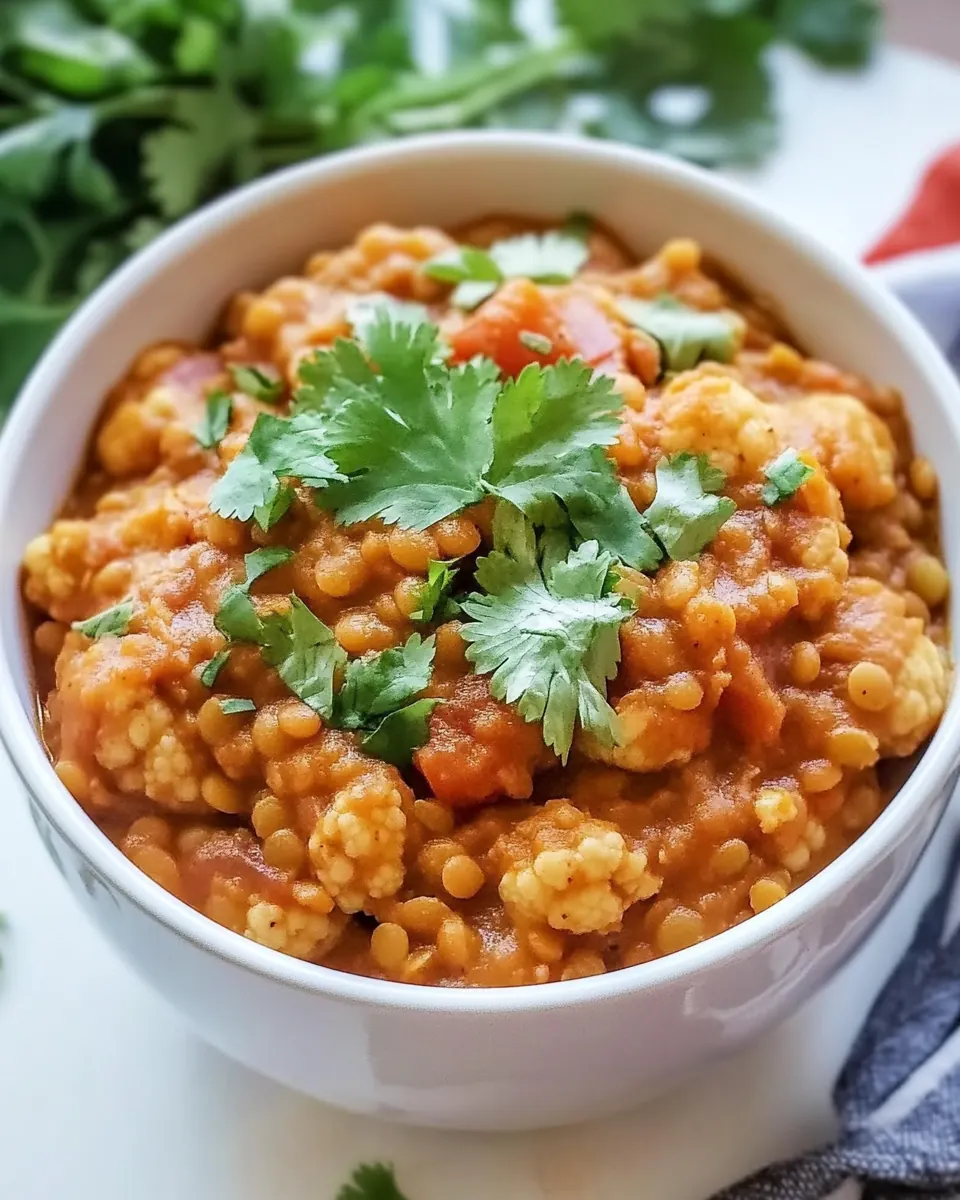
I like to keep directions relaxed and conversational, because slow cooker recipes are forgiving, yet small choices matter. As you follow these steps, pay attention to aromas and how textures change, since those cues tell you the dish is developing depth. Below I expand each instruction with sensory notes, the why behind techniques, and troubleshooting helps so your curry comes out exactly as you hope.
- Place the lentils in the bottom of a 4-quart or larger slow cooker. Add the onions, garlic, cauliflower, ginger, curry paste, salt, turmeric, coriander, cumin, cayenne, and cardamom, then stir to combine.: The base layer of split red lentils will absorb liquid and thicken the curry as they cook. You should notice a faint earthy scent from the dry lentils at first, and as they warm they will release a comforting steam. This placement prevents the lentils from overcooking on one side, because they are under the vegetables and remain submerged, which encourages even gelatinization. A common mistake is using a too small cooker, which can crowd ingredients and cause uneven cooking; make sure there is room for bubbling without spilling. Stirring now is not necessary, but visualizing layers helps during assembly. If your lentils look slightly dusty, give them a quick rinse and drain before adding. Keep an eye on pot size, because too shallow a vessel can lead to dryness around the edges.
- Pour the tomato puree over the top of the cauliflower and lentils. Refill the tomato puree can halfway with water, then pour it over the top of the slow cooker ingredients so that they are covered with liquid.: Right away you will sense a bright mix of aromatics as the minced garlic and ginger mingle with the spicy red curry paste. Stirring lets the spices and paste coat the cauliflower and onion , ensuring each bite is seasoned. This coating step helps the flavors bloom slowly into the cooking liquid, so the final curry will carry integrated spice instead of isolated pockets. Watch for the texture of the curry paste; it should distribute evenly without large clumps. A common error is failing to break up the curry paste, which can leave concentrated pockets of heat; take a moment to press and smear it into the vegetables. If the mixture seems too dry after stirring, you can add a splash of the reserved water to help distribute the paste.
- Cover and cook on high for 4-5 hours or low for 7-8 hours, until the lentils are soft.: As the jarred tomato puree hits the layered ingredients, it will emit a bright, slightly acidic aroma that contrasts nicely with the warm spices. The puree gives the braise its acidic backbone, helping the lentils break down without turning bland. You want the puree to coat and seep between the florets and lentils rather than pooling only on top, so pour slowly and observe how it settles. Avoid the mistake of using tomato sauce, which often contains added seasonings that can throw off the intended balance. If the puree feels overly thick, the next step of adding water will smooth the texture, so don’t worry if it seems dense initially.
- Just before serving, stir in the coconut milk. Serve over brown rice, quinoa, or farro, topped with fresh cilantro.: Using the empty can as a measuring tool is practical and precise. The added water helps produce a balanced braising liquid, and you should see ingredients just beneath the surface. As everything begins to warm, you will notice steam carrying a layered scent of tomato, spice, and vegetal sweetness. This liquid level is critical; too little and the lentils may stick or cook unevenly, too much and the curry will be too thin. A common troubleshooting tip is to watch that the liquid covers most ingredients, but still leaves a little headspace to allow bubbling. If your cooker seems shallow, reduce the water by a bit, and if it looks crowded, use a slightly deeper pot.
- Cover and cook on high for 4 to 5 hours or low for 7 to 8 hours until the lentils are soft: During the long slow cook you will notice the house gradually filling with a warm, spice forward aroma. The split red lentils will swell and begin to break down, lending creaminess, while the cauliflower softens but holds some tooth if chopped in larger florets. The reason for these time windows is that high accelerates breakdown while low encourages gentler melding of flavors, producing slightly different textures. Avoid the trap of overcooking on high if you want distinct vegetable pieces, because lentils can turn to porridge; check toward the end of the shorter window to gauge progress. If your curry appears too thick after the full cook, stir in additional water or a touch more coconut milk to reach the desired consistency.
- Just before serving stir in the coconut milk: The final addition of coconut milk brings immediate creaminess and mellows any sharpness from the tomato puree . As you stir, you should see the sauce blossom into a glossy, velvety finish, and the aroma will shift toward gentle sweetness. Adding it at the end preserves the coconut flavor and silky texture; cooking it too long can flatten the richness. A frequent mistake is pouring it in too early, which can separate or mute the coconut’s nuance, so reserve this step until the very end. Taste and adjust salt or heat now, because the coconut will slightly soften the spice level.
- Serve over brown rice quinoa or farro topped with fresh cilantro: Ladle the curry over your chosen grain and scatter chopped cilantro on top for a color and flavor lift. The warm steam rising from the bowl should carry a balance of cream, acidity, and spice, with the herb bringing a fresh, green finish. Serving over grains helps the curry feel complete and adds chew and contrast to the soft lentils. A mistake to avoid is skipping the garnish, because the fresh herb brightens every bite and counters the curry’s richness. If reheating leftovers, add a splash of water and stir gently to bring back the original silky texture.
Tips for Success
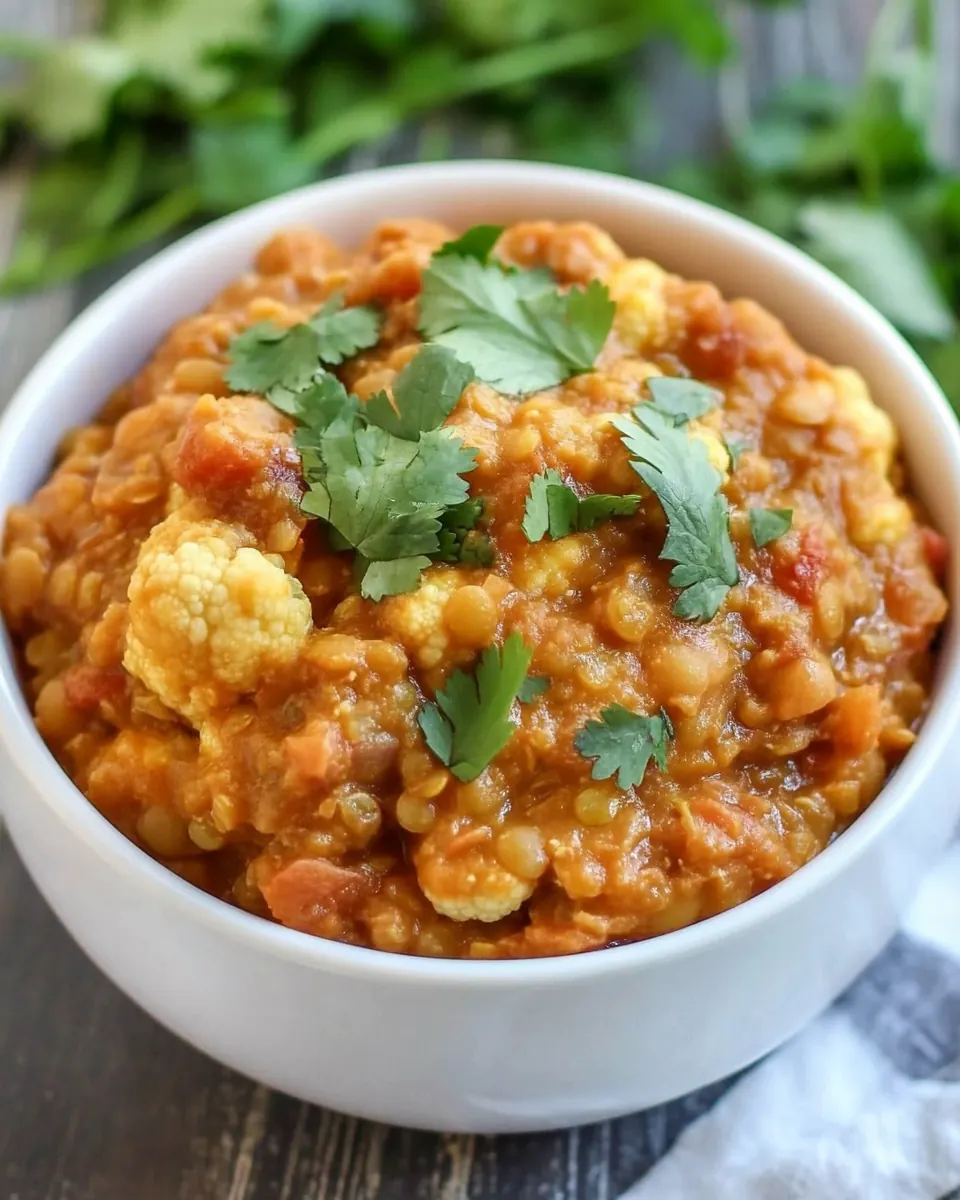
I have refined these tips over many bowls, and they cover timing, texture, and flavor balance. Use them as gentle guardrails to help the curry reach its fullest potential, whether you are a slow cooker newcomer or a seasoned pro.
- Choose the right lentils — Opt for split red lentils because they break down and thicken the curry; whole lentils will take longer and keep more bite.
- Rinse thoroughly — Running water over the lentils until it clears removes dust and reduces foaming during the long cook.
- Mind the cooker size — A too small slow cooker causes uneven cooking and spillage, so pick a 4 quart or larger model.
- Adjust heat gently — If you prefer a firmer cauliflower, choose the high 4 to 5 hour window and check early to prevent mushiness.
- Finish with coconut milk — Stir in the coconut milk at the end to keep it silky and full tasting, and to avoid separation.
- Reheat with care — Warm leftovers slowly on medium low heat and add a splash of water to restore the original consistency.
What Complements This Slow Cooker Red Lentil Cauliflower Curry
This curry pairs well with simple, grain based sides and bright garnishes that balance its richness. It works for casual weeknight dinners, family gatherings, and cozy winter lunches, and it stores beautifully for make ahead meals. Below are serving ideas, occasions, and storage suggestions presented as practical, ready to use options.
- Grain bases — Serve over brown rice, cooked quinoa, or farro to add chew and absorb the sauce, making the bowl heartier.
- Simple sides — A crisp green salad with lemon juice brightens the meal, offering a contrast to the curry’s creaminess.
- Meal occasions — Great for dinner during colder months, or for batch cooking ahead of a busy workweek when you need easy reheatable lunches.
- Seasonal fits — This recipe suits winter menus especially well, when hearty, warming bowls are comforting and welcome.
- Storage advice — Refrigerate leftovers in an airtight container for up to three days, and freeze for up to three months; thaw overnight before reheating.
- Presentation — Garnish with freshly chopped cilantro and serve with lemon wedges if you like a bright acidic finish to cut the richness.
FAQ
Conclusion
This Slow Cooker Red Lentil Cauliflower Curry stands out because it delivers deep, layered spice and comforting creaminess with very little hands on time. It’s a satisfying, nourishing bowl that adapts well to busy schedules and tastes even better as leftovers. I encourage you to give it a try on a day when you want dinner to feel special without fuss; the aromas alone will make the house feel like a warm welcome.

Slow Cooker Red Lentil Cauliflower Curry
Equipment
- 4 quart or larger slow cooker
- Can or measuring cup
- Wooden Spoon
Ingredients
- 2 cups split red lentils I like Bob’s Red Mill Red Lentils Provide a starchy, protein-rich base that thickens the curry as it simmers and absorbs surrounding flavors, creating a creamy texture when fully cooked and gently breaking down.
- 1 yellow onion diced Add a sweet, savory backbone and aromatic depth when sautéed or softened; diced pieces release sugars and meld with spices to build the curry’s flavor foundation.
- 2 cloves garlic minced Contribute pungent, savory sharpness and aromatic heat when minced; releases sulfurous compounds that brighten and deepen the overall savory profile.
- 1 head cauliflower chopped Offer a firm, textured vegetable that soaks up spices and liquid while adding bulk and mild, slightly nutty flavor; produces tender florets that complement the lentils.
- 1 tablespoon ginger minced Lend warm, citrusy heat and aromatic freshness when minced; helps balance rich and spicy elements while layering bright, gingery notes throughout the dish.
- 2 tablespoons red curry paste Introduce concentrated spicy, savory complexity with chili, aromatics, and umami; dissolves into the cooking liquid to provide curry character and heat.
- 1 1/2 teaspoons salt Enhance seasoning balance by elevating flavors and controlling taste intensity; helps highlight spices and define the savory profile of the finished curry.
- 1 teaspoon ground turmeric Impart warm, earthy color and gentle bitter-pungent notes that complement other spices while contributing a classic curry aroma and healthful properties.
- 1/2 teaspoon ground coriander Provide citrusy, floral undertones and subtle warmth that lifts the spice blend and pairs well with turmeric and cumin in the curry profile.
- 1/2 teaspoon ground cumin Bring earthy, slightly smoky warmth and depth that anchors the spice ensemble and harmonizes with turmeric and coriander for savory richness.
- 1/2 teaspoon ground cayenne pepper Add concentrated heat and a sharp, spicy kick that can be adjusted to taste; intensifies the curry’s warmth and liveliness.
- 1/4 teaspoon ground cardamom Contribute sweet, floral, and resinous notes in small amounts to add complexity and a subtle exotic aroma to the spice mix.
- 1 can tomato puree (29 ounces) NOT tomato sauce Deliver a bright, tangy tomato foundation with body and acidity that balances richness; thick puree ensures a robust sauce texture without excess liquid.
- 1 3/4 cups water Provide cooking liquid that hydrates lentils and vegetables, controls consistency, and enables gentle simmering so flavors meld evenly.
- 1/2 cup coconut milk use full fat—it’s worth it Supply creamy richness and tropical sweetness that softens heat and rounds the mouthfeel; full-fat coconut milk creates a luscious, velvety finish.
- Freshly chopped cilantro for serving Add fresh herbal brightness and a clean, citrusy finish when chopped and sprinkled over the curry just before serving to lift flavors.
- Brown rice, cooked quinoa, farro, or similar for serving Offer a hearty, absorbent starch for serving that soaks up curry sauce and completes the meal with additional texture and satisfying substance.
Instructions
- Place the lentils in the bottom of a 4-quart or larger slow cooker. Add the onions, garlic, cauliflower, ginger, curry paste, salt, turmeric, coriander, cumin, cayenne, and cardamom, then stir to combine.: The base layer of split red lentils will absorb liquid and thicken the curry as they cook. You should notice a faint earthy scent from the dry lentils at first, and as they warm they will release a comforting steam. This placement prevents the lentils from overcooking on one side, because they are under the vegetables and remain submerged, which encourages even gelatinization. A common mistake is using a too small cooker, which can crowd ingredients and cause uneven cooking; make sure there is room for bubbling without spilling. Stirring now is not necessary, but visualizing layers helps during assembly. If your lentils look slightly dusty, give them a quick rinse and drain before adding. Keep an eye on pot size, because too shallow a vessel can lead to dryness around the edges.
- Pour the tomato puree over the top of the cauliflower and lentils. Refill the tomato puree can halfway with water, then pour it over the top of the slow cooker ingredients so that they are covered with liquid.: Right away you will sense a bright mix of aromatics as the minced garlic and ginger mingle with the spicy red curry paste. Stirring lets the spices and paste coat the cauliflower and onion , ensuring each bite is seasoned. This coating step helps the flavors bloom slowly into the cooking liquid, so the final curry will carry integrated spice instead of isolated pockets. Watch for the texture of the curry paste; it should distribute evenly without large clumps. A common error is failing to break up the curry paste, which can leave concentrated pockets of heat; take a moment to press and smear it into the vegetables. If the mixture seems too dry after stirring, you can add a splash of the reserved water to help distribute the paste.
- Cover and cook on high for 4-5 hours or low for 7-8 hours, until the lentils are soft.: As the jarred tomato puree hits the layered ingredients, it will emit a bright, slightly acidic aroma that contrasts nicely with the warm spices. The puree gives the braise its acidic backbone, helping the lentils break down without turning bland. You want the puree to coat and seep between the florets and lentils rather than pooling only on top, so pour slowly and observe how it settles. Avoid the mistake of using tomato sauce, which often contains added seasonings that can throw off the intended balance. If the puree feels overly thick, the next step of adding water will smooth the texture, so don’t worry if it seems dense initially.
- Just before serving, stir in the coconut milk. Serve over brown rice, quinoa, or farro, topped with fresh cilantro.: Using the empty can as a measuring tool is practical and precise. The added water helps produce a balanced braising liquid, and you should see ingredients just beneath the surface. As everything begins to warm, you will notice steam carrying a layered scent of tomato, spice, and vegetal sweetness. This liquid level is critical; too little and the lentils may stick or cook unevenly, too much and the curry will be too thin. A common troubleshooting tip is to watch that the liquid covers most ingredients, but still leaves a little headspace to allow bubbling. If your cooker seems shallow, reduce the water by a bit, and if it looks crowded, use a slightly deeper pot.
- Cover and cook on high for 4 to 5 hours or low for 7 to 8 hours until the lentils are soft: During the long slow cook you will notice the house gradually filling with a warm, spice forward aroma. The split red lentils will swell and begin to break down, lending creaminess, while the cauliflower softens but holds some tooth if chopped in larger florets. The reason for these time windows is that high accelerates breakdown while low encourages gentler melding of flavors, producing slightly different textures. Avoid the trap of overcooking on high if you want distinct vegetable pieces, because lentils can turn to porridge; check toward the end of the shorter window to gauge progress. If your curry appears too thick after the full cook, stir in additional water or a touch more coconut milk to reach the desired consistency.
- Just before serving stir in the coconut milk: The final addition of coconut milk brings immediate creaminess and mellows any sharpness from the tomato puree . As you stir, you should see the sauce blossom into a glossy, velvety finish, and the aroma will shift toward gentle sweetness. Adding it at the end preserves the coconut flavor and silky texture; cooking it too long can flatten the richness. A frequent mistake is pouring it in too early, which can separate or mute the coconut’s nuance, so reserve this step until the very end. Taste and adjust salt or heat now, because the coconut will slightly soften the spice level.
- Serve over brown rice quinoa or farro topped with fresh cilantro: Ladle the curry over your chosen grain and scatter chopped cilantro on top for a color and flavor lift. The warm steam rising from the bowl should carry a balance of cream, acidity, and spice, with the herb bringing a fresh, green finish. Serving over grains helps the curry feel complete and adds chew and contrast to the soft lentils. A mistake to avoid is skipping the garnish, because the fresh herb brightens every bite and counters the curry’s richness. If reheating leftovers, add a splash of water and stir gently to bring back the original silky texture.
Notes
- Choose the right lentils — Opt for split red lentils because they break down and thicken the curry; whole lentils will take longer and keep more bite.
- Rinse thoroughly — Running water over the lentils until it clears removes dust and reduces foaming during the long cook.
- Mind the cooker size — A too small slow cooker causes uneven cooking and spillage, so pick a 4 quart or larger model.
- Adjust heat gently — If you prefer a firmer cauliflower, choose the high 4 to 5 hour window and check early to prevent mushiness.
- Finish with coconut milk — Stir in the coconut milk at the end to keep it silky and full tasting, and to avoid separation.
- Reheat with care — Warm leftovers slowly on medium low heat and add a splash of water to restore the original consistency.