Poutine
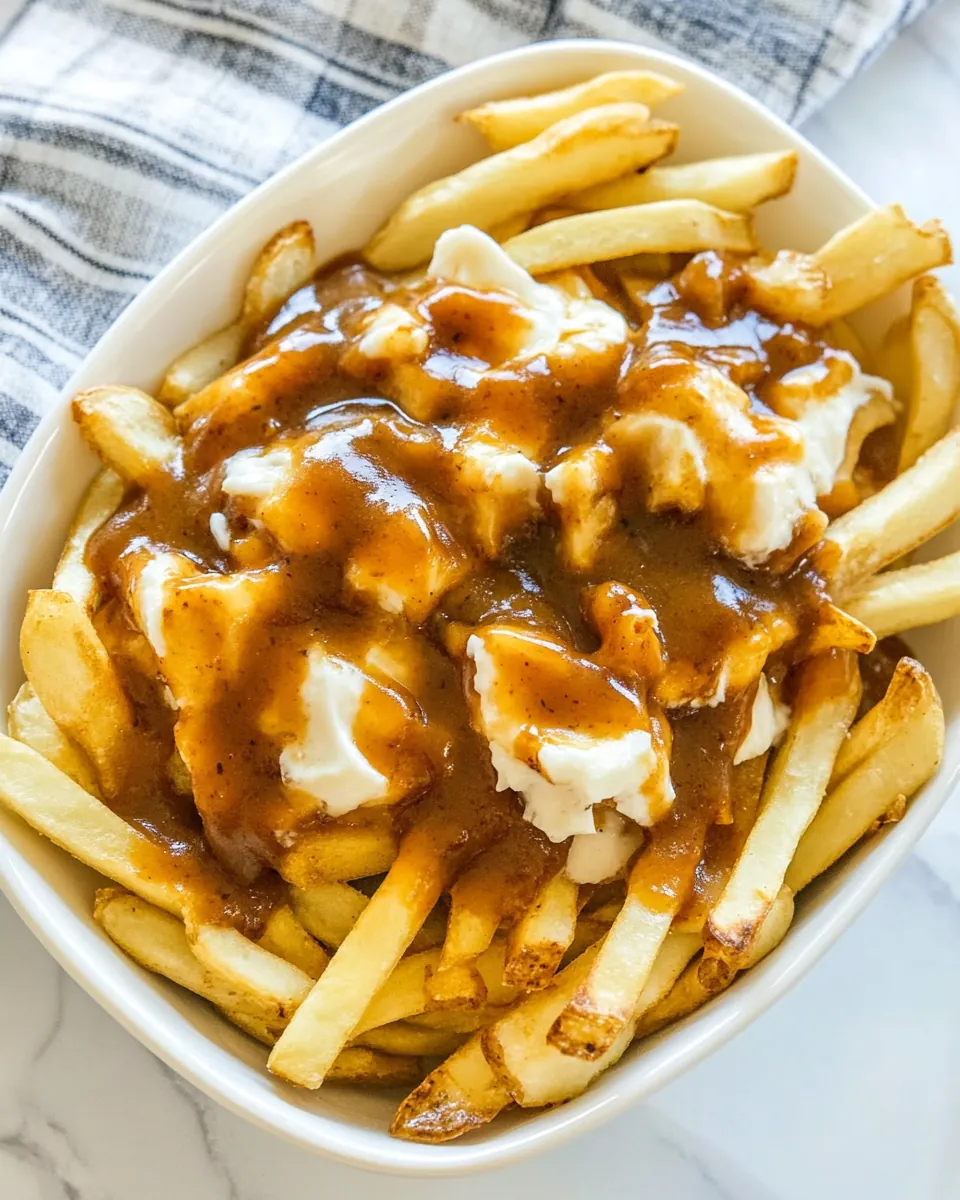
Poutine is one of those comforting, unapologetically indulgent dishes I return to whenever I want something warm, salty, and soul satisfying. The first time I tried Poutine I was standing at a winter market food stall, steam rising around me as the vendor ladled glossy brown gravy over a mound of fries and scattered squeaky white curds on top. I remember the first bite, that contrast of hot, crisp fries and the soft, elastic cheese curds as the gravy pooled and soaked in, and I was hooked.
Over the years I’ve adapted this street food favorite to my kitchen, learning small tricks that make a big difference. Sometimes I parboil the fries before frying for extra fluffy insides, other times I keep things simple with good quality frozen fries and a quick homemade brown gravy. No matter the method, the heart of Poutine is the effortless blend of textures and the way each component highlights the others: hot, crisp, soft, and savory.
Recipe Snapshot
30 mins
15 mins
15 mins
Easy
600 kcal
American
Keto, Gluten-Free
Dinner
Fryer or deep pot, Slotted spoon, Wire rack, Saucepan
Why This Poutine Works
Authentic comfort with few ingredients
I love that Poutine needs only three core players: fries, gravy, and cheese curds. Because each element is straightforward, you get instant payoff for minimal effort. The flavors are concentrated and honest, so even small improvements like warmer curds or a richer gravy make the whole dish sing.
Flexible and forgiving
What draws me to Poutine repeatedly is its adaptability. I often make my own fries when I have time, but on busy nights a good frozen batch works beautifully. The recipe allows substitutions without losing its soul, which makes it ideal for weeknight dinners or casual gatherings. I appreciate a dish that performs well under pressure, and this one always delivers.
Textural magic
The interplay between crisp fries, squeaky cheese curds, and silky gravy creates a mouthfeel that keeps me coming back. I like to serve it right away so the curds begin to stretch and the gravy softens the fries just enough to be luxurious but not limp. That contrast is the reason I often recommend assembling at the last moment, and it is the very detail that makes this dish special.
Great for sharing
I often bring a platter of Poutine to gatherings because it feels communal and celebratory. Everyone digs in, the gravy gets poured, and conversations flow. It’s both casual and comforting, which makes it ideal for nights when you want a low fuss, high satisfaction meal.
Quick to prepare
Even when I make everything from scratch the timing is generous, so it fits into busy evenings. The payoff is immediate, and because the ingredient list is short, you can focus on technique and temperature to lift the dish from good to great. Those small attentions are why I keep this recipe in heavy rotation.
Poutine Ingredients
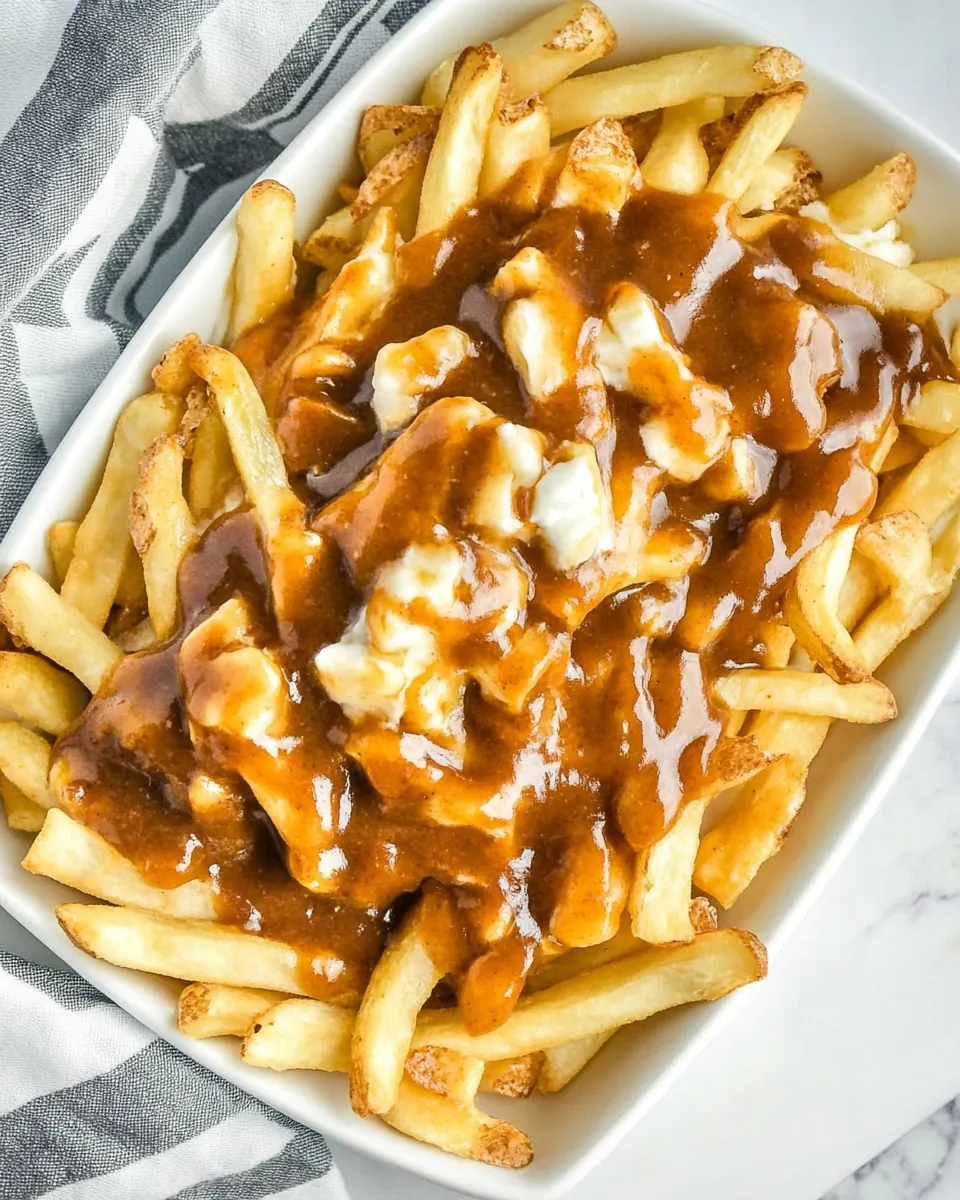
These ingredients are intentionally minimal, and that is the philosophy: each one has a clear role and they play perfectly together. The fries bring texture and starch, the gravy adds deep savory moisture, and the cheese curds provide the signature squeak and melt. When balanced properly, they form a cohesive dish greater than the sum of its parts.
- 1 batch homemade French fries (click for recipe): Crisp and golden, provides the starchy foundation and satisfying texture for the dish, holding gravy without becoming mushy. Prepare just before serving to maintain crunch and contrast with warm toppings. Use a thick-cut fry style for the classic poutine mouthfeel.
- 1 batch homemade brown beef gravy (click for recipe) or use a gravy packet: Savory and rich, supplies the deeply flavored, glossy sauce that soaks into fries and melds the components together. Simmer to concentrate flavors and adjust seasoning, using either homemade stock-based gravy or a packet as a shortcut. Keep hot and pourable so it melts the curds slightly on contact.
- 8 oz cheese curds at room temperature: Soft and slightly squeaky, offers the essential melty pockets of dairy that create poutine’s signature texture and flavor contrast. Bring to room temperature to encourage gentle melting under hot gravy without fully liquefying. Scatter evenly so each bite benefits from cheese pull and creaminess.
Recipe Steps for Poutine
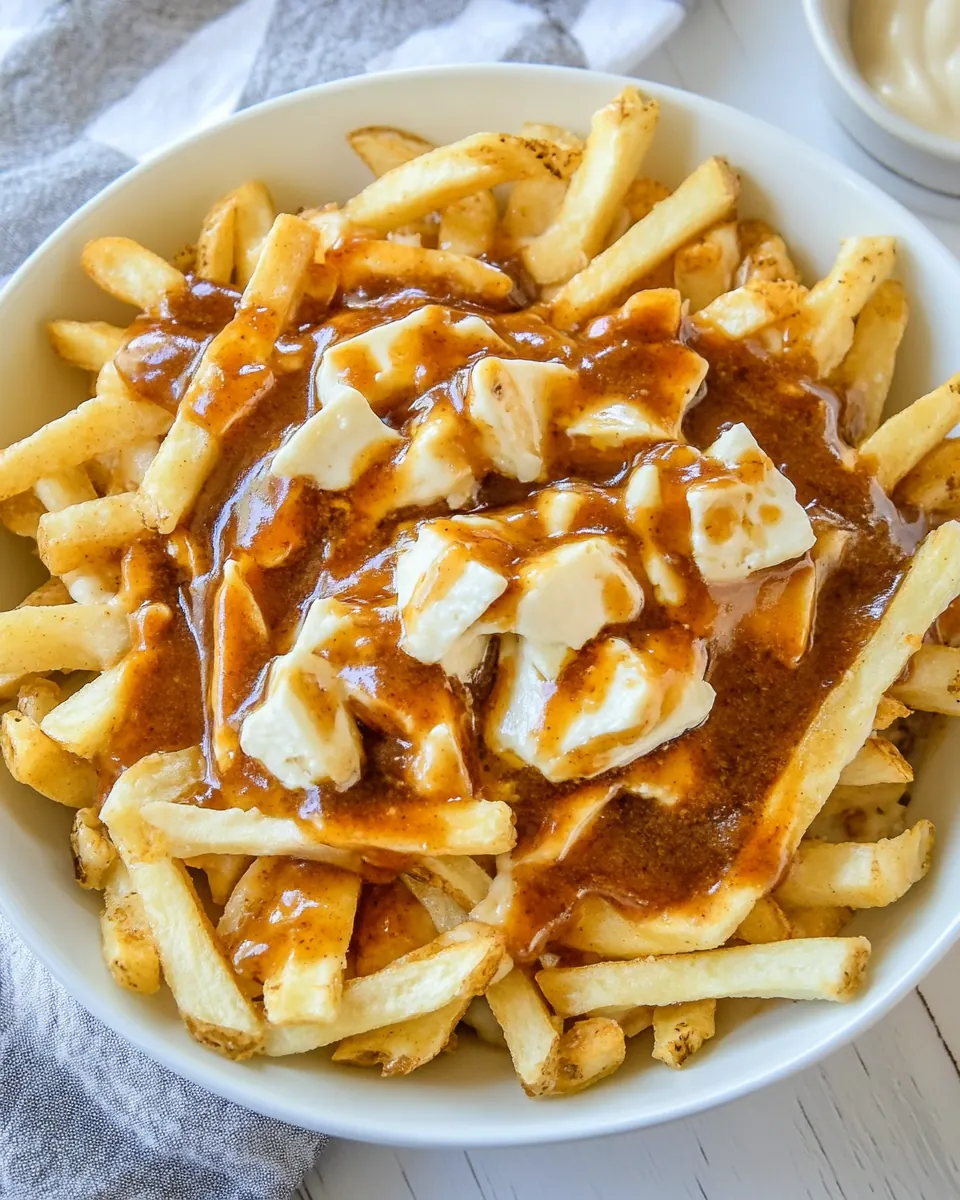
Below I walk you through each part of assembly with sensory cues and troubleshooting advice to help you get perfect results. Read each step fully so you can time your gravy and fries to come together at peak temperature for that ideal melt and texture.
- Make the fries, follow my homemade French fry recipe, or use frozen fries and fry them according to package instructions.: The sizzling of hot oil should smell faintly of cooked potato and give a crisp, audible crackle as each batch hits the fryer. You want golden edges and fluffy interiors, which tells you the oil is hot enough and the starches have set properly, this contrast is key for holding up to the gravy. If you notice the fries are greasy rather than crisp, the oil temperature was too low or the fries were overcrowded, so fry in smaller batches. A common mistake is starting with wet potatoes, pat them thoroughly dry so the oil does not spit and to achieve that deeply caramelized surface. Use a slotted spoon to transfer fries to a wire rack to keep air circulating and preserve crispness while you finish other steps.
- Make the gravy, use my recipe for homemade brown gravy, or use a packet and follow the package instructions. Vegetable or chicken gravy can also be used.: When the gravy starts to simmer, it should release a warm, roasted aroma with a glossy sheen and a viscosity that allows it to coat a spoon without sliding off immediately. This mouthfeel signals proper emulsification and reduced floury taste. Stirring constantly at the beginning helps avoid lumps, and finishing with a small pat of butter can add sheen and roundness. If the gravy tastes flat, adjust with a pinch of salt or a splash of acidic element like a squeeze of lemon or a dash of mustard, this brightens flavors. Overcooking can make it gummy, so keep gentle heat and stir; a frequent error is boiling too hard which breaks the texture.
- Divide the fries among serving bowls (or serve in a large platter).: You should hear a faint crisp crackle as the hot fries hit the bowl, and you will see steam rising gently, which helps the curds soften just enough to become luscious. Arranging them in a shallow layer allows the gravy to reach more fries evenly, creating consistent bites. Avoid stacking too many fries deep in one bowl, because the weight can squash the lower pieces and cause them to go limp. If your fries have cooled while you prepare the gravy, pop them into a preheated oven to bring back heat before assembling, this keeps the final dish lively and prevents congealing.
- Top with cheese curds. The heat of the fries should melt the cheese.: The curds should be at room temperature to encourage stretching and partial melting without turning into a single melted sheet, you want pockets of soft, squeaky cheese curds throughout. As soon as they touch the hot fries , they should begin to soften and show glossy edges, that is the cue to pour the gravy. If the curds stay cold and hard, the overall texture will be disjointed, so warm them slightly in the palm of your hand or on a tray in a warm oven for a minute. A common pitfall is adding too many curds which prevents the gravy from reaching the fries; distribute them evenly so each bite has balance.
- Pour the gravy over the fries and serve!: You should see the glossy brown gravy cascade over the fries, pooling around the base, and hear the soft hiss as heat meets the curds, causing them to yield. This final pour brings aroma and moisture, and the immediate contrast of textures is when the dish truly comes alive. Pour steadily to coat without drowning the fries, a thin even layer is better than a single heavy blob. If the gravy cools too quickly and congeals, rewarm gently and stir to restore fluidity before serving. A mistake to avoid is letting assembled poutine sit too long before serving, it is best eaten right away for peak texture and temperature.
Recipe Tips about Poutine
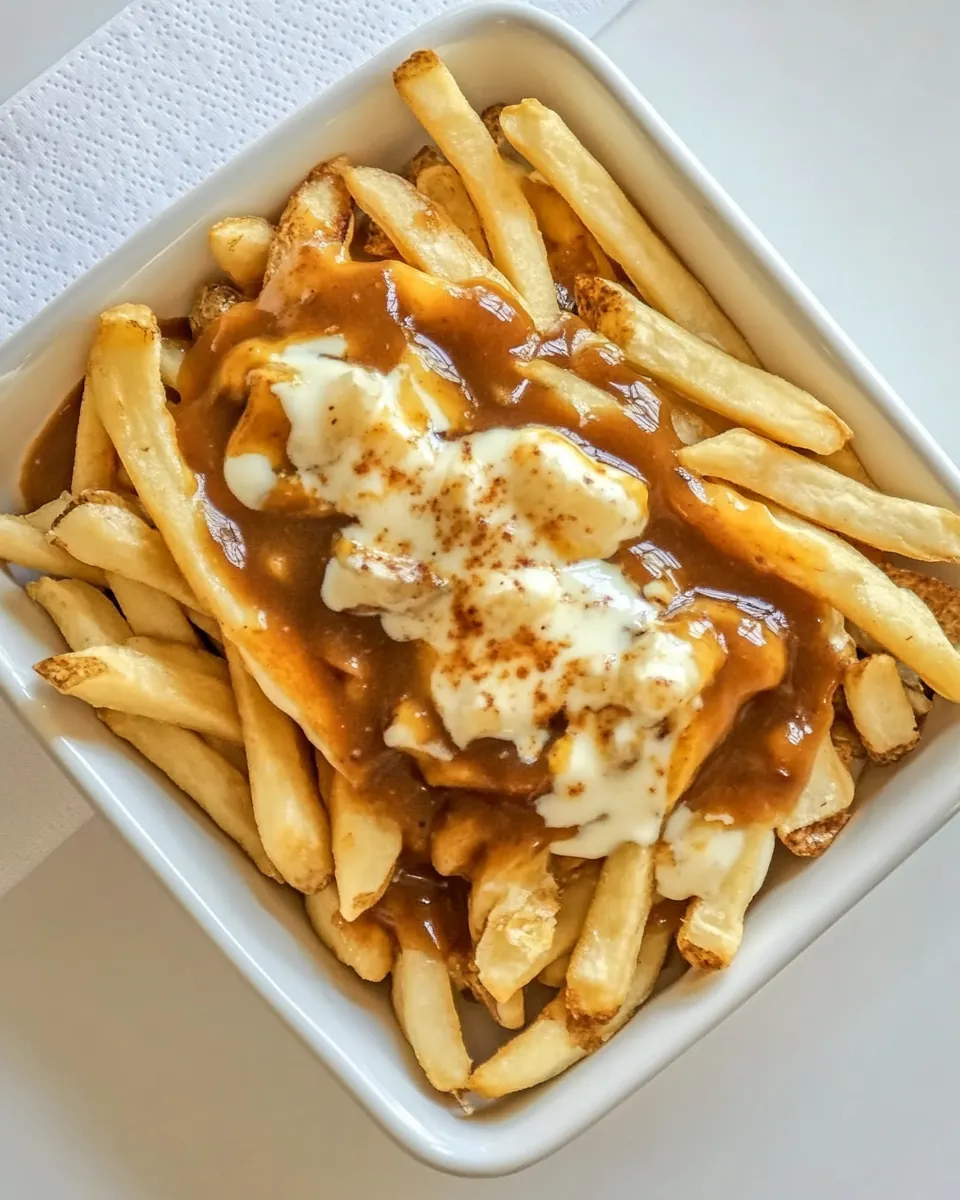
These tips reflect the little adjustments I’ve learned that consistently improve the final result. Keep them in mind as you prep so each component reaches its ideal state at assembly time.
- Warm your curds: Let the cheese curds come to room temperature or briefly warm them to help them soften and stretch slightly when the hot gravy hits.
- Double fry for extra crispness: Fry the fries at a lower temperature first to cook through, then at higher heat to crisp the exterior, this yields a tender interior and a crunchy shell.
- Control your gravy thickness: Aim for a gravy that coats the back of a spoon, if it is too thin it will not cling to the fries, if too thick it will feel pasty.
- Keep components warm: Hold your fries on a wire rack in a warm oven and keep gravy on low heat to ensure everything is hot at assembly.
- Even distribution matters: Scatter the cheese curds evenly before pouring the gravy so each bite has a mix of textures and flavors.
How to Enjoy Poutine
Serving Poutine is all about maintaining the balance of hot, crisp, and melty. I like to present it immediately, so the cheese curds are soft and slightly stretched as the gravy warms them. This dish shines as a casual shareable at late night meals, cozy winter dinners, or any gathering where comfort food is welcome.
- Casual dinners: Serve Poutine as a hearty centerpiece for a relaxed meal with friends, paired with simple salads or roasted vegetables to cut through the richness.
- Game day: It is perfect for watching sports because people can graze directly from a platter and enjoy the hands on experience, just keep napkins handy.
- Winter comfort: On cold evenings I favor richer gravies and thicker fries to make the dish extra warming and satisfying, it feels homey and filling.
- Make ahead strategy: Prepare fries and gravy separately, keep them warm, then assemble quickly when guests arrive so textures are at their best.
- Storage tips: Leftovers are best kept separate, refrigerate fries and gravy in airtight containers and reheat the fries in a hot oven to regain some crispness before recombining.
- Serving size: Divide into individual bowls for a more elegant presentation or serve family style on a large platter for sharing.
FAQ
Conclusion
Poutine stands out because of its brilliant simplicity, combining crisp fries, warm brown gravy, and squeaky cheese curds to create a richly satisfying bite every time. Give it a try when you want an easy, crowd pleasing comfort dish that needs minimal ingredients but delivers maximum flavor. Share it with friends or keep it all to yourself, just be ready to enjoy the immediate contrast of textures and the warm, savory goodness that makes this classic so enduring.
Poutine
Equipment
- Fryer or deep pot
- Slotted Spoon
- Wire Rack
- Saucepan
Ingredients
- 1 batch homemade French fries (click for recipe) Crisp and golden, provides the starchy foundation and satisfying texture for the dish, holding gravy without becoming mushy. Prepare just before serving to maintain crunch and contrast with warm toppings. Use a thick-cut fry style for the classic poutine mouthfeel.
- 1 batch homemade brown beef gravy (click for recipe) or use a gravy packet Savory and rich, supplies the deeply flavored, glossy sauce that soaks into fries and melds the components together. Simmer to concentrate flavors and adjust seasoning, using either homemade stock-based gravy or a packet as a shortcut. Keep hot and pourable so it melts the curds slightly on contact.
- 8 oz cheese curds at room temperature Soft and slightly squeaky, offers the essential melty pockets of dairy that create poutine’s signature texture and flavor contrast. Bring to room temperature to encourage gentle melting under hot gravy without fully liquefying. Scatter evenly so each bite benefits from cheese pull and creaminess.
Instructions
- Make the fries, follow my homemade French fry recipe, or use frozen fries and fry them according to package instructions.: The sizzling of hot oil should smell faintly of cooked potato and give a crisp, audible crackle as each batch hits the fryer. You want golden edges and fluffy interiors, which tells you the oil is hot enough and the starches have set properly, this contrast is key for holding up to the gravy. If you notice the fries are greasy rather than crisp, the oil temperature was too low or the fries were overcrowded, so fry in smaller batches. A common mistake is starting with wet potatoes, pat them thoroughly dry so the oil does not spit and to achieve that deeply caramelized surface. Use a slotted spoon to transfer fries to a wire rack to keep air circulating and preserve crispness while you finish other steps.
- Make the gravy, use my recipe for homemade brown gravy, or use a packet and follow the package instructions. Vegetable or chicken gravy can also be used.: When the gravy starts to simmer, it should release a warm, roasted aroma with a glossy sheen and a viscosity that allows it to coat a spoon without sliding off immediately. This mouthfeel signals proper emulsification and reduced floury taste. Stirring constantly at the beginning helps avoid lumps, and finishing with a small pat of butter can add sheen and roundness. If the gravy tastes flat, adjust with a pinch of salt or a splash of acidic element like a squeeze of lemon or a dash of mustard, this brightens flavors. Overcooking can make it gummy, so keep gentle heat and stir; a frequent error is boiling too hard which breaks the texture.
- Divide the fries among serving bowls (or serve in a large platter).: You should hear a faint crisp crackle as the hot fries hit the bowl, and you will see steam rising gently, which helps the curds soften just enough to become luscious. Arranging them in a shallow layer allows the gravy to reach more fries evenly, creating consistent bites. Avoid stacking too many fries deep in one bowl, because the weight can squash the lower pieces and cause them to go limp. If your fries have cooled while you prepare the gravy, pop them into a preheated oven to bring back heat before assembling, this keeps the final dish lively and prevents congealing.
- Top with cheese curds. The heat of the fries should melt the cheese.: The curds should be at room temperature to encourage stretching and partial melting without turning into a single melted sheet, you want pockets of soft, squeaky cheese curds throughout. As soon as they touch the hot fries , they should begin to soften and show glossy edges, that is the cue to pour the gravy. If the curds stay cold and hard, the overall texture will be disjointed, so warm them slightly in the palm of your hand or on a tray in a warm oven for a minute. A common pitfall is adding too many curds which prevents the gravy from reaching the fries; distribute them evenly so each bite has balance.
- Pour the gravy over the fries and serve!: You should see the glossy brown gravy cascade over the fries, pooling around the base, and hear the soft hiss as heat meets the curds, causing them to yield. This final pour brings aroma and moisture, and the immediate contrast of textures is when the dish truly comes alive. Pour steadily to coat without drowning the fries, a thin even layer is better than a single heavy blob. If the gravy cools too quickly and congeals, rewarm gently and stir to restore fluidity before serving. A mistake to avoid is letting assembled poutine sit too long before serving, it is best eaten right away for peak texture and temperature.
Notes
- Warm your curds: Let the cheese curds come to room temperature or briefly warm them to help them soften and stretch slightly when the hot gravy hits.
- Double fry for extra crispness: Fry the fries at a lower temperature first to cook through, then at higher heat to crisp the exterior, this yields a tender interior and a crunchy shell.
- Control your gravy thickness: Aim for a gravy that coats the back of a spoon, if it is too thin it will not cling to the fries, if too thick it will feel pasty.
- Keep components warm: Hold your fries on a wire rack in a warm oven and keep gravy on low heat to ensure everything is hot at assembly.
- Even distribution matters: Scatter the cheese curds evenly before pouring the gravy so each bite has a mix of textures and flavors.