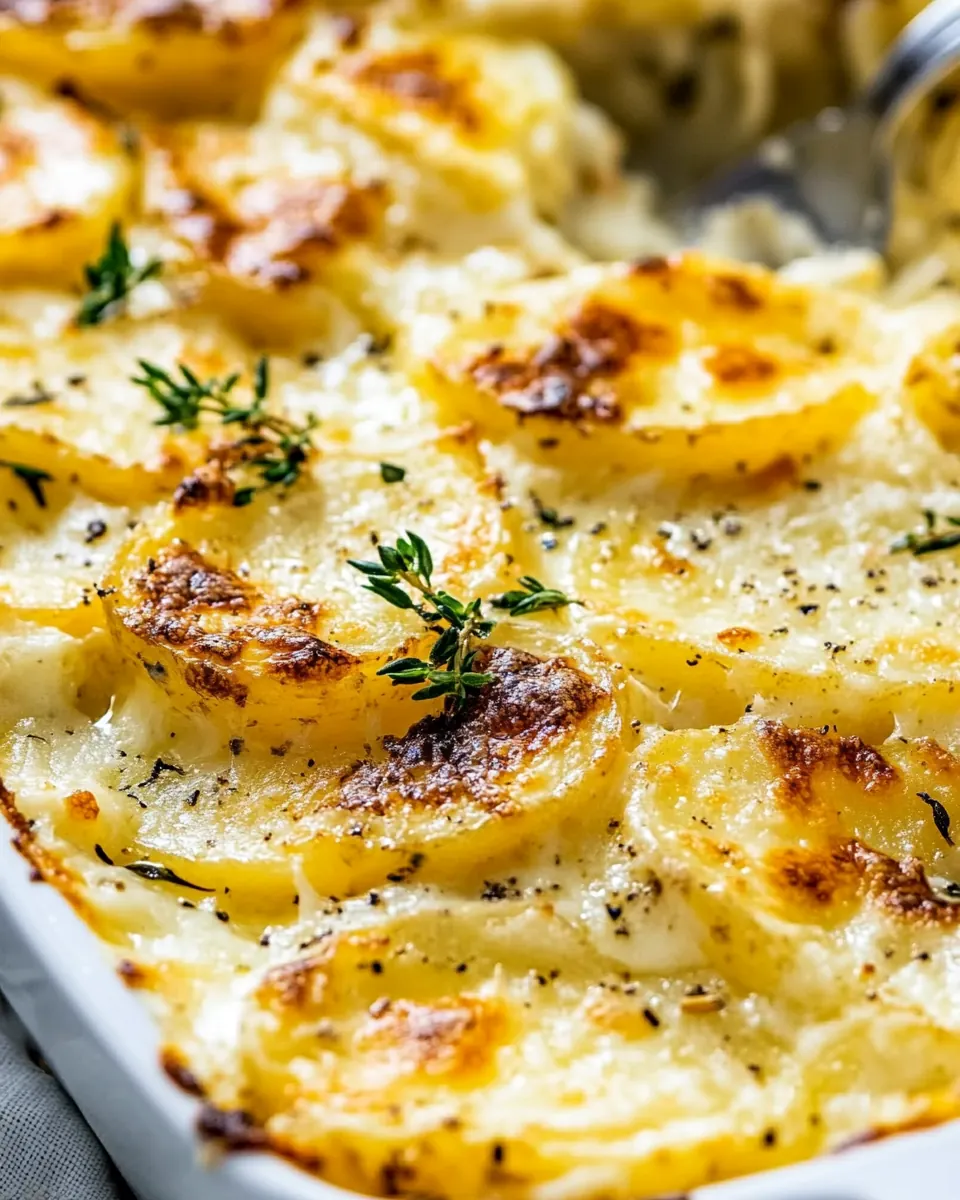
Potatoes Au Gratin
Potatoes Au Gratin has always been the warm, cheesy centerpiece of my family table on cold evenings, the kind of dish that draws people to the kitchen without any fuss.
Growing up, I watched my grandmother peel and slice potatoes with a practiced rhythm, the scent of butter and garlic rising like a promise. Later, when I made my first version, I learned that texture matters as much as flavor, and that the right balance of creamy sauce and melted cheese makes all the difference. There are memories tied to the first spoonful that oozes cheese and somehow comforts the soul. I love how a simple stack of potatoes transforms into layers of velvet richness when given patience and a hot oven.
Over the years I tweaked the recipe, swapping a splash of milk here, a different cheese there, and I discovered that small technique shifts produce big payoffs. I still reach for a mandoline when I want those paper thin, even slices, and I always grate cheese from a block, because the texture and melt are worth the extra minute. When I serve Potatoes Au Gratin, guests inevitably ask for the recipe and more often than not, they end up taking home a container for their own family dinner. This dish is both nostalgic and practical, a side that shines whether you are hosting a holiday or keeping it simple on a weeknight.
Recipe Snapshot
2 hr 5 mins
20 mins
105 mins
Hard
400 kcal
American
Gluten-Free, Low FODMAP
Side Dishes
Mandoline Slicer, 3-Quart Saucepan with Lid, 9×13-inch Casserole Dish
Why This Potatoes Au Gratin Stands Out
Comforting Creaminess
I adore how Potatoes Au Gratin delivers a silky, enveloping sauce that clings to every slice of potatoes. The roux and the gradual addition of milk and chicken broth give a luscious mouthfeel, so each bite feels indulgent without being heavy. I find this balance keeps people reaching for seconds.
Cheese Driven Flavor
The combination of shredded white cheddar cheese and grated Parmesan cheese creates depth and saltiness that rounds out the dish. I always grate from whole blocks because the fresh texture melts into glossy ribbons that store-bought shredded cheeses simply do not match. That fresh melt is a signature reason this recipe stands out.
Built for Sharing
This recipe scales naturally, and in my house a 9×13-inch casserole dish is practically an invitation. I love that you can finish the dish ahead of time and bake when guests arrive. It is one of those dishes that makes entertaining easier while still feeling thoughtful and homemade.
Textural Contrast
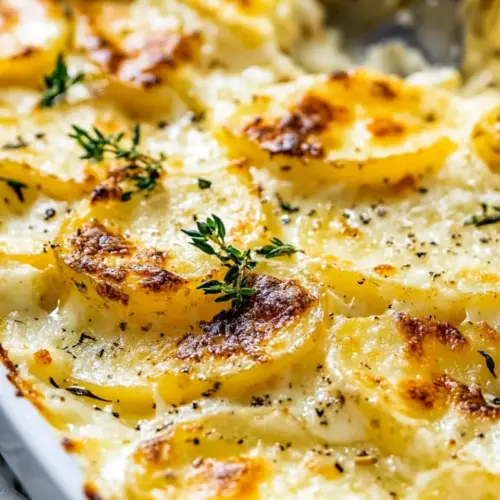
Layering the potatoes, sauce, and cheese ensures even coverage and creates a lovely interplay between tender slices and a golden, slightly crisp top. I prefer Yukon Gold for their creaminess and ability to hold shape, so every forkful has presence and structure.
Simple Techniques, Big Results
Your focus is on a few key moves, like sweating the onion and garlic, building a proper roux, and baking slowly until the dish bubbles and browns. Those small steps are approachable, and I promise they pay off, producing a homestyle dish that feels elevated without unnecessary fuss.
What Goes Into Potatoes Au Gratin
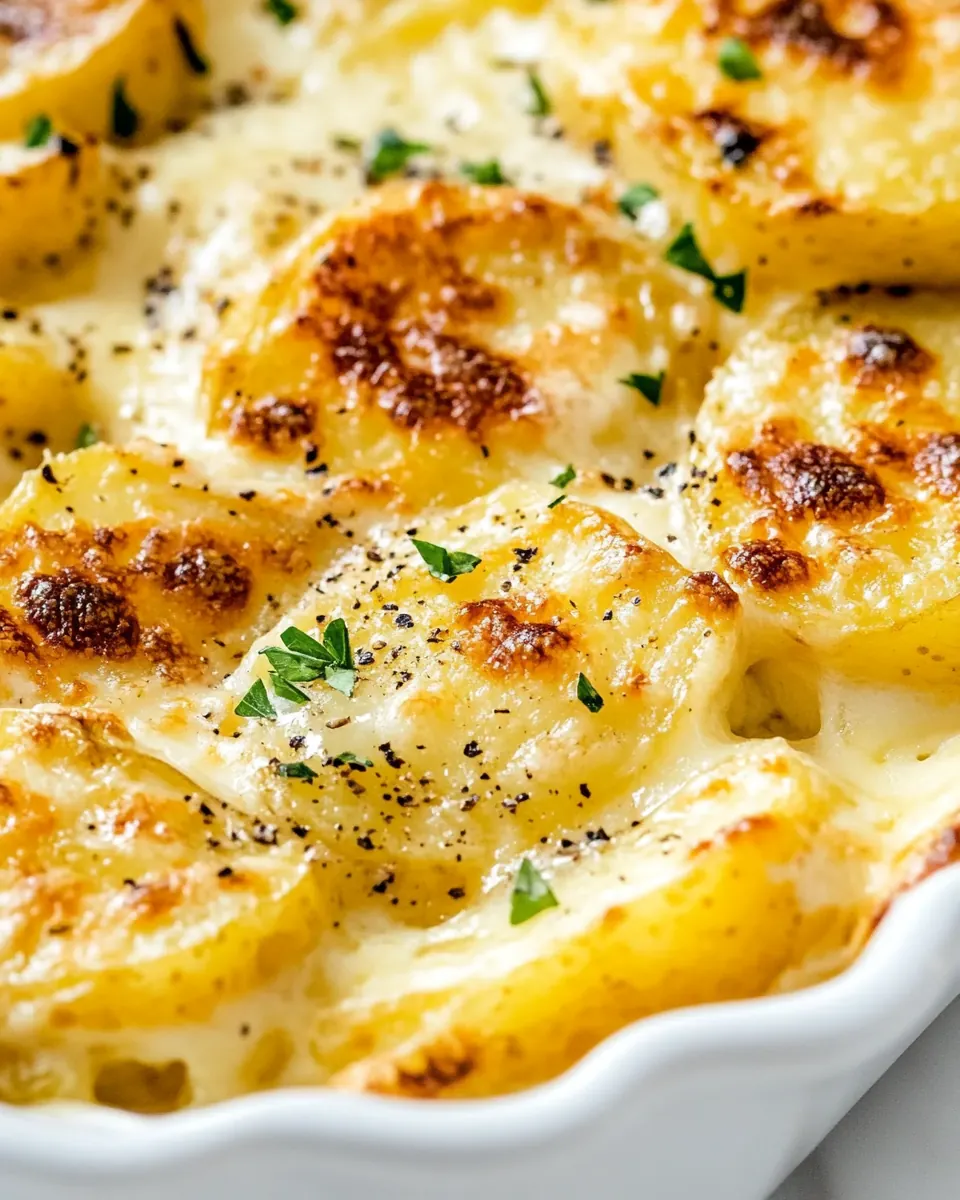
The ingredients here are a short list of dependable players that come together to make something greater than the sum of its parts. Think of the potatoes as the canvas, the roux and milk as the silk that binds layers, and the cheeses as the flavor architects. Each element has a job, whether that is providing structure, richness, or browning, and when used thoughtfully they create a balanced, comforting dish.
- 1/4 cup butter (unsalted): Melted and foamy, provides the rich fat needed to sauté aromatics and create a silky roux that binds the sauce together and adds a lush mouthfeel to the gratin.
- 1 medium onion (chopped): Softened and translucent, contributes a sweet, savory base flavor when sautéed and layers complexity into the creamy sauce and baked potatoes.
- 3 cloves garlic (minced): Aromatically minced and lightly cooked, lends pungent, savory notes that brighten the sauce and deepen overall flavor without overpowering the dish.
- 1/4 cup all-purpose flour: Whisked into melted butter, serves as the thickening agent for the sauce by forming a roux that gives the gratin its velvety, clingy texture.
- 1 cup chicken broth (low sodium or no sodium added): Poured in gradually, supplies savory liquid and depth while balancing the sauce's richness; low-sodium options allow better salt control in the finished dish.
- 2 cups whole milk (or half and half): Combined with broth, creates the creamy body of the sauce; using whole milk or half-and-half determines the final richness and custardy quality.
- 1/2 teaspoon salt (or to taste): Measured and adjusted to taste, seasons the sauce and highlights other flavors while allowing control over overall saltiness in the gratin.
- 1/2 teaspoon pepper (or to taste): Ground and added to taste, provides mild heat and aromatic lift, enhancing the savory profile and balancing richness in the finished casserole.
- 1 tablespoon fresh thyme (chopped, for garnish): Chopped and sprinkled at the end, gives fresh herbal brightness and a subtle floral note as a garnish that elevates aroma and presentation.
- 3 pounds potatoes (sliced into 1/8-inch rounds, I prefer Yukon Gold): Thinly sliced into uniform 1/8-inch rounds, forms the layered structure of the dish and cooks evenly to tender, creamy slices that absorb the sauce.
- 2 cups white cheddar cheese (freshly grated): Freshly grated and evenly layered, contributes sharp, creamy flavor and meltability that creates gooey, savory cheese layers and a luscious mouthfeel.
- 1/2 cup Parmesan cheese (freshly grated): Sprinkled for nutty, salty umami, adds a sharp finishing note and helps form a golden, slightly crisp top that contrasts the creamy interior.
Step by Step Instructions for Potatoes Au Gratin
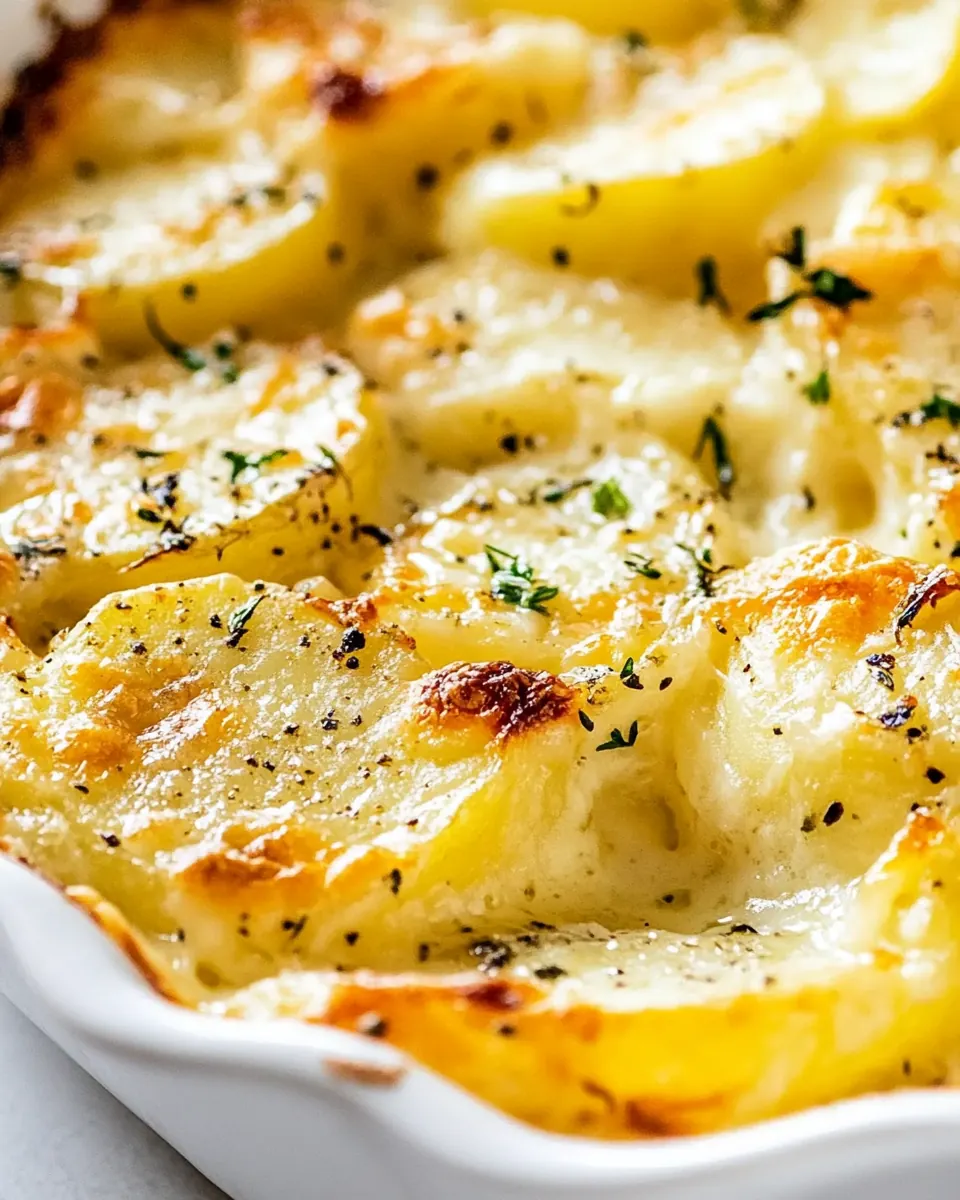
I find that clear, calm steps make the difference between a good gratin and a great one. Take your time with the sauce and the layers, and you will be rewarded with a creamy, bubbling casserole. These instructions walk you through the sensory cues and common pitfalls so you can bake with confidence.
- Preheat the oven: Preheat the oven to 350°F. Lightly spray a 9×13-inch casserole dish with cooking spray.: : Warmth in the kitchen signals progress, and when the oven reaches 350°F you will notice a gentle steady hum from the heating elements. The air becomes dry and slightly warming to the touch as the cavity stabilizes, which is important so the casserole begins to cook evenly the moment it goes in. I always let the oven fully reach temperature instead of guessing, because slipping a cold dish into an oven that is still climbing can lengthen the bake time and affect the final texture. A common mistake is rushing this step, which leads to a longer overall cook and uneven browning; give the oven those extra minutes to come to temperature.
- Sauté onion and garlic: In a medium size skillet, melt the butter over medium low heat. Add the onion and garlic and cook for about 3 minutes until softened. Sprinkle the flour over the onion and garlic and stir. Cook for 2 more minutes.: : As the butter melts over medium low heat you will hear a gentle sizzle and smell a toasty, nutty aroma from the fat as it warms. When you add the chopped onion and minced garlic , their scent blossoms into a sweet, aromatic base. Softening for about 3 minutes until the onion becomes translucent is the visual cue you want, and the mixture should shimmer without browning. Sprinkling the flour and stirring creates a slightly sandy paste that will lose its raw taste after a short cook of about 2 minutes. If you let the aromatics color, they will shift toward caramelized flavors which alter the intended delicate sauce profile; monitor the heat and stir frequently to avoid burning.
- Make the sauce: Slowly add the chicken broth and milk while continuously whisking to thicken. Whisk until smooth. Bring to a boil over medium heat while continuing to whisk. Season with salt and pepper.: : When you slowly add the chicken broth and milk while whisking, the mixture transforms from a thick paste into a glossy, homogeneous sauce; you will see ribbons form as the whisk moves and hear a soft thickening bubble as it approaches a simmer. Bring the sauce to a gentle boil over medium heat while continuing to whisk so it does not stick or develop lumps, and season with salt and pepper to taste. The goal is a smooth sauce that coats a spoon, not an aggressively thick gravy; this allows it to seep between the potato slices. A frequent error is adding the liquid too quickly, which results in lumps and requires extra whisking to correct, so pour slowly and keep the whisk moving.
- Layer the ingredients: Layer about a pound of the potato slices on the bottom of the prepared casserole dish. Top evenly with 1/3 of the sauce and about 1/2 cup of cheddar cheese. Repeat with another layer of potatoes, 1/3 of the sauce, and 1/2 cup of cheddar, the rest of the potatoes, remaining sauce, remaining cheese and finally the Parmesan cheese.: : Layering is tactile and visual, and placing about a pound of the potato slices on the bottom creates an even base. As you top with roughly one third of the sauce and about 1/2 cup of shredded white cheddar cheese , you will see the sauce glisten and the cheese begin to sink slightly into the layers. Repeat this process so each strata receives its fair share of sauce and cheese, finishing with the remaining sauce and the grated Parmesan cheese on top; the finished assembly should look evenly distributed and slightly glossy. Uniform slices are crucial here, because uneven pieces lead to irregular doneness; use consistent thickness for dependable results. Avoid heaping all the potatoes in once and pouring sauce on top, because that prevents even coating and can leave pockets of dry potato.
- Bake: Cover the casserole dish with aluminum foil and bake for about 45 minutes. Remove the aluminum foil and bake for an additional 45 minutes or until golden brown and the potatoes are fork tender. If needed, broil for a couple minutes until golden brown to your preference.: : Cover the casserole with foil to trap steam and allow the potatoes to become tender without drying out; during the first 45 minutes the kitchen will fill with savory steam and gentle bubbling sounds under the foil. After removing the foil and baking for an additional 45 minutes, the top will begin to brown and you will hear a pleasant soft bubbling as the sauce reduces into the layers. Look for golden color and fork tender potatoes as visual cues, and if you desire extra color, briefly broil for a couple minutes until the surface is golden and slightly crisp. A typical mistake is overbaking under foil or failing to remove it for the final bake, which can prevent a golden crust; time and visual checks prevent this.
- Garnish and serve: Garnish with fresh chopped thyme and serve with your favorite meat dish.: : After the gratin rests a few minutes out of the oven, sprinkle the chopped fresh thyme across the top so its aroma perfumes each bite. The steam will carry herb notes, and the contrast of green against the golden surface makes the dish look inviting. Serve while warm so you capture the creamy texture and molten cheese ribbons, and pair with a simple protein or a crisp salad if you like. A common oversight is slicing into the gratin immediately; letting it rest briefly helps the sauce set for cleaner serving portions.
Recipe Tips about Potatoes Au Gratin
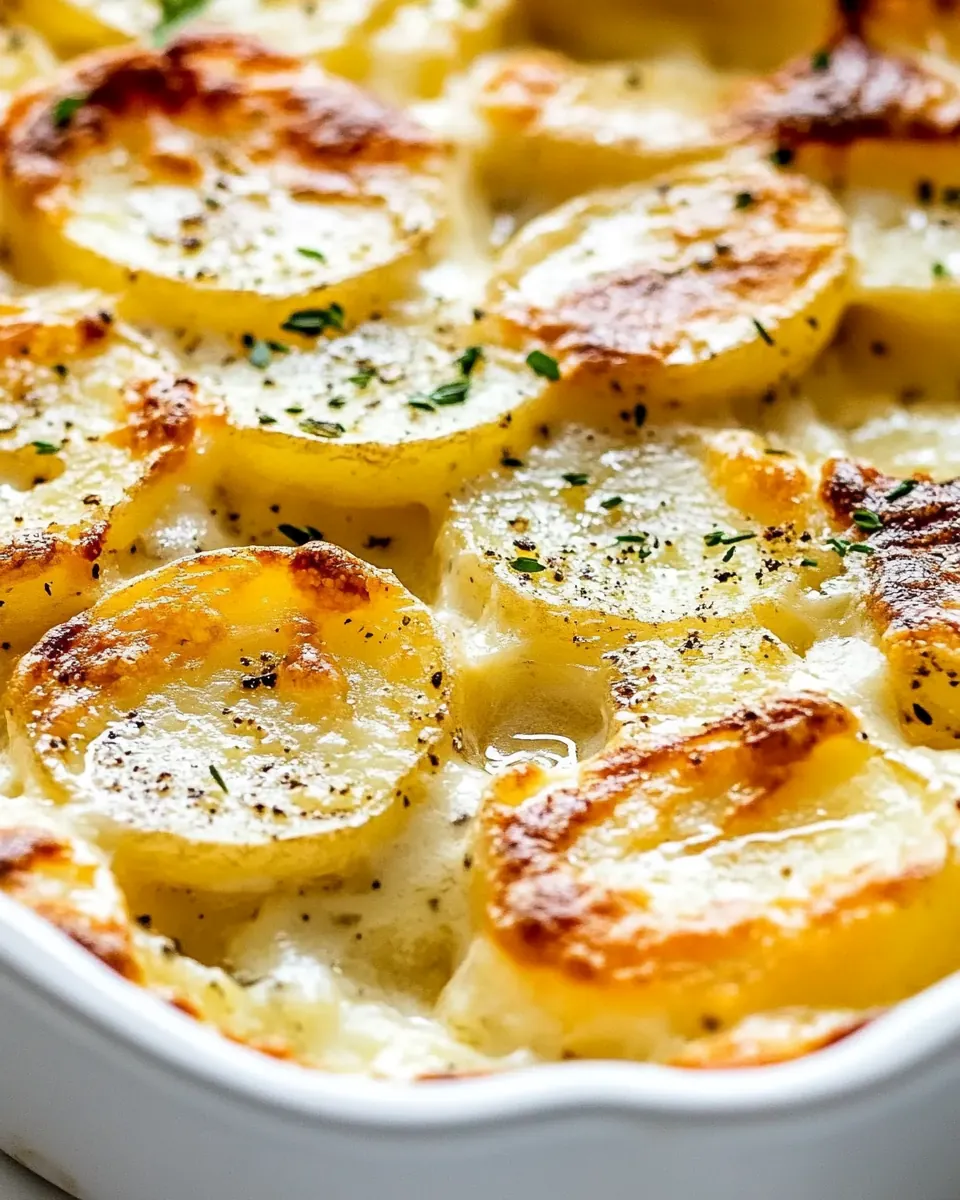
These tips come from trials, happy accidents, and the small changes that made the dish a family favorite. They are practical, tested, and focused on improving texture and flavor without introducing complexity.
- Choose the right potato: I prefer Yukon Gold for their balance of creaminess and structure; they hold together during baking and yield a tender, buttery interior. Starchier russets can become mealy, while waxier varieties may stay firmer than desired.
- Slice consistently: Uniform 1/8 inch slices ensure even cooking, and a mandoline is the quickest way to achieve this. If you slice by hand, take your time and line up similar thickness for reliable results.
- Mind the roux: Cook the flour and butter just long enough to remove raw flavors, stirring constantly; a pale blonde roux thickens without imparting a toasty flavor that would compete with the cheeses.
- Low sodium broth control: Use low sodium or no sodium chicken broth so you can season intentionally; cheeses add salt, and starting conservative prevents an overly salty final dish.
- Freshly grate cheese: Whole block cheese melts creamier and binds better in the sauce, giving a glossy, smooth finish that pre shredded options cannot match.
- Layer for even coverage: Building layers of potatoes, sauce, and cheese ensures every bite is saucy and flavored, rather than having dry pockets or cheese only on top.
- Rest before serving: Let the gratin sit for 10 to 15 minutes after baking to set the sauce slightly, so servings hold together and the texture is coherent.
Side Dish Ideas for Potatoes Au Gratin
Potatoes Au Gratin is versatile and pairs beautifully across different menus and occasions. Whether you are planning a cozy family dinner or a more celebratory meal, thoughtful pairing and presentation elevate the experience. Below are ideas to match timing, season, and style, with serving notes and storage tips included.
- Roasted vegetables for weeknight dinners: Pair with simply roasted seasonal vegetables to add color and contrast, such as roasted carrots or green beans. This combination balances the richness of the gratin with lighter, caramelized veg textures.
- Holiday centerpiece: Serve alongside a roasted protein for a festive dinner; the creamy profile of the gratin complements hearty mains and becomes a comforting side for special occasions. The dish scales well for guests and reheats reliably.
- Brunch accompaniment: Slice and serve warm with a crisp green salad and poached eggs for an indulgent brunch. The creamy layers make for a rich plate that pairs nicely with bright, acidic elements.
- Storage and make ahead: Assemble up to the end of the layer step and refrigerate covered overnight, then bake when ready; this saves time on busy entertaining days. Leftovers keep in an airtight container in the fridge for up to 4 days, reheating gently to preserve texture.
- Seasonal pairings: In winter, combine with braised greens or roasted root vegetables, while in spring a lemony salad or steamed asparagus will offer freshness that cuts through the richness.
- Presentation tip: Garnish with fresh chopped thyme and serve in the casserole dish for a rustic, family style feel that encourages sharing and seconds.
FAQ
Conclusion
Potatoes Au Gratin stands out because of its layers of tender potatoes, creamy sauce, and melted cheese that combine into a comforting, crowd pleasing side. Try it once with careful slicing, a slowly built roux, and freshly grated cheeses, and you will notice the difference in texture and flavor. This recipe is welcoming and adaptable, great for holiday tables or weeknight dinners when you want something that feels both homey and special. Give it a go, and enjoy the warm, cheesy satisfaction that keeps people coming back for seconds.
Potatoes Au Gratin
Equipment
- Mandoline Slicer
- 3-Quart Saucepan with Lid
- 9x13-inch Casserole Dish
Ingredients
- 1/4 cup butter (unsalted) Melted and foamy, provides the rich fat needed to sauté aromatics and create a silky roux that binds the sauce together and adds a lush mouthfeel to the gratin.
- 1 medium onion (chopped) Softened and translucent, contributes a sweet, savory base flavor when sautéed and layers complexity into the creamy sauce and baked potatoes.
- 3 cloves garlic (minced) Aromatically minced and lightly cooked, lends pungent, savory notes that brighten the sauce and deepen overall flavor without overpowering the dish.
- 1/4 cup all-purpose flour Whisked into melted butter, serves as the thickening agent for the sauce by forming a roux that gives the gratin its velvety, clingy texture.
- 1 cup chicken broth (low sodium or no sodium added) Poured in gradually, supplies savory liquid and depth while balancing the sauce's richness; low-sodium options allow better salt control in the finished dish.
- 2 cups whole milk (or half and half) Combined with broth, creates the creamy body of the sauce; using whole milk or half-and-half determines the final richness and custardy quality.
- 1/2 teaspoon salt (or to taste) Measured and adjusted to taste, seasons the sauce and highlights other flavors while allowing control over overall saltiness in the gratin.
- 1/2 teaspoon pepper (or to taste) Ground and added to taste, provides mild heat and aromatic lift, enhancing the savory profile and balancing richness in the finished casserole.
- 1 tablespoon fresh thyme (chopped, for garnish) Chopped and sprinkled at the end, gives fresh herbal brightness and a subtle floral note as a garnish that elevates aroma and presentation.
- 3 pounds potatoes (sliced into 1/8-inch rounds, I prefer Yukon Gold) Thinly sliced into uniform 1/8-inch rounds, forms the layered structure of the dish and cooks evenly to tender, creamy slices that absorb the sauce.
- 2 cups white cheddar cheese (freshly grated) Freshly grated and evenly layered, contributes sharp, creamy flavor and meltability that creates gooey, savory cheese layers and a luscious mouthfeel.
- 1/2 cup Parmesan cheese (freshly grated) Sprinkled for nutty, salty umami, adds a sharp finishing note and helps form a golden, slightly crisp top that contrasts the creamy interior.
Instructions
- Preheat the oven: Preheat the oven to 350°F. Lightly spray a 9×13-inch casserole dish with cooking spray.: : Warmth in the kitchen signals progress, and when the oven reaches 350°F you will notice a gentle steady hum from the heating elements. The air becomes dry and slightly warming to the touch as the cavity stabilizes, which is important so the casserole begins to cook evenly the moment it goes in. I always let the oven fully reach temperature instead of guessing, because slipping a cold dish into an oven that is still climbing can lengthen the bake time and affect the final texture. A common mistake is rushing this step, which leads to a longer overall cook and uneven browning; give the oven those extra minutes to come to temperature.
- Sauté onion and garlic: In a medium size skillet, melt the butter over medium low heat. Add the onion and garlic and cook for about 3 minutes until softened. Sprinkle the flour over the onion and garlic and stir. Cook for 2 more minutes.: : As the butter melts over medium low heat you will hear a gentle sizzle and smell a toasty, nutty aroma from the fat as it warms. When you add the chopped onion and minced garlic , their scent blossoms into a sweet, aromatic base. Softening for about 3 minutes until the onion becomes translucent is the visual cue you want, and the mixture should shimmer without browning. Sprinkling the flour and stirring creates a slightly sandy paste that will lose its raw taste after a short cook of about 2 minutes. If you let the aromatics color, they will shift toward caramelized flavors which alter the intended delicate sauce profile; monitor the heat and stir frequently to avoid burning.
- Make the sauce: Slowly add the chicken broth and milk while continuously whisking to thicken. Whisk until smooth. Bring to a boil over medium heat while continuing to whisk. Season with salt and pepper.: : When you slowly add the chicken broth and milk while whisking, the mixture transforms from a thick paste into a glossy, homogeneous sauce; you will see ribbons form as the whisk moves and hear a soft thickening bubble as it approaches a simmer. Bring the sauce to a gentle boil over medium heat while continuing to whisk so it does not stick or develop lumps, and season with salt and pepper to taste. The goal is a smooth sauce that coats a spoon, not an aggressively thick gravy; this allows it to seep between the potato slices. A frequent error is adding the liquid too quickly, which results in lumps and requires extra whisking to correct, so pour slowly and keep the whisk moving.
- Layer the ingredients: Layer about a pound of the potato slices on the bottom of the prepared casserole dish. Top evenly with 1/3 of the sauce and about 1/2 cup of cheddar cheese. Repeat with another layer of potatoes, 1/3 of the sauce, and 1/2 cup of cheddar, the rest of the potatoes, remaining sauce, remaining cheese and finally the Parmesan cheese.: : Layering is tactile and visual, and placing about a pound of the potato slices on the bottom creates an even base. As you top with roughly one third of the sauce and about 1/2 cup of shredded white cheddar cheese , you will see the sauce glisten and the cheese begin to sink slightly into the layers. Repeat this process so each strata receives its fair share of sauce and cheese, finishing with the remaining sauce and the grated Parmesan cheese on top; the finished assembly should look evenly distributed and slightly glossy. Uniform slices are crucial here, because uneven pieces lead to irregular doneness; use consistent thickness for dependable results. Avoid heaping all the potatoes in once and pouring sauce on top, because that prevents even coating and can leave pockets of dry potato.
- Bake: Cover the casserole dish with aluminum foil and bake for about 45 minutes. Remove the aluminum foil and bake for an additional 45 minutes or until golden brown and the potatoes are fork tender. If needed, broil for a couple minutes until golden brown to your preference.: : Cover the casserole with foil to trap steam and allow the potatoes to become tender without drying out; during the first 45 minutes the kitchen will fill with savory steam and gentle bubbling sounds under the foil. After removing the foil and baking for an additional 45 minutes, the top will begin to brown and you will hear a pleasant soft bubbling as the sauce reduces into the layers. Look for golden color and fork tender potatoes as visual cues, and if you desire extra color, briefly broil for a couple minutes until the surface is golden and slightly crisp. A typical mistake is overbaking under foil or failing to remove it for the final bake, which can prevent a golden crust; time and visual checks prevent this.
- Garnish and serve: Garnish with fresh chopped thyme and serve with your favorite meat dish.: : After the gratin rests a few minutes out of the oven, sprinkle the chopped fresh thyme across the top so its aroma perfumes each bite. The steam will carry herb notes, and the contrast of green against the golden surface makes the dish look inviting. Serve while warm so you capture the creamy texture and molten cheese ribbons, and pair with a simple protein or a crisp salad if you like. A common oversight is slicing into the gratin immediately; letting it rest briefly helps the sauce set for cleaner serving portions.
Notes
- Choose the right potato: I prefer Yukon Gold for their balance of creaminess and structure; they hold together during baking and yield a tender, buttery interior. Starchier russets can become mealy, while waxier varieties may stay firmer than desired.
- Slice consistently: Uniform 1/8 inch slices ensure even cooking, and a mandoline is the quickest way to achieve this. If you slice by hand, take your time and line up similar thickness for reliable results.
- Mind the roux: Cook the flour and butter just long enough to remove raw flavors, stirring constantly; a pale blonde roux thickens without imparting a toasty flavor that would compete with the cheeses.
- Low sodium broth control: Use low sodium or no sodium chicken broth so you can season intentionally; cheeses add salt, and starting conservative prevents an overly salty final dish.
- Freshly grate cheese: Whole block cheese melts creamier and binds better in the sauce, giving a glossy, smooth finish that pre shredded options cannot match.
- Layer for even coverage: Building layers of potatoes, sauce, and cheese ensures every bite is saucy and flavored, rather than having dry pockets or cheese only on top.
- Rest before serving: Let the gratin sit for 10 to 15 minutes after baking to set the sauce slightly, so servings hold together and the texture is coherent.
