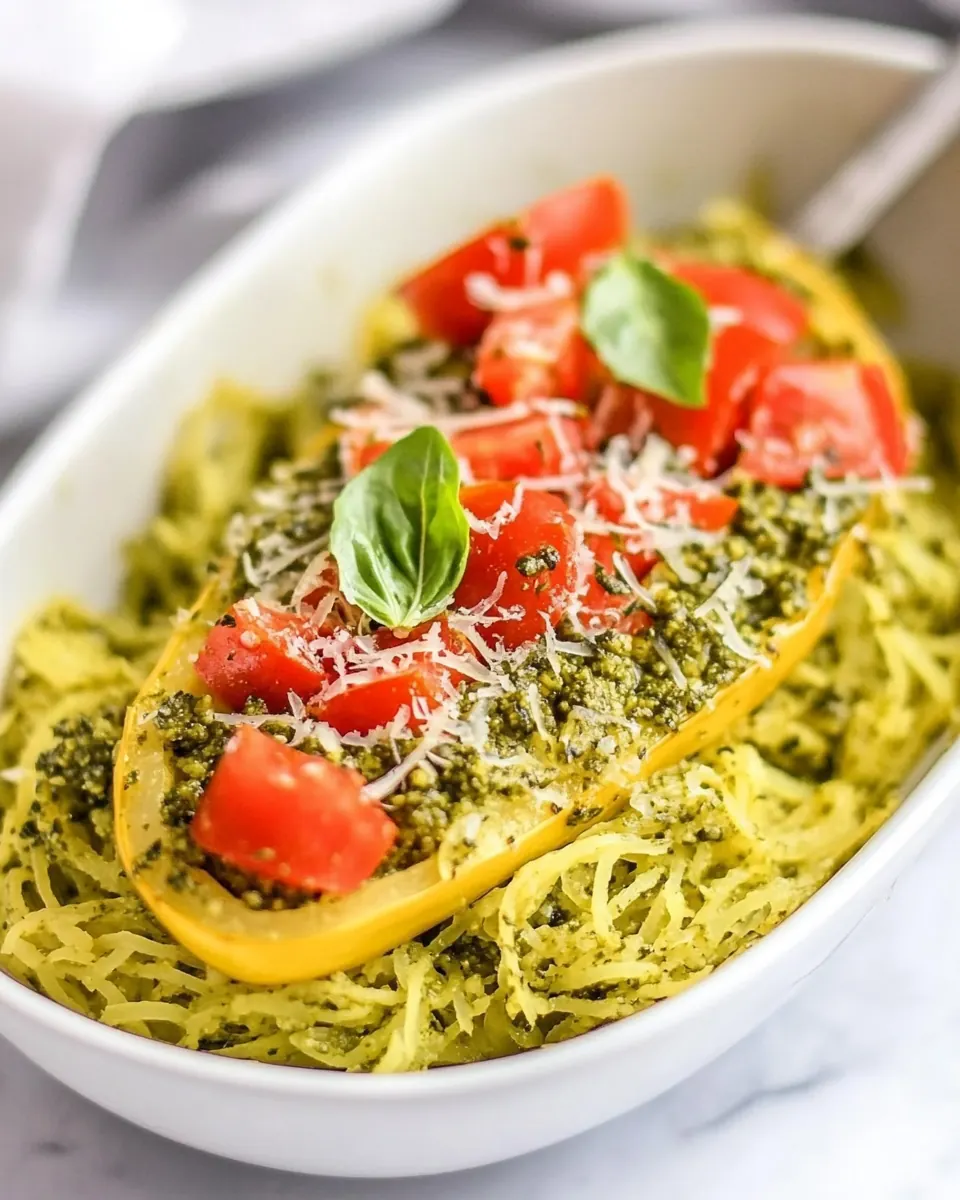
Pesto Spaghetti Squash with Tomatoes
Pesto Spaghetti Squash with Tomatoes is one of those recipes I reach for when I want something bright, vegetal, and a little unexpected on the weeknight table.
I remember the first time I roasted a spaghetti squash and it shredded into silky strands that caught sauce like delicate pasta. I was skeptical, yet intrigued, so I tossed those threads with a quick basil pesto and fresh, diced tomato. The result felt light but satisfying, with the aromatic hit of basil and the creamy, salty lift of Parmigiano. Over the years I adjusted tiny details, like how much olive oil to use in the blender and how to coax the best texture from the spaghetti squash.
Another memory that sticks is serving this at a summer dinner with friends, when everyone kept asking what was in it. I told them it was simply the bright trio of basil, garlic, and tomato marrying the tender, fork scraped strands of spaghetti squash. It felt like a short cut to something elegant, and it travelled well from kitchen to table so the conversation flowed uninterrupted.
Recipe Snapshot
20 mins
10 mins
10 mins
Easy
200 kcal
Italian
Keto, Paleo
Dinner
Microwave safe dish, Blender, Large bowl, Spoon, Fork
Why We Love This Pesto Spaghetti Squash with Tomatoes
Fresh seasonal flavor
I love how Pesto Spaghetti Squash with Tomatoes celebrates summer produce. The combination of fragrant basil and juicy tomato brings immediate brightness that feels local and immediate. When basil is at its peak, the pesto practically hums, and that lively herb flavor is the dish’s anchor.
Comfort without heaviness
We all want something comforting that does not sit like a brick. The tender strands of spaghetti squash provide body and a satisfying mouthfeel, while the olive oil based pesto keeps things silky rather than stodgy. That balance makes it perfect for evenings when you want cozy but light.
Quick and approachable technique
I often need dinner on the table fast, and this recipe answers that call. With a short microwave or roast step and a quick blitz of the blender, you get restaurant worthy results with minimal fuss. The method is forgiving, which is great when you are multi tasking.
Versatile and crowd friendly
This dish scales easily for company or a solo meal. It can be a main or a side, it travels to potlucks well, and it suits a range of diets. The simple ingredient list also makes swapping or doubling straightforward without losing flavor integrity.
Bright contrasts and texture
The contrast between the stringy, tender spaghetti squash, the silky pesto, and the pop of diced tomato is what keeps every bite interesting. That interplay of textures and temperatures is a small thing that makes the dish memorable.
Ingredients Overview for Pesto Spaghetti Squash with Tomatoes
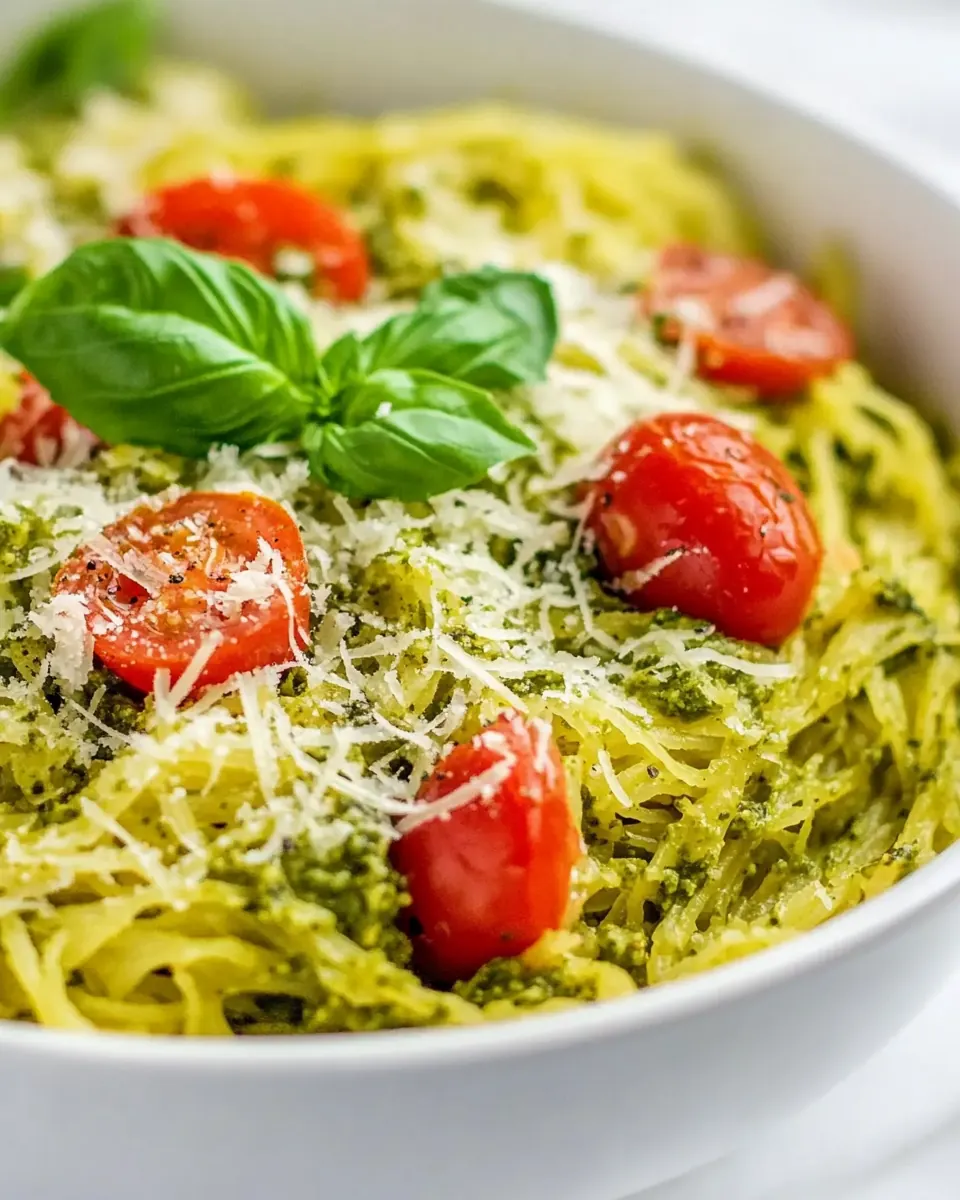
These ingredients are intentionally simple, designed to highlight quality over complexity. The key players are the vegetable base, the herbaceous pesto components, the finishing cheese, and the bright tomato that cuts through with acidity. Together they create a balanced plate where texture and flavor each have their moment.
- 1 medium spaghetti squash: Roast or steam until tender, then shred into noodle-like strands to mimic pasta; provides the main body of the dish with a mild, slightly sweet flavor and a light, fibrous texture. Drain any excess water to prevent sogginess and toss with sauce so the squash absorbs flavors without becoming mushy.
- 15 large basil leaves: Blend or chop into a loose pesto base to contribute bright, aromatic, peppery notes; adds fresh green color and a herbaceous backbone to the sauce. Tear or chiffonade leaves just before use to preserve fragrance and prevent browning.
- 1 small clove garlic: Mince finely to release pungent, savory compounds that enhance depth and umami; acts as a flavor amplifier in the pesto, balancing the herbs and cheese. Sauté briefly if desired to mellow sharpness, or use raw for a more assertive bite.
- 1/4 cup olive oil: Whisk or blend into the pesto to create a silky emulsion that carries and coats the squash strands; contributes richness and mouthfeel while helping to bind grated cheese and herbs. Use high-quality extra virgin olive oil for optimal flavor and drizzle extra on top for shine.
- 3 tbsp Parmigiano-Reggiano, grated, plus more for topping: Grate finely and incorporate into the pesto for savory, nutty, umami complexity; also sprinkle additional cheese over finished servings to add salty richness. Adjust quantity to taste, as the cheese helps thicken the sauce and intensify overall flavor.
- kosher salt and fresh pepper, to taste: Season sparingly to enhance and balance flavors, using kosher salt to elevate sweetness and acidity, and fresh pepper to add mild heat; both are adjusted to taste at the end. Taste during assembly to avoid over- or under-seasoning, since cheese contributes additional salt.
- 1 medium tomato, diced: Dice and fold in gently to contribute bursts of acidity, juiciness, and color that brighten the dish; provides contrast to the rich pesto and roasted squash with fresh, slightly sweet tomato flavor. Remove seeds if desired to reduce excess moisture and keep the final texture lively.
Preparation Steps for Pesto Spaghetti Squash with Tomatoes
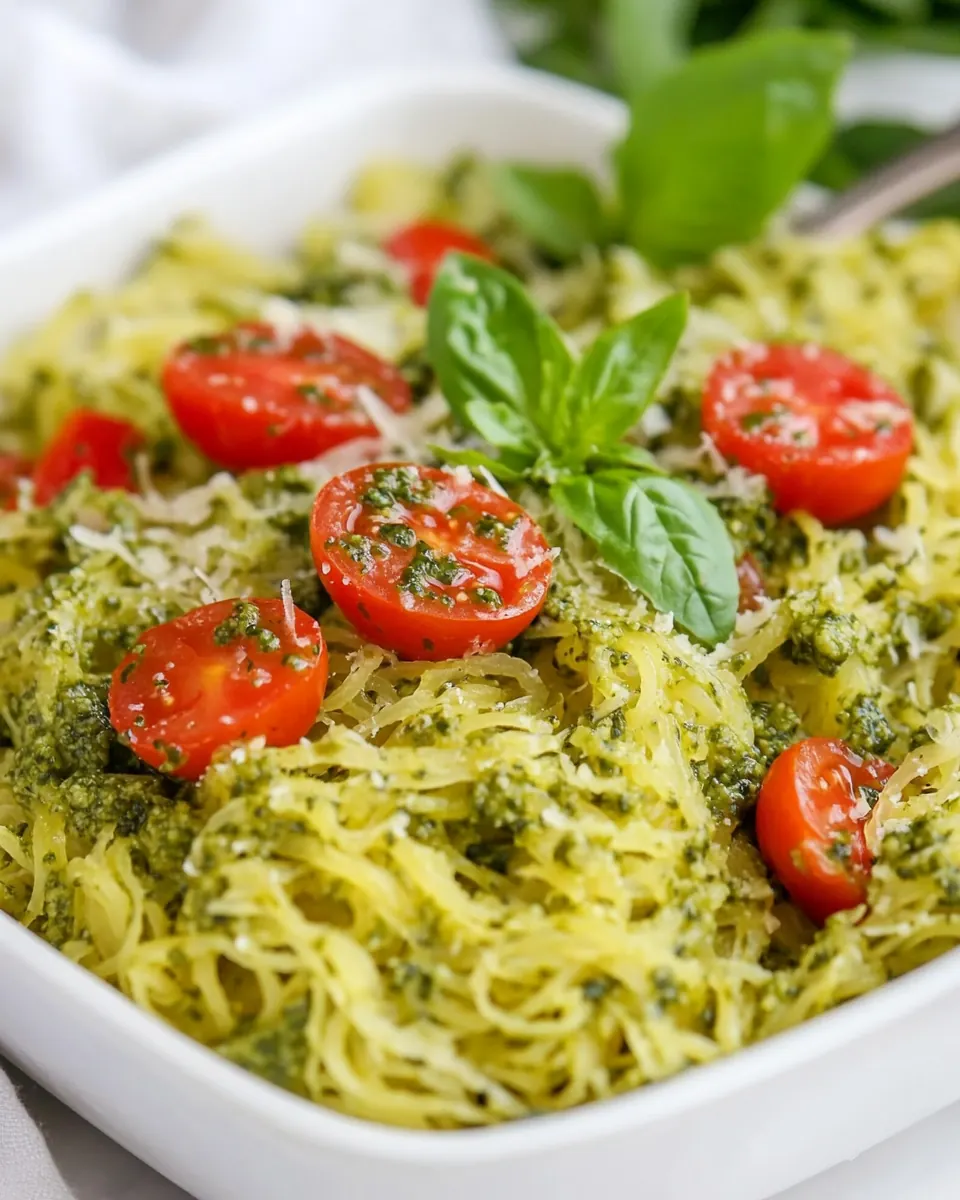
This recipe is straightforward, and I like to approach it with calm focus. Start by preparing the spaghetti squash, then make the pesto while the squash rests. The final assembly is fast, and the contrast of warm squash with cool pesto and fresh tomato is delightful.
- Cut squash in half lengthwise, scoop out seeds and fibers.: As you cut through the tough rind you will hear a firm resistance, and the flesh inside should be pale and dense. Scoop with a spoon, removing the stringy seeds and any fibrous bits until the cavity is clean. This cleanup ensures even cooking and prevents bitter or chewy strands. A common mistake is leaving seeds behind, which can add unwanted texture and prevent the squash from shredding cleanly.
- Place in a microwave safe dish and cover. Microwave 8-9 minutes.: The microwave will steam the squash quickly, yielding tender flesh. You will notice a gentle scent of cooked squash and the skin will feel softer to the touch when done. Covering traps steam so the flesh cooks through without drying. Be careful when removing the dish, it will be hot and steamy, and undercooking will leave the strands tough, while overcooking can make them mushy.
- Remove from the microwave and scoop out flesh with a fork into a large bowl.: Use a fork to tease the flesh into noodle like strands, scraping along the grain until you have the desired texture. The sound is soft scraping, and the strands should separate easily, appearing glossy. Transferring to a large bowl gives space to toss the squash with pesto without crushing it. If you notice soggy clumps, the squash may have been overcooked, but gentle tossing can still salvage the texture.
- Meanwhile, in a small blender combine basil, garlic, olive oil, parmesan cheese, salt and pepper and puree until smooth.: As the blender whirls, the aroma of crushed basil will rise and the mixture should emulsify into a vibrant, green sauce. The Parmigiano helps thicken and deepen the flavor while the olive oil makes the texture silky. Pulse first to chop the leaves, then stream the oil in for a creamier result. Overblending can cause the sauce to warm and lose freshness, and under seasoning will yield a flat pesto.
- Combine pesto with two cups spaghetti squash (save any remaining squash for another recipe).: When you fold the pesto into the warm squash, the sauce clings to each strand and releases a fragrant herb steam. Use gentle motions to toss so the strands stay intact and the pesto coats evenly. The warmth helps the pesto open up, but avoid vigorous mixing which can mush the squash. A typical slip up is adding too much pesto at once, making the texture overly oily, so start with a modest amount and add more if needed.
- Add tomatoes and season with additional salt and pepper.: Fold in the diced tomato at the end so you preserve its fresh bite and vibrant color. The contrast between warm, silky squash and cool, juicy tomato is essential for balance. Taste and adjust seasoning, noting how the tomato acidity can reduce the need for more salt. Over stirring will break down the tomato and lead to a wetter dish, so combine gently until everything is evenly distributed.
Substitutions and Tips
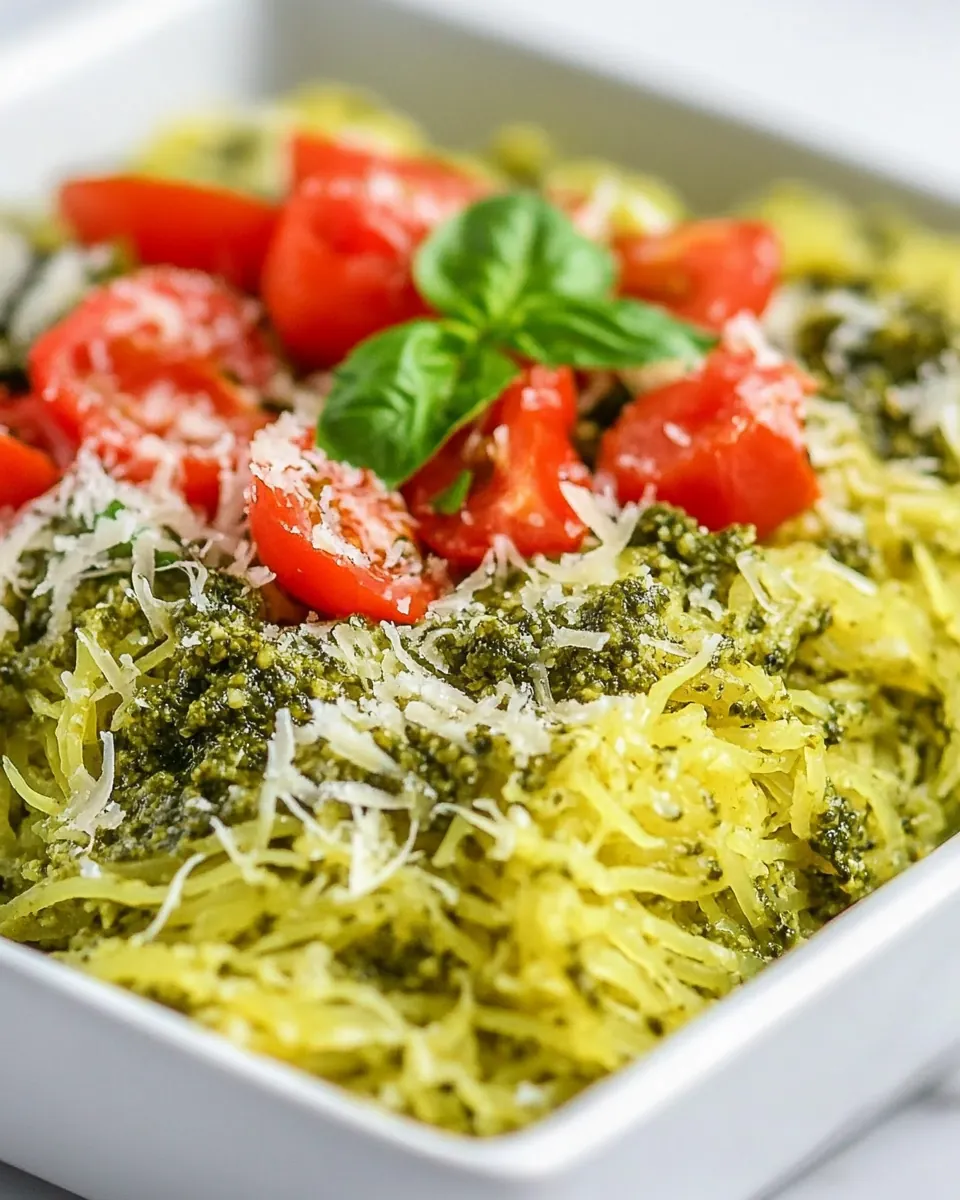
This section shares practical ideas and clever swaps to make the recipe your own. Below are detailed tips to help you get consistent results and to adapt the dish to what you have on hand.
- Make ahead You can prepare the pesto up to one day in advance and store it covered in the refrigerator to keep the color and aroma. Bring it to room temperature and give it a quick stir before tossing with the warm squash.
- Texture control If you prefer firmer strands, reduce microwave time by one minute and check for tenderness; undercooked squash will resist when you scrape it with a fork.
- Cheese adjustment Use the specified Parmigiano Reggiano for umami depth, but add it gradually so the pesto does not become grainy or overly salty.
- Oil quality The flavor of the olive oil shows through, so choose a fruity extra virgin for brightness. If your oil is too peppery, the pesto may taste harsh.
- Tomato timing Add the diced tomato at the last minute to maintain its fresh texture and acidity; cooking it in will mute the brightness.
What to Serve With Pesto Spaghetti Squash with Tomatoes
This dish works beautifully as a light main or a vibrant side, and plating it with complementary textures and flavors elevates the meal. Below are serving ideas, occasions, and storage notes to help you pair and present it well.
- As a main for lunch Serve the dressed spaghetti squash warm with a wedge of lemon on the side to brighten the flavors, and a simple green salad for contrast.
- As a side for dinner Pair it with roasted vegetables or grilled fish to add an herb forward counterpoint to richer proteins.
- For summer gatherings This is ideal for casual alfresco meals because it travels well and can be served room temperature, making it practical for buffets.
- Storage tips Keep leftovers in an airtight container in the refrigerator for up to three days; reheat gently or enjoy cold to preserve the pesto character.
- Seasonal pairings Lean into summer by serving alongside fresh corn, ripe stone fruit salads, or light chilled soups to create a cohesive seasonal menu.
- Occasion suggestions It is suitable for light weeknight dinners, picnic spreads, or as a colorful contribution to holiday potlucks where guests appreciate vegetable centric dishes.
FAQ
Conclusion
This recipe stands out because it pairs the bright intensity of fresh pesto with the light, noodle like texture of spaghetti squash, creating a summery, vegetable led plate. Give it a try on a busy weeknight or for a relaxed weekend meal, it’s forgiving and quick to pull together. I hope it becomes a staple in your rotation, providing a fresh alternative to heavier pasta dishes while still feeling satisfying and special.
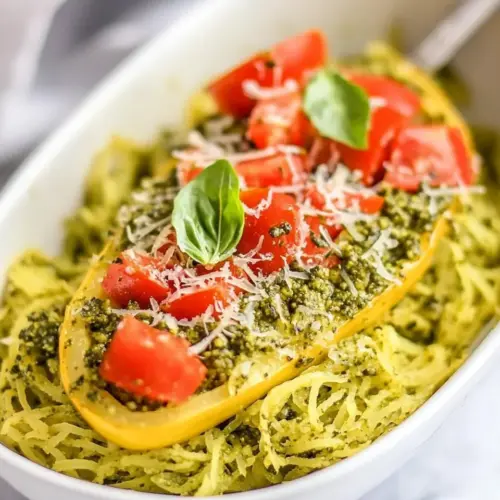
Pesto Spaghetti Squash with Tomatoes
Equipment
- Microwave safe dish
- Blender
- Large Bowl
- Spoon
- Fork
Ingredients
- 1 medium spaghetti squash Roast or steam until tender, then shred into noodle-like strands to mimic pasta; provides the main body of the dish with a mild, slightly sweet flavor and a light, fibrous texture. Drain any excess water to prevent sogginess and toss with sauce so the squash absorbs flavors without becoming mushy.
- 15 large basil leaves Blend or chop into a loose pesto base to contribute bright, aromatic, peppery notes; adds fresh green color and a herbaceous backbone to the sauce. Tear or chiffonade leaves just before use to preserve fragrance and prevent browning.
- 1 small clove garlic Mince finely to release pungent, savory compounds that enhance depth and umami; acts as a flavor amplifier in the pesto, balancing the herbs and cheese. Sauté briefly if desired to mellow sharpness, or use raw for a more assertive bite.
- 1/4 cup olive oil Whisk or blend into the pesto to create a silky emulsion that carries and coats the squash strands; contributes richness and mouthfeel while helping to bind grated cheese and herbs. Use high-quality extra virgin olive oil for optimal flavor and drizzle extra on top for shine.
- 3 tbsp Parmigiano-Reggiano, grated, plus more for topping Grate finely and incorporate into the pesto for savory, nutty, umami complexity; also sprinkle additional cheese over finished servings to add salty richness. Adjust quantity to taste, as the cheese helps thicken the sauce and intensify overall flavor.
- kosher salt and fresh pepper, to taste Season sparingly to enhance and balance flavors, using kosher salt to elevate sweetness and acidity, and fresh pepper to add mild heat; both are adjusted to taste at the end. Taste during assembly to avoid over- or under-seasoning, since cheese contributes additional salt.
- 1 medium tomato, diced Dice and fold in gently to contribute bursts of acidity, juiciness, and color that brighten the dish; provides contrast to the rich pesto and roasted squash with fresh, slightly sweet tomato flavor. Remove seeds if desired to reduce excess moisture and keep the final texture lively.
Instructions
- Cut squash in half lengthwise, scoop out seeds and fibers.: As you cut through the tough rind you will hear a firm resistance, and the flesh inside should be pale and dense. Scoop with a spoon, removing the stringy seeds and any fibrous bits until the cavity is clean. This cleanup ensures even cooking and prevents bitter or chewy strands. A common mistake is leaving seeds behind, which can add unwanted texture and prevent the squash from shredding cleanly.
- Place in a microwave safe dish and cover. Microwave 8-9 minutes.: The microwave will steam the squash quickly, yielding tender flesh. You will notice a gentle scent of cooked squash and the skin will feel softer to the touch when done. Covering traps steam so the flesh cooks through without drying. Be careful when removing the dish, it will be hot and steamy, and undercooking will leave the strands tough, while overcooking can make them mushy.
- Remove from the microwave and scoop out flesh with a fork into a large bowl.: Use a fork to tease the flesh into noodle like strands, scraping along the grain until you have the desired texture. The sound is soft scraping, and the strands should separate easily, appearing glossy. Transferring to a large bowl gives space to toss the squash with pesto without crushing it. If you notice soggy clumps, the squash may have been overcooked, but gentle tossing can still salvage the texture.
- Meanwhile, in a small blender combine basil, garlic, olive oil, parmesan cheese, salt and pepper and puree until smooth.: As the blender whirls, the aroma of crushed basil will rise and the mixture should emulsify into a vibrant, green sauce. The Parmigiano helps thicken and deepen the flavor while the olive oil makes the texture silky. Pulse first to chop the leaves, then stream the oil in for a creamier result. Overblending can cause the sauce to warm and lose freshness, and under seasoning will yield a flat pesto.
- Combine pesto with two cups spaghetti squash (save any remaining squash for another recipe).: When you fold the pesto into the warm squash, the sauce clings to each strand and releases a fragrant herb steam. Use gentle motions to toss so the strands stay intact and the pesto coats evenly. The warmth helps the pesto open up, but avoid vigorous mixing which can mush the squash. A typical slip up is adding too much pesto at once, making the texture overly oily, so start with a modest amount and add more if needed.
- Add tomatoes and season with additional salt and pepper.: Fold in the diced tomato at the end so you preserve its fresh bite and vibrant color. The contrast between warm, silky squash and cool, juicy tomato is essential for balance. Taste and adjust seasoning, noting how the tomato acidity can reduce the need for more salt. Over stirring will break down the tomato and lead to a wetter dish, so combine gently until everything is evenly distributed.
Notes
- Make ahead You can prepare the pesto up to one day in advance and store it covered in the refrigerator to keep the color and aroma. Bring it to room temperature and give it a quick stir before tossing with the warm squash.
- Texture control If you prefer firmer strands, reduce microwave time by one minute and check for tenderness; undercooked squash will resist when you scrape it with a fork.
- Cheese adjustment Use the specified Parmigiano Reggiano for umami depth, but add it gradually so the pesto does not become grainy or overly salty.
- Oil quality The flavor of the olive oil shows through, so choose a fruity extra virgin for brightness. If your oil is too peppery, the pesto may taste harsh.
- Tomato timing Add the diced tomato at the last minute to maintain its fresh texture and acidity; cooking it in will mute the brightness.