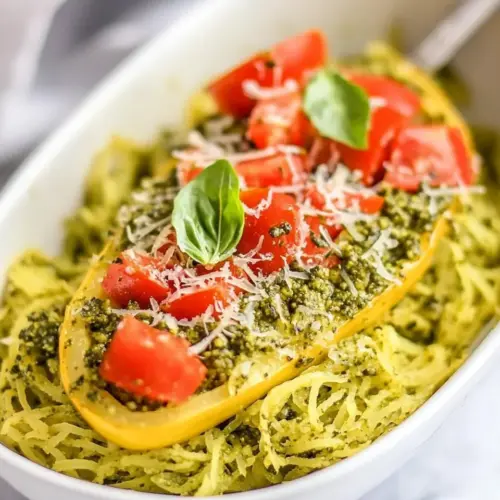
Pesto Spaghetti Squash with Tomatoes
Pesto Spaghetti Squash with Tomatoes is a light, creamy and herb forward dish that feels like summer in a bowl. Tender strands of spaghetti squash are tossed with a bright basil and Parmigiano pesto and finished with juicy tomato, perfect for an easy weeknight dinner or a elegant, low carb main.
Equipment
- Microwave safe dish
- Blender
- Large Bowl
- Spoon
- Fork
Ingredients
- 1 medium spaghetti squash Roast or steam until tender, then shred into noodle-like strands to mimic pasta; provides the main body of the dish with a mild, slightly sweet flavor and a light, fibrous texture. Drain any excess water to prevent sogginess and toss with sauce so the squash absorbs flavors without becoming mushy.
- 15 large basil leaves Blend or chop into a loose pesto base to contribute bright, aromatic, peppery notes; adds fresh green color and a herbaceous backbone to the sauce. Tear or chiffonade leaves just before use to preserve fragrance and prevent browning.
- 1 small clove garlic Mince finely to release pungent, savory compounds that enhance depth and umami; acts as a flavor amplifier in the pesto, balancing the herbs and cheese. Sauté briefly if desired to mellow sharpness, or use raw for a more assertive bite.
- 1/4 cup olive oil Whisk or blend into the pesto to create a silky emulsion that carries and coats the squash strands; contributes richness and mouthfeel while helping to bind grated cheese and herbs. Use high-quality extra virgin olive oil for optimal flavor and drizzle extra on top for shine.
- 3 tbsp Parmigiano-Reggiano, grated, plus more for topping Grate finely and incorporate into the pesto for savory, nutty, umami complexity; also sprinkle additional cheese over finished servings to add salty richness. Adjust quantity to taste, as the cheese helps thicken the sauce and intensify overall flavor.
- kosher salt and fresh pepper, to taste Season sparingly to enhance and balance flavors, using kosher salt to elevate sweetness and acidity, and fresh pepper to add mild heat; both are adjusted to taste at the end. Taste during assembly to avoid over- or under-seasoning, since cheese contributes additional salt.
- 1 medium tomato, diced Dice and fold in gently to contribute bursts of acidity, juiciness, and color that brighten the dish; provides contrast to the rich pesto and roasted squash with fresh, slightly sweet tomato flavor. Remove seeds if desired to reduce excess moisture and keep the final texture lively.
Instructions
- Cut squash in half lengthwise, scoop out seeds and fibers.: As you cut through the tough rind you will hear a firm resistance, and the flesh inside should be pale and dense. Scoop with a spoon, removing the stringy seeds and any fibrous bits until the cavity is clean. This cleanup ensures even cooking and prevents bitter or chewy strands. A common mistake is leaving seeds behind, which can add unwanted texture and prevent the squash from shredding cleanly.
- Place in a microwave safe dish and cover. Microwave 8-9 minutes.: The microwave will steam the squash quickly, yielding tender flesh. You will notice a gentle scent of cooked squash and the skin will feel softer to the touch when done. Covering traps steam so the flesh cooks through without drying. Be careful when removing the dish, it will be hot and steamy, and undercooking will leave the strands tough, while overcooking can make them mushy.
- Remove from the microwave and scoop out flesh with a fork into a large bowl.: Use a fork to tease the flesh into noodle like strands, scraping along the grain until you have the desired texture. The sound is soft scraping, and the strands should separate easily, appearing glossy. Transferring to a large bowl gives space to toss the squash with pesto without crushing it. If you notice soggy clumps, the squash may have been overcooked, but gentle tossing can still salvage the texture.
- Meanwhile, in a small blender combine basil, garlic, olive oil, parmesan cheese, salt and pepper and puree until smooth.: As the blender whirls, the aroma of crushed basil will rise and the mixture should emulsify into a vibrant, green sauce. The Parmigiano helps thicken and deepen the flavor while the olive oil makes the texture silky. Pulse first to chop the leaves, then stream the oil in for a creamier result. Overblending can cause the sauce to warm and lose freshness, and under seasoning will yield a flat pesto.
- Combine pesto with two cups spaghetti squash (save any remaining squash for another recipe).: When you fold the pesto into the warm squash, the sauce clings to each strand and releases a fragrant herb steam. Use gentle motions to toss so the strands stay intact and the pesto coats evenly. The warmth helps the pesto open up, but avoid vigorous mixing which can mush the squash. A typical slip up is adding too much pesto at once, making the texture overly oily, so start with a modest amount and add more if needed.
- Add tomatoes and season with additional salt and pepper.: Fold in the diced tomato at the end so you preserve its fresh bite and vibrant color. The contrast between warm, silky squash and cool, juicy tomato is essential for balance. Taste and adjust seasoning, noting how the tomato acidity can reduce the need for more salt. Over stirring will break down the tomato and lead to a wetter dish, so combine gently until everything is evenly distributed.
Notes
- Make ahead You can prepare the pesto up to one day in advance and store it covered in the refrigerator to keep the color and aroma. Bring it to room temperature and give it a quick stir before tossing with the warm squash.
- Texture control If you prefer firmer strands, reduce microwave time by one minute and check for tenderness; undercooked squash will resist when you scrape it with a fork.
- Cheese adjustment Use the specified Parmigiano Reggiano for umami depth, but add it gradually so the pesto does not become grainy or overly salty.
- Oil quality The flavor of the olive oil shows through, so choose a fruity extra virgin for brightness. If your oil is too peppery, the pesto may taste harsh.
- Tomato timing Add the diced tomato at the last minute to maintain its fresh texture and acidity; cooking it in will mute the brightness.