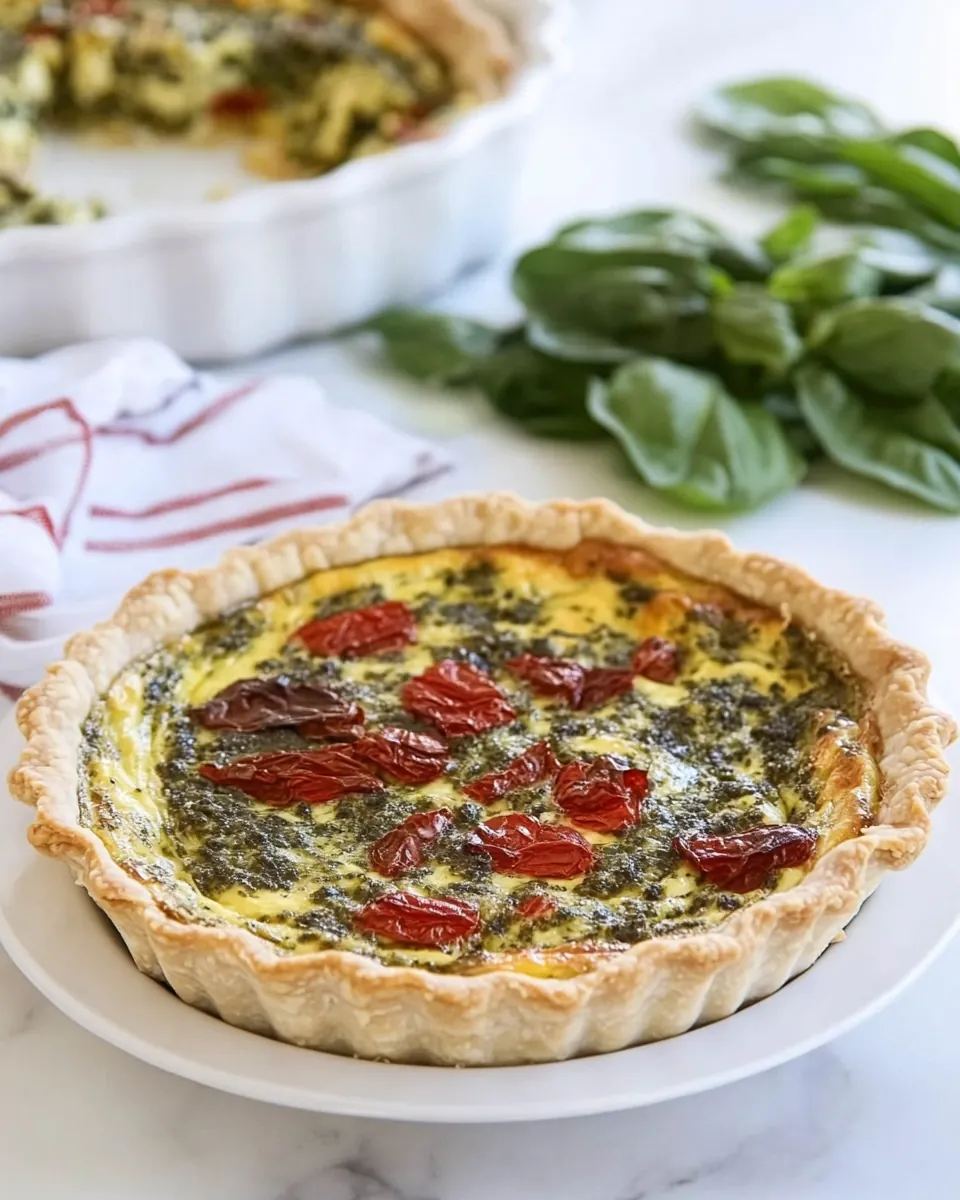
Pesto Quiche
Pesto Quiche became my go to when I wanted something that felt elegant without the fuss, a savory slice that travels well from brunch table to weekday dinner. I remember the first time I tossed a spoonful of pesto into an egg custard, and how the room filled with basil perfume as the quiche baked. That aroma hooked me, and I kept refining the balance between herb, dairy, and bright sun dried tomato to make every forkful sing.
Over the years I have brought this Pesto Quiche to potlucks, lazy weekend breakfasts, and quiet solo lunches after long shifts. Each time it landed on the table, people asked for the recipe, and I loved telling the story of how a simple swap of milk and Greek yogurt made the custard silkier while keeping it light. The textures are comforting, but the pesto keeps it lively, which is why I reach for this recipe when I want something both familiar and a little special.
Recipe Snapshot
1 hr 5 mins
20 mins
45 mins
Medium
250 kcal
Mediterranean
Gluten-Free, Keto
Breakfast
9 inch pie plate, rimmed baking sheet, mixing bowl, whisk, foil or parchment paper, wire rack
Why This Pesto Quiche Is a Winner
Bright basil forward flavor
I adore how pesto gives this quiche an unmistakable herbal lift. Instead of relying solely on heavy creams, the pesto threads basil, garlic, and nutty cheese notes into every bite, so the quiche tastes layered and complex without extra fuss. I find that the herb oil in pesto carries flavor through the custard, making slices sing even after a day in the fridge.
Balanced custard texture
The combination of eggs, egg whites, milk, and plain Greek yogurt creates a custard that is both creamy and stable. I like that the quiche sets firm enough to slice cleanly while still feeling tender in the center. That balance is forgiving, so if you overbake by a few minutes, you still get a lovely mouthfeel.
Fresh and pantry friendly
With baby spinach and sundried tomatoes, this recipe blends fresh produce with pantry staples. I often keep the dried tomatoes and pesto on hand so I can pull this together quickly. The sundried tomatoes add a bright, concentrated sweetness that contrasts the savory custard in a way I always appreciate.
Versatile for meals and occasions
This Pesto Quiche works for brunch, a light dinner, or a picnic. I love serving it warm right from the oven, but it also travels well to gatherings and tastes excellent at room temperature. It’s one of those recipes that makes hosting easier and me feel a little more composed.
Texture and visual appeal
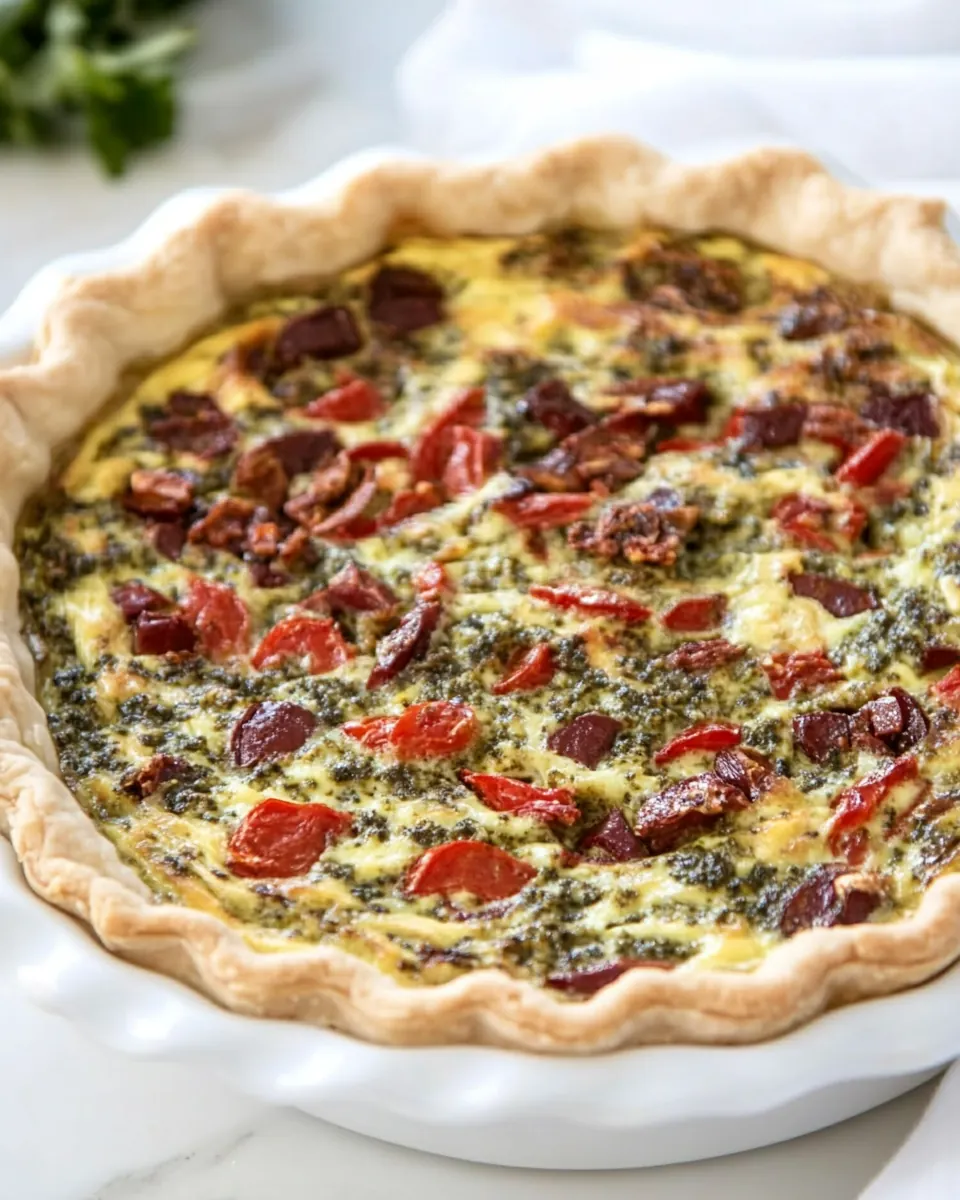
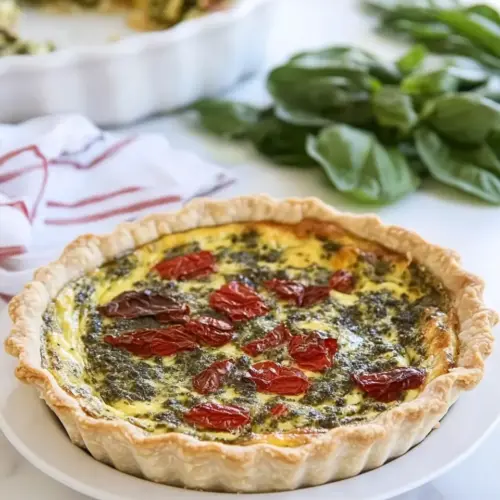
The golden crust, emerald flecks of spinach, and ruby bits of sundried tomatoes make for a striking presentation. I enjoy how the colors promise flavor before the first bite, and that visual cue always draws guests in.
What You’ll Need for Pesto Quiche
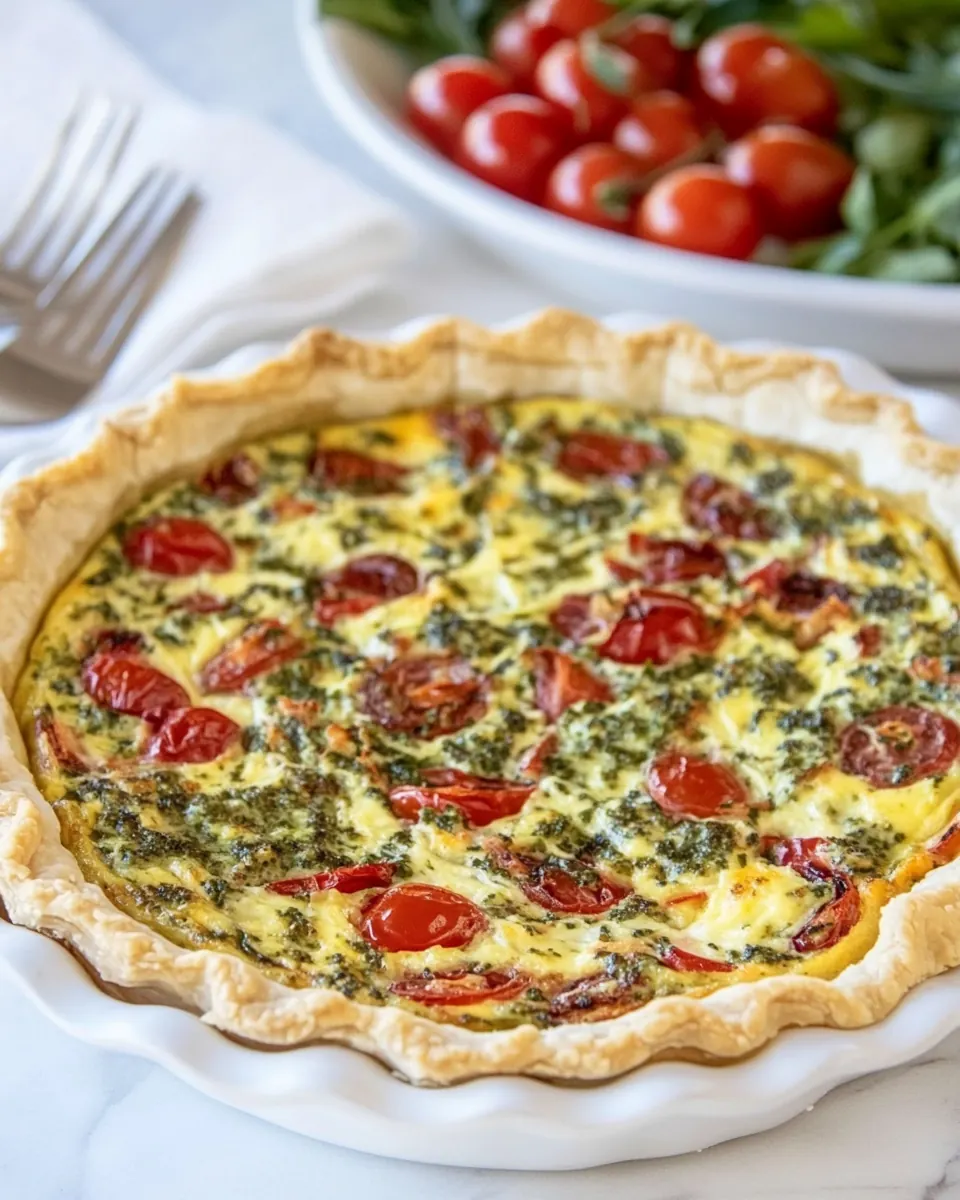
These ingredients work together to create a quiche that is herb forward, tangy, and satisfying. The crust provides a crisp, buttery base to hold a creamy, savory custard. Key players like pesto and Parmesan cheese deliver umami and herb character, while Greek yogurt keeps the filling tender without weighing it down. The spinach and sundried tomatoes offer color and bright contrast to the rich custard.
- 1 whole wheat pastry crust unbaked: Provide a sturdy whole grain base and higher fiber content for the quiche; presses into the pie dish to hold the filling and bakes to a golden, slightly nutty crust. Enhance nutritional value and texture while balancing richer fillings like cheese and pesto for a more wholesome final dish.
- 4 large eggs: Bind the custard with rich structure and creamy texture; whisk into the milk and yogurt to set the quiche as it bakes and give a tender, sliceable interior. Contribute protein and help the quiche achieve a stable, smooth consistency.
- 2 large egg whites: Lighten the custard while reducing overall fat; combine with whole eggs to increase protein without overpowering richness, improving texture and ensuring even baking. Help create a firmer set with fewer calories than using additional whole eggs.
- 3/4 cup milk: Add moisture and a silky mouthfeel to the egg mixture while diluting richness for a balanced custard; choose milk for familiar dairy notes and help the filling cook evenly. Contribute to browning and a tender set when combined with eggs and yogurt.
- 1/4 cup plain Greek yogurt: Introduce tanginess and creaminess to the custard while enriching texture; stir into the egg and milk mixture for a subtle acidic lift that brightens flavors. Provide additional protein and help stabilize the quiche filling for a smooth finish.
- 1/4 cup pesto: Impart aromatic herb flavor and savory depth throughout the quiche; fold into the custard to distribute basil, garlic, and nutty notes for a classic pesto profile. Enhance overall seasoning so fewer added salts are needed while complementing spinach and cheese.
- 1/4 teaspoon kosher salt: Season the filling to enhance natural flavors and ensure balanced taste; measure carefully to avoid over-salting, especially with salty cheeses like Parmesan. Dissolve into the wet mixture so seasoning is evenly distributed in every slice.
- 1/4 teaspoon freshly ground pepper: Add mild heat and aromatic complexity via freshly ground pepper; sprinkle into the custard to brighten flavors and provide subtle spiciness. Work with salt to create a well-rounded savory profile without overwhelming delicate ingredients.
- 2 cups baby spinach roughly chopped: Contribute freshness, color, and a tender leafy texture when wilted into the custard; chop to distribute evenly so each slice has spinach presence and mild vegetal flavor. Provide nutrients and a pleasant contrast to cheesy, savory elements.
- 1/2 cup Parmesan cheese freshly grated: Provide a salty, umami-rich finish with nutty and savory notes; grate finely so it melts into the quiche, creating a cohesive, golden-topped filling. Balance the pesto and sundried tomatoes and help develop a flavorful crust edge where cheese meets pastry.
- 1/3 cup dried julienne sundried tomatoes (not oil-packed) roughly chopped: Deliver concentrated sweet-tart tomato flavor and chewy texture when rehydrated in the custard; chop to disperse bright, intense bites throughout the quiche without adding oiliness. Complement pesto and spinach by contributing acidity and concentrated tomato character.
Recipe Directions for Pesto Quiche
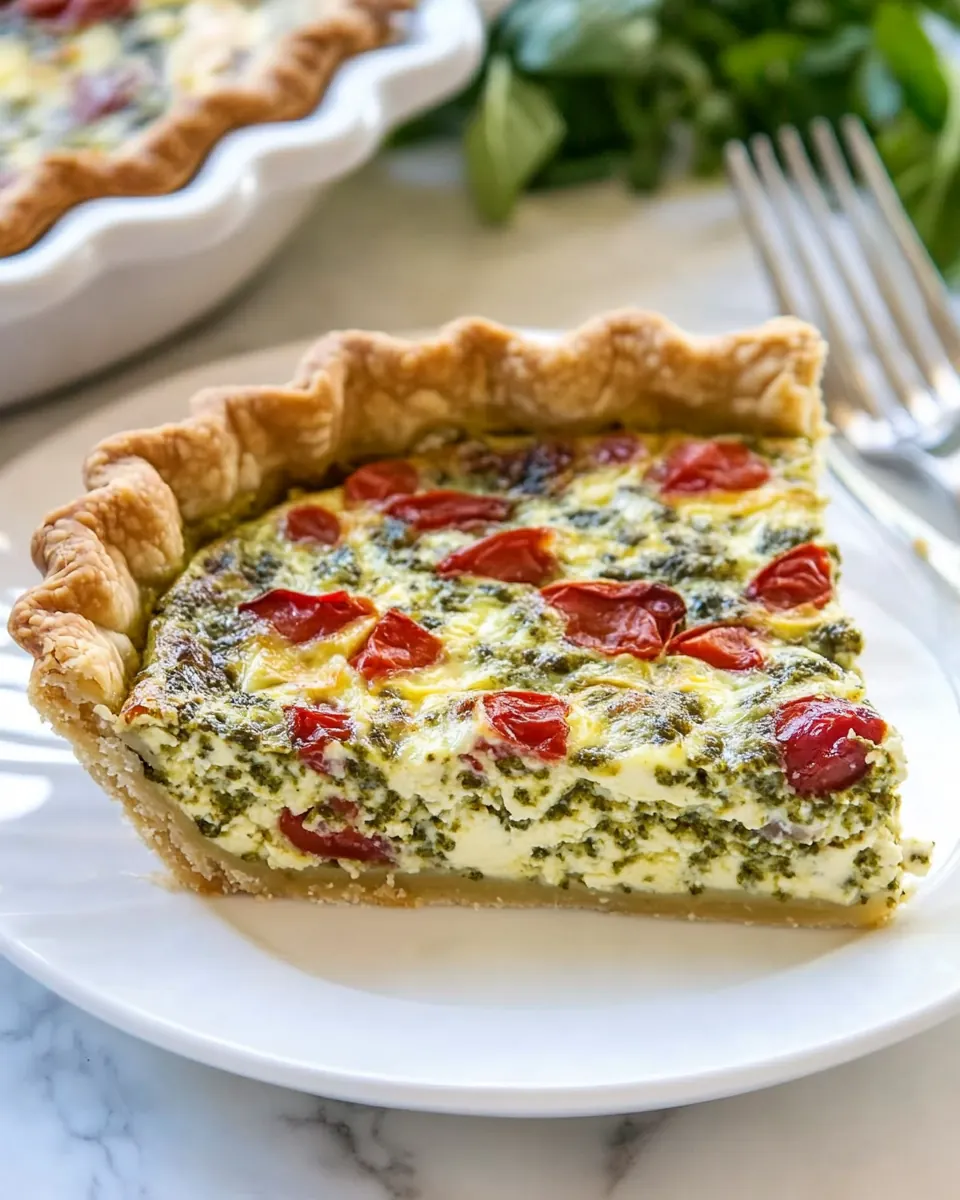
I like to walk through the process like a relaxed ritual so the kitchen feels calm and organized before the oven work begins. The directions below follow my step by step routine, and they include sensory notes so you can tell when each stage is right. Take your time with the crust and custard, and remember that small visual cues mean big results.
- Prepare the pastry crust according to the recipe directions (note: the recipe will yield 2 crusts. Feel free to either half the recipe or freeze the second half for a later time).: The smell of warmed butter and whole wheat from the crust signals that it will crisp beautifully in the oven; when fitting dough into the plate you should feel it relax as you press, making it easy to crimp; this step matters because a properly prepared crust prevents leaks and sogginess; one common mistake is stretching the dough too thin which can cause shrinkage during blind baking, so if it resists, let it rest a few minutes to relax gluten before continuing.
- Preheat the oven to 425 degrees F. Roll the dough into a 12-inch circle, then fit it into a 9-inch pie plate (not deep dish). Trim the crust so it overhangs the plate edge by about 1 inch all the way around, then tuck the edges under at the plate edge and crimp with your fingers or a fork.: You will notice the kitchen warming and the dough taking shape visually, with the edges overhanging by about 1 inch; rolling to an even thickness helps the crust bake uniformly, and tucking edges under creates a neat rim; avoid using a deep dish plate because it alters baking time and can leave the center underdone.
- Prick the bottom of the crust all over with a fork at 1/2-inch intervals, then line the plate with foil or parchment paper. Fill with dry beans, uncooked rice, or pie weights, ensuring that the beans or weights are all the way up against the edges of the pan. Set on a rimmed baking sheet, then bake for 15 minutes. Remove the lining and weights. If the crust has puffed up in spots, gently press it back down with a fork. Bake, uncovered, for 8-10 additional minutes, until the bottom of the crust is lightly golden. Remove from oven and set aside. Reduce the oven temperature to 375 degrees F.: The gentle rattling of the weights settling in signals they are distributed to hold the crust; blind baking ensures the bottom cooks through, preventing a soggy base when the custard is added; a troubleshooting tip is to press down any puffed spots immediately after removing the weights so the custard contacts the crust; failing to blind bake typically results in a wet bottom.
- Meanwhile, place the sundried tomatoes in a small bowl and cover them with boiling water. Let sit for 5 minutes to rehydrate, then drain and pat dry.: Visually you want a pale golden color and a firm base when tapped; this timing sets the stage for a crisp foundation that contrasts the soft filling; if the center looks pale but the edges are browning too quickly, tent the edges with foil; a common error is rushing this step which leaves the bottom limp and soggy once filled.
- In a large bowl whisk together the eggs, egg whites, milk, Greek yogurt, pesto, salt, and pepper. Then, stir in the spinach, Parmesan, and sundried tomatoes.: The oven will settle into a gentler heat for even cooking of the custard without over browning the crust; this adjustment is crucial because the initial high heat sets the crust structure while the lower temperature cooks the filling more gently for a custard texture; do not skip lowering the oven as a hotter final bake can cause excessive rise and crack the custard.
- With the pie plate still on the baking sheet, carefully pour the filling into the prebaked crust.: You will hear the quiet trickle as you drain them and feel the tomatoes plump slightly under your fingers after rehydration; this softening brings out their sweet tang and prevents them from drawing moisture from the custard during baking; a mistake to avoid is using oil packed tomatoes without draining thoroughly, which can add unwanted oil to the filling and affect set.
- Bake until the quiche is puffed and the center is set but still a little jiggly, 40 to 50 minutes. If the crust starts to brown too quickly as the quiche bakes, wrap the edges of the pan with foil to protect it. Let quiche cool on a wire rack for 15 minutes. Slice and serve warm or at room temperature.: As you whisk, you will see the custard lighten in color and smell of herb and dairy emerging from the pesto; folding in the spinach and Parmesan cheese distributes texture and savory notes evenly; this technique matters because over mixing can incorporate too much air, causing the quiche to puff unevenly; avoid adding wet greens that are not well drained, as excess water thins the custard and prolongs bake time.
- With the pie plate still on the baking sheet carefully pour the filling into the prebaked crust: The filling should glide into the crust and settle with minimal splashing, and you may hear a faint whisper as it levels; keeping the plate on a baking sheet catches any spills and makes transferring to the oven safe; this step is important to keep the oven clean and prevent tipping; a common slip is overfilling, so leave a little room for the custard to expand as it heats.
- Bake until the quiche is puffed and the center is set but still a little jiggly 40 to 50 minutes: Watch for the quiche to develop a gentle dome and for the edges to take on a warm golden tone, while the center should wobble slightly when nudged, signaling a perfect set; if the crust browns too quickly, wrap the pan edges with foil to protect them; avoid jarring the oven during this long bake which can cause the custard to collapse and become grainy.
- Let quiche cool on a wire rack for 15 minutes slice and serve warm or at room temperature: As it cools you will notice the scent of basil and cheese deepen and the quiche calming into neat slices, which makes cutting easier and cleaner; cooling allows residual heat to finish the set without overbaking; a common oversight is slicing immediately which can cause the custard to crumble, so give it the brief rest it needs.
Pro Tips and Tweaks
I keep a handful of small habits that make this quiche consistently excellent. These tips focus on timing, ingredient handling, and tweaks that save time while improving texture.
- Make ahead and freeze: Follow the note to freeze fully baked quiche wrapped tightly, it reheats beautifully and is a lifesaver for busy mornings.
- Pesto distribution: Whisk the pesto with the eggs first so its oils emulsify into the custard for even flavor instead of settling in pockets.
- Cheese choice: Use freshly grated Parmesan cheese for the best melt and flavor brightness, freshly grated gives better texture than pre grated blends.
- Spinach prep: Chop the baby spinach small and squeeze out excess moisture after rinsing to prevent a watery filling.
- Blind baking care: When blind baking, press any puffed spots down after removing weights so the custard sits flush against the crust for even contact and bake.
- Reheating slices: Rewarm individual slices on a sheet in a 350 degree F oven until steaming to revive crisp edges without drying the custard.
Best Served With
This quiche pairs well with light sides and suits many occasions from weekend brunch to casual dinner. Below are serving ideas and storage notes to help you plan a complete meal.
- Fresh green salad: Serve alongside a crisp mixed green salad dressed simply with lemon and olive oil to balance the richness of the quiche.
- Light soup: A simple vegetable or tomato based soup can complement the herb profile and make for a cozy lunch pairing.
- Picnic friendly: Because it holds up at room temperature, pack slices for outdoor gatherings or potlucks for easy serving.
- Occasions: Great for brunch, casual dinner, or holiday morning meals when you want something make ahead and elegant.
- Storage tips: Store leftover slices in an airtight container in the refrigerator for up to 3 days, reheat gently in a 350 degree F oven until warmed through.
- Freezing guidance: Fully baked quiche freezes well for up to 2 months when wrapped tightly, thaw overnight in the refrigerator before reheating.
FAQ
Conclusion
Pesto Quiche stands out because it blends vibrant basil pesto with a silky custard and bright sun dried tomatoes for a dish that feels both homey and refined. I encourage you to give it a try, whether you are feeding a small crowd or treating yourself to a leisurely weekend meal. The steps are straightforward, the flavors sing, and the make ahead options mean you can enjoy elegant slices with minimal day of effort. Serve a wedge with a simple salad or pack a slice for a picnic, and enjoy how a few pantry staples can come together into something truly satisfying.
Pesto Quiche
Equipment
- 9-inch pie plate
- Rimmed Baking Sheet
- Mixing Bowl
- Whisk
- Foil or parchment paper
- Wire Rack
Ingredients
- 1 whole wheat pastry crust unbaked Provide a sturdy whole grain base and higher fiber content for the quiche; presses into the pie dish to hold the filling and bakes to a golden, slightly nutty crust. Enhance nutritional value and texture while balancing richer fillings like cheese and pesto for a more wholesome final dish.
- 4 large eggs Bind the custard with rich structure and creamy texture; whisk into the milk and yogurt to set the quiche as it bakes and give a tender, sliceable interior. Contribute protein and help the quiche achieve a stable, smooth consistency.
- 2 large egg whites Lighten the custard while reducing overall fat; combine with whole eggs to increase protein without overpowering richness, improving texture and ensuring even baking. Help create a firmer set with fewer calories than using additional whole eggs.
- 3/4 cup milk Add moisture and a silky mouthfeel to the egg mixture while diluting richness for a balanced custard; choose milk for familiar dairy notes and help the filling cook evenly. Contribute to browning and a tender set when combined with eggs and yogurt.
- 1/4 cup plain Greek yogurt Introduce tanginess and creaminess to the custard while enriching texture; stir into the egg and milk mixture for a subtle acidic lift that brightens flavors. Provide additional protein and help stabilize the quiche filling for a smooth finish.
- 1/4 cup pesto Impart aromatic herb flavor and savory depth throughout the quiche; fold into the custard to distribute basil, garlic, and nutty notes for a classic pesto profile. Enhance overall seasoning so fewer added salts are needed while complementing spinach and cheese.
- 1/4 teaspoon kosher salt Season the filling to enhance natural flavors and ensure balanced taste; measure carefully to avoid over-salting, especially with salty cheeses like Parmesan. Dissolve into the wet mixture so seasoning is evenly distributed in every slice.
- 1/4 teaspoon freshly ground pepper Add mild heat and aromatic complexity via freshly ground pepper; sprinkle into the custard to brighten flavors and provide subtle spiciness. Work with salt to create a well-rounded savory profile without overwhelming delicate ingredients.
- 2 cups baby spinach roughly chopped Contribute freshness, color, and a tender leafy texture when wilted into the custard; chop to distribute evenly so each slice has spinach presence and mild vegetal flavor. Provide nutrients and a pleasant contrast to cheesy, savory elements.
- 1/2 cup Parmesan cheese freshly grated Provide a salty, umami-rich finish with nutty and savory notes; grate finely so it melts into the quiche, creating a cohesive, golden-topped filling. Balance the pesto and sundried tomatoes and help develop a flavorful crust edge where cheese meets pastry.
- 1/3 cup dried julienne sundried tomatoes (not oil-packed) roughly chopped Deliver concentrated sweet-tart tomato flavor and chewy texture when rehydrated in the custard; chop to disperse bright, intense bites throughout the quiche without adding oiliness. Complement pesto and spinach by contributing acidity and concentrated tomato character.
Instructions
- Prepare the pastry crust according to the recipe directions (note: the recipe will yield 2 crusts. Feel free to either half the recipe or freeze the second half for a later time).: The smell of warmed butter and whole wheat from the crust signals that it will crisp beautifully in the oven; when fitting dough into the plate you should feel it relax as you press, making it easy to crimp; this step matters because a properly prepared crust prevents leaks and sogginess; one common mistake is stretching the dough too thin which can cause shrinkage during blind baking, so if it resists, let it rest a few minutes to relax gluten before continuing.
- Preheat the oven to 425 degrees F. Roll the dough into a 12-inch circle, then fit it into a 9-inch pie plate (not deep dish). Trim the crust so it overhangs the plate edge by about 1 inch all the way around, then tuck the edges under at the plate edge and crimp with your fingers or a fork.: You will notice the kitchen warming and the dough taking shape visually, with the edges overhanging by about 1 inch; rolling to an even thickness helps the crust bake uniformly, and tucking edges under creates a neat rim; avoid using a deep dish plate because it alters baking time and can leave the center underdone.
- Prick the bottom of the crust all over with a fork at 1/2-inch intervals, then line the plate with foil or parchment paper. Fill with dry beans, uncooked rice, or pie weights, ensuring that the beans or weights are all the way up against the edges of the pan. Set on a rimmed baking sheet, then bake for 15 minutes. Remove the lining and weights. If the crust has puffed up in spots, gently press it back down with a fork. Bake, uncovered, for 8-10 additional minutes, until the bottom of the crust is lightly golden. Remove from oven and set aside. Reduce the oven temperature to 375 degrees F.: The gentle rattling of the weights settling in signals they are distributed to hold the crust; blind baking ensures the bottom cooks through, preventing a soggy base when the custard is added; a troubleshooting tip is to press down any puffed spots immediately after removing the weights so the custard contacts the crust; failing to blind bake typically results in a wet bottom.
- Meanwhile, place the sundried tomatoes in a small bowl and cover them with boiling water. Let sit for 5 minutes to rehydrate, then drain and pat dry.: Visually you want a pale golden color and a firm base when tapped; this timing sets the stage for a crisp foundation that contrasts the soft filling; if the center looks pale but the edges are browning too quickly, tent the edges with foil; a common error is rushing this step which leaves the bottom limp and soggy once filled.
- In a large bowl whisk together the eggs, egg whites, milk, Greek yogurt, pesto, salt, and pepper. Then, stir in the spinach, Parmesan, and sundried tomatoes.: The oven will settle into a gentler heat for even cooking of the custard without over browning the crust; this adjustment is crucial because the initial high heat sets the crust structure while the lower temperature cooks the filling more gently for a custard texture; do not skip lowering the oven as a hotter final bake can cause excessive rise and crack the custard.
- With the pie plate still on the baking sheet, carefully pour the filling into the prebaked crust.: You will hear the quiet trickle as you drain them and feel the tomatoes plump slightly under your fingers after rehydration; this softening brings out their sweet tang and prevents them from drawing moisture from the custard during baking; a mistake to avoid is using oil packed tomatoes without draining thoroughly, which can add unwanted oil to the filling and affect set.
- Bake until the quiche is puffed and the center is set but still a little jiggly, 40 to 50 minutes. If the crust starts to brown too quickly as the quiche bakes, wrap the edges of the pan with foil to protect it. Let quiche cool on a wire rack for 15 minutes. Slice and serve warm or at room temperature.: As you whisk, you will see the custard lighten in color and smell of herb and dairy emerging from the pesto; folding in the spinach and Parmesan cheese distributes texture and savory notes evenly; this technique matters because over mixing can incorporate too much air, causing the quiche to puff unevenly; avoid adding wet greens that are not well drained, as excess water thins the custard and prolongs bake time.
- With the pie plate still on the baking sheet carefully pour the filling into the prebaked crust: The filling should glide into the crust and settle with minimal splashing, and you may hear a faint whisper as it levels; keeping the plate on a baking sheet catches any spills and makes transferring to the oven safe; this step is important to keep the oven clean and prevent tipping; a common slip is overfilling, so leave a little room for the custard to expand as it heats.
- Bake until the quiche is puffed and the center is set but still a little jiggly 40 to 50 minutes: Watch for the quiche to develop a gentle dome and for the edges to take on a warm golden tone, while the center should wobble slightly when nudged, signaling a perfect set; if the crust browns too quickly, wrap the pan edges with foil to protect them; avoid jarring the oven during this long bake which can cause the custard to collapse and become grainy.
- Let quiche cool on a wire rack for 15 minutes slice and serve warm or at room temperature: As it cools you will notice the scent of basil and cheese deepen and the quiche calming into neat slices, which makes cutting easier and cleaner; cooling allows residual heat to finish the set without overbaking; a common oversight is slicing immediately which can cause the custard to crumble, so give it the brief rest it needs.
Notes
- Make ahead and freeze: Follow the note to freeze fully baked quiche wrapped tightly, it reheats beautifully and is a lifesaver for busy mornings.
- Pesto distribution: Whisk the pesto with the eggs first so its oils emulsify into the custard for even flavor instead of settling in pockets.
- Cheese choice: Use freshly grated Parmesan cheese for the best melt and flavor brightness, freshly grated gives better texture than pre grated blends.
- Spinach prep: Chop the baby spinach small and squeeze out excess moisture after rinsing to prevent a watery filling.
- Blind baking care: When blind baking, press any puffed spots down after removing weights so the custard sits flush against the crust for even contact and bake.
- Reheating slices: Rewarm individual slices on a sheet in a 350 degree F oven until steaming to revive crisp edges without drying the custard.