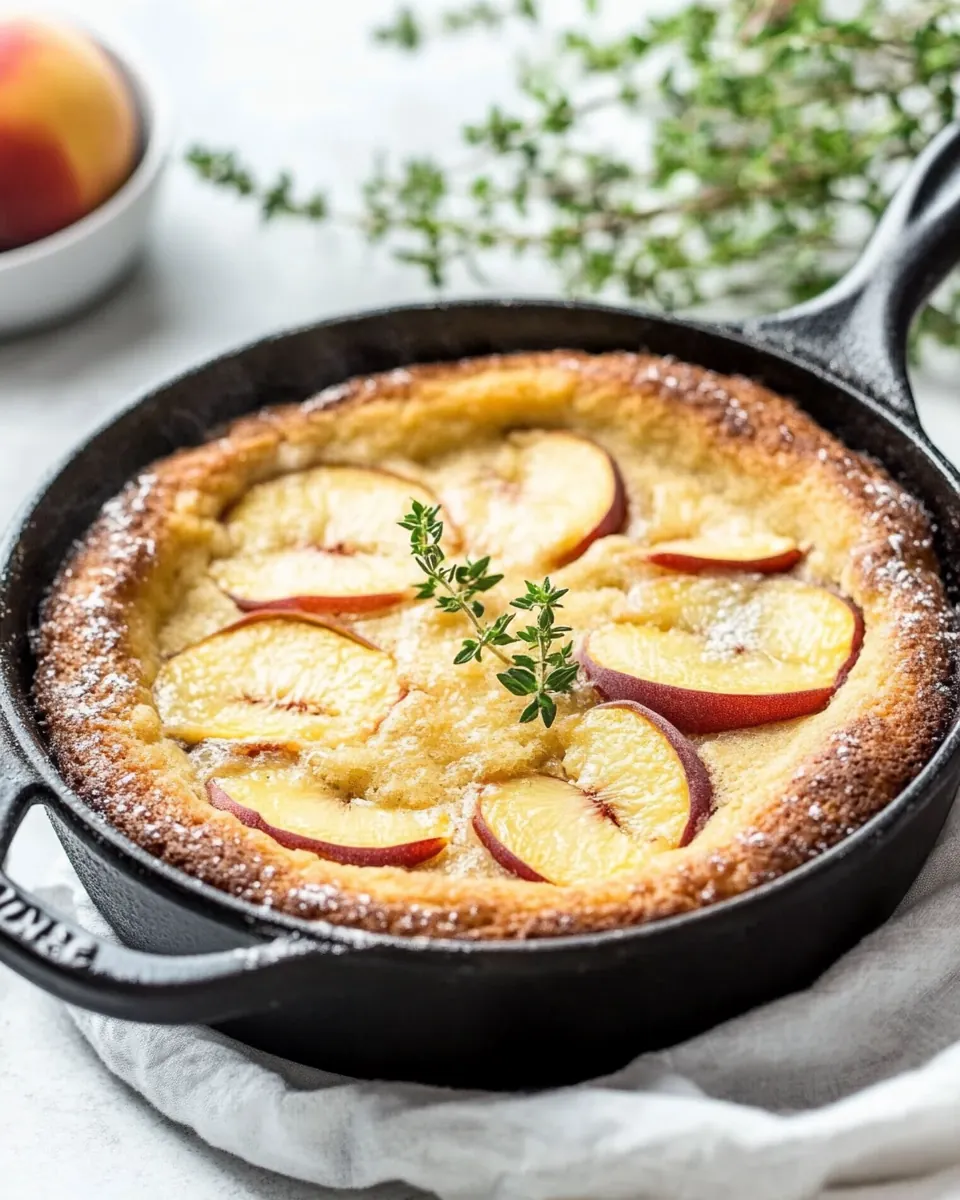
Peach Thyme Skillet Cake
Peach Thyme Skillet Cake was one of those recipes I first made on a sultry summer afternoon when the backyard thyme was begging to be used and the peaches at the farmer market smelled like sunshine. I remember juggling a cast iron skillet, a bowl of flour dust, and the sticky sweetness of sliced fruit, feeling like I was baking a small celebration right on the stovetop before taking it into the oven. The moment the pan came out warm and golden, the kitchen filled with a fragrant mix of caramelized sugar and herb, and I knew this would become a regular.
The second time I made Peach Thyme Skillet Cake, I simplified a few things and found ways to trust my senses. I learned to watch for the batter to pull away from the skillet edges, and to listen for the faint, comforting pop as the peaches released their juices. Serving it still slightly warm with a knife that left a soft trail through the crumb felt like sharing a small piece of summer with friends. Each bite balances the soft cake crumb with the gentle, almost savory lift of thyme, and the peaches become jammy without losing their bright lift.
Recipe Snapshot
55 mins
15 mins
40 mins
Medium
260 kcal
American
Gluten-Free, Vegan
Desserts
Cast iron skillet, Electric mixer, Mixing bowls, Offset spatula
Why This Peach Thyme Skillet Cake Hits Different
Fruit forward flavor with herbal lift
I adore how the peaches carry the show, offering juicy, fragrant pockets while the thyme sneaks in gentle savory notes. This contrast makes the cake taste thoughtful, not cloying. I often tell guests that the herb turns a simple fruit cake into something grown up and slightly surprising.
One pan ease that feels elevated
Using a single skillet means less mess and more confidence. I love that you can mix, bake, and serve from the same vessel. It makes weekday baking feel doable, and the skillet‘s edges help create a lovely caramelized crust that a sheet pan just cannot match.
Textural harmony
The method yields a tender crumb with blistered fruit on top, and the sprinkle of extra sugar before baking gives a crisp top layer. I appreciate that the cake is moist but not dense, and that each forkful offers both soft cake and peach ribbons.
Flexible and approachable
I’ve found this cake forgiving whether your peaches are perfectly ripe or just shy of prime. It welcomes slight adjustments in slicing and timing, which is perfect for home bakers who want a reliable result without fuss. When guests ask for the recipe, I say it’s practical and impressive all at once.
Seasonal appeal
This recipe celebrates summer in a way that feels authentic. I love bringing it to backyard gatherings, and I often pair it with simple tea or coffee. It showcases seasonal peaches without drowning them in batter, so their flavor leads every bite.
Main Ingredients for Peach Thyme Skillet Cake
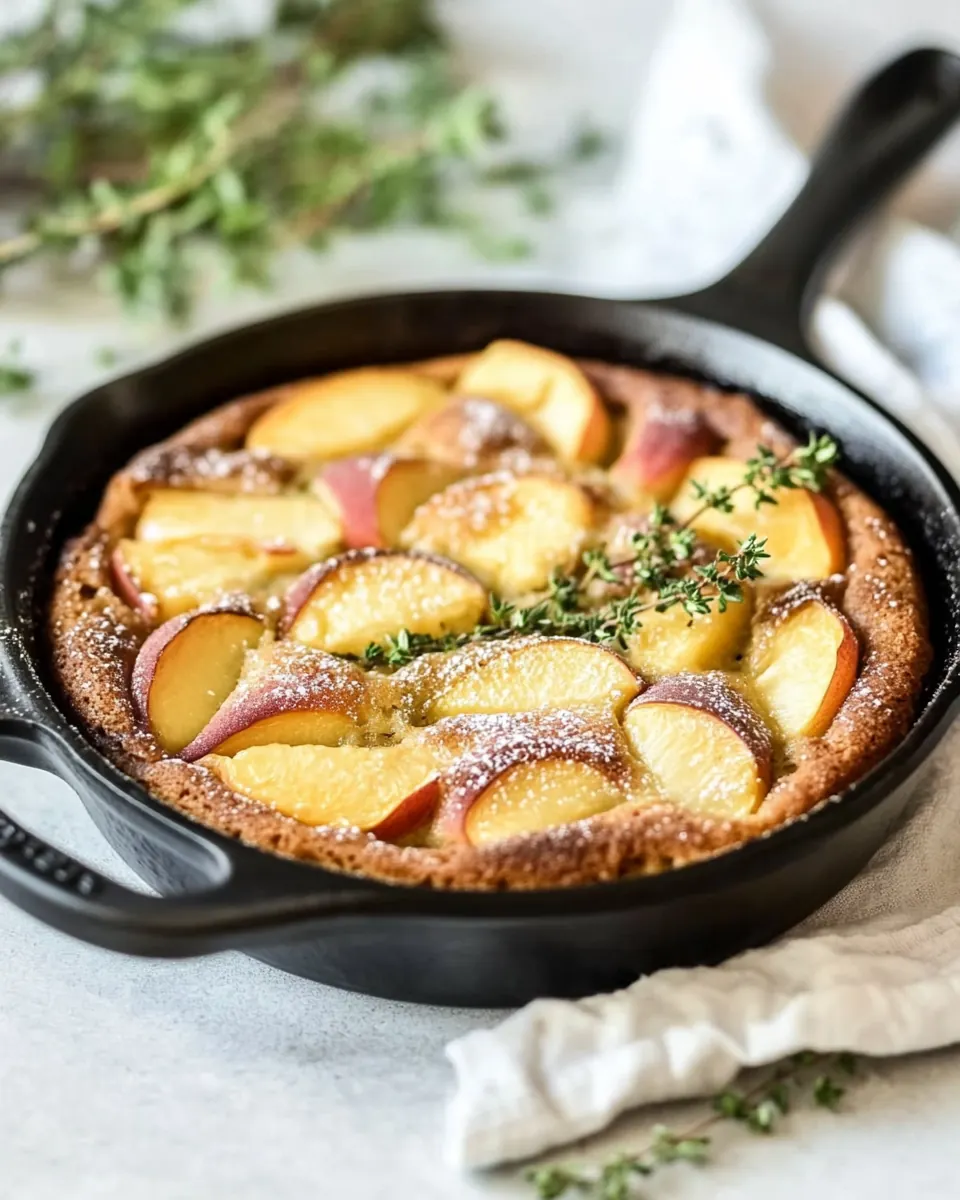
I believe the best recipes trust a few strong players. For Peach Thyme Skillet Cake, the core idea is to let the fruit shine while the batter provides a tender, buttery backdrop. The thyme acts like a gentle amplifier, lifting sweetness and adding a subtle herbaceous note. The interplay between butter, buttermilk, and a touch of sugar gives structure and moisture, while the peaches add freshness and moisture as they bake.
- 4 tablespoons unsalted butter, room temperature, plus more for skillet 1 cup all-purpose flour, plus more for skillet 1/2 teaspoon baking powder 1/4 teaspoon baking soda 1 1/2 teaspoons chopped fresh thyme leaves 1/2 teaspoon coarse salt 3/4 cup plus 2 tablespoons sugar 1 large egg 1/2 cup low-fat buttermilk 2 small ripe peaches (or 1 large), thinly sliced: Cream and enrich the batter by adding fat and moisture; room–temperature unsalted butter helps create a tender, velvety crumb, aids in aeration when creamed with sugar, and can be used to grease the skillet to promote even browning and prevent sticking. Combine with the additional instruction to butter the skillet for best results.
How to Make Peach Thyme Skillet Cake
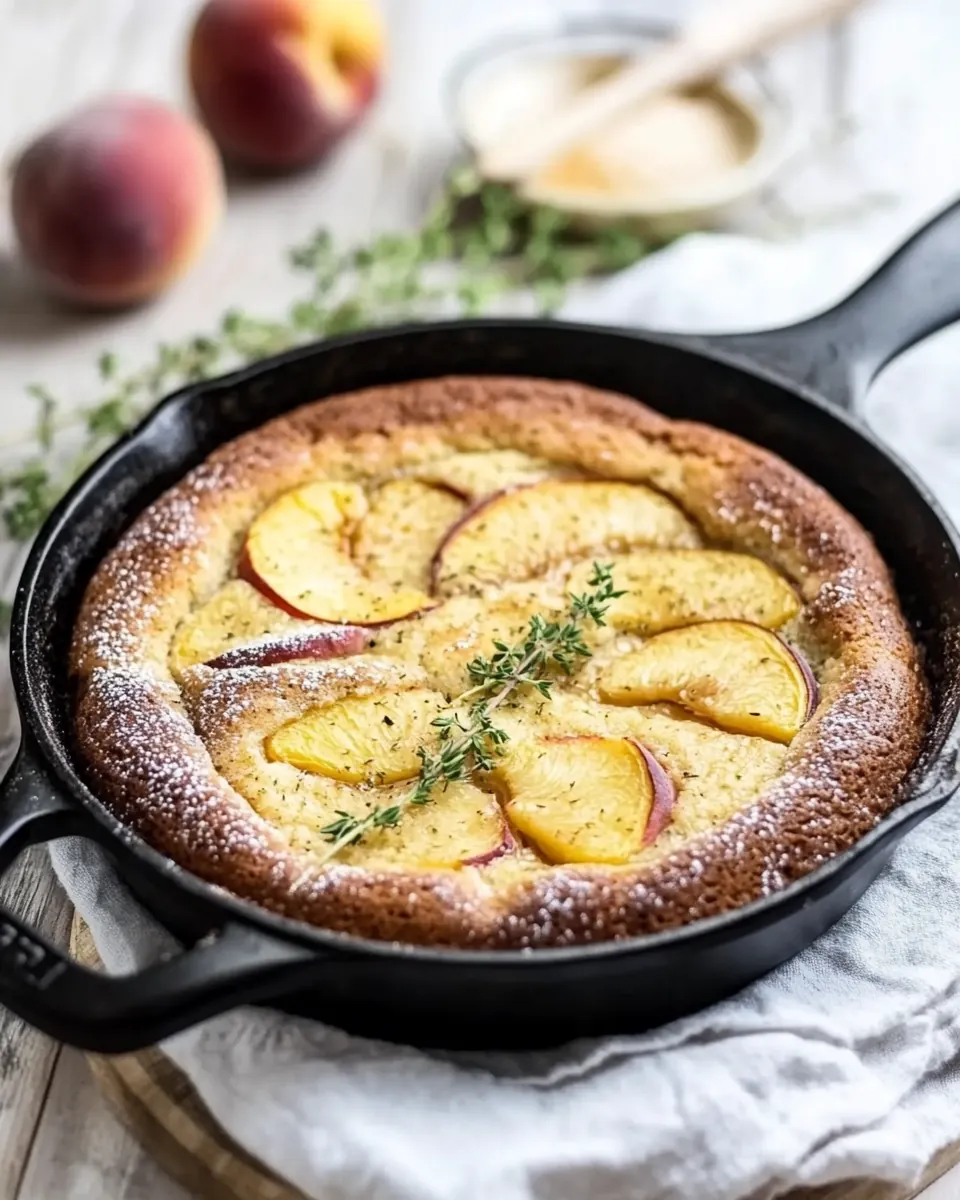
I like to approach the method with calm focus, because each little sensory cue tells you when the cake is heading toward success. Work steadily and keep an eye on the peaches as they bake. Below are the cleaned steps expanded into detailed notes so you can follow along confidently.
- Preheat oven to 375 degrees. Butter and flour an 8 inch cast iron skillet (or other oven safe skillet) and set aside.: Warm, dry heat is crucial here, you will smell the faint warmth as the oven comes to temperature and that steady heat helps the cake rise evenly and the top caramelize, creating a golden crust that contrasts the tender crumb. Why this matters, the 375 degrees setting helps the edges set quickly while the center continues to cook, reducing the chance of a collapsed middle. Sensory cues include a faint warm wave when you open the oven and an even glow on the racks. Troubleshooting tip, if your oven runs hot or cold, an oven thermometer will save you from under or over baking; avoid opening the oven door repeatedly during the first part of baking, which can cause uneven rise.
- In a medium bowl, whisk together flour, baking powder, baking soda, thyme and salt. In the bowl of an electric mixer, cream together butter and 3/4 cup of sugar until light and fluffy. Beat in egg. With the mixer on low, add flour mixture in three additions, alternating with the buttermilk. Be sure to start and end with the flour mixture.: The combination of butter and a dusting of flour creates a thin release layer so the cake slips out cleanly and the edges get a delicate crust. You should feel the skillet warm to the touch after a minute in the oven if you like a head start, but it is not required. Visual cues include a thin, even coating of flour and no excess clumps. Why this technique matters, butter adds flavor and helps toast the edges while flour prevents sticking. Troubleshooting tip, if flour clumps, tap out the excess so you do not end up with dry pockets on the cake exterior.
- Pour batter into prepared skillet and smooth with an offset spatula. Spread 3/4 of the peach slices over the top of the cake. Sprinkle the top of the cake with 2 tablespoons of sugar.: You will see the pale tan of the all purpose flour flecked with green from the thyme , and the whisking distributes the leaveners evenly so pockets of baking powder do not create uneven bubbles. This is all about even distribution, which yields a smooth rise and uniform crumb. Smell the faint herbal aroma that emerges as you mix, it is subtle but important. Troubleshooting tip, be sure the baking powder and baking soda are fresh, old leavening can give weak rise and dense texture.
- Bake for 35-40 minutes or until toothpick inserted into the cake comes out clean. Add remaining peach slices to the top of the cake in the last 25 minutes of baking. Allow cake to cool slightly before slicing.: As you beat, watch the color shift from pale to slightly more yellow and the texture change to light and airy, almost cloudlike, because the butter is trapping air that helps leaven the cake. The sound will be a steady whir, and when it is ready the beater ribbons will leave a small trail in the butter. This step matters because it builds structure and tenderness. Troubleshooting tip, if your butter is too warm and greasy, chill briefly and start again, as overly soft butter will not hold air and the cake will be dense.
- Enjoy!: The egg should be at room temperature so it mixes smoothly into the creamed butter and sugar , creating a satin batter. I notice a glossy sheen once it is incorporated. The egg adds moisture and binding power. Troubleshooting tip, add the egg slowly and scrape down the bowl to avoid pockets of unmixed egg, which can cause uneven texture.
- With the mixer on low, add flour mixture in three additions, alternating with the buttermilk: This staged mixing keeps the batter tender by minimizing gluten development while ensuring everything blends. After each addition, the batter will seem to tighten and then loosen when you add the buttermilk , creating a smooth, slightly thick batter. The reason this matters is that alternating prevents overmixing and yields a delicate crumb. Troubleshooting tip, do not over beat after the last flour addition, a few quick pulses are enough to combine.
- Be sure to start and end with the flour mixture: Beginning and finishing with dry ingredients helps control moisture and keeps the batter from becoming too loose. You will feel the batter gain body after the final flour addition and it should hold a gentle mound on the spatula. This technique ensures structure without toughness. Troubleshooting tip, if the batter appears overly stiff, a tablespoon of extra buttermilk can smooth it out without thinning too much.
- Pour batter into prepared skillet and smooth with an offset spatula: As the batter hits the warm, buttered skillet you will hear a soft faint thud and see it spread, then smoothing with an offset spatula gives an even surface so the peaches sit uniformly on top. The visual cue is a glossy, leveled top. This matters because an even surface bakes uniformly and prevents one side from overcooking. Troubleshooting tip, if the batter is lumpy, gently tap the skillet on the counter to settle air bubbles before adding fruit.
- Spread 3/4 of the peach slices over the top of the cake: Arrange most of the peach slices into an attractive pattern, slightly overlapping so they sink into the top and create pockets of jammy fruit as they bake. You will see juices beginning to settle around the fruit as it settles. This placement matters for even distribution and elegant presentation. Troubleshooting tip, avoid piling slices too thickly in the center which can slow baking and leave a soggy spot.
- Sprinkle the top of the cake with 2 tablespoons of sugar: The extra granulated sugar caramelizes during baking, producing tiny crisped crystals that add contrast to the tender crumb. You may hear a faint crackle as the sugar melts and browns. This finish layer is why the edges develop a pleasing crunch. Troubleshooting tip, if your sugar clumps, sift it lightly so it distributes evenly.
- Bake for 35 to 40 minutes or until toothpick inserted into the cake comes out clean: During baking you will notice the aroma shift from raw batter to caramel and peach, and the top will become golden and slightly blistered. A clean toothpick indicates the crumb is set, but be mindful that a few moist crumbs from the fruit are normal. This timing ensures a fully cooked center without drying the edges. Troubleshooting tip, if the top browns too quickly, tent with foil for the remaining time to avoid overbrowning.
- Add remaining peach slices to the top of the cake in the last 25 minutes of baking: Placing the remaining slices later preserves their shape and fresh peach character, so they soften without completely disintegrating. You will see them warm and glossy but not fully collapsed. This timing gives a pleasing contrast between deeply baked peaches and fresher slices. Troubleshooting tip, insert the slices gently into small spaces on top rather than pressing deeply, which can disturb the crumb.
- Allow cake to cool slightly before slicing: Cooling lets the crumb set and the juices redistribute, so each slice holds together. You should notice steam easing away and the cake firming at the edges. This rest is essential for neat slices and better texture. Troubleshooting tip, slicing while too hot can produce a gummy center and messy presentation.
- Enjoy: Sit down and savor the warm mix of tender cake, slightly caramelized top, and aromatic thyme . Sharing this with friends is one of my favorite endings to a summer meal. Troubleshooting tip, if the cake seems dense on the first slice, allow it to cool a bit longer, as the texture often improves with a short rest.
Customization Ideas
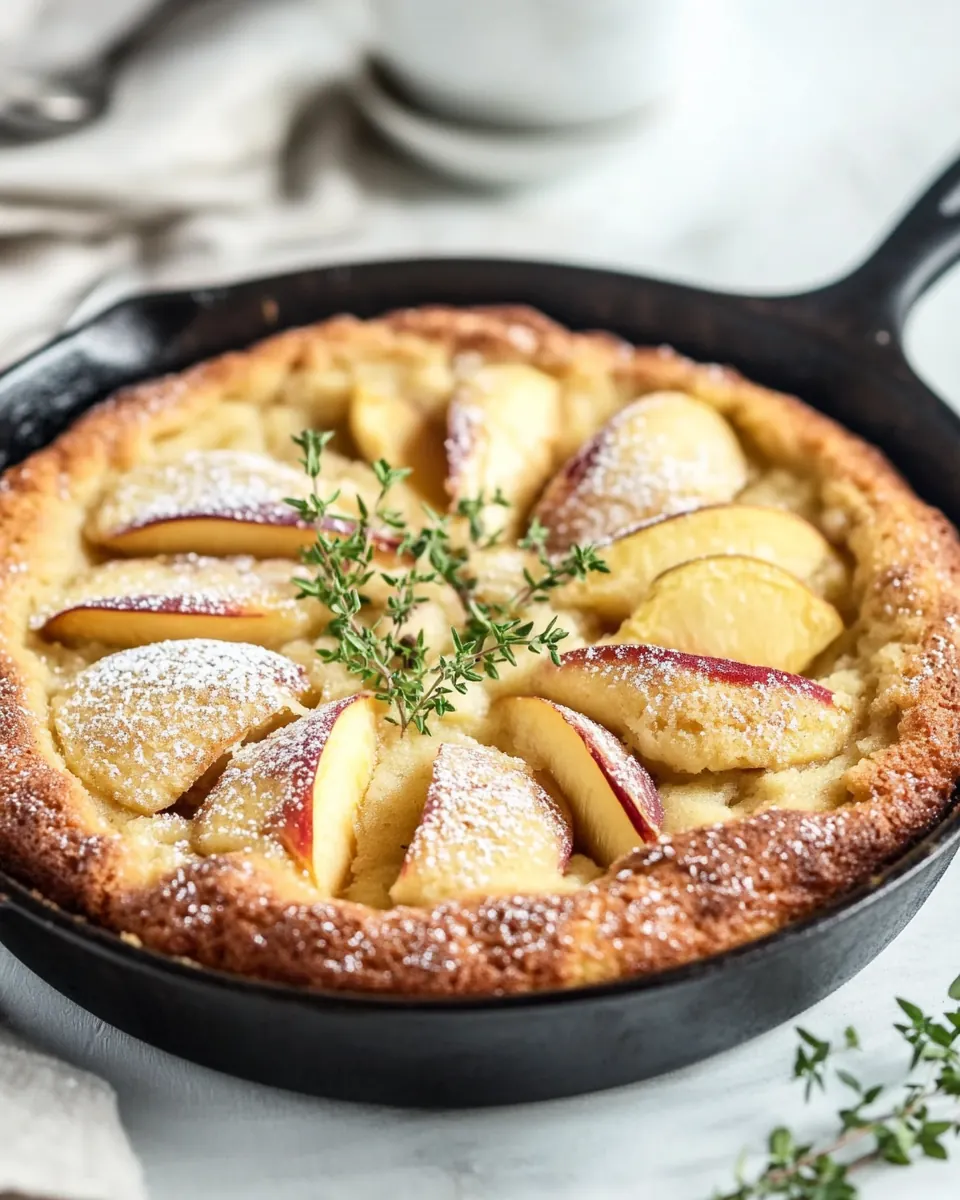
This cake adapts nicely to what you have on hand while keeping the central idea intact. Below are practical ways to tweak texture, presentation, and flavor while honoring the original balance of fruit, herb, and tender crumb.
- Switch up the fruit by using nectarines in place of peaches for a slightly firmer texture and a hint of tartness while preserving the overall flavor profile.
- Play with the herb modestly, adding a touch more thyme if you want a pronounced savory note, but be careful as too much can edge into bitterness.
- Upgrade the finish by sprinkling a mix of coarse sugar and a pinch of cinnamon on top for a warm aromatic crunch that complements the peaches.
- Make it dairy friendly by using a plant based milk cultured product in place of buttermilk if you need a non dairy option, but expect a slightly different crumb.
- Serve warm or room temperature, the cake holds its texture well and can be reheated gently for that fresh baked feeling when serving later.
What to Pair With Peach Thyme Skillet Cake
This cake presents beautifully on its own, but pairing can elevate the experience depending on the occasion. I like to think about temperature, texture, and complementary flavors when planning accompaniments. Below are serving ideas and contexts that suit this cake well.
- Casual brunch: Serve slices alongside a pot of strong coffee and a light fruit salad to balance the cake’s richness with bright acidity.
- Afternoon tea: Arrange thin slices on a small plate with delicate tea sandwiches or scones, letting the herbal notes of thyme echo through the spread.
- Summer picnic: Pack cooled slices wrapped in parchment for an outdoor treat, accompanied by chilled lemonade and a simple green salad.
- Small dinner party dessert: Finish the meal with a slice and a small scoop of vanilla style frozen dessert, the cold creaminess contrasting the warm cake texture.
- Storage tips: Keep leftovers covered at room temperature for one day or refrigerate up to three days; to refresh, warm gently in a low oven for a few minutes.
- Seasonal pairing: This is ideal for summer gatherings when stone fruit is at its peak, making the peaches the shining element on the table.
FAQ
Conclusion
This Peach Thyme Skillet Cake shines because it lets seasonal peaches take center stage while a touch of thyme adds an unexpected, delightful lift. It’s approachable, one pan friendly, and delivers a satisfying mix of tender crumb and caramelized fruit. Give it a try the next time peaches are at their peak, and enjoy the comforting aroma that will fill your kitchen. Sharing slices with friends or family turns a simple dessert into a warm, memorable moment.
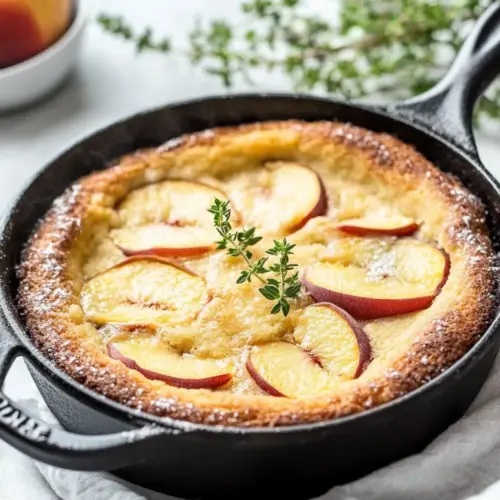
Peach Thyme Skillet Cake
Equipment
- Cast-Iron Skillet
- Electric Mixer
- Mixing Bowls
- Offset Spatula
Ingredients
- 4 tablespoons unsalted butter, room temperature, plus more for skillet 1 cup all-purpose flour, plus more for skillet 1/2 teaspoon baking powder 1/4 teaspoon baking soda 1 1/2 teaspoons chopped fresh thyme leaves 1/2 teaspoon coarse salt 3/4 cup plus 2 tablespoons sugar 1 large egg 1/2 cup low-fat buttermilk 2 small ripe peaches (or 1 large), thinly sliced Cream and enrich the batter by adding fat and moisture; room-temperature unsalted butter helps create a tender, velvety crumb, aids in aeration when creamed with sugar, and can be used to grease the skillet to promote even browning and prevent sticking. Combine with the additional instruction to butter the skillet for best results.
Instructions
- Preheat oven to 375 degrees. Butter and flour an 8 inch cast iron skillet (or other oven safe skillet) and set aside.: Warm, dry heat is crucial here, you will smell the faint warmth as the oven comes to temperature and that steady heat helps the cake rise evenly and the top caramelize, creating a golden crust that contrasts the tender crumb. Why this matters, the 375 degrees setting helps the edges set quickly while the center continues to cook, reducing the chance of a collapsed middle. Sensory cues include a faint warm wave when you open the oven and an even glow on the racks. Troubleshooting tip, if your oven runs hot or cold, an oven thermometer will save you from under or over baking; avoid opening the oven door repeatedly during the first part of baking, which can cause uneven rise.
- In a medium bowl, whisk together flour, baking powder, baking soda, thyme and salt. In the bowl of an electric mixer, cream together butter and 3/4 cup of sugar until light and fluffy. Beat in egg. With the mixer on low, add flour mixture in three additions, alternating with the buttermilk. Be sure to start and end with the flour mixture.: The combination of butter and a dusting of flour creates a thin release layer so the cake slips out cleanly and the edges get a delicate crust. You should feel the skillet warm to the touch after a minute in the oven if you like a head start, but it is not required. Visual cues include a thin, even coating of flour and no excess clumps. Why this technique matters, butter adds flavor and helps toast the edges while flour prevents sticking. Troubleshooting tip, if flour clumps, tap out the excess so you do not end up with dry pockets on the cake exterior.
- Pour batter into prepared skillet and smooth with an offset spatula. Spread 3/4 of the peach slices over the top of the cake. Sprinkle the top of the cake with 2 tablespoons of sugar.: You will see the pale tan of the all purpose flour flecked with green from the thyme , and the whisking distributes the leaveners evenly so pockets of baking powder do not create uneven bubbles. This is all about even distribution, which yields a smooth rise and uniform crumb. Smell the faint herbal aroma that emerges as you mix, it is subtle but important. Troubleshooting tip, be sure the baking powder and baking soda are fresh, old leavening can give weak rise and dense texture.
- Bake for 35-40 minutes or until toothpick inserted into the cake comes out clean. Add remaining peach slices to the top of the cake in the last 25 minutes of baking. Allow cake to cool slightly before slicing.: As you beat, watch the color shift from pale to slightly more yellow and the texture change to light and airy, almost cloudlike, because the butter is trapping air that helps leaven the cake. The sound will be a steady whir, and when it is ready the beater ribbons will leave a small trail in the butter. This step matters because it builds structure and tenderness. Troubleshooting tip, if your butter is too warm and greasy, chill briefly and start again, as overly soft butter will not hold air and the cake will be dense.
- Enjoy!: The egg should be at room temperature so it mixes smoothly into the creamed butter and sugar , creating a satin batter. I notice a glossy sheen once it is incorporated. The egg adds moisture and binding power. Troubleshooting tip, add the egg slowly and scrape down the bowl to avoid pockets of unmixed egg, which can cause uneven texture.
- With the mixer on low, add flour mixture in three additions, alternating with the buttermilk: This staged mixing keeps the batter tender by minimizing gluten development while ensuring everything blends. After each addition, the batter will seem to tighten and then loosen when you add the buttermilk , creating a smooth, slightly thick batter. The reason this matters is that alternating prevents overmixing and yields a delicate crumb. Troubleshooting tip, do not over beat after the last flour addition, a few quick pulses are enough to combine.
- Be sure to start and end with the flour mixture: Beginning and finishing with dry ingredients helps control moisture and keeps the batter from becoming too loose. You will feel the batter gain body after the final flour addition and it should hold a gentle mound on the spatula. This technique ensures structure without toughness. Troubleshooting tip, if the batter appears overly stiff, a tablespoon of extra buttermilk can smooth it out without thinning too much.
- Pour batter into prepared skillet and smooth with an offset spatula: As the batter hits the warm, buttered skillet you will hear a soft faint thud and see it spread, then smoothing with an offset spatula gives an even surface so the peaches sit uniformly on top. The visual cue is a glossy, leveled top. This matters because an even surface bakes uniformly and prevents one side from overcooking. Troubleshooting tip, if the batter is lumpy, gently tap the skillet on the counter to settle air bubbles before adding fruit.
- Spread 3/4 of the peach slices over the top of the cake: Arrange most of the peach slices into an attractive pattern, slightly overlapping so they sink into the top and create pockets of jammy fruit as they bake. You will see juices beginning to settle around the fruit as it settles. This placement matters for even distribution and elegant presentation. Troubleshooting tip, avoid piling slices too thickly in the center which can slow baking and leave a soggy spot.
- Sprinkle the top of the cake with 2 tablespoons of sugar: The extra granulated sugar caramelizes during baking, producing tiny crisped crystals that add contrast to the tender crumb. You may hear a faint crackle as the sugar melts and browns. This finish layer is why the edges develop a pleasing crunch. Troubleshooting tip, if your sugar clumps, sift it lightly so it distributes evenly.
- Bake for 35 to 40 minutes or until toothpick inserted into the cake comes out clean: During baking you will notice the aroma shift from raw batter to caramel and peach, and the top will become golden and slightly blistered. A clean toothpick indicates the crumb is set, but be mindful that a few moist crumbs from the fruit are normal. This timing ensures a fully cooked center without drying the edges. Troubleshooting tip, if the top browns too quickly, tent with foil for the remaining time to avoid overbrowning.
- Add remaining peach slices to the top of the cake in the last 25 minutes of baking: Placing the remaining slices later preserves their shape and fresh peach character, so they soften without completely disintegrating. You will see them warm and glossy but not fully collapsed. This timing gives a pleasing contrast between deeply baked peaches and fresher slices. Troubleshooting tip, insert the slices gently into small spaces on top rather than pressing deeply, which can disturb the crumb.
- Allow cake to cool slightly before slicing: Cooling lets the crumb set and the juices redistribute, so each slice holds together. You should notice steam easing away and the cake firming at the edges. This rest is essential for neat slices and better texture. Troubleshooting tip, slicing while too hot can produce a gummy center and messy presentation.
- Enjoy: Sit down and savor the warm mix of tender cake, slightly caramelized top, and aromatic thyme . Sharing this with friends is one of my favorite endings to a summer meal. Troubleshooting tip, if the cake seems dense on the first slice, allow it to cool a bit longer, as the texture often improves with a short rest.
Notes
- Switch up the fruit by using nectarines in place of peaches for a slightly firmer texture and a hint of tartness while preserving the overall flavor profile.
- Play with the herb modestly, adding a touch more thyme if you want a pronounced savory note, but be careful as too much can edge into bitterness.
- Upgrade the finish by sprinkling a mix of coarse sugar and a pinch of cinnamon on top for a warm aromatic crunch that complements the peaches.
- Make it dairy friendly by using a plant based milk cultured product in place of buttermilk if you need a non dairy option, but expect a slightly different crumb.
- Serve warm or room temperature, the cake holds its texture well and can be reheated gently for that fresh baked feeling when serving later.