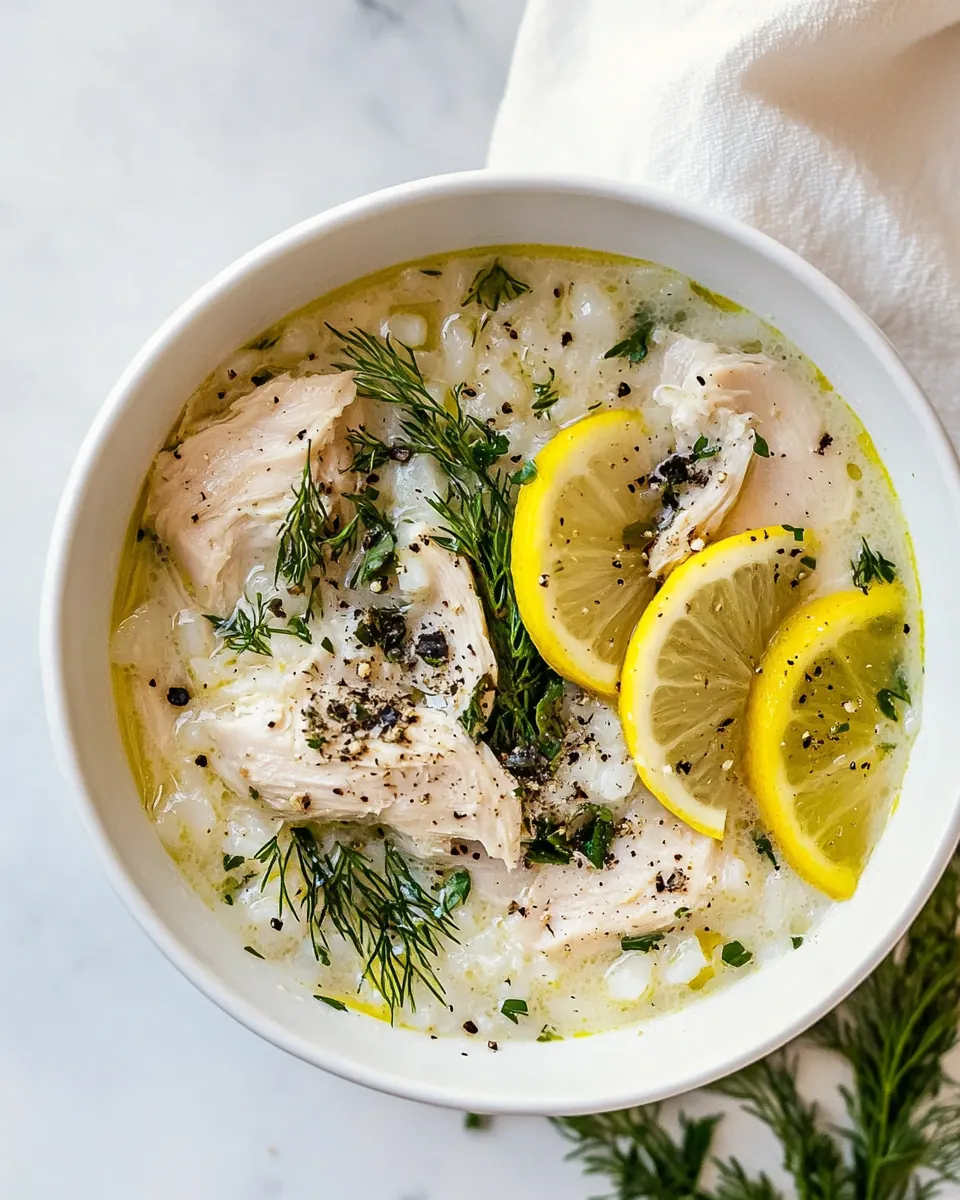
Avgolemono Chicken and Rice Soup
Avgolemono Chicken and Rice Soup has been my kitchen comfort on cold nights for years, a bowl that folds warm citrus brightness into rich, silky broth in a way that always makes the table feel more like home. The first time I tasted it I remember how the steam carried that lemony perfume across the room, and how the shredded chicken and tender grains of rice seemed to hug the creamy, egg thickened soup. Over time I’ve learned small tricks that keep the eggs from curdling and the rice from turning mushy, and those little touches are what turn a good pot into a memorable one.
I tend to cook this when we want something soothing but not heavy, the kind of meal you can eat with one hand while you flip through a cookbook with the other. Guests often ask for the recipe after their first spoonful, and I always say that the secret is patience, gentle heat, and fresh dill to brighten every bite. It’s a dish I return to when I want to feel cared for, and I hope it becomes that for you too.
Recipe Snapshot
55 mins
10 mins
45 mins
Medium
450 kcal
Mediterranean
Gluten-Free, Low FODMAP
Soups
Pot, Slotted spoon, Large heatproof bowl, Forks
The Magic of This Avgolemono Chicken and Rice Soup
Bright, balanced flavor
I love how Avgolemono Chicken and Rice Soup balances tangy lemon with savory chicken broth, creating a profile that wakes up the palate without overpowering it. The lemon juice cuts through the richness while the eggs lend a silky mouthfeel that feels luxurious yet comforting. Personally, that interplay keeps me reaching for another spoonful.
Simple ingredients, big impact
We’re working with pantry-friendly items like rice, eggs, and store bought chicken broth, but the technique elevates them. Using a few fresh elements such as the reserved dill fronds and a final drizzle of olive oil turns humble staples into something noteworthy. I appreciate recipes that respect ingredients instead of masking them.
Comfort and versatility
This soup is both restorative and versatile, perfect for a quiet family dinner or when someone needs a little culinary TLC. I often cook a bigger batch because it reheats beautifully, and you can easily swap chicken cuts if needed. The method keeps the textures pleasing, so leftovers still taste homemade.
Technique driven results
The folding of the eggs and gradual tempering with the hot broth is what gives the soup its signature silkiness. I find that taking the few extra minutes to temper properly prevents curdling and creates that velvety finish we all crave. Once you master that step, the rest feels effortless.
Fresh finishing touches
A final garnish of chopped dill, cracked black pepper, and a drizzle of olive oil does more than look pretty, it brightens and lifts the bowl. I never skip that last bit of seasoning, it’s what makes everyone at the table pause and smile.
Ingredients to Make Avgolemono Chicken and Rice Soup
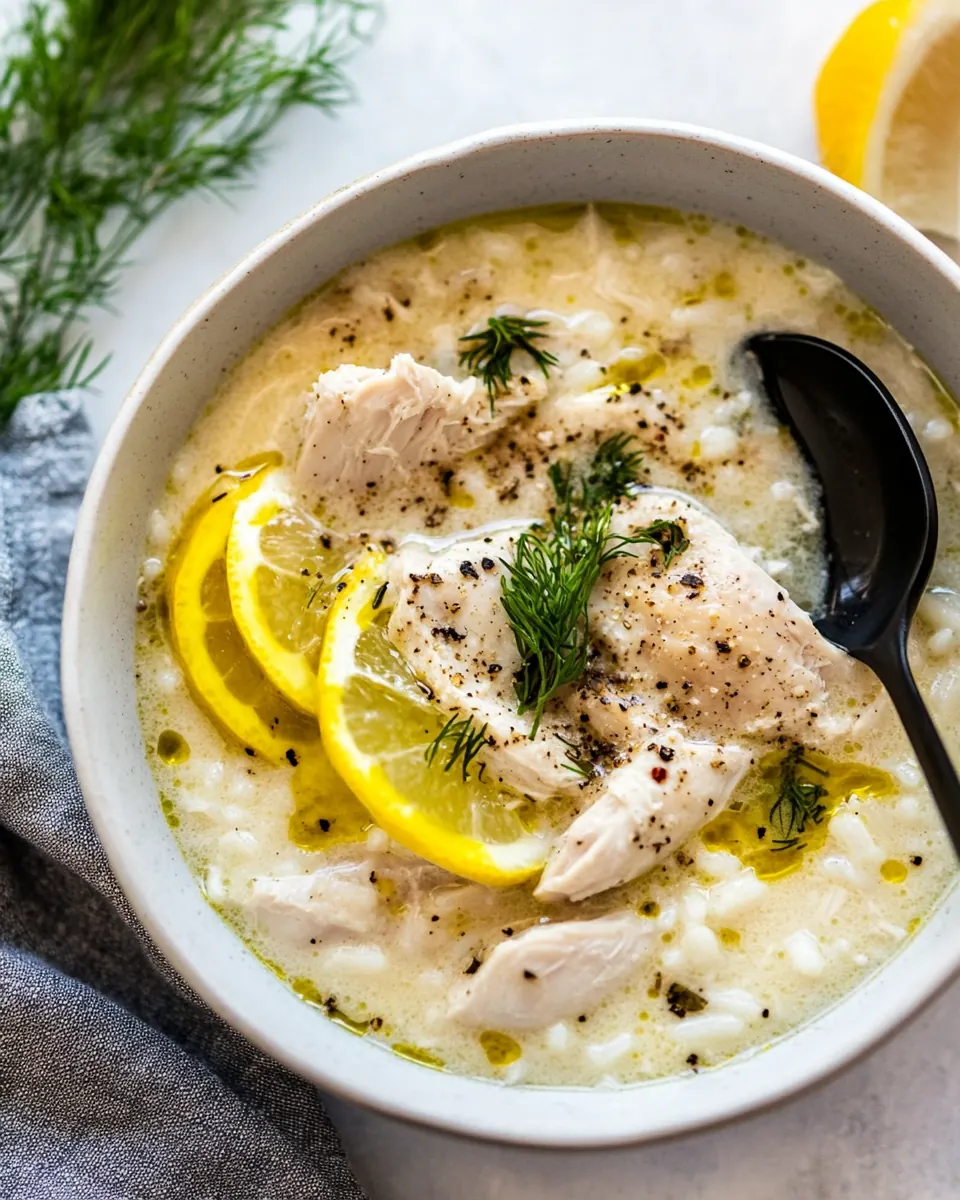
The ingredients here are intentionally straightforward, each playing a clear role in the harmony of the soup. The chicken provides savory depth while the rice offers body and comforting texture. Fresh dill and lemon juice are the bright notes that keep the broth lively, and the eggs create a creamy, emulsified finish. Together they form a classic framework that is both nourishing and elegant.
- 1/2 ounce container fresh dill: Chopped finely and scattered over the finished soup to lend a bright, herbaceous finish that complements the lemon and chicken; adds fresh aromatic notes and a subtle grassy flavor that lifts the broth. Use leaves only and add near the end to preserve color and fragrance.
- 2 quarts low-sodium chicken broth: Poured into the pot as the cooking liquid to build the base of the soup; provides savory depth and body while keeping sodium under control so the lemon and egg can shine. Warm gently to avoid curdling when the egg-lemon mixture is tempered in.
- 1 1/2 pounds boneless skinless chicken thighs: Cooked through and shredded or cut into bite-sized pieces to provide rich, tender protein; thighs contribute moistness and succulence that pair well with rice and the creamy egg-lemon emulsion. Simmer gently in the broth until fully cooked, then remove and shred before returning to the soup.
- 3/4 cup uncooked white rice: Simmered in the broth until tender to add comforting texture and subtle starchiness that helps slightly thicken the soup when combined with the egg mixture. Rinse briefly before cooking if desired to reduce surface starch and prevent excessive cloudiness.
- 2 large eggs: Beaten and tempered into the hot broth with lemon to create the classic creamy, silky emulsion that defines avgolemono; eggs add richness, body, and a velvety mouthfeel without dairy. Whisk vigorously and temper slowly to avoid scrambling when incorporating into the soup.
- 1/4 cup freshly squeezed lemon juice, plus more as needed: Squeezed and whisked into the egg mixture to provide the bright, tangy acidity that balances the richness of eggs and chicken; lemon juice defines the characteristic flavor of avgolemono. Add gradually and taste, adjusting for a lively but balanced citrus presence.
- 1/2 teaspoon kosher salt: Sprinkled in during seasoning to enhance and balance flavors; kosher salt helps draw out accent notes from the chicken, rice, and lemon while allowing control over overall salinity. Add gradually and taste as the soup concentrates during cooking.
- ground black pepper, to taste: Ground and added to taste to introduce warm, slightly sharp heat that complements the lemon and herbs without overpowering the dish. Season lightly and adjust at the end to achieve a gentle peppery lift.
- drizzle extra-virgin olive oil for serving: Drizzled over individual bowls just before serving to contribute a silky finish and subtle fruity richness from the olive oil; enhances mouthfeel and adds a hint of Mediterranean character. Use sparingly to avoid masking the delicate lemon-egg emulsion.
The Method for Avgolemono Chicken and Rice Soup
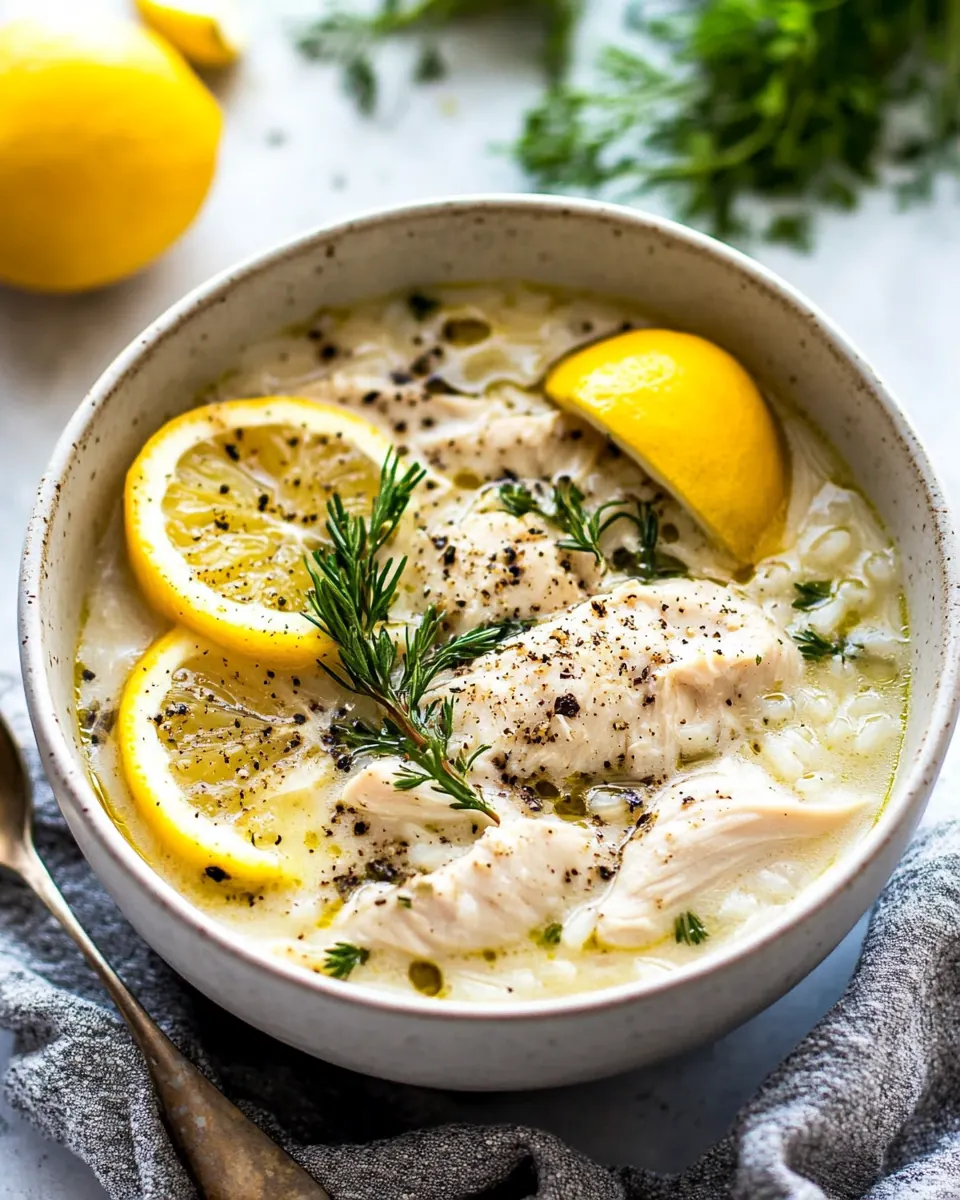
Coaxing the best texture and flavor from this soup depends on a few gentle techniques, especially when emulsifying the eggs and lemon into the hot broth. Read through the steps so you understand the rhythm, and have your tools at hand for tempering and shredding. A calm pace and attention to sensory cues will reward you with a silken, bright soup.
- Pull the dill fronds from the stems; reserve 1/2 cup of the fronds for garnish.: The scent of fresh dill should be immediate and herbaceous when you separate fronds from stems, a green perfume that hints at the bright finish to come. Work over a bowl to catch bits and keep the kitchen tidy, and use your fingers to gently strip rather than chop right away, preserving delicate leaf texture. Avoid bruising the fronds which can make them taste slightly bitter. If the dill seems limp, a quick rinse and dry will revive it, but be sure the leaves are mostly dry so they don't water down the garnish appearance.
- In a pot, combine the stems, chicken thighs and rice with the chicken broth and bring to a boil over high heat.: When the pot first comes up to a boil you will notice vigorous bubbling and a savory aroma as the chicken broth and stems release flavors into the liquid. The rolling boil helps extract collagen and taste from the chicken and stems, which will deepen the broth. Keep an eye on the pot so it doesn't foam over, and stir gently to distribute the rice . A common error is boiling too long at high heat, which can make the chicken tough later, so this initial high heat is brief and purposeful.
- Lower the heat to medium-low and stir. Cover and cook the chicken until tender, 25 minutes.: As you reduce to a gentle simmer the surface will show slow, steady ripples and the aroma will intensify into a warm, savory note. Covered, the steam cooks the chicken through while the rice absorbs liquid; the texture should be tender not falling apart. Check for a gentle simmer rather than a boil, because agitation can break grains and make the broth cloudy. Avoid lifting the lid too often, which can extend cooking time and cool the pot unnecessarily.
- Use a slotted spoon to remove the chicken and stems from the broth. Discard the stems and transfer the chicken to a plate then shred with 2 forks.: Removing solids brightens visual clarity and concentrates the broth's flavor. When you transfer the hot chicken to a plate and shred with forks, the meat should pull apart easily, yielding moist ribbons that will later meld with the egg lemon mixture. If the meat resists shredding, it may need a few more minutes; shredding while the meat is very hot makes it easier. Discarding the stems prevents woody bitterness in the finished soup.
- Meanwhile, increase the heat to medium-high and bring the stock up to an active simmer.: Raising the heat restores movement to the pot, and you will see more pronounced bubbles rising to the surface, which is ideal for tempering because you want hot, not boiling, broth. The simmer concentrates flavors and slightly reduces volume, intensifying the soup. Be vigilant now, because if the broth boils aggressively when you add the egg mixture it can cook the eggs into curds. Keep the simmer steady and controlled to avoid this.
- In a large heatproof bowl, vigorously whisk the eggs until frothy. Add 1/4 cup lemon juice and mix to incorporate.: The eggs should become pale and airy as you whisk, taking on a light froth that helps them blend smoothly into the hot liquid later. When you add the lemon juice , the mixture will smell bright and tangy, a signal that the soup will finish with lively acidity. Vigorous whisking helps incorporate air, which stabilizes the egg when tempered. A frequent mistake is underwhisking, which can increase the chance of the eggs separating when introduced to heat.
- While you whisk the eggs, gradually drizzle in 1 ladleful (about 1 cup) of the broth (it’s OK if some grains of rice tag along) and mix until fully combined.: As warm broth meets the egg lemon mixture you should notice steam and a gentle increase in temperature without any curdling. The gradual drizzle is crucial to raise the eggs to broth temperature safely, creating a glossy emulsion. If you pour too quickly the eggs can scramble, producing grainy bits, so patience here prevents that outcome. If a few rice grains enter the bowl, they will soften the mixture and are harmless, but avoid transferring large amounts of solids which can cool the ladle and interrupt tempering.
- Pour the lemon-egg mixture into the pot with the broth, immediately remove from the heat, and stir in the shredded chicken. Taste and add more lemon juice to taste.: Right after pouring, remove the pot from direct heat to keep the residual warmth from overcooking the eggs, and stir gently so the texture turns silky and smooth without separating. You should hear a barely audible simmer and see the broth thicken slightly, taking on a satiny sheen as the emulsion sets. Adding the shredded chicken now warms the meat gently without drying it. A key trap is returning the pot to high heat too soon, which will cause curdling, so keep it off the burner while you finish seasoning.
- Garnish with a generous amount of fresh dill, black pepper and a drizzle of olive oil.: At this point the aroma should be bright lemon balanced by savory broth and tender chicken . Taste carefully and add incremental amounts of lemon juice until you reach a lively but balanced acidity that complements the eggs and broth. I often add a small squeeze and then wait a minute before reassessing, because the flavors settle as the bowl cools slightly. Over-acidifying is the most common misstep, so adjust slowly and with restraint.
- Garnish with a generous amount of fresh dill black pepper and a drizzle of olive oil.: The final assembly adds visual contrast and aromatic lift, with the chopped dill brightening each spoonful and the cracked black pepper giving a gentle bite. A light drizzle of olive oil adds sheen and an extra layer of flavor that rounds the bowl. Serve immediately so the garnish retains its texture, because letting the herbs sit in hot liquid will diminish their crispness. If the soup sits too long, reheat gently while stirring to maintain the silky consistency.
Tips and Variations
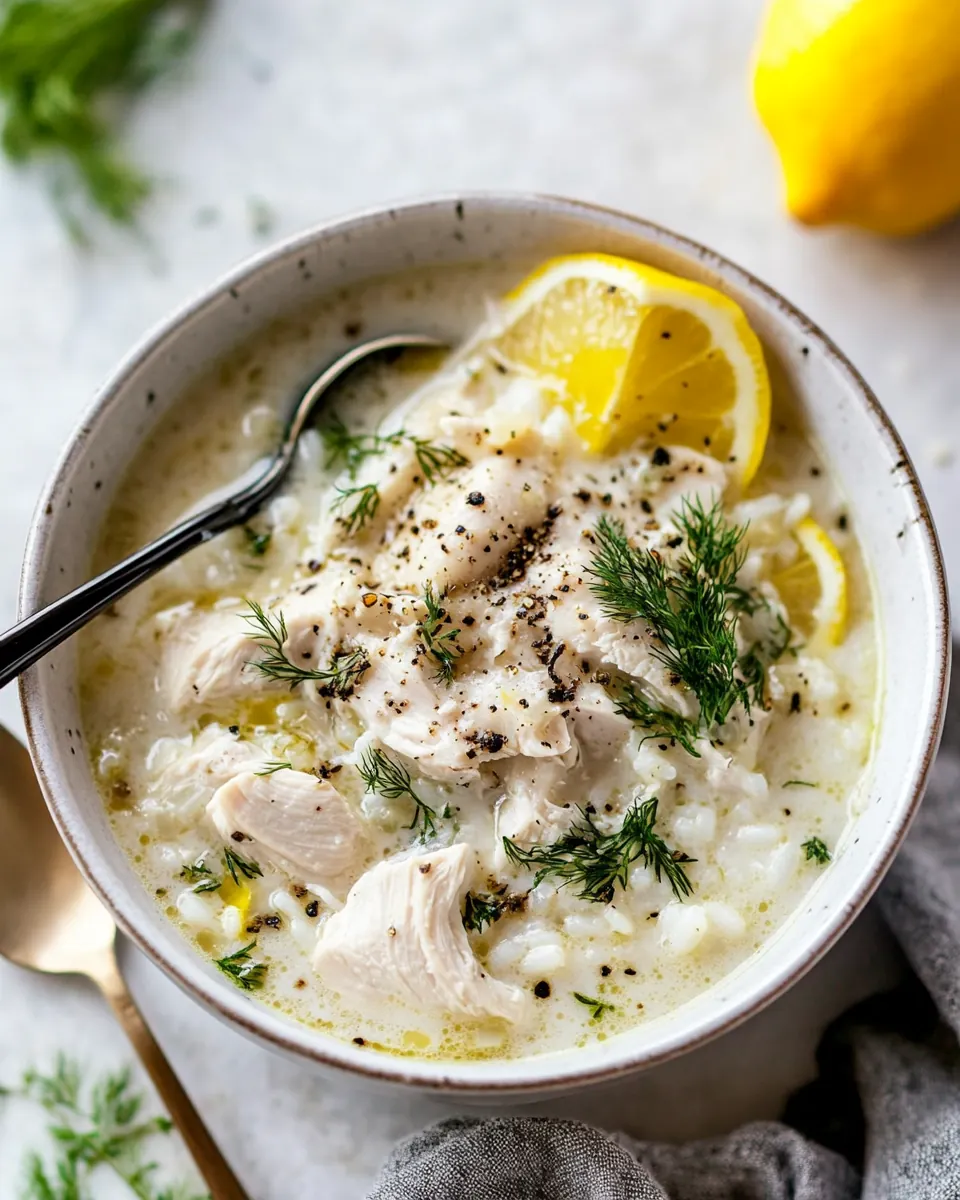
I like to offer a few variations and practical tips that make the cooking smoother and the outcome more dependable. These notes expand on texture control, timing, and presentation so you feel confident each time you cook Avgolemono Chicken and Rice Soup.
- Use warm broth when tempering, because adding cold broth can shock the eggs and cause uneven texture; warm liquid helps form a stable emulsion for a silky finish.
- Stagger rice timing, if you prefer firmer grains cook the rice briefly before adding the chicken, this prevents over softened rice especially if you plan to reheat leftovers.
- Choose thighs for richness, boneless skinless chicken thighs provide extra flavor and stay tender during simmering, making shredding easier and the broth richer.
- Reserve herb fronds, saving some fresh dill for garnish keeps the plate visually appealing and adds a fresh burst of aroma that lifts every spoonful.
- Adjust lemon slowly, add lemon juice in small increments and taste between additions so the final acidity complements rather than overwhelms the eggs and broth.
What to Serve Alongside Avgolemono Chicken and Rice Soup
This soup pairs beautifully with a few simple sides and can fit a range of occasions, from a casual weeknight to a gentle Ramadan iftar. Think light, textural contrasts and items that will not overpower the delicate avgolemono notes. I often reach for a crisp salad or warm bread to round the meal and make it feel complete.
- Crusty country bread, a loaf with a chewy crumb is ideal for sopping up the silky broth and adds a satisfying, rustic contrast to the smooth soup.
- Simple green salad, a dressed salad with lemon vinaigrette echoes the soups citrus notes while adding crunch and a refreshing counterpoint to the warm bowl.
- Roasted seasonal vegetables, lightly seasoned and oven roasted vegetables make the meal heartier for dinner and introduce caramelized flavors that pair well with the soups brightness.
- Light meze plates, small plates of marinated olives or sliced cucumber provide an easy way to expand the meal with complementary textures and lively flavors.
- Occasion planning, for winter evenings or when you need comfort this soup is perfect, and it suits gatherings where a warm, nourishing main is appreciated such as family dinners or quiet holiday meals.
- Storage tips, cool the soup quickly, refrigerate in airtight containers, and consume within three days; reheat gently over low heat to preserve the creamy texture and avoid boiling which can break the emulsion.
- Seasonal pairing, in colder months lean on heartier sides like roasted root vegetables, while in spring a bright, crisp salad will complement the lemon and dill notes.
FAQ
Conclusion
Avgolemono Chicken and Rice Soup is special because it blends bright lemon with a silky egg emulsion and tender chicken for a comforting, elegant bowl. Give it a try when you want a nourishing meal that still feels light and bright. The technique of tempering the eggs is straightforward once you practice it a couple times, and the rewarding texture and layered flavors make this soup worth the attention. Serve it with a simple salad or crusty bread, and enjoy the warmth and freshness it brings to the table.
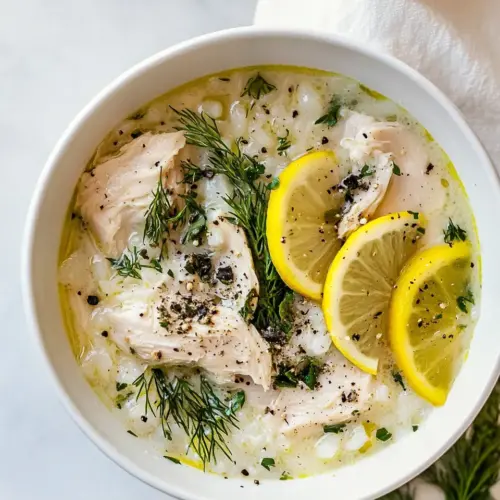
Avgolemono Chicken and Rice Soup
Equipment
- Pot
- Slotted Spoon
- Large heatproof bowl
- Forks
Ingredients
- 1/2 ounce container fresh dill Chopped finely and scattered over the finished soup to lend a bright, herbaceous finish that complements the lemon and chicken; adds fresh aromatic notes and a subtle grassy flavor that lifts the broth. Use leaves only and add near the end to preserve color and fragrance.
- 2 quarts low-sodium chicken broth Poured into the pot as the cooking liquid to build the base of the soup; provides savory depth and body while keeping sodium under control so the lemon and egg can shine. Warm gently to avoid curdling when the egg-lemon mixture is tempered in.
- 1 1/2 pounds boneless skinless chicken thighs Cooked through and shredded or cut into bite-sized pieces to provide rich, tender protein; thighs contribute moistness and succulence that pair well with rice and the creamy egg-lemon emulsion. Simmer gently in the broth until fully cooked, then remove and shred before returning to the soup.
- 3/4 cup uncooked white rice Simmered in the broth until tender to add comforting texture and subtle starchiness that helps slightly thicken the soup when combined with the egg mixture. Rinse briefly before cooking if desired to reduce surface starch and prevent excessive cloudiness.
- 2 large eggs Beaten and tempered into the hot broth with lemon to create the classic creamy, silky emulsion that defines avgolemono; eggs add richness, body, and a velvety mouthfeel without dairy. Whisk vigorously and temper slowly to avoid scrambling when incorporating into the soup.
- 1/4 cup freshly squeezed lemon juice, plus more as needed Squeezed and whisked into the egg mixture to provide the bright, tangy acidity that balances the richness of eggs and chicken; lemon juice defines the characteristic flavor of avgolemono. Add gradually and taste, adjusting for a lively but balanced citrus presence.
- 1/2 teaspoon kosher salt Sprinkled in during seasoning to enhance and balance flavors; kosher salt helps draw out accent notes from the chicken, rice, and lemon while allowing control over overall salinity. Add gradually and taste as the soup concentrates during cooking.
- ground black pepper, to taste Ground and added to taste to introduce warm, slightly sharp heat that complements the lemon and herbs without overpowering the dish. Season lightly and adjust at the end to achieve a gentle peppery lift.
- drizzle extra-virgin olive oil for serving Drizzled over individual bowls just before serving to contribute a silky finish and subtle fruity richness from the olive oil; enhances mouthfeel and adds a hint of Mediterranean character. Use sparingly to avoid masking the delicate lemon-egg emulsion.
Instructions
- Pull the dill fronds from the stems; reserve 1/2 cup of the fronds for garnish.: The scent of fresh dill should be immediate and herbaceous when you separate fronds from stems, a green perfume that hints at the bright finish to come. Work over a bowl to catch bits and keep the kitchen tidy, and use your fingers to gently strip rather than chop right away, preserving delicate leaf texture. Avoid bruising the fronds which can make them taste slightly bitter. If the dill seems limp, a quick rinse and dry will revive it, but be sure the leaves are mostly dry so they don't water down the garnish appearance.
- In a pot, combine the stems, chicken thighs and rice with the chicken broth and bring to a boil over high heat.: When the pot first comes up to a boil you will notice vigorous bubbling and a savory aroma as the chicken broth and stems release flavors into the liquid. The rolling boil helps extract collagen and taste from the chicken and stems, which will deepen the broth. Keep an eye on the pot so it doesn't foam over, and stir gently to distribute the rice . A common error is boiling too long at high heat, which can make the chicken tough later, so this initial high heat is brief and purposeful.
- Lower the heat to medium-low and stir. Cover and cook the chicken until tender, 25 minutes.: As you reduce to a gentle simmer the surface will show slow, steady ripples and the aroma will intensify into a warm, savory note. Covered, the steam cooks the chicken through while the rice absorbs liquid; the texture should be tender not falling apart. Check for a gentle simmer rather than a boil, because agitation can break grains and make the broth cloudy. Avoid lifting the lid too often, which can extend cooking time and cool the pot unnecessarily.
- Use a slotted spoon to remove the chicken and stems from the broth. Discard the stems and transfer the chicken to a plate then shred with 2 forks.: Removing solids brightens visual clarity and concentrates the broth's flavor. When you transfer the hot chicken to a plate and shred with forks, the meat should pull apart easily, yielding moist ribbons that will later meld with the egg lemon mixture. If the meat resists shredding, it may need a few more minutes; shredding while the meat is very hot makes it easier. Discarding the stems prevents woody bitterness in the finished soup.
- Meanwhile, increase the heat to medium-high and bring the stock up to an active simmer.: Raising the heat restores movement to the pot, and you will see more pronounced bubbles rising to the surface, which is ideal for tempering because you want hot, not boiling, broth. The simmer concentrates flavors and slightly reduces volume, intensifying the soup. Be vigilant now, because if the broth boils aggressively when you add the egg mixture it can cook the eggs into curds. Keep the simmer steady and controlled to avoid this.
- In a large heatproof bowl, vigorously whisk the eggs until frothy. Add 1/4 cup lemon juice and mix to incorporate.: The eggs should become pale and airy as you whisk, taking on a light froth that helps them blend smoothly into the hot liquid later. When you add the lemon juice , the mixture will smell bright and tangy, a signal that the soup will finish with lively acidity. Vigorous whisking helps incorporate air, which stabilizes the egg when tempered. A frequent mistake is underwhisking, which can increase the chance of the eggs separating when introduced to heat.
- While you whisk the eggs, gradually drizzle in 1 ladleful (about 1 cup) of the broth (it’s OK if some grains of rice tag along) and mix until fully combined.: As warm broth meets the egg lemon mixture you should notice steam and a gentle increase in temperature without any curdling. The gradual drizzle is crucial to raise the eggs to broth temperature safely, creating a glossy emulsion. If you pour too quickly the eggs can scramble, producing grainy bits, so patience here prevents that outcome. If a few rice grains enter the bowl, they will soften the mixture and are harmless, but avoid transferring large amounts of solids which can cool the ladle and interrupt tempering.
- Pour the lemon-egg mixture into the pot with the broth, immediately remove from the heat, and stir in the shredded chicken. Taste and add more lemon juice to taste.: Right after pouring, remove the pot from direct heat to keep the residual warmth from overcooking the eggs, and stir gently so the texture turns silky and smooth without separating. You should hear a barely audible simmer and see the broth thicken slightly, taking on a satiny sheen as the emulsion sets. Adding the shredded chicken now warms the meat gently without drying it. A key trap is returning the pot to high heat too soon, which will cause curdling, so keep it off the burner while you finish seasoning.
- Garnish with a generous amount of fresh dill, black pepper and a drizzle of olive oil.: At this point the aroma should be bright lemon balanced by savory broth and tender chicken . Taste carefully and add incremental amounts of lemon juice until you reach a lively but balanced acidity that complements the eggs and broth. I often add a small squeeze and then wait a minute before reassessing, because the flavors settle as the bowl cools slightly. Over-acidifying is the most common misstep, so adjust slowly and with restraint.
- Garnish with a generous amount of fresh dill black pepper and a drizzle of olive oil.: The final assembly adds visual contrast and aromatic lift, with the chopped dill brightening each spoonful and the cracked black pepper giving a gentle bite. A light drizzle of olive oil adds sheen and an extra layer of flavor that rounds the bowl. Serve immediately so the garnish retains its texture, because letting the herbs sit in hot liquid will diminish their crispness. If the soup sits too long, reheat gently while stirring to maintain the silky consistency.
Notes
- Use warm broth when tempering, because adding cold broth can shock the eggs and cause uneven texture; warm liquid helps form a stable emulsion for a silky finish.
- Stagger rice timing, if you prefer firmer grains cook the rice briefly before adding the chicken, this prevents over softened rice especially if you plan to reheat leftovers.
- Choose thighs for richness, boneless skinless chicken thighs provide extra flavor and stay tender during simmering, making shredding easier and the broth richer.
- Reserve herb fronds, saving some fresh dill for garnish keeps the plate visually appealing and adds a fresh burst of aroma that lifts every spoonful.
- Adjust lemon slowly, add lemon juice in small increments and taste between additions so the final acidity complements rather than overwhelms the eggs and broth.
