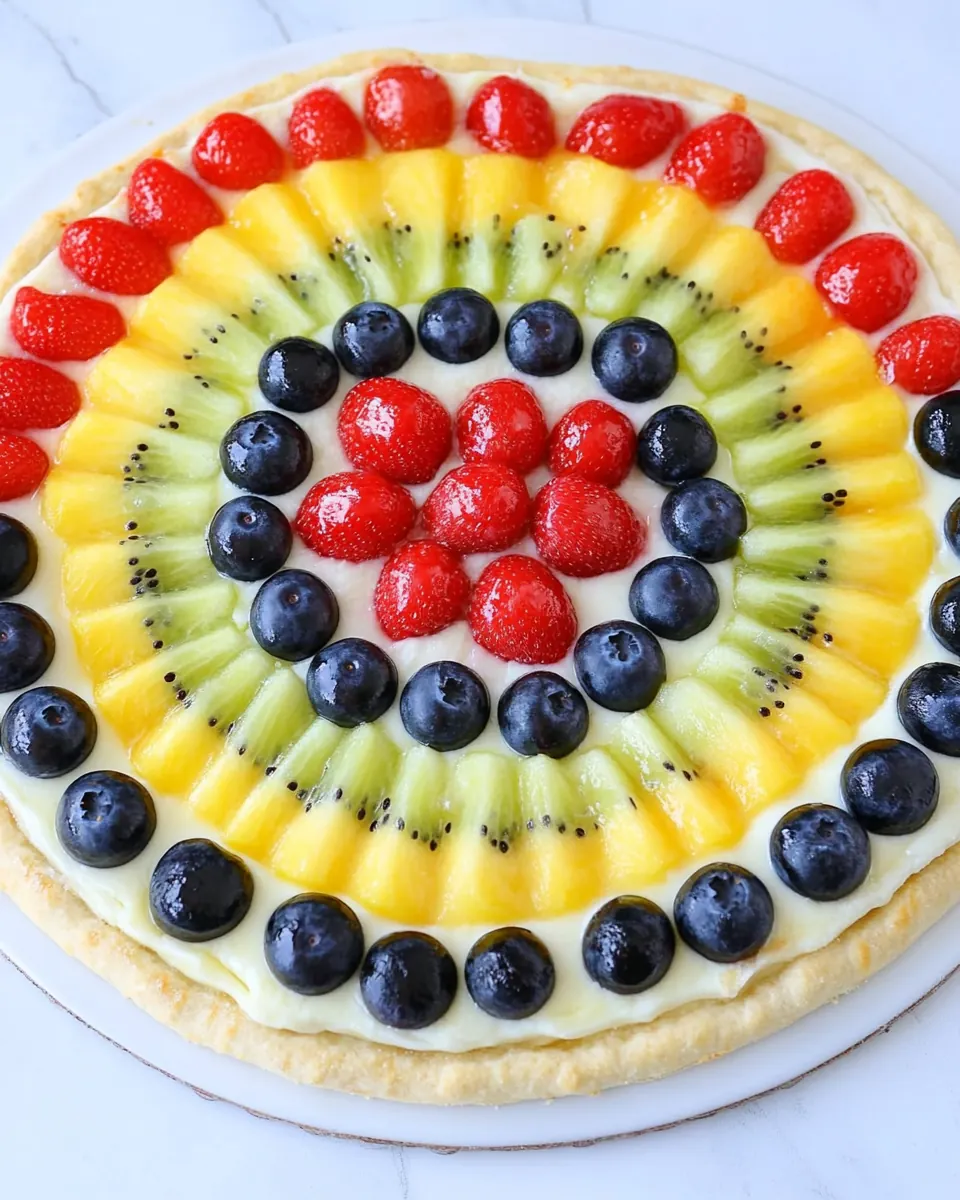
Fruit Pizza
Fruit Pizza has been my go to for summer gatherings ever since a sun drenched picnic introduced me to its joyful contrast of sweet cream and vibrant fruit.
I still remember arranging glossy slices of bananas and jewel like blueberries while kids chased bubbles nearby, the warm breeze carrying the scent of baked sugar and softened butter. That day taught me how a simple assembly can feel celebratory, and how the right balance of creamy topping and crisp crust makes people linger just a little longer at the table.
Over the years I tweaked the patterning and timing so the crust stays tender and the fruit remains bright. I like dipping ripe bananas in a little pineapple splash to keep them from browning, and I assemble close enough to serving time to preserve the crunch. If you love fresh fruit and easy entertaining, this recipe turns everyday produce into something you want to photograph and share.
Recipe Snapshot
30 mins
20 mins
10 mins
Medium
180 kcal
American
Gluten-Free, Low FODMAP
Desserts
pizza pan, ball fruit-fresh produce protector, pizza cutter
The Charm of This Fruit Pizza
Vibrant seasonal flavor
I adore how Fruit Pizza lets each fruit shine. Summer berries and tropical slices bring contrasting sweetness and acidity, creating a multi dimensional bite without heavy handiwork.
Quick to impress
If I need a last minute dessert to wow guests, the assembly is fast yet looks intentional. A baked cookie crust and creamy topping read as fancy, even when you did most of the work in under an hour.
Textural harmony
The crisp yet tender crust paired with whipped, tangy frosting creates a balance that keeps every forkful interesting. I find that texture is what makes people come back for seconds.
Flexible and forgiving
I love that you can adapt the fruit arrangement, swap a few berries, or use canned pineapple juice for an extra bright note. It holds up well to small changes without sacrificing the final effect.
Kid friendly and festive
When I host family, this recipe becomes a collaborative project. Children love placing fruit, and adults appreciate a dessert that is not overly sweet or heavy. It makes celebrations feel relaxed and colorful.
What You Need for Fruit Pizza
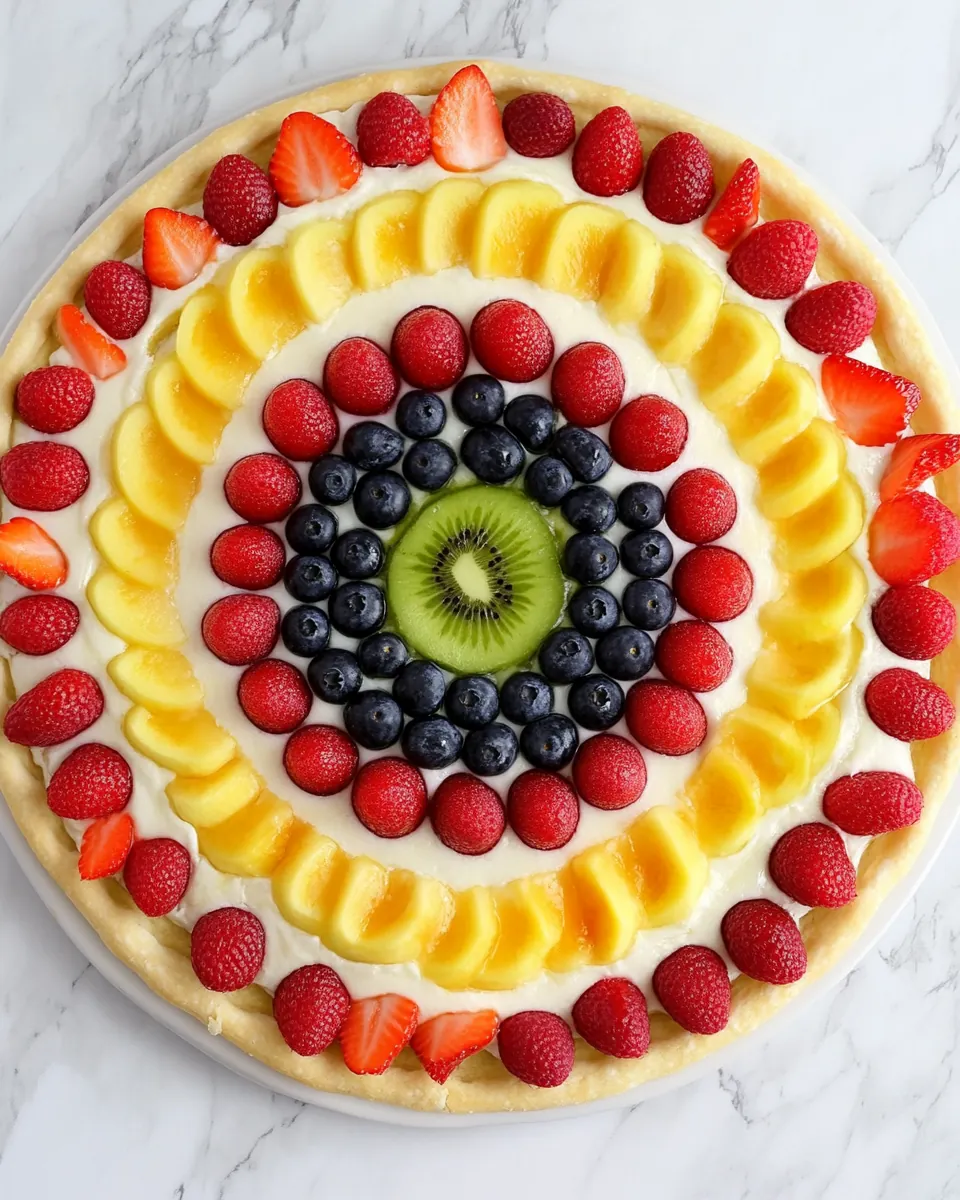
These ingredients play together like a small team. The crust ingredients build structure and a lightly sweet base, while the frosting brings creaminess and a touch of tang. The fruit is the star, delivering freshness, color, and varied textures that elevate each bite.
- 3/4 cups sugar: Provide sweetness and structure to the crust and filling while helping to brown during baking; measure carefully to balance sweetness with fruit tartness and creaming with butter for proper texture.
- 1/2 cup unsalted butter: Contribute rich fat and moisture to the crust, enabling a tender, slightly flaky base; soften to room temperature and cream with sugar to incorporate air for a lighter finished texture.
- 1 egg: Bind the dough and help with leavening and richness; whisk into the creamed butter and sugar to create emulsion and improve the cookie-like crust's cohesion.
- 1 1/4 cup + 2 tablespoons all-purpose flour: Form the bulk of the crust’s dry structure and absorb fats and liquids; sift or spoon into the bowl to avoid overpacking and achieve a tender, crumbly texture in the base.
- 1 teaspoon cream of tartar: Add mild acidity and stabilize the structure while tenderizing the crust; combine with baking soda to provide gentle lift and improve overall flavor balance.
- 1/2 teaspoon baking soda: Provide additional leavening to react with acidic components for slight rise and a lighter crumb; measure precisely to prevent soapy or metallic aftertastes.
- 1/8 teaspoons salt: Enhance flavor by balancing sweetness and controlling fermentation effects; use sparingly to avoid drying out the crust or altering the filling’s taste.
- bananas, strawberries, kiwis, blackberries, pineapples, blueberries: Offer fresh, varied flavors, textures, and visual appeal as the topping; slice or arrange fruit evenly for balanced sweetness, acidity, and attractive presentation on the cream cheese layer.
- 1 (8-ounce) package cream cheese, softened: Create a smooth, tangy, creamy topping that anchors the fruit and adds richness; soften to room temperature and beat until fluffy for a spreadable consistency.
- 1/2 cup powdered sugar: Add sweetness and help stabilize the cream cheese topping while smoothing texture; sift or beat in gradually to avoid graininess and to reach desired sweetness level.
- 2 tablespoons pineapple juice, or vanilla extract: Provide flavoring and a bit of thinning liquid to the cream cheese mixture; choose pineapple juice for tropical brightness or vanilla extract for warm aromatic notes depending on desired flavor profile.
How to Assemble Fruit Pizza
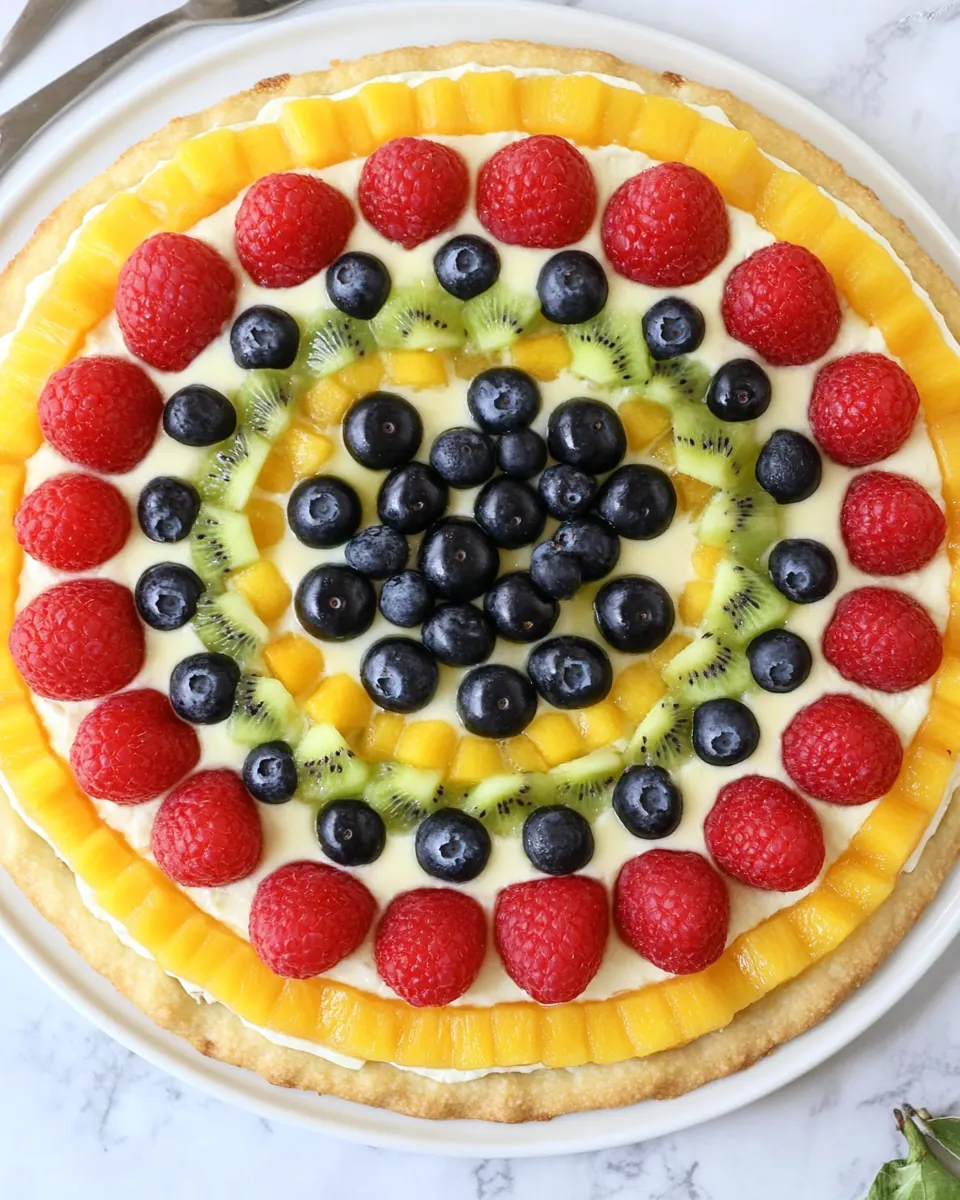
Assembling this dessert is a joyful process where timing matters. I walk you from warm crust to glossy fruit placement, focusing on sensory cues so you can replicate the right textures and flavors. Keep your fruit ready and chilled, and aim to assemble close to serving time for the best contrast.
- Preheat the oven to 350°F.: You should feel the warm hum of the oven as it reaches temperature, and the even heat is essential for a uniformly baked crust. Preheating ensures the edges set quickly, which prevents a soggy center. A common mistake is skipping preheat, which causes uneven rise and a dense texture. Check your oven gauge and allow the oven to reach the full 350°F before inserting the pan.
- In a medium bowl, cream sugar, butter, and egg with a hand mixer.: As you cream, notice the transformation from separate components into a smooth, glossy mixture; it will smell buttery and sweet, with tiny air bubbles forming that promise a light crust. Proper creaming helps incorporate air, improving tenderness and browning. Avoid under mixing, which yields a heavy dough, or over mixing, which can make the crust tough. Scrape the bowl sides to ensure even blending.
- In another bowl, mix flour, cream of tartar, baking soda, and salt.: The dry mix should look uniform and powdery, with no lumps. Sifting or whisking together creates an even distribution of leavening so the crust bakes consistently. Neglecting to mix thoroughly can leave pockets of rising agent, causing irregular texture. Use a fork or whisk to fluff the mixture for a homogenous result.
- Add dry ingredients to creamed mixture and mix until well combined.: The batter will begin to thicken and take on a cohesive dough like texture, fragrant with butter and vanilla notes if used. Combining in stages prevents overworking and ensures a tender crumb. A frequent error is adding all the flour at once, which can lead to clumping and an uneven dough. Mix just until no streaks of flour remain.
- Dip hands in flour and spread dough onto a lightly greased pizza pan until it is approximately 1/4 inch thick. Leave 1–2 inches around the edges of the pan for dough to expand.: When you press the dough, you should feel a slightly tacky, pliable surface that smooths under gentle pressure. Leaving space around the edges accommodates expansion and results in a neat rim. Overworking the dough can make it elastic and resistant to pressing, so work gently and keep your hands floured. If the dough feels too sticky, chill briefly for easier handling.
- Bake for 10 minutes, then let cool.: The oven will perfume the kitchen with browned sugar and butter as the crust edges turn a pale golden hue. Baking for the precise time gives a set crust that remains tender. A common pitfall is overbaking, which produces a hard, cracker like base; underbaking yields a doughy center. Allow the crust to cool fully so the frosting does not melt on contact.
- While crust cools, make the frosting. In a medium bowl, cream together cream cheese, sugar, and pineapple juice with the hand mixer. Spread over cooled cookie crust.: The frosting will become silky and slightly tangy, with aromatic brightness from the pineapple juice. Spreading when the crust is cool prevents sliding or melting. If the frosting is too soft, chill it briefly to firm up. A mistake to avoid is spreading warm frosting, which will seep into the crust and ruin the texture contrast.
- Right before serving, add desired fruit in the pattern you prefer. Dip bananas in pineapple juice to keep them from getting dark fast.: As you arrange fruit, listen for the quiet clink of berries settling and admire the glossy colors; the contrast between the creamy white frosting and jewel like fruit is striking. Adding fruit just before serving preserves texture and prevents sogginess. A typical error is assembling hours ahead, which causes moisture to leach and makes the crust limp. Pat fruit dry if it is wet to avoid excess moisture.
- Keep refrigerated for up to 3 hours until ready to serve.: Chilling helps the frosting set and the fruit stay firm, while the flavors meld slightly for a harmonized bite. Too long in the fridge will soften the crust as fruit releases juices, so observe the timeline. Avoid leaving the pizza unrefrigerated for extended periods, especially on warm days, to keep the frosting safe and the fruit fresh.
Helpful Notes about Fruit Pizza
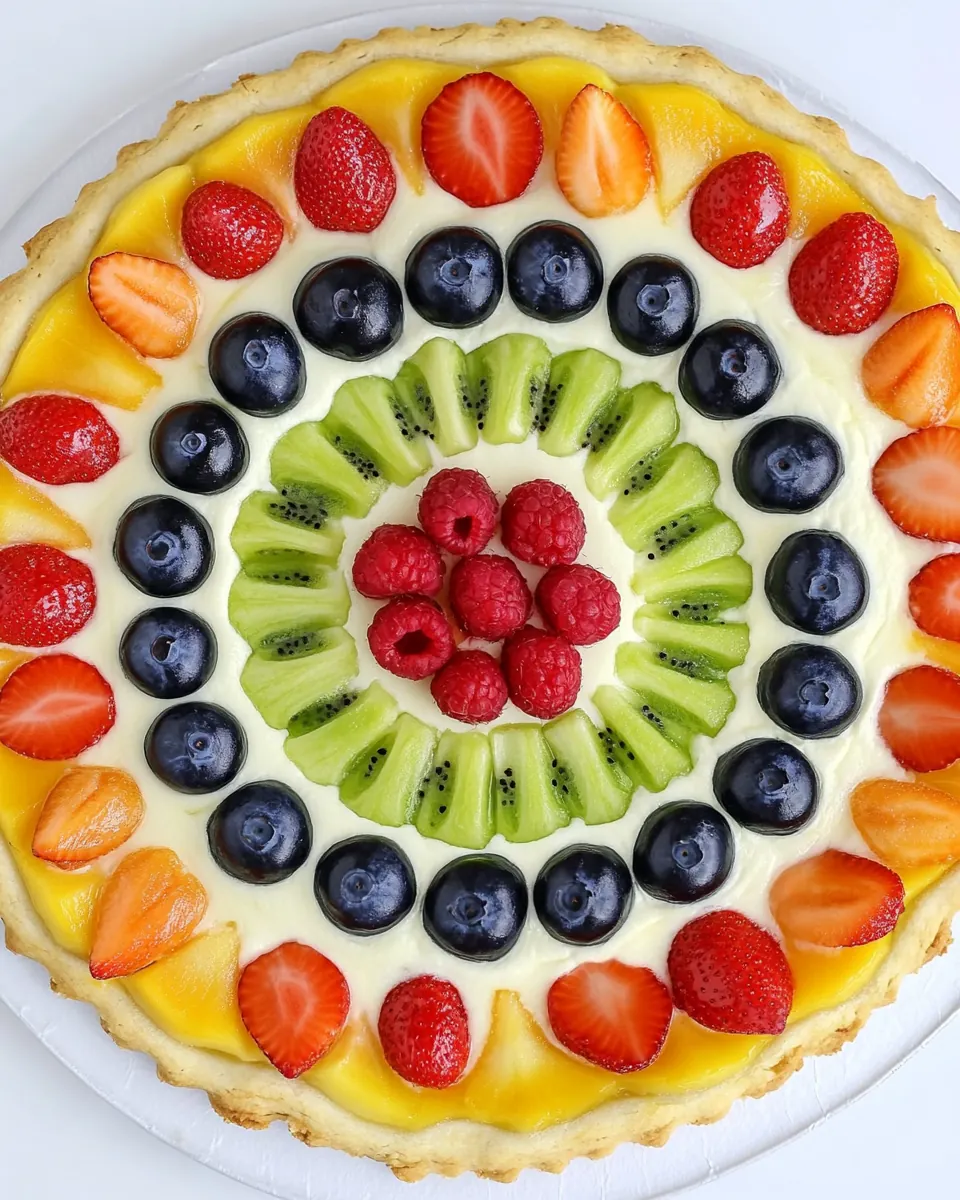
I keep these notes handy when preparing Fruit Pizza. They help maintain texture, timing, and the bright look that makes the dessert memorable. Read them and pick the strategies that match your schedule and pantry.
- Make ahead strategy, prepare the crust and frosting the day before, then store them separately. This saves time on the event day and prevents the fruit from making the crust soggy. Store the crust at room temperature covered, and keep frosting chilled in an airtight container.
- Substitute shortcut, if pressed for time use store bought sugar cookie dough pressed into the pizza pan and baked at 375°F for about 13 minutes. This is a reliable shortcut that still delivers a sweet base for the frosting and fruit.
- Fruit prep tips, slice firmer fruits and keep more delicate berries whole. Store sliced fruit in separate containers and assemble just before serving to preserve texture and appearance. Be cautious with fruits that release a lot of juice.
- Storage limits, leftovers are best eaten within a day or two because the crust and fruit soften over time. Keep any uneaten slices refrigerated and covered to slow moisture transfer, but expect a change in texture after the first day.
- Frosting consistency, adjust powdered sugar to reach your preferred spreadability. If the frosting is too thick, a teaspoon of pineapple juice will loosen it without thinning flavor too much.
Accompaniments for Fruit Pizza
This dessert pairs well with light beverages and simple accompaniments that complement the fruity tang. I often present it for brunch or summer gatherings, where it shines as a centerpiece. Below are serving ideas, storage suggestions, and occasion notes to guide how you present Fruit Pizza.
- Casual brunch, serve slices alongside a pot of coffee and a pitcher of iced tea for a relaxed mid morning spread. The bright fruit pairs well with citrusy drinks and keeps the mood light.
- Party centerpiece, arrange slices on a large platter with extra fruit garnishes nearby for guests to customize. This works well for birthdays and outdoor summer parties where finger food is welcome.
- Seasonal serving, emphasize summer berries and stone fruit for peak freshness and flavor. Seasonal fruit enhances sweetness and reduces the need for extra sugar in the frosting.
- Storage tips, keep assembled pizza refrigerated and consume within three hours for best texture, or store unassembled components separately if making ahead. Note that assembled leftovers will become softer over time as fruit releases moisture.
- Holiday and occasion uses, while perfect for summer gatherings, this recipe also adapts to festive occasions by arranging fruit into themed patterns, making it a versatile option for casual celebrations.
FAQ
Conclusion
What makes this Fruit Pizza special is the joyful union of a tender cookie like crust, tangy cream cheese frosting, and a bright assortment of fresh fruit. It’s a dessert that looks like effort but comes together with straightforward steps and minimal stress. I encourage you to try it at your next gathering, and arrange the fruit in a pattern that makes you smile. Serve it shortly after assembly for the best texture, enjoy the pops of fresh flavor, and watch how everyone gravitates toward the colorful platter.
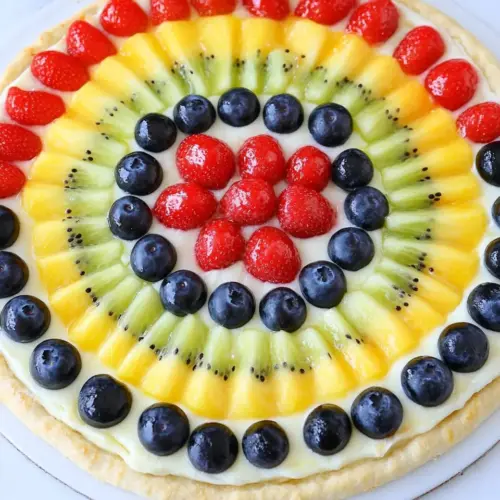
Fruit Pizza
Equipment
- Pizza Pan
- ball fruit-fresh produce protector
- Pizza Cutter
Ingredients
- 3/4 cups sugar Provide sweetness and structure to the crust and filling while helping to brown during baking; measure carefully to balance sweetness with fruit tartness and creaming with butter for proper texture.
- 1/2 cup unsalted butter Contribute rich fat and moisture to the crust, enabling a tender, slightly flaky base; soften to room temperature and cream with sugar to incorporate air for a lighter finished texture.
- 1 egg Bind the dough and help with leavening and richness; whisk into the creamed butter and sugar to create emulsion and improve the cookie-like crust's cohesion.
- 1 1/4 cup + 2 tablespoons all-purpose flour Form the bulk of the crust’s dry structure and absorb fats and liquids; sift or spoon into the bowl to avoid overpacking and achieve a tender, crumbly texture in the base.
- 1 teaspoon cream of tartar Add mild acidity and stabilize the structure while tenderizing the crust; combine with baking soda to provide gentle lift and improve overall flavor balance.
- 1/2 teaspoon baking soda Provide additional leavening to react with acidic components for slight rise and a lighter crumb; measure precisely to prevent soapy or metallic aftertastes.
- 1/8 teaspoons salt Enhance flavor by balancing sweetness and controlling fermentation effects; use sparingly to avoid drying out the crust or altering the filling’s taste.
- bananas, strawberries, kiwis, blackberries, pineapples, blueberries Offer fresh, varied flavors, textures, and visual appeal as the topping; slice or arrange fruit evenly for balanced sweetness, acidity, and attractive presentation on the cream cheese layer.
- 1 (8-ounce) package cream cheese, softened Create a smooth, tangy, creamy topping that anchors the fruit and adds richness; soften to room temperature and beat until fluffy for a spreadable consistency.
- 1/2 cup powdered sugar Add sweetness and help stabilize the cream cheese topping while smoothing texture; sift or beat in gradually to avoid graininess and to reach desired sweetness level.
- 2 tablespoons pineapple juice, or vanilla extract Provide flavoring and a bit of thinning liquid to the cream cheese mixture; choose pineapple juice for tropical brightness or vanilla extract for warm aromatic notes depending on desired flavor profile.
Instructions
- Preheat the oven to 350°F.: You should feel the warm hum of the oven as it reaches temperature, and the even heat is essential for a uniformly baked crust. Preheating ensures the edges set quickly, which prevents a soggy center. A common mistake is skipping preheat, which causes uneven rise and a dense texture. Check your oven gauge and allow the oven to reach the full 350°F before inserting the pan.
- In a medium bowl, cream sugar, butter, and egg with a hand mixer.: As you cream, notice the transformation from separate components into a smooth, glossy mixture; it will smell buttery and sweet, with tiny air bubbles forming that promise a light crust. Proper creaming helps incorporate air, improving tenderness and browning. Avoid under mixing, which yields a heavy dough, or over mixing, which can make the crust tough. Scrape the bowl sides to ensure even blending.
- In another bowl, mix flour, cream of tartar, baking soda, and salt.: The dry mix should look uniform and powdery, with no lumps. Sifting or whisking together creates an even distribution of leavening so the crust bakes consistently. Neglecting to mix thoroughly can leave pockets of rising agent, causing irregular texture. Use a fork or whisk to fluff the mixture for a homogenous result.
- Add dry ingredients to creamed mixture and mix until well combined.: The batter will begin to thicken and take on a cohesive dough like texture, fragrant with butter and vanilla notes if used. Combining in stages prevents overworking and ensures a tender crumb. A frequent error is adding all the flour at once, which can lead to clumping and an uneven dough. Mix just until no streaks of flour remain.
- Dip hands in flour and spread dough onto a lightly greased pizza pan until it is approximately 1/4 inch thick. Leave 1–2 inches around the edges of the pan for dough to expand.: When you press the dough, you should feel a slightly tacky, pliable surface that smooths under gentle pressure. Leaving space around the edges accommodates expansion and results in a neat rim. Overworking the dough can make it elastic and resistant to pressing, so work gently and keep your hands floured. If the dough feels too sticky, chill briefly for easier handling.
- Bake for 10 minutes, then let cool.: The oven will perfume the kitchen with browned sugar and butter as the crust edges turn a pale golden hue. Baking for the precise time gives a set crust that remains tender. A common pitfall is overbaking, which produces a hard, cracker like base; underbaking yields a doughy center. Allow the crust to cool fully so the frosting does not melt on contact.
- While crust cools, make the frosting. In a medium bowl, cream together cream cheese, sugar, and pineapple juice with the hand mixer. Spread over cooled cookie crust.: The frosting will become silky and slightly tangy, with aromatic brightness from the pineapple juice. Spreading when the crust is cool prevents sliding or melting. If the frosting is too soft, chill it briefly to firm up. A mistake to avoid is spreading warm frosting, which will seep into the crust and ruin the texture contrast.
- Right before serving, add desired fruit in the pattern you prefer. Dip bananas in pineapple juice to keep them from getting dark fast.: As you arrange fruit, listen for the quiet clink of berries settling and admire the glossy colors; the contrast between the creamy white frosting and jewel like fruit is striking. Adding fruit just before serving preserves texture and prevents sogginess. A typical error is assembling hours ahead, which causes moisture to leach and makes the crust limp. Pat fruit dry if it is wet to avoid excess moisture.
- Keep refrigerated for up to 3 hours until ready to serve.: Chilling helps the frosting set and the fruit stay firm, while the flavors meld slightly for a harmonized bite. Too long in the fridge will soften the crust as fruit releases juices, so observe the timeline. Avoid leaving the pizza unrefrigerated for extended periods, especially on warm days, to keep the frosting safe and the fruit fresh.
Notes
- Make ahead strategy, prepare the crust and frosting the day before, then store them separately. This saves time on the event day and prevents the fruit from making the crust soggy. Store the crust at room temperature covered, and keep frosting chilled in an airtight container.
- Substitute shortcut, if pressed for time use store bought sugar cookie dough pressed into the pizza pan and baked at 375°F for about 13 minutes. This is a reliable shortcut that still delivers a sweet base for the frosting and fruit.
- Fruit prep tips, slice firmer fruits and keep more delicate berries whole. Store sliced fruit in separate containers and assemble just before serving to preserve texture and appearance. Be cautious with fruits that release a lot of juice.
- Storage limits, leftovers are best eaten within a day or two because the crust and fruit soften over time. Keep any uneaten slices refrigerated and covered to slow moisture transfer, but expect a change in texture after the first day.
- Frosting consistency, adjust powdered sugar to reach your preferred spreadability. If the frosting is too thick, a teaspoon of pineapple juice will loosen it without thinning flavor too much.
