Pastina Soup
Pastina Soup is the kind of bowl I turn to on chilly evenings when I want something comforting, simple, and unfussy. I remember my grandmother ladling a steaming bowl into my hands after I came in wet and cold from playing in the snow, and that memory shapes how I cook it today.
The first time I made Pastina Soup as an adult, I wanted to honor that warmth but also give it a little brightness. The tiny pasta swirled through the broth felt like nostalgia in spoonfuls, while a touch of lemon zest lifted the whole bowl so it never felt heavy. I like to cook the vegetables gently until they sigh with sweetness, then let the pastina bloom in the broth so every spoonful is silky.
Recipe Snapshot
35 mins
10 mins
25 mins
Easy
200 kcal
Italian
Gluten-Free, Paleo
Soups
Large pot, Ladle, Wooden spoon
Why This Pastina Soup Works
Comfort in a Spoon
I adore Pastina Soup because it hits that rare spot between nourishing and gentle. When I am under the weather or simply need calm, this soup soothes without weighing me down. The tiny pasta makes it feel like a personal bowl of care, and I often reach for it when I want familiar flavors that wrap around me.
Speed and Simplicity
One of the reasons I turn to this recipe is how fast it comes together. With minimal prep and a short cooking window, I can have a steaming bowl in less than an hour, which makes it perfect for a busy weeknight. I love that you do not need fancy techniques to get a satisfying result.
Flexible and Friendly
I appreciate how flexible Pastina Soup is. You can use low-sodium chicken broth or vegetable broth depending on what you have, and garnishes like chopped fresh parsley or grated Parmesan cheese let you personalize each bowl. That adaptability makes it a staple in my repertoire because it fits many diets and pantries.
Textural Delight
The tiny shape of pastina pasta creates a lovely mouthfeel that is different from larger noodles. It nestles in the broth and between the softened bites of carrots and celery, giving a delicate texture that is especially good for kids or anyone who prefers gentler bites.
Bright Finish
I always include a little lemon zest because it brings a surprising brightness that balances the savory broth. That small hit of citrus keeps the soup from feeling flat, and it is a reason I often choose this bowl when I want something both soothing and lively.
What You’ll Need for Pastina Soup
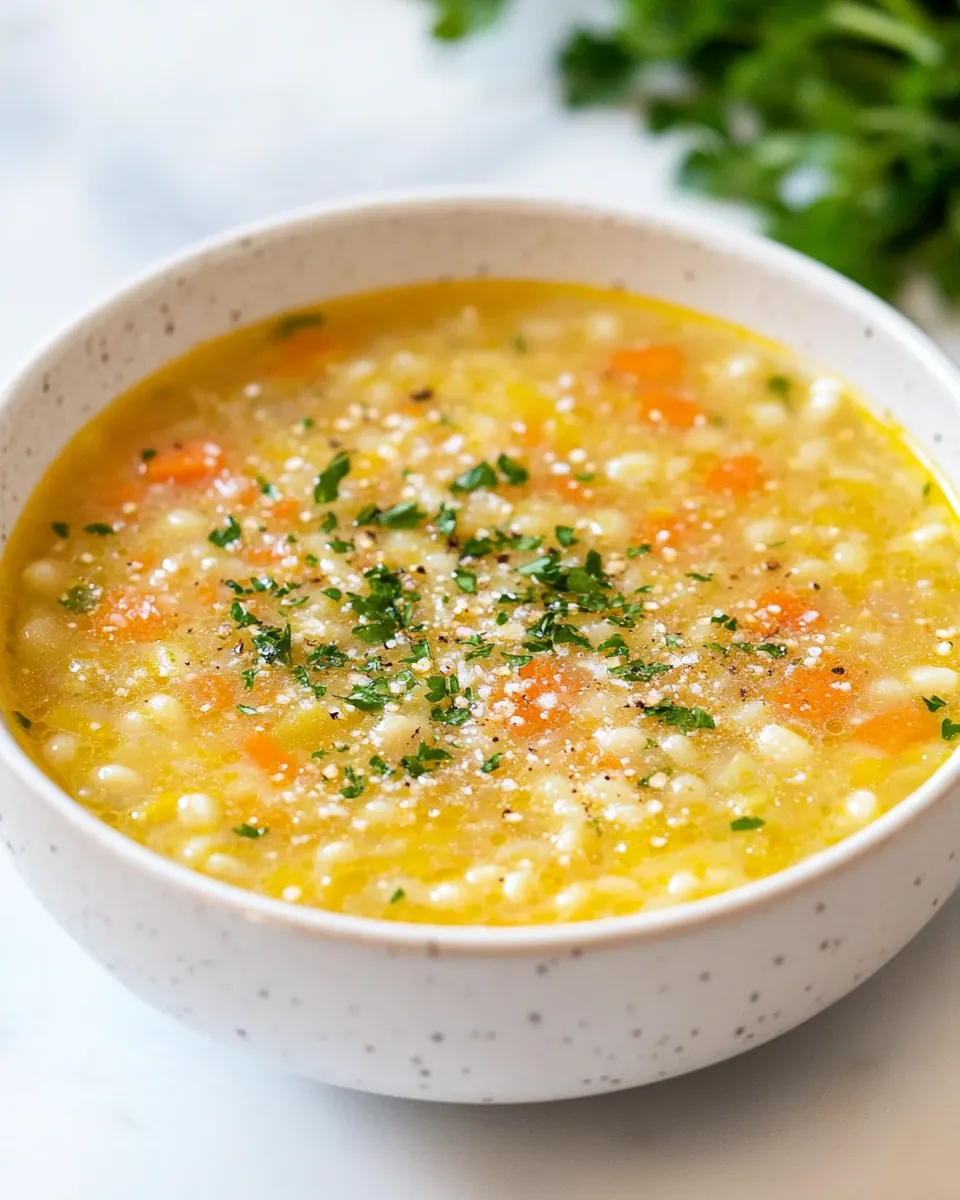
These ingredients are intentionally simple, chosen to create a clear, harmonious broth with small pasta as the star. The vegetables form a sweet aromatic base, the broth provides body and seasoning control, and the pastina brings a soft, comforting texture. Small garnishes add freshness and umami without competing with the delicate flavors.
- 1 tablespoon olive oil: Sauté to build flavor and provide a fragrant base for the soup, contributing healthy fats and a glossy finish when heated gently.
- 1 small yellow onion diced: Dice to add sweetness and aromatic depth, releasing natural sugars as they soften and integrating with other vegetables.
- 2 medium carrots peeled and diced: Peel and dice to contribute subtle sweetness and earthy texture, becoming tender and slightly caramelized as the soup simmers.
- 2 celery ribs diced: Dice to provide a crisp, aromatic backbone and mild savory notes that soften and meld with the carrots and onion.
- 3 garlic cloves minced: Mince to add pungent, savory warmth and bright, aromatic lift that infuses the broth during cooking.
- 6 cups low-sodium chicken broth or vegetable broth: Simmer to create the liquid foundation that carries all flavors, hydrates the pasta, and determines overall soup richness and saltiness.
- 1 bay leaf (optional): Simmer optional to impart a gentle herbal aroma and subtle depth, easily removed before serving to avoid overpowering the broth.
- 1 cup pastina pasta: Cook until tender to supply small, comforting pasta pearls that soak up broth and give the soup body and texture.
- 2 teaspoons lemon zest: Zest to brighten and lift flavors with concentrated citrus oils, balancing richness and adding a fresh, aromatic finish.
- Salt and black pepper to taste: Season to taste to enhance and balance flavors, controlling the soup's overall saltiness and reinforcing other savory elements.
- Chopped fresh parsley for garnish () (optional): Garnish optional to add fresh herbal brightness and a pop of color, enhancing aroma and balancing richer flavors.
- Grated Parmesan cheese for garnish () (optional): Garnish optional to contribute savory, umami richness and a creamy, salty finish when sprinkled just before serving.
How to Prepare Pastina Soup
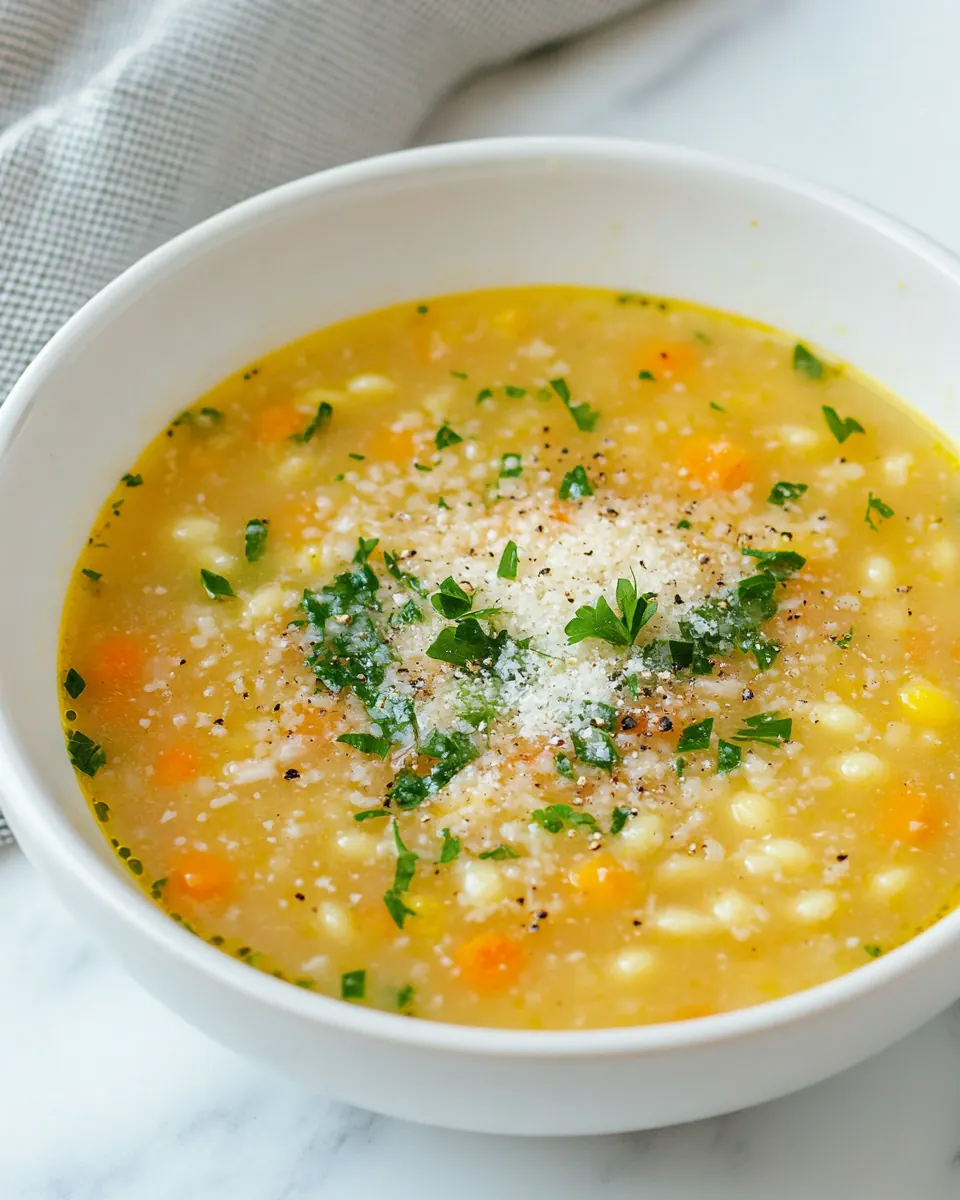
I like to approach the cooking with a calm rhythm so each component gets the attention it deserves. The goal is a clear, flavorful broth and tender vegetables, with the pastina pasta cooked just until tender. Keep your ladle nearby to taste and adjust as you go.
- Heat the olive oil in a large pot over medium heat. Add the diced onion, carrots, celery, and minced garlic. Cook until the vegetables soften, about 5 minutes.: As the olive oil warms, you will see a slight shimmer and feel the pot radiate gentle heat, which helps the aromatics release their flavors without browning too quickly. The sizzling sound will start soft, and the aroma becomes faintly fruity, signaling that the pan is ready. This gentle heating helps the vegetables soften evenly, preventing the garlic from burning. A common mistake is turning the heat too high, which can char the onion edges and introduce bitterness.
- Pour in the broth and add the bay leaf. Bring the mixture to a boil, then lower the heat and let it simmer for 15-20 minutes until the vegetables are tender. Remove the bay leaf.: Once in the pot, the vegetables should hiss softly as they meet the oil, and after a few minutes their raw sharpness will mellow into a sweet, savory scent. You will notice the onion turning translucent and the carrots losing rigidity, which means they are releasing moisture to build the soup base. Stir occasionally to ensure even cooking and to keep the pieces from sticking and browning unevenly. Avoid neglecting the pot, as overcrowding can trap steam and prevent proper softening.
- Stir in the pastina pasta and continue to cook for 5-6 minutes, stirring occasionally to keep the pasta from sticking. Mix in lemon zest. Season the soup with salt and black pepper as needed.: During this time, the pot fills with a warm, comforting aroma as the sugars in the carrots caramelize slightly and the celery softens. Visual cues include the onion becoming glossy and the edges of the vegetables appearing more tender. The sound of gentle bubbling is normal as moisture escapes. If the vegetables start to brown quickly, lower the heat to preserve a clean flavor profile; that initial golden hue should be light and not bitter.
- Divide the soup into bowls. Garnish with fresh parsley and a sprinkle of Parmesan cheese if desired. Serve warm.: As you add the broth , it will hiss and steam, releasing the aromatics into a savory liquid. The bay leaf will infuse subtle herbal notes that marry with the softened vegetables. Bringing the pot to a simmer allows flavors to meld slowly, creating depth without heavy reduction. A frequent issue is using overly salty broth, so I prefer low-sodium and adjust at the end.
- Bring the mixture to a boil, then lower the heat and let it simmer for 15 to 20 minutes until the vegetables are tender: The transition from vigorous boil to gentle simmer encourages a clear broth and prevents the pastina pasta from disintegrating later. You will see small, steady bubbles and smell a developing, rounded aroma. Test a piece of carrot for tenderness; it should yield easily to a fork. Boiling for too long can break down the texture of the vegetables, so monitor the pot closely.
- Remove the bay leaf: Pulling out the bay leaf stops further infusion, keeping the herb note delicate. This small act prevents the leaf from imparting a bitter, leathery edge if left too long. The broth should smell balanced and the vegetables tender, indicating readiness for the pasta. A common slip is forgetting this step, which can result in an overly assertive bay flavor.
- Stir in the pastina pasta: As you add the pastina pasta , it will sink and then wobble in the simmering broth, gradually expanding and softening. The tiny shapes should move freely in the pot, and you will notice the soup thicken slightly as the pasta releases starch. Stirring occasionally prevents clumping and ensures even cooking. Overcooking the pasta causes a mushy texture, so keep a close eye and follow the suggested cooking time carefully.
- Continue to cook for 5 to 6 minutes, stirring occasionally to keep the pasta from sticking: During these minutes, the broth gains a silkier mouthfeel as starches disperse, and you will hear a softer simmer. Observe the pasta closely; it should be tender but still hold its shape, creating a pleasant, gentle tooth. If the pot becomes too thick, add a splash of reserved broth or water to adjust the consistency. Stir with a gentle motion to avoid breaking the tiny shapes.
- Mix in lemon zest: Adding the lemon zest at this stage releases bright citrus oils into the warm soup, producing an aromatic lift that contrasts the savory broth. The fragrance will be noticeable immediately, giving the bowl a fresh edge that keeps the soup from tasting flat. This step balances the richness and adds a clean finish. A mistake is using too much zest, which can dominate the subtle flavors, so measure carefully.
- Season the soup with salt and black pepper as needed: Tasting is crucial here, because the low-sodium broth and the pasta will respond differently as they warm. Add salt in small increments and finish with a few twists of black pepper to complement the citrus. The right seasoning will make the flavors pop without masking the delicate components. Over-salting can be hard to fix, so season conservatively and adjust after a brief rest.
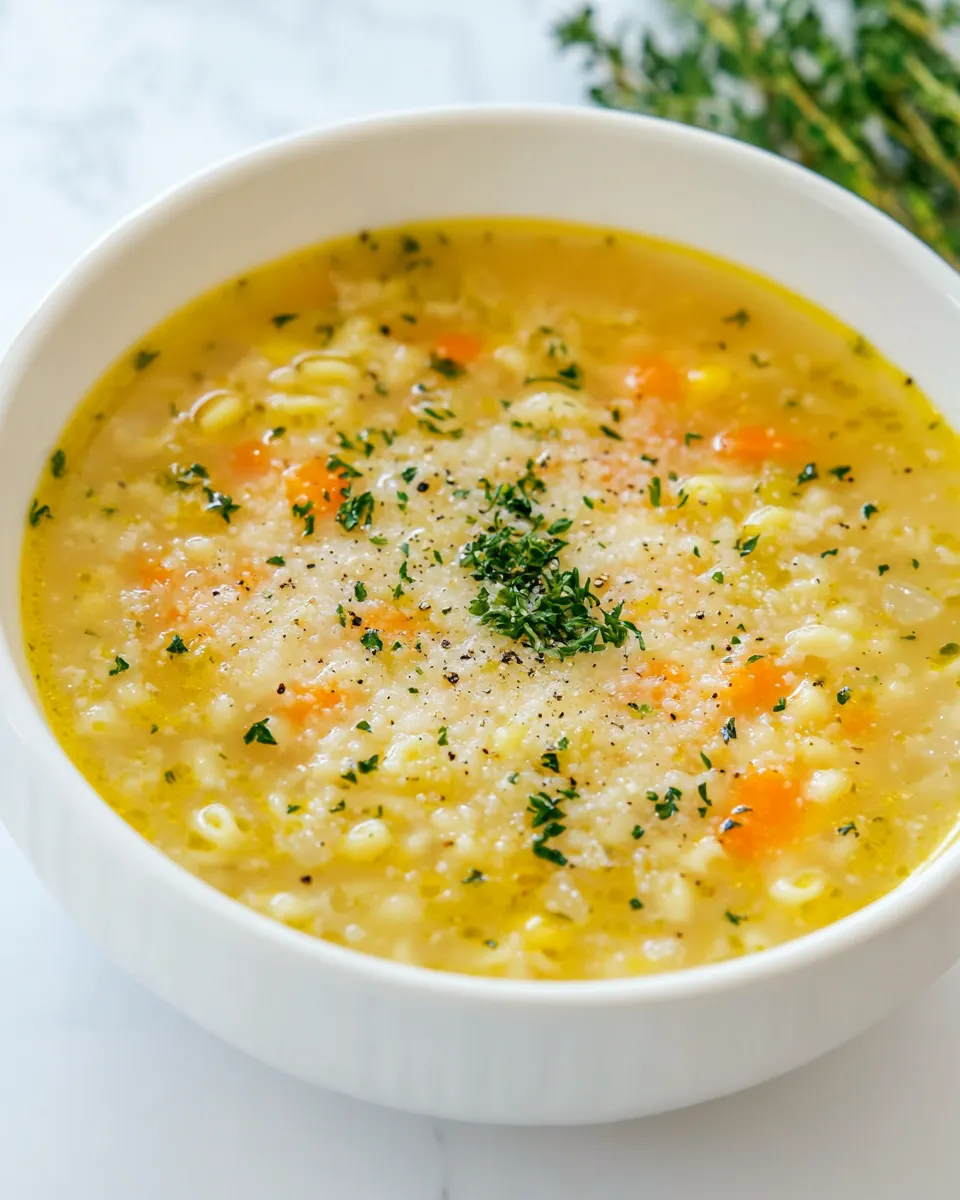
- Divide the soup into bowls: As you ladle the warm soup into individual bowls, notice the steam carrying the combined aromas of vegetables and citrus. The tiny pearls of pastina pasta should be suspended throughout, creating a cozy presentation. Serve promptly to preserve the texture, because the pasta will continue to absorb liquid if left standing. A common error is letting the soup sit too long, which results in thickened broth and softened pasta.
- Garnish with fresh parsley and a sprinkle of Parmesan cheese if desired: A final touch of chopped fresh parsley adds a green brightness and visual contrast, while a light dusting of grated Parmesan cheese melts slightly into the hot soup, contributing savory depth. These garnishes personalize each bowl and enhance mouthfeel. Avoid adding large amounts of cheese directly into the pot, as it can change the texture and flavor balance.
Recipe Tips about Pastina Soup
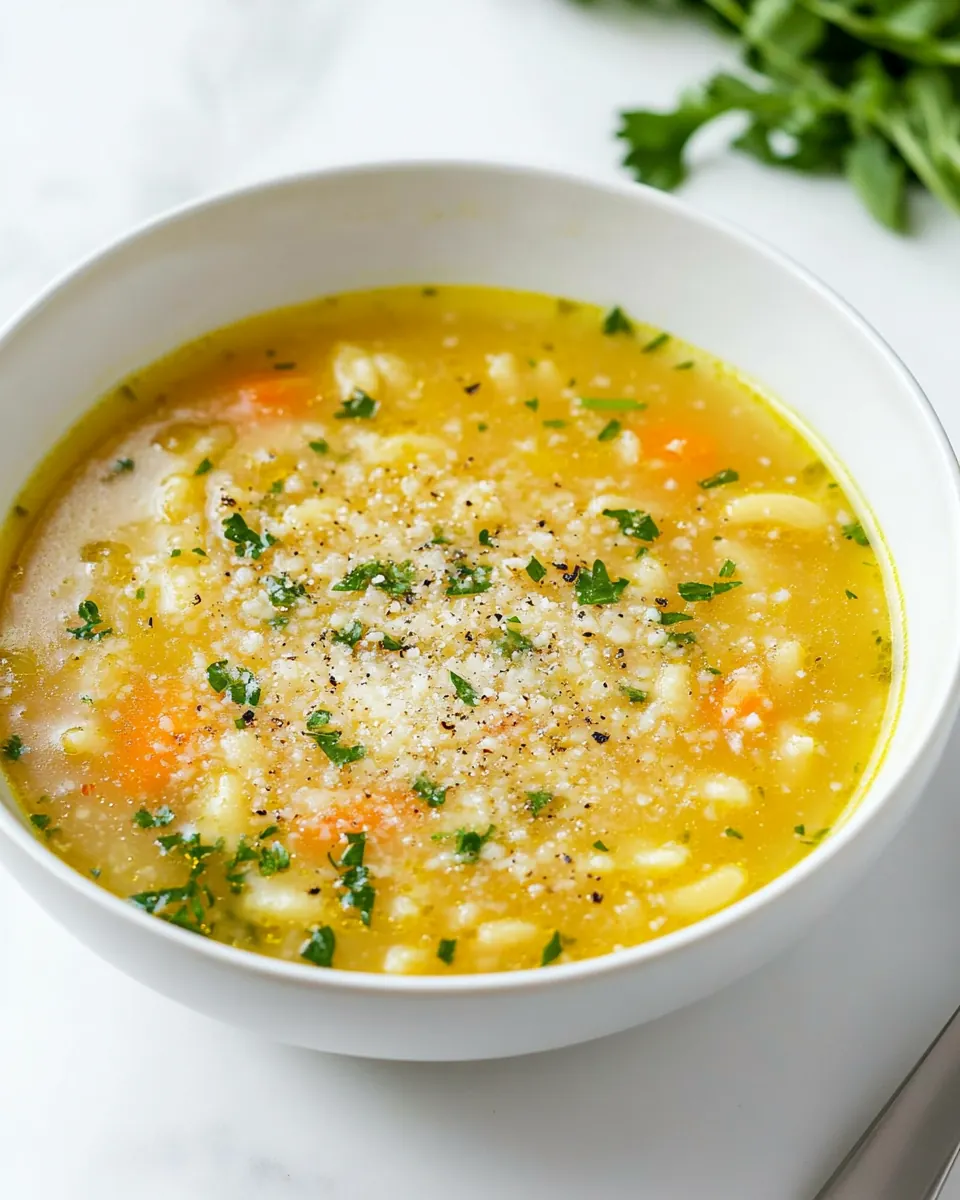
I like to keep tips practical and rooted in small adjustments that make a big difference. These tips help you manage texture, seasoning, and serving so the soup is consistently comforting. Read them and pick the ones that fit your pantry and timing.
- Control the salt Start with low-sodium broth and season at the end so you can fine tune the soup without over-salting.
- Watch the pasta The tiny pastina pasta cooks very quickly, so test for tenderness early to avoid a mushy result.
- Brighten with zest Adding the lemon zest at the end preserves citrus oils that lift the whole bowl, making the flavor lively without extra acid.
- Garnish just before serving Fresh chopped parsley and a light sprinkle of grated Parmesan cheese add visual appeal and a finishing flavor boost.
- Adjust texture with reserved broth If the soup thickens as it sits, stir in a little warm broth to restore a silky consistency.
Serving Suggestions
Pastina Soup makes a gentle, versatile meal that fits many occasions. Whether you want a light lunch, a soothing dinner, or a comforting bowl during cooler weather, this soup adapts well. I often serve it with minimal sides so the flavors and texture remain the focus.
- Simple lunch Serve a small bowl of Pastina Soup with crusty bread for dipping, keeping the meal light and easy to digest for midday.
- Weeknight dinner Present a larger bowl as the main course, perhaps with an extra sprinkle of grated Parmesan cheese for savory depth, making a cozy, quick evening option.
- Comfort when sick This soup is ideal during colds, offering warm hydration and tender pastina pasta that is easy on the stomach while still providing satisfying flavor.
- Ramadan iftar Break a fast gently with a warm bowl of Pastina Soup, pairing it with dates and water, as the softness and broth soothe the palate.
- Storage tips Store leftovers in an airtight container in the fridge for up to three days, but note that the pastina pasta will continue to absorb liquid and soften; refresh with warm broth before reheating.
- Seasonal pairings In winter, serve the soup alongside roasted winter vegetables or a simple salad; in milder months, keep garnishes light and fresh to preserve brightness.
FAQ
Conclusion
Pastina Soup is special because it pairs simple ingredients with a delicate texture to create a bowl that feels like a warm memory. I encourage you to try it when you want something fast yet nurturing, whether for a weeknight meal or to soothe someone feeling under the weather. The tiny pasta, gentle vegetables, and bright lemon zest make each spoonful comforting and approachable. Make it your own with the garnishes you love, and remember that small adjustments to seasoning and timing will help you find your perfect version.
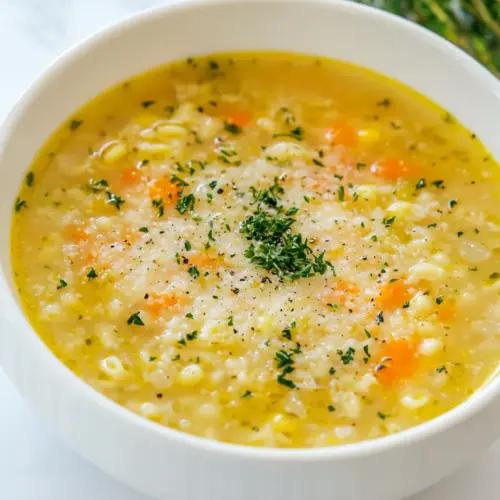
Pastina Soup
Equipment
- Large Pot
- Ladle
- Wooden Spoon
Ingredients
- 1 tablespoon olive oil Sauté to build flavor and provide a fragrant base for the soup, contributing healthy fats and a glossy finish when heated gently.
- 1 small yellow onion diced Dice to add sweetness and aromatic depth, releasing natural sugars as they soften and integrating with other vegetables.
- 2 medium carrots peeled and diced Peel and dice to contribute subtle sweetness and earthy texture, becoming tender and slightly caramelized as the soup simmers.
- 2 celery ribs diced Dice to provide a crisp, aromatic backbone and mild savory notes that soften and meld with the carrots and onion.
- 3 garlic cloves minced Mince to add pungent, savory warmth and bright, aromatic lift that infuses the broth during cooking.
- 6 cups low-sodium chicken broth or vegetable broth Simmer to create the liquid foundation that carries all flavors, hydrates the pasta, and determines overall soup richness and saltiness.
- 1 bay leaf optional Simmer optional to impart a gentle herbal aroma and subtle depth, easily removed before serving to avoid overpowering the broth.
- 1 cup pastina pasta Cook until tender to supply small, comforting pasta pearls that soak up broth and give the soup body and texture.
- 2 teaspoons lemon zest Zest to brighten and lift flavors with concentrated citrus oils, balancing richness and adding a fresh, aromatic finish.
- Salt and black pepper to taste Season to taste to enhance and balance flavors, controlling the soup's overall saltiness and reinforcing other savory elements.
- Chopped fresh parsley for garnish (optional) Garnish optional to add fresh herbal brightness and a pop of color, enhancing aroma and balancing richer flavors.
- Grated Parmesan cheese for garnish (optional) Garnish optional to contribute savory, umami richness and a creamy, salty finish when sprinkled just before serving.
Instructions
- Heat the olive oil in a large pot over medium heat. Add the diced onion, carrots, celery, and minced garlic. Cook until the vegetables soften, about 5 minutes.: As the olive oil warms, you will see a slight shimmer and feel the pot radiate gentle heat, which helps the aromatics release their flavors without browning too quickly. The sizzling sound will start soft, and the aroma becomes faintly fruity, signaling that the pan is ready. This gentle heating helps the vegetables soften evenly, preventing the garlic from burning. A common mistake is turning the heat too high, which can char the onion edges and introduce bitterness.
- Pour in the broth and add the bay leaf. Bring the mixture to a boil, then lower the heat and let it simmer for 15-20 minutes until the vegetables are tender. Remove the bay leaf.: Once in the pot, the vegetables should hiss softly as they meet the oil, and after a few minutes their raw sharpness will mellow into a sweet, savory scent. You will notice the onion turning translucent and the carrots losing rigidity, which means they are releasing moisture to build the soup base. Stir occasionally to ensure even cooking and to keep the pieces from sticking and browning unevenly. Avoid neglecting the pot, as overcrowding can trap steam and prevent proper softening.
- Stir in the pastina pasta and continue to cook for 5-6 minutes, stirring occasionally to keep the pasta from sticking. Mix in lemon zest. Season the soup with salt and black pepper as needed.: During this time, the pot fills with a warm, comforting aroma as the sugars in the carrots caramelize slightly and the celery softens. Visual cues include the onion becoming glossy and the edges of the vegetables appearing more tender. The sound of gentle bubbling is normal as moisture escapes. If the vegetables start to brown quickly, lower the heat to preserve a clean flavor profile; that initial golden hue should be light and not bitter.
- Divide the soup into bowls. Garnish with fresh parsley and a sprinkle of Parmesan cheese if desired. Serve warm.: As you add the broth , it will hiss and steam, releasing the aromatics into a savory liquid. The bay leaf will infuse subtle herbal notes that marry with the softened vegetables. Bringing the pot to a simmer allows flavors to meld slowly, creating depth without heavy reduction. A frequent issue is using overly salty broth, so I prefer low-sodium and adjust at the end.
- Bring the mixture to a boil, then lower the heat and let it simmer for 15 to 20 minutes until the vegetables are tender: The transition from vigorous boil to gentle simmer encourages a clear broth and prevents the pastina pasta from disintegrating later. You will see small, steady bubbles and smell a developing, rounded aroma. Test a piece of carrot for tenderness; it should yield easily to a fork. Boiling for too long can break down the texture of the vegetables, so monitor the pot closely.
- Remove the bay leaf: Pulling out the bay leaf stops further infusion, keeping the herb note delicate. This small act prevents the leaf from imparting a bitter, leathery edge if left too long. The broth should smell balanced and the vegetables tender, indicating readiness for the pasta. A common slip is forgetting this step, which can result in an overly assertive bay flavor.
- Stir in the pastina pasta: As you add the pastina pasta , it will sink and then wobble in the simmering broth, gradually expanding and softening. The tiny shapes should move freely in the pot, and you will notice the soup thicken slightly as the pasta releases starch. Stirring occasionally prevents clumping and ensures even cooking. Overcooking the pasta causes a mushy texture, so keep a close eye and follow the suggested cooking time carefully.
- Continue to cook for 5 to 6 minutes, stirring occasionally to keep the pasta from sticking: During these minutes, the broth gains a silkier mouthfeel as starches disperse, and you will hear a softer simmer. Observe the pasta closely; it should be tender but still hold its shape, creating a pleasant, gentle tooth. If the pot becomes too thick, add a splash of reserved broth or water to adjust the consistency. Stir with a gentle motion to avoid breaking the tiny shapes.
- Mix in lemon zest: Adding the lemon zest at this stage releases bright citrus oils into the warm soup, producing an aromatic lift that contrasts the savory broth. The fragrance will be noticeable immediately, giving the bowl a fresh edge that keeps the soup from tasting flat. This step balances the richness and adds a clean finish. A mistake is using too much zest, which can dominate the subtle flavors, so measure carefully.
- Season the soup with salt and black pepper as needed: Tasting is crucial here, because the low-sodium broth and the pasta will respond differently as they warm. Add salt in small increments and finish with a few twists of black pepper to complement the citrus. The right seasoning will make the flavors pop without masking the delicate components. Over-salting can be hard to fix, so season conservatively and adjust after a brief rest.
- Divide the soup into bowls: As you ladle the warm soup into individual bowls, notice the steam carrying the combined aromas of vegetables and citrus. The tiny pearls of pastina pasta should be suspended throughout, creating a cozy presentation. Serve promptly to preserve the texture, because the pasta will continue to absorb liquid if left standing. A common error is letting the soup sit too long, which results in thickened broth and softened pasta.
- Garnish with fresh parsley and a sprinkle of Parmesan cheese if desired: A final touch of chopped fresh parsley adds a green brightness and visual contrast, while a light dusting of grated Parmesan cheese melts slightly into the hot soup, contributing savory depth. These garnishes personalize each bowl and enhance mouthfeel. Avoid adding large amounts of cheese directly into the pot, as it can change the texture and flavor balance.
Notes
- Control the salt Start with low-sodium broth and season at the end so you can fine tune the soup without over-salting.
- Watch the pasta The tiny pastina pasta cooks very quickly, so test for tenderness early to avoid a mushy result.
- Brighten with zest Adding the lemon zest at the end preserves citrus oils that lift the whole bowl, making the flavor lively without extra acid.
- Garnish just before serving Fresh chopped parsley and a light sprinkle of grated Parmesan cheese add visual appeal and a finishing flavor boost.
- Adjust texture with reserved broth If the soup thickens as it sits, stir in a little warm broth to restore a silky consistency.