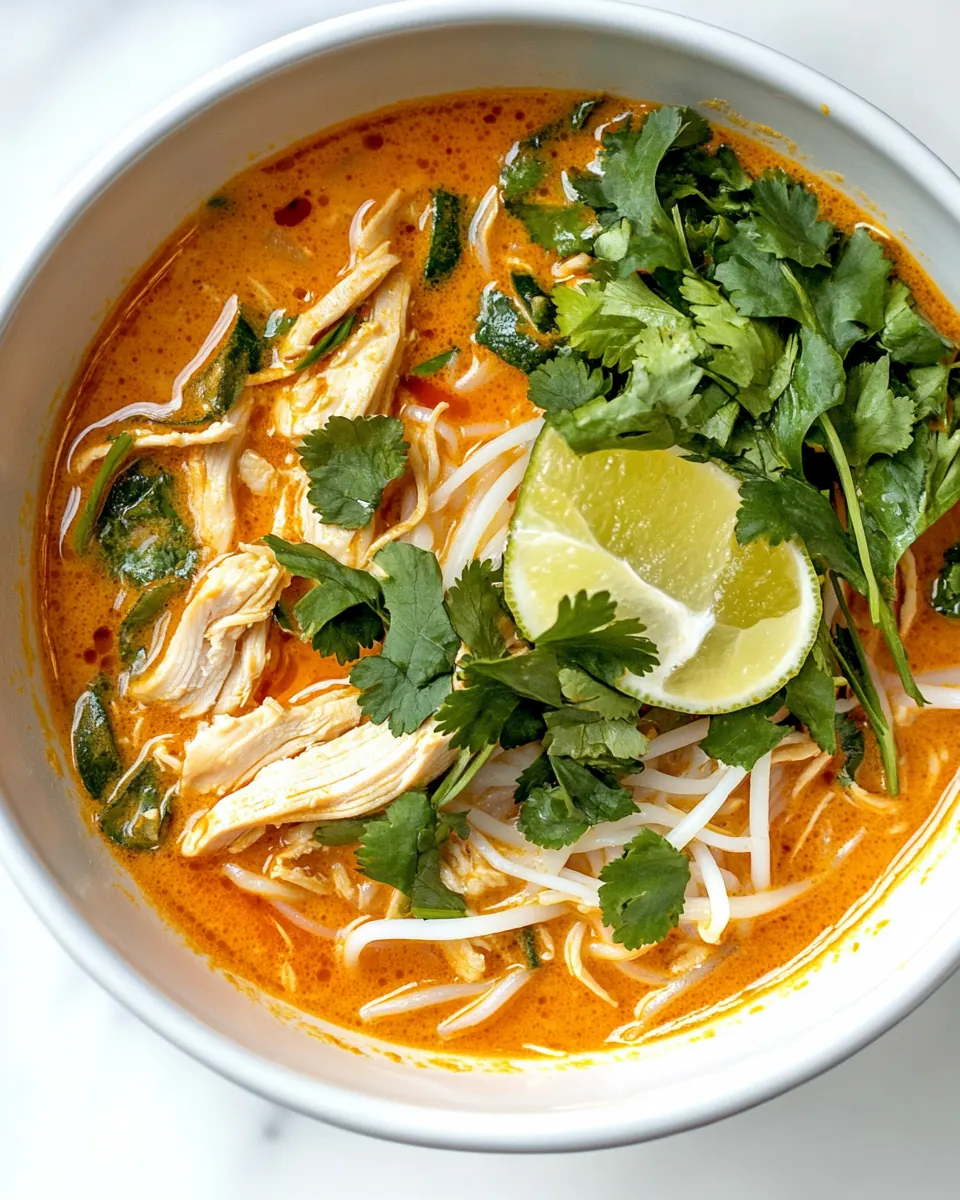
Easy Thai Chicken Curry Soup
Easy Thai Chicken Curry Soup is the kind of bowl I reach for when I want something that feels special but comes together in a flash. The first time I made it I was tired from a long day, but the aroma of chicken, coconut, and red curry paste filled the kitchen and instantly lifted my mood. I remember standing over the pot, stirring, and thinking how comforting and bright a single bowl could be.
Since then this recipe has become a staple for weeknight dinners when we need warmth and speed without sacrificing flavor. I love how the coconut milk brings a creamy balance to the heat of the curry paste, and how a squeeze of lime wakes everything up. It’s one of those recipes that travels well to busy nights, casual guests, or when you want leftovers that actually taste better the next day.
Recipe Snapshot
20 mins
5 mins
15 mins
Easy
350 kcal
Thai
Gluten-Free, Keto
Soups
Large pot, Wooden spoon, Ladle
Why This Easy Thai Chicken Curry Soup Is a Winner
Comfort with Lightness
I adore that Easy Thai Chicken Curry Soup manages to be both comforting and light. The creamy mouthfeel of the coconut milk sits alongside bright lime juice, so you never feel weighed down. I find this balance perfect for evenings when you want a nourishing bowl without the heaviness.
Speed without Sacrifice
One reason I keep returning to this recipe is how quickly it comes together. From the moment I start sautéing the onion to the first steaming spoonful, it takes about the time of a short playlist. That speed means I can get remarkable flavor with minimal fuss, which is essential on busy nights.
Layered, Fresh Flavors
The combination of Thai red curry paste, fresh ginger, and garlic builds a savory foundation, while fresh herbs like basil and cilantro add immediate brightness. I love how tearing the herbs at the end releases aromas that make the soup smell like a restaurant at home.
Versatile and Forgiving
This recipe is wonderfully adaptable. I often tweak the spice level or noodle quantity depending on what I have. The soup forgives small timing differences, so if you need to simmer a bit longer the textures still hold up, which makes it ideal for cooks who appreciate flexibility.
Leftovers That Improve
I’ll admit I make more than we need on purpose, because the flavors deepen overnight. Reheating gently with a splash of broth or water brings the noodles back to life and returns the soup to a just-made state. For me, that makes this an especially practical weekday favorite.
Easy Thai Chicken Curry Soup Shopping List
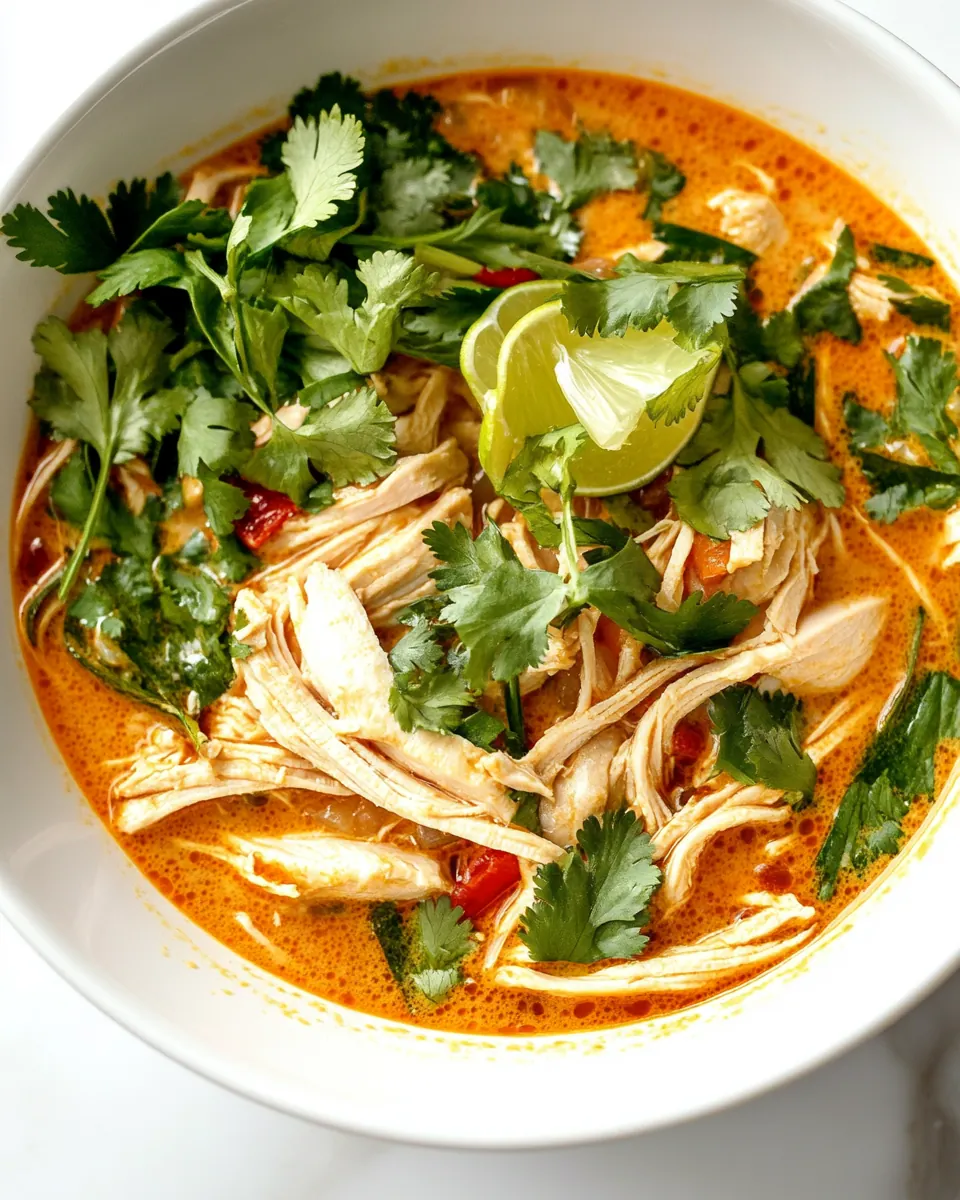
These ingredients are chosen to create a balance of savory, creamy, and bright notes. The key players are the Thai red curry paste for spicy aromatic depth, the coconut milk for creamy richness, and the fresh herbs and lime for brightness. Together, they make a bowl that is layered, comforting, and lively.
- 1 tablespoon olive oil: Sauté in a hot pan to develop a flavorful base and lightly brown other aromatics before adding liquids, contributing subtle fruitiness and richness.
- 1/2 medium onion chopped finely: Sweat until translucent to provide sweetness and aromatic depth that balances spicy and savory elements, finely chopped to melt into the soup.
- 1 teaspoon grated fresh ginger: Grate and add early to infuse bright, warm heat and a zesty backbone that complements the curry paste and lifts the broth.
- 3 cloves garlic minced: Mince and cook briefly to release pungent, savory aromas that layer with ginger and curry for an aromatic savory foundation.
- 4 heaping tablespoons Thai red curry paste see note: Stir into hot oil to dissolve and bloom spices, delivering concentrated red chili heat, umami, and classic Thai flavor intensity.
- 4 cups chicken or vegetable broth: Pour as the primary savory liquid to create the soup's body and provide a savory, lightly seasoned canvas for other components.
- 2 cups water: Add to adjust cooking volume and dilute intensity, helping control broth concentration and providing simmering liquid for noodles.
- Juice of 1 lime: Squeeze in at the end to add bright acidity that balances richness and enhances the overall freshness of the curry flavors.
- 3.5 ounces uncooked rice noodles see note: Soak or briefly cook in the simmering broth to provide tender, slightly chewy texture and to absorb the curry-flavored liquid.
- 1 (13.5 ounce) can full fat coconut milk: Whisk into the hot broth to impart creamy richness, mellow heat, and a slightly sweet coconut flavor that rounds out the soup.
- 2 cups shredded cooked chicken (I used rotisserie): Fold in pre-cooked shredded protein to add substantial body, savory flavor, and make the soup hearty and meal-worthy.
- Generous handful fresh basil torn: Toss in just before serving to contribute aromatic, slightly sweet, peppery notes and a fresh herbal lift to each spoonful.
- Handful fresh cilantro chopped: Sprinkle or stir in for a bright, citrusy herbal contrast that adds freshness and complements the basil and lime.
- Chopped scallions to taste: Garnish to add crisp, mild onion flavor and a pop of green color, enhancing mouthfeel and visual appeal when served.
- Salt & pepper to taste: Season to taste to balance flavors, enhance umami, and ensure the final dish meets desired saltiness and peppery warmth.
- Lime wedges for serving () (optional): Serve alongside to provide extra bright acidity for diners to squeeze over their bowls, brightening flavors as desired.
Cooking Instructions for Easy Thai Chicken Curry Soup
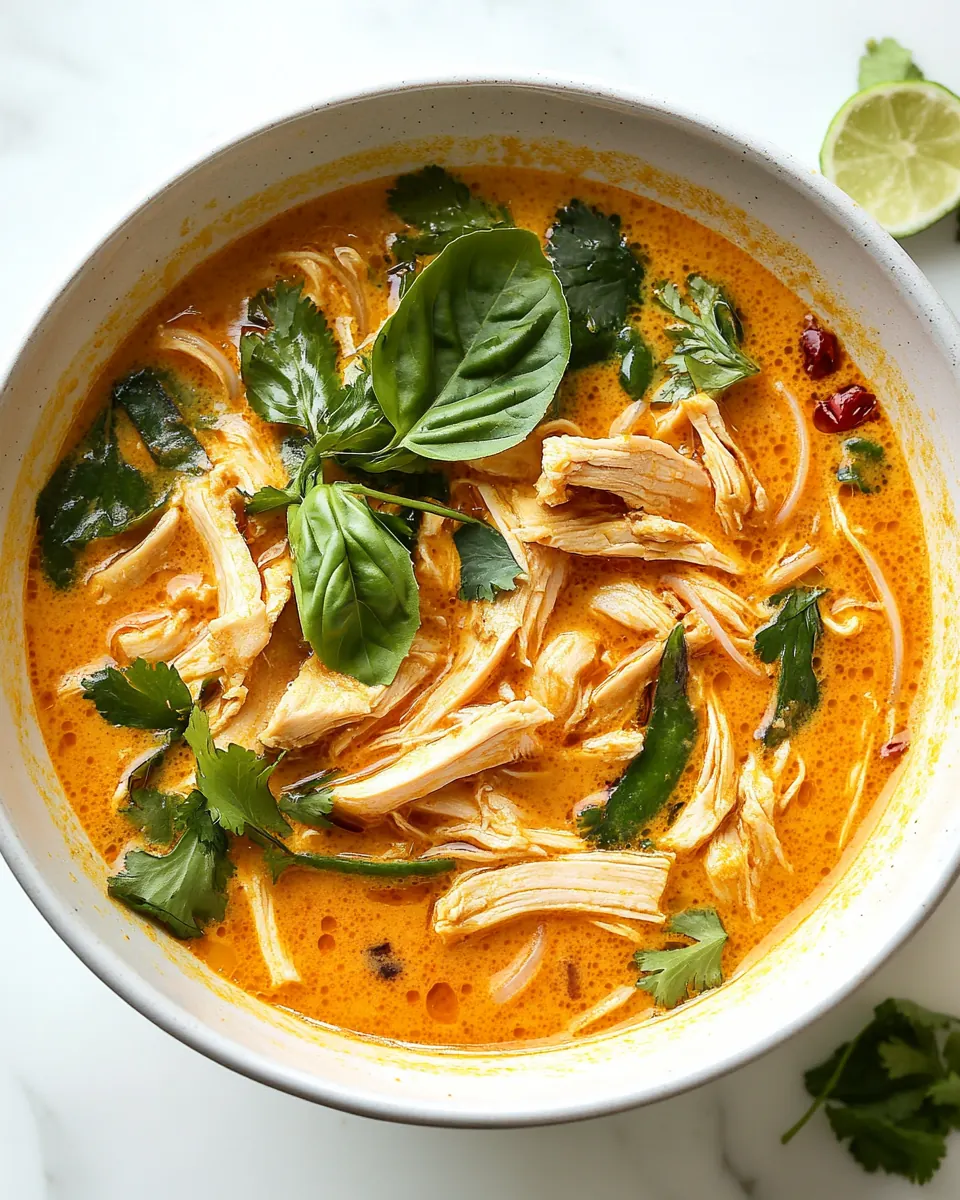
This method is conversational and geared toward home cooks who like sensory guidance. The steps walk you through sautéing, flavor-building, and finishing so each spoonful is balanced. Read each step slowly, and trust your senses as you cook.
- Add the olive oil and onion to a large pot over medium-high heat. Sauté for 5 minutes, stirring occasionally.: The pan should smell sweet and savory as the onion softens, and you will hear a gentle sizzle that tells you the heat is right. Softened, translucent onion is the goal, not browned bits, so watch the color closely. If the onion begins to brown, reduce the heat to prevent bitterness. Stirring occasionally ensures even cooking and releases the onion 's natural sugars, which form the flavor base for the soup. One common mistake is rushing the step by using too high heat, which scorches the onion and gives a burnt taste to the broth; keep the pan at medium-high and be patient as the aromatics gently mellow.
- Stir in the ginger, garlic, and curry paste, and cook for about 30 seconds.: As the ginger and garlic hit the warm oil, they should puff and perfume the kitchen quickly, releasing bright spicy and savory notes. You should catch a brief perfume of the curry paste's chilies and aromatics, and the paste will darken slightly as its oils bloom. This short cook is about awakening the spices, not cooking them to dryness, so keep them moving to avoid burning. The reason this matters is that blooming concentrates flavor and disperses it through the oil, creating a deep, layered broth. Avoid letting the mixture burn, which makes the whole soup taste acrid; if it starts to stick, add a splash of broth to deglaze the pan.
- Add the broth, water, lime juice, and noodles. Increase heat to high and bring to a gentle boil.: When you add the liquids, the kitchen will shift from spicy aroma to a savory steam as the broth warms. The noodles will begin to soften in the hot liquid, swelling and releasing a faint rice scent. Bring the pot up to a gentle boil, not a wild roil, so the noodles cook evenly without breaking apart. Gentle bubbling ensures even cooking and helps flavors marry. A frequent error is to overboil, which can cause the rice noodles to become gluey; keep the heat controlled and stir gently to prevent clumping.
- Stir in the coconut milk and chicken. Reduce heat to medium-low and let the soup simmer for 10 minutes.: Adding the coconut milk softens the broth into a creamy emulsion and the aroma will become rounded and comforting. As you add the shredded chicken , it will warm through and pick up the curry flavors without drying out. A low simmer allows the flavors to meld and the pasta to finish cooking while preserving texture. You should see small, gentle bubbles and a glossy surface on the broth. If the soup is too thin, simmer a little longer uncovered, but if it is too thick, add a splash of broth. A common misstep is boiling too vigorously here, which can separate the coconut milk and make the texture grainy, so keep it at a low simmer.
- Stir in the basil, cilantro, and scallions. Season with salt & pepper as needed.: When the fresh herbs hit the warm soup, their aromas will instantly release, creating a fragrant top note that contrasts the rich broth. The bright green flecks signal freshness, and the scallions give a slight crunch and pungency. Tasting now is key, because it’s the last chance to balance salt and acid before serving. If the flavor feels flat, a touch more lime or salt will sharpen it. Avoid adding too much salt at once; it is easier to add more after tasting than to fix over-salting.
- Serve immediately with an extra wedge of lime on the side if desired. The noodles will soak up more liquid the longer you leave the soup. I suggest adding more chicken broth if you need to add more liquid (e. g. reheating leftovers the next day).: Serve while the soup is steaming, and encourage diners to squeeze lime to their taste, which will add a spark of acidity that livens the entire bowl. The noodles will continue to absorb liquid, so the soup will thicken slightly as it sits; if you plan to keep leftovers, reserve extra broth to thin it when reheating. A common oversight is letting the soup sit uncovered for too long, which can dry the noodles and make them clump together; store leftovers in a sealed container with a little extra broth.
How to Switch It Up
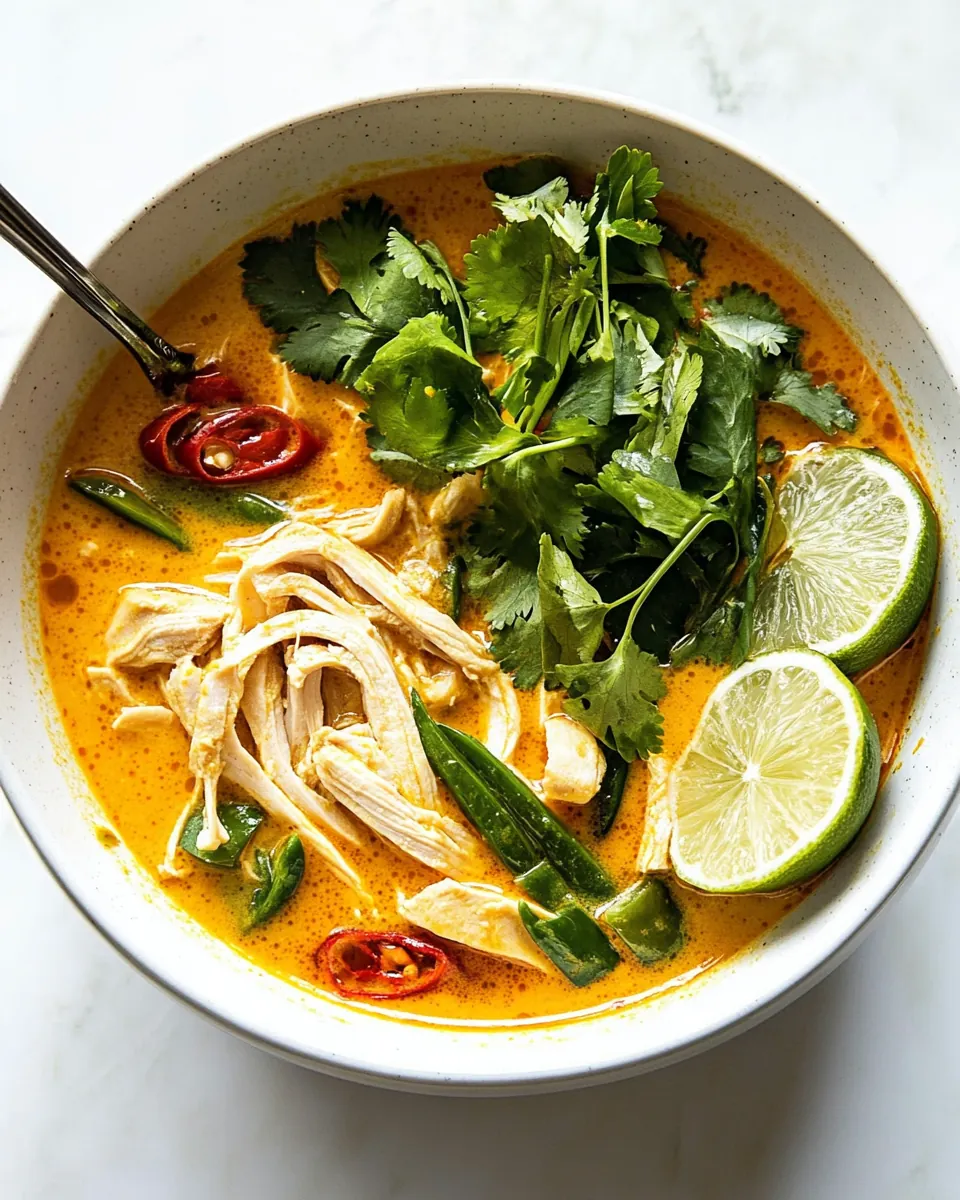
I like offering small, intentional changes so you can adapt Easy Thai Chicken Curry Soup to what you have on hand or your mood. These tips are practical and rooted in the recipe’s flavor profile, and each one helps you customize heat, texture, or timing without losing the essence of the dish.
- Adjust the heat: If you prefer milder soup, reduce the amount of Thai red curry paste to suit your palate, and add more gradually so you can fine tune the spice level.
- Noodle swap: Try thicker rice noodles for more bite, remembering thicker noodles may require a slightly longer cook in the hot broth to reach the right texture.
- Herb timing: Add basil and cilantro right at the end to preserve brightness, as prolonged cooking will dull their fresh flavors.
- Broth control: If your soup tastes too salty after adding the curry paste, dilute with a little extra water or unsalted broth and rebalance with lime.
- Make it heartier: Increase the shredded chicken quantity slightly if you want a more substantial bowl, or serve alongside a simple steamed vegetable for a fuller meal.
- Prep while cooking: Chop herbs and prep garnishes while the soup simmers to save time and keep the workflow efficient.
Perfect Matches for Easy Thai Chicken Curry Soup
This soup shines on its own but also pairs beautifully with simple sides and serving ideas. Think about texture contrasts and bright elements that complement the creamy, spicy broth. These pairings work for casual weeknights, cozy dinners, and any time you want a bowl to feel like a complete meal.
- Steamed vegetables: Lightly steamed greens like bok choy or broccoli add a crisp counterpoint to the creamy broth and boost the meal’s heartiness.
- Simple rice: A small bowl of jasmine rice can be served on the side for guests who prefer spooning the soup over rice rather than eating noodles.
- Fresh herb platter: Offer extra basil, cilantro, and lime wedges so diners can customize brightness and herb intensity at the table.
- Casual gatherings: This soup is an excellent choice for relaxed dinners with friends because it is quick to make and scales well for larger pots.
- Leftover strategy: Store the soup in the fridge with extra broth on the side and reheat gently, adding broth as needed so the noodles do not absorb all the liquid.
- Occasions: Perfect for weeknight dinners, a comforting lunch, or a light dinner during colder months when you want something soul-warming but not heavy.
- Seasonal pairing: The bright lime and fresh herbs make it suitable all year round, pairing well with both spring produce and heartier fall sides.
FAQ
Conclusion
Easy Thai Chicken Curry Soup stands out because it blends bold curry flavors, creamy coconut richness, and bright lime into a quick, satisfying bowl. Give it a try on a busy night when you want something comforting yet lively, and don’t be surprised if it becomes a weekly favorite. The combination of aromatics, tender shredded chicken, and slurpable rice noodles makes it both effortless and memorable, and I hope it brings warmth and flavor to your table.
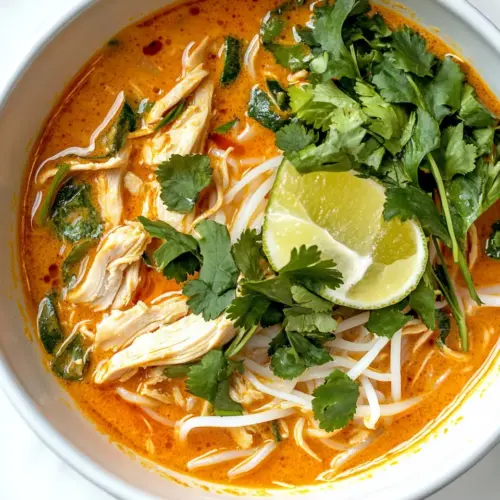
Easy Thai Chicken Curry Soup
Equipment
- Large Pot
- Wooden Spoon
- Ladle
Ingredients
- 1 tablespoon olive oil Sauté in a hot pan to develop a flavorful base and lightly brown other aromatics before adding liquids, contributing subtle fruitiness and richness.
- 1/2 medium onion chopped finely Sweat until translucent to provide sweetness and aromatic depth that balances spicy and savory elements, finely chopped to melt into the soup.
- 1 teaspoon grated fresh ginger Grate and add early to infuse bright, warm heat and a zesty backbone that complements the curry paste and lifts the broth.
- 3 cloves garlic minced Mince and cook briefly to release pungent, savory aromas that layer with ginger and curry for an aromatic savory foundation.
- 4 heaping tablespoons Thai red curry paste see note Stir into hot oil to dissolve and bloom spices, delivering concentrated red chili heat, umami, and classic Thai flavor intensity.
- 4 cups chicken or vegetable broth Pour as the primary savory liquid to create the soup's body and provide a savory, lightly seasoned canvas for other components.
- 2 cups water Add to adjust cooking volume and dilute intensity, helping control broth concentration and providing simmering liquid for noodles.
- Juice of 1 lime Squeeze in at the end to add bright acidity that balances richness and enhances the overall freshness of the curry flavors.
- 3.5 ounces uncooked rice noodles see note Soak or briefly cook in the simmering broth to provide tender, slightly chewy texture and to absorb the curry-flavored liquid.
- 1 (13.5 ounce) can full fat coconut milk Whisk into the hot broth to impart creamy richness, mellow heat, and a slightly sweet coconut flavor that rounds out the soup.
- 2 cups shredded cooked chicken (I used rotisserie) Fold in pre-cooked shredded protein to add substantial body, savory flavor, and make the soup hearty and meal-worthy.
- Generous handful fresh basil torn Toss in just before serving to contribute aromatic, slightly sweet, peppery notes and a fresh herbal lift to each spoonful.
- Handful fresh cilantro chopped Sprinkle or stir in for a bright, citrusy herbal contrast that adds freshness and complements the basil and lime.
- Chopped scallions to taste Garnish to add crisp, mild onion flavor and a pop of green color, enhancing mouthfeel and visual appeal when served.
- Salt & pepper to taste Season to taste to balance flavors, enhance umami, and ensure the final dish meets desired saltiness and peppery warmth.
- Lime wedges for serving (optional) Serve alongside to provide extra bright acidity for diners to squeeze over their bowls, brightening flavors as desired.
Instructions
- Add the olive oil and onion to a large pot over medium-high heat. Sauté for 5 minutes, stirring occasionally.: The pan should smell sweet and savory as the onion softens, and you will hear a gentle sizzle that tells you the heat is right. Softened, translucent onion is the goal, not browned bits, so watch the color closely. If the onion begins to brown, reduce the heat to prevent bitterness. Stirring occasionally ensures even cooking and releases the onion 's natural sugars, which form the flavor base for the soup. One common mistake is rushing the step by using too high heat, which scorches the onion and gives a burnt taste to the broth; keep the pan at medium-high and be patient as the aromatics gently mellow.
- Stir in the ginger, garlic, and curry paste, and cook for about 30 seconds.: As the ginger and garlic hit the warm oil, they should puff and perfume the kitchen quickly, releasing bright spicy and savory notes. You should catch a brief perfume of the curry paste's chilies and aromatics, and the paste will darken slightly as its oils bloom. This short cook is about awakening the spices, not cooking them to dryness, so keep them moving to avoid burning. The reason this matters is that blooming concentrates flavor and disperses it through the oil, creating a deep, layered broth. Avoid letting the mixture burn, which makes the whole soup taste acrid; if it starts to stick, add a splash of broth to deglaze the pan.
- Add the broth, water, lime juice, and noodles. Increase heat to high and bring to a gentle boil.: When you add the liquids, the kitchen will shift from spicy aroma to a savory steam as the broth warms. The noodles will begin to soften in the hot liquid, swelling and releasing a faint rice scent. Bring the pot up to a gentle boil, not a wild roil, so the noodles cook evenly without breaking apart. Gentle bubbling ensures even cooking and helps flavors marry. A frequent error is to overboil, which can cause the rice noodles to become gluey; keep the heat controlled and stir gently to prevent clumping.
- Stir in the coconut milk and chicken. Reduce heat to medium-low and let the soup simmer for 10 minutes.: Adding the coconut milk softens the broth into a creamy emulsion and the aroma will become rounded and comforting. As you add the shredded chicken , it will warm through and pick up the curry flavors without drying out. A low simmer allows the flavors to meld and the pasta to finish cooking while preserving texture. You should see small, gentle bubbles and a glossy surface on the broth. If the soup is too thin, simmer a little longer uncovered, but if it is too thick, add a splash of broth. A common misstep is boiling too vigorously here, which can separate the coconut milk and make the texture grainy, so keep it at a low simmer.
- Stir in the basil, cilantro, and scallions. Season with salt & pepper as needed.: When the fresh herbs hit the warm soup, their aromas will instantly release, creating a fragrant top note that contrasts the rich broth. The bright green flecks signal freshness, and the scallions give a slight crunch and pungency. Tasting now is key, because it’s the last chance to balance salt and acid before serving. If the flavor feels flat, a touch more lime or salt will sharpen it. Avoid adding too much salt at once; it is easier to add more after tasting than to fix over-salting.
- Serve immediately with an extra wedge of lime on the side if desired. The noodles will soak up more liquid the longer you leave the soup. I suggest adding more chicken broth if you need to add more liquid (e. g. reheating leftovers the next day).: Serve while the soup is steaming, and encourage diners to squeeze lime to their taste, which will add a spark of acidity that livens the entire bowl. The noodles will continue to absorb liquid, so the soup will thicken slightly as it sits; if you plan to keep leftovers, reserve extra broth to thin it when reheating. A common oversight is letting the soup sit uncovered for too long, which can dry the noodles and make them clump together; store leftovers in a sealed container with a little extra broth.
Notes
- Adjust the heat: If you prefer milder soup, reduce the amount of Thai red curry paste to suit your palate, and add more gradually so you can fine tune the spice level.
- Noodle swap: Try thicker rice noodles for more bite, remembering thicker noodles may require a slightly longer cook in the hot broth to reach the right texture.
- Herb timing: Add basil and cilantro right at the end to preserve brightness, as prolonged cooking will dull their fresh flavors.
- Broth control: If your soup tastes too salty after adding the curry paste, dilute with a little extra water or unsalted broth and rebalance with lime.
- Make it heartier: Increase the shredded chicken quantity slightly if you want a more substantial bowl, or serve alongside a simple steamed vegetable for a fuller meal.
- Prep while cooking: Chop herbs and prep garnishes while the soup simmers to save time and keep the workflow efficient.