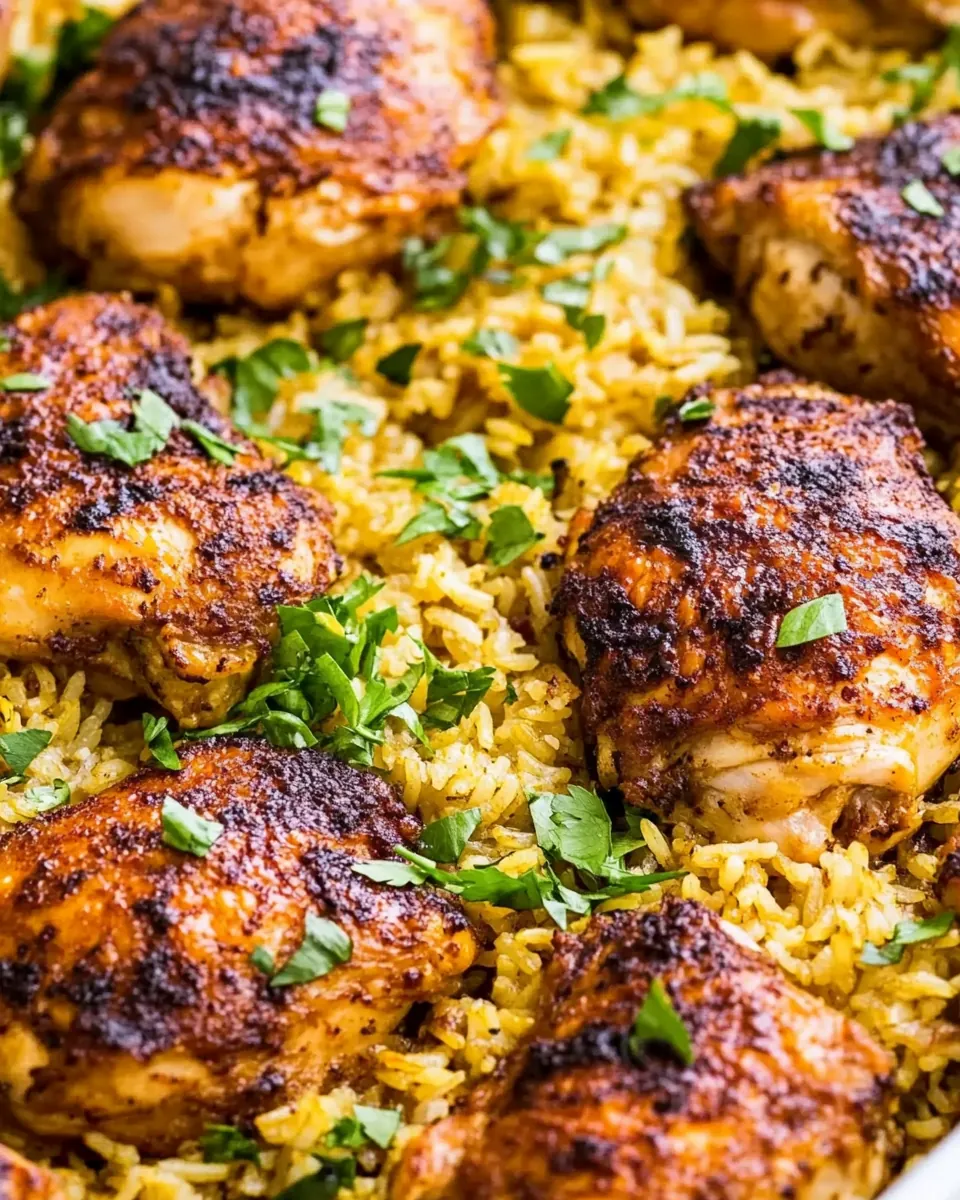
Oven Baked Chicken and Rice
Oven Baked Chicken and Rice has been my go to when I need comfort food that feels like a hug from the oven. The moment I first made this dish I remember the warm, savory steam that filled my kitchen, the kind that makes you slow down and take a deep breath because you know dinner will be worth the wait. I grew up eating simple one pan meals, and this version blends those memories with a few small tricks I picked up after many trial runs, so the rice cooks perfectly while the chicken becomes tender and flavorful.
Weeks when schedules get chaotic, I reach for this recipe because it lets me prep quickly, then hand the heavy lifting over to the oven. I love how the spices infuse into both the chicken and the rice, giving every forkful a layered flavor. There have been times I adjusted the seasoning on the fly or swapped stock types depending on what was in the pantry, and each time the result was still reliably satisfying. You will notice the aroma first, then the golden color on the chicken, and finally the perfectly fluffy rice underneath.
Recipe Snapshot
1 hr 20 mins
10 mins
70 mins
Medium
450 kcal
American
Gluten-Free, Low FODMAP
Dinner
8×12 inches baking dish (20x30cm)
What Sets This Oven Baked Chicken and Rice Apart
One Pan Simplicity
I adore how Oven Baked Chicken and Rice reduces cleanup while maximizing flavor. Using a single baking dish means fewer pans to wash, and that simplicity makes this recipe a frequent choice during busy weeks. I find that layering the rice under the chicken allows the juices and seasonings to mingle, producing a deeply savory bed of rice that tastes purpose built to accompany every bite of chicken.
Reliable Texture
What keeps me coming back to this method is how reliably it produces tender chicken and separate, fluffy long grain rice. The trick is using hot stock and water so the grains start absorbing liquid immediately, and covering the dish for a portion of the bake ensures even steaming. I have learned that small timing and temperature choices yield a consistent texture, which is a real comfort when you want dinner to be predictable.
Layered Flavor Without Fuss
The seasonings are simple yet effective, and they season both the chicken and the rice at once. I often rely on smoked paprika, dried thyme, and oregano to give the dish a warm, herbaceous backbone, while a little garlic granules adds a savory depth. Because the flavors develop together during the bake, you get a cohesive dish where every forkful tastes intentional.
Weekend Friendly Yet Weeknight Ready
I’ve made this for casual family dinners and for guests, and it always hits the right note. If you have a bit more time, marinating the chicken briefly deepens flavor, but if you need a fast solution, the straightforward seasoning still delivers. That flexibility is invaluable when meal planning changes at the last minute.
Comfort That Scales
This recipe converts well to slightly larger dishes if you need to feed more people. Because the ingredients work together in a predictable way, you can scale up with confidence and still serve a comforting, hearty meal. I particularly appreciate that it holds well for leftovers, making it a practical choice for batch cooking.
Ingredients Overview for Oven Baked Chicken and Rice
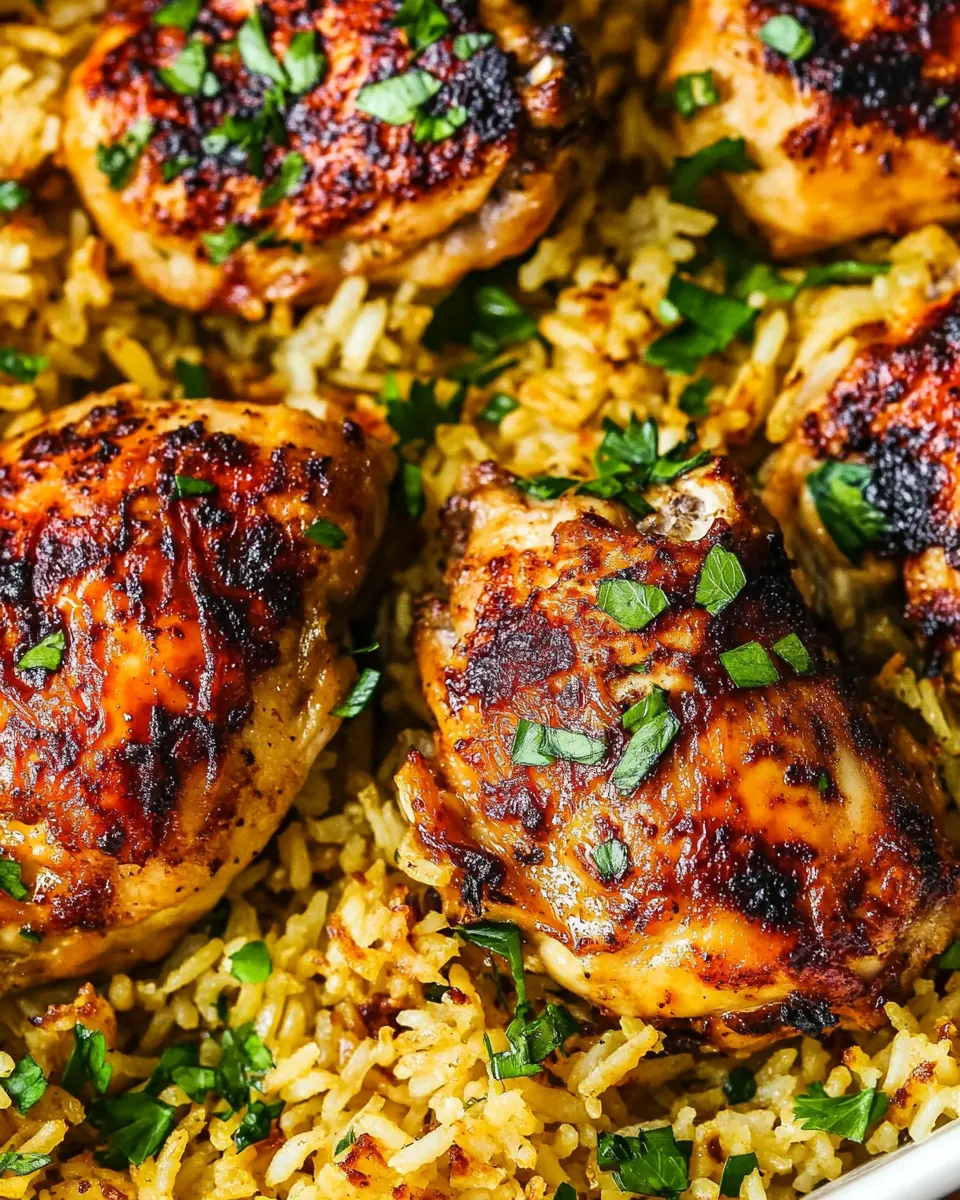
These ingredients were chosen to create harmony between the chicken and the rice. The core idea is simple, heat and liquid interacting with grain and protein to yield complementary textures. The spices season both components, while hot stock ensures the rice absorbs flavor from the very start. The key players are the spices for aroma, the hot liquids for proper rice cooking, and the bone in chicken for depth of flavor.
- 2 tablespoons olive oil: Drizzle olive oil over food to provide healthy fat and help brown the chicken for deeper flavor; it also prevents sticking during searing or baking. Use it to carry and meld herbs and spices into the protein for an even coating.
- 1 teaspoon salt: Season generously with salt to enhance and balance flavors throughout the dish; it helps draw out moisture from the chicken for better seasoning penetration. Adjust quantity to taste and to account for the stock's sodium level.
- 1/4 teaspoon ground black pepper: Sprinkle ground black pepper sparingly to add a warm, pungent heat and aromatic complexity; it complements the savory elements without overpowering. Freshly ground pepper gives brighter flavor than pre-ground varieties.
- 1 teaspoon smoked paprika: Dust smoked paprika to impart a mild smoky sweetness and vibrant color to the chicken and rice; it deepens the overall flavor profile. Use it with other spices to create a cohesive seasoning blend.
- 1 teaspoon dried thyme: Add dried thyme for earthy, slightly minty notes that pair well with poultry and rice; its subtle herbal character supports richer flavors. Rehydrate slightly during cooking to release oils and aroma.
- 1 teaspoon dried oregano: Stir in dried oregano to lend a warm, slightly bitter herbal tone that enhances savory components; it blends nicely with thyme and paprika. Crumble leaves between fingers before adding to boost fragrance.
- 1 teaspoon garlic granules: Sprinkle garlic granules to provide concentrated savory garlic flavor that distributes evenly across the chicken and rice; they are convenient when fresh garlic is also used. Rehydrates during cooking to marry with other seasonings.
- 6 (2 pounds, 900g) chicken thighs skinless, bone-in – See notes 1 & 2 below: Arrange skinless, bone-in chicken thighs to supply rich, moist meat and robust flavor; bones contribute depth to the cooking juices and stock. Use thighs for even cooking and to keep the finished dish tender and succulent.
- 1 onion diced: Sauté diced onion to build a sweet, aromatic foundation and add savory depth to both rice and chicken; cooking softens the onion and releases its natural sugars. Use translucent onions to ensure mellow, integrated flavor.
- 2 cloves garlic minced: Mince garlic to deliver bright, pungent aroma and savory umami that complements the onions and herbs; fresh garlic sharpens the overall profile. Add at appropriate time to avoid burning and to preserve its flavor.
- 2 tablespoons olive oil: Combine additional olive oil to coat the rice or vegetables and aid in sautéing aromatics for a glossy texture; it also helps prevent rice from sticking. Use alongside butter for a richer mouthfeel.
- 2 tablespoons butter melted: Incorporate melted butter to contribute a creamy, rich flavor and velvety mouthfeel that enriches the rice and sauce; it helps create a luxurious finish. Butter also promotes golden browning and tender crumb in cooked rice.
- 1 and 1/2 cups (375 ml) vegetable or chicken stock hot, Note 3: Pour hot vegetable or chicken stock to infuse the rice with savory depth and additional seasoning; hot liquid helps maintain even cooking temperature and prevents shocking the rice. Choose stock based on desired flavor intensity and saltiness.
- 1 and 1/4 cups (315 ml) water hot: Add hot water to adjust the total liquid volume for proper rice cooking; combined with stock it ensures rice absorbs flavors and reaches the correct texture. Ensure water is hot to keep cooking steady and avoid undercooked grains.
- 1 and 1/2 cups (280g) long-grain rice uncooked, Note 4: Measure long–grain rice uncooked to provide light, separate grains that absorb flavors and remain fluffy when baked; long–grain varieties resist clumping. Rinse if desired to remove excess starch and improve texture.
- 1 teaspoon salt: Season again with salt to fine-tune the overall seasoning of the combined rice and cooking liquid; this second addition ensures balanced taste after dilution by other ingredients. Taste the liquid before baking when possible to avoid oversalting.
- 1/4 teaspoon ground black pepper: Finish with a final dusting of ground black pepper to add a subtle kick and aromatic lift to the completed dish; it harmonizes the savory elements. Adjust to preference for heat and aroma.
Cooking Instructions for Oven Baked Chicken and Rice
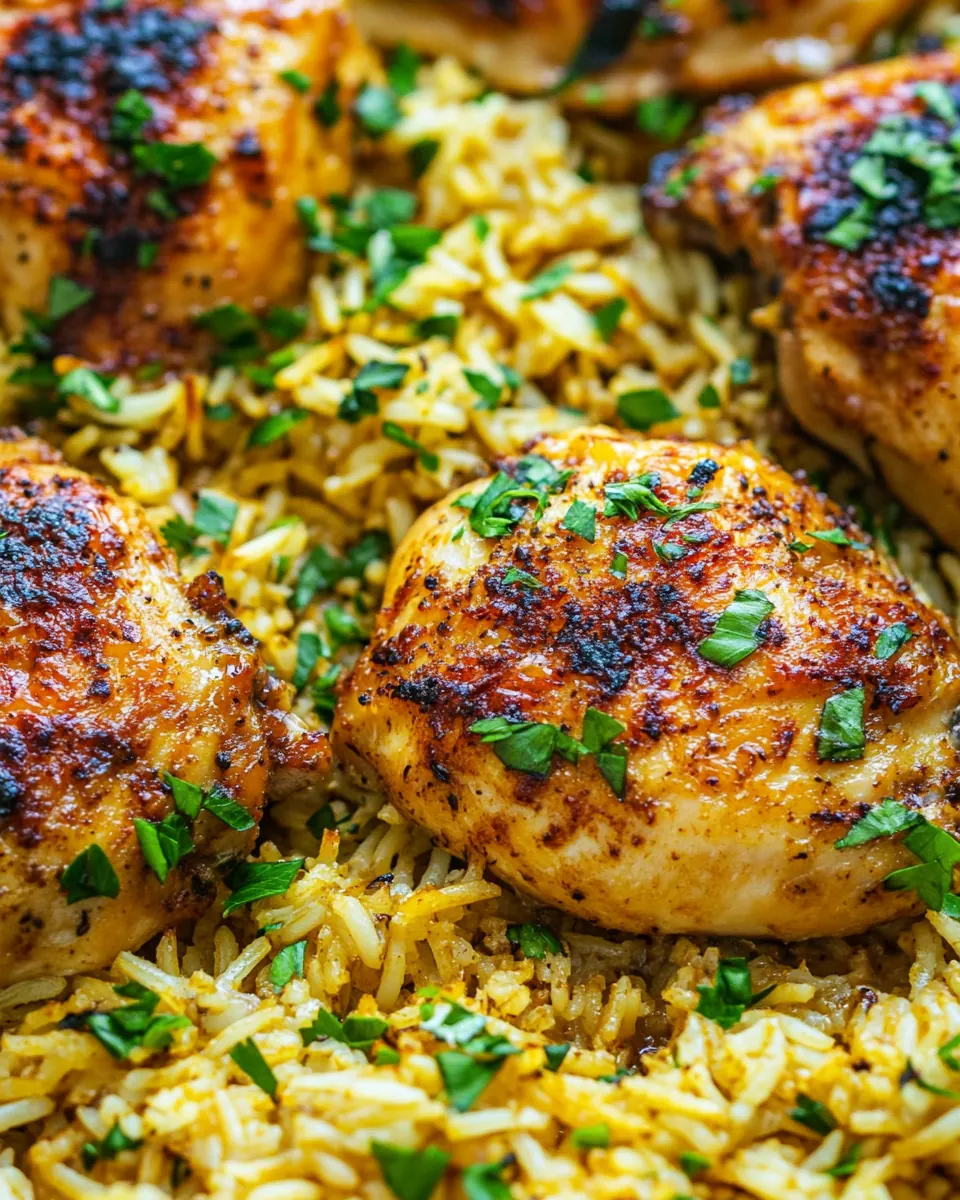
This method is straightforward but relies on timing and temperature to synchronize the chicken and the rice. I like to prep everything first so I can layer the dish quickly and get it into the oven without fuss. The steps below follow the original directions closely, expanded with sensory cues and troubleshooting to help you succeed.
- Preheat oven to 350°F/180°C.: The moment you set the oven to 350°F/180°C you should notice the warm dry air begin to circulate as it approaches temperature, which primes the dish for even heat. Proper preheating ensures the chicken starts roasting immediately rather than slowly warming, which improves browning and texture. If you skip preheating you may end up extending the cooking time and getting uneven results, so wait until the oven signals readiness.
- To a large mixing bowl, whisk the oil and seasonings, then add the chicken thighs and mix so that the chicken thighs are well coated. Marinate for 15-30 minutes if the time allows.: When you whisk the olive oil and spices you will smell the paprika and herbs bloom, a fragrant sign the seasoning is active. Coating the chicken lets the flavors adhere to the surface and begin to penetrate the meat. Marinating even briefly tenderizes the outside and deepens flavor, but avoid marinating too long at room temperature for safety. A common misstep is not fully coating the thighs which leads to uneven seasoning across pieces.
- To a baking dish, add onion, garlic, olive oil, butter, hot vegetable stock, hot water, rice, salt, and pepper. And give everything a quick mix.: As you assemble the base, the heat of the stock will release steam and scent, and the melting butter will create a glossy surface on the rice . Stirring ensures the diced onion and minced garlic distribute evenly so every grain absorbs flavor. Be careful to use hot liquids, because cold liquid can interrupt the rice cooking cycle and lead to gummy or unevenly cooked grains.
- Place the chicken over the rice.: Nestling the seasoned chicken into the rice allows its juices to baste the grains as it cooks, infusing the rice with savory depth. Visually you want the thighs spaced so air can circulate, not crowded, which helps the edges brown better when uncovered later. A mistake here is overcrowding the dish which can prevent proper browning and create steam pockets.
- Cover with foil and bake covered for 30 minutes.: Covering traps steam so the rice absorbs the hot liquids and the chicken cooks gently. During this phase you should hear a faint simmer and smell the blended aromatics rising, and the rice will start to swell as it hydrates. If the foil is not sealed well you may lose steam and end up with undercooked rice, so ensure a snug cover.
- Uncover, spray the chicken with oil and bake for 30 more minutes. Broil for a few minutes to give the chicken golden and crisp edges and crust.: Once uncovered you will see the surface dry a bit, and spraying with oil helps the chicken develop a golden crust as it roasts. The exposed heat will crisp edges and concentrate flavors, producing audible sizzling and a deeper roasted aroma. Broiling for a short time is optional but creates a desirable color and texture. Watch closely during broiling to avoid burning, as the high heat works very quickly.
- Remove from the oven, and allow the chicken and rice to rest for 10 minutes. Fluff the rice (remove the chicken if needed then put it back in), garnish with fresh herbs and serve.: Resting is when the juices redistribute and the steam finishes cooking the grains, so the rice becomes fluffy rather than sticky. When you fluff the rice you will notice separated grains and a fragrant lift of the seasonings. A common oversight is serving immediately, which can leave the rice dense and the chicken juices running out; allow the full rest time for best texture.
Recipe Tips about Oven Baked Chicken and Rice
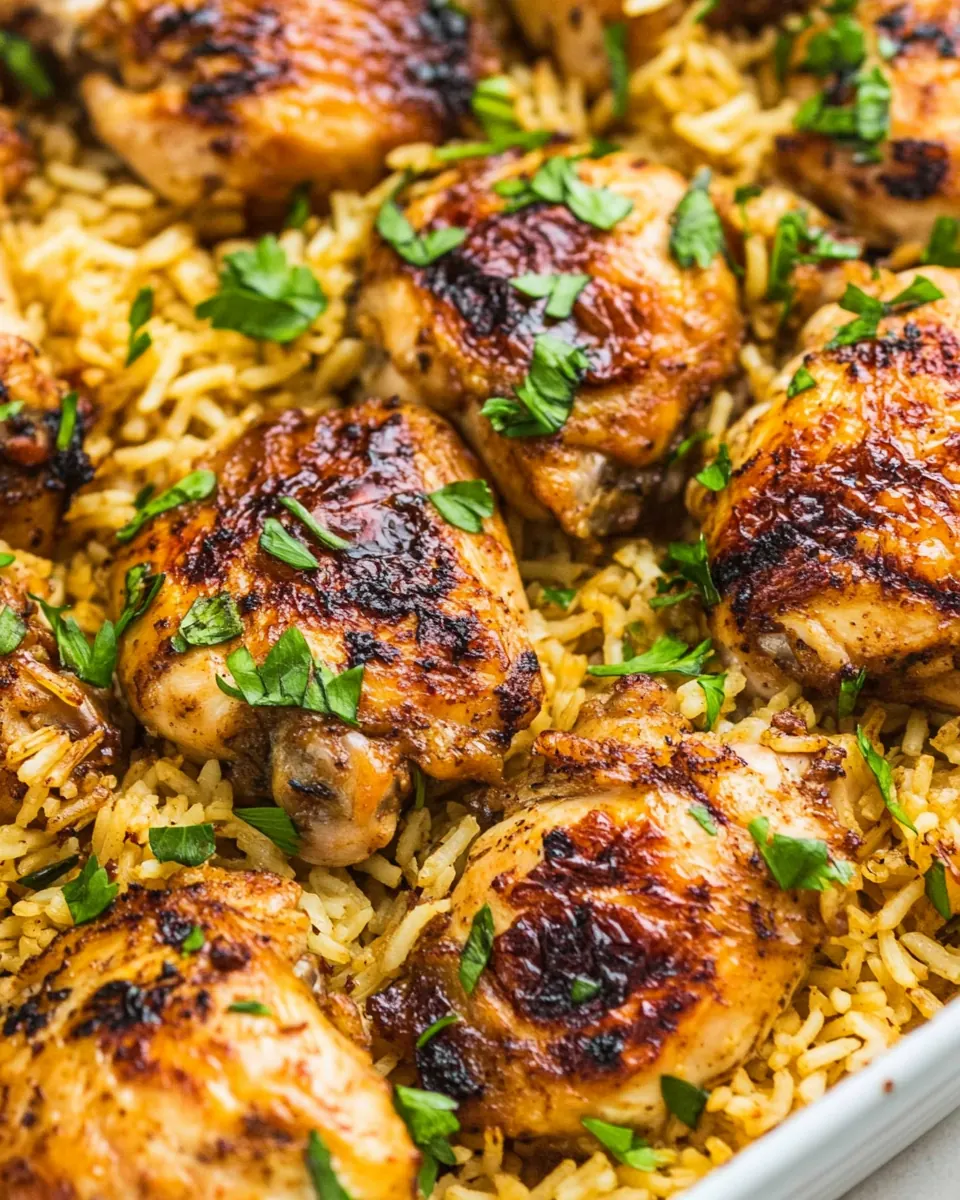
This set of tips expands on practical choices that make the recipe foolproof. I share what I do differently sometimes and why those tweaks matter to the final texture and flavor.
- Heat the liquids: Always use hot stock and hot water when assembling the dish, because hot liquid shortens the time it takes for the rice to begin absorbing and prevents undercooking. Cold liquids cool the baking dish and create uneven cooking which leads to some grains remaining firm while others overcook.
- Remove the skin: I remove the skin from bone in chicken thighs to keep the rice from becoming greasy, since rendered fat can drip into the grains and change texture. Taking off skin takes seconds and results in a cleaner, more balanced dish.
- Use long grain rice: Choose basmati or jasmine for separate, fluffy grains. Short grain or risotto rice will break down and become mushy under the long bake, so stick to long grain for the intended texture and absorption rate.
- Marinate briefly if possible: If you have 15 to 30 minutes, letting the seasoned chicken rest improves the depth of flavor, but the dish still works well without it. Marinating at room temperature for too long is unsafe, so keep it brief or refrigerate if you go longer.
- Seal the dish when baking: Cover tightly with foil for the initial bake so steam can build and cook the rice evenly. A loose cover lets steam escape and can result in unevenly cooked grains, so check the seal before placing in the oven.
- Watch the broil: Broiling at the end gives beautiful color and texture, but it happens fast. Keep the oven door slightly ajar if your broiler is powerful, and watch for the golden color to avoid burning.
What Goes Well With This Oven Baked Chicken and Rice
This section outlines complementary sides and serving ideas, plus storage and occasion notes to help you present the dish thoughtfully. The list format below highlights practical pairings and serving suggestions.
- Light green salad: A crisp salad with a zesty lemon dressing balances the warm, savory notes of the chicken and the rice, offering fresh texture and acidity which cuts through the richness.
- Roasted vegetables: Oven roasted carrots or green beans provide complementary roasted aromas and a slightly caramelized sweetness that plays well against the herbed rice.
- Yogurt sauce: A simple yogurt based sauce with herbs adds a cool, creamy contrast and brightens each bite when dolloped on the side of the plate.
- Family dinners and weeknights: This dish is ideal for casual family dinners and easy weeknight meals because it cooks in one dish and serves multiple people reliably.
- Leftovers storage: Cool leftovers quickly and refrigerate in an airtight container for up to three days; reheat gently covered to prevent drying out, adding a splash of water if needed to rehydrate the rice.
- Seasonal serving: In colder months like winter this warm, baked dish feels especially comforting, though it works year round because of its flexible flavor profile.
FAQ
Conclusion
Oven Baked Chicken and Rice shines because it synchronizes tender bone in chicken with fluffy, flavorful long grain rice in one easy baking dish. Give it a try when you want comforting food with minimal cleanup, and let the aromatic spices and hot stock do the heavy lifting. I hope this recipe becomes a reliable favorite in your rotation, bringing warmth and satisfying texture to weeknights and casual gatherings alike.
Oven Baked Chicken and Rice
Equipment
- 8×12 inches baking dish (20x30cm)
Ingredients
- 2 tablespoons olive oil Drizzle olive oil over food to provide healthy fat and help brown the chicken for deeper flavor; it also prevents sticking during searing or baking. Use it to carry and meld herbs and spices into the protein for an even coating.
- 1 teaspoon salt Season generously with salt to enhance and balance flavors throughout the dish; it helps draw out moisture from the chicken for better seasoning penetration. Adjust quantity to taste and to account for the stock's sodium level.
- 1/4 teaspoon ground black pepper Sprinkle ground black pepper sparingly to add a warm, pungent heat and aromatic complexity; it complements the savory elements without overpowering. Freshly ground pepper gives brighter flavor than pre-ground varieties.
- 1 teaspoon smoked paprika Dust smoked paprika to impart a mild smoky sweetness and vibrant color to the chicken and rice; it deepens the overall flavor profile. Use it with other spices to create a cohesive seasoning blend.
- 1 teaspoon dried thyme Add dried thyme for earthy, slightly minty notes that pair well with poultry and rice; its subtle herbal character supports richer flavors. Rehydrate slightly during cooking to release oils and aroma.
- 1 teaspoon dried oregano Stir in dried oregano to lend a warm, slightly bitter herbal tone that enhances savory components; it blends nicely with thyme and paprika. Crumble leaves between fingers before adding to boost fragrance.
- 1 teaspoon garlic granules Sprinkle garlic granules to provide concentrated savory garlic flavor that distributes evenly across the chicken and rice; they are convenient when fresh garlic is also used. Rehydrates during cooking to marry with other seasonings.
- 6 (2 pounds, 900g) chicken thighs skinless, bone-in – See notes 1 & 2 below Arrange skinless, bone-in chicken thighs to supply rich, moist meat and robust flavor; bones contribute depth to the cooking juices and stock. Use thighs for even cooking and to keep the finished dish tender and succulent.
- 1 onion diced Sauté diced onion to build a sweet, aromatic foundation and add savory depth to both rice and chicken; cooking softens the onion and releases its natural sugars. Use translucent onions to ensure mellow, integrated flavor.
- 2 cloves garlic minced Mince garlic to deliver bright, pungent aroma and savory umami that complements the onions and herbs; fresh garlic sharpens the overall profile. Add at appropriate time to avoid burning and to preserve its flavor.
- 2 tablespoons olive oil Combine additional olive oil to coat the rice or vegetables and aid in sautéing aromatics for a glossy texture; it also helps prevent rice from sticking. Use alongside butter for a richer mouthfeel.
- 2 tablespoons butter melted Incorporate melted butter to contribute a creamy, rich flavor and velvety mouthfeel that enriches the rice and sauce; it helps create a luxurious finish. Butter also promotes golden browning and tender crumb in cooked rice.
- 1 and 1/2 cups (375 ml) vegetable or chicken stock hot, Note 3 Pour hot vegetable or chicken stock to infuse the rice with savory depth and additional seasoning; hot liquid helps maintain even cooking temperature and prevents shocking the rice. Choose stock based on desired flavor intensity and saltiness.
- 1 and 1/4 cups (315 ml) water hot Add hot water to adjust the total liquid volume for proper rice cooking; combined with stock it ensures rice absorbs flavors and reaches the correct texture. Ensure water is hot to keep cooking steady and avoid undercooked grains.
- 1 and 1/2 cups (280g) long-grain rice uncooked, Note 4 Measure long-grain rice uncooked to provide light, separate grains that absorb flavors and remain fluffy when baked; long-grain varieties resist clumping. Rinse if desired to remove excess starch and improve texture.
- 1 teaspoon salt Season again with salt to fine-tune the overall seasoning of the combined rice and cooking liquid; this second addition ensures balanced taste after dilution by other ingredients. Taste the liquid before baking when possible to avoid oversalting.
- 1/4 teaspoon ground black pepper Finish with a final dusting of ground black pepper to add a subtle kick and aromatic lift to the completed dish; it harmonizes the savory elements. Adjust to preference for heat and aroma.
Instructions
- Preheat oven to 350°F/180°C.: The moment you set the oven to 350°F/180°C you should notice the warm dry air begin to circulate as it approaches temperature, which primes the dish for even heat. Proper preheating ensures the chicken starts roasting immediately rather than slowly warming, which improves browning and texture. If you skip preheating you may end up extending the cooking time and getting uneven results, so wait until the oven signals readiness.
- To a large mixing bowl, whisk the oil and seasonings, then add the chicken thighs and mix so that the chicken thighs are well coated. Marinate for 15-30 minutes if the time allows.: When you whisk the olive oil and spices you will smell the paprika and herbs bloom, a fragrant sign the seasoning is active. Coating the chicken lets the flavors adhere to the surface and begin to penetrate the meat. Marinating even briefly tenderizes the outside and deepens flavor, but avoid marinating too long at room temperature for safety. A common misstep is not fully coating the thighs which leads to uneven seasoning across pieces.
- To a baking dish, add onion, garlic, olive oil, butter, hot vegetable stock, hot water, rice, salt, and pepper. And give everything a quick mix.: As you assemble the base, the heat of the stock will release steam and scent, and the melting butter will create a glossy surface on the rice . Stirring ensures the diced onion and minced garlic distribute evenly so every grain absorbs flavor. Be careful to use hot liquids, because cold liquid can interrupt the rice cooking cycle and lead to gummy or unevenly cooked grains.
- Place the chicken over the rice.: Nestling the seasoned chicken into the rice allows its juices to baste the grains as it cooks, infusing the rice with savory depth. Visually you want the thighs spaced so air can circulate, not crowded, which helps the edges brown better when uncovered later. A mistake here is overcrowding the dish which can prevent proper browning and create steam pockets.
- Cover with foil and bake covered for 30 minutes.: Covering traps steam so the rice absorbs the hot liquids and the chicken cooks gently. During this phase you should hear a faint simmer and smell the blended aromatics rising, and the rice will start to swell as it hydrates. If the foil is not sealed well you may lose steam and end up with undercooked rice, so ensure a snug cover.
- Uncover, spray the chicken with oil and bake for 30 more minutes. Broil for a few minutes to give the chicken golden and crisp edges and crust.: Once uncovered you will see the surface dry a bit, and spraying with oil helps the chicken develop a golden crust as it roasts. The exposed heat will crisp edges and concentrate flavors, producing audible sizzling and a deeper roasted aroma. Broiling for a short time is optional but creates a desirable color and texture. Watch closely during broiling to avoid burning, as the high heat works very quickly.
- Remove from the oven, and allow the chicken and rice to rest for 10 minutes. Fluff the rice (remove the chicken if needed then put it back in), garnish with fresh herbs and serve.: Resting is when the juices redistribute and the steam finishes cooking the grains, so the rice becomes fluffy rather than sticky. When you fluff the rice you will notice separated grains and a fragrant lift of the seasonings. A common oversight is serving immediately, which can leave the rice dense and the chicken juices running out; allow the full rest time for best texture.
Notes
- Heat the liquids: Always use hot stock and hot water when assembling the dish, because hot liquid shortens the time it takes for the rice to begin absorbing and prevents undercooking. Cold liquids cool the baking dish and create uneven cooking which leads to some grains remaining firm while others overcook.
- Remove the skin: I remove the skin from bone in chicken thighs to keep the rice from becoming greasy, since rendered fat can drip into the grains and change texture. Taking off skin takes seconds and results in a cleaner, more balanced dish.
- Use long grain rice: Choose basmati or jasmine for separate, fluffy grains. Short grain or risotto rice will break down and become mushy under the long bake, so stick to long grain for the intended texture and absorption rate.
- Marinate briefly if possible: If you have 15 to 30 minutes, letting the seasoned chicken rest improves the depth of flavor, but the dish still works well without it. Marinating at room temperature for too long is unsafe, so keep it brief or refrigerate if you go longer.
- Seal the dish when baking: Cover tightly with foil for the initial bake so steam can build and cook the rice evenly. A loose cover lets steam escape and can result in unevenly cooked grains, so check the seal before placing in the oven.
- Watch the broil: Broiling at the end gives beautiful color and texture, but it happens fast. Keep the oven door slightly ajar if your broiler is powerful, and watch for the golden color to avoid burning.