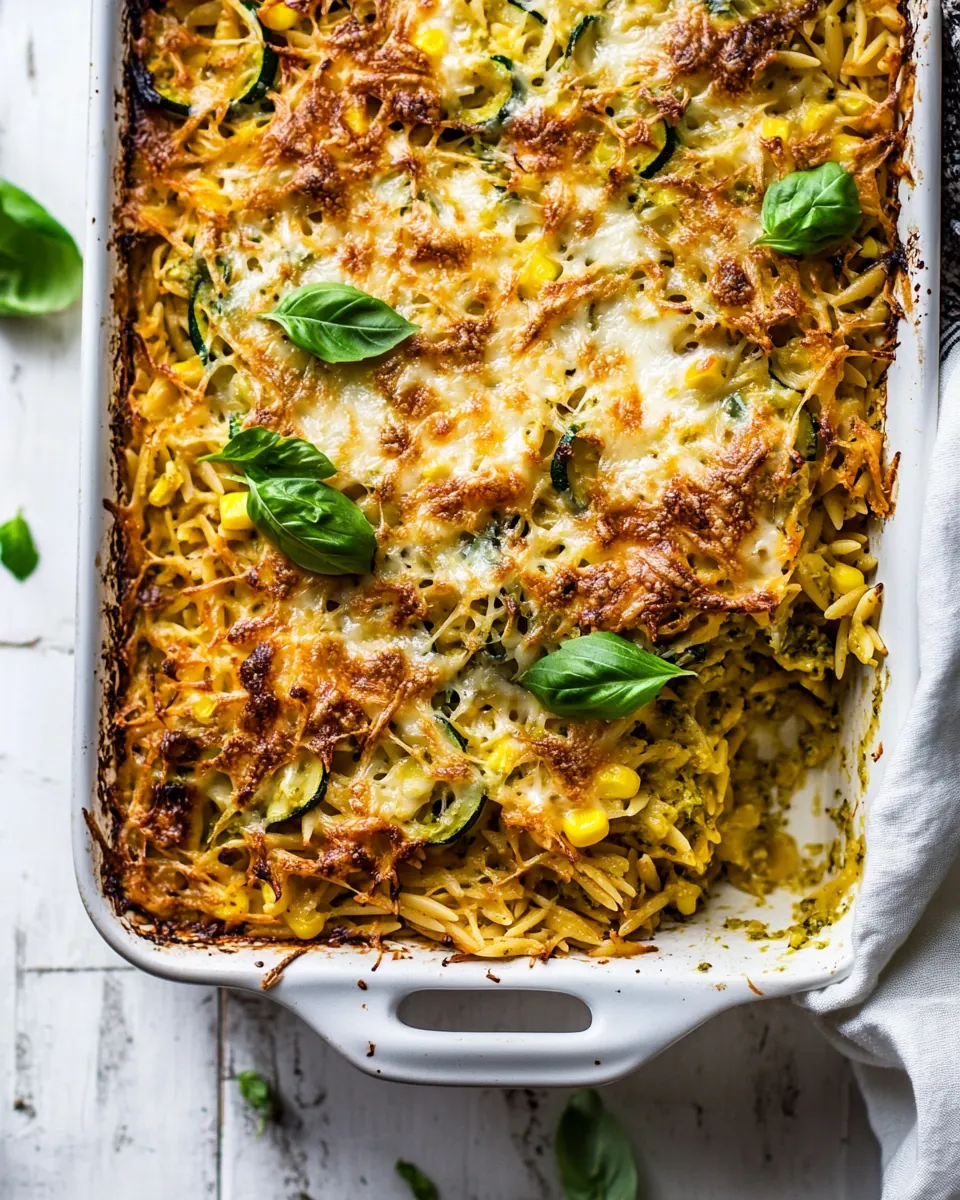
One Pan Corn and Zucchini Pesto Orzo Casserole
One Pan Corn and Zucchini Pesto Orzo Casserole has been my go to when summer squash is overflowing from the farmer market and I want something fast, satisfying, and a little bit cheesy.
One evening last July I came home exhausted, with a bag of zucchini and a jar of basil pesto that I had been meaning to use. I wanted dinner that felt like a hug, but without a pile of pans to wash, so I threw everything into a single baking dish and crossed my fingers. The result was caramelized edges on the zucchini, sweet pops of corn, and orzo threaded through a silky pesto sauce that soaked into every bite. It instantly became a weeknight staple and an easy potluck contribution.
I love how this casserole plays with textures, the way the cheeses bubble into a golden blanket while the orzo stays tender, not mushy. I often tuck in extra herbs or a squeeze of lemon, depending on how the pesto tastes that day. You can serve it straight from the pan, or let it rest for a few minutes so it firms up and slices neatly. Friends always ask for the recipe, and I always say the same thing, it is forgiving and joyful to make.
Recipe Snapshot
45 mins
15 mins
30 mins
Medium
400 kcal
Mediterranean
Gluten-Free, Vegan
Dinner
9×13 inch baking dish, Oven
Why This One Pan Corn and Zucchini Pesto Orzo Casserole Hits Different
Comfort in One Dish
I adore how One Pan Corn and Zucchini Pesto Orzo Casserole manages to deliver both comfort and simplicity. When life is busy, having a full meal come together in one vessel means fewer decisions and more time to sit down and enjoy the food. The casserole format gives that warm, homey vibe without feeling heavy.
Bright seasonal flavors
Because it leans on fresh zucchini and sweet corn, this recipe celebrates summer produce. The freshness of the basil in the pesto brightens the entire dish, while the thyme and shallot add savory depth. I find this contrast keeps every bite lively and balanced.
Textural play
There is a satisfying contrast between the tender orzo, the roasted edges of the zucchini, and the melted cheeses. The cheeses create a glossy, slightly stretchy top that gives a pleasing chew, while the vegetables add both bite and moisture. I love that each forkful has multiple sensations.
Flexible and forgiving
I often tweak quantities or swap cheeses depending on what I have. The recipe tolerates small changes, so if the pesto is oily or the orzo needs a touch more liquid, it still finishes beautifully. This forgiving quality makes it great for cooks of all levels, and that is one reason it often shows up at my table.
Great for gatherings
Because it bakes in a single 9 by 13 dish, this casserole scales well for a crowd. I bring it to potlucks and family dinners because it travels easily and stays delicious at room temperature. It is also a good make ahead dish, which is perfect for busy entertaining days.
Key Ingredients for One Pan Corn and Zucchini Pesto Orzo Casserole
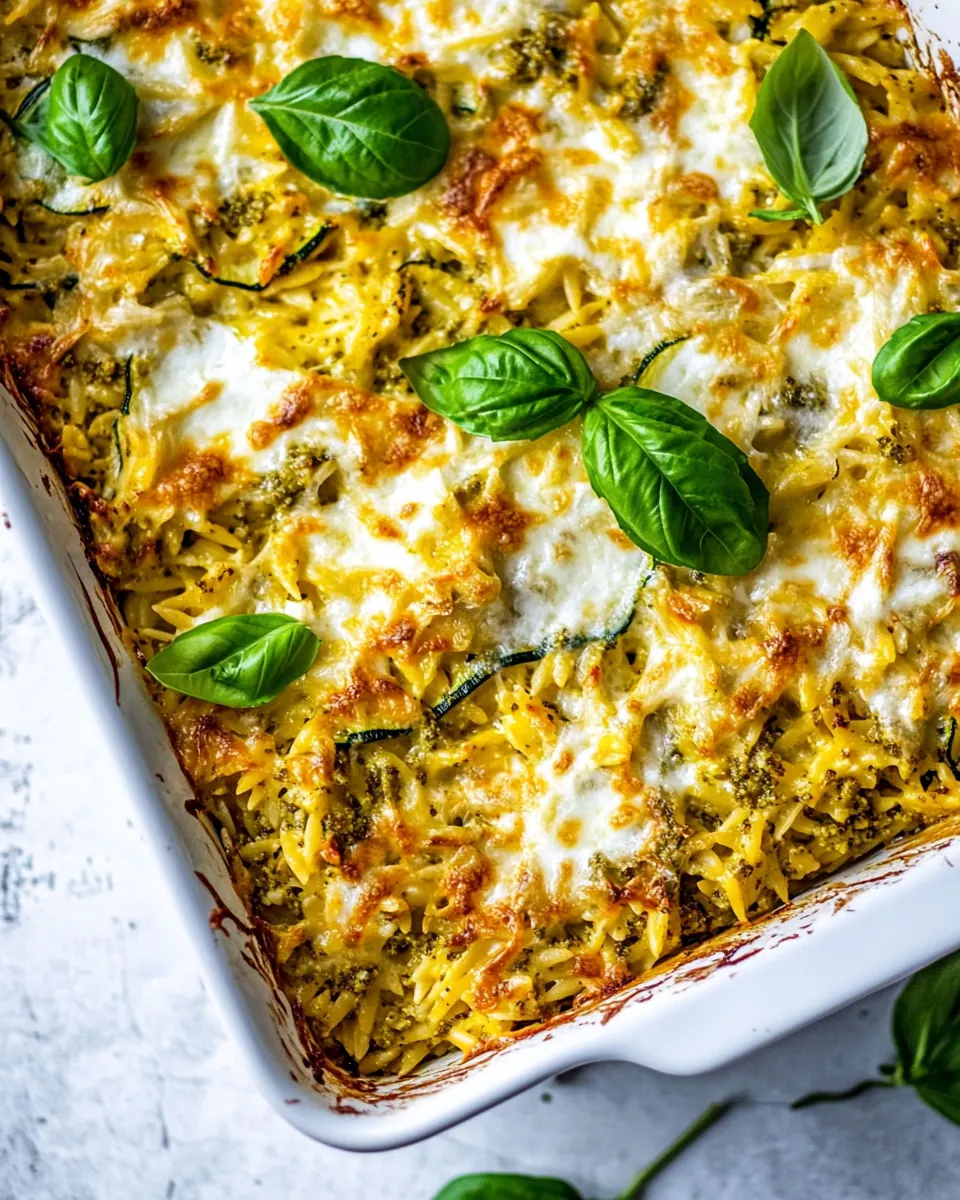
The philosophy behind these ingredients is simple, fresh produce combined with pantry staples to make a cohesive, comforting bake. The key players are the zucchini, which roast and sweeten, the corn for pops of sweetness, and the orzo which soaks up the pesto into a creamy, saucy center. Cheeses bring richness and binding, while herbs and aromatics keep things bright.
- 2 zucchini or yellow summer squash, sliced: Sliced to tender rounds and sautéed until lightly browned, adds a mild, slightly sweet and vegetal texture to the casserole while absorbing other flavors. Provides bulk and moisture that balances the starchiness of the orzo and the richness of the cheeses.
- 3 tablespoons extra virgin olive oil: Used to gently sauté aromatics and vegetables, contributes fruity, peppery fat that helps meld flavors and prevents sticking. Adds depth and richness to the dish while carrying the pesto and seasonings throughout the casserole.
- 4 cloves garlic, chopped: Chopped and softened in the olive oil, releases pungent, savory aromatics that infuse the pan with robust flavor. Helps build a savory backbone that complements the fresh corn and pesto.
- 1 shallot, chopped: Chopped and sweated alongside garlic and zucchini, lends a subtle sweet oniony note that enhances overall flavor complexity. Provides mild sharpness that balances the creamy cheeses and herbaceous pesto.
- 2 tablespoons fresh thyme leaves: Added as fresh leaves, contributes bright, lemony, slightly piney herbal notes that lift the dish. Scattered through the sauté, it brings freshness and aromatic interest to each bite.
- 1 tablespoon Italian seasoning: Sprinkled in during cooking, supplies a balanced blend of Mediterranean herbs for savory depth and warmth. Enhances the overall Italian-inspired flavor profile without overpowering the pesto.
- kosher salt and black pepper: Seasoned to taste during cooking and before baking, provides necessary salinity and a contrast from peppery spice to enhance all other components. Ensures proper seasoning so the pesto, cheese, and vegetables sing together.
- 2 cups fresh corn: Cut from fresh cobs and tossed into the pan, offers crisp-sweet kernels that add juicy pops of flavor and texture contrast. Brightens the casserole with natural sweetness and summer character.
- chili flakes: Added sparingly for heat, contributes a smoky, spicy kick that wakes up the palate and complements the richness of cheese and pesto. Used to taste so the casserole gains warmth without overwhelming other flavors.
- 1 pound dry orzo pasta: Cooked until al dente in the casserole, absorbs flavors and creates the comforting pasta base for the dish. Provides a tender, slightly chewy vehicle that holds sauce, cheese, and vegetables together.
- 1 jar (8 ounce) basil pesto: Stirred in to provide concentrated herbaceous, garlicky flavor that permeates the orzo and vegetables, creating cohesive seasoning. Acts as a shortcut to fresh basil flavor and adds oily richness.
- 3/4 cups shredded Havarti or mozzarella cheese: Sprinkled over and mixed into the casserole for creamy meltiness, contributes mild, buttery, and slightly tangy notes when melted. Helps create a luscious, gooey texture that binds the ingredients.
- 3/4 cups shredded sharp cheddar cheese: Shredded and layered into the dish for sharp flavor and gooey browning, supplies a tangy, robust cheddar bite that contrasts milder cheeses. Adds depth, color, and a pleasant savory finish when melted.
- 1/3 cup fresh basil: Torn or chiffonaded and added at the end for vibrant, fresh basil aroma and flavor that brightens the finished casserole. Offers a final herbal lift and visual freshness to each serving.
Recipe Directions for One Pan Corn and Zucchini Pesto Orzo Casserole
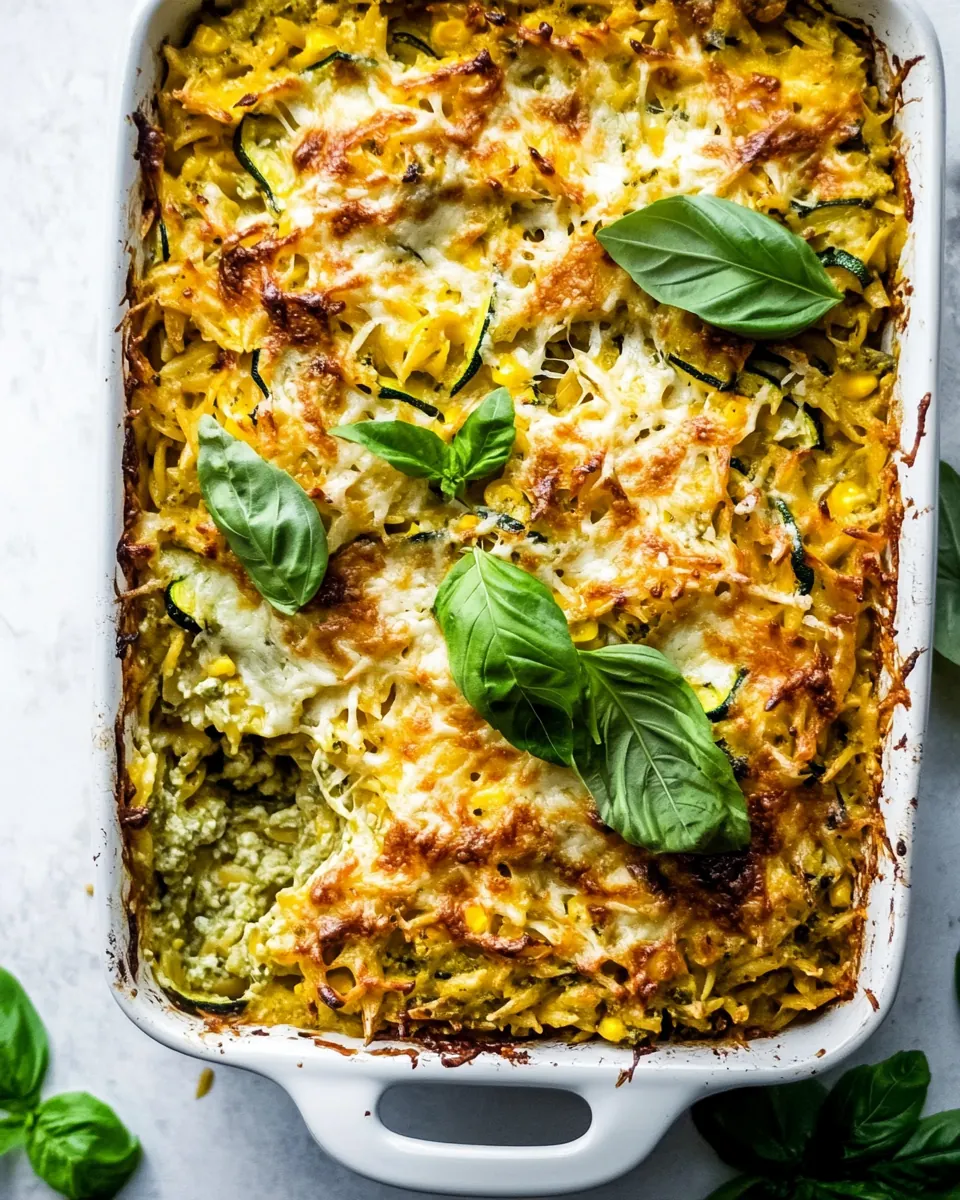
This recipe is straightforward yet relies on timing and sensory cues to get the texture right. Read through the steps once to understand flow, then follow along, paying attention to the look and aroma at each stage.
- Preheat the oven to 400° F. In a 9×13 inch baking dish, combine the zucchini, olive oil, garlic, shallots, thyme, Italian seasoning, chili flakes, salt, and pepper. Roast 15 minutes. Pull the zucchini out of the oven. To the same pan, add the corn, orzo, and pesto. Pour over 2 1/2 cups of water and stir to combine. Return the dish to the oven and bake for 12-15 minutes, until most of the water has cooked into the pasta, but not all of it. Stir the pasta around, then sprinkle over the cheeses. Bake another 10 minutes, until the cheese has melted and the sauce is bubbling. If there's a lot of oil from the pesto on top, drain off the excess. Top with fresh basil!: The oven should feel reliably hot, which ensures the zucchini roasts quickly and the orzo absorbs liquid without becoming gluey. You want a consistent 400° F so the initial roasting caramelizes the edges and draws out concentrated flavors. Commonly, ovens run slightly cool, so if you suspect that, preheat a bit longer and check with an oven thermometer.
- In a 9×13 inch baking dish, combine the zucchini, olive oil, garlic, shallots, thyme, Italian seasoning, chili flakes, salt, and pepper: At this point you should smell the herb and oil mingling, and the garlic will be fragrant without cooked notes yet. Toss everything so the zucchini gets an even oil sheen, or you'll see uneven roasting patches. A frequent mistake is overcrowding the dish which steams instead of roasts, so spread the pieces out.
- Roast 15 minutes: During roasting, watch for browned edges and a softened center in the zucchini . The sound is quiet aside from occasional bubbling of oil, and the aroma becomes nutty and sweet. If you roast too long, the squash will collapse and lose structure, so stick to fifteen minutes as your visual cue.
- Pull the zucchini out of the oven: Once removed, the oven remains hot, and the zucchini should glisten and show light caramel spots. Letting it sit inside too long will keep cooking it further, which can make it mushy, so transfer promptly to the next step.
- To the same pan, add the corn, orzo, and pesto: The contrast of bright corn kernels against the roasted zucchini is obvious visually, and the pesto brings a fragrant herbal punch. Stirring distributes the pesto and helps the orzo contact liquid later; a common slip is not mixing well enough so you find pockets of pesto rather than an even coating.
- Pour over 2 1/2 cups of water and stir to combine: The orzo needs this measured liquid to hydrate without turning into mush. You should see the water mostly covering the pasta and a glossy sheen from the pesto . If you pour too much, the bake will be soupy; too little, and the pasta will stay undercooked. Stir thoroughly to deglaze any browned bits for added flavor.
- Return the dish to the oven and bake for 12 to 15 minutes, until most of the water has cooked into the pasta, but not all of it: You will notice the surface look less watery and more thickened, with the orzo swelling. The sound is subdued, with gentle bubbling as the liquid reduces. Pull it when the surface appears tacky and the orzo is mostly tender, because the next steps finish cooking it. Overbaking here can dry the casserole before the cheeses go in.
- Stir the pasta around, then sprinkle over the cheeses: After stirring, the texture should feel creamy and cohesive, and adding shredded cheeses creates an even blanket that will melt and bind the ingredients. Ensure the cheese is distributed so you get both cheesy pockets and a uniform top. A mistake is dumping cheese only in one area, which yields uneven melt and browning.
- Bake another 10 minutes, until the cheese has melted and the sauce is bubbling: During this final bake you will hear gentle bubbling and see the cheese turn glossy, possibly with small golden spots. The bubbling indicates the sauce is hot through, and the edges may crisp slightly, adding texture. If you leave it too long, the top can overbrown and the orzo can become dry.
- If there's a lot of oil from the pesto on top, drain off the excess: Visually inspect the surface and, if needed, tilt the pan carefully to pour off surplus oil or blot with a paper towel. Excess oil can mask flavors and make the casserole greasy, so removing a bit keeps the palate clean. Be cautious while draining hot oil to avoid burns.
- Top with fresh basil: Fresh basil added at the end provides a bright scent and a fresh contrast to the warm, cheesy bake. The leaves should look vibrant and green; if they have already wilted, their flavor has softened. Add them just before serving for best color and fragrance.
Recipe Variations about One Pan Corn and Zucchini Pesto Orzo Casserole
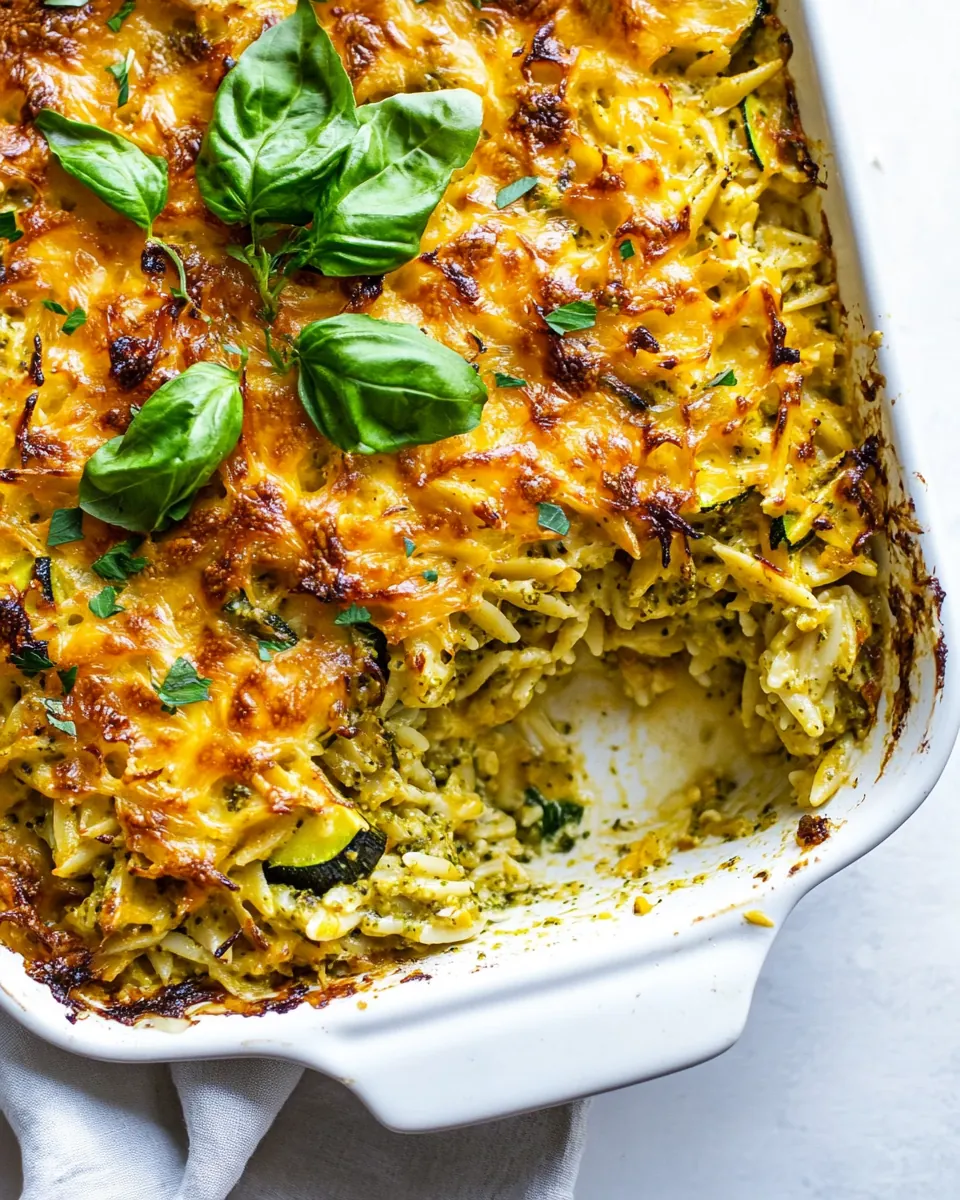
This casserole is a canvas for small changes that keep the essence intact. Below are practical variations and ideas that preserve the harmony of the dish while letting you adapt to what is in your pantry or to the preferences of those you are feeding.
- Swap cheeses Try mixing equal parts shredded mozzarella and sharp cheddar as directed, or use a single melting cheese if you prefer a uniform texture. The balance between mild and sharp cheeses creates both stretch and flavor depth, which I find comforting.
- Pesto intensity If your jarred basil pesto tastes very strong or salty, start with slightly less and fold in more after tasting the cooked orzo. This prevents an overpowering herb or salty finish.
- Make it spicier Increase the chili flakes to add more heat, or sprinkle on crushed red pepper at the table. Small additions build gentle heat without masking the herb and cheese notes.
- Use frozen corn If fresh corn is not available, frozen kernels work well; thaw and drain them first so they do not add extra water to the casserole during baking.
- Herb swaps Replace the fresh thyme with oregano or a touch more Italian seasoning if you prefer a different aromatic profile. Keep quantities similar so the herb notes stay in balance with the pesto.
Serving This One Pan Corn and Zucchini Pesto Orzo Casserole
This dish is versatile for casual weeknights or relaxed gatherings. Serve it warm from the pan, or let it rest and slice for a buffet. Consider pairing options and storage ideas below to get the most from each batch.
- Serve warm as a main Offer the casserole straight from the oven for a cozy weeknight dinner, accompanied by a crisp green salad to add brightness and contrast.
- Side dish at gatherings Use it as a hearty side dish alongside grilled vegetables or simple roasted proteins for summer cookouts and potlucks.
- Perfect for lunch Pack leftovers into containers for an easy lunch that reheats well in the oven or microwave, keeping the texture creamy.
- Storage tips Cool to room temperature, then refrigerate in an airtight container for up to three days; reheat gently to preserve the orzo texture and creamy sauce.
- Occasion pairings This casserole fits casual holiday tables, weekend brunch spreads, or Ramadan iftar meals where a comforting, shareable dish is appreciated.
- Seasonal tweaks In early summer, highlight sweet corn and fresh basil; later in the season, consider slightly riper squash and adjust the pesto quantity to taste.
FAQ
Conclusion
This casserole shines because it turns simple summer produce into a creamy, herb forward, and cheesy one pan meal that feels both comforting and fresh. I encourage you to give One Pan Corn and Zucchini Pesto Orzo Casserole a try on a busy weeknight or for your next casual gathering, because it is forgiving, flavorful, and scales well. It is the kind of recipe that rewards small adjustments and always brings people to the table.
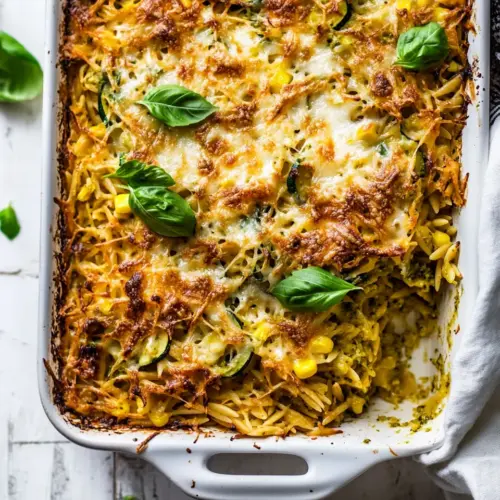
One Pan Corn and Zucchini Pesto Orzo Casserole
Equipment
- 9x13-inch Baking Dish
- Oven
Ingredients
- 2 zucchini or yellow summer squash, sliced Sliced to tender rounds and sautéed until lightly browned, adds a mild, slightly sweet and vegetal texture to the casserole while absorbing other flavors. Provides bulk and moisture that balances the starchiness of the orzo and the richness of the cheeses.
- 3 tablespoons extra virgin olive oil Used to gently sauté aromatics and vegetables, contributes fruity, peppery fat that helps meld flavors and prevents sticking. Adds depth and richness to the dish while carrying the pesto and seasonings throughout the casserole.
- 4 cloves garlic, chopped Chopped and softened in the olive oil, releases pungent, savory aromatics that infuse the pan with robust flavor. Helps build a savory backbone that complements the fresh corn and pesto.
- 1 shallot, chopped Chopped and sweated alongside garlic and zucchini, lends a subtle sweet oniony note that enhances overall flavor complexity. Provides mild sharpness that balances the creamy cheeses and herbaceous pesto.
- 2 tablespoons fresh thyme leaves Added as fresh leaves, contributes bright, lemony, slightly piney herbal notes that lift the dish. Scattered through the sauté, it brings freshness and aromatic interest to each bite.
- 1 tablespoon Italian seasoning Sprinkled in during cooking, supplies a balanced blend of Mediterranean herbs for savory depth and warmth. Enhances the overall Italian-inspired flavor profile without overpowering the pesto.
- kosher salt and black pepper Seasoned to taste during cooking and before baking, provides necessary salinity and a contrast from peppery spice to enhance all other components. Ensures proper seasoning so the pesto, cheese, and vegetables sing together.
- 2 cups fresh corn Cut from fresh cobs and tossed into the pan, offers crisp-sweet kernels that add juicy pops of flavor and texture contrast. Brightens the casserole with natural sweetness and summer character.
- chili flakes Added sparingly for heat, contributes a smoky, spicy kick that wakes up the palate and complements the richness of cheese and pesto. Used to taste so the casserole gains warmth without overwhelming other flavors.
- 1 pound dry orzo pasta Cooked until al dente in the casserole, absorbs flavors and creates the comforting pasta base for the dish. Provides a tender, slightly chewy vehicle that holds sauce, cheese, and vegetables together.
- 1 jar (8 ounce) basil pesto Stirred in to provide concentrated herbaceous, garlicky flavor that permeates the orzo and vegetables, creating cohesive seasoning. Acts as a shortcut to fresh basil flavor and adds oily richness.
- 3/4 cups shredded Havarti or mozzarella cheese Sprinkled over and mixed into the casserole for creamy meltiness, contributes mild, buttery, and slightly tangy notes when melted. Helps create a luscious, gooey texture that binds the ingredients.
- 3/4 cups shredded sharp cheddar cheese Shredded and layered into the dish for sharp flavor and gooey browning, supplies a tangy, robust cheddar bite that contrasts milder cheeses. Adds depth, color, and a pleasant savory finish when melted.
- 1/3 cup fresh basil Torn or chiffonaded and added at the end for vibrant, fresh basil aroma and flavor that brightens the finished casserole. Offers a final herbal lift and visual freshness to each serving.
Instructions
- Preheat the oven to 400° F. In a 9×13 inch baking dish, combine the zucchini, olive oil, garlic, shallots, thyme, Italian seasoning, chili flakes, salt, and pepper. Roast 15 minutes. Pull the zucchini out of the oven. To the same pan, add the corn, orzo, and pesto. Pour over 2 1/2 cups of water and stir to combine. Return the dish to the oven and bake for 12-15 minutes, until most of the water has cooked into the pasta, but not all of it. Stir the pasta around, then sprinkle over the cheeses. Bake another 10 minutes, until the cheese has melted and the sauce is bubbling. If there's a lot of oil from the pesto on top, drain off the excess. Top with fresh basil!: The oven should feel reliably hot, which ensures the zucchini roasts quickly and the orzo absorbs liquid without becoming gluey. You want a consistent 400° F so the initial roasting caramelizes the edges and draws out concentrated flavors. Commonly, ovens run slightly cool, so if you suspect that, preheat a bit longer and check with an oven thermometer.
- In a 9×13 inch baking dish, combine the zucchini, olive oil, garlic, shallots, thyme, Italian seasoning, chili flakes, salt, and pepper: At this point you should smell the herb and oil mingling, and the garlic will be fragrant without cooked notes yet. Toss everything so the zucchini gets an even oil sheen, or you'll see uneven roasting patches. A frequent mistake is overcrowding the dish which steams instead of roasts, so spread the pieces out.
- Roast 15 minutes: During roasting, watch for browned edges and a softened center in the zucchini . The sound is quiet aside from occasional bubbling of oil, and the aroma becomes nutty and sweet. If you roast too long, the squash will collapse and lose structure, so stick to fifteen minutes as your visual cue.
- Pull the zucchini out of the oven: Once removed, the oven remains hot, and the zucchini should glisten and show light caramel spots. Letting it sit inside too long will keep cooking it further, which can make it mushy, so transfer promptly to the next step.
- To the same pan, add the corn, orzo, and pesto: The contrast of bright corn kernels against the roasted zucchini is obvious visually, and the pesto brings a fragrant herbal punch. Stirring distributes the pesto and helps the orzo contact liquid later; a common slip is not mixing well enough so you find pockets of pesto rather than an even coating.
- Pour over 2 1/2 cups of water and stir to combine: The orzo needs this measured liquid to hydrate without turning into mush. You should see the water mostly covering the pasta and a glossy sheen from the pesto . If you pour too much, the bake will be soupy; too little, and the pasta will stay undercooked. Stir thoroughly to deglaze any browned bits for added flavor.
- Return the dish to the oven and bake for 12 to 15 minutes, until most of the water has cooked into the pasta, but not all of it: You will notice the surface look less watery and more thickened, with the orzo swelling. The sound is subdued, with gentle bubbling as the liquid reduces. Pull it when the surface appears tacky and the orzo is mostly tender, because the next steps finish cooking it. Overbaking here can dry the casserole before the cheeses go in.
- Stir the pasta around, then sprinkle over the cheeses: After stirring, the texture should feel creamy and cohesive, and adding shredded cheeses creates an even blanket that will melt and bind the ingredients. Ensure the cheese is distributed so you get both cheesy pockets and a uniform top. A mistake is dumping cheese only in one area, which yields uneven melt and browning.
- Bake another 10 minutes, until the cheese has melted and the sauce is bubbling: During this final bake you will hear gentle bubbling and see the cheese turn glossy, possibly with small golden spots. The bubbling indicates the sauce is hot through, and the edges may crisp slightly, adding texture. If you leave it too long, the top can overbrown and the orzo can become dry.
- If there's a lot of oil from the pesto on top, drain off the excess: Visually inspect the surface and, if needed, tilt the pan carefully to pour off surplus oil or blot with a paper towel. Excess oil can mask flavors and make the casserole greasy, so removing a bit keeps the palate clean. Be cautious while draining hot oil to avoid burns.
- Top with fresh basil: Fresh basil added at the end provides a bright scent and a fresh contrast to the warm, cheesy bake. The leaves should look vibrant and green; if they have already wilted, their flavor has softened. Add them just before serving for best color and fragrance.
Notes
- Swap cheeses Try mixing equal parts shredded mozzarella and sharp cheddar as directed, or use a single melting cheese if you prefer a uniform texture. The balance between mild and sharp cheeses creates both stretch and flavor depth, which I find comforting.
- Pesto intensity If your jarred basil pesto tastes very strong or salty, start with slightly less and fold in more after tasting the cooked orzo. This prevents an overpowering herb or salty finish.
- Make it spicier Increase the chili flakes to add more heat, or sprinkle on crushed red pepper at the table. Small additions build gentle heat without masking the herb and cheese notes.
- Use frozen corn If fresh corn is not available, frozen kernels work well; thaw and drain them first so they do not add extra water to the casserole during baking.
- Herb swaps Replace the fresh thyme with oregano or a touch more Italian seasoning if you prefer a different aromatic profile. Keep quantities similar so the herb notes stay in balance with the pesto.