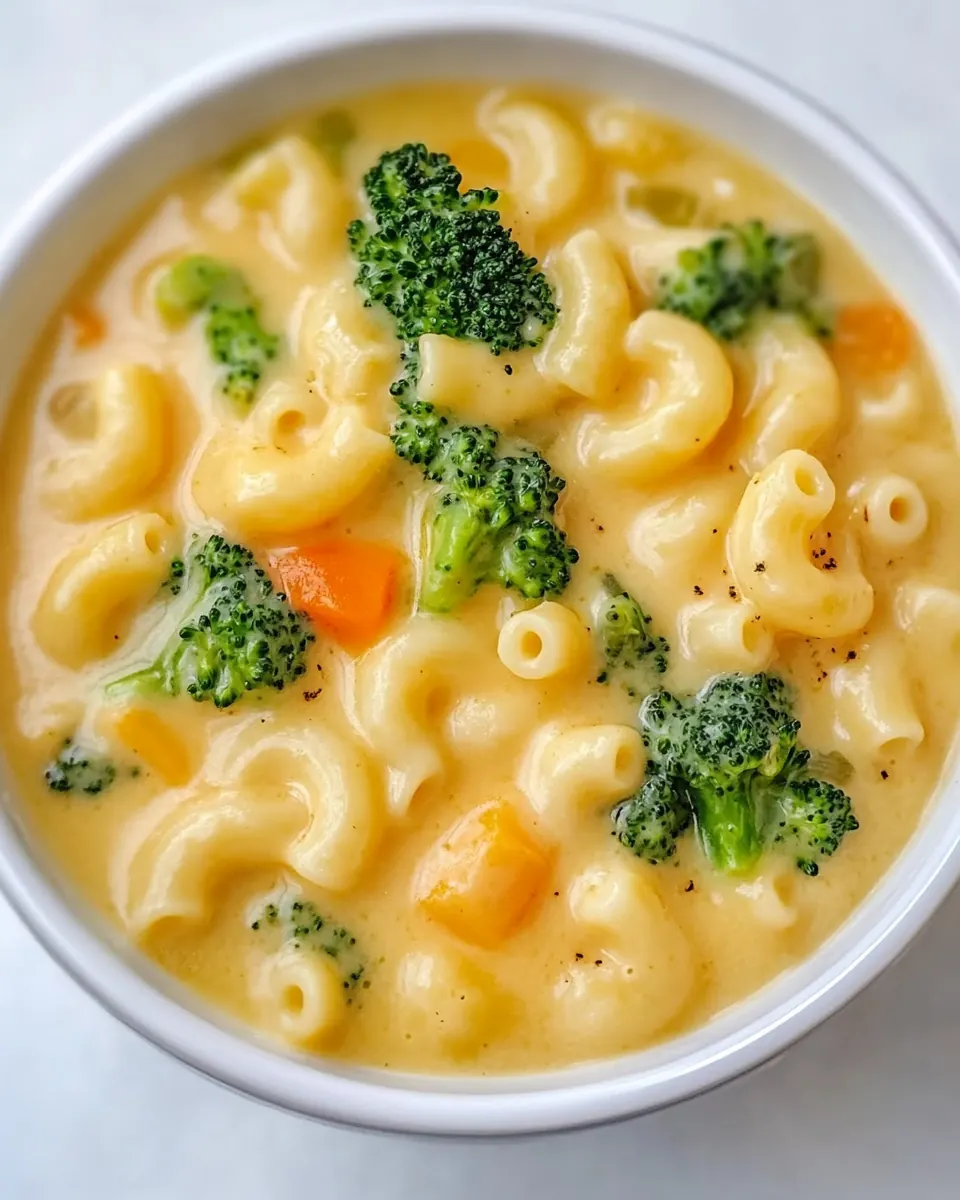
Macaroni and Cheese Soup with Broccoli
Macaroni and Cheese Soup with Broccoli is one of those cozy bowls I reach for when the day needs comforting and practical food at once. I first made this while juggling a chilly evening and a picky eater who loved macaroni but not much else, and it quickly became our go to dinner because it felt like a hug in a bowl. The blend of creamy cheese and small pasta shapes, brightened by tender broccoli, makes it both playful and nourishing.
The first time I stirred the steaming pot, the kitchen filled with a rounded, milky aroma that promised warmth. As the vegetables softened and the cheese melted in, I found myself layering flavors rather than masking them. That little pinch of nutmeg and the sharpness of grated cheddar gave the soup personality, while the small pasta kept things fun and familiar. I love how this recipe doubles as a weekday lifesaver and a weekend indulgence.
Over the years I tweaked techniques to keep the broth silky and prevent the pasta from turning gummy, and now I feel confident sharing those notes with you. If you are feeding a crowd or just want leftovers that reheat well, this is forgiving and adaptable. I often chop vegetables while the water for the pasta comes to a boil, so the rhythm of cooking feels steady rather than frantic. Trust the sensory cues I describe below, they make all the difference.
Recipe Snapshot
35 mins
10 mins
25 mins
Medium
250 kcal
American
Gluten-Free, Low FODMAP
Soups
Large soup pot, Colander, Whisk, Grater
Why This Macaroni and Cheese Soup with Broccoli Shines
Comfort with a Veggie Boost
I adore how Macaroni and Cheese Soup with Broccoli gives you the creamy familiarity of classic comfort food, while the broccoli adds color, texture, and a little nutritional balance. This combination keeps the dish from feeling heavy, so we get the cozy without the regret. I love serving it when family comes by, because it satisfies both adults and kids.
Quick and Weeknight Friendly
We can get this on the table in under an hour, and that pace matters on busy nights. The method is straightforward, so I can chat with guests or help with homework while things simmer. The handful of steps means fewer decisions under pressure, which is a big win in my book.
Layered, Real Cheese Flavor
I insist on grating the cheddar myself because pre shredded cheese often has anti clumping agents that change the melt. That little extra effort produces a silkier, more flavorful finish, and you can actually taste the difference. A touch of Parmesan cheese at the end adds a savory lift that keeps each spoonful interesting.
Texture and Balance
This recipe balances creamy broth, tender but slightly firm pasta, and crisp tender broccoli. When everything is at the right stage, the soup is comforting yet texturally dynamic. I like that it is easy to adjust the pasta amount if you want a brothy bowl or a heartier, stew like finish.
Make Ahead and Flexible
We often make a double batch for leftovers, and I appreciate that the soup reheats beautifully if you add a splash of milk to loosen it. It holds up well in the fridge for a couple of days, so it’s a practical choice for planning meals without losing the fresh cooked flavor.
Ingredients for Macaroni and Cheese Soup with Broccoli
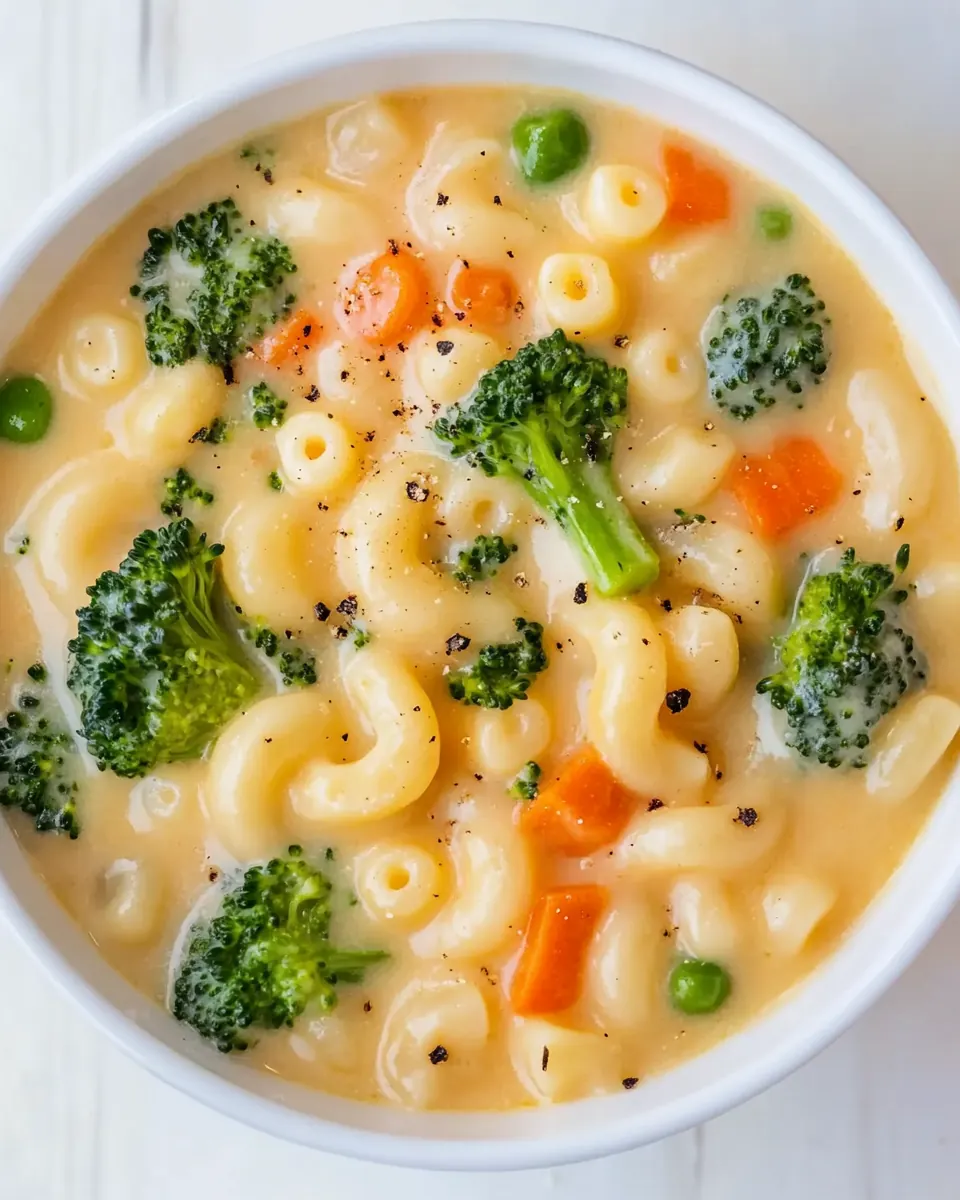
These ingredients are intentionally simple, focusing on pantry friendly staples and fresh produce that play well together. The pasta gives body, the aromatic vegetables build a savory foundation, and the dairy components create a smooth, cheesy broth. Small touches like dry mustard and nutmeg add depth and prevent the cheese from tasting one dimensional.
- 4 oz dry elbow pasta or small shape: Measure and cook until al dente; provides the starchy base and texture for the soup while thickening slightly as it releases starch during simmering.
- 1 1/2 cups onion, chopped: Sauté until translucent to build a sweet and savory aromatic foundation that complements other vegetables and adds body to the broth.
- 1 large carrot, chopped: Chop and soften to contribute natural sweetness, subtle texture, and extra nutrients while balancing savory flavors in the soup.
- 1 celery stalk, chopped: Dice and sweat to add aromatic depth and a mild vegetal crunch that supports the mirepoix flavor profile and enhances overall complexity.
- 2 cloves garlic, minced: Mince finely and cook briefly to release pungent, savory oils that boost overall flavor without overpowering the delicate cheese and broth.
- 1 tbsp salted butter: Melt gently to sauté vegetables and provide a rich mouthfeel and slight savory fat content that helps carry flavors throughout the soup.
- 2 tbsp flour: Whisk in and cook briefly to form a roux that thickens the broth, creates a smooth texture, and helps emulsify the dairy and cheeses.
- 2 1/2 cups fat free low sodium chicken broth, or vegetable broth: Pour and simmer as the primary liquid component; supplies savory, low-sodium savory notes and a light backbone for the soup’s flavor.
- 1 cup fat free milk: Heat gradually into the roux to create a creamy base; adds dairy richness while keeping the dish lighter with fat-free content.
- pinch nutmeg: Grate or add sparingly to introduce a warm, nutty nuance that enhances the creamy, cheesy character without overpowering other flavors.
- 1/2 tsp dry mustard: Sprinkle in to impart a subtle sharp, tangy complexity that mimics traditional mustard notes and brightens the cheese flavors.
- salt and fresh pepper to taste: Season to balance and enhance all flavors; adjust salt and pepper to personal taste to bring out the savory and creamy elements.
- 2 cups about 10 oz broccoli florets, chopped into small pieces: Chop into small florets and add near the end of cooking to provide bright color, tender-crisp texture, and balanced vegetable nutrition.
- 1 1/2 cups 2% sharp cheddar, best to grate yourself: Shred freshly to melt smoothly into the soup and deliver sharp, creamy, tangy cheese flavor that forms the core cheesy character.
- 2 tbsp Parmesan cheese: Grate and sprinkle to add a salty, umami finish and delicate nutty sharpness that rounds out the overall cheese profile.
Step by Step Instructions for Macaroni and Cheese Soup with Broccoli

These steps guide you through building flavor, texture, and a silky finish. Read each step, notice the sensory cues I describe, and take time to taste as you go. The process is forgiving, but following the cues helps you avoid common missteps like grainy cheese or overcooked pasta.
- Boil pasta in salted water according to package directions for al dente. Drain and set aside.: The bubbling pot will steam up the kitchen and you should hear a gentle rolling boil, not a violent roar, which keeps the pasta from breaking apart. A properly salted pot seasons the pasta internally, giving the finished soup more balanced taste. Drain into a colander when the texture is firm yet tender, and set aside so it does not continue to soften in hot water. A common mistake is overcooking the pasta , which will absorb too much broth later and become mushy; time it carefully and test a piece before draining.
- Chop onion, carrot, celery, garlic by hand or mini food processor.: As you chop, notice the sweet onion aroma and the earthy, crisp scent of the carrot and celery . Even cuts ensure even cooking so the vegetables soften at the same rate, creating a balanced base. I prefer a rough chop for texture in the soup, but a fine dice will meld more into the broth. Avoid leaving large uneven pieces, which can lead to inconsistent bites.
- In a large soup pot or dutch oven, melt light butter. Add chopped vegetables and sauté on low heat until soft, about 5 minutes.: When the butter melts, it will foam slightly and give off a rich, dairy scent that signals the start of browning potential. Keep the heat low to medium low so the butter does not brown, unless you want a nuttier base. This gentle heat helps soften the vegetables without risking a bitter char. Overheating the butter before adding the vegetables can lead to uneven cooking and lost sweetness.
- Add flour and fresh pepper to the pot and stir until smooth.: As the vegetables soften, the pot will release a layered, savory aroma. Stir frequently so the onion becomes translucent and the carrot and celery begin to tenderize. Softening the vegetables slowly draws out their natural sugars and builds a savory backbone. If you rush this step with high heat, the outside may brown too quickly while the interior stays firm, changing the intended flavor profile.
- Slowly add chicken broth, milk, nutmeg and dry mustard powder; whisking constantly.: When you sprinkle in the flour , it will clump briefly before incorporating into the fat to form the roux. Stir until the mixture looks glossy and smooth, which indicates the flour is evenly hydrated and will thicken the soup uniformly. Cook briefly to cook off the raw flour taste, watching for a subtle change in scent. If you do not cook the flour enough, the soup can retain a chalky taste later.
- Set heat to medium-low and let it come to a slow boil. Cover and cook on low about 10-15 minutes.: As you pour the broth and milk , whisk steadily to avoid lumps, and you will see the roux gently loosen into a creamy pale liquid. The aroma shifts to a warm, milky scent with a hint of spice from the nutmeg and dry mustard . Whisking is key to a silky texture. If you add liquid too quickly, bits of roux can clump, leaving an uneven texture in the finished soup.
- Add broccoli florets, parmesan cheese, and stir well. Adjust salt and pepper to taste.: Watch for small bubbles rising to the surface and a steady steam; that indicates the liquid is heating uniformly. Once it reaches a gentle boil, cover and cook on low about 10 to 15 minutes so flavors can meld and the soup thickens. The aroma deepens and the broth will start to feel slightly more viscous on your spoon. Avoid high heat, which can separate the dairy or scorch the bottom of the pot.
- Cook uncovered until broccoli is cooked, about 5 minutes. Remove from heat and wait until it stops boiling.: When you add the broccoli the steam will smell green and fresh, and the Parmesan cheese will dissolve into the warm broth providing a savory lift. Stir so the cheese melts evenly and the broccoli is distributed throughout. The green pieces should look vibrant, not dull, which signals they will retain a pleasant bite. Overcooking the broccoli here can make it mushy, so monitor the next step closely.
- Add cheddar cheese a little at a time, mixing well until cheese melts.: With the pot uncovered you can see steam escape and hear a soft simmer; the broccoli should be tender yet still slightly firm when pierced with a fork. This balance keeps the texture lively in the soup. Remove from heat and wait until it stops boiling to prevent the dairy from overheating during the next additions. A typical error is leaving the pot at a rolling boil, which can make the milk break or the cheese seize when added.
- Return the cooked elbows to the soup and mix well, adjust salt and pepper if needed.: As you add small handfuls of freshly grated cheddar , the soup will go glossy and silkier, and you will hear a gentle settling as the cheese incorporates. Adding gradually helps it melt smoothly and prevents clumping. Stir until each addition is fully dissolved before adding more, and keep the heat low to protect the texture. If the soup becomes grainy, it may be from overheating the cheese or adding it too quickly.
- Eat right away so the pasta doesn't absorb all the broth.: When you fold the reserved pasta back in, the soup will take on a heartier body and the aroma becomes warmly starchy. Mix until the pasta is evenly coated and taste for seasoning, adjusting salt and fresh pepper as needed because the cheeses add salt. If the pasta soaks up too much broth, you can loosen with a splash of milk. Avoid adding too much salt early on, because the cheese can push the saltiness over the edge as it melts.
- Eat right away so the pasta doesn't absorb all the broth: Serve while the soup is hot and the broth is still slightly loose, so each spoonful has a creamy mouthfeel and counterpoint from the broccoli . As it sits, the pasta will continue to absorb liquid, concentrating flavors and thickening the texture. If you must hold it, cool slightly and reheat gently with a little milk to refresh the consistency. A common misstep is letting the soup sit too long before serving, resulting in a dry, stodgy bowl.
Make It Your Own

This section offers ways to personalize flavors, textures, and portions while keeping the core technique intact. Below I expand tips into actionable ideas you can use to tune the recipe to your family or occasion.
- Swap broths thoughtfully, use low sodium chicken broth for savory depth or choose vegetable broth to keep the dish vegetarian. The choice affects the final umami level, so taste as you season to compensate.
- Grate your own cheeses, do not rely on pre shredded cheese if you want a silky finish. Freshly grated cheddar and freshly grated Parmesan cheese melt more uniformly and have a cleaner flavor profile.
- Control pasta texture, cook the pasta to al dente and drain promptly. If making ahead, undercook by one minute to prevent it from becoming overly soft when reheated.
- Enhance with aromatics, gently sauté the onion, carrot, and celery until translucent to build savory depth without browning. Low heat extracts sweetness and keeps the broth balanced.
- Mind the heat when melting cheese, add grated cheese gradually off direct heat and stir until smooth. High heat can cause the cheese to separate, yielding a grainy texture.
Perfect Matches for Macaroni and Cheese Soup with Broccoli
This section outlines serving ideas, pairings, and occasions where the recipe shines. Use the suggestions below to plan complete meals, storage, and seasonal touches that complement the main bowl.
- Weeknight dinner, serve with a simple side salad to add a crisp contrast and lighten the meal. The soup is filling enough to be the main star, and a green salad introduces a fresh element.
- Casual lunch, ladle into bowls with crusty bread on the side so diners can dip and enjoy both textures. The bread helps scoop up any remaining silky broth for a satisfying bite.
- Family friendly gatherings, this appeals to mixed palates and can be served buffet style. Keep the soup warm in a low oven or crockpot and stir in a little milk if it thickens while holding.
- Meal prep, store in the refrigerator for up to two days and reheat gently with a splash of milk to revive the consistency. Avoid freezing with the pasta included, as texture will degrade; instead freeze the base and add freshly cooked pasta when reheating.
- Seasonal pairing, perfect for winter evenings when a warm bowl is welcome, and also works well through transitional seasons when broccoli is in good supply. The soup feels like comfort food on cool days and a cozy choice for quiet nights in.
FAQ
Conclusion
This Macaroni and Cheese Soup with Broccoli stands out for its cozy creaminess balanced by bright, tender broccoli and perfectly cooked small pasta. I encourage you to give it a try because it marries comfort and practicality, making weeknights simpler and tastier. The straightforward method and pantry friendly ingredients mean you can pull this together on a busy evening and still serve something that feels special and satisfying.

Macaroni and Cheese Soup with Broccoli
Equipment
- Large soup pot
- Colander
- Whisk
- Grater
Ingredients
- 4 oz dry elbow pasta or small shape Measure and cook until al dente; provides the starchy base and texture for the soup while thickening slightly as it releases starch during simmering.
- 1 1/2 cups onion, chopped Sauté until translucent to build a sweet and savory aromatic foundation that complements other vegetables and adds body to the broth.
- 1 large carrot, chopped Chop and soften to contribute natural sweetness, subtle texture, and extra nutrients while balancing savory flavors in the soup.
- 1 celery stalk, chopped Dice and sweat to add aromatic depth and a mild vegetal crunch that supports the mirepoix flavor profile and enhances overall complexity.
- 2 cloves garlic, minced Mince finely and cook briefly to release pungent, savory oils that boost overall flavor without overpowering the delicate cheese and broth.
- 1 tbsp salted butter Melt gently to sauté vegetables and provide a rich mouthfeel and slight savory fat content that helps carry flavors throughout the soup.
- 2 tbsp flour Whisk in and cook briefly to form a roux that thickens the broth, creates a smooth texture, and helps emulsify the dairy and cheeses.
- 2 1/2 cups fat free low sodium chicken broth, or vegetable broth Pour and simmer as the primary liquid component; supplies savory, low-sodium savory notes and a light backbone for the soup’s flavor.
- 1 cup fat free milk Heat gradually into the roux to create a creamy base; adds dairy richness while keeping the dish lighter with fat-free content.
- pinch nutmeg Grate or add sparingly to introduce a warm, nutty nuance that enhances the creamy, cheesy character without overpowering other flavors.
- 1/2 tsp dry mustard Sprinkle in to impart a subtle sharp, tangy complexity that mimics traditional mustard notes and brightens the cheese flavors.
- salt and fresh pepper to taste Season to balance and enhance all flavors; adjust salt and pepper to personal taste to bring out the savory and creamy elements.
- 2 cups about 10 oz broccoli florets, chopped into small pieces Chop into small florets and add near the end of cooking to provide bright color, tender-crisp texture, and balanced vegetable nutrition.
- 1 -1/2 cups 2% sharp cheddar, best to grate yourself Shred freshly to melt smoothly into the soup and deliver sharp, creamy, tangy cheese flavor that forms the core cheesy character.
- 2 tbsp Parmesan cheese Grate and sprinkle to add a salty, umami finish and delicate nutty sharpness that rounds out the overall cheese profile.
Instructions
- Boil pasta in salted water according to package directions for al dente. Drain and set aside.: The bubbling pot will steam up the kitchen and you should hear a gentle rolling boil, not a violent roar, which keeps the pasta from breaking apart. A properly salted pot seasons the pasta internally, giving the finished soup more balanced taste. Drain into a colander when the texture is firm yet tender, and set aside so it does not continue to soften in hot water. A common mistake is overcooking the pasta , which will absorb too much broth later and become mushy; time it carefully and test a piece before draining.
- Chop onion, carrot, celery, garlic by hand or mini food processor.: As you chop, notice the sweet onion aroma and the earthy, crisp scent of the carrot and celery . Even cuts ensure even cooking so the vegetables soften at the same rate, creating a balanced base. I prefer a rough chop for texture in the soup, but a fine dice will meld more into the broth. Avoid leaving large uneven pieces, which can lead to inconsistent bites.
- In a large soup pot or dutch oven, melt light butter. Add chopped vegetables and sauté on low heat until soft, about 5 minutes.: When the butter melts, it will foam slightly and give off a rich, dairy scent that signals the start of browning potential. Keep the heat low to medium low so the butter does not brown, unless you want a nuttier base. This gentle heat helps soften the vegetables without risking a bitter char. Overheating the butter before adding the vegetables can lead to uneven cooking and lost sweetness.
- Add flour and fresh pepper to the pot and stir until smooth.: As the vegetables soften, the pot will release a layered, savory aroma. Stir frequently so the onion becomes translucent and the carrot and celery begin to tenderize. Softening the vegetables slowly draws out their natural sugars and builds a savory backbone. If you rush this step with high heat, the outside may brown too quickly while the interior stays firm, changing the intended flavor profile.
- Slowly add chicken broth, milk, nutmeg and dry mustard powder; whisking constantly.: When you sprinkle in the flour , it will clump briefly before incorporating into the fat to form the roux. Stir until the mixture looks glossy and smooth, which indicates the flour is evenly hydrated and will thicken the soup uniformly. Cook briefly to cook off the raw flour taste, watching for a subtle change in scent. If you do not cook the flour enough, the soup can retain a chalky taste later.
- Set heat to medium-low and let it come to a slow boil. Cover and cook on low about 10-15 minutes.: As you pour the broth and milk , whisk steadily to avoid lumps, and you will see the roux gently loosen into a creamy pale liquid. The aroma shifts to a warm, milky scent with a hint of spice from the nutmeg and dry mustard . Whisking is key to a silky texture. If you add liquid too quickly, bits of roux can clump, leaving an uneven texture in the finished soup.
- Add broccoli florets, parmesan cheese, and stir well. Adjust salt and pepper to taste.: Watch for small bubbles rising to the surface and a steady steam; that indicates the liquid is heating uniformly. Once it reaches a gentle boil, cover and cook on low about 10 to 15 minutes so flavors can meld and the soup thickens. The aroma deepens and the broth will start to feel slightly more viscous on your spoon. Avoid high heat, which can separate the dairy or scorch the bottom of the pot.
- Cook uncovered until broccoli is cooked, about 5 minutes. Remove from heat and wait until it stops boiling.: When you add the broccoli the steam will smell green and fresh, and the Parmesan cheese will dissolve into the warm broth providing a savory lift. Stir so the cheese melts evenly and the broccoli is distributed throughout. The green pieces should look vibrant, not dull, which signals they will retain a pleasant bite. Overcooking the broccoli here can make it mushy, so monitor the next step closely.
- Add cheddar cheese a little at a time, mixing well until cheese melts.: With the pot uncovered you can see steam escape and hear a soft simmer; the broccoli should be tender yet still slightly firm when pierced with a fork. This balance keeps the texture lively in the soup. Remove from heat and wait until it stops boiling to prevent the dairy from overheating during the next additions. A typical error is leaving the pot at a rolling boil, which can make the milk break or the cheese seize when added.
- Return the cooked elbows to the soup and mix well, adjust salt and pepper if needed.: As you add small handfuls of freshly grated cheddar , the soup will go glossy and silkier, and you will hear a gentle settling as the cheese incorporates. Adding gradually helps it melt smoothly and prevents clumping. Stir until each addition is fully dissolved before adding more, and keep the heat low to protect the texture. If the soup becomes grainy, it may be from overheating the cheese or adding it too quickly.
- Eat right away so the pasta doesn't absorb all the broth.: When you fold the reserved pasta back in, the soup will take on a heartier body and the aroma becomes warmly starchy. Mix until the pasta is evenly coated and taste for seasoning, adjusting salt and fresh pepper as needed because the cheeses add salt. If the pasta soaks up too much broth, you can loosen with a splash of milk. Avoid adding too much salt early on, because the cheese can push the saltiness over the edge as it melts.
- Eat right away so the pasta doesn't absorb all the broth: Serve while the soup is hot and the broth is still slightly loose, so each spoonful has a creamy mouthfeel and counterpoint from the broccoli . As it sits, the pasta will continue to absorb liquid, concentrating flavors and thickening the texture. If you must hold it, cool slightly and reheat gently with a little milk to refresh the consistency. A common misstep is letting the soup sit too long before serving, resulting in a dry, stodgy bowl.
Notes
- Swap broths thoughtfully, use low sodium chicken broth for savory depth or choose vegetable broth to keep the dish vegetarian. The choice affects the final umami level, so taste as you season to compensate.
- Grate your own cheeses, do not rely on pre shredded cheese if you want a silky finish. Freshly grated cheddar and freshly grated Parmesan cheese melt more uniformly and have a cleaner flavor profile.
- Control pasta texture, cook the pasta to al dente and drain promptly. If making ahead, undercook by one minute to prevent it from becoming overly soft when reheated.
- Enhance with aromatics, gently sauté the onion, carrot, and celery until translucent to build savory depth without browning. Low heat extracts sweetness and keeps the broth balanced.
- Mind the heat when melting cheese, add grated cheese gradually off direct heat and stir until smooth. High heat can cause the cheese to separate, yielding a grainy texture.