Lentil Coconut Curry With Cashew Cilantro Pesto Cucumber Noodles
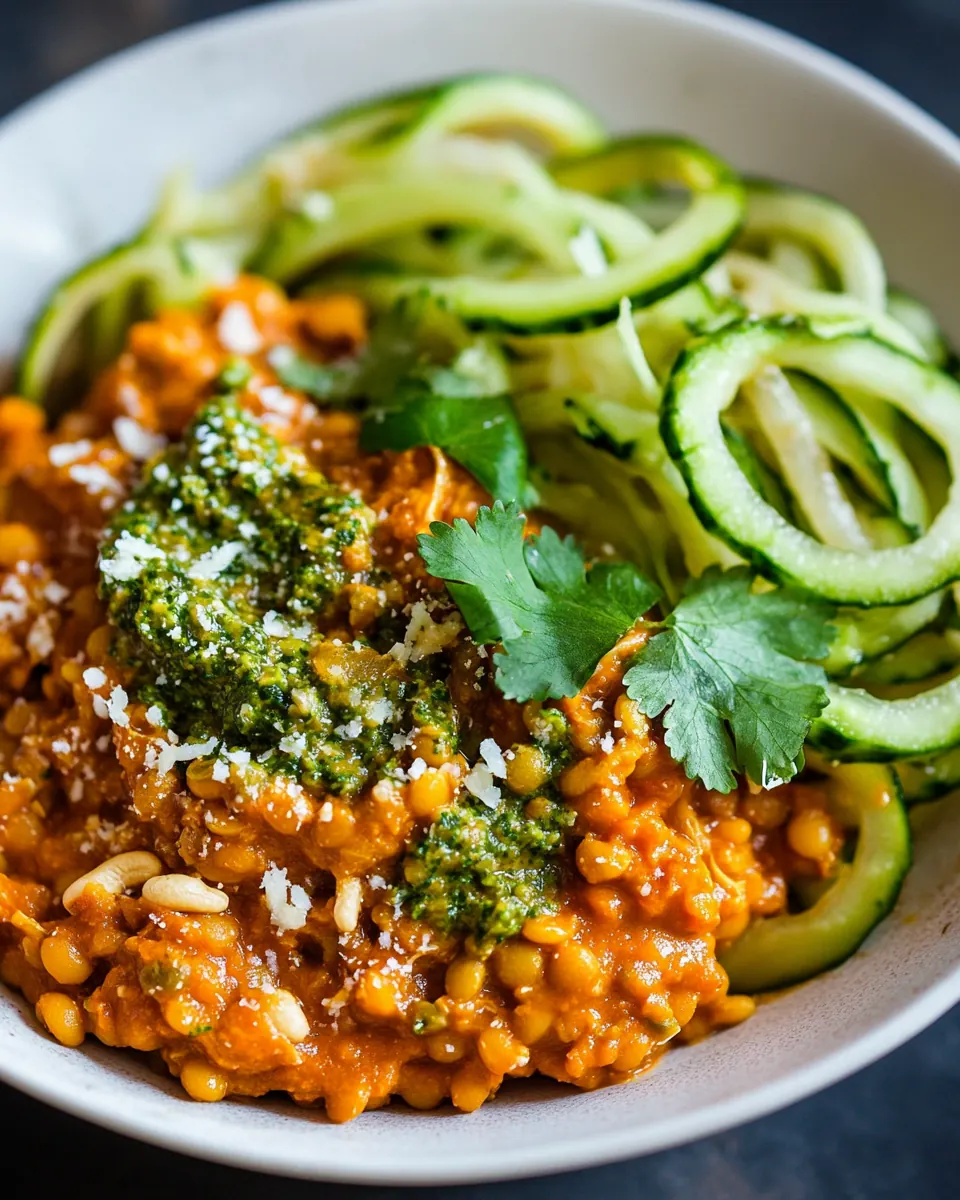
Lentil Coconut Curry With Cashew Cilantro Pesto Cucumber Noodles came into my weeknight rotation on a night when I wanted something comforting yet bright, creamy yet fresh. I remember juggling errands, craving something warm and soothing, and finding a few pantry staples that turned into a full meal that felt both indulgent and light. The contrast between the velvety coconut milk braised lentils and the cool, herbaceous cashews and cilantro pesto tossed with crisp cucumber noodles made a lasting impression on me.
That first attempt felt like a small celebration of texture and geometry, with the thick, spoonable curry ladled over spirals of crunchy noodles. I kept reaching for the bowl between bites because the aroma of yellow curry paste and ginger rose up and the pesto added a fresh, tangy lift. Over time I refined the balance of spice and cream, learning when to let the lentils soften until almost silky and how much lime juice the pesto needs to pop.
Recipe Snapshot
40 mins
10 mins
30 mins
Medium
350 kcal
Indian
Vegan, Gluten-Free
Dinner
Large pot, Small food processor, Spiralizer, Paper towels
Why Try This Lentil Coconut Curry With Cashew Cilantro Pesto Cucumber Noodles
Comfort and freshness in one
I love that Lentil Coconut Curry With Cashew Cilantro Pesto Cucumber Noodles manages to feel hearty and light simultaneously. The creamy texture from the coconut milk and slow cooked red lentils gives you that cozy mouthfeel, while the chilled pesto coated cucumber noodles bring brightness and a clean finish. This contrast keeps each bite interesting and satisfying.
Speed without sacrifice
We can have a bowl of this on the table in under an hour, and I appreciate how approachable the process is. You don’t need complicated techniques to extract maximum flavor, just simple stirring, simmering, and an efficient blitz in a food processor to make the pesto super creamy. That means this recipe works for busy weeknights when you still want something special.
Textural play
What makes this stand out for me is the interplay of textures. The tender, almost jammy lentils soaked in a coconut and tomato base contrast with the crunchy spiralized cucumbers and the buttery, slightly coarse cashew pesto. I find that alternating spoonfuls of curry with forkfuls of pesto noodles keeps the palate engaged.
Herb forward and adaptable
I often tweak the herb ratio based on what I have, and the recipe tolerates adjustments well. The duo of cilantro and mint creates a layered herbal character that feels fresh and lively next to warm spices. You can scale the heat with the jalapeño or make it milder for kids, and the dish still sings.
Nutrition that satisfies
I adore recipes that deliver protein, healthy fats, and vegetables in one bowl. The red lentils provide plant protein and fiber, the cashews contribute creaminess and healthy fats, and the cucumbers lighten the dish. It’s one of those meals that leaves you content without feeling heavy, which is why I keep coming back to it.
Shopping List for Lentil Coconut Curry With Cashew Cilantro Pesto Cucumber Noodles
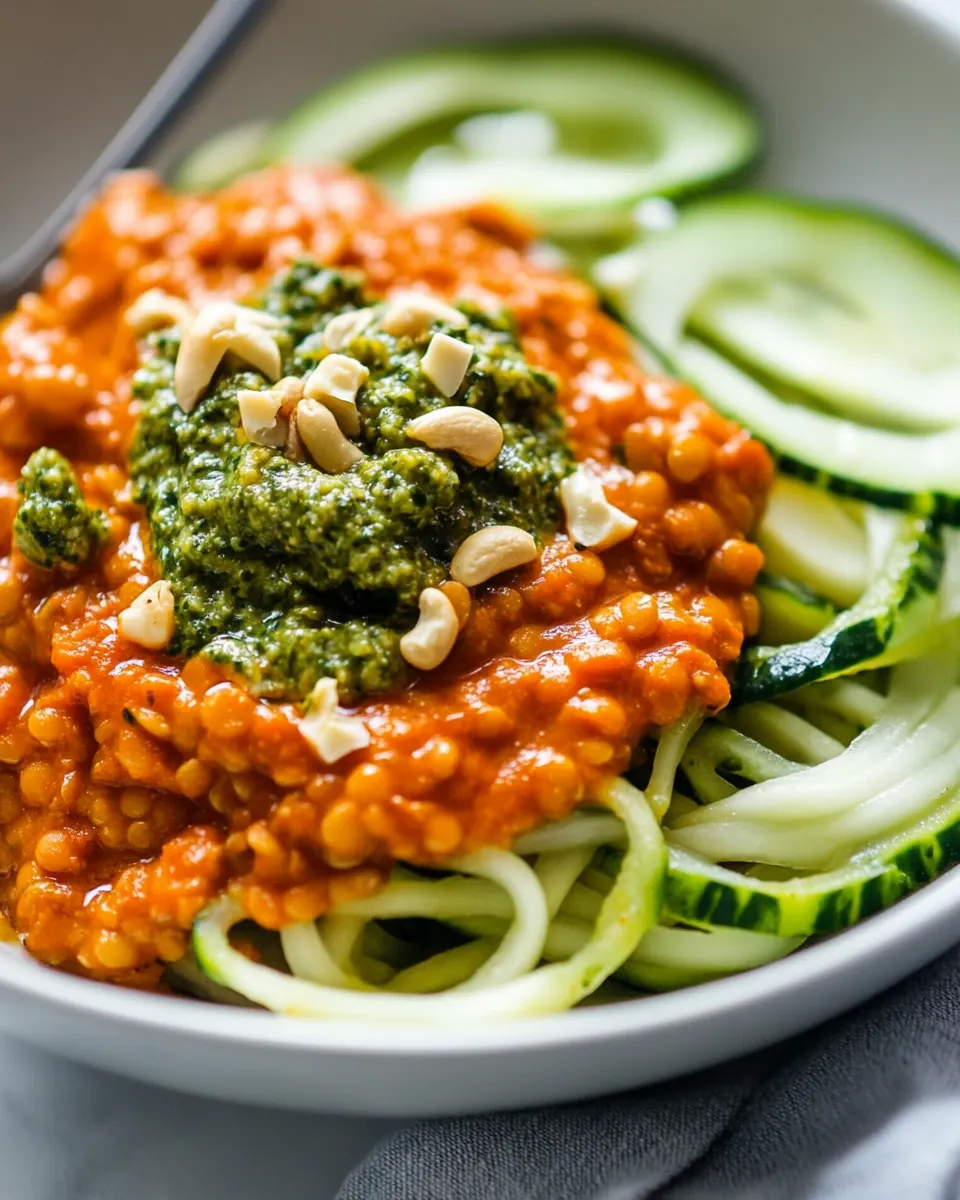
This recipe blends pantry-friendly staples with bright fresh herbs. The philosophy here is balance: a rich, creamy curry base built from coconut milk and crushed tomatoes, protein from red lentils, and a herbaceous, fat rich pesto made from cashews and cilantro. The spiralized cucumbers act as a cool canvas, while aromatics like ginger and jalapeño provide warmth and lift.
- 1 cup light coconut milk: Adds rich, creamy body and subtle coconut sweetness to the curry, creating a smooth sauce that balances spices and acidity while contributing a silky mouthfeel.
- 1 cup crushed tomatoes: Provides bright tomato acidity and umami depth to the curry base, helping to build a savory backbone and balance the creaminess of the coconut milk.
- 1/2 cup water: Thins the sauce to desired consistency and helps the lentils cook evenly, allowing flavors to meld without diluting seasoning when used sparingly.
- 1 tablespoon yellow curry paste: Imparts concentrated warm, aromatic curry flavor with turmeric, cumin, and chili notes, serving as the primary spice blend that defines the dish's Southeast Asian profile.
- 1/2 cup red lentils: Contributes hearty texture and mild earthy flavor while absorbing the curry liquid to become tender and protein-rich, making the dish substantial and nutritious.
- Salt and pepper to taste: Enhances overall flavor by adjusting seasoning levels; balances sweetness, acidity, and spice to achieve a harmonious taste throughout the curry and pesto.
- 1/4 cup roasted salted cashews 36 grams, plus additional chopped cashews for garnish: Adds crunchy, salty richness and a buttery nutty flavor to the pesto, providing body and savory contrast while some extra cashews serve as a finishing garnish.
- 1 cup roughly chopped packed cilantro plus additional for garnish: Delivers bright, herbaceous freshness and a vibrant green flavor to the cashew pesto while additional sprigs add an attractive garnish and aromatic lift.
- 1/4 cup roughly chopped packed fresh mint: Introduces cool, slightly sweet minty brightness to the pesto, rounding out the herbaceous profile and lending a refreshing counterpoint to the warm curry spices.
- 1/2 teaspoon minced fresh ginger: Offers sharp, zesty warmth and aromatic bite to the pesto and curry, contributing a clean heat that enhances other flavors without overwhelming them.
- 1 teaspoon minced jalapeño pepper: Brings fruity, mild heat and a lively peppery note to the pesto, contributing subtle spice and depth that complements the cilantro and lime.
- 1 teaspoon fresh lime juice: Provides tangy acidity that brightens the pesto and balances the richness of cashews and coconut, lifting flavors and adding freshness to the dish.
- 2 tablespoons water: Helps adjust pesto texture and loosen the paste for easier blending and tossing, allowing the herbs and cashews to emulsify into a spreadable consistency.
- 1 tablespoon melted coconut oil: Adds a delicate tropical aroma and helps emulsify the pesto, contributing a glossy finish and subtle coconut flavor when melted into the mixture.
- 2 Very large cucumbers or 3 small cucumbers spiralized with the 3-millimeter blade: Creates crisp, low-carbohydrate noodles and a refreshing base for the curry, offering crunchy contrast and a hydrating vehicle for the lentil coconut sauce.
Instructions for Lentil Coconut Curry With Cashew Cilantro Pesto Cucumber Noodles
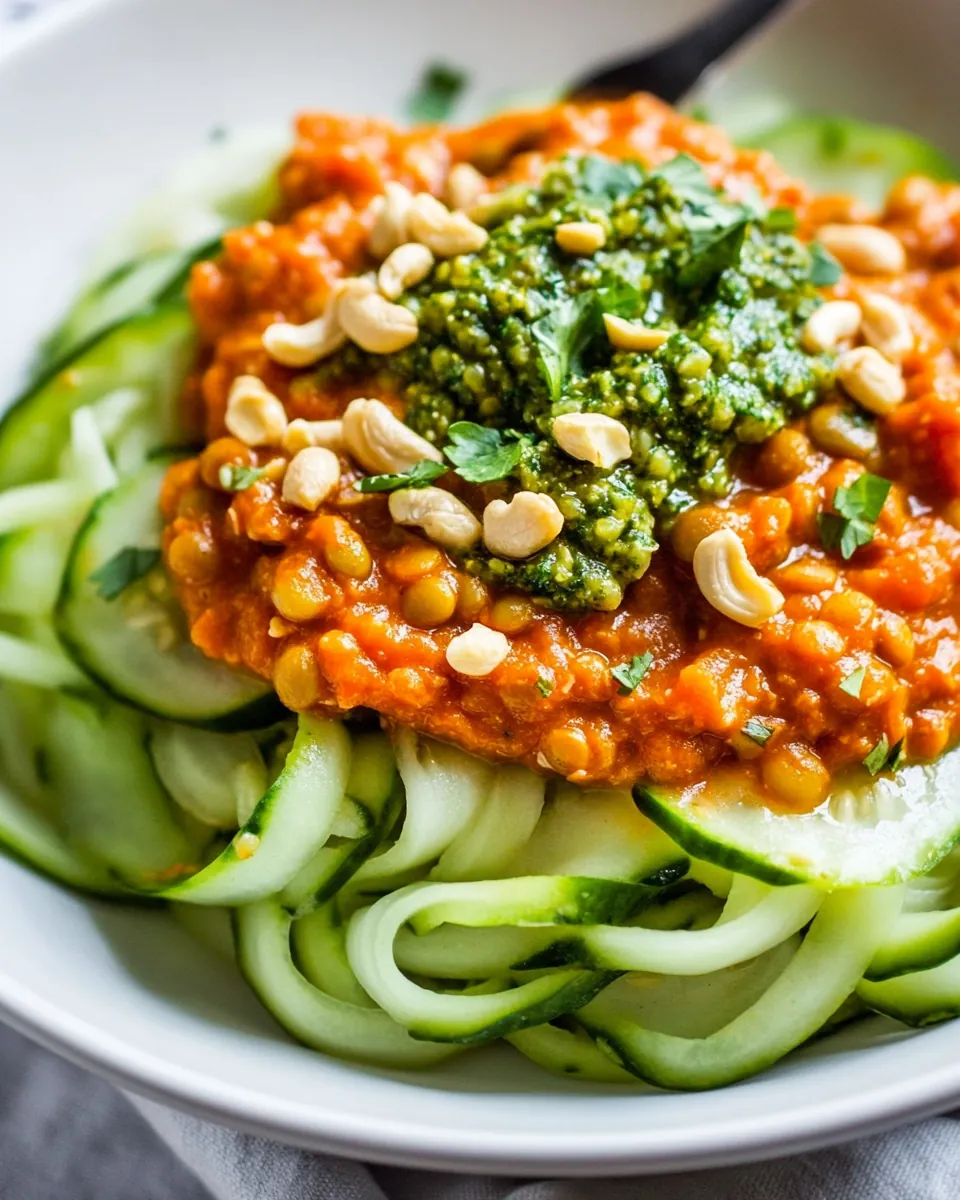
The steps below guide you from the first simmer to assembling bowls that pair warm curry with cool pesto noodles. Follow sensory cues, and take your time with the pesto so it reaches a silky consistency. I find moving between the stove and food processor keeps the workflow smooth.
- In a large pot, whisk together the coconut milk, crushed tomatoes, water, and curry paste and bring to a boil. Whisk it frequently and really try to break down the curry paste.: As the pot heats, you will smell the fragrant oils from the yellow curry paste blooming into the coconut milk , an aroma that signals flavor development, and you should see the sauce change color as the paste disperses. Vigorously whisking helps break down any clumps of paste so that the sauce becomes uniform and glossy, which prevents pockets of intense spice. A common mistake is skimping on whisking, leaving streaks of paste that taste overly concentrated; frequent whisking avoids this. Watch for small bubbles at the edges to indicate it is approaching a boil, and keep the heat moderate so it does not scorch the bottom.
- Once boiling, stir in the lentils, cover, and reduce the heat to low. Cook until the lentils have absorbed most of the liquid and are thick and creamy, about 20 minutes. Add salt and pepper to taste.: You will hear a gentle simmer and see the red lentils swell and begin to soften, releasing starches that transform the sauce into a velvety texture. Stir occasionally to prevent sticking and to check the consistency; when the lentils are tender and the mixture clings to a spoon, it is ready. This slow, gentle simmer is crucial to achieve that spoonable, almost porridge like quality; rushing with higher heat can cause uneven cooking and a grainy texture. Taste and season at the end, because reduced liquids intensify salt and spice and you may need only a small adjustment.
- While the lentils cook, place the cashews in a small food processor (mine is 3 cups) and process until broken down.: You will notice a change in sound as the cashews go from crunchy to crumbly, a clue that they are ready for the herbs. Processing them first creates a coarse base that captures the liquids and oils added later. One pitfall is overfilling the processor; work in batches if needed so the blades can move freely and you get an even texture rather than a paste that is too oily.
- Add the cilantro, mint, ginger, jalapeño pepper, and lime juice and process until broken down and blended.: The aroma will shift to bright herbaceous notes as the cilantro and mint break down, and you may see flecks of green become suspended in the cashew mixture. Processing at this stage helps marry the flavors, creating a lively pesto base. Avoid overprocessing to the point where the herbs become dark and bitter; pulse until the mixture looks cohesive and fragrant.
- With the food processor running, add the water and coconut oil and process until smooth and creamy, scraping the sides down as necessary.: As you add the water and melted coconut oil , the pesto will emulsify and glossy ribbons will form, indicating a silky texture. Use the scrape down to ensure no pockets of unmixed cashew remain, which helps the pesto coat the cucumber noodles evenly. A frequent error is adding too much liquid at once; add gradually so you can control the thickness and avoid a watery sauce.
- Place the spiralized cucumbers onto a paper towel and press out any excess moisture. Place them into a large bowl and add in the pesto. Toss to coat.: Pressing the cucumber strands removes excess water that would otherwise dilute the pesto and make the dish watery, and you should feel the noodles become slightly drier and pleasantly crisp. Tossing by hand ensures each strand gets a light coating of pesto so textures remain distinct: cool crunch of cucumber against creamy pesto. A common slip is skipping the pressing step which leads to a soggy result, so be patient and press well.
- Divide the noodles between plates, and divide the lentil curry on top of each pile of noodles.: When you assemble, you want to keep the noodles mostly separate from the hot curry until served so they retain their crunch. Ladle warm, spoonable curry atop each nest, creating a pleasing temperature contrast and letting diners mix as they like. Avoid pouring too much curry at once which can overwhelm the cucumber and make everything limp; a measured portion keeps the textures balanced.
- Garnish with extra chopped cilantro and cashews. Serve.: The final garnish adds fresh color and crunch, and you will appreciate the bright hit of raw cilantro against the warm curry. Serve immediately so the contrast between warm and cool is at its best. One mistake is prepping garnishes too far ahead, which can cause herbs to wilt; chop and add just before serving for peak appearance and flavor.
Substitutions and Tips
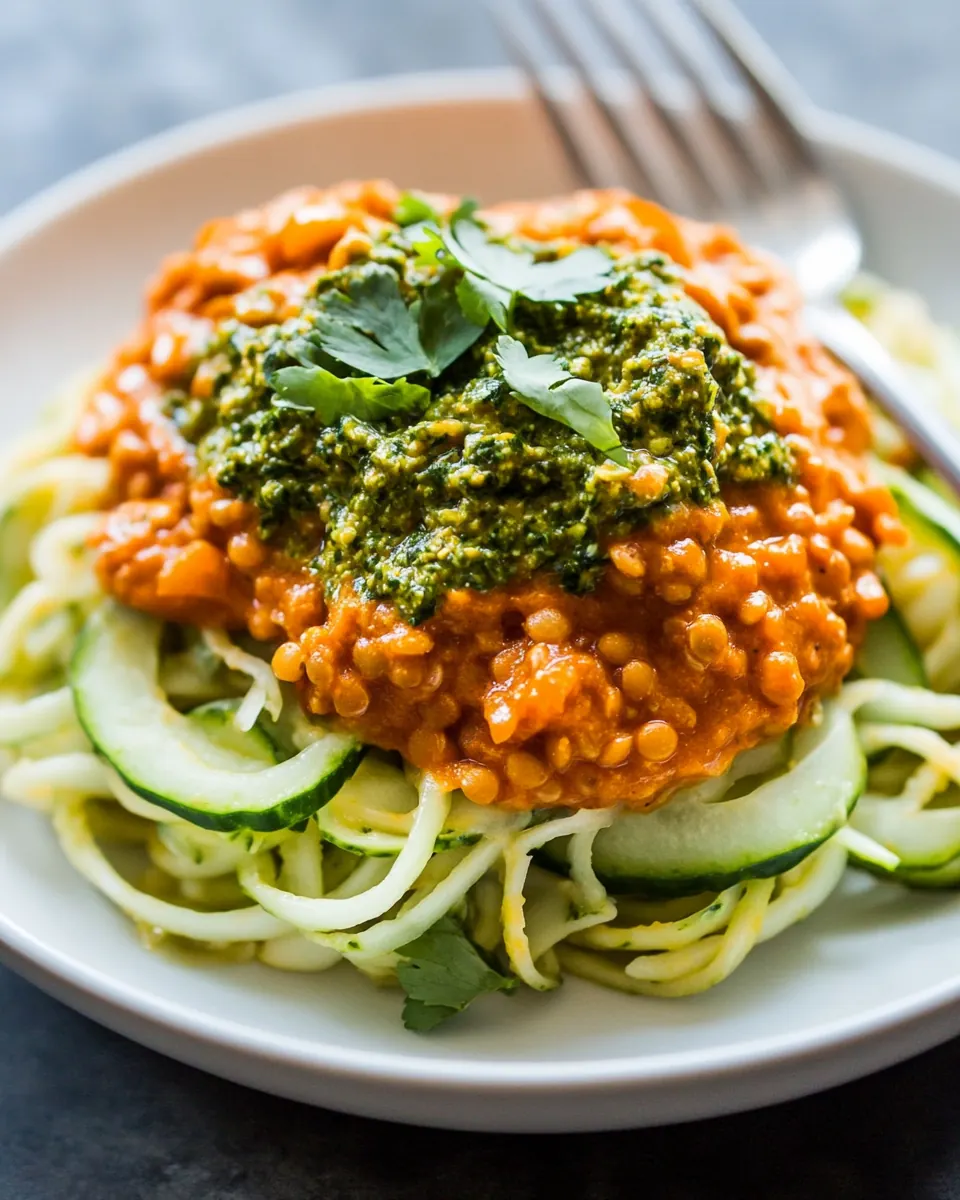
This section highlights practical swaps and technique notes to help you adapt the recipe without losing its heart. I share texture preserving tips and ways to balance flavors if your pantry or preferences differ.
- Cashew texture tip: If your food processor struggles, chop the cashews by hand first, then pulse to finish, which helps avoid an oily paste.
- Herb balance: Increase or decrease the mint and cilantro ratio based on your preference for cooling versus bright herbal notes; taste as you go.
- Spice control: If you prefer milder heat, remove the seeds from the jalapeño before mincing, or use half the amount and add more later if needed.
- Consistency check: If your pesto is too thick for tossing, add the 2 tablespoons of water gradually until it reaches a glossy, spreadable consistency.
- Make ahead strategy: The curry can be made a day ahead and reheated gently, but wait to toss pesto with the cucumbers until service to preserve crunch.
Accompaniments for Lentil Coconut Curry With Cashew Cilantro Pesto Cucumber Noodles
These serving ideas help you tailor the meal for different occasions and give guidance for storing and pairing. Think of the dish as flexible: a standalone bowl that also plays well with small sides and seasonal touches.
- Serve warm bowls: Place a nest of pesto tossed cucumber noodles and top with the warm lentil curry for an easy weeknight dinner that balances warm and cool elements.
- Family style: Spoon the curry into a central pot and set the pesto coated cucumbers in a large bowl so everyone assembles their plate, which is great for casual gatherings.
- Occasions: This works beautifully for lunch or dinner, and because it is light and satisfying it suits fasting days or Ramadan if you need a gentle, nourishing meal after breaking fast.
- Storage tips: Refrigerate the curry in an airtight container for up to three days, keep the pesto and spiralized cucumbers separate until ready to serve to avoid sogginess.
- Seasonal pairings: In summer, emphasize the chilled pesto and cucumbers; in cooler months, serve the curry slightly warmer and use the pesto as a bright counterpoint.
- Presentation: Garnish with reserved chopped cashews and extra cilantro for texture and an inviting fresh finish.
FAQ
Conclusion
This recipe stands out because it balances a creamy, spiced coconut lentil curry with a bright, herbaceous cashew cilantro pesto and crisp cucumber noodles, creating a bowl that is both comforting and refreshing. I encourage you to give it a try tonight, even if you only have a few pantry staples on hand, because the flavors come together quickly and reward minimal effort. It’s a meal that invites you to savor contrasts of temperature and texture while delivering satisfying plant based protein and fresh herbal character. Share it with someone who appreciates bold, layered flavors and enjoy the simple pleasure of a bowl that feels special yet accessible.
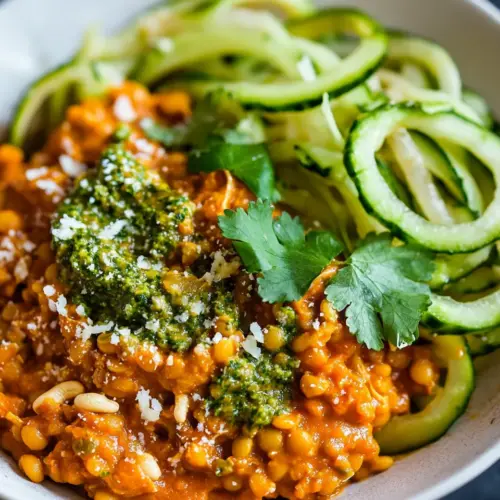
Lentil Coconut Curry With Cashew Cilantro Pesto Cucumber Noodles
Equipment
- Large Pot
- Small food processor
- Spiralizer
- Paper towels
Ingredients
- 1 cup light coconut milk Adds rich, creamy body and subtle coconut sweetness to the curry, creating a smooth sauce that balances spices and acidity while contributing a silky mouthfeel.
- 1 cup crushed tomatoes Provides bright tomato acidity and umami depth to the curry base, helping to build a savory backbone and balance the creaminess of the coconut milk.
- 1/2 cup water Thins the sauce to desired consistency and helps the lentils cook evenly, allowing flavors to meld without diluting seasoning when used sparingly.
- 1 tablespoon yellow curry paste Imparts concentrated warm, aromatic curry flavor with turmeric, cumin, and chili notes, serving as the primary spice blend that defines the dish's Southeast Asian profile.
- 1/2 cup red lentils Contributes hearty texture and mild earthy flavor while absorbing the curry liquid to become tender and protein-rich, making the dish substantial and nutritious.
- Salt and pepper to taste Enhances overall flavor by adjusting seasoning levels; balances sweetness, acidity, and spice to achieve a harmonious taste throughout the curry and pesto.
- 1/4 cup roasted salted cashews 36 grams, plus additional chopped cashews for garnish Adds crunchy, salty richness and a buttery nutty flavor to the pesto, providing body and savory contrast while some extra cashews serve as a finishing garnish.
- 1 cup roughly chopped packed cilantro plus additional for garnish Delivers bright, herbaceous freshness and a vibrant green flavor to the cashew pesto while additional sprigs add an attractive garnish and aromatic lift.
- 1/4 cup roughly chopped packed fresh mint Introduces cool, slightly sweet minty brightness to the pesto, rounding out the herbaceous profile and lending a refreshing counterpoint to the warm curry spices.
- 1/2 teaspoon minced fresh ginger Offers sharp, zesty warmth and aromatic bite to the pesto and curry, contributing a clean heat that enhances other flavors without overwhelming them.
- 1 teaspoon minced jalapeño pepper Brings fruity, mild heat and a lively peppery note to the pesto, contributing subtle spice and depth that complements the cilantro and lime.
- 1 teaspoon fresh lime juice Provides tangy acidity that brightens the pesto and balances the richness of cashews and coconut, lifting flavors and adding freshness to the dish.
- 2 tablespoons water Helps adjust pesto texture and loosen the paste for easier blending and tossing, allowing the herbs and cashews to emulsify into a spreadable consistency.
- 1 tablespoon melted coconut oil Adds a delicate tropical aroma and helps emulsify the pesto, contributing a glossy finish and subtle coconut flavor when melted into the mixture.
- 2 Very large cucumbers or 3 small cucumbers spiralized with the 3-millimeter blade Creates crisp, low-carbohydrate noodles and a refreshing base for the curry, offering crunchy contrast and a hydrating vehicle for the lentil coconut sauce.
Instructions
- In a large pot, whisk together the coconut milk, crushed tomatoes, water, and curry paste and bring to a boil. Whisk it frequently and really try to break down the curry paste.: As the pot heats, you will smell the fragrant oils from the yellow curry paste blooming into the coconut milk , an aroma that signals flavor development, and you should see the sauce change color as the paste disperses. Vigorously whisking helps break down any clumps of paste so that the sauce becomes uniform and glossy, which prevents pockets of intense spice. A common mistake is skimping on whisking, leaving streaks of paste that taste overly concentrated; frequent whisking avoids this. Watch for small bubbles at the edges to indicate it is approaching a boil, and keep the heat moderate so it does not scorch the bottom.
- Once boiling, stir in the lentils, cover, and reduce the heat to low. Cook until the lentils have absorbed most of the liquid and are thick and creamy, about 20 minutes. Add salt and pepper to taste.: You will hear a gentle simmer and see the red lentils swell and begin to soften, releasing starches that transform the sauce into a velvety texture. Stir occasionally to prevent sticking and to check the consistency; when the lentils are tender and the mixture clings to a spoon, it is ready. This slow, gentle simmer is crucial to achieve that spoonable, almost porridge like quality; rushing with higher heat can cause uneven cooking and a grainy texture. Taste and season at the end, because reduced liquids intensify salt and spice and you may need only a small adjustment.
- While the lentils cook, place the cashews in a small food processor (mine is 3 cups) and process until broken down.: You will notice a change in sound as the cashews go from crunchy to crumbly, a clue that they are ready for the herbs. Processing them first creates a coarse base that captures the liquids and oils added later. One pitfall is overfilling the processor; work in batches if needed so the blades can move freely and you get an even texture rather than a paste that is too oily.
- Add the cilantro, mint, ginger, jalapeño pepper, and lime juice and process until broken down and blended.: The aroma will shift to bright herbaceous notes as the cilantro and mint break down, and you may see flecks of green become suspended in the cashew mixture. Processing at this stage helps marry the flavors, creating a lively pesto base. Avoid overprocessing to the point where the herbs become dark and bitter; pulse until the mixture looks cohesive and fragrant.
- With the food processor running, add the water and coconut oil and process until smooth and creamy, scraping the sides down as necessary.: As you add the water and melted coconut oil , the pesto will emulsify and glossy ribbons will form, indicating a silky texture. Use the scrape down to ensure no pockets of unmixed cashew remain, which helps the pesto coat the cucumber noodles evenly. A frequent error is adding too much liquid at once; add gradually so you can control the thickness and avoid a watery sauce.
- Place the spiralized cucumbers onto a paper towel and press out any excess moisture. Place them into a large bowl and add in the pesto. Toss to coat.: Pressing the cucumber strands removes excess water that would otherwise dilute the pesto and make the dish watery, and you should feel the noodles become slightly drier and pleasantly crisp. Tossing by hand ensures each strand gets a light coating of pesto so textures remain distinct: cool crunch of cucumber against creamy pesto. A common slip is skipping the pressing step which leads to a soggy result, so be patient and press well.
- Divide the noodles between plates, and divide the lentil curry on top of each pile of noodles.: When you assemble, you want to keep the noodles mostly separate from the hot curry until served so they retain their crunch. Ladle warm, spoonable curry atop each nest, creating a pleasing temperature contrast and letting diners mix as they like. Avoid pouring too much curry at once which can overwhelm the cucumber and make everything limp; a measured portion keeps the textures balanced.
- Garnish with extra chopped cilantro and cashews. Serve.: The final garnish adds fresh color and crunch, and you will appreciate the bright hit of raw cilantro against the warm curry. Serve immediately so the contrast between warm and cool is at its best. One mistake is prepping garnishes too far ahead, which can cause herbs to wilt; chop and add just before serving for peak appearance and flavor.
Notes
- Cashew texture tip: If your food processor struggles, chop the cashews by hand first, then pulse to finish, which helps avoid an oily paste.
- Herb balance: Increase or decrease the mint and cilantro ratio based on your preference for cooling versus bright herbal notes; taste as you go.
- Spice control: If you prefer milder heat, remove the seeds from the jalapeño before mincing, or use half the amount and add more later if needed.
- Consistency check: If your pesto is too thick for tossing, add the 2 tablespoons of water gradually until it reaches a glossy, spreadable consistency.
- Make ahead strategy: The curry can be made a day ahead and reheated gently, but wait to toss pesto with the cucumbers until service to preserve crunch.