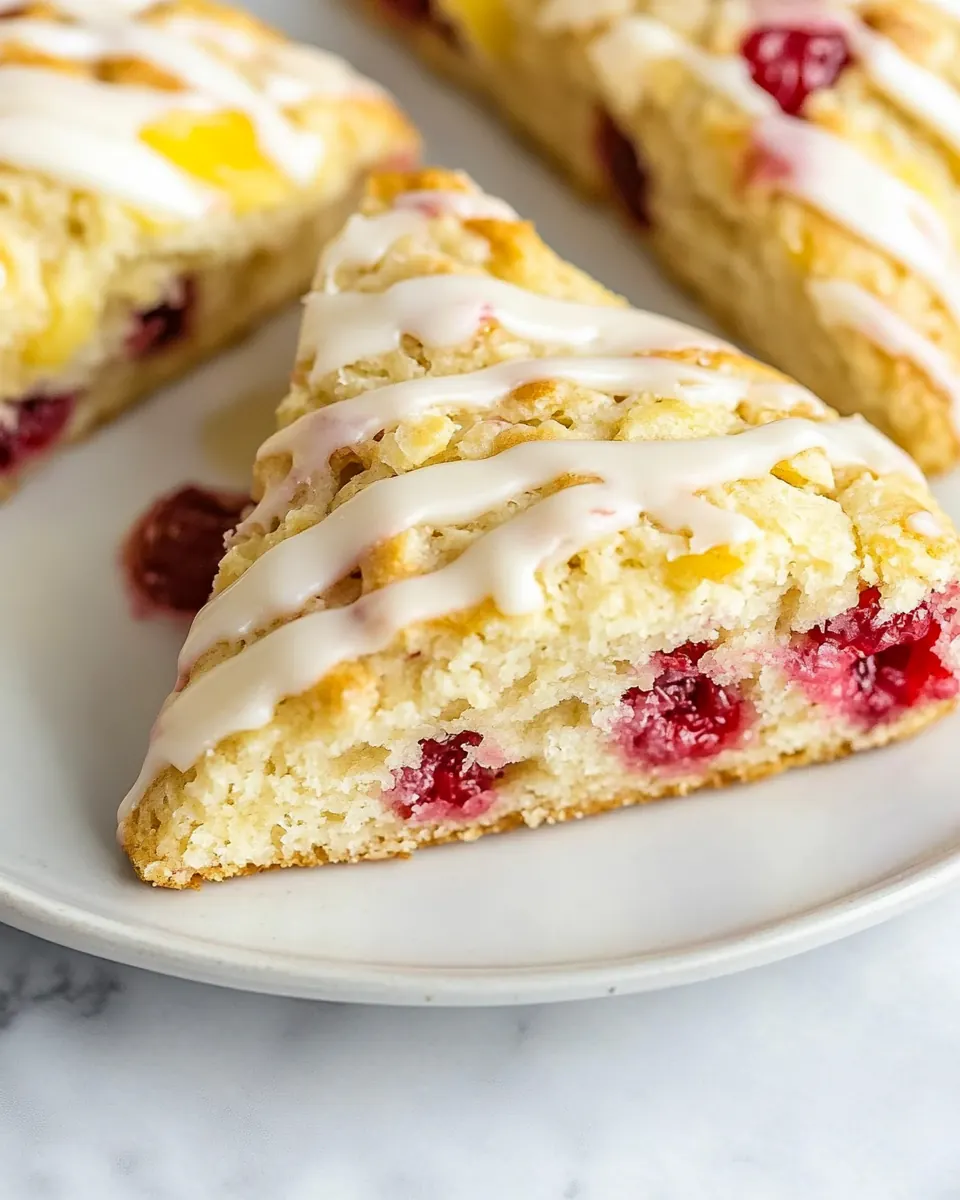
Lemon Raspberry Scones
Lemon Raspberry Scones have been my weekend guilty pleasure ever since I first folded bright, tart berries into buttery dough on a rainy Saturday morning.
There was one particular morning when I was trying to coax a smile out of a house full of sleepy teenagers, and the scent of lemon zest warmed the kitchen while the oven hummed. I remember pressing the sticky dough into a circle and worrying the raspberries would bleed everywhere, yet when the timer chimed, small golden triangles emerged, their edges crisp and the centers tender. The glaze set quickly into a glossy sheen, offering just the right sweet and tangy finish.
I like to sit with a warm scone and a narrow cup of tea, watching the steam curl and thinking about how simple techniques give the best rewards. Over time I learned to treat the chilled unsalted butter like a precious asset, grating it so each shard creates pockets of flakiness. I also started zesting lemons directly into the sugar to make a fragrant base that perfumes every bite. These habits turned a straightforward batter into something I reach for when friends drop by unannounced, or when I crave a bright pick me up during a long afternoon.
Recipe Snapshot
32 mins
15 mins
17 mins
Medium
220 kcal
American
Gluten-Free, Low FODMAP
Breakfast
Nordic Ware Aluminum Half Sheet Pans, Pre-Cut Parchment Paper Baking Sheets, Mixing bowl set
The Charm of This Lemon Raspberry Scones
Bright citrus flavor in every bite
I love how the combination of lemon zest and lemon juice lifts the entire pastry. The lemon flavor is immediate and clean, cutting through the richness so each bite feels lively instead of heavy. That little pop of citrus keeps these scones from being overly sweet, and I often find myself reaching for another because the tartness balances the glaze beautifully.
Buttery, tender texture
Using frozen, grated unsalted butter creates delicate layers that give a tender crumb and flakiness. I learned this trick from flaky pastry recipes, and it works wonders here. Each bite yields soft interior pockets that practically melt, while the exterior edges crisp just enough to provide contrast.
Fresh raspberries add color and acidity
The fresh raspberries are mild and juicy, lending an almost jamlike note where they burst. I appreciate that they remain somewhat intact, giving little sweet islands of berry, and their color makes these scones feel celebratory, perfect for spring brunches or afternoon tea.
Easy technique, impressive results
This recipe is deceptively simple, requiring only basic tools and straightforward steps. I often make it when I want to impress with minimal fuss. The techniques here are forgiving, and even when raspberries break a bit while folding, the oven finishes the job and everything bakes up lovely.
Versatile and crowd friendly
These scones travel well and hold up on a platter without getting soggy. I like to make a batch for neighborhood get togethers because they store well for a few days in the fridge, and the glaze restores that fresh bakery feel when reapplied.
What You’ll Need for Lemon Raspberry Scones
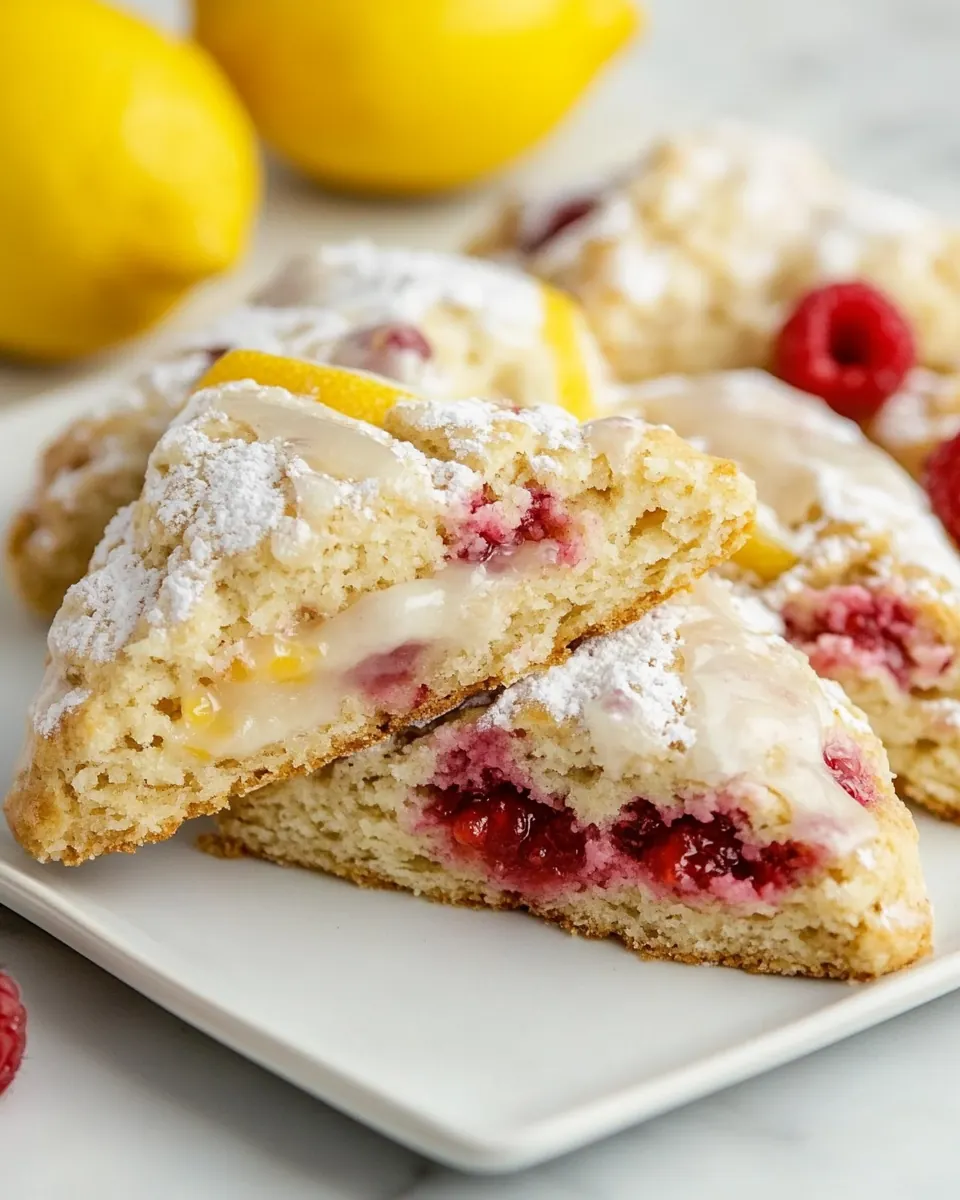
These ingredients are intentionally simple, focusing on a few key players that do the heavy lifting. The flour and leavening give structure and lift, while the frozen unsalted butter creates flakiness. Fresh raspberries and lemon elements provide brightness, and the glaze ties everything together with sweetness and sheen.
- 1/3 cup granulated sugar: Adds sweetness and helps tenderize the dough while balancing tart lemon flavor; granulated sugar also aids in browning during baking and contributes to the crumb structure when creamed with butter or incorporated into the dry mix.
- zest of two medium lemons: Provides bright citrus aroma and concentrated lemon oil that intensifies overall lemon flavor; zest disperses evenly in batter delivering fresh, natural acidity without additional liquid and complements the glaze and yogurt notes.
- 2 cups all-purpose flour: Creates the structural base of the scone by providing gluten and starch; all-purpose flour absorbs liquids and fats, giving the scones their tender yet sturdy crumb and allowing leavening agents to work effectively.
- 1 1/2 teaspoons baking powder: Leavens the dough by releasing carbon dioxide when activated, helping the scones rise and become light; baking powder also contributes to a tender texture and balanced lift throughout baking.
- 1/2 teaspoon salt: Enhances overall flavor by balancing sweetness and highlighting other ingredients; salt strengthens gluten slightly and improves the perception of other flavors, making the scones taste more rounded.
- 8 tablespoons unsalted butter frozen: Incorporates cold fat to create flaky layers and tender crumb; frozen unsalted butter when cut into the flour yields distinct pockets that melt during baking, producing a desirable flaky scone texture.
- 1/2 cup + 2 tablespoons lemon-flavored Greek Yogurt I recommend whole milk yogurt, or sour cream: Adds moisture, tang, and richness while contributing to tender crumb; lemon–flavored Greek yogurt provides acidity that reacts with leavening and imparts a creamy lemon character when combined with other wet ingredients.
- 1 large egg: Binds the ingredients together, adds richness and structure, and contributes to browning; a large egg also helps emulsify fats and liquids for a cohesive dough and slightly richer texture.
- 1 teaspoon pure vanilla extract: Contributes mellow sweet vanilla notes that enhance other flavors; pure vanilla extract rounds the taste profile and complements both the lemon and raspberry elements in the scones.
- 2/3 cups fresh raspberries: Delivers bursts of bright, fruity flavor and soft texture; fresh raspberries add natural sweetness, tartness, and visual appeal, so they should be gently folded in to avoid crushing and color bleed.
- 3 tablespoons unsalted butter melted: Brushes the scone tops to promote even browning and help glazes adhere; melted unsalted butter adds flavor and a glossy finish while contributing a hint of richness to the crust.
- 1 cup confectioners’ sugar sifted: Provides a sweet, smooth glaze that adds shine and extra sweetness; confectioners’ sugar dissolves easily into liquid to create a silky icing for drizzling over cooled scones.
- 1/2 teaspoon pure vanilla extract: Adds warm, aromatic vanilla undertone to the glaze, deepening flavor; pure vanilla extract pairs with lemon to balance tartness and enhance the confectioners’ sugar glaze.
- 2 tablespoons freshly squeezed lemon juice: Imparts bright acidity and concentrated lemon flavor to the glaze, balancing sweetness; freshly squeezed lemon juice thins the icing to desired consistency and accentuates the scones’ citrus profile.
Recipe Directions for Lemon Raspberry Scones
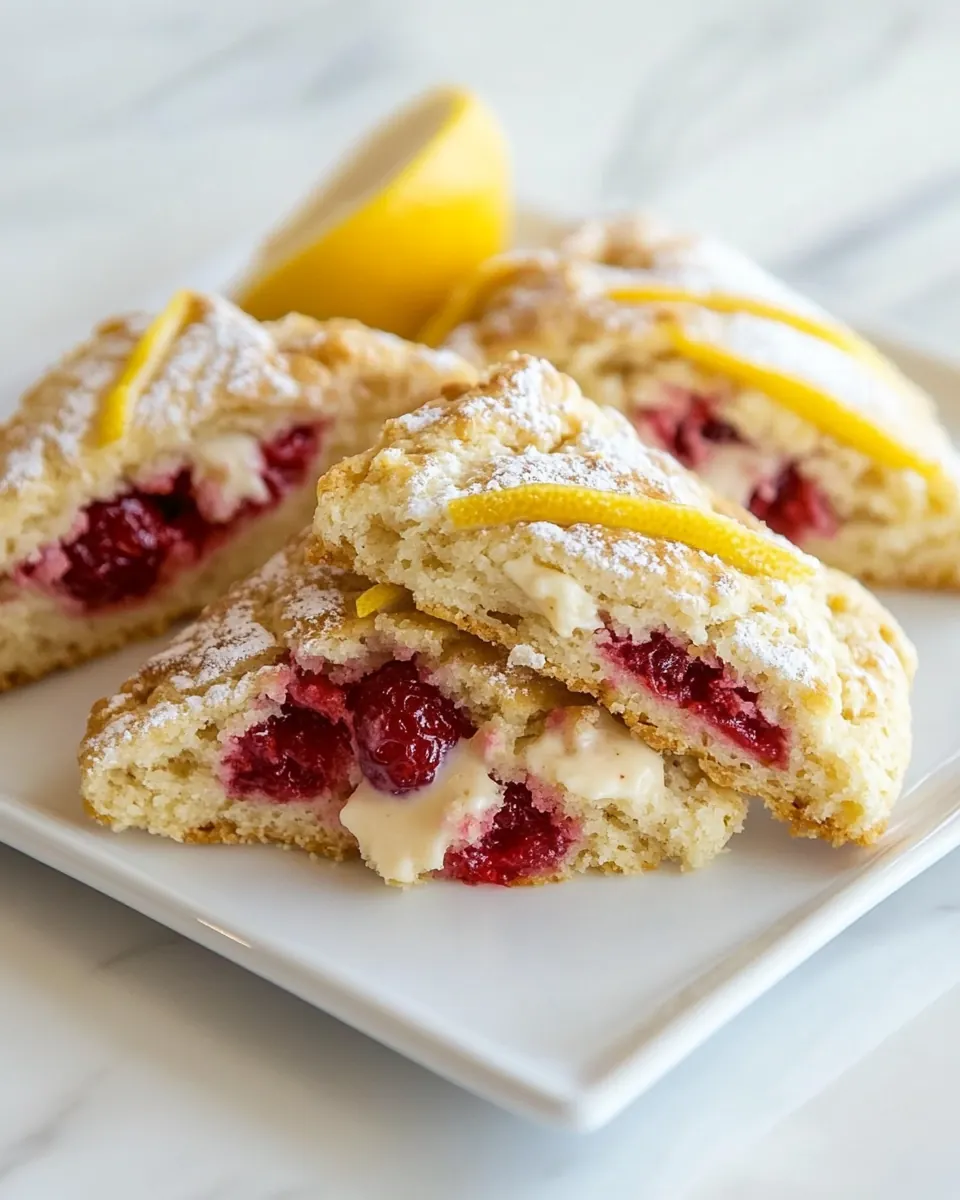
These directions are straightforward, but the small details matter. I’ll walk you through the sensory cues and troubleshooting notes that help you bake confident, consistent scones every time.
- Preheat oven to 400°F. Line a baking sheet with parchment paper.: As the oven warms, you should notice a faint electrical hum and a gentle rise in the kitchen heat, creating the ideal environment for a rapid oven spring. Preheating ensures the scones begin to set immediately on contact, producing crisp edges. A common mistake is not preheating long enough, which leads to flat, dense scones, so wait until the oven reaches a steady temperature before baking.
- In a medium bowl, combine sugar and lemon zest; mix with your fingertips until the sugar is moistened and fragrant. Add in the flour, baking powder and salt and mix until combined.: Rubbing the lemon zest into the sugar releases citrus oils, and you should smell a bright, tangy perfume as you work. When the dry ingredients are mixed, the flour will look homogenous and slightly grainy, ready to accept the butter. Avoid overmilling the zest into tiny pieces that could create bitter bits, and don’t overwork the flour mixture which can develop gluten and yield tougher scones.
- Grate butter into flour mixture on the large holes of a box grater; use a fork or pastry blender to work in the butter until the mixture resembles coarse meal.: As you grate frozen unsalted butter , you’ll hear a soft scraping and see small flakes scattered through the flour, like snow. Working the butter until the mixture looks like coarse cornmeal is key for pockets of flakiness after baking. If the butter starts to warm and smear, chill the bowl briefly because warm butter will coat the flour and prevent proper aeration, producing dense texture.
- In a small bowl, whisk the yogurt (or sour cream), egg and vanilla until smooth.: Whisking brings a sheen to the mixture, with the egg stretching the liquid into a glossy emulsion. The blend should be homogenous, with no streaks of white or yolk visible. If the yogurt is too cold and clumpy, let it sit a minute to loosen, because uneven liquid can cause pockets of dryness in the dough.
- Using a fork, stir sour cream mixture into flour mixture until a dough starts to form. Gently fold in raspberries. The raspberries may break up a little, no worries because they’ll bake up beautifully. Gently use your hands to press the dough against the bowl into a ball. The dough will be quite sticky at first, but it will come together.: When you begin stirring, listen for soft scraping as the wet and dry components meet, and watch the dough take on a slightly glossy sheen. Folding in the fresh raspberries should be done delicately to avoid complete disintegration; a little color streaking is okay. If you press too hard or overmix, the raspberries will release too much moisture, making the dough soggy, so use gentle strokes until you have a cohesive mass.
- Place the dough on a lightly floured surface and pat into a 7-inch circle about 3/4-inch thick. Use a knife to cut into 8 triangles; place on prepared baking sheet, about 1 inch apart. Bake until golden, about 15 to 17 minutes. Cool for 10 minutes and prepare the glaze.: As you pat the dough, the surface should feel tacky but manageable, and the circle will hold its shape. The triangles will brown at the edges and develop a warm, golden color in the oven, offering a visual cue that interior crumb is set. Overbaking will dry them out, so check a few minutes before the lower end of the time range to avoid overly firm centers. Allowing a 10 minute cool period stops carryover cooking and gives the scones a chance to settle, preventing the glaze from slipping off.
- In a medium bowl, prepare the glaze by mixing together the melted butter, confectioners’ sugar, vanilla and lemon juice. Whisk until smooth. Dip the top of the scones into the glaze and allow the glaze to harden. If you would like to drizzle the glaze onto your scones instead of dipping them, you can thicken the glaze a bit with additional confectioners’ sugar.: The glaze should be glossy and pourable, with the scent of lemon and vanilla rising as you whisk. Dipping creates a uniform sheen and a satisfying crack when the glaze hardens; drizzling gives a more rustic look. If the glaze is too thin it will run off and pool on the tray, so add more sifted sugar to thicken if needed. Let the glaze set in a cool spot, and resist the urge to stack scones until the coating is fully firm.
Customization Ideas

These ideas help you tweak the recipe while keeping the soul of the scone intact. I like to experiment, but I always return to the basic balance of butter, lemon, and berries.
- Use whole milk yogurt: Swapping to full fat Greek yogurt deepens the richness and yields a creamier crumb that still supports the fresh raspberries.
- Chill the dough briefly: If your kitchen is warm, pop the formed dough in the fridge for 10 minutes to firm up, which makes cutting neater and helps maintain flakiness.
- Make a thicker glaze for dipping: Add extra sifted confectioners’ sugar to achieve a coating that hardens quickly and gives a glossy bakery finish.
- Drizzle for a rustic look: If you prefer a lighter glazing, thin the icing slightly and use a spoon to create a decorative drizzle rather than a full dip.
- Brush with melted butter right out of the oven: For an extra golden surface, lightly brush warm scones before glazing to enrich the crust and enhance aroma.
What Complements This Lemon Raspberry Scones
These scones are ideal for morning and afternoon gatherings, and they pair well with light beverages and seasonal fruit. They suit casual brunches as well as special occasions where a bright, bakery style pastry is welcome.
- Serve with hot tea: A cup of mild black tea or herbal infusion highlights the lemon notes and balances the sweet glaze.
- Offer jam or clotted cream sparingly: A thin smear can add richness without overpowering the raspberry pockets and citrus lift.
- Great for spring brunch: Their fresh color and flavor make them perfect for spring gatherings, showers, and light holiday breakfasts.
- Storage tips: Store in an airtight container in the refrigerator for up to three days, then rewarm briefly to refresh texture.
- Plating idea: Arrange on a tiered tray for a pretty presentation, and garnish with extra lemon zest or a few whole raspberries for color.
- Portioning: The recipe yields 8 scones, making it easy to scale up for a crowd without losing quality.
FAQ
Conclusion
What makes these scones special is the bright interplay between zesty lemon and juicy raspberry, balanced by tender, buttery layers that feel indulgent but not heavy. Try them the next weekend when you want a simple bake that looks and tastes like you spent hours in the kitchen. They are forgiving, adaptable, and always welcome at a casual brunch or a thoughtful treat for friends.

Lemon Raspberry Scones
Equipment
- Nordic Ware Aluminum Half Sheet Pans
- Pre-Cut Parchment Paper Baking Sheets
- Mixing bowl set
Ingredients
- 1/3 cup granulated sugar Adds sweetness and helps tenderize the dough while balancing tart lemon flavor; granulated sugar also aids in browning during baking and contributes to the crumb structure when creamed with butter or incorporated into the dry mix.
- zest of two medium lemons Provides bright citrus aroma and concentrated lemon oil that intensifies overall lemon flavor; zest disperses evenly in batter delivering fresh, natural acidity without additional liquid and complements the glaze and yogurt notes.
- 2 cups all-purpose flour Creates the structural base of the scone by providing gluten and starch; all-purpose flour absorbs liquids and fats, giving the scones their tender yet sturdy crumb and allowing leavening agents to work effectively.
- 1 1/2 teaspoons baking powder Leavens the dough by releasing carbon dioxide when activated, helping the scones rise and become light; baking powder also contributes to a tender texture and balanced lift throughout baking.
- 1/2 teaspoon salt Enhances overall flavor by balancing sweetness and highlighting other ingredients; salt strengthens gluten slightly and improves the perception of other flavors, making the scones taste more rounded.
- 8 tablespoons unsalted butter frozen Incorporates cold fat to create flaky layers and tender crumb; frozen unsalted butter when cut into the flour yields distinct pockets that melt during baking, producing a desirable flaky scone texture.
- 1/2 cup + 2 tablespoons lemon-flavored Greek Yogurt I recommend whole milk yogurt, or sour cream Adds moisture, tang, and richness while contributing to tender crumb; lemon-flavored Greek yogurt provides acidity that reacts with leavening and imparts a creamy lemon character when combined with other wet ingredients.
- 1 large egg Binds the ingredients together, adds richness and structure, and contributes to browning; a large egg also helps emulsify fats and liquids for a cohesive dough and slightly richer texture.
- 1 teaspoon pure vanilla extract Contributes mellow sweet vanilla notes that enhance other flavors; pure vanilla extract rounds the taste profile and complements both the lemon and raspberry elements in the scones.
- 2/3 cups fresh raspberries Delivers bursts of bright, fruity flavor and soft texture; fresh raspberries add natural sweetness, tartness, and visual appeal, so they should be gently folded in to avoid crushing and color bleed.
- 3 tablespoons unsalted butter melted Brushes the scone tops to promote even browning and help glazes adhere; melted unsalted butter adds flavor and a glossy finish while contributing a hint of richness to the crust.
- 1 cup confectioners’ sugar sifted Provides a sweet, smooth glaze that adds shine and extra sweetness; confectioners’ sugar dissolves easily into liquid to create a silky icing for drizzling over cooled scones.
- 1/2 teaspoon pure vanilla extract Adds warm, aromatic vanilla undertone to the glaze, deepening flavor; pure vanilla extract pairs with lemon to balance tartness and enhance the confectioners’ sugar glaze.
- 2 tablespoons freshly squeezed lemon juice Imparts bright acidity and concentrated lemon flavor to the glaze, balancing sweetness; freshly squeezed lemon juice thins the icing to desired consistency and accentuates the scones’ citrus profile.
Instructions
- Preheat oven to 400°F. Line a baking sheet with parchment paper.: As the oven warms, you should notice a faint electrical hum and a gentle rise in the kitchen heat, creating the ideal environment for a rapid oven spring. Preheating ensures the scones begin to set immediately on contact, producing crisp edges. A common mistake is not preheating long enough, which leads to flat, dense scones, so wait until the oven reaches a steady temperature before baking.
- In a medium bowl, combine sugar and lemon zest; mix with your fingertips until the sugar is moistened and fragrant. Add in the flour, baking powder and salt and mix until combined.: Rubbing the lemon zest into the sugar releases citrus oils, and you should smell a bright, tangy perfume as you work. When the dry ingredients are mixed, the flour will look homogenous and slightly grainy, ready to accept the butter. Avoid overmilling the zest into tiny pieces that could create bitter bits, and don’t overwork the flour mixture which can develop gluten and yield tougher scones.
- Grate butter into flour mixture on the large holes of a box grater; use a fork or pastry blender to work in the butter until the mixture resembles coarse meal.: As you grate frozen unsalted butter , you’ll hear a soft scraping and see small flakes scattered through the flour, like snow. Working the butter until the mixture looks like coarse cornmeal is key for pockets of flakiness after baking. If the butter starts to warm and smear, chill the bowl briefly because warm butter will coat the flour and prevent proper aeration, producing dense texture.
- In a small bowl, whisk the yogurt (or sour cream), egg and vanilla until smooth.: Whisking brings a sheen to the mixture, with the egg stretching the liquid into a glossy emulsion. The blend should be homogenous, with no streaks of white or yolk visible. If the yogurt is too cold and clumpy, let it sit a minute to loosen, because uneven liquid can cause pockets of dryness in the dough.
- Using a fork, stir sour cream mixture into flour mixture until a dough starts to form. Gently fold in raspberries. The raspberries may break up a little, no worries because they’ll bake up beautifully. Gently use your hands to press the dough against the bowl into a ball. The dough will be quite sticky at first, but it will come together.: When you begin stirring, listen for soft scraping as the wet and dry components meet, and watch the dough take on a slightly glossy sheen. Folding in the fresh raspberries should be done delicately to avoid complete disintegration; a little color streaking is okay. If you press too hard or overmix, the raspberries will release too much moisture, making the dough soggy, so use gentle strokes until you have a cohesive mass.
- Place the dough on a lightly floured surface and pat into a 7-inch circle about 3/4-inch thick. Use a knife to cut into 8 triangles; place on prepared baking sheet, about 1 inch apart. Bake until golden, about 15 to 17 minutes. Cool for 10 minutes and prepare the glaze.: As you pat the dough, the surface should feel tacky but manageable, and the circle will hold its shape. The triangles will brown at the edges and develop a warm, golden color in the oven, offering a visual cue that interior crumb is set. Overbaking will dry them out, so check a few minutes before the lower end of the time range to avoid overly firm centers. Allowing a 10 minute cool period stops carryover cooking and gives the scones a chance to settle, preventing the glaze from slipping off.
- In a medium bowl, prepare the glaze by mixing together the melted butter, confectioners’ sugar, vanilla and lemon juice. Whisk until smooth. Dip the top of the scones into the glaze and allow the glaze to harden. If you would like to drizzle the glaze onto your scones instead of dipping them, you can thicken the glaze a bit with additional confectioners’ sugar.: The glaze should be glossy and pourable, with the scent of lemon and vanilla rising as you whisk. Dipping creates a uniform sheen and a satisfying crack when the glaze hardens; drizzling gives a more rustic look. If the glaze is too thin it will run off and pool on the tray, so add more sifted sugar to thicken if needed. Let the glaze set in a cool spot, and resist the urge to stack scones until the coating is fully firm.
Notes
- Use whole milk yogurt: Swapping to full fat Greek yogurt deepens the richness and yields a creamier crumb that still supports the fresh raspberries.
- Chill the dough briefly: If your kitchen is warm, pop the formed dough in the fridge for 10 minutes to firm up, which makes cutting neater and helps maintain flakiness.
- Make a thicker glaze for dipping: Add extra sifted confectioners’ sugar to achieve a coating that hardens quickly and gives a glossy bakery finish.
- Drizzle for a rustic look: If you prefer a lighter glazing, thin the icing slightly and use a spoon to create a decorative drizzle rather than a full dip.
- Brush with melted butter right out of the oven: For an extra golden surface, lightly brush warm scones before glazing to enrich the crust and enhance aroma.