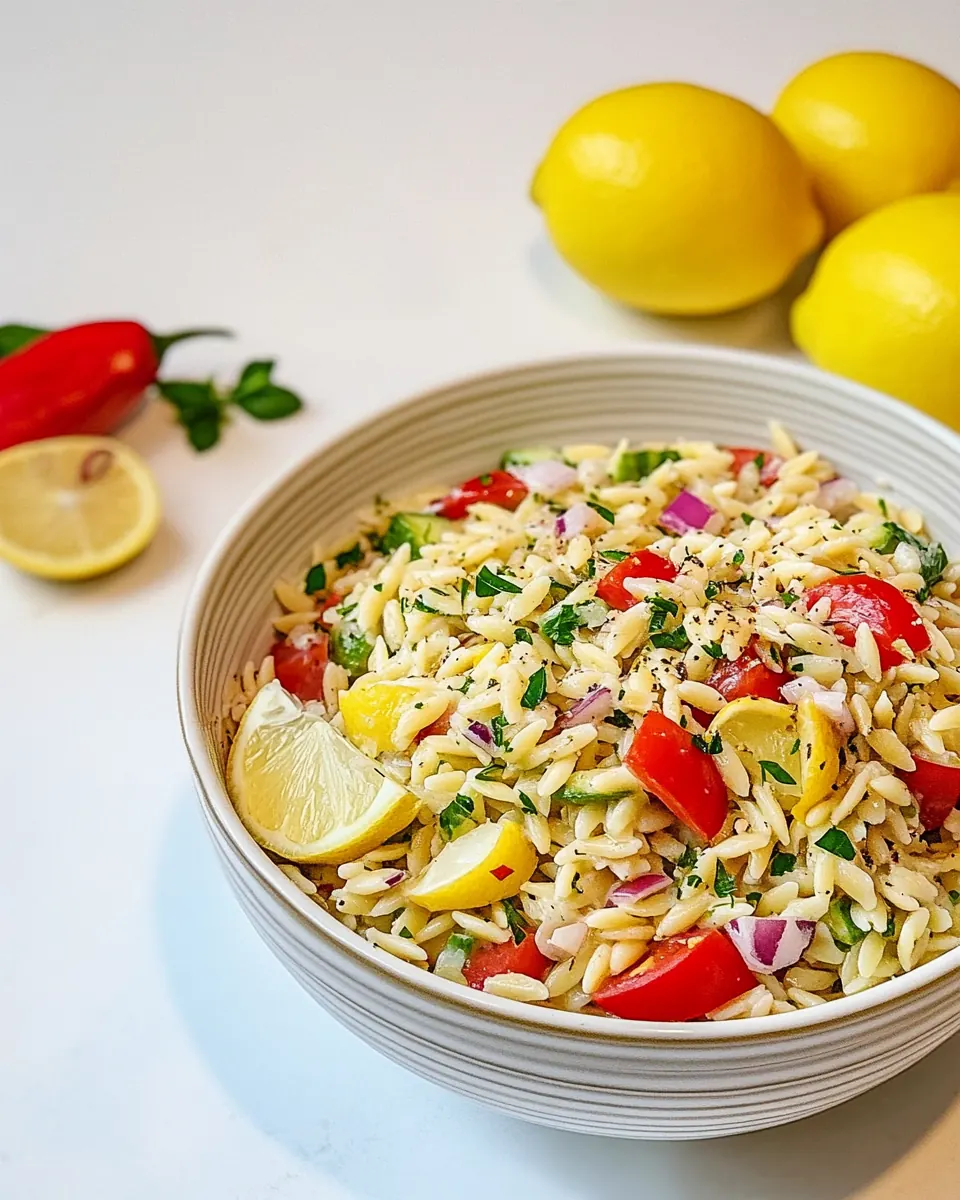
Lemon Orzo Salad
Lemon Orzo Salad has been a staple on my summer table for years, the kind of dish I reach for when I want something bright, simple, and quietly impressive.
I remember the first time I plated up a bowl of this salad for friends after a long beach day, and how the light citrus punch and tender orzo felt like a reward. That evening taught me that a few careful ingredients can create a dish that tastes layered and thoughtful without fuss. Over time I tweaked quantities so the lemon notes sing, the feta cheese brings creamy saltiness, and the fresh herbs keep things lively.
Making Lemon Orzo Salad became my favorite way to use ripe summer produce, and I find the textures comforting: the little rice shaped orzo provides chew, the cherry tomatoes pop with juice, and the cucumber adds a cool snap. I often bring it to potlucks because it travels well and stays vibrant even after a few hours in a cooler. When friends ask for the recipe, they always comment on how fresh and clean it tastes, so I began jotting down the exact balance that works for me.
Recipe Snapshot
25 mins
15 mins
10 mins
Easy
250 kcal
Mediterranean
Gluten-Free, Low FODMAP
Side Dishes
Large pot, Colander, Large bowl, Whisk
Why You’ll Love This Lemon Orzo Salad
Bright and refreshing flavor profile
I love how Lemon Orzo Salad hits a bright citrus note without being puckery. The combination of lemon juice and lemon zest gives a layered lemon presence, and the dressing oils and coats each grain, so every bite is balanced. I find this contrast keeps the salad from tasting one dimensional.
Quick to prepare, great for busy days
Because the orzo cooks in about 8 to 10 minutes, I can pull this together fast. I often boil the pasta while I chop the vegetables, so prep time feels efficient. This makes the recipe a reliable option for easy weeknight dinners or last minute gatherings.
Versatile and portable
I often bring this to picnics or potlucks because Lemon Orzo Salad stays tasty whether served cold or at room temperature. The textures hold up, and the simple dressing keeps components from getting soggy, so you can prepare it ahead and relax.
Balanced textures and colors
The mix of tender orzo, crisp cucumber, juicy cherry tomatoes, and creamy feta cheese creates a delightful contrast. I enjoy how the herbs, like parsley and basil, add an herbal brightness that makes every forkful interesting.
Family friendly and crowd pleasing
I can always count on everyone at the table enjoying this salad. It appeals to picky eaters and adventurous palates alike, and it’s easy to scale up for a crowd. I like that it looks gorgeous too, with colorful vegetables and flecks of herbs making the presentation effortless.
Ingredients to Make Lemon Orzo Salad
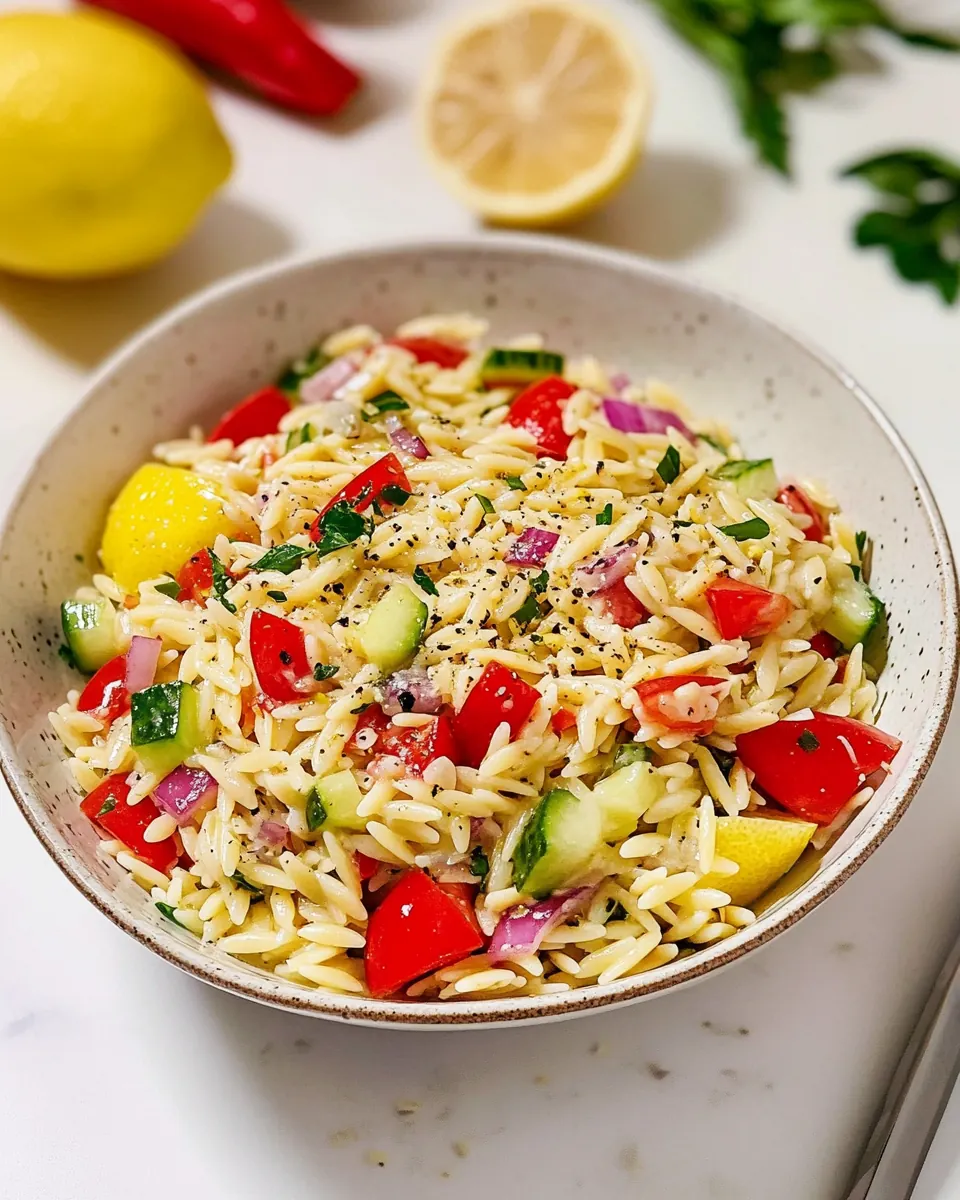
These ingredients are chosen to create a simple, balanced salad where citrus, herbs, and creamy cheese play starring roles. The orzo forms the base, absorbing the lemony dressing so each bite is flavorful. Vegetables bring texture, while the herbs lift the whole dish with freshness. The feta cheese finishes it with salt and cream to round out the flavors.
- 1 1/2 cups orzo: Cook until al dente and drain; serves as the tender, chewy base that soaks up lemony dressing and binds salad components together. Rinse briefly with cold water to stop cooking and keep orzo from clumping, then fluff before mixing with other ingredients.
- 1/3 cup lemon juice: Squeeze fresh for bright acidity and tang that lifts the entire salad, balancing oil and creamy feta. Combine with zest and olive oil to make a vibrant vinaigrette that flavors every bite.
- 1/4 cup olive oil: Whisk into a dressing to add smooth, fruity richness and help emulsify lemon juice for an even coating. Use extra-virgin olive oil for better flavor and mouthfeel while tossing the orzo and vegetables.
- 1 teaspoon lemon zest: Zest for concentrated citrus aroma and a punch of lemon flavor that complements the juice without adding more liquid. Sprinkle into the dressing and over the salad to enhance overall brightness and fragrance.
- Salt to taste: Season to taste to enhance and balance flavors, bringing out the natural sweetness of tomatoes and herbs while taming acidity. Add gradually and adjust at the end to avoid over-salting, especially because feta contributes salty notes.
- Black pepper to taste: Grind freshly for a sharp, warming counterpoint that brightens the lemon and herbs while adding subtle heat. Taste as you mix to achieve a pleasing savory balance without overwhelming delicate ingredients.
- 1 cup cherry tomatoes halved: Halve for juicy bursts of sweetness and acidity that add texture and color contrast; their juices mingle with the dressing to flavor surrounding orzo. Choose ripe cherry tomatoes for the best balance of sweetness and tang.
- 1 cup cucumber diced: Dice for crisp, refreshing crunch and cooling moisture that balances feta and oil; acts as a palate-cleansing element. Peel if desired and remove seeds only if excess moisture will dilute the dressing.
- 1/4 cup red onion finely chopped: Finely chop for pungent, slightly sweet sharpness that threads through the salad in small, flavorful bites. Rinse and soak briefly if you want to soften intensity, then drain well before adding.
- 1/4 cup fresh parsley chopped: Chop for fresh, herbaceous depth that adds green, slightly peppery notes while brightening the overall salad. Add toward the end to preserve color and fragrance and toss gently to distribute evenly.
- 1/4 cup fresh basil chopped: Chop for sweet, aromatic basil notes that complement lemon and tomatoes, offering a fragrant, summery lift. Tear larger leaves lightly to release oils and fold in so the herb remains vibrant and not bruised.
- 1/2 cup feta cheese crumbled: Crumble for creamy, salty richness that provides savory contrast and tangy creaminess throughout the salad. Scatter on top and fold gently so feta pockets remain visible and deliver bursts of flavor.
Putting Together Lemon Orzo Salad
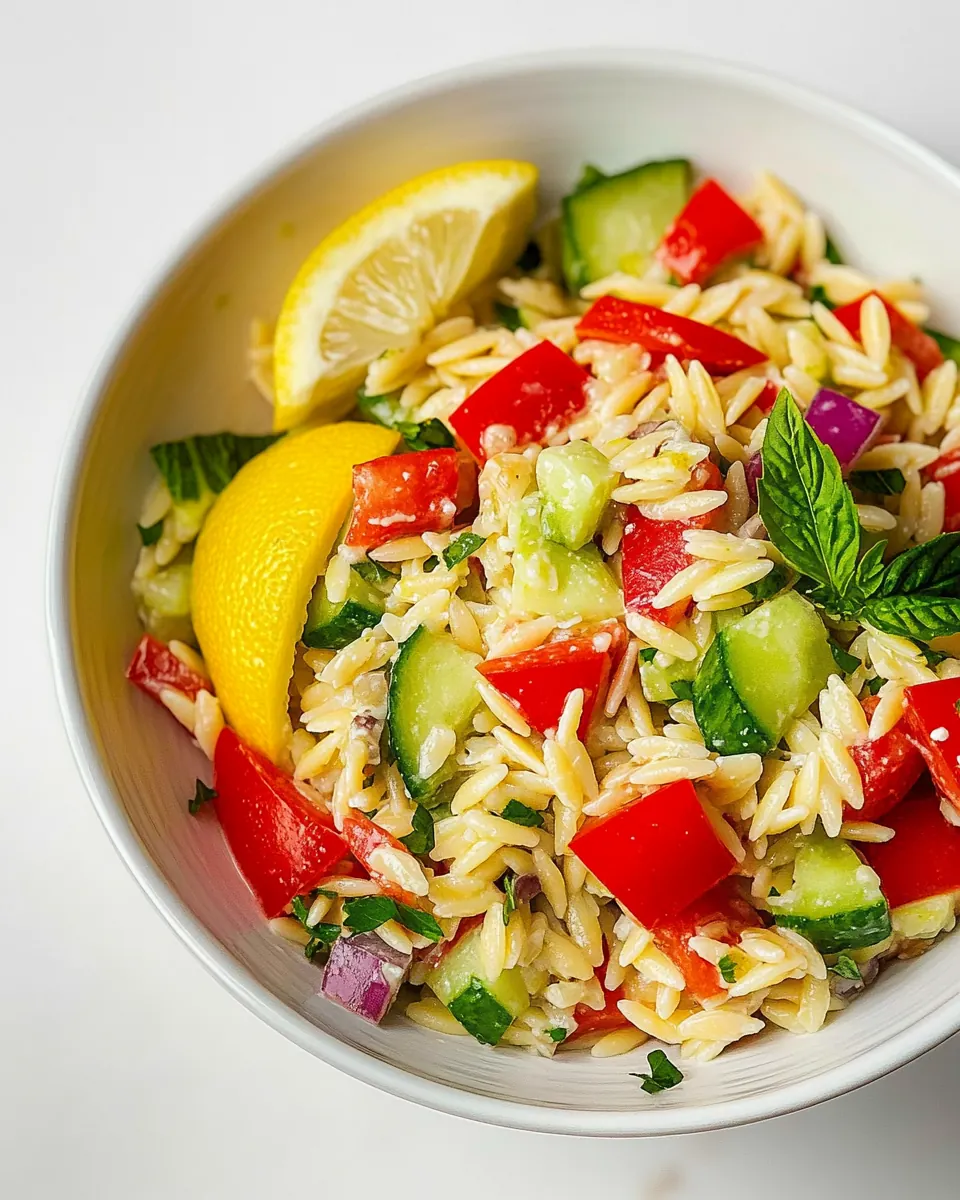
This recipe moves quickly, and the key is to coordinate boiling the orzo while prepping the vegetables and dressing. Work in a rhythm so the pasta cools while you finish chopping, then toss everything gently so textures remain distinct.
- Cook orzo in a large pot of boiling salted water until al dente, about 8 to 10 minutes. Drain and rinse under cold water to cool.: As the pot reaches a rolling boil, you will hear the water roar and see steam curl, then add the orzo and stir to prevent sticking. Cooking until al dente gives the orzo a slight chew that holds up when chilled, and the tiny grains should still feel a touch firm when bitten. You want to avoid a floppy, gummy texture because overcooked pasta will absorb too much dressing and become heavy. A common mistake is letting the pasta sit in hot water off the heat, which continues softening it, so drain promptly when the timing is right.
- In a large bowl, whisk together lemon juice, olive oil, lemon zest, salt, and black pepper.: Running cold water over the drained orzo stops the cooking immediately and cools the grains so they do not wilt the herbs or cook the vegetables when combined. The stream of water should make the grains separate and feel slick rather than sticky. If you skip rinsing, residual heat can turn crisp vegetables limp, and the dressing may be absorbed unevenly. Avoid rinsing until the orzo is fully drained, as excess water will dilute the dressing.
- Add the cooled orzo, cherry tomatoes, cucumber, red onion, parsley, basil, and feta cheese to the bowl with the dressing. Toss to combine.: As you whisk, the dressing should emulsify into a pale, slightly glossy vinaigrette with bright citrus perfume from the lemon zest . The sound is a soft rhythm as the oil blends, and the aroma becomes noticeably lemon forward. Emulsifying helps the dressing cling to the orzo , ensuring even flavor. A frequent error is adding too much salt at once; it is better to season gradually and taste because the feta cheese will add salt later.
- Adjust seasoning with additional salt and pepper if needed. Chill in the refrigerator until ready to serve.: When the ingredients meet the vinaigrette, you will see colors mingle and the bowl brighten with flecks of green and red. Toss gently so the feta cheese stays present in chunks and the vegetables do not break down. The goal is a cohesive salad where each component keeps its texture. Overenthusiastic tossing can turn the salad mushy, so fold carefully to combine without crushing the tomatoes.
- Toss to combine: As you toss, listen for a soft shuffle of ingredients and notice the dressing wrapping each grain of orzo . The salad should glisten without pooling liquid at the bottom, indicating a balanced emulsion. Proper tossing ensures even seasoning in every bite, and it helps the herbs distribute their aroma. A common pitfall is underseasoning; taste a spoonful and adjust with more salt or black pepper if the flavors feel muted.
- Adjust seasoning with additional salt and pepper if needed: Taste the salad for the final balance, checking for enough acid, salt, and pepper. If it needs brightness, add a splash more lemon juice ; if it seems flat, a pinch of salt will open up flavors. The salad should vibrate with citrus while the feta cheese provides savory depth. Avoid over salting, because the feta cheese can push the dish toward salty if you are not careful.
- Chill in the refrigerator until ready to serve: Cooling the salad allows flavors to meld and the dressing to further coat the orzo , creating a more cohesive taste. In the fridge, the salad firms slightly and the herbs settle into the mix. If served too warm, the feta cheese can soften and disperse, losing its distinct texture. A common oversight is chilling in a tightly sealed container for too long, which can flatten aromas; use a shallow container for even cooling.
Expert Tips about Lemon Orzo Salad
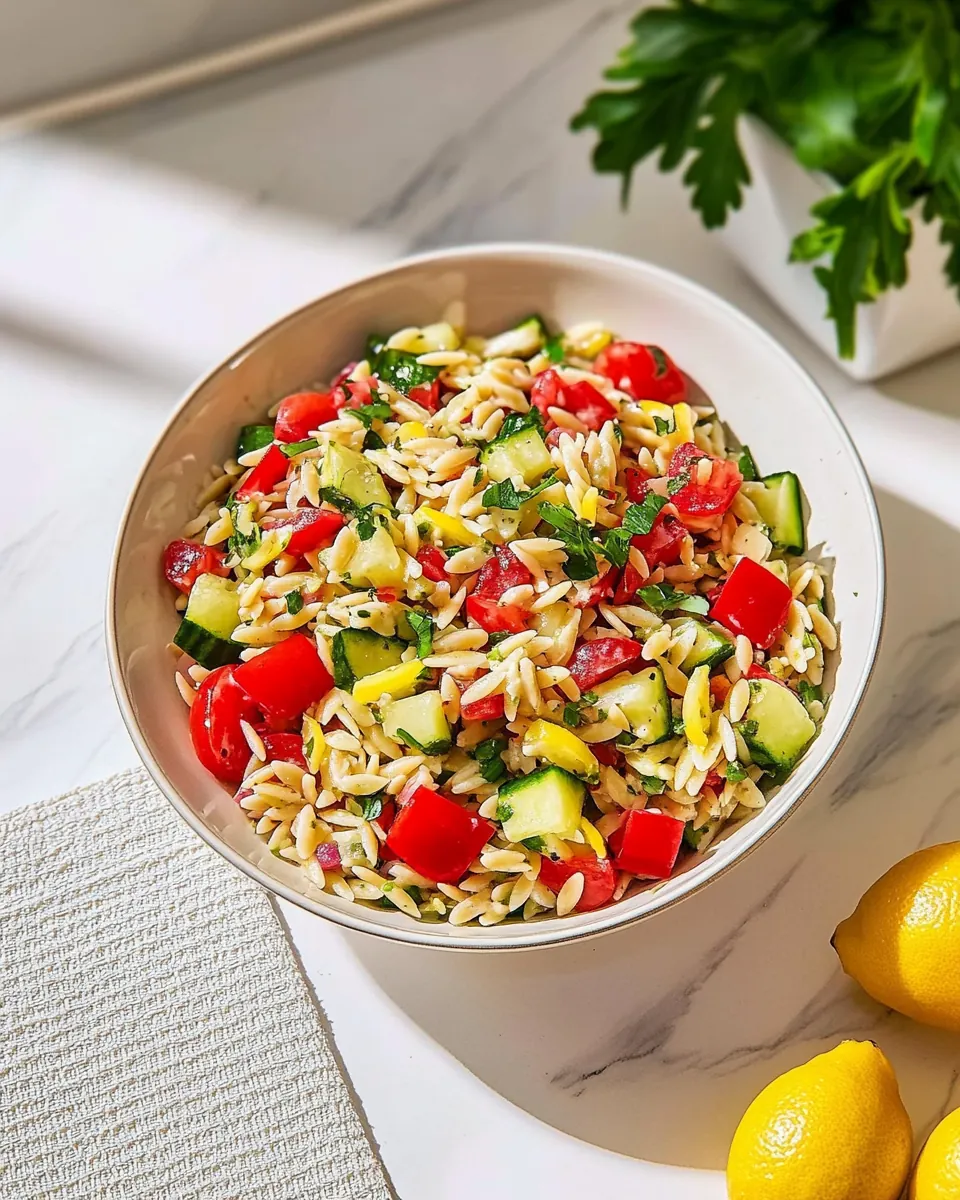
This salad rewards small techniques more than complicated steps, so a few focused tips will elevate your result. I include practical notes below that I use every time to keep the flavors bright and textures distinct.
- Emulsify the dressing, whisk the lemon juice and olive oil vigorously so the vinaigrette coats the orzo evenly rather than pooling. This helps the flavor adhere to each grain.
- Don’t overcook orzo, aim for al dente so the pasta maintains a slight chew after chilling, which preserves a pleasant mouthfeel. Overcooked pasta becomes gluey and absorbs too much dressing.
- Keep tomatoes separate until serving, if you are prepping hours ahead, add the halved cherry tomatoes just before serving to prevent excess moisture in the salad.
- Soak red onion if needed, if the raw red onion is too sharp for your taste, soak it in cold water for 10 minutes to mellow the bite without removing flavor.
- Use quality feta, a good crumbly feta cheese with tang will make a big difference, and crumbling it by hand preserves texture better than pre crumbled versions.
Pairing Suggestions for Lemon Orzo Salad
This salad works well as a main for a light lunch or as a side at dinner, and it fits many occasions from casual picnics to more festive summer meals. Below I outline ways I like to serve it and seasonal approaches to maximize enjoyment.
- Serve as a light lunch, present the salad in a shallow bowl with a little extra olive oil drizzled on top and a final sprinkle of chopped parsley and basil to freshen each plate.
- Pair as a side for dinner, this salad complements simply seasoned proteins and roasted vegetables, offering a citrusy foil to richer mains for a balanced plate.
- Great for picnics and potlucks, keep chilled in a thermal container until serving; it travels well and remains flavorful after a few hours out of the refrigerator.
- Seasonal hosting, in summer the salad shines with peak cherry tomatoes and fresh herbs, making it ideal for backyard gatherings or al fresco meals.
- Storage tips, refrigerate in an airtight container for up to three days, and add a splash of lemon juice or olive oil before serving if the salad seems dry.
- Serving style, serve cold or at room temperature; if chilling long term, stir gently before plating to redistribute the dressing and restore texture.
FAQ
Conclusion
What makes this recipe special is its bright, layered flavors and the effortless way simple ingredients come together to create something greater than the sum of its parts. I encourage you to give Lemon Orzo Salad a try, whether you need a fresh weeknight meal or a dish to bring to your next gathering. It’s reliable, easy to scale, and forgiving to prepare, so you can focus on enjoying the company rather than fussing over the stove. I hope this salad becomes a go to summer favorite for you, bringing a little citrus sunshine to the table each time.
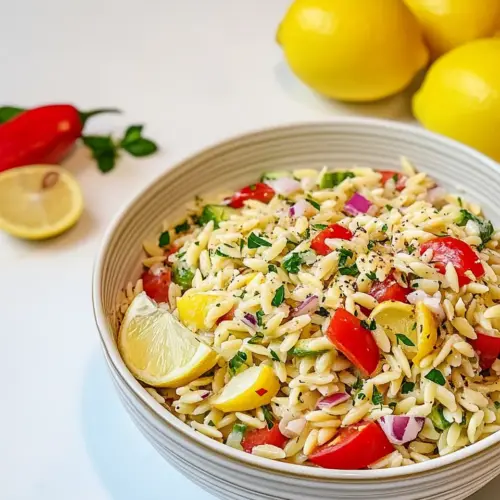
Lemon Orzo Salad
Equipment
- Large Pot
- Colander
- Large Bowl
- Whisk
Ingredients
- 1 1/2 cups orzo Cook until al dente and drain; serves as the tender, chewy base that soaks up lemony dressing and binds salad components together. Rinse briefly with cold water to stop cooking and keep orzo from clumping, then fluff before mixing with other ingredients.
- 1/3 cup lemon juice Squeeze fresh for bright acidity and tang that lifts the entire salad, balancing oil and creamy feta. Combine with zest and olive oil to make a vibrant vinaigrette that flavors every bite.
- 1/4 cup olive oil Whisk into a dressing to add smooth, fruity richness and help emulsify lemon juice for an even coating. Use extra-virgin olive oil for better flavor and mouthfeel while tossing the orzo and vegetables.
- 1 teaspoon lemon zest Zest for concentrated citrus aroma and a punch of lemon flavor that complements the juice without adding more liquid. Sprinkle into the dressing and over the salad to enhance overall brightness and fragrance.
- Salt to taste Season to taste to enhance and balance flavors, bringing out the natural sweetness of tomatoes and herbs while taming acidity. Add gradually and adjust at the end to avoid over-salting, especially because feta contributes salty notes.
- Black pepper to taste Grind freshly for a sharp, warming counterpoint that brightens the lemon and herbs while adding subtle heat. Taste as you mix to achieve a pleasing savory balance without overwhelming delicate ingredients.
- 1 cup cherry tomatoes halved Halve for juicy bursts of sweetness and acidity that add texture and color contrast; their juices mingle with the dressing to flavor surrounding orzo. Choose ripe cherry tomatoes for the best balance of sweetness and tang.
- 1 cup cucumber diced Dice for crisp, refreshing crunch and cooling moisture that balances feta and oil; acts as a palate-cleansing element. Peel if desired and remove seeds only if excess moisture will dilute the dressing.
- 1/4 cup red onion finely chopped Finely chop for pungent, slightly sweet sharpness that threads through the salad in small, flavorful bites. Rinse and soak briefly if you want to soften intensity, then drain well before adding.
- 1/4 cup fresh parsley chopped Chop for fresh, herbaceous depth that adds green, slightly peppery notes while brightening the overall salad. Add toward the end to preserve color and fragrance and toss gently to distribute evenly.
- 1/4 cup fresh basil chopped Chop for sweet, aromatic basil notes that complement lemon and tomatoes, offering a fragrant, summery lift. Tear larger leaves lightly to release oils and fold in so the herb remains vibrant and not bruised.
- 1/2 cup feta cheese crumbled Crumble for creamy, salty richness that provides savory contrast and tangy creaminess throughout the salad. Scatter on top and fold gently so feta pockets remain visible and deliver bursts of flavor.
Instructions
- Cook orzo in a large pot of boiling salted water until al dente, about 8 to 10 minutes. Drain and rinse under cold water to cool.: As the pot reaches a rolling boil, you will hear the water roar and see steam curl, then add the orzo and stir to prevent sticking. Cooking until al dente gives the orzo a slight chew that holds up when chilled, and the tiny grains should still feel a touch firm when bitten. You want to avoid a floppy, gummy texture because overcooked pasta will absorb too much dressing and become heavy. A common mistake is letting the pasta sit in hot water off the heat, which continues softening it, so drain promptly when the timing is right.
- In a large bowl, whisk together lemon juice, olive oil, lemon zest, salt, and black pepper.: Running cold water over the drained orzo stops the cooking immediately and cools the grains so they do not wilt the herbs or cook the vegetables when combined. The stream of water should make the grains separate and feel slick rather than sticky. If you skip rinsing, residual heat can turn crisp vegetables limp, and the dressing may be absorbed unevenly. Avoid rinsing until the orzo is fully drained, as excess water will dilute the dressing.
- Add the cooled orzo, cherry tomatoes, cucumber, red onion, parsley, basil, and feta cheese to the bowl with the dressing. Toss to combine.: As you whisk, the dressing should emulsify into a pale, slightly glossy vinaigrette with bright citrus perfume from the lemon zest . The sound is a soft rhythm as the oil blends, and the aroma becomes noticeably lemon forward. Emulsifying helps the dressing cling to the orzo , ensuring even flavor. A frequent error is adding too much salt at once; it is better to season gradually and taste because the feta cheese will add salt later.
- Adjust seasoning with additional salt and pepper if needed. Chill in the refrigerator until ready to serve.: When the ingredients meet the vinaigrette, you will see colors mingle and the bowl brighten with flecks of green and red. Toss gently so the feta cheese stays present in chunks and the vegetables do not break down. The goal is a cohesive salad where each component keeps its texture. Overenthusiastic tossing can turn the salad mushy, so fold carefully to combine without crushing the tomatoes.
- Toss to combine: As you toss, listen for a soft shuffle of ingredients and notice the dressing wrapping each grain of orzo . The salad should glisten without pooling liquid at the bottom, indicating a balanced emulsion. Proper tossing ensures even seasoning in every bite, and it helps the herbs distribute their aroma. A common pitfall is underseasoning; taste a spoonful and adjust with more salt or black pepper if the flavors feel muted.
- Adjust seasoning with additional salt and pepper if needed: Taste the salad for the final balance, checking for enough acid, salt, and pepper. If it needs brightness, add a splash more lemon juice ; if it seems flat, a pinch of salt will open up flavors. The salad should vibrate with citrus while the feta cheese provides savory depth. Avoid over salting, because the feta cheese can push the dish toward salty if you are not careful.
- Chill in the refrigerator until ready to serve: Cooling the salad allows flavors to meld and the dressing to further coat the orzo , creating a more cohesive taste. In the fridge, the salad firms slightly and the herbs settle into the mix. If served too warm, the feta cheese can soften and disperse, losing its distinct texture. A common oversight is chilling in a tightly sealed container for too long, which can flatten aromas; use a shallow container for even cooling.
Notes
- Emulsify the dressing, whisk the lemon juice and olive oil vigorously so the vinaigrette coats the orzo evenly rather than pooling. This helps the flavor adhere to each grain.
- Don’t overcook orzo, aim for al dente so the pasta maintains a slight chew after chilling, which preserves a pleasant mouthfeel. Overcooked pasta becomes gluey and absorbs too much dressing.
- Keep tomatoes separate until serving, if you are prepping hours ahead, add the halved cherry tomatoes just before serving to prevent excess moisture in the salad.
- Soak red onion if needed, if the raw red onion is too sharp for your taste, soak it in cold water for 10 minutes to mellow the bite without removing flavor.
- Use quality feta, a good crumbly feta cheese with tang will make a big difference, and crumbling it by hand preserves texture better than pre crumbled versions.