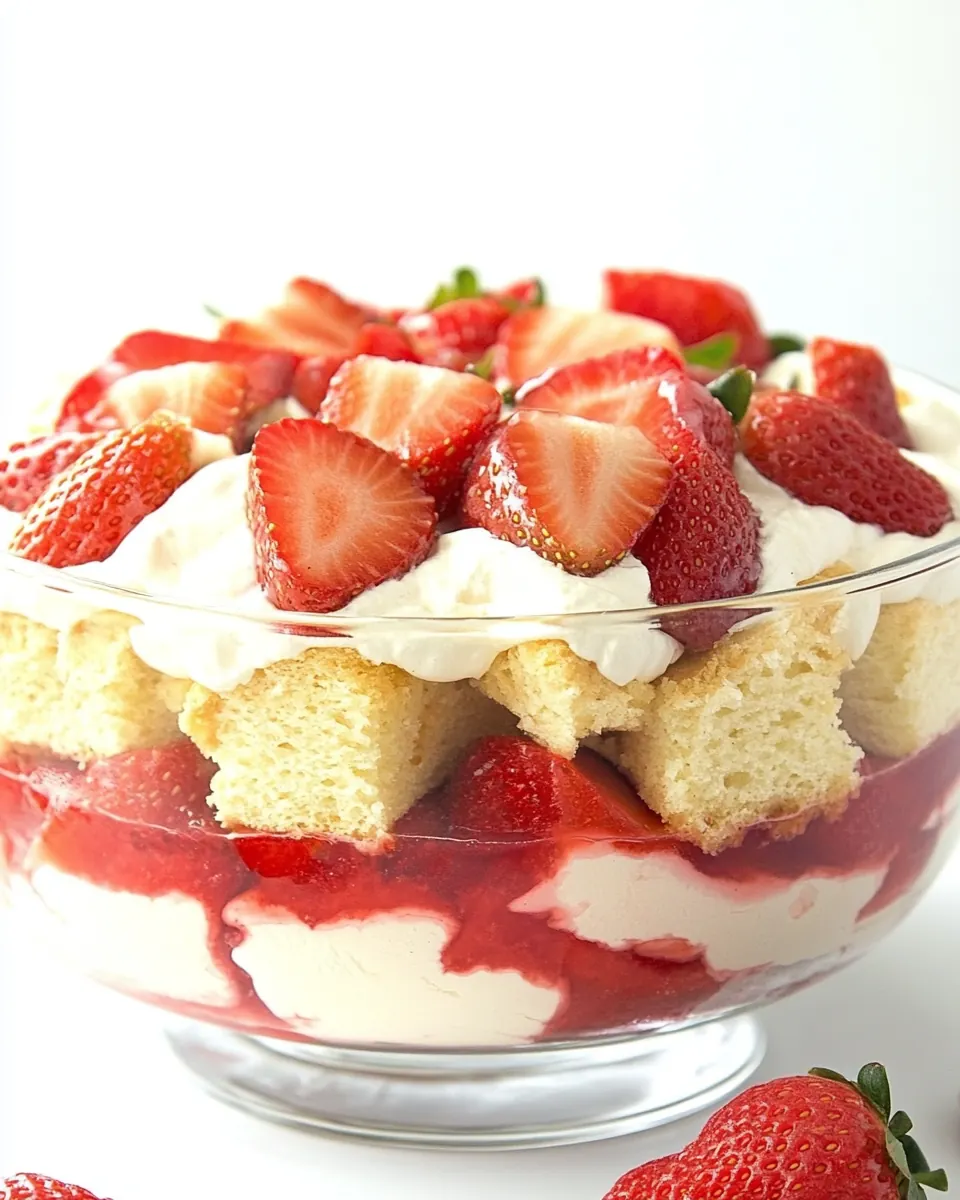
Layered Strawberry Trifle
Layered Strawberry Trifle has been my go to when I want something that feels festive without fuss, and the first spoonful always takes me back to a sunlit brunch at my grandmother’s house. I remember carrying a bowl of glossy berries to the table while she fussed with serving spoons, and how the simple stack of cake, creamy filling, and fruit seemed to make everyone at the table smile. That memory is part of why I make this dessert whenever I want company to linger a little longer, because it invites sharing and conversation.
When I make Layered Strawberry Trifle now, I think about balance more than showiness. I want the cake to soak up just enough of the tart lemon syrup so each bite is moist but not soggy, and the cream cheese layer to be airy and slightly tangy so it offsets the sweetness of the strawberries. There is a rhythm to the layering, I find, that is oddly calming, and I like to let the final mound of strawberries sit on top like a bright crown. If I am serving a crowd I will assemble it a few hours ahead so flavors settle together.
Over years of tweaking, I learned a few small tricks that make the difference between a good trifle and one you’ll write home about, and they are mostly about texture and timing. Choosing a sturdy store bought pound cake or a homemade butter loaf keeps the structure, while the lemon syrup perk makes the fruit sing. The whipped cream and cream cheese blend gives a silkiness that still holds its shape when spooned. I love that this dessert works as casually as it does for special occasions, and that it travels well to potlucks.
Recipe Snapshot
27 mins
25 mins
2 mins
Easy
300 kcal
American
Gluten-Free, Low FODMAP
Desserts
Saucepan, Electric mixer, Spatula, Glass serving bowl, Knife
Why This Layered Strawberry Trifle Works
I love how it layers flavors and textures
One of the reasons I keep coming back to Layered Strawberry Trifle is the contrast each layer provides. The slightly boozy note would be lovely, but instead the bright lemon syrup soaks into the pound cake, giving savory structure and sweet fruit a meeting place. The interplay between the soft cake, smooth cream cheese mixture, and juicy strawberries keeps every spoonful interesting, and I enjoy watching guests react to that first complex bite.
It is easy to scale for company
I’ve made Layered Strawberry Trifle for two and for twenty, and the technique is forgiving. Because the recipe relies on layers not precise measurements, you can double the quantities without losing texture. I find this comforting when I host, because it reduces last minute stress and lets me focus on getting the table right and pouring drinks for friends.
The components play well ahead of time
Prep-ahead is a real win here. I will often make the lemon syrup and the cream cheese mixture a day ahead and refrigerate them, which deepens the flavors. The soaked cake holds up in the fridge and the strawberries keep their brightness if you wait to slice them until assembly. This flexibility is why I turn to Layered Strawberry Trifle for celebrations where I want to be present with guests.
It highlights seasonal fruit beautifully
When strawberries are at their peak, they are the star. I love serving this trifle in spring when berries are tender and fragrant, because each layer only needs a little coaxing to shine. The lemon syrup sharpens the fruit, and you can taste the season in each spoonful. It is a simple canvas that lets excellent fruit stand out.
Comfort without heaviness
There is a homey quality to Layered Strawberry Trifle that is familiar but never heavy. The whipped cream like texture from the cream and cream cheese keeps the mouthfeel light, and the cake gives satisfying substance. For me that balance feels like a hug that does not overstay its welcome.
Ingredients You’ll Need for Layered Strawberry Trifle
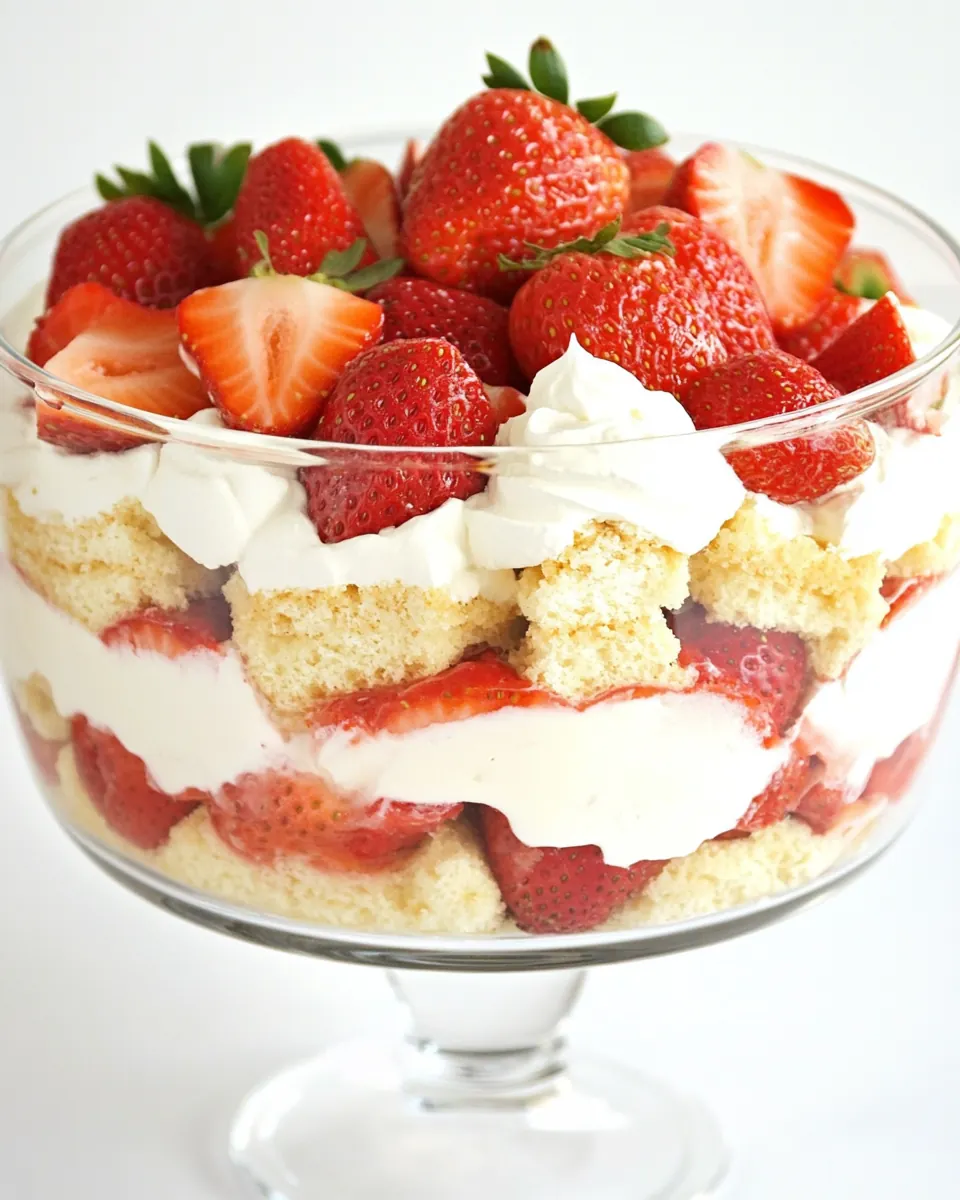
I approach the ingredient list like a small orchestra where each player has a clear job. The pound cake provides structure, the strawberries bring brightness and acidity, while the cream cheese and heavy whipping cream combine to make a silky, pipeable filling. The lemon syrup ties fruit and cake together, keeping the trifle moist without making it soggy. Together these ingredients create a dessert that feels celebratory and grounded at the same time.
- 1/4 cup granulated white sugar: Sweeten and balance the lemon's tang by dissolving into sauces or syrups; works well when combined with water and lemon juice to macerate fruit. Adds brightness to the dessert and helps build a simple syrup-like base for glossy fruit layers.
- 1/4 cup freshly squeezed lemon juice: Brighten and tenderize fruit layers by providing acidity; combine with sugar and water to create a quick macerating liquid. Helps preserve fresh berry color and adds a zesty contrast to rich cream components.
- 1/4 cup water: Dissolve sugar and lemon juice to form a light syrup that macerates berries and moistens cake layers; provides mild dilution without thinning creams. Helps distribute flavor evenly and keeps fruit juicy throughout assembly.
- 20 ounces pound cake or butter loaf (Store bought is okay): Provide structure and absorbent cake layers when cubed; acts as a neutral, buttery base that soaks up syrups and cream. Store–bought pound cake or butter loaf is convenient and maintains a classic trifle texture when layered.
- 8 ounces cream cheese, at room temperature: Create a tangy, dense creamy layer when beaten smooth with sugar and combined with whipped cream; contributes richness and stability. At room temperature the cheese blends easily for a velvety filling that balances sweet fruit.
- 1/3 cup granulated white sugar: Sweeten and stabilize the cream cheese mixture when beaten in; helps control the overall sweetness of the trifle. Works with sugar and cream to create a smooth, spreadable filling that holds layers together.
- 1 cup heavy whipping cream: Whip to soft or firm peaks to create light, airy whipped cream; fold into the cream cheese mixture for volume and silkiness. Provides a fluffy contrast to dense cake and juicy strawberries while lending a creamy mouthfeel.
- 6 cups fresh strawberries, trimmed and halved: Provide fresh, juicy fruit layers with bright flavor and vibrant color when trimmed and halved; macerate with the syrup to release juices. Serve as the primary fruity component that contrasts the rich dairy and cake layers.
How to Cook Layered Strawberry Trifle
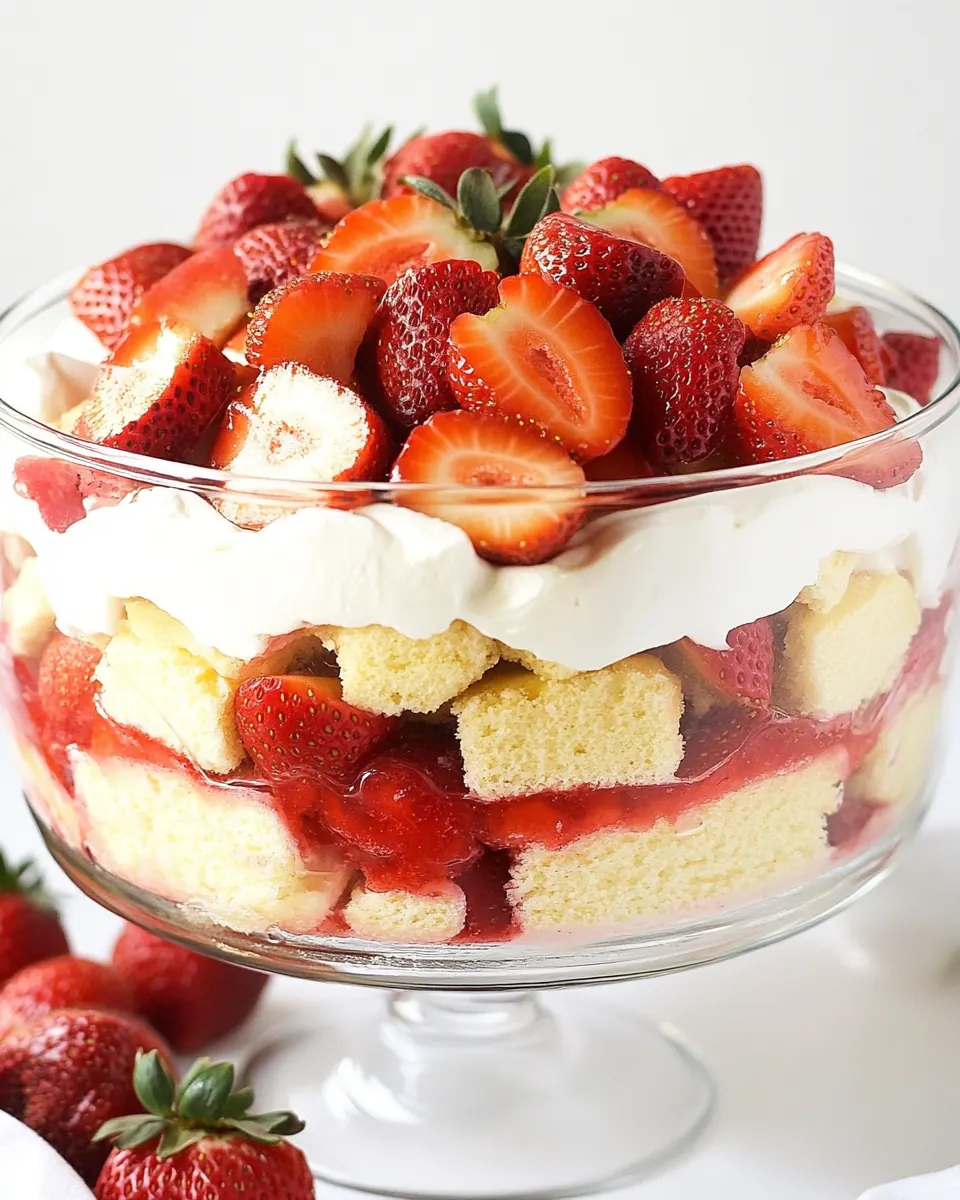
This recipe is straightforward, but the payoff comes from careful attention during each component step. Take your time with the lemon syrup so it cools slightly, and whip the cream and cream cheese to a light, airy texture. When assembling, layer gently so the structure stays pretty and the flavors remain distinct.
- In a small saucepan, bring the sugar, lemon juice and water to a boil over medium heat. Stir to dissolve sugar completely. Let cool.: The first sensory cue you will notice is the sharp citrus aroma as the mixture warms, and the tiny bubbles forming at the edge of the saucepan indicate the sugar is dissolving evenly. Stir gently so the sugar fully dissolves into a clear syrup, and reduce the heat if the mixture begins to rapid boil to avoid over reduction. The reason this matters is that a balanced syrup will soak into the pound cake without making it soggy, providing a bright contrast to the sweet layers. One common mistake here is overheating, which can concentrate the mixture too much and result in a very sticky syrup that clings in clumps rather than soaking evenly; to avoid that, keep the heat moderate and watch for a gentle simmer.
- Slice the cake into 3/4-inch slices. Brush lemon syrup over both sides of each cake slice. Quarter each slice.: After removing the saucepan from heat you will feel the residual warmth and smell the intense lemon notes mellow slightly as it cools to room temperature. Cooling stabilizes the syrup so it will not immediately steam the cake when brushed on, and it helps the liquid distribute evenly instead of pooling. A misstep is pouring hot syrup over the cake, which can cause the cake to become overly sodden and fall apart during assembly, so always bring the syrup down to warm or room temperature before using.
- Use an electric mixer to beat the cream cheese with the sugar on high speed until light and fluffy. Reduce the speed to medium and slowly add the cream. Continue beating until the mixture resembles soft whipped cream.: When you slice the pound cake , notice the soft crumb and the slight resistance of a good crust. Uniform 3/4 inch slices give consistent structure and allow even soaking. The tactile sensation of cutting through the cake tells you if it is dense enough to hold layers; a cake that compresses excessively when sliced may be too fresh or delicate. Avoid slicing paper thin, which makes the cake vulnerable to falling apart once syrup is applied.
- Arrange half of the cake pieces in the bottom of a glass serving bowl or dish (2 quart size is sufficient). Spoon half the cream-cheese mixture over the cake in dollops; spreading to the sides of the dish. Scatter half of the strawberries on top. Repeat layering with cake, cream cheese and berries. Pile additional strawberries on top.: As you brush the syrup, the cake will visibly darken and glisten, absorbing the citrus flavor. The brush strokes should be gentle so syrup soaks in rather than forming a wet surface. This technique infuses the cake with balanced acidity and keeps the final dessert from tasting flat. Common trouble is over saturating one side and leaving the other dry, which leads to uneven bites; move the brush steadily and check each slice for uniform sheen.
- Cover and refrigerate until chilled (about an hour). You may also refrigerate overnight.: When you quarter the slices, the smaller pieces make layering neater and allow the syrup to penetrate more surface area. You'll notice clean edges when the cake is properly chilled, which helps the trifle look tidy. If the cake is crumbly, chilling for a few minutes will firm it and make quartering easier. Cutting too roughly can create crumbs that muddy the visual layers, so use a sharp knife and deliberate cuts.
- Use an electric mixer to beat the cream cheese with the sugar on high speed until light and fluffy: The initial high speed aerates the cream cheese and sugar, producing a lighter texture and diminishing any residual granularity. Listen for a steady, even motor sound which indicates uniform blending, and watch for the mixture to become visibly paler and softer. Doing this step ensures the filling will be smooth and not heavy, which matters for the overall mouthfeel. A frequent error is using cold cream cheese that resists whipping, resulting in lumps; always bring the cream cheese to room temperature to avoid this.
- Reduce the speed to medium and slowly add the cream: As you drizzle in the cold or chilled heavy whipping cream , the sound changes to a softer whir and the texture will transform into a billowy mix. Adding the cream slowly allows it to incorporate without deflating the air you built into the cream cheese, producing a stable, whipped consistency. This step is critical for achieving a creamy but still scoopable layer in the trifle. Adding the cream too quickly can cause the mixture to split or lose volume, so patience here rewards you with a better texture.
- Continue beating until the mixture resembles soft whipped cream: Visually you want a glossy, soft peak texture, not stiff peaks. The sense of touch when you lift the whisk should show a light but cohesive mass that will hold dollops on the cake. This consistency keeps the layers distinct while still being airy. Overwhipping can make the mixture grainy or cause it to separate, so stop once it has a smooth, fluffy look.
- Arrange half of the cake pieces in the bottom of a glass serving bowl or dish (2 quart size is sufficient): As you place the cake pieces, note how they form a stable base that will catch the cream and strawberries. The visual of an even first layer is important because it sets the template for the rest of the trifle. Using a glass dish lets you admire the layers as you build them. A common misstep is crowding the dish too tightly which prevents syrup from reaching inner pieces; leave slight gaps for even distribution.
- Spoon half the cream-cheese mixture over the cake in dollops; spreading to the sides of the dish: The dollops should be placed so you can gently nudge them with a spatula to reach edges, creating an even coating that clings to the cake. You will notice a pleasing contrast between the pale cream and the golden cake. This technique traps air and keeps the mouthfeel light while ensuring every bite has cream. Smearing aggressively can deflate the mixture, so use a light touch when spreading.
- Scatter half of the strawberries on top: As you add the strawberries , their fragrance will bloom and the color contrast will become striking. Arrange them so juices do not pool in one spot, and aim for uniform distribution to ensure each serving gets fruit. This layer adds juiciness and fresh acidity that balances the sweet components. A typical mistake is placing overripe berries which can leak and make the layers watery, so choose firm ripe fruit.
- Repeat layering with cake, cream cheese and berries: Building the second set of layers brings the dish to fullness, and you will hear soft thuds as pieces nestle. The repeated textures create rhythm in every spoonful, and repeating exactly gives predictable portions. Take care to mirror the first layers so the trifle looks cohesive. Overpacking the top layers can compress the lower ones, causing leakage, so layer gently.
- Pile additional strawberries on top: The final crown of fruit should be arranged with attention to visual appeal, creating height and a fresh finish. The aromatic lift from the berries will be strongest now, making the trifle irresistible. This top layer also signals freshness, so slice just before serving when possible. Placing too many berries can overcrowd and bruise them, so balance aesthetics with structural needs.
- Cover and refrigerate until chilled (about an hour): Chilling lets the flavors marry and the textures firm slightly, producing cleaner spoonfuls when served. You will notice the edges set and the syrup settle into the cake during this time. Refrigeration also improves slicing and serving consistency. A common error is refrigerating uncovered, which can dry the surface, so cover to retain moisture.
- You may also refrigerate overnight: If you plan ahead, an overnight chill deepens flavor integration and makes serving effortless the next day. The mouthfeel will be more cohesive and the trifle easier to portion. Keep covered to prevent absorption of refrigerator odors. Avoid freezing, as ice crystals will ruin the delicate whipped texture.
Tips for Success
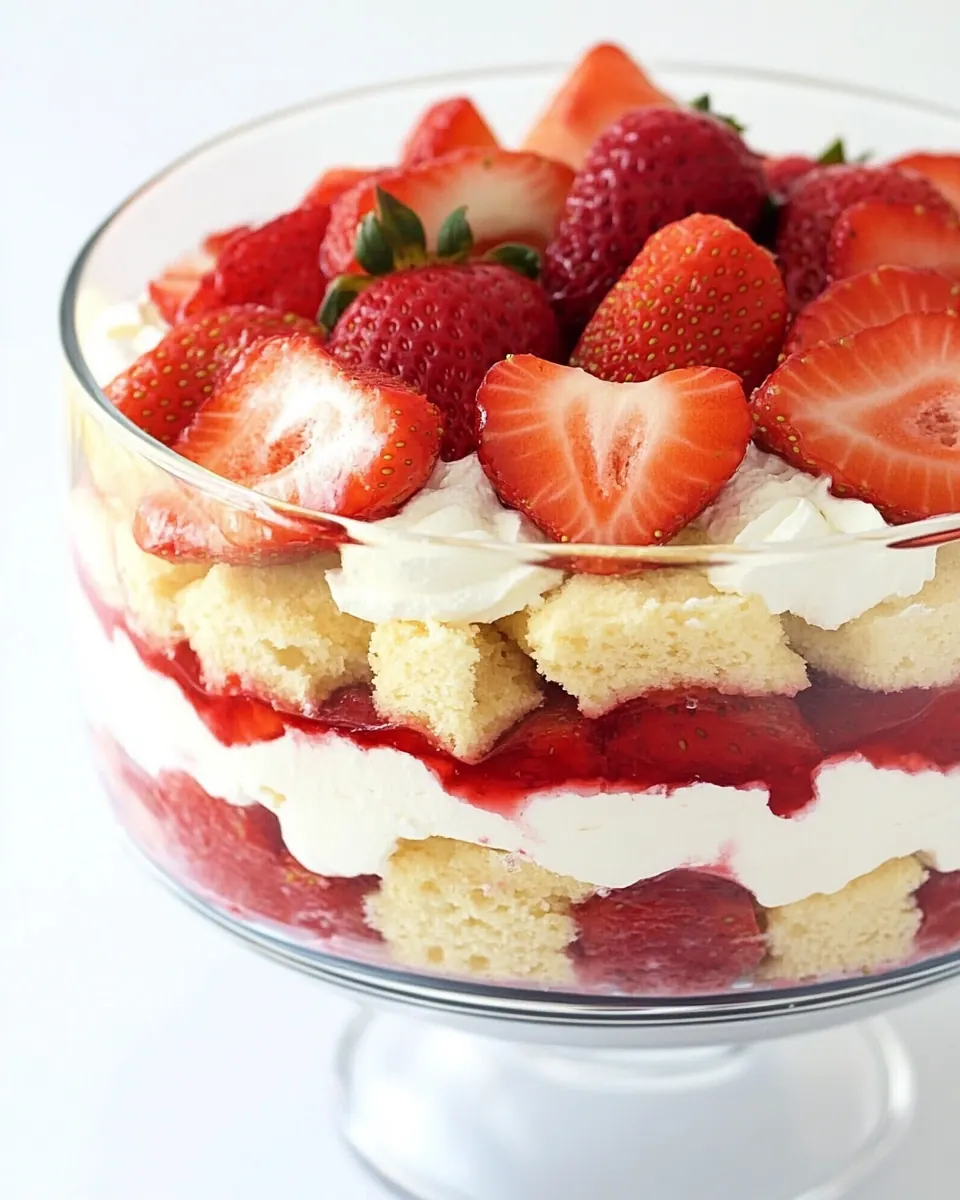
I like to think of these tips as small habits that make assembly smoother and the final result more striking. Spend a little time on texture and timing and the trifle will repay you with balanced flavor and a pretty presentation.
- Room temperature cream cheese: Allowing the cream cheese to soften makes it blend into a smooth, airy mixture, preventing lumps and ensuring a silky filling.
- Gentle syrup brushing: Brush the lemon syrup on both sides of the pound cake evenly so it absorbs without becoming waterlogged, giving every bite balanced moisture.
- Whip to soft peaks: Whip the heavy whipping cream into the cream cheese until soft peaks form to maintain an airy but stable filling that holds its shape in the trifle.
- Use firm ripe strawberries: Choose berries that are ripe yet firm so they hold their shape and do not release excess juice that can make the layers soggy.
- Assemble in a clear dish: Layering in a glass bowl showcases the beautiful strata and helps you monitor even distribution of cake, cream, and fruit as you build.
- Chill before serving: Refrigerate the trifle for at least an hour so flavors meld and the layers set, resulting in cleaner slices and a more cohesive texture.
Perfect Pairings for Layered Strawberry Trifle
Layered Strawberry Trifle shines in casual gatherings and celebratory meals alike, making it a versatile dessert to bring to brunches, spring dinners or family potlucks. I like to serve it after a light lunch so the dessert feels like a sweet finale rather than a heavy conclusion. For seasonal menus, it pairs wonderfully with fresh salads and light grilled mains when strawberries are at their peak.
- Serve with coffee or tea: A small cup of hot beverage offsets the chilled sweetness and gives guests a warm contrast to the trifle’s cool texture.
- Great for brunch: The bright lemon and fresh strawberries make this trifle ideal for spring or summer brunches, where lighter desserts are preferred.
- Celebration dessert: Because it is visually appealing, it works well for birthdays or showers, providing a festive presentation that is simple to scale.
- Storage tips: Keep covered in the refrigerator for up to 48 hours to preserve texture and flavor, and avoid freezing to protect the whipped filling.
- Occasions: Serve at family dinners, Ramadan if desired after iftar as a sweet treat, or potlucks where transportability and ease of serving are appreciated.
- Seasonal pairing: In spring, highlight the trifle with the freshest berries; later in the season, you can still enjoy it by using firm ripe berries or mixing in other berries as noted in the recipe tips.
FAQ
Conclusion
Layered Strawberry Trifle stands out because it pairs bright, seasonal fruit with a silky cream and sturdy cake for an effortless yet elegant dessert. Give it a try the next time you want a showstopping sweet that is surprisingly easy to assemble and scales well for guests. I hope this recipe becomes a favorite in your rotation, bringing bright flavors and relaxed hospitality to your table.
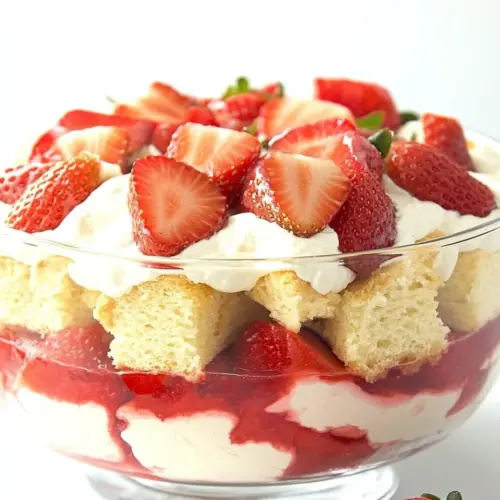
Layered Strawberry Trifle
Equipment
- Saucepan
- Electric Mixer
- Spatula
- Glass serving bowl
- Knife
Ingredients
- 1/4 cup granulated white sugar Sweeten and balance the lemon's tang by dissolving into sauces or syrups; works well when combined with water and lemon juice to macerate fruit. Adds brightness to the dessert and helps build a simple syrup-like base for glossy fruit layers.
- 1/4 cup freshly squeezed lemon juice Brighten and tenderize fruit layers by providing acidity; combine with sugar and water to create a quick macerating liquid. Helps preserve fresh berry color and adds a zesty contrast to rich cream components.
- 1/4 cup water Dissolve sugar and lemon juice to form a light syrup that macerates berries and moistens cake layers; provides mild dilution without thinning creams. Helps distribute flavor evenly and keeps fruit juicy throughout assembly.
- 20 ounces pound cake or butter loaf (Store bought is okay) Provide structure and absorbent cake layers when cubed; acts as a neutral, buttery base that soaks up syrups and cream. Store-bought pound cake or butter loaf is convenient and maintains a classic trifle texture when layered.
- 8 ounces cream cheese, at room temperature Create a tangy, dense creamy layer when beaten smooth with sugar and combined with whipped cream; contributes richness and stability. At room temperature the cheese blends easily for a velvety filling that balances sweet fruit.
- 1/3 cup granulated white sugar Sweeten and stabilize the cream cheese mixture when beaten in; helps control the overall sweetness of the trifle. Works with sugar and cream to create a smooth, spreadable filling that holds layers together.
- 1 cup heavy whipping cream Whip to soft or firm peaks to create light, airy whipped cream; fold into the cream cheese mixture for volume and silkiness. Provides a fluffy contrast to dense cake and juicy strawberries while lending a creamy mouthfeel.
- 6 cups fresh strawberries, trimmed and halved Provide fresh, juicy fruit layers with bright flavor and vibrant color when trimmed and halved; macerate with the syrup to release juices. Serve as the primary fruity component that contrasts the rich dairy and cake layers.
Instructions
- In a small saucepan, bring the sugar, lemon juice and water to a boil over medium heat. Stir to dissolve sugar completely. Let cool.: The first sensory cue you will notice is the sharp citrus aroma as the mixture warms, and the tiny bubbles forming at the edge of the saucepan indicate the sugar is dissolving evenly. Stir gently so the sugar fully dissolves into a clear syrup, and reduce the heat if the mixture begins to rapid boil to avoid over reduction. The reason this matters is that a balanced syrup will soak into the pound cake without making it soggy, providing a bright contrast to the sweet layers. One common mistake here is overheating, which can concentrate the mixture too much and result in a very sticky syrup that clings in clumps rather than soaking evenly; to avoid that, keep the heat moderate and watch for a gentle simmer.
- Slice the cake into 3/4-inch slices. Brush lemon syrup over both sides of each cake slice. Quarter each slice.: After removing the saucepan from heat you will feel the residual warmth and smell the intense lemon notes mellow slightly as it cools to room temperature. Cooling stabilizes the syrup so it will not immediately steam the cake when brushed on, and it helps the liquid distribute evenly instead of pooling. A misstep is pouring hot syrup over the cake, which can cause the cake to become overly sodden and fall apart during assembly, so always bring the syrup down to warm or room temperature before using.
- Use an electric mixer to beat the cream cheese with the sugar on high speed until light and fluffy. Reduce the speed to medium and slowly add the cream. Continue beating until the mixture resembles soft whipped cream.: When you slice the pound cake , notice the soft crumb and the slight resistance of a good crust. Uniform 3/4 inch slices give consistent structure and allow even soaking. The tactile sensation of cutting through the cake tells you if it is dense enough to hold layers; a cake that compresses excessively when sliced may be too fresh or delicate. Avoid slicing paper thin, which makes the cake vulnerable to falling apart once syrup is applied.
- Arrange half of the cake pieces in the bottom of a glass serving bowl or dish (2 quart size is sufficient). Spoon half the cream-cheese mixture over the cake in dollops; spreading to the sides of the dish. Scatter half of the strawberries on top. Repeat layering with cake, cream cheese and berries. Pile additional strawberries on top.: As you brush the syrup, the cake will visibly darken and glisten, absorbing the citrus flavor. The brush strokes should be gentle so syrup soaks in rather than forming a wet surface. This technique infuses the cake with balanced acidity and keeps the final dessert from tasting flat. Common trouble is over saturating one side and leaving the other dry, which leads to uneven bites; move the brush steadily and check each slice for uniform sheen.
- Cover and refrigerate until chilled (about an hour). You may also refrigerate overnight.: When you quarter the slices, the smaller pieces make layering neater and allow the syrup to penetrate more surface area. You'll notice clean edges when the cake is properly chilled, which helps the trifle look tidy. If the cake is crumbly, chilling for a few minutes will firm it and make quartering easier. Cutting too roughly can create crumbs that muddy the visual layers, so use a sharp knife and deliberate cuts.
- Use an electric mixer to beat the cream cheese with the sugar on high speed until light and fluffy: The initial high speed aerates the cream cheese and sugar, producing a lighter texture and diminishing any residual granularity. Listen for a steady, even motor sound which indicates uniform blending, and watch for the mixture to become visibly paler and softer. Doing this step ensures the filling will be smooth and not heavy, which matters for the overall mouthfeel. A frequent error is using cold cream cheese that resists whipping, resulting in lumps; always bring the cream cheese to room temperature to avoid this.
- Reduce the speed to medium and slowly add the cream: As you drizzle in the cold or chilled heavy whipping cream , the sound changes to a softer whir and the texture will transform into a billowy mix. Adding the cream slowly allows it to incorporate without deflating the air you built into the cream cheese, producing a stable, whipped consistency. This step is critical for achieving a creamy but still scoopable layer in the trifle. Adding the cream too quickly can cause the mixture to split or lose volume, so patience here rewards you with a better texture.
- Continue beating until the mixture resembles soft whipped cream: Visually you want a glossy, soft peak texture, not stiff peaks. The sense of touch when you lift the whisk should show a light but cohesive mass that will hold dollops on the cake. This consistency keeps the layers distinct while still being airy. Overwhipping can make the mixture grainy or cause it to separate, so stop once it has a smooth, fluffy look.
- Arrange half of the cake pieces in the bottom of a glass serving bowl or dish (2 quart size is sufficient): As you place the cake pieces, note how they form a stable base that will catch the cream and strawberries. The visual of an even first layer is important because it sets the template for the rest of the trifle. Using a glass dish lets you admire the layers as you build them. A common misstep is crowding the dish too tightly which prevents syrup from reaching inner pieces; leave slight gaps for even distribution.
- Spoon half the cream-cheese mixture over the cake in dollops; spreading to the sides of the dish: The dollops should be placed so you can gently nudge them with a spatula to reach edges, creating an even coating that clings to the cake. You will notice a pleasing contrast between the pale cream and the golden cake. This technique traps air and keeps the mouthfeel light while ensuring every bite has cream. Smearing aggressively can deflate the mixture, so use a light touch when spreading.
- Scatter half of the strawberries on top: As you add the strawberries , their fragrance will bloom and the color contrast will become striking. Arrange them so juices do not pool in one spot, and aim for uniform distribution to ensure each serving gets fruit. This layer adds juiciness and fresh acidity that balances the sweet components. A typical mistake is placing overripe berries which can leak and make the layers watery, so choose firm ripe fruit.
- Repeat layering with cake, cream cheese and berries: Building the second set of layers brings the dish to fullness, and you will hear soft thuds as pieces nestle. The repeated textures create rhythm in every spoonful, and repeating exactly gives predictable portions. Take care to mirror the first layers so the trifle looks cohesive. Overpacking the top layers can compress the lower ones, causing leakage, so layer gently.
- Pile additional strawberries on top: The final crown of fruit should be arranged with attention to visual appeal, creating height and a fresh finish. The aromatic lift from the berries will be strongest now, making the trifle irresistible. This top layer also signals freshness, so slice just before serving when possible. Placing too many berries can overcrowd and bruise them, so balance aesthetics with structural needs.
- Cover and refrigerate until chilled (about an hour): Chilling lets the flavors marry and the textures firm slightly, producing cleaner spoonfuls when served. You will notice the edges set and the syrup settle into the cake during this time. Refrigeration also improves slicing and serving consistency. A common error is refrigerating uncovered, which can dry the surface, so cover to retain moisture.
- You may also refrigerate overnight: If you plan ahead, an overnight chill deepens flavor integration and makes serving effortless the next day. The mouthfeel will be more cohesive and the trifle easier to portion. Keep covered to prevent absorption of refrigerator odors. Avoid freezing, as ice crystals will ruin the delicate whipped texture.
Notes
- Room temperature cream cheese: Allowing the cream cheese to soften makes it blend into a smooth, airy mixture, preventing lumps and ensuring a silky filling.
- Gentle syrup brushing: Brush the lemon syrup on both sides of the pound cake evenly so it absorbs without becoming waterlogged, giving every bite balanced moisture.
- Whip to soft peaks: Whip the heavy whipping cream into the cream cheese until soft peaks form to maintain an airy but stable filling that holds its shape in the trifle.
- Use firm ripe strawberries: Choose berries that are ripe yet firm so they hold their shape and do not release excess juice that can make the layers soggy.
- Assemble in a clear dish: Layering in a glass bowl showcases the beautiful strata and helps you monitor even distribution of cake, cream, and fruit as you build.
- Chill before serving: Refrigerate the trifle for at least an hour so flavors meld and the layers set, resulting in cleaner slices and a more cohesive texture.
